

In this guide
Installer reviews and trade directories are a starting point, not a guarantee. The registers that carry weight in the UK are the ones tied to a certification scheme: the Microgeneration Certification Scheme (MCS) for renewable work, and TrustMark, described in official guidance as a government endorsed quality scheme, for work in and around the home1. A commercial directory or a five-star rating sits outside both, and nothing about a high score obliges an installer to put anything right.
What the schemes do give a household is a route. MCS certifies, quality assures and provides consumer protection for microgeneration installations and installers, covering small-scale renewable electricity technologies such as solar photovoltaic panels, biomass, wind, heat pumps and heat products3. TrustMark registration is written into funded schemes: ECO4 and GBIS Flex providers, agents, installers and contractors should be TrustMark registered, and the Warm Home Discount (England and Wales) Regulations 2026 require a boiler or central heating system to be installed by, or under the responsibility of, a person registered with TrustMark, with a certificate of lodgement issued by the operator of TrustMark4.
The practical consequence is that a review score tells you how previous customers felt, while a register tells you what an installer has agreed to be held to. The two answer different questions, and only one of them survives a dispute.
What installer reviews and ratings can and cannot tell you
Reviews are evidence of experience, not of competence. A review platform records what a household thought of a job; it does not record whether the work complied with building regulations, whether the installer held the certification they claimed, or whether the installation was registered on the MCS Installation Database. Those are separate questions with separate answers, and only the second set is checkable in advance.
There is also a structural asymmetry in who can post. Under the Boiler Upgrade Scheme, installers must request statutory reviews, and property owners cannot10. That means the review record for grant-funded work is generated at the installer's initiative, which is a reason to read a run of positive reviews as a managed process rather than a spontaneous one. It does not make the reviews false. It does mean the absence of negative reviews is weak evidence.
Where reviews are genuinely useful is in narrowing a shortlist and in surfacing patterns: repeated complaints about the same thing, such as a failure to return after commissioning, are worth weighing. Where they are not useful is as a substitute for the register check. A household that reads twenty reviews and skips the certification check has done the easier half of the work.
The other limit is that reviews rarely distinguish between the installer and the technology. A heat pump that underperforms because it was designed for the wrong flow temperature produces a poor review of the installer, which may be fair, and a poor impression of heat pumps, which may not be. The evidence on this is set out in the government's own review of the heat pump transition, which notes that MCS requires installers to provide a design-stage prediction of system efficiency, not verify actual performance, and that MCS does not require remediation of systems that are underperforming relative to their design12. A review cannot tell you which of those two things happened.
MCS: the quality mark for renewable installers

MCS is a mark of quality which demonstrates adherence to industry-recognised standards for renewable products, contractors and their installations1. It is a certification scheme for microgeneration installation companies and products, aiming to ensure consistent standards and provide confidence to consumers6. In scope are solar photovoltaic panels, biomass, wind, heat pumps and heat products3.
Certification is delivered through certification bodies rather than by MCS directly. Installers must carry a current and valid MCS Certificate issued by one of a named set: Certsure LLP trading as NICEIC, Napit Certification Ltd, Simply Certification, The IAA (Installation Assurance Authority), or Amtivo Group trading as British Assessment Bureau13. That list matters when checking a claim, because the certificate names the body that issued it.
The scheme is in transition. UKAS approved updates to the redeveloped MCS Installer scheme to incorporate air-to-air heat pumps on 8 September 2026, allowing MCS to proceed to the next stage of implementation, and MCS began supporting installer certification bodies in progressing towards UKAS accreditation for air-to-air heat pump certification on the same date9. The transition phase is due to end on 31 March 2027, by which date all MCS certified installers must operate under the redeveloped Scheme9. A household signing a contract in the meantime may be dealing with an installer working under either version.
For energy independence, MCS matters because it is the gate to grant funding and to the paperwork that proves an installation was done to a recognised standard. It is not a guarantee of performance, and the distinction is developed below.
TrustMark: the Government Endorsed Quality Scheme for work in and around the home
TrustMark is described in official guidance as a government endorsed quality scheme, and councils point households to it as a competent person register for finding an installer that will assess circumstances and property to identify suitable measures2. The Scottish Government has said it will consider using the UK Government endorsed TrustMark quality assurance framework15.
Its reach into funded work is the strongest argument for checking it. Under the Warm Home Discount (England and Wales) Regulations 2026, a boiler or central heating system must be installed by, or under the responsibility of, a person who is registered with TrustMark, with a certificate of lodgement issued by the operator of TrustMark5. The Warm Homes Social Housing Fund wave 3 guidance requires all installers to be TrustMark registered, or equivalent, and compliant with corresponding requirements set out on TrustMark's website16. The Green Homes Wales loan terms require the installer contracted to supply and install eligible measures to be registered with TrustMark and to remain registered until the installation work has been completed17. ECO4 delivery guidance requires measures to be installed by or under the responsibility of a TrustMark registered installer, with a relevant certificate of lodgement18.
TrustMark (2005) Limited is a company registered in England and Wales with company number 054801445. That is a fixed identifier, useful when checking whether correspondence is genuine.
Finding a certified installer: the Find an Installer tool and TrustMark directory
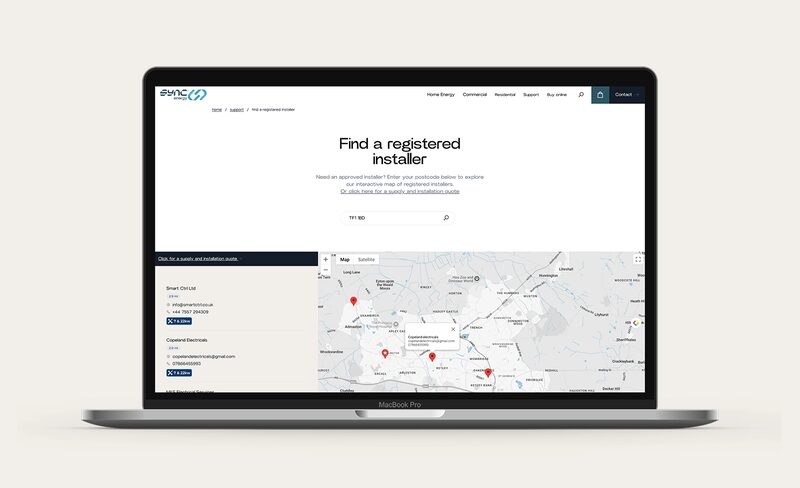
Official guidance is direct about the route: use the government-endorsed Microgeneration Certification Scheme to find certified installers, and get at least three quotes from reputable installers10. Councils repeat the same instruction, pointing households to a competent person register such as TrustMark14.
The two tools do different jobs. The MCS finder lists installers certified for specific renewable technologies, which is what a heat pump, solar or biomass job needs. The TrustMark directory lists businesses registered under the quality assurance framework, which is what funded work under ECO4, GBIS Flex and the Warm Homes Social Housing Fund requires4. An installer can appear in one and not the other, and for grant-funded work the TrustMark condition is the one written into the rules.
For work in Wales, the Green Homes Wales route adds a further layer: the Retrofit Coordinator named in the Installation Grant Offer Letter must be instructed and registered under TrustMark, the borrower must own and occupy the property in Wales at the time the letter is issued, a Project Information Form aligned with the Recommendations Reports is required, an unsecured fixed sum loan from the scheme must have been obtained, Annex C requirements must be met, installers must be registered, work must not start before the letter is issued, the measure must be completely new, and no other public financial support may be received17.

Checking an installer's certification: free, and how to do it

The check costs nothing and takes minutes. Ask for the certification body named on the certificate, then confirm the registration with that body. The named bodies for MCS work are Certsure LLP trading as NICEIC, Napit Certification Ltd, Simply Certification, The IAA, and Amtivo Group trading as British Assessment Bureau13.
There is a second layer for building regulations. A registered installer will be approved to carry out the work to comply with building regulations without involving local authority building control, and a certificate is issued on completion11. For gas appliances, if a registered installer with the relevant competencies carries out the work, they should be able to self-certify without the need for close involvement of building control19. Where an installer is not in an approved Competent Person scheme, they will not be able to self-certify that their work is compliant, and a building control body does not need to be notified for certain services or fittings only where the owner employs an installer registered with a relevant competent person scheme designated in the regulations20.
Building control bodies may accept certification under independent schemes of certification and accreditation as evidence of compliance with a relevant standard22. That is the mechanism by which a register check substitutes for a separate inspection.
"Ask family and friends who have used installers about their satisfaction and whether they got a FENSA certificate."
The FENSA checklist is a useful model for any trade: ask for the certificate, not just the reassurance. The same logic applies to MCS and TrustMark, where the certificate number and the issuing body are the checkable facts.
Consumer protection if something goes wrong
Consumer protection for home upgrade work is being rebuilt. The government has consulted on reforming consumer protection for home upgrade schemes, proposing a transparent public register of government approved installers, a single advice and support service covering the entire time a home is being upgraded, powers to hold installers and delivery partners to account including bans from working on government schemes, and a new data-backed system that spots risks and installer performance issues earlier24. The consultation also proposes creating a single end-to-end consumer protection service, accountable to government and responsible for system oversight and performance, as well as providing advice, case management and support for consumers24.
Parliamentary debate on energy market consumer protection in June 2026 described a service that will have powers to enforce better service through contracts that hold installers and delivery partners to account26. These are proposals and a stated intention, not protections a household can rely on today. The current position is that protection comes from the certification scheme, the consumer code the installer belongs to, and whatever guarantee or insurance backed product the contract includes.
For households affected by supplier failure, the Department for Energy Security and Net Zero has confirmed that it nominated TrustMark to directly support customers of the failed supplier, with an online form at the TrustMark support page and the general enquiries line on 0333 555 12347. That is a specific intervention rather than a general consumer protection, and it shows the shape of what is proposed: a single named body that a household can reach.
The independence point is worth stating plainly. A certification scheme and a consumer code are forms of collective redress, not individual leverage. They work because the installer wants to keep the registration. Where an installer has stopped trading, the registration is gone and the leverage with it, which is why deposit protection and insurance backed guarantees matter more than any register.
Complaints: MCS as single point of contact, and when ADR applies

MCS is the contact for issues with the installation process, the installer, or the MCS certificate or product6. Its roles include setting and maintaining technical standards for installations and products, certifying installers and products against those standards, issuing MCS certificates for completed eligible installations, and assisting certification bodies to review and address cases and consumer issues relating to installers or products27. It is not an alternative dispute resolution body, and it does not adjudicate.
The escalation route for installation quality, workmanship or installer behaviour is to raise it with the installer in the first instance, then the installer's consumer code, which will be HIES or RECC, or MCS installation quality complaints8. The consumer code is where ADR applies, because membership of a code carries a requirement to participate in a dispute resolution process. MCS certification alone does not.
The deadline is fixed. For MCS certified installations, a complaint must be made no more than two years after the date that the system was commissioned6. That runs from commissioning, not from the date a fault appears, which is why a household should record the commissioning date and keep the certificate.
There is a separate verification process that can look like a complaint. MCS undertakes its own checks on installations completed by MCS-certified installers, separate from Ofgem's audit programme, and may contact owners directly or arrange a visit8. Property owners contacted for these checks should aim to respond within seven days20. The verification line for routine post-installation verification on behalf of Ofgem is 0333 103 8198, and the general MCS number is 0333 103 81308.
TrustMark's Find and Fix service: a free home check at no cost to you
TrustMark's support role extends beyond registration. The Department for Energy Security and Net Zero nominated TrustMark to directly support customers of a failed supplier, with an online form and the general enquiries number 0333 555 12347. Councils also operate free home repair support: Manchester City Council's Home Repairs Support Service is free29.
The value of a free check is diagnostic. It establishes what was installed, whether the paperwork exists, and what the remedy might be, before any money is spent on a surveyor or a solicitor. For a household whose installer has stopped trading, that is often the first step that produces a written record.
The limit is that a free check is not a remedy. It does not compel an installer to return, and it does not pay for remedial work. It produces information, which is what a complaint or an insurance claim needs.
Getting quotes: why three is the minimum
Independent guidance is to get at least three quotes and check you are being quoted like for like23. The reason is not that the cheapest is best, but that three quotes expose the differences that a single quote hides: what is included in the price, what is excluded, what the performance estimate assumes, and what the warranty covers.
Like-for-like comparison is the harder half. Two quotes for the same technology can differ because one includes a system flush, a magnetic filter, a smart thermostat or a longer workmanship warranty, and because one assumes a different heat loss figure. The MCS performance estimate is a design-stage prediction of system efficiency, not a verification of actual performance, so two installers can produce different predictions for the same house without either being wrong12.
For grant-funded work, the quote is not the whole picture. Under the Boiler Upgrade Scheme, installers cannot use a temporary MCS certification number to create an account or apply for a voucher, and retrospective applications are allowed only after full certification, at installer risk30. An installer account is limited to one per MCS accreditation31. Those rules shape what an installer can promise and when.

What MCS certification does not guarantee
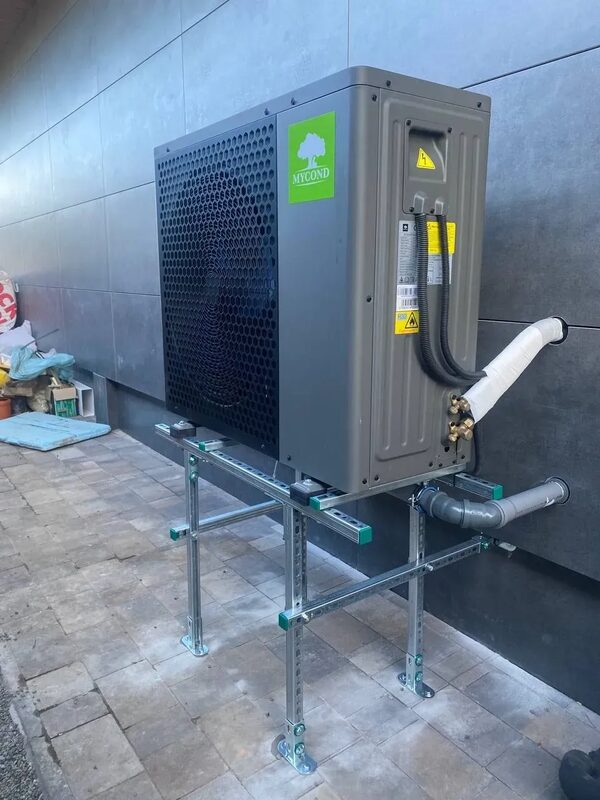
Certification is a standard for process, not a promise of outcome. MCS requires installers to provide a design-stage prediction of system efficiency, not verify actual performance, and MCS does not require remediation of systems that are underperforming relative to their design12. A household can therefore hold a valid MCS certificate for a system that does not deliver the predicted efficiency, and the scheme does not oblige the installer to fix that gap.
The certificate itself has a validity condition. It is proof that the installation is MCS-certified, and it should only be issued once the installation is fully installed and commissioned; certificates issued before completion are ineligible32. A certificate produced before the work is finished is not evidence of a finished job.
Registration timing is also specified in scheme rules. In the Barcud Solar Panel Installation Scheme specification, the installation must be registered on the MCS Installation Database no later than 10 working days after commissioning, with an MCS Certificate generated, and MCS commissioning certification issued to the employer within 14 days of commissioning13. Those are scheme-specific deadlines, but they show the shape of the requirement: registration is a step with a clock on it, not an automatic consequence of the work.
What certification does not cover is the commercial conduct of the business, its financial stability, or its willingness to return after the final payment. Those are addressed by the consumer code, by deposit protection, and by insurance backed guarantees, which is why the register check is the beginning of the process rather than the end of it.
Sources32 cited
- Heat pumps explained: experts answer your questions, GOV.UK, 2024-03-28
- Get a grant or loan to improve your home energy efficiency, Bristol City Council, 2026
- ECO4 Flex information document, Ceredigion County Council, 2025-11
- ECO4 delivery guidance version 4.0, Ofgem, 2026-03
- The Warm Home Discount (England and Wales) Regulations 2026, legislation.gov.uk, 2026-03-27
- Who to contact: Domestic RHI contacts, guidance and resources, Ofgem, 2026-09-17
- Written statement: support for householders impacted by closure of the Energy Company Obligation scheme, Welsh Government, 2026-03-13
- BUS guidance for property owners v5 draft, Ofgem, 2026-03-25
- Implementation of air-to-air heat pumps into MCS enters next phase, MCS, 2026-09-08
- Solar panels, London Borough of Hammersmith and Fulham, 2026-09-17
- Building regulations: doors and windows, Planning Portal, 2026
- CFP report: heat pump transition, GOV.UK, 2026-05
- Barcud Solar Panel Installation Scheme Specification, Sell2Wales, 2026-06-15
- Energy Company Obligation (ECO) scheme: home energy efficiency, Leeds City Council, 2026-09-20
- Heat in Buildings Strategy: fairer Scotland duty assessment summary, Scottish Government, 2021-11
- Warm Homes Social Housing Fund wave 3 scheme guidance addendum, GOV.UK, 2026-06
- Green Homes Wales loan standard terms and conditions, Development Bank of Wales, 2026-09-17
- ECO4 Flex open, South Cambridgeshire District Council, 2026-09-17
- Boilers and heating, Planning Portal, 2026
- Boiler Upgrade Scheme guidance for installers V5, Ofgem, 2026-04-28
- Building regulations: boilers and heating, Welsh Government, 2026-09-17
- Approved Document L Volume 1 consultation version, Welsh Government, 2026-09-17
- What to check before appointing an installer, FENSA, 2026-09-20
- Reforming consumer protection for home upgrade schemes, GOV.UK, 2026-06-17
- Greater protections to restore families' trust in home upgrades, GOV.UK, 2026-06-17
- Energy market consumer protection, Hansard, 2026-06-17
- Boiler Upgrade Scheme, Ofgem, 2026-09-17
- Boiler Upgrade Scheme guidance for property owners v5.1, Ofgem, 2026-07
- Home improvement assistance, Manchester City Council, 2026-09-20
- Summary of updates to BUS guidance for installers V5, Ofgem, 2026-04
- Boiler Upgrade Scheme guidance for installers v5.1, Ofgem, 2026-07-02
- Feed-in Tariffs: frequently asked questions v5, Ofgem, 2018-12
 Installer Schemes and CodesCheck whether your installer is on TrustMark, and whether they belong to HIES or the Renewable Energy Consumer Code.
 Checking an InstallerBefore you sign anything, how do you know your installer is genuine?
 Using an Installer in EnglandHow do you check an installer is registered to sign off their own work, and what happens if they are not?
 Manufacturer Approved NetworksDoes an approved installer badge mean better work, or just a longer warranty on the boiler or heat pump?
 MCS ExplainedMCS is the quality mark for solar panels, heat pumps and other home renewables.
 Installer in Northern IrelandHow do you check an installer in Northern Ireland is properly registered, and who do you complain to if the work goes wrong?