

In this answer
Short answer
An insurance backed guarantee (IBG) is an insurance policy that backs the original guarantee given by a contractor1. It exists for one reason: the guarantee a household receives from an installer is only as good as the company that issued it, and companies stop trading. An IBG transfers that risk to an insurer, so the workmanship promise survives the business that made it.
The mechanics are straightforward. An IBG backs the installer's workmanship warranty and provides protection should the installer cease to trade2. Cover is typically available for up to 10 years, and the period of cover should be equal to the maximum guarantee period provided by the installer or contractor1. Many IBGs are available for up to 10 years, though the certificate and policy wording confirm exactly what applies3.
What it does not do is replace the manufacturer's warranty on the equipment. An IBG is not a replacement for product warranties provided by manufacturers; it is another layer of protection3. The two sit alongside each other, covering different failures, and a household usually holds both.
What an insurance backed guarantee is, in plain terms
The plain definition is an insurance policy that covers the guaranteed work completed in the event a business or tradesperson ceases to trade5. Citizens Advice puts it in consumer language: insurance-backed means an insurance policy has been taken out to make sure the guarantee or warranty is still valid if the trader or seller goes out of business6. The household is not buying insurance directly; the installer arranges it, and the household receives the benefit.
Subject to the policy terms and conditions, an IBG provides protection in the event the installer ceases to trade and cannot honour the terms of their written guarantee4. That conditional wording matters. The policy is not an open-ended promise to fix anything that goes wrong; it is a promise to stand behind the specific guarantee the installer gave, on the terms the insurer set.
The product exists because the alternative is weak. A workmanship guarantee from a sole trader or a small limited company is a contractual promise with no capital behind it. If the company is dissolved, the promise is worth nothing and the household joins the queue of unsecured creditors. An IBG converts that promise into a claim against an insurer, which is why consumer codes and certification schemes treat it as a form of financial protection rather than a courtesy.
For a household pursuing energy independence, the IBG is part of what makes a self-generated supply dependable. A solar array, battery or heat pump that fails at year four is a repair bill and a loss of generation. The IBG is the mechanism that keeps someone else liable for the workmanship when the installer is no longer there to call.
What an IBG covers: workmanship, liquidation and retirement

The core of the cover is workmanship. An IBG provides protection for qualifying workmanship issues during the guarantee period7. It guarantees that the installer's workmanship is covered, should they cease trading8. The word qualifying does real work here: not every defect is a workmanship issue, and the policy wording decides which are.
The trigger events are wider than simple insolvency. Cover extends to voluntary liquidation of the company or retirement of a self-employed person4. For installations by registered tradespeople, cover applies in the event the installation company ceases to trade, including liquidation, receivership, bankruptcy, death or state retirement of the chief executive, owner or principal9. That last category catches the common case of a one-person business whose owner simply stops working.
What the money pays for is narrower than households often assume. The CIGA guarantee provides for remediation of directly associated damage and directly attributable costs in materials and workmanship when the installer is no longer trading or able to fulfil obligations, and not compensation for loss or indirect or incidental costs10. In other words, the insurer fixes the work; it does not pay damages for inconvenience.
"An insurance-backed guarantee remains in place even if the contractor ceases trading."
An IBG is a specialist form of financial protection that can cover a household if the original installer ceases to trade during the guarantee period3. It is not a maintenance contract, and it does not cover the wear and tear that any working system accumulates.
Cover period: up to 10 years, matched to the installer's guarantee
The maximum period of cover is up to 10 years1. Within that ceiling, the period of cover should be equal to the maximum guarantee period provided by the installer or contractor1. The IBG is designed to mirror the underlying guarantee, not to extend it. If an installer offers a five-year workmanship guarantee, the IBG runs for five years.
There is a floor beneath that. Installers must guarantee the workmanship of the installation for a minimum of two years following installation1, and independent guidance describes minimum two-year workmanship cover4. MCS approved financial protection products go further, offering at least six years' cover from the moment of installation11. The gap between two years and six years is the difference between the minimum a scheme demands and what a stronger financial protection product provides.
| Cover element | Period or limit | Source |
|---|---|---|
| Maximum IBG cover | Up to 10 years | 1 |
| Matched to installer's guarantee | Equal to the maximum guarantee period | 1 |
| Minimum workmanship guarantee | 2 years following installation | 1 |
| MCS approved financial protection | At least six years from installation | 11 |
| Maximum excess | £250 | 4 |
The practical consequence is that the certificate, not the sales conversation, tells a household what it holds. Many IBGs are available for up to 10 years, but the certificate and policy wording should always be checked to confirm exactly what is covered3. A ten-year figure quoted verbally is not the same as a ten-year figure printed on a policy schedule.
When an IBG is mandatory and when it is optional
Whether an IBG is required depends on the technology and the scheme, not on the size of the contract. For domestic installations an IBG is required under the relevant certification route1. Flexi-Orb requires certified installers to provide an Insurance Backed Guarantee for solar PV and battery storage installations8. Those are the categories where the protection is built into the scheme rules.
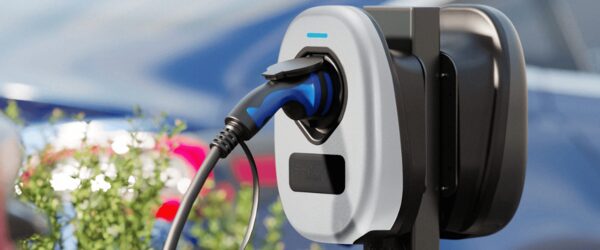
For an EV charge point only installation, providing an IBG is optional12. That is a genuine distinction rather than a loophole: a charge point is a simpler installation with a shorter expected life, and the scheme rules reflect that. A household buying a charge point alongside solar and a battery is in a different position from one buying a standalone unit.
The requirement has moved over time. MCS announced plans that included removing the mandatory requirement to purchase insurance-backed guarantees13. That does not mean the protection disappeared from the market; it means the obligation shifted, and households now need to ask rather than assume. Independent guidance on avoiding poor heat pump work advises requesting confirmation that the system will come with an Insurance Backed Guarantee14.
Only approved businesses can offer this protection, which is itself a signal about the installer3. An IBG is not available to any trader who wants one; it comes through accredited routes.
How to claim, transfer and check your certificate
The claim route starts with the paperwork. To make a claim, contact the insurance provider named on the IBG certificate4. Details on how to submit a claim under the guarantee are contained within the guarantee certificate15. The certificate is therefore the single most important document in the file, and it should be kept with the installation records rather than in a drawer of miscellaneous paperwork.
If the certificate is missing, the route depends on how the work was funded. For works completed and lodged under government-funded or capital schemes, the registered business should have provided the guarantee information, and the household can then approach the scheme provider and finally TrustMark for a copy16. For the CIGA guarantee, a claim can be started with the property address and postcode to search the guarantee database, and no copy of the guarantee or guarantee reference number is needed17.
Transferability is a standard feature. Independent guidance describes a provision to be able to transfer the IBG to a new owner of the property4, and the CIGA guarantee remains valid for subsequent owners or occupiers of the property10. On a sale, the certificate should be handed to the buyer, because the protection attaches to the property rather than to the person who paid for it.
There is also a route above the insurer. Policies described by independent guidance include access to the Financial Services Compensation Scheme and access to the Financial Ombudsman Service4. Those are the backstops if an insurer fails or a claim is handled badly.

What an IBG does not replace: manufacturer warranties
An IBG sits in a stack of protections, and confusing the layers is the most common mistake. A manufacturer's guarantee covers the products used, such as the glazing units, frames or panels, while an installer's guarantee covers the workmanship and installation process18. The IBG backs the second of those, not the first.
An IBG is not a replacement for product warranties provided by manufacturers; it is another layer of protection3. If a heat pump compressor fails within the manufacturer's warranty period, the claim runs to the manufacturer or its approved network. If the same unit was installed with a reversed flow and pipework that was never commissioned, the claim runs to the installer, and if the installer has gone, to the IBG insurer.
The covered items under an IBG can include installation issues and product failure3, which is broader than workmanship alone. But the exclusions are firm: it will not cover issues outside the contractor's control, like damage caused by general wear and tear, misuse, or external events like flooding or structural problems3. A system damaged by a leaking roof or a flooded plant room is an insurance matter for the buildings policy, not the IBG.
For a household, the practical position is that the IBG protects the part of the installation no manufacturer will touch: the labour, the design decisions and the commissioning. That is also the part most likely to be done badly, and the part that determines whether a self-generating home actually performs.
Where an IBG falls short

The limits are worth stating as plainly as the benefits. An IBG depends on an insurer remaining solvent and honouring a policy, which is why the FCA-regulated provider requirement matters3. It depends on the installer having actually bought the policy: policies are activated automatically once the installer has registered the consumer's installation and paid the premium4, so an unregistered or unpaid installation leaves the household with a guarantee and no insurance behind it.
It also depends on the household holding the certificate. An insurance certificate confirming that cover is in place is issued to the household3, and where a certificate is created on the MCS Installations Database, the organisation providing the IBG must be declared at that point1. Those two records are the check against an installer who claims cover exists but never arranged it.
The cover is capped and conditional. The excess is not greater than £2504, and MCS approved financial protection products are described as having a capped excess at £25011. The policy pays for remediation of the work, not for the electricity a household did not generate while a system was down, and not for the inconvenience of a second set of tradespeople in the house.
Finally, the IBG is only one document in a handover pack. An MCS handover pack should include Insurance Backed Guarantee details20, and a boiler installation should have the Benchmark Checklist on the inside back pages of the installation instructions fully completed and signed by the householder to confirm a full and clear explanation of operation was given21. In Northern Ireland, grant payment requires accounts, receipts and certificates including the insurance backed bond which guarantees the work, if applicable22. The IBG is a component of a paper trail, and its value depends on the rest of that trail existing.
Sources22 cited
- Insurance Backed Guarantee Products, MCS Certified, 2026-05-13
- Flexi-Orb for Homeowners, Flexi-Orb, 2026-08-13
- Understanding Insurance Backed Guarantees, The Consumer Protection Association, 2025-06-18
- Insurance Backed Guarantees, Flexi-Orb, 2026-02-25
- Glossary of Terms, NAPIT, 2026-09-19
- Claim using a warranty or guarantee, Citizens Advice, 2026-09-17
- If a Contractor Goes Bust, The Consumer Protection Association, 2026-08-05
- Flexi-Orb Consumer Guide, Flexi-Orb, 2025-02-17
- Understanding Double Glazing, The Consumer Protection Association, 2025-02-05
- Consumer Update, CIGA, 2017-10-19
- Financial Protection, MCS Certified, 2026-05-13
- Renewable Energy Installations, Flexi-Orb, 2024-09-10
- MCS announces plans for future redevelopment, MCS Certified, 2023-10-05
- The growing problem of botched heat pump installations, Flexi-Orb, 2025-04-02
- Complaints Procedure, The Installation Assurance Authority, 2026-09-20
- Homeowner FAQs, TrustMark, 2026-09-20
- Reporting a Concern, The Installation Assurance Authority, 2026-09-20
- Compare Contractors Fairly, The Consumer Protection Association, 2025-11-27
- Condensation Advice, FENSA, 2026-09-20
- Pre and Post Installation Checklists, Flexi-Orb, 2024-06-24
- HHIC Benchmark Checklist, HHIC, 2026-09-17
- How long will the whole process take, Northern Ireland Housing Executive, 2026-09-17
 Insurance-Backed GuaranteesDescribes what an insurance-backed guarantee covers, how long it runs and when a code or grant scheme requires one.
 Workmanship WarrantiesIf something goes wrong with your solar panels, who actually fixes it and who pays?
 Warranties and DegradationHow long do solar panels actually last, and what do the warranties really cover?
 When Your Installer Goes BustWhat happens to deposits, part-completed work, workmanship guarantees and complaints when a home energy installation company fails, and how to claim on deposit protection, an insurance-backed guarantee, card or finance cover, and who honours the manufacturer's warranty.
 Manufacturer Approved NetworksDoes an approved installer badge mean better work, or just a longer warranty on the boiler or heat pump?
 Registering a WarrantyGetting a new boiler covered for longer usually means registering it quickly, often within a month of installation, or the long guarantee drops to a year.