
In this guide
A Pod Point home charger is one of the best known wallboxes in the UK, and the questions households actually ask about it are narrow: what does it cost, will it fit my car, who owns the company now, and what does the app do. The headline answers are straightforward. A Pod Point Solo 3S home charger costs from £999 to install, or £34 a month on subscription1. The charger runs at up to 7.4kW, which Pod Point describes as three times faster than a three-pin plug, and it is compatible with all electric vehicle brands and all energy suppliers2.
The name has changed. Pod Point rebranded to Pod in May 2025, and the business now runs its website at podenergy.com4. Pod Point chargers keep their product branding and sit alongside the Pod Drive subscription under the new Pod brand4. The company says the change reflects a shift from selling chargers to providing charging services4.
The ownership question has a definite answer. EDF, through its British subsidiary EDF Energy Customers Ltd, completed the acquisition of all outstanding shares in Pod Point Group Holdings PLC on 4 August 2025, and Pod Point is now a wholly owned subsidiary of EDF5. That ended its time as a listed company: Pod Point had been listed on the London Stock Exchange under the ticker symbol PODP6.
What that means for a household is mostly about who stands behind the product and the tariff bundles rather than about the hardware. The charger itself is a wall-mounted unit wired to the mains, not a plug-in device, and it works with any supplier. The commercial tie-ins, the Pod Power by EDF tariff and the Pod Rewards cashback, sit on top of that.
Pod Point at a glance: a UK charger brand since 2009
Pod Point Limited has been charging the UK since 2009, and the company states it has been trusted by customers for over 15 years2. It describes itself as the leading UK home charging provider, offering chargers, tariffs and charger bundles1. The scale figures it publishes are substantial: more than 300,000 chargers fitted on UK homes, 300,000 or more customers, 21,000 or more five-star reviews, and 6 billion or more miles powered3. It also states it is rated "Excellent" on Trustpilot7.
An independent press release from June 2023 recorded that the company had shipped more than 211,000 charge points in the UK by that date, and that it was recommended by Volkswagen and Volvo6. Those recommendations date from 2016, when Pod Point was named as a recommended supplier by both brands8. The company's public charging footprint is visible in everyday places: Pod Point locations include Tesco and Lidl stores, as well as Center Parcs and National Park locations such as the Peak District9. Tesco has partnered with Pod Point for its charging stations, and Lidl provides charging mainly through a Pod Point partnership10.
For a household, the relevant point is that this is an established brand with a long UK trading history rather than a new entrant, and that its public charging network gives some visibility of the name beyond the home. The company registration number is 06851754, registered in England2.
Now owned by EDF: what the buyout means for householders
The acquisition completed on 4 August 2025. EDF, through its British subsidiary EDF Energy Customers Ltd, acquired all outstanding shares of Pod Point Group Holdings PLC, and Pod Point was delisted from the London Stock Exchange with effect from that date5. The sequence began earlier: the Pod Board recommended the buyout offer from EDF in June 2025, at which time EDF already held a 53% stake in the business5. EDF's own statement describes Pod Point as being, as a wholly owned subsidiary of EDF, well positioned to thrive in a rapidly evolving market5.
For a householder, three practical consequences follow. First, the company is no longer independently listed, so there is no share price to watch and no separate shareholder base; the parent is an energy supplier. Second, the commercial bundles now run through EDF: Pod Point Plug & Power is available to EDF customers and new joiners, and Pod Drive includes exclusive access to the Pod Power by EDF tariff11. Third, the charger's technical compatibility is unaffected. Pod Point states that its charger is compatible with all energy suppliers, so ownership by one supplier does not tie the hardware to that supplier's electricity2.
That distinction matters for energy independence. The wallbox itself is a piece of equipment on your own property, drawing power through your own meter, and it will charge a car whatever supplier is named on the bill. What the EDF ownership changes is the shape of the offers around it: cashback for smart charging, a bundled tariff, and a single corporate group behind both the charger and the electricity. A household that wants the charger without the tariff can have it, and a household that wants the tariff bundle needs to be an EDF customer.
The Solo 3S: 7.4kW, Wi-Fi and the Pod Home app
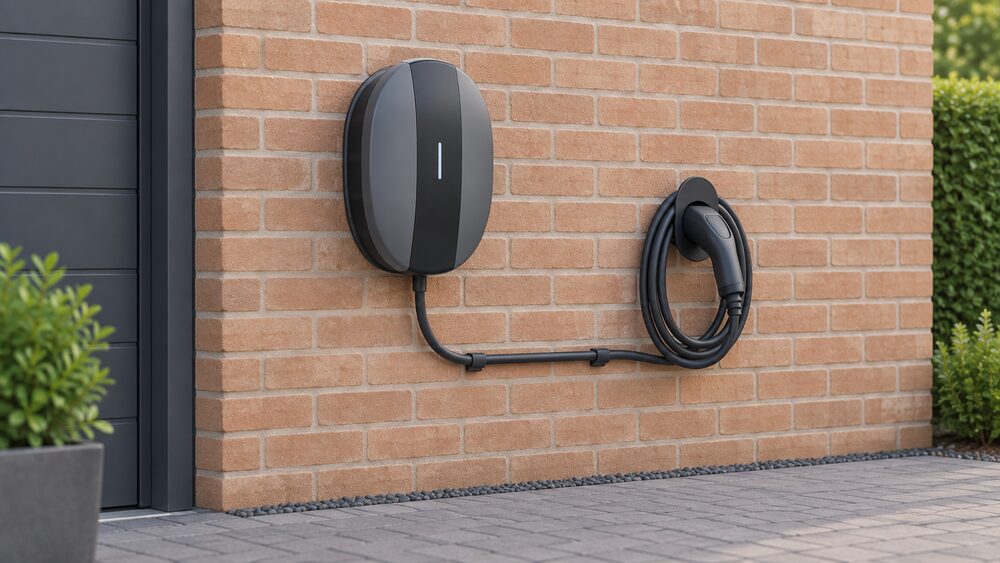
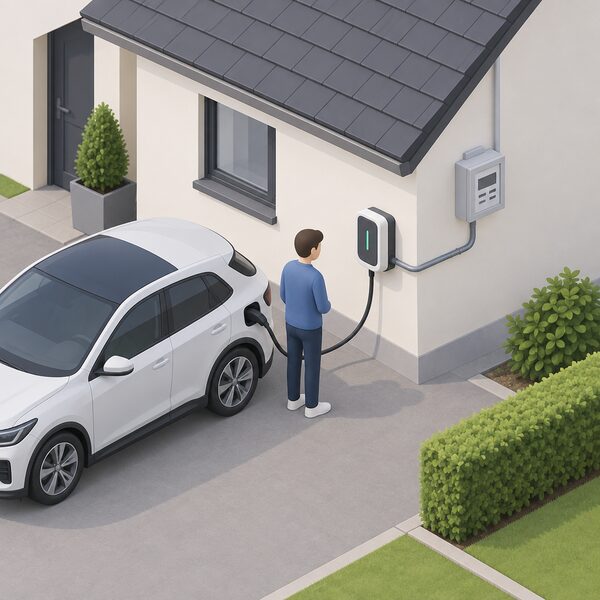
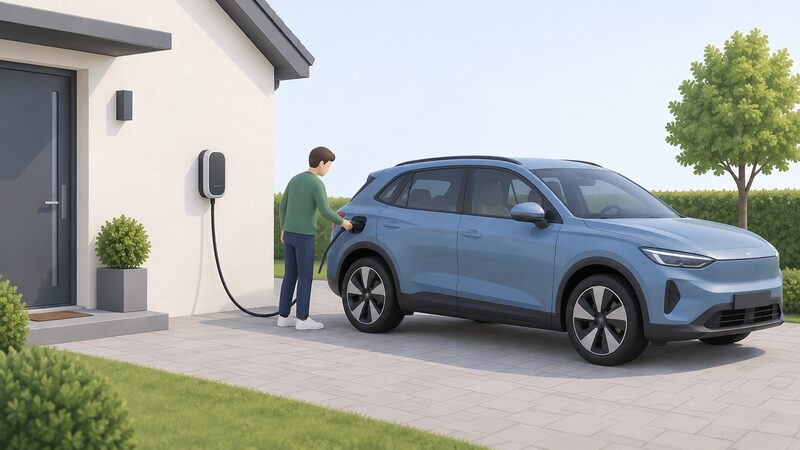
The current home unit is the Pod Point Solo 3S. It charges at up to 7.4kW when connected to the main electrical supply, and Pod Point states that a car will charge three times faster on it than on a three-pin plug2. It cannot be connected to a three-pin plug socket at all: the charger needs a connection to the main electrical supply3. It is Wi-Fi enabled, which Pod Point says keeps the charger up to date with the latest smart features, and it comes with a host of smart features3.
The smart side runs through the Pod Home app. Pod Point lists charge scheduling and solar and grid modes as app features, and states that the charger works without the app, charging whenever it is plugged in13. The app also lets a household set a ready-by time, charge automatically when energy costs are lowest, track charging activity, manage multiple vehicles and integrate with a home solar setup7. Pod Point states the Solo 3S is fully compliant with the government's latest smart charging regulations7.
One independent listing gives the Pod Solo 3S a maximum charging speed of 7.0kW and records it as not smart tariff compatible14. That sits alongside Pod Point's own 7.4kW figure and its smart charging features, and the two documents disagree on both points. The maker's figure is the one tied to the product page; the independent listing is a third-party assessment. A household comparing chargers should treat the smart tariff question as one to confirm for the specific model and tariff being considered.
| Feature | Pod Point Solo 3S |
|---|---|
| Charging rate | up to 7.4kW3 |
| Speed versus three-pin plug | 3x faster2 |
| Connectivity | Wi-Fi enabled3 |
| App | Pod Home app, charge scheduling, solar and grid modes13 |
| Works without app | Yes, charges whenever plugged in13 |
| Smart charging regulations | Fully compliant, per the maker7 |
| Independent listing | 7.0kW, not smart tariff compatible14 |
What a Pod Drive package includes
Pod Drive is the bundled home charging package. Pod Point describes it as including an award-winning Pod Point charger, Pod Rewards cashback earned every time you smart charge, exclusive access to the Pod Power by EDF tariff, and installation handled by Pod Point7. It can be bought upfront or taken as a subscription7. The subscription price is £34 a month, against £999 upfront to install1.
Pod Drive launched in May 2025 as the UK's first home EV charging subscription, alongside the rebrand to Pod4. The launch offer cut the upfront cost of installing a Solo 3S charger from £1,249 to £99, with a £40 monthly subscription covering the charger, installation and a 48-hour service guarantee, and cashback on up to 7,500 smart charged miles a year, worth over £1704. The plan works with any energy provider and the Solo 3S is compatible with any EV4.
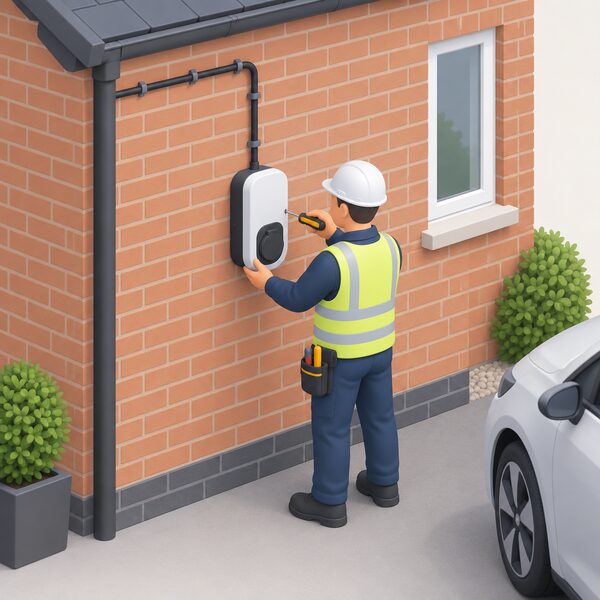
The installation element is not a bare fit. Pod Point states that its Which? endorsed standard installation is included with the cost of every charger3. The standard installation covers fitting the home charger on a brick or plaster wall, or to another suitable permanent structure; up to 15 metres of cable, neatly clipped to the wall; and an electrical certificate to show the installation meets UK standard wiring regulations1. Pod Point states that one of its expert Which?-accredited engineers arrives to install the charger, and that the service is endorsed by Which?3.
The Pod Point Plug & Power route works slightly differently: Pod Point gets in touch to arrange the payment and installation of a Pod Point Solo 3S charger, and the tariff is available to EDF customers and new joiners11. Pod Point also states that discounts are available for people with disabilities13.
For independence, the package structure is worth reading carefully. The charger and the installation are yours; the cashback and the tariff are a continuing commercial relationship with EDF. A household that takes Pod Drive is buying a charger plus a supplier relationship, and the two can be separated later, since the hardware is compatible with all suppliers2.
Cost: what a home charger with installation comes to
Pod Point's own published figure is from £999 to install for a Solo 3S home charger, or £34 a month by subscription1. That is the maker's price for its own product, and it includes the standard installation described above3. The conflict ruling on this figure notes that the price may differ because of subsidised pricing agreed with vehicle manufacturers, so a household buying through a car brand may see a different number1.
Independent figures for home charging installation generally sit in a similar band. The Energy Saving Trust gives a typical cost of around £800 to £1,200 for installing a home charge point, and repeats the same range in separate guidance15. One independent source puts installation costs including the charge point at £400 to £1,000, depending on how powerful the charger is17. A Checkatrade report cited in charging statistics found an average cost of £1,000 for parts and labour18. Carwow records that installing a Pod Solo 3S home charger costs £99, or £49 through a special deal for Nissan EV buyers12.
The spread reflects what is being counted. Pod Point's £999 is a supplied-and-installed price for a specific unit with a defined standard installation. The £400 to £1,000 range is a general market figure across charger types and power ratings. The £99 and £49 figures are installation charges within a subsidised package, not the full cost of the hardware.
Vehicle and energy supplier compatibility
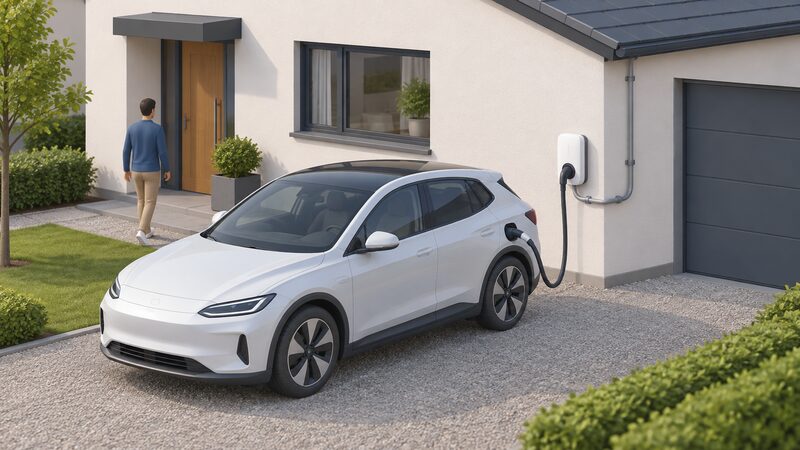
Compatibility is the least complicated part of the Pod Point proposition. Pod Point states that its chargers are compatible with all electric vehicle brands and with all plug-in vehicle brands, and that the Solo 3S is compatible with all plug-in electric vehicles2. It also states that every Pod Point charger is fully compatible with the DS electric and plug-in hybrid range and with the Smart electric and plug-in hybrid range19. The Solo 3S is available for home installation with installation included for all DS electric and plug-in hybrid models19.
On the electricity side, Pod Point states the charger is compatible with all energy suppliers2. There is no requirement to change supplier to have one installed, and no technical lock to EDF despite the ownership. The EDF relationship appears in the tariff bundles rather than in the hardware: Pod Point Plug & Power is available to EDF customers and new joiners, and Pod Drive includes exclusive access to the Pod Power by EDF tariff11.
Two conditions sit outside compatibility. The first is parking: Pod Point states that many EV charging providers will require dedicated off-street parking so that a home charger can be installed, and its own eligibility line is that installation is available provided you own your home, or have permission, and have off-road parking3. The second is geography: the home charger offer is for people living in Great Britain1. Support for households in Scotland runs separately through Home Energy Scotland's charging at home grant, which funds a grant towards the cost of purchasing and installing a home charge point20. The Energy Saving Trust also lists domestic charge point funding21.
Solar integration and smart charging
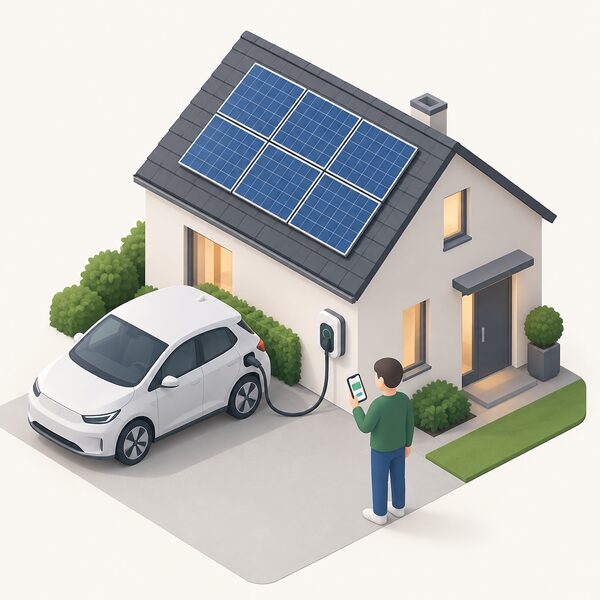
The Solo 3S is described by Pod Point as a solar compatible charger that automatically works with solar panels, whether they are already installed or added later13. The Pod Home app includes solar and grid modes, alongside charge scheduling, so charging can be directed to surplus solar generation or to the grid depending on what is available13. The app also supports a ready-by time and automatic charging when energy costs are lowest7.
This is where a home charger starts to matter for energy independence rather than just convenience. A car charged from a home solar array uses self-generated electricity instead of imported power, and the solar mode exists to make that automatic rather than manual. The limits are real, though. The charger depends on a Wi-Fi connection at the property, or a SIM router with a 3G or 4G SIM, for its connected features1. Without that connection, the scheduling and solar modes are not available, even though the charger will still charge a car when plugged in13.
The wider smart charging picture is regulated rather than optional. Pod Point states the Solo 3S is fully compliant with the government's latest smart charging regulations7. The Energy Saving Trust publishes guidance on smart charging electric vehicles, which covers how charging can be shifted to times when electricity is cheaper or when more renewable generation is on the system16. The Energy Saving Trust also notes that there are plenty of publicly available chargepoints across the UK, although these are more expensive than charging at home22.
For a household, the practical position is that a Pod Point charger can be a solar-aware device, but only with a working internet connection and a solar array to feed it. The independence it offers is partial: it reduces imported electricity when the sun is out, and it shifts charging to cheaper periods, but it does not remove the connection to the grid or to a supplier.
Security and data: what was found and what was fixed
In November 2021, Which? reported a security flaw in Pod Point electric car chargers that may have put the data of 140,000 app users at risk. Which? described Pod Point as the UK's largest domestic car charging provider and now owned by EDF Energy, and reported that the company fixed the issue after Which? contacted it23. The finding concerned the app and the data behind it rather than the charging hardware itself.
That episode is the clearest illustration of the dependence a connected charger creates. A wallbox with an app and a cloud account holds personal data and depends on the manufacturer's servers for its connected features. The charger still charges without the app, but the smart layer runs through the maker's systems13. The same pattern appears across the sector: the Energy Systems Catapult has published work on making home energy management work for consumers, and describes Matter as a universal, open-source and secure connectivity standard for smart home devices24. That standard exists precisely because connected home equipment raises questions about who holds the data and how the device is controlled.
On the physical side, the Energy Saving Trust has published a report on EV charger vandalism, which notes the use of alarm systems to deter thieves25. Cable security and siting are practical considerations for any outdoor wallbox.
Installation, certification and the rules around it
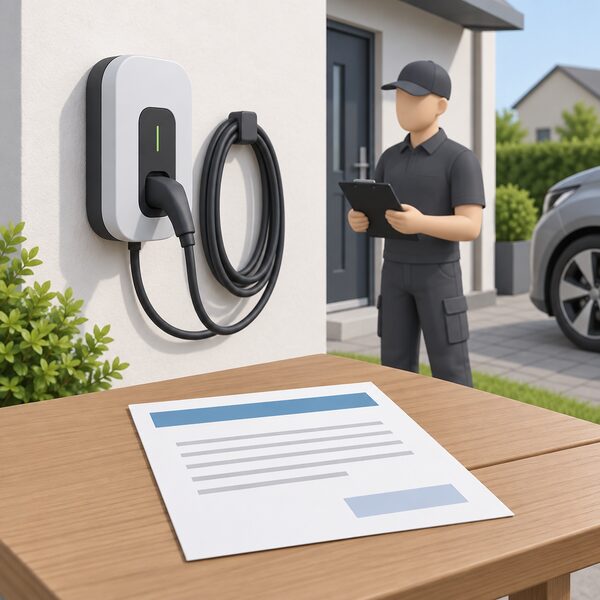
Pod Point's installation process is documented on its own site, and the standard installation covers the wall fitting, up to 15 metres of cable and an electrical certificate confirming the work meets UK standard wiring regulations1. The company states that its engineers are Which?-accredited3. Which? Trusted Traders awarded Pod Point a Which? Trusted Trader Approved Service for its end-to-end installation service in September 2023, and Pod Point states it was the first EV charging company to receive the endorsement6.
Certification of the equipment itself sits with third parties. BSI operates Kitemark certification for EV charging, covering testing and certification for charge points for both home and commercial use26. The Electric Vehicle Consumer Code for Home Chargepoints (EVCC) is a separate consumer protection scheme covering home chargepoints27. For a household, these are the marks to look for on the product and the paperwork rather than claims made in marketing.
The regulatory backdrop has also shifted. In England, home EV chargers, public charging points and business installations now fall under permitted development rights, a change reported in August 202628. Anyone competent to install an electric vehicle charge point can submit the relevant installation application, including an installer working on behalf of the customer29. Network connection questions, including whether a charger needs to be notified to the distribution network operator, are covered in Energy Networks Association guidance on connecting to the networks30.
One further point on the definition of a public charge point is worth knowing, because it affects which rules apply. Official guidance defines a public charge point as one intended, that is designed and marketed, for use primarily by members of the general public, including charge points on public roads and in public or privately owned car parks, whether or not those car parks are available only to consumers of specific goods or services31. That is why a supermarket charger counts as public even though it sits on private land.
Where Pod Point fits a household's energy independence
A Pod Point home charger does three things for a household. It moves car charging onto the home electricity supply, which the Energy Saving Trust notes is cheaper than public charging22. It allows charging to be scheduled, including into cheaper or sunnier periods, through the Pod Home app7. And with solar panels it can charge a car from self-generated electricity rather than imported power13.
What it does not do is remove dependence. The charger is wired to the mains and draws grid electricity whenever the sun is not supplying it. Its smart features depend on a Wi-Fi or SIM connection and on Pod Point's app and servers1. The cashback and tariff elements of Pod Drive depend on a continuing relationship with EDF7. And the company itself is now a subsidiary of an energy supplier rather than an independent listed business, so the commercial direction of the brand sits within EDF5.
The business has also grown beyond the home. In May 2026 Pod acquired EO Charging out of administration, adding fleet and depot charging software to its range32. EO Charging had entered administration in April 2026, and its customers included Amazon, DHL and Tesco32. Pod says the deal cements its position as the largest EV charging services provider in the UK, and that existing EO Charging customers will continue to receive stable, uninterrupted service32. For a household, the home charger offer is unchanged, but the company behind it now spans home, workplace, public and fleet charging.
For a household weighing up a home charger, the honest summary is that Pod Point offers a widely installed, broadly compatible unit at a published price, with a long UK trading history and a strong installation endorsement, inside a package that increasingly points towards one supplier's tariff. The hardware works with any car and any supplier; the extras work with EDF. A comparison with a rival brand is at Ohme vs Pod Point home EV chargers, and the wider field is covered in Home EV Charger Manufacturers.
Sources32 cited
- Pod Point home charger, EDF Energy, 2026
- Pod Point, Pod Point, 2026
- Pod Point installation, Pod Point, 2026
- Pod Point evolves into Pod and launches new subscription model, Pod Drive | Pod, podenergy.com
- EDF completes acquisition of EV charging solutions provider Pod Point, EDF Energy, 2025
- Looking to install a home charger for your electric car? Find a trader you can trust, Which?, 2023
- Pod Point smart homecharger, Pod Point, 2026
- Effects of plug-in grant changes explained, Zapmap, 2016
- Destination charging, Zapmap, 2026
- EV charging at supermarkets, Uswitch, 2025
- Sign up to Pod Point Plug & Power with EDF, EDF Energy, 2026
- Best electric car charging subscriptions, Carwow, 2025
- Pod Point discounts, Pod Point, 2026
- Home electric vehicle chargers, Carwow, 2026
- Electric vehicles: debunking myths, Energy Saving Trust, 2025
- Smart charging electric vehicles, Energy Saving Trust, 2025
- Electric vehicle charge points, Flexi-Orb, 2025
- EV charging statistics, Uswitch, 2025
- Pod Point DS homecharger, Pod Point, 2026
- Charging at home grant, Home Energy Scotland, 2026
- Domestic charge point funding, Energy Saving Trust, 2026
- Charging electric vehicles, Energy Saving Trust, 2026
- Pod Point electric car chargers security flaw may have put 140,000 app users' data at risk, Which?, 2021
- Making home energy management work for consumers, Energy Systems Catapult, 2026
- EV charger vandalism, Energy Saving Trust, 2026
- Powering trust in electric vehicle charging with BSI Kitemark certification, BSI, 2026
- RECC Autumn Newsletter 2024, RECC, 2024
- EV charger regulations in England: what's changed, NICEIC, 2026
- Register energy devices in homes or small businesses: guidance for device owners and installation contractors, GOV.UK, 2026
- Frequently asked questions about connecting to the networks, Energy Networks Association, 2026
- Guide to EVSCP regulations 2021, Department for Transport, 2021
- Pod Point acquires EO Charging in the UK - electrive.com, electrive.com
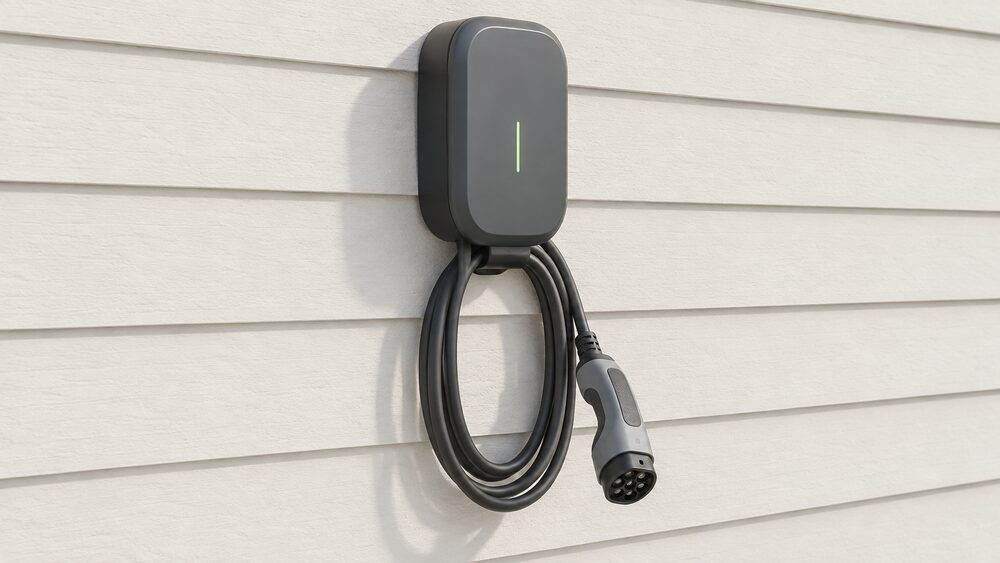 Pod Point home chargersPod Point is one of the best-known names in UK home charging, and it is now owned by EDF.
 Pod Point Plug & PowerPod Point Plug & Power bundles a Solo 3S home charger at £499 with a two-year tariff at 6.49p per kWh off-peak, and requires a fully connected smart meter.