
In this guide
Pod Point Plug & Power is a combined offer: a Pod Point Solo 3S home charger bought at £499 against a stated recommended retail price of £999, paired with a two-year fixed-price electricity tariff whose off-peak rate is 6.49p per kWh1. The off-peak window runs from 11pm to 6am, and the tariff is backed by 100% zero carbon electricity1. The charger price and the tariff sit in one contract, which is what separates this from buying a charger outright and choosing a tariff separately.
The condition that governs everything else is metering. Pod Point states plainly that a fully connected smart meter is required to benefit from the off-peak rates, and that new customers are placed on the Standard Variable tariff first and transferred automatically once the meter is connected to Pod Point's systems1. Until that transfer, the 6.49p rate does not apply. Eligibility is limited to Great Britain, so Northern Ireland households are outside the offer1.
For context, the Ofgem price cap unit rate for electricity was 26.11p per kWh for 1 July to 30 September 2026 in England, Scotland and Wales on a standard variable tariff paid by Direct Debit, including VAT2. The 6.49p off-peak rate is therefore roughly a quarter of the capped standard rate, but it applies only inside a seven-hour window, and the household still pays the tariff's day rate for everything used outside it.
What Plug & Power is: a charger and tariff bundle in one contract
The offer combines three things that are usually bought separately: the hardware, the installation and the electricity supply. Pod Point's wider home charging package, sold as Pod Drive, brings together a Pod Point charger, Pod Rewards cashback, exclusive access to the Pod Power by EDF tariff and installation in one arrangement1. Plug & Power is the tariff side of that structure, with the charger discounted to £499 for customers who take it1.
Bundling energy with something else is not unique to EV charging. Utility Warehouse provides energy, broadband and mobile in one package, and Huddle combines energy bills with water, broadband and TV into one payment before charging each housemate their share3. What makes the EV version different is that the hardware creates the load the tariff is designed to serve: a home charger that can be scheduled into a cheap window is what makes an off-peak rate worth having.
The structure of the bill itself is conventional. A domestic energy account is one charging structure made up of a standing charge and the unit prices of the gas and electricity4. Plug & Power changes the unit price inside a defined window rather than the shape of the bill. For a household already weighing time-of-use arrangements, the wider mechanics are set out in time-of-use electricity tariffs and EV energy tariffs in the UK.
The independence question is worth stating plainly. This bundle reduces the cost of electricity but does not reduce dependence on it: the household remains connected to the grid, supplied by a named supplier, and reliant on a smart meter and a manufacturer's charger to capture the cheap window. What it buys is cheaper units inside a fixed overnight period, not self-sufficiency.
The tariff: 6.49p per kWh between 11pm and 6am
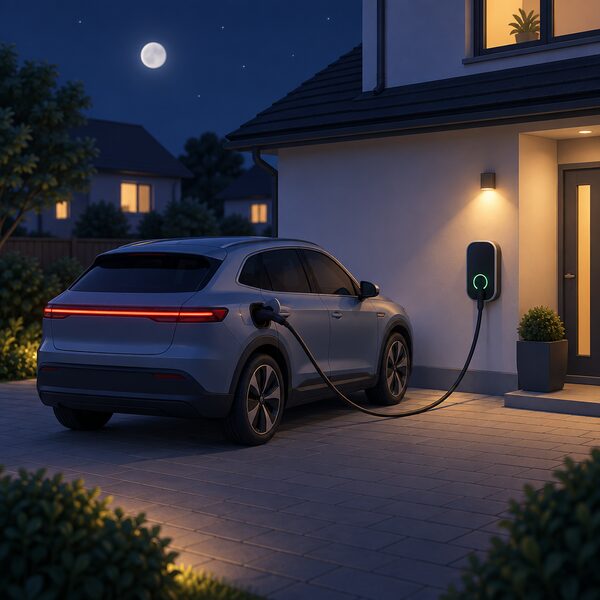
The headline rate is 6.49p per kWh off-peak, inside an 11pm to 6am window, on a two-year fixed-price tariff backed by 100% zero carbon electricity1. That is the figure to hold on to, and it sits well below the alternatives it will be compared against.
The comparison set matters, because off-peak rates vary widely by structure. The SAP 10 fuel price table used for building compliance modelling lists a 7-hour tariff low rate of 15.00p per kWh, a 10-hour tariff low rate of 19.28p per kWh and an 18-hour tariff high rate of 24.97p per kWh, all from 1 January 20265. Those are modelled prices rather than offers a household can buy, but they show the range that off-peak windows occupy. On the market side, Octopus Go has offered off-peak rates as low as £0.07 per kWh between 23:30 and 05:306, and an Economy 7 night rate of 17.291p per kWh was listed on 18 September 20267.
| Rate | Unit price | Window |
|---|---|---|
| Plug & Power off-peak | 6.49p per kWh1 | 11pm to 6am |
| Octopus Go off-peak | as low as £0.07 per kWh6 | 23:30 to 05:30 |
| Economy 7 night rate | 17.291p per kWh7 | Night hours |
| SAP 10 7-hour tariff low | 15.00p per kWh5 | 7 hours |
| SAP 10 10-hour tariff low | 19.28p per kWh5 | 10 hours |
| Ofgem cap, standard variable | 26.11p per kWh2 | All hours |
Two things drive the difference between these figures. The first is window length: a seven-hour window at a very low rate suits a household that can move its load, while a longer window at a higher rate suits one that cannot. The second is what the rate is for. A modelled compliance price is not a contract; a supplier's off-peak rate is. 11p per kWh and 26.32p per kWh both appearing, and that conflict is unresolved2.
Cost: £499 for the charger, and what a year of charging runs to
The charger is priced at £499 for Plug & Power customers, against a stated recommended retail price of £9991. The documents also disagree on the Solo 3S list price, with £1,049 and £999 both appearing as one-off payment figures, and that conflict is unresolved1. Either way, the £499 is a purchase price, not a sum recovered through the unit rate.
To judge whether that is good value, the wider market for home charging is the reference point. Independent guidance puts buying and installing a home EV charger at £500 to £1,200, with 7kW units, the type most homes take, at around £900 to buy and install9. A typical domestic installation is valued at £800 to £1,500 for the electrical work alone, excluding the charger unit10. A report from Checkatrade found the average cost of installing a home EV charger was £1,00011, and a retrofit is typically £1,000 to £2,00012. Installation typically adds £500 to £1,000 per charger13.
Against those figures, £499 for the unit with standard installation included is below the independent range for the hardware alone. What the household gives up in exchange is tariff choice for two years.
Running costs are where the off-peak rate does its work. Pod Point states a 20-mile commute can be done for as little as 37p1. Independent guidance puts home off-peak charging at about 2p per mile, based on an average tested EV efficiency of 3.18 miles per kWh14. For a full charge, one comparison puts 220 miles at £17 at home, £37 on public fast charging and £53 on public rapid charging, against £45 for a full tank of petrol15. The average cost to charge an electric car at home was £13 in October 2024, based on an average UK domestic electricity rate of 24.5p and a typical 54kWh battery11. That figure reflects a standard rate, not an off-peak one, which is why it sits above what a Plug & Power household would expect overnight.
Eligibility and the smart meter requirement
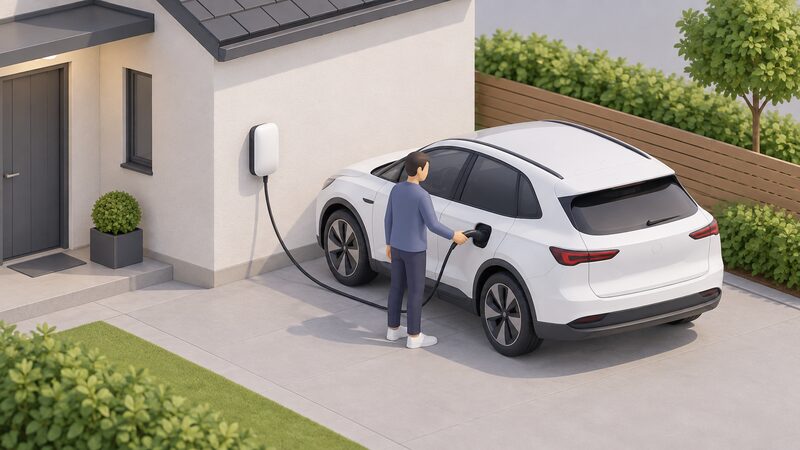
The eligibility conditions are short and both are absolute. Pod Point states that a fully connected smart meter is required to benefit from the off-peak rates, and that the household must live in Great Britain1. There is no published route around either.
Smart meter eligibility more generally may vary, and any household that pays for energy, whether owning or renting, should be able to book an installation where it is expected to work in the property16. A smart meter can fail to operate in smart mode for several reasons: it loses connection with the supplier, it loses connection after a change of supplier, or it was installed without being connected to the national communication system18. Ofgem has proposed that where a consumer's smart meter is not operating in smart mode for more than 90 days, the consumer will receive compensation, but that measure is proposed rather than implemented19.
Northern Ireland sits outside this offer entirely. The territory condition is Great Britain1, and Northern Ireland also sits outside the Ofgem price cap, with its own support arrangements: the Energy Price Guarantee gave up to 3.8p per kWh off electricity and 2.6p per kWh off gas in Q2 202321. 6p per kWh electricity and 3.9p per kWh gas also appearing, and the conflict is unresolved21. Households there are covered separately in energy tariffs in Northern Ireland.
How signing up works: Standard Variable first, then automatic transfer
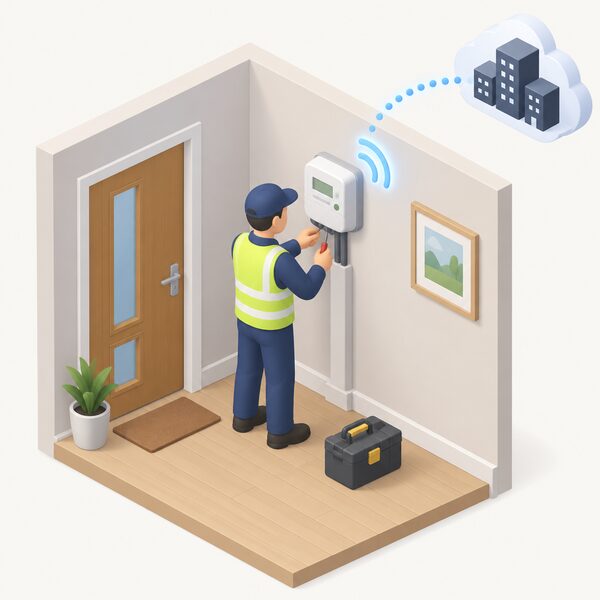
The sign-up path has a staging step that matters more than it first appears. New customers sign up on the Standard Variable tariff, then are automatically transferred on to Pod Point Plug & Power once the smart meter is connected to Pod Point's systems1. The cheap window does not exist until that transfer completes.
That sequencing is a common pattern in smart-meter-dependent products, and it means the practical experience depends on how quickly the meter connection is established. A household that signs up before its meter is communicating will pay standard variable rates in the interim. The compensation proposal described above is the only formal remedy in the documents, and it is not yet in force19.
Once the tariff is live, the charging behaviour is what converts the rate into savings. Pod Point's app allows a ready-by time to be set, with charging scheduled automatically when energy costs are lowest, charging activity tracked, multiple vehicles managed and integration with a home solar setup1. That is the mechanism by which a household uses the 11pm to 6am window without manually plugging in at the right hour.
The wider pattern of supplier-controlled and scheduled charging is covered in smart charging tariffs, and the question of whether a household without an EV can take an EV tariff is answered in EV tariff eligibility.
The Solo 3S charger and what installation covers
The charger supplied is the Pod Point Solo 3S, described as Wi-Fi enabled so that it stays up to date with the latest smart features, compatible with all plug-in electric vehicles, OZEV approved and fully compliant with the government's latest smart charging regulations22. Pod Point states that every Pod Point charger is fully compatible with DS's electric and plug-in hybrid range, and that the Solo 3S is available for home installation with installation included1.
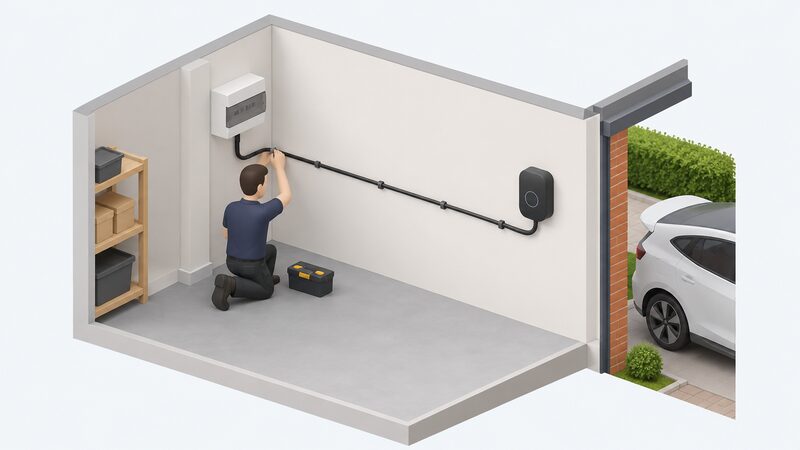
Standard installation includes up to 15 metres of black cable clipped between the distribution board or electrical supply meter and the charge point22. That is the boundary of what is included: cable runs beyond 15 metres, or work involving a different route or additional electrical work, falls outside the standard scope and is quoted separately.
| Specification | Detail |
|---|---|
| Model | Pod Point Solo 3S1 |
| Connectivity | Wi-Fi enabled22 |
| Vehicle compatibility | All plug-in electric vehicles22 |
| Approvals | OZEV approved, compliant with smart charging regulations22 |
| Cable included | Up to 15 metres, distribution board to charge point22 |
| App functions | Ready-by time, automatic cheapest-hour charging, activity tracking, multi-vehicle, solar integration1 |
The installation standard itself is governed by Section 722 of the wiring regulations for EV charging, which is the framework an installer works to23. For a household, the practical point is that the included scope is defined by cable length and route, and anything outside it changes the quote.
Exit fees and the two-year commitment
The tariff is fixed for two years, and exit fees apply if it is cancelled within that period1. Pod Point does not publish the fee amount on the product page, so the figure is one to confirm in the contract before signing rather than one that can be quoted here.
Exit fees are a standard feature of fixed energy contracts, and official consumer guidance is to choose a tariff with low or no exit fees in case circumstances change and the contract needs to be cancelled early24. The research evidence on how fees change behaviour is stark: switching intention falls to 61% when a £300 fee is present25. A two-year commitment with an unpublished fee is therefore a term worth weighing against the £499 charger discount, since the discount is the consideration for the lock-in.
The general mechanics of exit fees on fixed tariffs, including when they are charged and what counts as a move of home, are set out in exit fees and energy tariff contract terms and when do I pay an exit fee on a fixed energy tariff.
Pod Point as a company: ownership, track record and accreditations
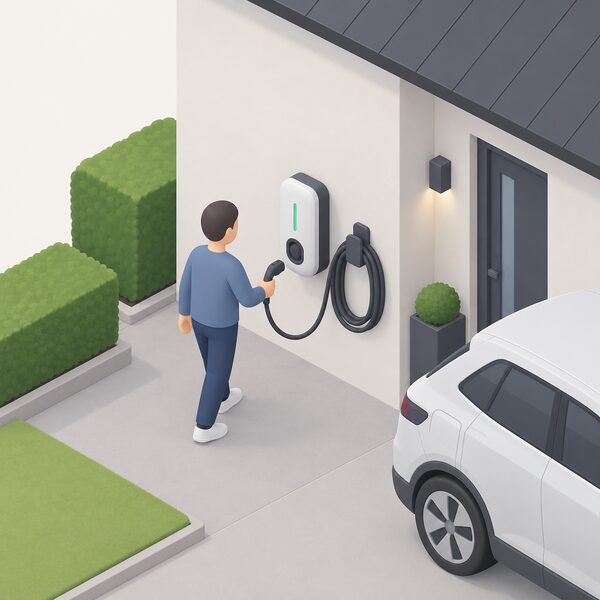
Pod Point has been accredited as a Which? Trusted Trader for its end-to-end solution and customer-focused service22. That accreditation is a service-quality mark rather than a financial one, and it speaks to how the company handles installation and aftercare rather than to the terms of the tariff.
The company's commercial track record includes supplying Tesco's EV charging stations, which gives it a visible public charging footprint alongside its domestic business26. That matters for a household weighing a two-year commitment: a supplier with a public network and a retail partnership has a presence beyond the home charger market, though it does not guarantee the terms of any individual contract.
The material available records no security incident affecting Pod Point chargers or its app. What is documented is the accreditation and the partnership above. Absence of a recorded incident is not a published security audit, and none is cited here, so the point should be read as an absence of evidence rather than a clean bill of health.
For a household, the dependence this creates is worth naming. The charger is a manufacturer's device, the tariff is a supplier's contract, the cheap window depends on a smart meter connection, and the scheduling depends on Wi-Fi and an app. The household gains cheaper overnight units and a discounted charger; it does not gain independence from the grid, the supplier or the manufacturer's software. Broader context on what tariffs can and cannot do for household independence is in tariffs and household energy independence.
Sources26 cited
- Pod Point home charger product page, Pod Point, 2026
- Current gas and electricity prices, Centre for Sustainable Energy, 2026
- Which? Energy Survey results, Which?, 2026
- Problems with services: consumer advice, Isle of Anglesey County Council, 2025
- SAP 10 fuel prices from 01 01 2026, BRE Group, 2026
- Electric car charging guide, Carwow, 2025
- Economy 7, Consumer Council for Northern Ireland, 2026
- Regional energy prices, Uswitch, 2026
- Electric car charging at home, Which?, 2026
- Section 722 EV charging complete guide, Elec-Mate, 2026
- EV charging statistics, Uswitch, 2025
- Watt a Save, Home Builders Federation, 2026
- Best EV tariffs for multi-car families, Uswitch, 2025
- How much does it cost to charge an electric car, Which?, 2026
- Charging electric vehicles, Energy Saving Trust, 2026
- Smart meters: renting, Smart Energy GB, 2026
- Smart meters: your rights and expectations, GOV.UK, 2025
- Smart meter performance, Ofgem, 2026
- Final decision: smart meter GSOPs, Ofgem, 2026
- How do you know if you have a smart meter, Smart DCC, 2026
- Energy price cap explained, Welsh Government, 2026
- EV charger home installation process, Pod Point, 2025
- EV charging at supermarkets, Uswitch, 2025
- Five top tips from Which? to cut your energy bills, Welsh Government, 2026
- Understanding consumers' energy tariff choices, Ofgem, 2025
- How to pay for public EV charging, Zapmap, 2025
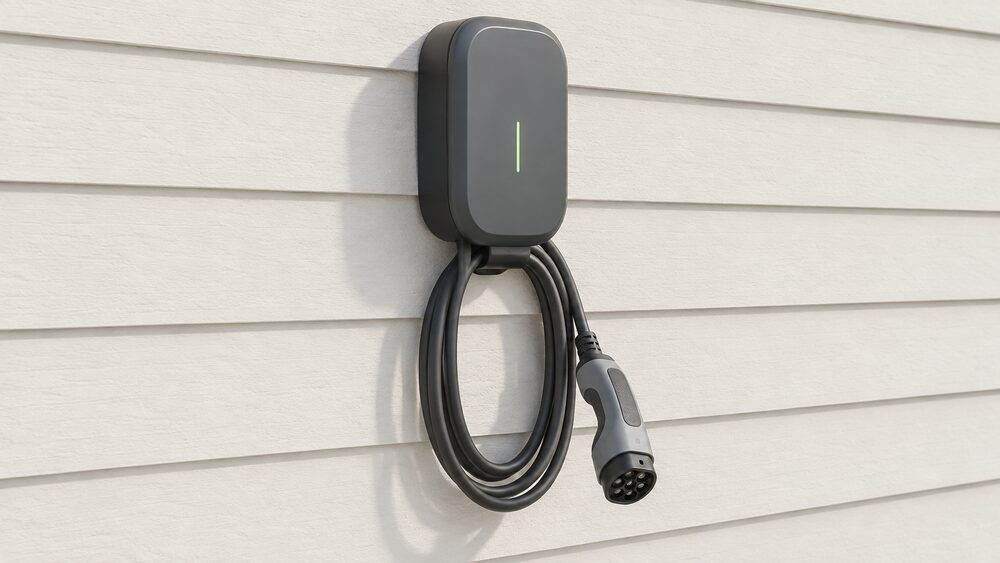 Pod Point home chargersPod Point is one of the best-known names in UK home charging, and it is now owned by EDF.
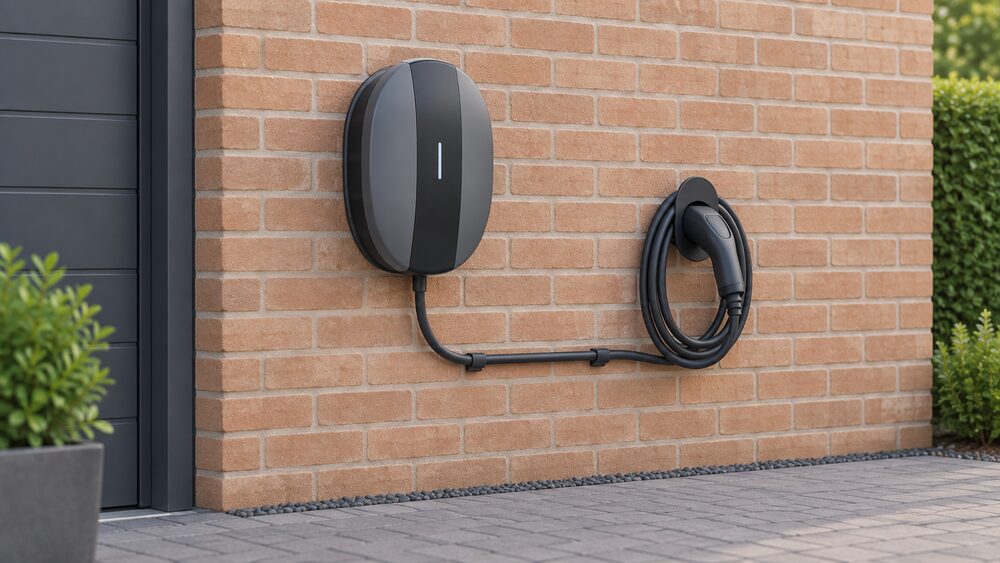 Pod Point home EV chargersWondering what a Pod Point home charger costs, whether it fits your car and who owns the company now?