
In this answer
Short answer
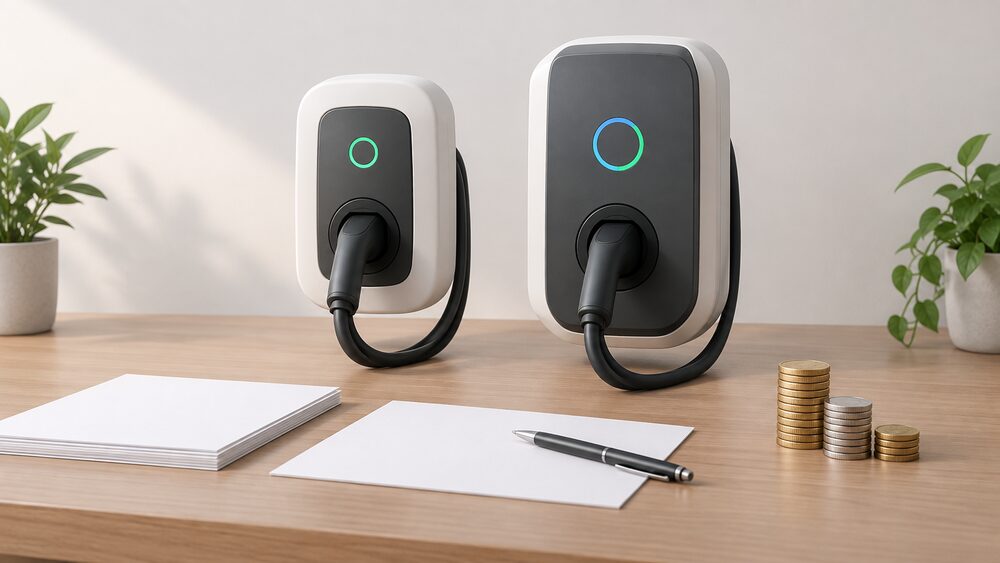
A vehicle-to-grid (V2G) charger costs around £4,500 today, against £500 to £1,200 for a typical home charger bought and installed1. The gap is the whole story of V2G pricing: the hardware that lets a car push electricity back to the grid carries a premium of roughly £3,700 over a smart chargepoint, and that premium is what any payback calculation has to clear before the household sees a return2.
The premium is not a mark-up on the same box. A V2G unit contains bidirectional power electronics, a different connector standard in most cases, and the control equipment needed to satisfy network operators. Projections put the premium over an equivalent smart charger at between £656 and £1,164 by 2030, and the cost premium for 7kW V2G needs to drop below £1,000 by 2030 for continued viability3.
For a household weighing energy independence, the arithmetic is stark. At the current incremental hardware cost, the optimised V2G payback period was modelled at more than 30 years; at an incremental cost of around £1,000 it could fall to below five years2. V2G buys flexibility and export income, not a cheap charger.
What a V2G charger costs today: around £4,500
The most recent published figure for a V2G chargepoint is around £4,500, quoted in 2022 guidance on the technology1. That figure sits alongside the mainstream home charging market, where Which? reports that a home EV charger typically costs between £500 and £1,200 to buy and install, and that 7kW chargers, a good choice for most homes, cost around £900 to buy and install3. Zapmap puts a typical 7kW charge point at between £700 and £1,200 fully installed5.
The £4,500 figure is a charger price, not a whole-system price. It does not include the car, which must support bidirectional discharging, or the smart meter that V2G requires6. It also predates the current generation of bidirectional products, and the two projections differ in kind: one has V2G charger cost reaching £1,000 by 2030, while the V2G Britain work projects a 2030 premium of £656 to £1,164 over an equivalent smart charger rather than an absolute price7.
For context on what a household actually pays for charging hardware today, mainstream smart chargers cluster well below the V2G figure. A 7kW unit is listed at £449.00, and a bundled bidirectional package at £1,489.008. Installation-included mainstream chargers typically cost between £500 and £1,200 to buy and install, with 7kW chargers around £9009. A premium smart charger is quoted at £1,050 to £1,200+ installed9.
The premium over a smart charger: about £3,700
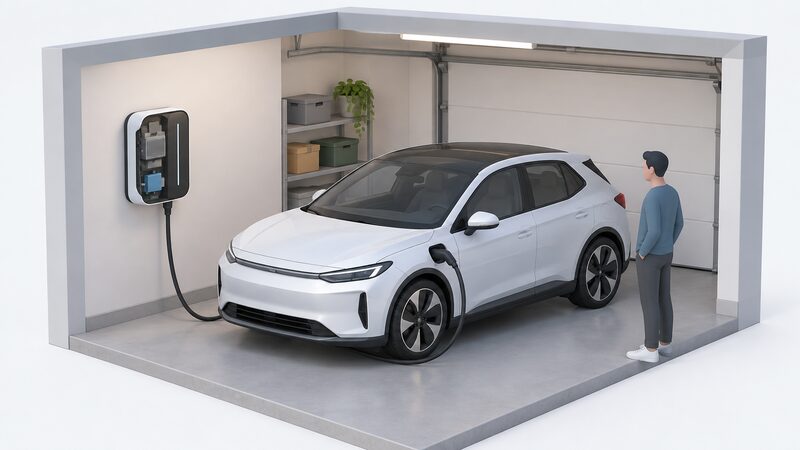
The clearest figure for the V2G premium comes from the Project Sciurus trial, which recorded an incremental hardware cost of around £3,700 above a smart chargepoint at the end of the trial2. That is the number to hold on to: it is the extra capital a household commits for bidirectional capability, measured against the smart charger it would otherwise have bought.
Earlier work estimated the premium for a V2G charger above a smart charger at around £4,0004. The two figures are close and come from the same research lineage, so the working assumption of a premium in the region of £3,700 to £4,000 is well supported. What differs is the direction of travel. The V2G Britain report suggests the premium over an equivalent smart charger is expected to reduce to between £656 and £1,164 by 2030, and a component-based projection aligns on a premium of about £650 to £1,150 in the same year3.
The premium is not uniform across the hardware. A level 2 (7kW AC) charger was assessed at a total premium of £400 to install above a benchmark charger, around 2023, made up of £80 and £40 components alongside the base uplift10. That figure describes a different cost boundary from the £3,700 trial figure, which covered the full incremental hardware cost of a bidirectional unit rather than a component breakdown.
"we estimate that the premium for a V2G charge (above a Smart charger) is around £4,000."
Why V2G costs more than a standard charge point
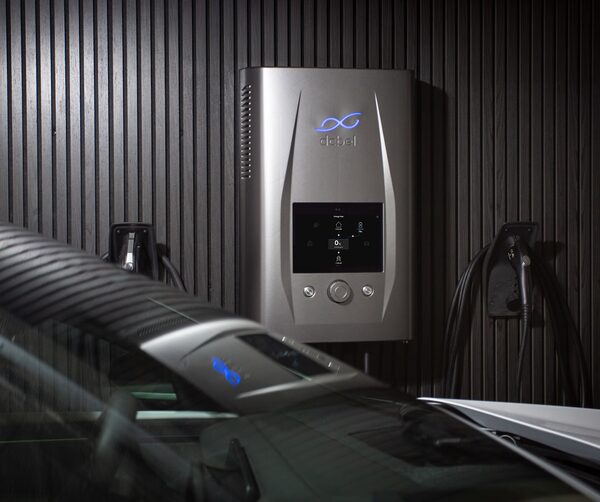
A V2G charger acts, and looks, very similar to a standard charging point, but the similarity is skin deep11. The cost sits in three places: the power electronics that convert DC from the battery to AC for the grid and back again, the connector standard, and the control and communications equipment needed to satisfy network operators and aggregators.
Most V2G systems use a specific type of charger connector called CHAdeMO, but some models can also use CCS6. That matters for cost because CHAdeMO is a less common standard on new cars, and the bidirectional hardware built around it is produced in smaller volumes than the mainstream Type 2 charge points that almost all electric cars use12. Low production volume is the classic reason a component stays expensive, and it is the mechanism behind the premium figures above.
The control side adds cost too. V2G requires a smart meter, a compatible V2G charger and a car that supports the technology, and the charger must be able to respond to signals about when to import and when to export6. That is a more demanding specification than a smart charger that only schedules charging. UK Power Networks has described a UK-first approach to fast-track V2G technology, reflecting the network-side work needed before bidirectional connections become routine13.
The practical consequence is that a V2G quote is not comparable line for line with a smart charger quote. The smart charger price covers a one-directional unit and its installation; the V2G price covers a bidirectional unit, its commissioning, and the eligibility checks that go with it.
Whether the premium pays for itself on your tariff
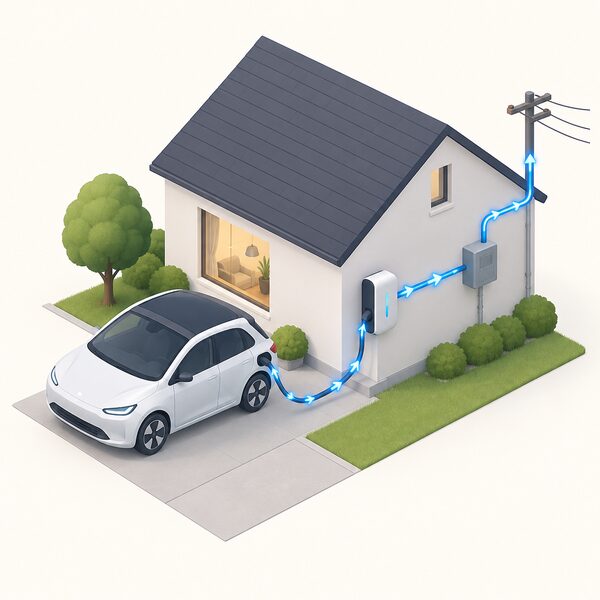
Payback is where V2G pricing meets household economics, and the evidence is mixed. At the current incremental hardware cost, the optimised V2G payback period was modelled at more than 30 years; if the incremental capital cost of V2G hardware can be reduced to around £1,000, the payback period could come down to below five years2. The same trial modelled a five-year payback at a £1,000 incremental cost without the tariff charge restriction2.
Revenue estimates vary by method and date. The simulated annual revenue from V2G using tariff optimisation was £340 per year, and including Firm Frequency Response provision from V2G this figure rises to £513, an increase of £29/kW2. A 7kW V2G charger could capture annual revenues of around £436, four times that achieved with the average plug-in rate, and could be capable of achieving annual revenues of around £436 above smart charging3. Export rates reported for V2G range from 5p to 15p per kWh depending on supplier and demand, while one official case study records V2G owners being paid 30p per kWh for energy sold back to the grid6.
Two cautions sit over these numbers. Upcoming changes to the structure of charges in domestic tariffs were expected to reduce the annual revenue possible from V2G tariff optimisation by around 50%2. And smart charging alone captures a large share of the value: when including grid services, smart charging captures 40% of the total value of V2G for low plug-in scenarios, or merely 10% for high plug-in cases, with a separate estimate putting the range at 40% to 80% for low plug-in scenarios and 24% for high plug-in cases3.
| Figure | Value | Source |
|---|---|---|
| Simulated annual revenue, tariff optimisation | £340 per year | Project Sciurus2 |
| Annual revenue including Firm Frequency Response | £513 | Project Sciurus2 |
| Annual revenue, 7kW V2G, high plug-in archetype | around £436 | V2G Britain3 |
| Export rate range | 5p to 15p per kWh | Uswitch6 |
| Export rate, official case study | 30p per kWh | Ofgem14 |
Grants, meters and what the quote includes
There is no V2G-specific grant. The EV chargepoint grant provides up to £350 off the cost of installing a charger, and landlords and flat tenants are eligible for a government grant of up to £350 for home EV chargers, which can reduce an installation fee to as low as £65016. That grant applies to chargepoint installation generally, not to bidirectional hardware, so it does not close the V2G premium.
Whether installation is included depends on the supplier. E.ON Next states that the EV charger installation cost is included in the price paid for the home charger from it17. Other sellers price the unit and fitting separately, with one maker offering a premium installation option at £99.99 for a slot within a week18. A V2G quote should be read for what it covers: unit, fitting, commissioning, and any network notification.
Some charging products carry ongoing costs rather than a one-off price. One maker's charger is offered with monthly pricing starting from £6.70 a month, and another states that all of its EV chargers come with a lifetime ev.energy subscription worth £5/month at no extra cost19. Those are smart charging products, not V2G units, but they show the direction the market is moving: hardware subsidised by a service relationship.
Where V2G fits in household energy independence
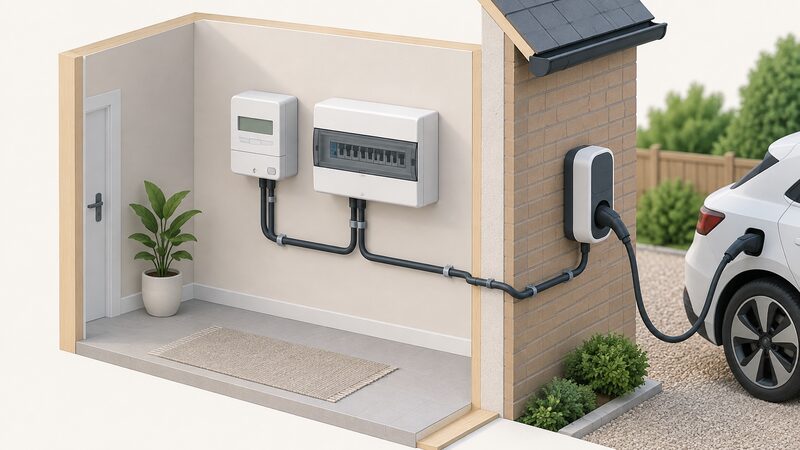
V2G is the most complete form of household energy independence available in the EV charging market, and the most expensive. It allows an electric vehicle charger to not only charge a vehicle, but also take energy from the vehicle, turning the car into a store that can be discharged to the grid when demand and prices are high21. The car becomes a household asset with an export function, not just a load.
The scale of that flexibility is significant in aggregate. If 50% of 2030 EVs were V2G enabled, this would open up 22 TWh of flexible EV discharging capacity per year14. For an individual household, the benefit is narrower: revenue from exporting, plus the ability to shift energy against a tariff. The dependence that remains is substantial. The household still relies on the grid for the energy it exports and re-imports, on a supplier for the export tariff, on a car maker for bidirectional support in the vehicle, and on the charger maker for firmware and app control. V2G does not remove any of those relationships; it adds a revenue stream on top of them.
The cost position is what limits take-up. A V2G charger costing around £4,500 today would take quite some time to pay back, though costs have fallen dramatically in the last few years and are set to fall further in the coming years as standards evolve and production ramps up1. The cost premium for 7kW V2G needs to drop below £1,000 by 2030 for continued viability22. Until that happens, the household economics favour a smart charger and a time-of-use tariff, with V2G as a future upgrade path rather than a present purchase.
For the wider picture of how bidirectional charging sits alongside solar, batteries and tariffs, see vehicle-to-grid and vehicle-to-home charging and EV charging and household energy independence. The cost of the conventional alternative is set out in home EV charge point cost, and the earnings side in V2G earnings.
Sources22 cited
- Nearly everything you need to know about vehicle-to-grid, Cenex, 2022-02-21
- Project Sciurus trial insights report, Cenex, 2021-05
- V2GB: Vehicle to Grid Britain, Cenex, 2026-09-17
- Commercial viability of V2G, Cenex, 2021-01
- Home charging, Zapmap, 2025-06-19
- Vehicle-to-grid charging guide, Uswitch, 2025-07-02
- More than money: finding the true power of V2G, Cenex, 2030
- EV chargers, EVEC, 2026-09-18
- Home EV charger buying guide, So Energy, 2026-08
- An introduction to vehicle-to-grid charging for electric vehicles, Cenex, 2030
- Vehicle-to-grid, Cenex, 2021-08-23
- EV charging statistics, Uswitch, 2025-12-15
- UK-first approach to fast-track vehicle-to-grid technology, UK Power Networks, 2026-03-12
- Case study: UK electric vehicle grid (V2G) charging, Ofgem, 2021-07-06
- New research finds V2G charging delivers greater value than standard electric vehicle smart charging, Cenex, 2019-05-14
- Best EV tariffs for multi-car families, Uswitch, 2025-07-02
- How to do electric vehicle charging at home, E.ON Next, 2026-09-17
- vecGO 2.0 7.4kW EV Charger, Type 1 & Type 2, Single Phase, Untethered, EVEC, 2026-09-17
- EVEC home chargers, EVEC, 2026-09-17
- Solar integration, waEV-charge, 2026-09-17
- Vehicle-to-grid best practice guide, Energy Saving Trust, 2026-05-05
- Vehicle to Grid Britain, Energy Systems Catapult, 2030
 Cost to Charge an EV at HomeHow home charging cost is worked out from battery size, efficiency, the unit rate paid and the tariff behind it, with full-charge costs of about £8 to £17, cost per mile, annual running costs and what changes for EV owners from April 2028.
 Home EV Charger CostA home charge point usually costs between seven hundred and fifteen hundred pounds fitted, with most people paying around a thousand.
 Home Battery CostA home battery usually costs between one and a half and ten thousand pounds fitted, depending on size.
 Portable Power Station CostHow much does a portable power station cost in the UK, and what does the money actually buy?
 EV Charging Bolt-OnsCan you get cheap electricity for your car without changing the tariff for the rest of your home?
 What Is a Smart Charger?A smart EV charger is an internet-connected home charge point that schedules charging around tariff prices, grid demand and household load.