
In this comparison
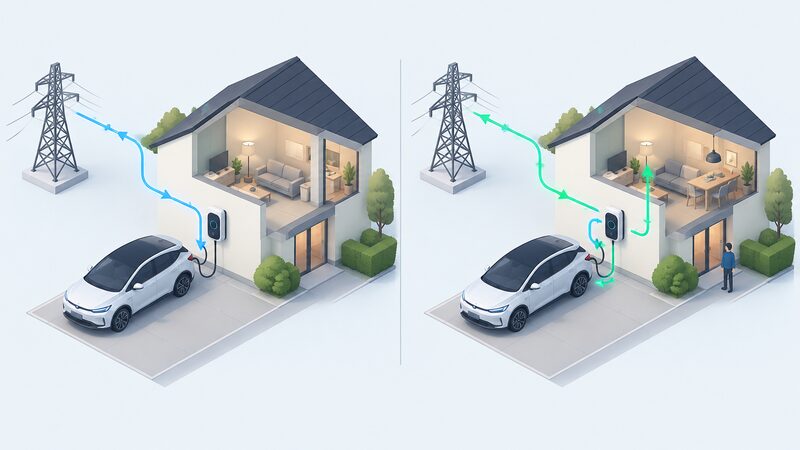
Smart charging and vehicle-to-grid (V2G) are often compared as if they were rivals. They are not the same kind of thing. Smart charging shifts when a car charges, using incentives to move demand outside peak times, either through simple peak and off-peak tariffs such as Economy 7 or by rewarding charging when low carbon electricity is plentiful and normal demand is low1. V2G goes further: it lets energy stored in the car battery flow back out, either into the building it is connected to or into the grid2.
On the money, the honest answer is that smart charging captures most of the value and V2G adds a smaller increment on top. Cenex modelling found smart charging can capture around 80% of the savings compared with V2G when grid services are excluded3. The same body's earlier work put smart charging at between 40% and 80% of the value of V2G compared with unmanaged charging4. The extra that V2G brings is real but modest: £220 per year of incremental value above smart charging in one simulation, and £436 above smart charging annual revenues for a 7kW V2G charger at a high plug-in rate in later modelling5.
The catch is availability. V2G is still not widely available, with eligibility requirements such as a compatible car, charger and smart meter6. Only CHAdeMO currently has a valid protocol for V2G charging to feed electricity into the public grid7. Smart charging, by contrast, works with almost any modern EV and a smart meter.
V2G and smart charging at a glance
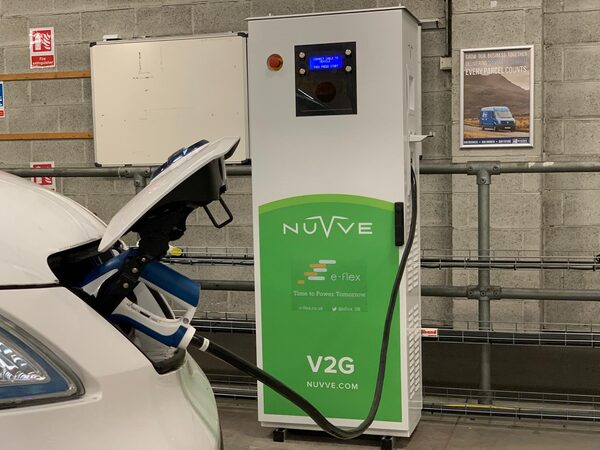
The core difference is direction of flow. A smart charger is a one-way device that decides when to draw power. A V2G chargepoint is bidirectional: it is able to draw power to charge the vehicle and export the electricity from the car battery back to the home or the grid10. Physically it acts, and looks, very similar to a standard charging point11.
Smart charging is defined by incentives rather than hardware. It encourages charging outside peak times, either through simple peak and off-peak electricity tariffs or by rewarding charging when there is more low carbon electricity available and normal demand is low1. FlexAssure describes the household version plainly: let your car charge when electricity is cheapest and greenest, often overnight, without changing your routine12.
V2G is defined by the battery being used as a system asset. Vehicle to grid technology refers to the use of vehicle batteries as storage to help balance supply and demand on the electricity network, applying at scales from individual batteries up to aggregation of multiple batteries across one or multiple carparks13. The idea is not new: it was originally conceived of back in the 1990s14.
The two are not mutually exclusive. A V2G charger also does smart charging, and the value comparison only makes sense when the smart charging baseline is included. That is why the headline percentages matter more than the headline pounds: most of the saving comes from timing, and the export adds a margin.
What smart charging does: shifting when the car charges

Smart charging is a scheduling problem solved with price signals. The household sets a departure time, the charger or the supplier's system picks the cheapest or greenest hours inside that window, and the car charges without anyone standing over it. The Energy Saving Trust frames the wider prize: a vehicle-to-grid system could potentially offer a two-way movement of energy, with energy stored in the car battery used in the home or sold back to the grid at times of peak demand15.
The evidence that shifting works is now fairly strong. UK Power Networks ran a UK-first trial showing that shifting EV charging can help manage renewable energy16. Shift 2.0 tested how dynamic prices influence smart charging, enabling drivers to maximise the benefit of cheaper periods17. NESO's own framing is that smart charging uses incentives to move demand away from peaks1.
Smart chargers also pair with solar. They can monitor real-time solar electricity production and adjust charging speed accordingly, drawing more power when the sun is out and switching between solar and grid supply depending on availability18. That is a different kind of saving from tariff arbitrage, and it depends on generation rather than on a supplier's price schedule.
For a household's energy independence, smart charging is a modest but immediate gain. It does not reduce the amount of electricity bought, but it changes when it is bought, and it makes the car a flexible load rather than a fixed one. The dependence that remains is on the supplier's tariff design: without a time-of-use tariff, the scheduling has nothing to optimise against.
What V2G adds: exporting stored energy back to the grid
V2G turns the car into a small battery on the network. Vehicle to grid technology enables energy stored in EVs to be fed back into the electricity network19. Energy Networks Association describes it as allowing electric vehicles not only to draw power from the grid to charge their batteries but also to send electricity back to the grid when needed, generating cash for the EV owner20. The Energy Saving Trust's version is that V2G charging allows energy stored in the vehicle's battery to be exported to the grid during periods of high demand21.
There is a family of related terms. V2H, vehicle-to-home, uses the energy to power a home rather than delivering it back to the grid20. V2X is the umbrella: it allows electric vehicles to operate bidirectionally, charging from the electricity grid but also discharging to the grid, building or home as needed22. The Climate Change Committee's monitoring framework uses that broader definition22.
The system-level case is large. An official case study projects that if 50% of the UK's EVs were V2G enabled, this would open up 22 TWh of flexible EV discharging capacity per year by 20309. Ofgem's parallel case study gives the same 22 TWh figure23. That is the reason networks and regulators are interested: not household pocket money, but a very large flexible resource that can absorb surplus renewable generation and release it at peak.
For an individual household, the addition is narrower. The car has to be plugged in when the export window opens, the charger has to be bidirectional, and the supplier or aggregator has to be paying for the service. Where those line up, the car earns while parked. Where they do not, the household has a smart charger with extra hardware and no extra income.
Savings compared: how much each can cut charging costs
The comparison has been modelled repeatedly, and the results depend heavily on assumptions about how often the car is plugged in and whether grid services are counted.
| Study | Smart charging | V2G | Basis |
|---|---|---|---|
| Cenex, Understanding the True Value of V2G (2019) | 40% to 80% of V2G value | £186 additional annual value vs unmanaged charging | Average V2G chargepoint4 |
| Cenex, Sciurus trial insights (2021) | £83 per year optimised | £173 per year optimised; £340 per year with tariff optimisation | Post-TCR revised tariffs8 |
| Cenex, commercial viability of V2G (2021) | Baseline | Around £410 per year vs unmanaged charging | First two revenue streams8 |
| V2GB (2026) | Around 80% of V2G savings | £436 above smart charging annual revenues | 7kW V2G charger, 75% plug-in rate3 |
The direction of travel in the numbers is worth noting. The Sciurus work found that upcoming changes to the structure of charges in domestic tariffs would reduce the annual revenue possible from V2G tariff optimisation by around 50%8. The same report gives £83 for optimised smart charging and £173 for optimised V2G under the revised tariffs, against £340 per year from V2G using tariff optimisation before those changes8. So the gap between the two narrows as well as shrinks.
The largest single revenue source in the earlier Cenex work was not energy arbitrage at all: the largest percentage of V2G revenues came from providing grid services, such as Firm Frequency Response4. V2GB's shortlist of key revenue streams is similar in character: low and high voltage DUoS charge avoidance, DTU, imbalance management, FFR dynamic and static, STOR Flexible, and energy price arbitrage3. These are wholesale and network services, not something a household negotiates directly.
The conflict in the published figures is unresolved. V2GB gives smart charging's share of V2G value as 40% for low plug-in scenarios, or merely 10% for high plug-in cases when grid services are included, while a combined figure of around 80% applies where grid services are excluded3.
Hardware, tariffs and what a household needs
V2G needs three things at once: a compatible car, a compatible charger and a smart meter6. The charger is a bidirectional unit, not a standard smart charger, and the meter has to be able to support the control the scheme relies on10. A smart meter provides real-time data and enables precise control of when the car charges and discharges24.
Smart charging needs far less. It works through the charger's own scheduling or the supplier's system, and the household benefit depends on being on a tariff that prices some hours below others. Some suppliers offer smart charging tariffs that make electricity cheaper at night or at times of low demand, and official analysis found tariffs for smart meter households that could save up to two-thirds of charging costs at certain times of day25. Without a smart meter, some EV-specific tariffs are closed off26.
There is a registration duty that sits alongside both. Energy devices in homes or small businesses, including chargepoints, are covered by guidance for device owners and installation contractors on registering them27. Wales has published national standards for electric vehicle infrastructure that set expectations for chargepoint installations there28.
The practical difference for a household is the size of the commitment. Smart charging is a tariff decision plus a charger that can schedule. V2G is a hardware decision plus a tariff decision plus a compatibility check, and the compatible car list is short. The Energy Ombudsman's consumer guidance on EV tariffs and home charging sets out what households need to know about the tariff side of that choice29.
Where V2G falls short
The limits are technical, commercial and practical, and they are firm.
Only CHAdeMO currently has a valid protocol for V2G charging to feed electricity into the public grid7. That restricts the compatible car list to a small number of models, mostly Asian brands, and in one official trial the only compatible EV was a Nissan Leaf7. CCS is catching up but has a lot of catching up to do7.
The revenue is not stable. Changes to the structure of domestic tariffs cut the annual revenue possible from V2G tariff optimisation by around 50% in the Sciurus modelling8. A household signing up on the strength of an early figure may find the later figure materially lower.
The battery question is unresolved rather than settled. Cenex reports that frequent charging and discharging could shorten battery life, but that the impact should be relatively minimal within recommended guidelines30. EV-elocity found V2G could extend battery life by about 10%, around one extra year of use30. The two findings point in different directions, and the outcome depends on the vehicle and the duty cycle.
Warranty is the least documented part. One maker warns that V2L is designed for powering appliances, not charging another car, so the manufacturer might deny warranty coverage if something goes wrong31. For V2G specifically, the position depends on the individual maker's terms.
What each option means for energy independence

Smart charging changes the household's relationship with the grid without changing its dependence on it. The car becomes a flexible load that can be moved to hours when electricity is cheap and low carbon, and the household gains control over timing rather than over supply. The dependence that remains is on the supplier, the tariff design and the meter. Where a time-of-use tariff is not available, the flexibility has no value to capture.
V2G adds a genuine export capability, and that is a different kind of independence: the household is no longer only a buyer. But the capability is conditional on a short list of compatible cars, a bidirectional charger, a compatible meter and an aggregator or supplier willing to pay for the service6. The car has to be plugged in when the window opens. The revenue depends on tariff structures that have already been revised downward once8.
At system level the prize is large: 22 TWh of flexible EV discharging capacity per year by 2030 if 50% of the UK's EVs were V2G enabled9. That figure describes a national resource, not a household income. For an individual home, the realistic position is that smart charging delivers most of the saving available today, and V2G delivers an increment that is real, modelled, and not yet widely accessible.
Sources31 cited
- What is flexibility?, FlexAssure
- Vehicle-to-grid (V2G), Cenex
- V2GB: Vehicle to Grid Britain, Cenex
- Commercial viability of V2G, Cenex
- New research finds V2G charging delivers greater value than standard electric vehicle smart charging, Cenex
- An introduction to vehicle-to-grid charging for electric vehicles, Cenex
- Nearly everything you need to know about vehicle-to-grid, Cenex
- Project Sciurus trial insights report, Cenex
- Case study: UK electric vehicle grid (V2G) charging, Ofgem
- UK first approach to fast track vehicle-to-grid technology, UK Power Networks
- Smart charge, Zapmap
- What is bidirectional charging?, Carwow
- Vehicle-to-grid charging, Uswitch
- EV glossary, Uswitch
- Five electric vehicle innovations to watch in 2022, Energy Saving Trust
- UK first trial shows shifting EV charging can help manage renewable energy, UK Power Networks
- Batteries, wheels and smart charging, NESO
- Can solar panels charge electric cars?, The CPA
- How smart can a smart meter be in the connected home?, Smart DCC
- LCT strategy, Energy Networks Association
- Smart homes, lower carbon footprint, Energy Saving Trust
- Well adapted energy system, Climate Change Committee
- Case study: UK hydrogen heated homes of the future, Ofgem
- Storage, Electricity North West
- Consumer survey 2021: decarbonisation and home energy use, Ofgem
- Can I switch energy supplier if I have solar panels?, Uswitch
- Register energy devices in homes or small businesses, GOV.UK
- Electric vehicle infrastructure national standards, Welsh Government
- EV tariffs and home charging: what consumers need to know, Energy Ombudsman
- Vehicle-to-grid, Cenex
- V2V bidirectional charging, go-e
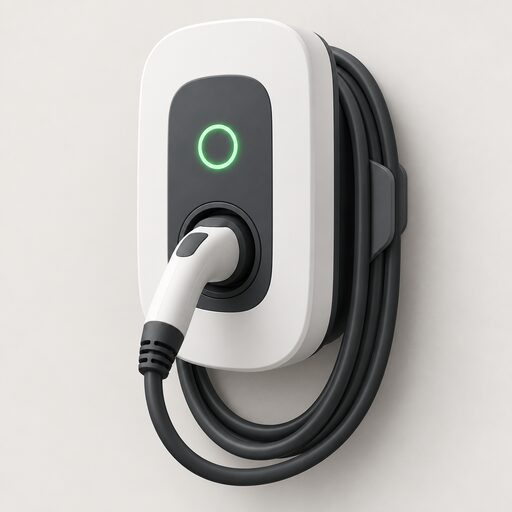 Supplier-Controlled ChargingSmart charging tariffs let your energy supplier decide when your car charges, usually overnight when electricity is cheaper.
 Types of Home EV ChargerWhich home charger suits your car and your driveway?
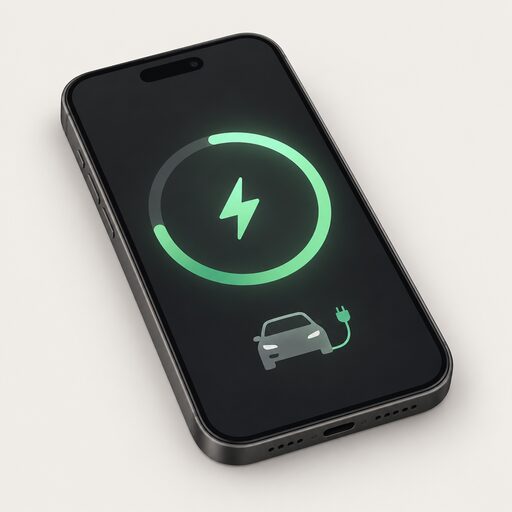 What Is a Smart Charger?A smart EV charger is an internet-connected home charge point that schedules charging around tariff prices, grid demand and household load.
 Batteries and Smart TariffsA home battery can earn its keep if your electricity prices change through the day.
 Charging and Energy IndependenceCharging an electric car at home can cut your fuel costs, but how much does it really free you from the grid?
 EV Charging Bolt-OnsCan you get cheap electricity for your car without changing the tariff for the rest of your home?