
In this answer
Short answer
Project Sciurus was the world's largest domestic vehicle-to-grid (V2G) trial, running from 2018 to 2021 with 320 V2G units installed in real homes across the UK1. The project was funded by BEIS and OZEV and delivered by OVO Energy, Cenex, Nissan and Indra1. It set out to test whether households could earn money by letting their electric car battery feed power back to the grid, and whether the hardware and software could work at scale in ordinary homes.
The headline finding was that participants could recover the majority of their household energy costs through V2G1. Earnings ranged from £120 to £725 a year depending on how the car was used2. Over the analysis period, the trial offset more than 750MWh of energy through V2G2. The original target of 1,000 domestic V2G units was revised to between 300 and 400, and 320 were ultimately installed2.
The trial matters for household energy independence because it tested whether a car battery can act as a home's energy store and a grid asset at the same time. It also exposed the limits: the V2G unit still cost around £3,700 more than a comparable smart charger by the end of the trial, which kept the technology out of reach for most households4.
Project Sciurus at a glance: the world's largest domestic V2G trial
Project Sciurus was described by Cenex as the world's largest domestic V2G trial4. It ran between 2018 and 2021 and was a three-year project1. The data analysis covered twelve months, between January 2020 and December 20202. The trial was funded by BEIS and OZEV and run by OVO Energy, Cenex, Nissan and Indra1.
The scale was significant for a domestic trial. The original target was 1,000 domestic V2G units, but this was revised to between 300 and 4002. In the end, 320 V2G units were installed in real homes across the UK3. A separate Cenex document records 325 V2G units in real homes across the UK as of January 20216. The two figures differ slightly, and the count is not settled between them.
Indra Renewable Technologies stated it was the first to successfully demonstrate large-scale domestic vehicle-to-grid technology in the Project Sciurus V2G trial7. Cenex provided V2G specification, installation and technology development expertise8. The trial formed part of the wider Vehicle-to-Grid competition, which also funded the V2GB feasibility study9.
For a household, the significance is that this was not a laboratory test. Real homes, real cars and real grid connections were used over a full year of data collection. That makes the findings more directly relevant to what a household might expect than a short demonstration project.
What the trial set out to prove, and how it was funded and run
Project Sciurus set out to test the commercial, technical and operational viability of V2G technology and how it can benefit both the electricity grid and consumers10. The trial was funded by BEIS and OZEV1. It was part of the Vehicle-to-Grid competition, and the V2GB feasibility study was also part of that competition9.
The V2GB project had four primary objectives9. Its consortium members were Nissan, Energy Systems Catapult, Cenex, Moixa, Western Power Distribution, National Grid ESO and Element Energy9. That project was a feasibility study, separate from the domestic installation work of Sciurus, but it fed into the same evidence base.
Cenex's REVOLVE model was capable of simulating the charging and discharging behaviour of large numbers of EVs at half-hourly granularity over a year9. That modelling capability underpinned the trial's analysis of how domestic V2G could scale.
The trial also drew on work by Swansea University, which verified the performance of the technology in a related Welsh project11. That verification role is a reminder that independent measurement, not just maker claims, was part of the programme.
For a household considering V2G, the funding structure matters. Government funding through BEIS and OZEV meant the trial could install hardware at a scale that would not have been commercially viable otherwise. The trial did not prove that V2G pays for itself without subsidy; it proved that the technology works and that households can earn from it when the hardware is in place.
The partners and the hardware: OVO Energy, Cenex, Nissan and Indra
The project partners were OVO Energy, Cenex, Nissan and Indra2. OVO Energy was the energy supplier, Cenex the independent consultancy, Nissan the vehicle manufacturer and Indra the charger manufacturer. Indra stated it was the first to successfully demonstrate large-scale domestic vehicle-to-grid technology in the trial7.
The hardware was a bi-directional charger. The conflict rulings note a deliverable to develop at least 300 6kWh bi-directional chargers capable of providing vehicle-to-grid services, alongside a separate deliverable to engage and recruit at least 300 trial participants5. The two deliverables are recorded separately and the documents do not resolve how they relate.
The charger used CHAdeMO and CCS connectors in the wider market. MFG EV Power, Osprey Charging and InstaVolt all provide charging with tethered devices via both CHAdeMO and CCS connectors12. That connector landscape matters because V2G requires a compatible vehicle and charger pairing.
OVO Energy also appears in the list of suppliers that should help with in-home displays older than a year, alongside E, E.ON Next, Good Energy, Octopus Energy, Scottish Power, Utilita Energy and Utility Warehouse14. That is a separate consumer protection point, but it shows OVO's role in the domestic energy market beyond the trial.
For a household, the partner list is a guide to who holds the intellectual property and the warranty obligations. Indra made the charger, Nissan made the car, OVO supplied the energy and Cenex ran the analysis. If a household bought a V2G charger after the trial, the warranty and support would come from the charger maker, not from the trial partnership.
What participants earned: £120 to £725 a year, depending on how the car was used
Participants earned between £120 and £725 a year depending on how the car was used2. The trial found customers could recover the majority of their household energy costs1. The earnings varied with battery size and charging pattern.
The conflict rulings give more detail on the incremental V2G benefit. For a 40 kWh EV, the Optimised Smart figure was £100, the Optimised V2G figure was £352, and the incremental V2G benefit was £252 across 163 participants2. For a 30 kWh EV, the Optimised Smart figure was £134, the Optimised V2G figure was £344, and the incremental V2G benefit was £210 across 81 participants2. The documents do not rule on which battery size is more representative.
Those figures sit alongside wider evidence on EV running costs. Electric vehicles can save up to £750 a year on fuel costs on average15. An average driver can save £760 annually in fuel16. The average driver's annual cost is approximately £1,500 per year17. Flexible tariffs combined with low-carbon home technologies can produce savings of up to around £800 a year18.
The Smart Export Guarantee pays around £220 a year in Great Britain and £130 in Northern Ireland19. That is a useful comparison: V2G earnings in the trial were in the same range as export payments, but required a car, a charger and a supplier arrangement.
For a household, the range from £120 to £725 is wide because it depends on how much the car is plugged in, how much battery capacity is available and how the supplier values the flexibility. The trial did not produce a single guaranteed figure.
| Battery size | Optimised Smart | Optimised V2G | Incremental V2G benefit | Participants |
|---|---|---|---|---|
| 40 kWh | £100 | £352 | £252 | 163 |
| 30 kWh | £134 | £344 | £210 | 81 |
What the trial found: 750MWh offset, grid balancing and changed charging habits
The trial offset more than 750MWh of energy through V2G2. The majority of trial participants said their charging habits changed after taking part4. The trial demonstrated that domestic V2G could provide grid balancing services while households earned from the flexibility.
Cenex's REVOLVE model simulated charging and discharging behaviour at half-hourly granularity over a year9. That level of detail is what allows a supplier to value V2G accurately. The Agile Streets project demonstrated the use of the smart metering system and a new business model to manage EV charging20. That project is separate from Sciurus but shows the same principle: smart metering and flexible tariffs are the plumbing that makes V2G work.
The trial's findings on changed charging habits matter because V2G only works if households are willing to leave the car plugged in and let the supplier control when it charges and discharges. The majority of participants changed their habits, which suggests the behaviour change is achievable4.
For a household, the 750MWh figure is a measure of aggregate grid benefit, not a household figure. Divided across 320 units, it represents a substantial amount of energy shifted per home over the trial period, but the trial does not give a per-household breakdown in the available facts.
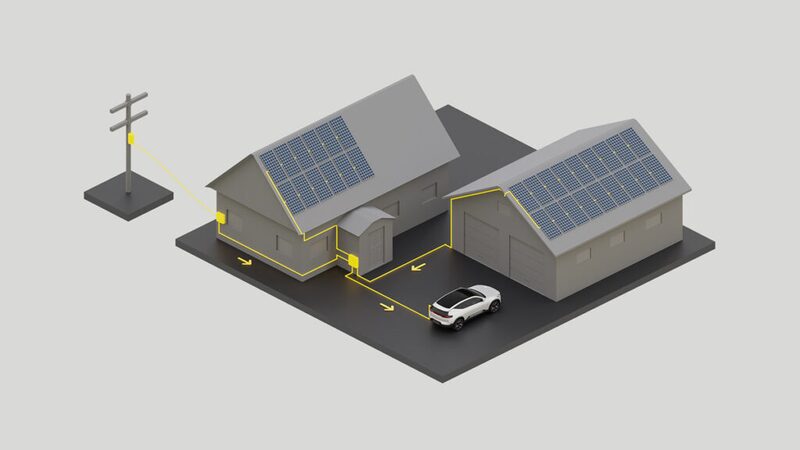
The grid balancing benefit is the part that matters for energy independence. A car battery that can discharge to the grid is a distributed energy resource. It reduces the need for centralised generation and gives the household a way to earn from a asset that would otherwise sit idle overnight.
Where V2G fell short: hardware cost and the revised target of 320 units
The original target was 1,000 domestic V2G units, but this was revised to between 300 and 4002. In the end, 320 V2G units were installed in real homes across the UK3. The reduction was driven by cost. By the end of Sciurus, the hardware and installation cost of the V2G unit dropped to around £3,700 more than a comparable smart charger4.
Cenex predicted V2G hardware prices would fall below £3,000 to £5,000 by 202510. That prediction is a maker-side projection, not an official figure, and it should be read as an expectation rather than a result. The trial itself did not achieve a price point that made V2G a mass-market proposition.
The wider charging market gives context. A total of 13,281 public EV chargers were added to the network by the end of 202521. Smart Charge had 742 EV chargers across the UK as of the end of August 202622. RAW Charging had 2,520 EV chargers across the UK as of the end of August 202623. Those are public charging figures, not domestic V2G, but they show the scale of the charging infrastructure that V2G would need to complement.
For a household, the £3,700 premium is the central barrier. A smart charger costs far less and still allows off-peak charging. V2G adds the ability to discharge, but the household has to earn enough from that discharge to justify the extra cost. The trial showed earnings of £120 to £725 a year, which means the payback period on a £3,700 premium would be several years even at the top of the range.
The Commercial Viability of V2G white paper and what it recommended

Cenex published the Commercial Viability of V2G white paper as part of the trial output6. The white paper set out best practice recommendations for future product and service providers to help them develop fit-for-purpose solutions with V2G technology10. It drew on the demonstrator projects that tested the commercial, technical and operational viability of V2G technology and how it can benefit both the electricity grid and consumers10.
The Energy Saving Trust also produced a vehicle-to-grid best practice guide10. That guide is independent of the trial partnership and covers the wider V2G landscape. Powerloop was the project developed to test the feasibility of domestic V2G10. Its objective was finding the hardware, building the software and creating the markets to demonstrate the feasibility and value in domestic V2G24.
The white paper's recommendations are aimed at product and service providers, not at households directly. That is an important distinction. The trial's commercial viability work was about whether a business can make V2G work, not just whether a household can earn from it.
For a household, the white paper is the document that explains what needs to change before V2G becomes a mainstream option. The recommendations cover product design, service design and market design. Until those are addressed, V2G remains a trial technology rather than a standard home upgrade.
The trial insights report and the white paper are both available from Cenex2. The trial insights report covers the household data and participant earnings. The white paper covers the commercial and market recommendations. Together they form the published record of what Project Sciurus found and what it recommended.
Sources24 cited
- World's largest domestic vehicle-to-grid trial reveals customers could recover the majority of their household energy costs, Cenex, 2021-06-03
- Project Sciurus trial insights report, Cenex, 2021-05
- Project Sciurus case study, Cenex, 2022-12-15
- Changing perceptions: the importance of V2G, Cenex, 2021-06-29
- 4 pioneering V2G projects, Cenex, 2023-03-22
- Commercial Viability of V2G, Cenex, 2021-01
- Innovation, Indra Renewable Technologies, 2026-09-17
- Vehicle-to-grid (V2G), Cenex, 2021-08-23
- V2GB: Vehicle-to-Grid Britain, Cenex, 2026-09-17
- Vehicle-to-grid best practice guide, Energy Saving Trust, 2026-05-05
- Wallpaper heats homes among innovative projects trialled in Wales, Welsh Government, 2022-05-31
- Tethered vs untethered, Zapmap, 2026-02-23
- Tethered vs untethered, Zapmap, 2026-02-23
- Fixing problems with your smart meters and in-home display, Citizens Advice, 2026-09-17
- Electric vehicles: debunking myths, Energy Saving Trust, 2025-09-22
- Electric cars, Home Energy Scotland, 2026-09-20
- New government and an energy price promise: some thoughts, Energy and Utilities Alliance, 2026-07-27
- Flexible futures: integrating smart tariffs with low-carbon home technologies, Energy Saving Trust, 2026-07-10
- Energy saving upgrades for home renovation, Energy Saving Trust, 2026-05-05
- Agile Streets future flexible charging report, Energy Saving Trust, 2025-10-03
- Public electric vehicle charging infrastructure statistics, 1 July 2026, Department for Transport, 2025-12-31
- Smart Charge, Zapmap, 2026
- RAW Charging, Zapmap, 2026
- More than money: finding the true power of V2G, Cenex, 2026-09-17
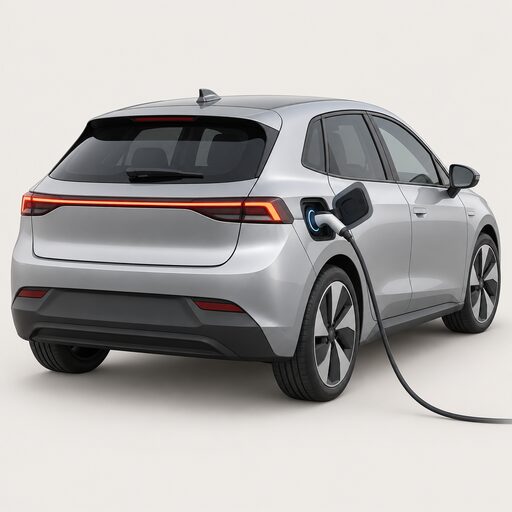 V2G and V2H ChargingCan your electric car earn money by sending power back to your home or the grid?
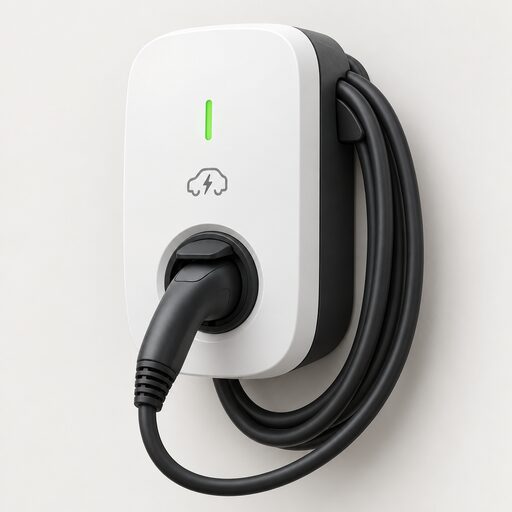 Bidirectional Charging ExplainedCan your electric car actually earn you money by sending power back to the grid?
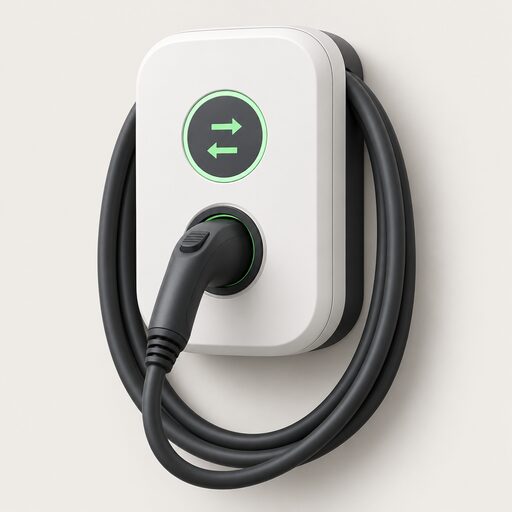 Bidirectional Chargers and CostsA bidirectional charger lets your electric car send power back to your home or the grid, not just take it in.
 The Full Solar Panels GuideHow much do solar panels cost, and what could they save you each year?
 Cost to Charge an EV at HomeHow home charging cost is worked out from battery size, efficiency, the unit rate paid and the tariff behind it, with full-charge costs of about £8 to £17, cost per mile, annual running costs and what changes for EV owners from April 2028.
 The Full New Technology GuideWhich new home energy ideas can you actually buy in the UK right now, and which are still stuck in trials?