
In this comparison
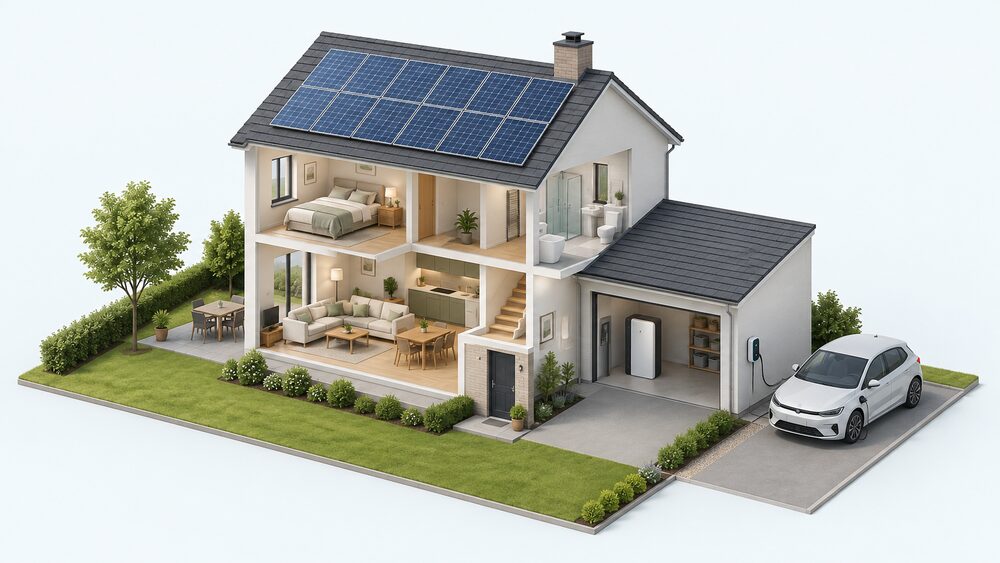
An electric vehicle can be charged cheaply in two quite different ways: from your own solar generation during the day, or from the grid in a cheap overnight window on a time-of-use tariff. The two are not rivals so much as complements, and the households that get the lowest cost per mile tend to use both.
The headline numbers are small either way. Off-peak home charging works out at about 2p per mile, based on an average tested EV efficiency of 3.18 miles per kWh, against a home rate of 7p per kWh and public chargers that can cost more than ten times that1. Driving 100 miles in an EV costs £7 in electricity at standard home rates2. A full charge taken overnight at 10p per kWh comes to £63.
Solar changes the arithmetic because the electricity is already yours. Charging from your own generation is significantly cheaper than using grid power and far cheaper than petrol or diesel over the same distance4. The catch is timing, not price: solar peaks in the middle of the day, and most cars are parked at work then.
Two ways to charge cheaply: solar by day or an overnight tariff
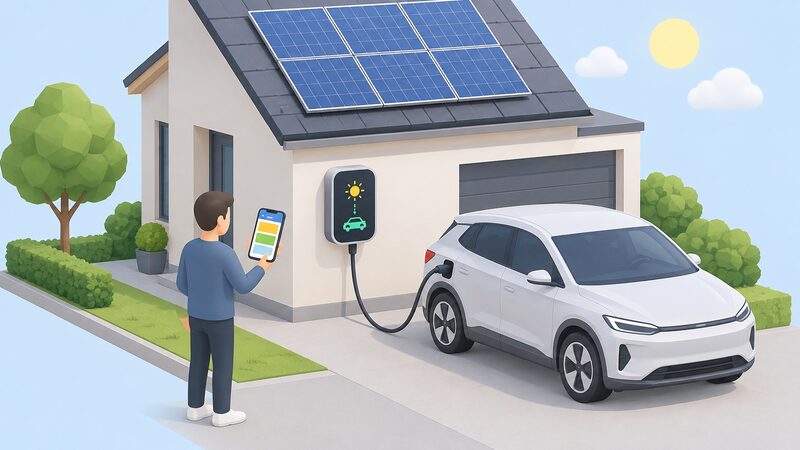
The first route is direct self-consumption. Charging your EV during the day maximises direct use of your solar power, making it the cheapest and greenest option, and solar generation can directly charge your EV if you have the right equipment7. That equipment is the deciding factor: a charge point that can modulate its output to follow generation, rather than drawing a fixed rate regardless of what the roof is producing.
The second route is a time-of-use tariff. There are several EV tariffs available, and most involve a lower rate for charging overnight8. With electric vehicle tariffs it is typically cheaper to use energy at night9. A time of use electricity tariff charges different rates depending on the time of day: cheaper when demand is low, usually overnight, and more expensive when demand is high, in the early evening10.
The two routes answer different constraints. Solar answers the question of where the electrons come from. An overnight tariff answers the question of when the grid is cheapest. A household with a car that sits on the drive all day can lean on the first. A household that commutes and returns at 6pm will find the second does most of the work, because the car is simply not there when the roof is generating.
What neither route removes is the connection itself. Solar charging still depends on the charge point, the inverter and the vehicle being compatible, and on the sun being out. Overnight charging depends on a supplier, a tariff and a meter. Both are forms of dependence, just on different things. The self-consumption page sets out how much of a household's own generation typically gets used on site, which is the figure that decides how much solar is really available for the car.
How EV tariffs work: two-rate structures and the cheap overnight window

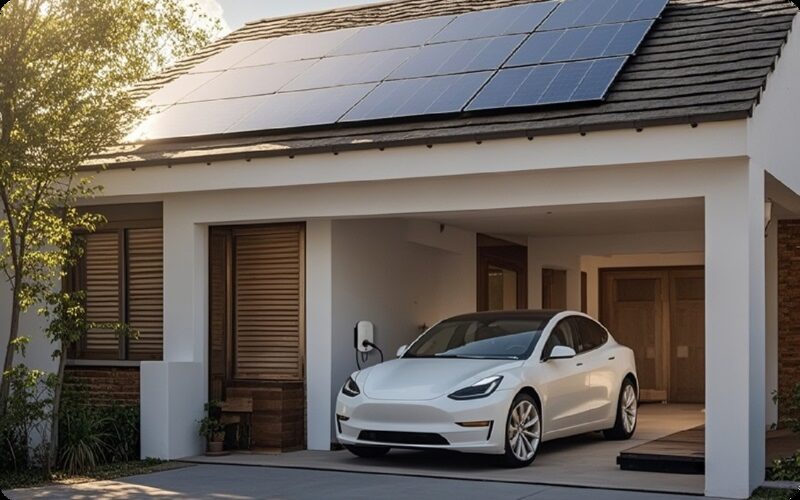
EV tariffs come in two broad shapes. The first is a two-rate tariff, offering cheaper overnight electricity so the cheap power can also run other appliances11. These are typically 2-rate tariffs, where it is cheaper to use energy at night, so electric vehicles can be charged more cheaply overnight12. They often work similarly to domestic Economy 7 tariffs, where electricity is charged at a lower unit rate for seven hours during the night13.
The second shape is the add-on EV tariff. Consumers keep their existing household tariff but receive separate EV charging discounts, credits or other benefits14. These tariffs offer cheaper rates just for the specific energy used to charge your EV, and the cheaper kWh cost applies any time of day or night15. That distinction matters: an add-on rate is not a time window at all, it is a rate attached to a particular load.
The general structure is consistent across the market. EV energy tariffs typically have lower unit costs overnight when there is less demand on the national grid, a renewable energy promise, and some offer added benefits for the EV driver3. Two-rate tariffs offer cheaper off-peak electricity rates overnight and a higher on-peak rate during the day15. Time-of-use tariffs vary prices throughout the day, usually with a cheaper overnight charging window14.
The practical consequence is that a two-rate tariff rewards any load you can move, not just the car. A home battery can be charged with cheap electricity from your supplier, typically on certain tariffs at night or in the middle of the day16. That is why the tariff decision and the storage decision tend to be made together. The whole-home energy system design page covers how generation, storage, heat and EV load are sized against each other.
What overnight charging actually costs: under 2p per mile and £3 to £4 a charge
The per-mile figure is the one that matters for comparison, and it is remarkably low. Home charging on an off-peak or EV rate comes to about 2p per mile, based on an average tested EV efficiency of 3.18 miles per kWh1. The same source puts the standard home rate at 7p per kWh and notes that public chargers can cost more than ten times the home rate, with 79p per kWh a typical figure1.
At the level of a single charge, the numbers stay modest. A full charge taken overnight at 10p per kWh costs £6.003. Driving 100 miles in an EV costs £7 in electricity2. Official material on the EV chargepoint grant scheme describes home charging as potentially allowing drivers to charge their vehicles at home for as little as 2p per mile17, and a government press release on the Electric Car Grant uses the same 2p per mile figure for residents without driveways accessing cheaper rates18.
Two caveats sit alongside these figures. Costs vary by region and household3, so the same tariff name produces different bills in different parts of the UK. And the 2p per mile figure depends on the cheap rate actually being available when the car is plugged in, which is a matter of tariff design rather than of the car.
"It's simply cheaper and more convenient to charge your car at home, especially if your energy provider offers cheaper off-peak electricity or a specialist EV charging tariff."
Home charging is also likely to be cheaper than a public EV station, which is the comparison most drivers feel most directly. The gap between 2p and 79p per kWh is the whole argument for charging at home wherever it is possible.
Charging from home solar: cost per mile and why driving patterns matter
Solar charging is cheaper again, because the electricity has no unit price attached. Charging from your own electricity is significantly cheaper than using grid power and far cheaper than petrol or diesel over the same distance4. The constraint is not cost but availability: the car has to be connected while the roof is producing.
That makes driving patterns the deciding variable. A household where the car sits at home during daylight can absorb a large share of generation directly. A household where the car leaves at 7am and returns at 6pm cannot, and will find that most of its solar export happens while the car is elsewhere. The can an EV be charged entirely from home solar in summer? page deals with that seasonal question directly, and the cost per mile to run an EV on home solar page works through the arithmetic.
Real households show both patterns. One case study describes a home where, at night, the cheaper off-peak electricity tariff is used to charge the EV and battery, with the battery topped up by the solar panels during the day19. Another describes a household that uses a low cost overnight tariff when they need extra electricity to charge their EV20. In both, solar does the daytime work and the tariff covers the shortfall.
The independence question is worth stating plainly. Solar charging reduces the number of units bought from a supplier, but it does not remove the supplier, the meter or the connection. A car charged entirely from the roof in summer is still charged from the grid in December. The winter gap is the structural limit on solar-only EV running in the UK.
Solar plus a smart tariff: combining both for the lowest cost per mile
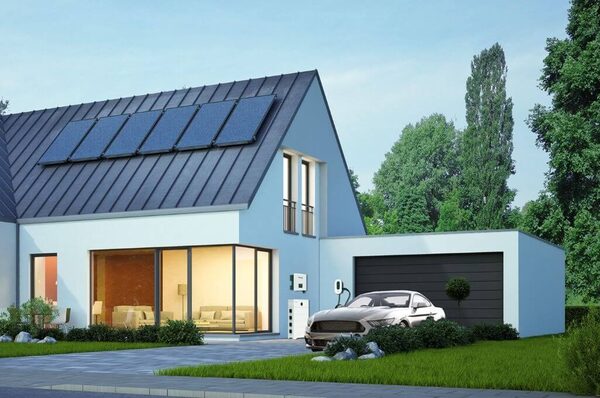
The lowest-cost arrangement uses both routes. Solar-specific energy tariffs usually combine an export tariff with a smart time of use tariff, with different electricity prices based on peak and off-peak times21. For a household with panels and a battery, the recommended options are a dedicated solar or battery tariff, or a good SEG tariff matched with a dynamic import tariff or an Economy 7 tariff22.
The mechanics are simple. The EV is programmed to charge during the cheap rate period, using the charger or the vehicle itself22. Smart charging lets the car charge when electricity is cheapest and greenest, often overnight, without changing your routine23. Zapmap's smart charging product charges at the cheapest time based on your existing tariff and preferences24.
The tariff landscape underneath this is shifting. Economy 7 and Economy 10 use fixed cheaper periods, while newer EV and tracker tariffs can be more dynamic and usually work best with a smart meter12. Off-peak pricing can also reflect generation conditions: energy might be cheaper if there is a lot of energy being generated, for example on very windy or sunny days25. That is the point at which solar and tariff stop being separate strategies, because a dynamic tariff can price a sunny afternoon low enough that grid charging and solar charging converge.
For a household, the sequence is: generate what you can, store what you cannot use immediately, and buy the remainder in the cheapest window available. The home battery vs hot water tank comparison is relevant here, because a battery charged overnight on a cheap rate can also cover morning demand that solar cannot reach.
Which tariff type fits which household: two-rate, add-on or per-kWh EV rates
The choice between tariff shapes follows from what a household can shift. A two-rate tariff suits a home with several flexible loads: an EV, a battery, a heat pump or an immersion heater that can all run overnight. An add-on EV tariff suits a household that wants to keep its existing arrangement and take a discount on the car's consumption specifically, since the cheaper kWh cost applies any time of day or night15.
Eligibility is the first filter. Most electric vehicle tariffs require a smart meter as well as an EV charger26. Some energy providers offer smart charging tariffs that make electricity cheaper at night or at times of low demand. Octopus Energy currently offers three EV tariffs5, and Good Energy's EV Charge tariff sets its off-peak window at midnight to 5am, with the peak rate applying from 5am to midnight6.
For households with more than one flexible technology, the calculus changes. An EV, heat pump or home battery makes smart tariffs much more valuable10. Guidance for heat pump owners points to a dynamic tariff or a heat pump tariff22, and where a household has a larger than average solar system or a smaller than average heat pump, a solar panel or battery tariff may be worth considering, especially if a good SEG rate is not available from a company with a good import tariff22.
| Tariff shape | How the cheap rate works | Best fit |
|---|---|---|
| Two-rate (time of use) | Cheaper off-peak overnight, higher on-peak during the day15 | Homes with an EV plus battery, heat pump or other shiftable load |
| Add-on EV | Separate discount or credit for EV charging only; cheaper rate applies any time14 | Homes keeping an existing tariff and wanting a car-specific discount |
| Economy 7 style | Low-cost rate for seven hours each night25 | Households already on, or suited to, a fixed overnight block |
| Dynamic or tracker | Prices vary with conditions; can be cheaper on windy or sunny days25 | Homes with a smart meter and automation that can respond to price |
Choosing a single long off-peak window over two shorter ones
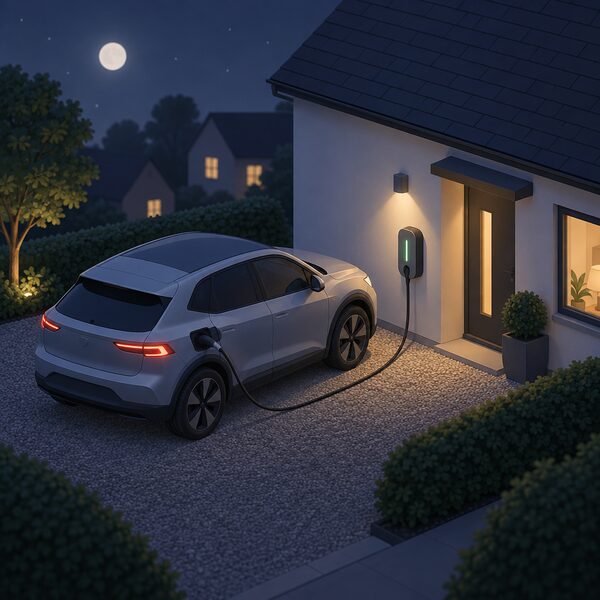
The length and shape of the cheap window decides how much of a car's charge can be absorbed at the low rate. A single long block is easier to fill than two short ones, because a charge session has to start and finish inside the window, and a full charge from empty can take several hours at typical home power levels.
The published windows vary. Octopus Go gives five hours of cheaper energy every night5. Economy 7 tariffs offer a low-cost rate for electricity for seven hours each night25. Some EV tariffs are built around one period of very cheap electricity in the early hours of the morning for charging an electric vehicle22, which is narrower but deeper than a seven-hour block.
Which shape suits a household depends on how much energy it needs to move. A car doing modest daily mileage needs only a couple of hours. A car plus a home battery plus a heat pump may need the whole window, and a single long block is easier to schedule than two shorter ones that each have to be filled separately. The best apps for cheap electricity page covers the tools that show when prices are lowest.
Green tariffs and renewable sourcing for EV charging
Green tariffs are a separate question from cheap tariffs, and the two do not always coincide. Electricity tariffs are easier to make 100% green: the energy produced comes from renewable sources such as solar, wind or waves25. EV energy tariffs typically combine lower overnight unit costs with a renewable energy promise3.
The distinction a household should hold on to is between sourcing and self-generation. A green tariff changes who the supplier buys from; it does not change the fact that the electricity arrives through the grid, at the supplier's price, under the supplier's terms. Solar on the roof changes the physical source of some of the units. The household import dependence page sets out what remains imported even in a well-equipped home.
For EV charging specifically, the greenest and cheapest option is the same one: use your own generation when it is available, and buy the rest in the cheapest low-carbon window. That is also the arrangement that leaves the household least exposed to a single price, though not to the grid itself.
Sources26 cited
- How much does it cost to charge an electric car, Which?, 2026-08-26
- Electric cars, Home Energy Scotland, 2026-09-20
- EV energy tariffs news, Zapmap, 2024-05-14
- Can solar panels charge electric cars, The CPA, 2026-04-15
- Octopus EV energy tariffs, Uswitch, 2025-10-09
- Time of use peak and off-peak times, Good Energy, 2026-03-24
- EV chargers for solar panel charging, E.ON Next, 2026-09-17
- Charging electric vehicles, Energy Saving Trust, 2026-04-23
- Time of use tariffs: the benefits, Smart Energy GB, 2026-04-24
- Should I switch to a time of use tariff, Energy Saving Trust, 2026-01-23
- Time of use tariffs explained, Which?, 2026-04-23
- Energy flexibility, Smart Energy GB, 2026-08-17
- Electric cars and energy bills, Uswitch, 2026-04-27
- EV tariffs and home charging: what consumers need to know, Energy Ombudsman, 2026-09-11
- EV energy tariffs, Zapmap, 2024-09-16
- Battery storage, Home Energy Scotland, 2026-09-20
- EV charger grant: driveway owners excluded, Carwow, 2026-03-16
- Four more EV models qualify for £3,750 discount under Electric Car Grant, GOV.UK, 2025-12-03
- Beth and Martin's story: solar panels and electric vehicle, Energy Saving Trust, 2025-03-03
- Russell and Kate's story: solar panels and heat pump, Energy Saving Trust, 2026-08-13
- Solar panel installation, Energy Saving Trust, 2026-09-07
- Tariffs for renewable technology, Energy Saving Trust, 2026-08-12
- Using energy flexibly, Smart Energy GB, 2026-09-19
- Smart charging, Zapmap, 2026
- Types of energy tariff, Confused.com, 2025-11-03
- How to choose the best energy company, Which?, 2026-01-19
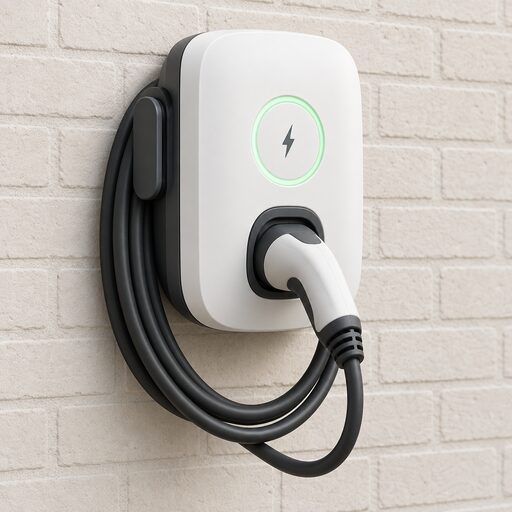 Home EV Charger ManufacturersWhich home EV charger brands are worth considering, and how do you choose between them?
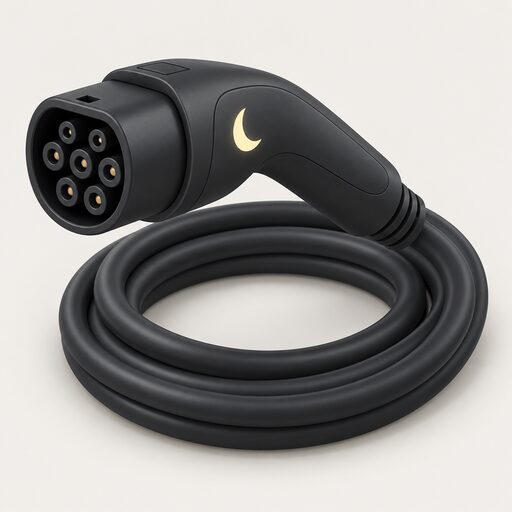 Electric Vehicle TariffsCharging an electric car at home can cost far less overnight, but only on special electricity plans.
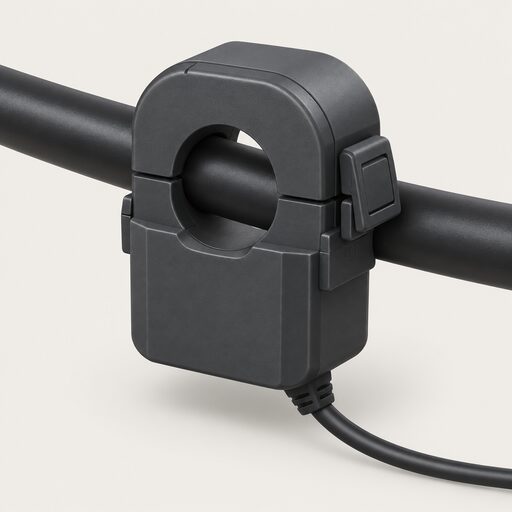 Charging an EV from Solar PanelsCharging your car from solar panels means using the power your roof makes instead of sending it to the grid.
 Charging and Energy IndependenceCharging an electric car at home can cut your fuel costs, but how much does it really free you from the grid?
 EV Charging Bolt-OnsCan you get cheap electricity for your car without changing the tariff for the rest of your home?
 Supplier-Controlled ChargingSmart charging tariffs let your energy supplier decide when your car charges, usually overnight when electricity is cheaper.