
In this comparison
Charging an electric car at home is cheaper than charging it on the public network, and usually by a wide margin. On an off-peak EV tariff, home charging costs around 7p per kWh, which works out at about 2p per mile on an average tested efficiency of 3.18 miles per kWh1. Public slow and fast charging averages 52p per kWh, and ultra-rapid points on the public network are typically priced at 79p per kWh2.
The gap shows up most clearly in the cost of a full charge. The Energy Saving Trust puts home charging on a standard tariff at £17, public fast charging at £37 and public rapid charging at £53, against £45 for a full tank of petrol covering the same 220 miles4. On an EV tariff or other time-of-use tariff, a full home charge falls to £84.
Two structural factors sit behind the difference. The first is the unit rate a household can reach by shifting charging to cheaper hours. The second is tax: domestic electricity carries 5% VAT, while electricity bought at a public chargepoint carries 20%6. That 15 percentage point difference applies to the same electricity, and it falls hardest on drivers who cannot charge at home at all.
Unit rates compared: 7p off-peak at home against 52p on the public network
The headline comparison is between the cheapest domestic rate a household can reach and the average price on the public network. Off-peak home charging on an EV tariff is around 7p per kWh, and the same source notes that public chargers can cost more than ten times this, with 79p per kWh a typical ultra-rapid price1. Home charging on a standard rate is 24p per kWh, or 8p per mile1.
Public charging is not one price. Slower public charging ranges from free-to-use to around 57p per kWh, while ultra-rapid charge points are typically 79p per kWh3. The average cost of charging on a public network was 52p per kWh on slow and fast charging devices, about 15p per mile2. A separate industry price comparison puts average rapid and ultra-rapid public charging at 79.00p per kWh9.
One independent statistics set gives 52p per kWh for slow and fast devices2; another figure of 76p per kWh appears in the same period and is not reconciled with it. The 52p figure is the one attached to slow and fast charging specifically, and the 79p figure is attached to rapid and ultra-rapid, so the two are measuring different parts of the network rather than contradicting each other directly.
| Charging option | Unit rate | Cost per mile |
|---|---|---|
| Home, off-peak EV tariff | 7p per kWh1 | 2p1 |
| Home, standard rate | 24p per kWh1 | 8p1 |
| Public slow and fast, average | 52p per kWh2 | about 15p2 |
| Public slower charging, range | free-to-use to around 57p per kWh3 | not stated |
| Public ultra-rapid, typical | 79p per kWh3 | 27p1 |
A household on a time-of-use tariff at 10p per kWh pays about £6 for a charge, against £16.80 on a standard rate of 28p per kWh, while public charging at 45p to £1 per kWh costs £27 to £6010. The spread on the public network is wider than the spread at home, which matters for anyone planning a journey rather than a routine.
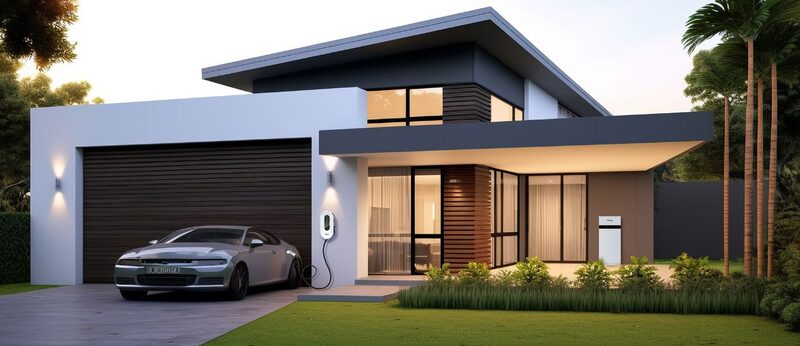
VAT: 5% at home, 20% at public chargepoints
Domestic electricity is charged at 5% VAT, and public charging is charged at 20%6. The same split is described by the Society of Motor Manufacturers and Traders, which states that VAT on home charging is just 5%11, and by Citizens Advice, which has called for a reduction of VAT on public charging costs from 20% to 5%12.
The difference is not a rounding error. One industry analysis describes the gap as a pavement tax, the difference in VAT between public charging and home charging, and puts it at 20 per cent after the removal of VAT on electricity bills9. The SMMT has described public charging as incurring VAT at four times the rate of private charging13, and has argued that public charge point use could be made fairer by reducing VAT from 20% to 5%14.
"Drivers who use public charging face a higher VAT rate than those who charge at home, 20% as opposed to 5%"
The campaign to align the rates is broad. BEAMA's position paper calls for VAT for public charging to be aligned with the current VAT for domestic charging at 5%15. FairCharge is lobbying the government to reduce the VAT on public charging from 20% to 5% to bring it in line with domestic charging costs, and the government has yet to decide3. The SMMT has made the same request in successive statements, including a call to equalise VAT on public charging to match the 5% home charging rate16.
The practical effect is that a driver without off-street parking pays more tax on the same kilowatt hour than a driver with a driveway. That is the core of the equity argument, and it is why the VAT question sits at the centre of the home versus public cost comparison rather than at its edges.
What a typical year of driving costs on each option
Annual costs depend on how much charging happens at home. Drivers who can charge at home could save up to £750 a year compared with a petrol car11. Among EV drivers who charge 80% at home, typical running costs were £630 per year, about 6p per mile, against £1,410 for petrol or diesel2. Drivers charging 50% at home paid £1,070 a year, or 11p per mile, which was still £340 less than petrol or diesel drivers2.
Zapmap's running cost archetypes for 10,000 miles a year show the same pattern. A driver charging 80% at home and 20% on rapid public points pays £660 a year, while a driver charging 50% at home, 25% on slow public and 25% on rapid pays £1,10017. One worked example describes a household whose annual charging cost is just £660 because they primarily charge at home on a low-cost EV tariff3.
| Charging pattern | Annual cost | Basis |
|---|---|---|
| 80% home, 20% rapid public | £66017 | 10,000 miles |
| 50% home, 25% slow public, 25% rapid | £1,10017 | 10,000 miles |
| 80% home charging | £630, about 6p per mile2 | average annual running cost |
| 50% home charging | £1,070, 11p per mile2 | average annual running cost |
| Home on a low-cost EV tariff | £6603 | worked household example |
The pattern is consistent: the more charging that happens at home, the lower the annual figure, and the fall is steepest between the 80% and 50% home charging groups. A household that can move most of its charging to an off-peak window sits at the bottom of that range. A household relying on the public network for most of its energy sits at the top, and pays 20% VAT on top of the higher unit rate.
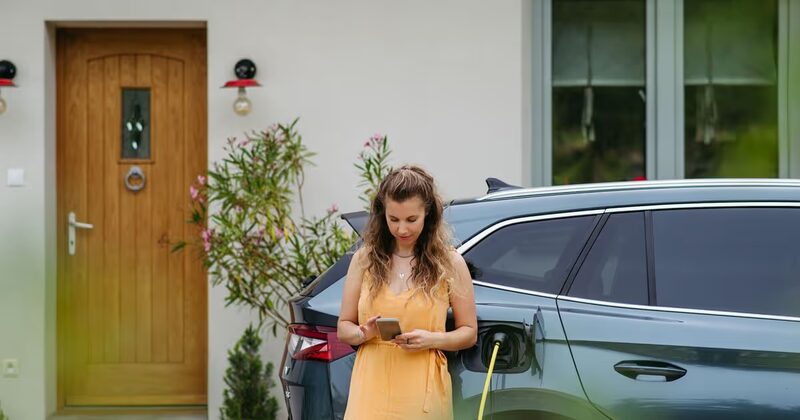
How an EV tariff and smart charging widen the gap
Smart charging tariffs make it cheaper to use electricity at night, or at times of low electricity demand, and some energy providers offer them18. The mechanism is a time-of-use rate combined with a smart meter, which lets the charger draw power in the cheapest hours rather than as soon as the car is plugged in.
The saving is measurable. An average-consumption household with an EV and a time-of-use tariff could already save around £330 annually by smart-charging on a time-of-use tariff when compared to a static one8. Ofgem's draft impact assessment puts the proportion of home EV charge points that use an EV tariff at 62%19.
Home charging with an EV tariff or other time-of-use tariff costs £8 per full charge, against £17 on a standard tariff and £53 on public rapid charging5. The £8 figure is the one to hold against the public rapid figure, because both describe a full charge of the same car.
The Energy Ombudsman can consider complaints relating to EV charging at a consumer's home but is unable to consider complaints about charging away from the home20. Its service is free21. That boundary matters for the comparison: a dispute about a home tariff or a home charger has a route to resolution, while a dispute about a public chargepoint price does not go to the same body.
The government has launched a review into the cost of public electric vehicle charging, looking at the impact of energy prices, wider cost contributors and options for lowering these costs for consumers22. Until that review concludes, the gap between a smart home tariff and the public network is set by the tariff market and by the VAT rate, not by regulation.
Chargers, grants and the rules that shape home charging
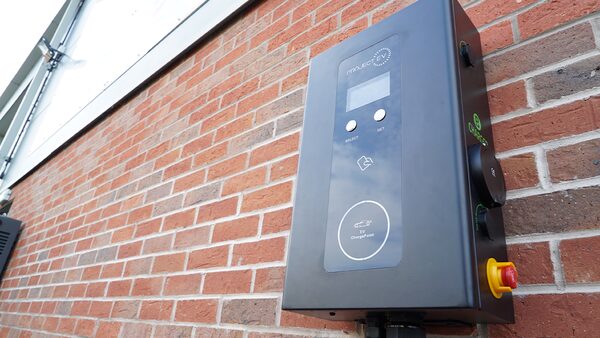
The cost of home charging is not only the unit rate. It also depends on the charger, the installation and whether a grant applies. The cost factors are the electricity tariff, the time of charging, how long you charge for, the type of car and battery size, and the charging connection type23.
Grants have narrowed. Three schemes closed for applications on 31 March 202624. The government reserves the right to end or change the grant schemes, aiming to provide four weeks' notice and honour claims made before any public announcement, subject to the grant criteria24. The home and workplace chargepoint grant schemes have been extended for a final year with funding until 31 March 2027, and the scheme is expected to be the final year of the current grant structure.
For households without off-street parking, the Electric Vehicle Chargepoint Grant for Households with On-Street Parking is the relevant route. It is only for people who have vehicles on the list of OZEV-approved electric vehicles25. The grant cannot be backdated, and the chargepoint must not be installed before OZEV confirms eligibility25. If a claim is approved, OZEV will pay the grant to the chargepoint installer25.
The application process is set out in the scheme rules: contact an OZEV-authorised installer to get a quote, then select the start new application button, create an account and apply using the form provided to submit details of your property and vehicle to OZEV26. Invoices must include the company name and address, the invoice date, the customer name or company name, the customer billing address, the total cost including VAT before the grant, the OZEV grant amount discounted, and the final amount invoiced27.
For landlords and flat tenants, the Electric vehicle chargepoint grant for residential landlords funds home chargepoints, but you cannot apply if you live in the property, if the property is not a residential property, if the chargepoint was already installed before OZEV confirms eligibility, if the property is only used for holiday accommodation, if there is no company registration number or VAT registration number, or if the installation is because of a mandatory requirement26. One independent estimate puts the grant at up to £350 for landlords and flat tenants, reducing the installation cost to as low as £6502.
Local authority funding works differently. The On-Street Residential Charging scheme provides up to 75% of hardware and installation costs to local authorities for on-street and rapid charging28. That is funding to councils rather than to households, and it is the route by which on-street provision is extended.
Where home charging is not available
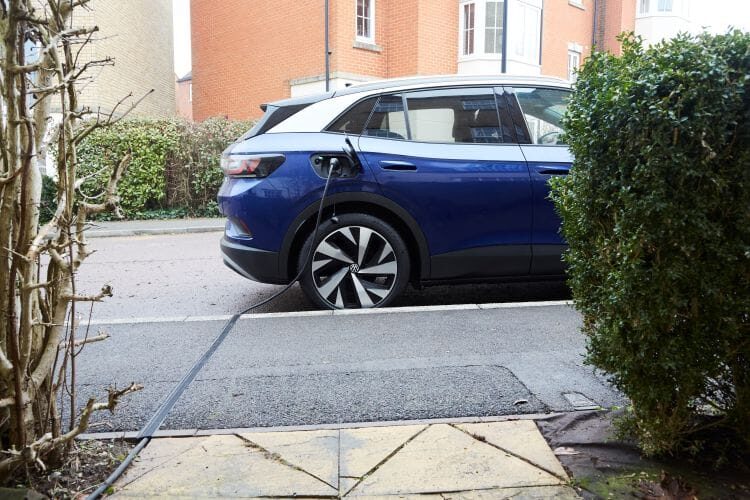
For households without a driveway, the comparison changes shape. Public charging points usually charge at a 7 kW rate, providing about 30 miles of range per hour of charge, though some charge at 22 kW23. There are plenty of publicly available chargepoints across the UK, although these are more expensive than charging at home4.
The government has recognised the position of drivers who cannot charge at home. It has stated that enabling residents without driveways to access cheaper electricity rates lets them charge up for as little as 2p per mile22. The On-Street Residential Charging scheme and the on-street parking grant are the two mechanisms aimed at that group.
The Energy Ombudsman's remit stops at the home boundary, so a driver relying on public charging has no equivalent route for a pricing complaint20. The government's review into the cost of public charging is the process looking at that side of the market22.
What the comparison means for a household
Home charging gives a household control over both the rate it pays and the time it charges. That control is the source of the saving: an off-peak EV tariff at around 7p per kWh against a public average of 52p per kWh, with 5% VAT against 20%1. It also depends on things outside the household's control, including the tariff market, the smart meter rollout and the grant schemes, which now run to 31 March 2027.
The dependence that remains is real. A home charger needs a grid connection, a supplier and a tariff, and the cheapest rates depend on a smart meter and on shifting load to hours the supplier chooses. A driver without off-street parking depends on the public network for most or all of their energy, pays the higher VAT rate, and has no route to the Energy Ombudsman for charging away from home20. The gap between the two positions is the central fact of this comparison, and it is a gap in both price and recourse.
Sources28 cited
- How much does it cost to charge an electric car, Which?, 2026-08-26
- EV charging statistics, Uswitch, 2025-07
- Electric car charging costs: all you need to know, Zapmap, 2026-09-04
- Charging electric vehicles, Energy Saving Trust, 2026-04-23
- Smart charging electric vehicles, Energy Saving Trust, 2025-03-25
- Open letter to the Chancellor on EV charging, ChargeUK, 2025-11-05
- Electric vehicle charging market study final report, GOV.UK, 2024-03
- Electricity distribution networks study: government response, GOV.UK, 2025-07-07
- Reduced public charging prices could boost EV sales, ChargeUK, 2026-07-31
- What is the cheapest way to charge an EV, Uswitch, 2025-07-02
- EVs: the facts, SMMT, 2025-09-22
- Citizens Advice response to the ECC inquiry into electric vehicles, Citizens Advice, 2023-09-22
- Decarbonisation demands fair taxation, SMMT, 2024-03-01
- The clock's ticking to help consumers go electric, SMMT, 2024-07-04
- BEAMA EV position paper, BEAMA, 2024
- Unprecedented EV discounting shores up September new car market, SMMT, 2024-10
- Supercharging the EV transition, Consumer Scotland, 2025
- EV charger installation and maintenance, NICEIC, 2025-08
- Smart meter guaranteed standards of performance draft impact assessment, Ofgem, 2025-08
- Review of Ofgem call for evidence, Energy Ombudsman, 2025-02-28
- Can we help: use this checklist, Energy Ombudsman, 2025-04-15
- Four more EV models qualify for £3,750 discount, GOV.UK, 2025-12-03
- How to charge an electric car, Uswitch, 2022-02-02
- Changes to electric vehicle chargepoint grant schemes from 1 April 2026, GOV.UK, 2026-02-25
- Electric Vehicle Chargepoint Grant for Households with On-Street Parking, GOV.UK, 2026-09-17
- Electric vehicle chargepoint and infrastructure grants for landlords, GOV.UK, 2026-09-18
- Electric vehicle chargepoint and infrastructure specifications, GOV.UK, 2023-10-10
- Electric vehicle charging, Isle of Anglesey County Council, 2026-09-20
 Cost to Charge an EV at HomeHow home charging cost is worked out from battery size, efficiency, the unit rate paid and the tariff behind it, with full-charge costs of about £8 to £17, cost per mile, annual running costs and what changes for EV owners from April 2028.
 Public EV Charging PricesCovers the published price series for public charging, how per-kWh rates differ by network and speed, and how they have moved over the past year.
 Home EV Charger CostA home charge point usually costs between seven hundred and fifteen hundred pounds fitted, with most people paying around a thousand.
 Public EV ChargingWhat does public charging really cost when you cannot plug in at home, and how do you pay for it?
 EV Charging Bolt-OnsCan you get cheap electricity for your car without changing the tariff for the rest of your home?
 Home Battery CostA home battery usually costs between one and a half and ten thousand pounds fitted, depending on size.