
In this comparison
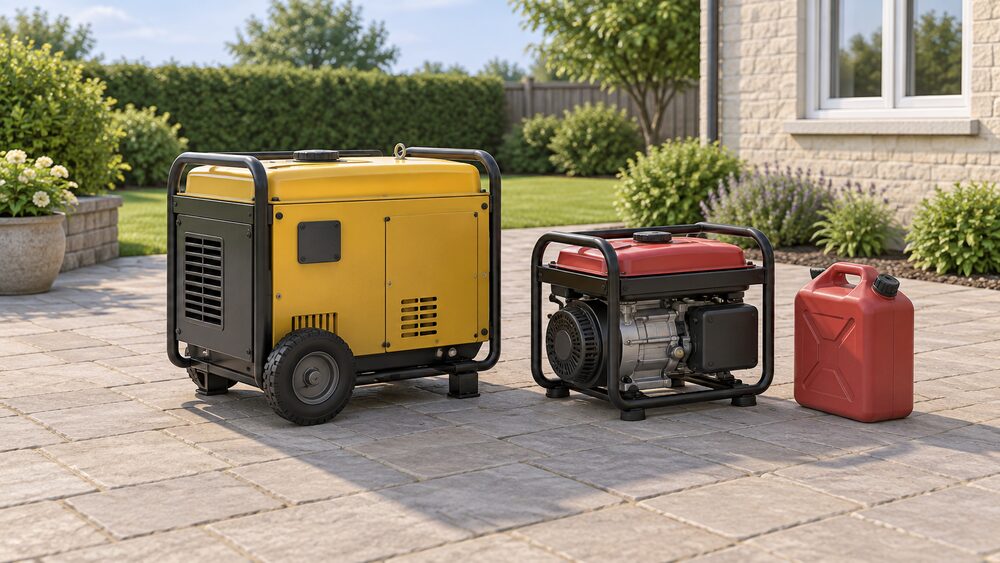
A diesel generator costs at least £1,000 and can run past £10,000, while a petrol set starts at around £2001. That price gap is the first thing most households meet, and it is not the whole comparison. Diesel engines are generally described as quieter, more durable and lower on vibration and fuel use than higher-speed alternatives, but they carry a higher initial outlay2. Petrol sets are cheaper to buy and simpler to move, and they produce poisonous carbon monoxide gas, so they must never be run in a confined space2.
The choice turns on four things: what the generator has to carry, how long a cut is expected to last, where the set can legally and safely sit, and how much fuel can be kept on the property. Diesel suits longer runs and heavier loads. Petrol suits short outages, small loads and a lower entry price. Neither is a route to energy independence on its own: both depend on a fuel supply chain, a supplier and, for most homes, the grid for everything the generator is not wired to carry.
Diesel or petrol: which suits a home backup
The two fuels pull in different directions. Diesel generators are generally diesel powered at the slower end of the market, and those low speed sets are described as quieter and more durable than the higher speed gensets, with less vibration and lower fuel usage, at the cost of higher initial capital outlay2. That combination, quiet, durable, economical to run, expensive to buy, is what makes diesel the usual answer where a set will run for long stretches or start automatically.
Petrol generators sit at the other end. They are cheaper to buy and easier to move, and they carry two specific weaknesses. They produce poisonous carbon monoxide gas, so they must never be run in a confined space, and they can struggle with remote starting because operating the engine's choke requires an additional mechanical operation2. A household that wants a set to start itself when the power fails is therefore pushed towards diesel, or towards a petrol set with a manual start and someone present to pull it.
Diesel also has more fuel flexibility. Diesel generators can be run on biodiesel or on virgin or waste vegetable oil as well as on standard diesel2. That matters for a rural household with a supply of waste oil, and it matters less for a suburban one buying from a forecourt.
There is one limitation on the diesel side that the maker guidance is explicit about: the fuel is best suited to warmer climates, as it can gel at temperatures below freezing2. A UK household running a diesel set through a cold snap needs to plan for that, whether through a fuel additive, a heated store or accepting that the set may not start on the coldest morning of the year.
Fuel efficiency: more power per litre with diesel
The efficiency case for diesel rests on how much work a litre does, not on what the litre costs. Diesel retailed at 176.6p per litre against 149.8p for petrol in one comparison of large SUVs3, so diesel is the more expensive fuel at the pump. It goes further: the Government advisory rate is 10.91 miles per litre for a diesel vehicle in the 1601 to 2000cc band against 9.41 miles per litre for a petrol vehicle in the 1401 to 2000cc band5. More miles per litre, at a higher price per litre.
That comparison comes from road vehicles, not generators, and the sources here do not publish an equivalent figure for a stationary engine. What they do show is how much of the fuel's energy is lost in a small petrol engine: 20% of petrol is converted into useful energy in a combustion engine equivalent6. The rest leaves as heat and exhaust. A diesel engine's higher compression ratio is the usual reason it does better, though no figure for that advantage in a generator appears here.
For a household weighing the two, the practical reading is this. Diesel costs more per litre and delivers more work per litre. Petrol costs less per litre and delivers less work per litre. Whether the diesel premium pays back depends on how many hours the set runs, and the sources give no hours figure at which it does.
"compared to [20% of petrol for a combustion engine equivalent]"
Running costs and fuel storage at home
Purchase price is the clearest published figure. A diesel generator costs at least £1,000, and prices can soar to £10,000 and beyond, while a petrol generator starts at around £2001. Those are UK retail figures read in January 2026 and include VAT as sold. Beyond that, prices are installer-quoted and no range is published here.
Running cost evidence is thinner and comes from small petrol sets. One Hyundai P1 petrol generator costs about 51p an hour to run, with around £4.35 to fill it and run the tank empty1. No equivalent pence-per-hour figure for a diesel home generator appears in the sources.
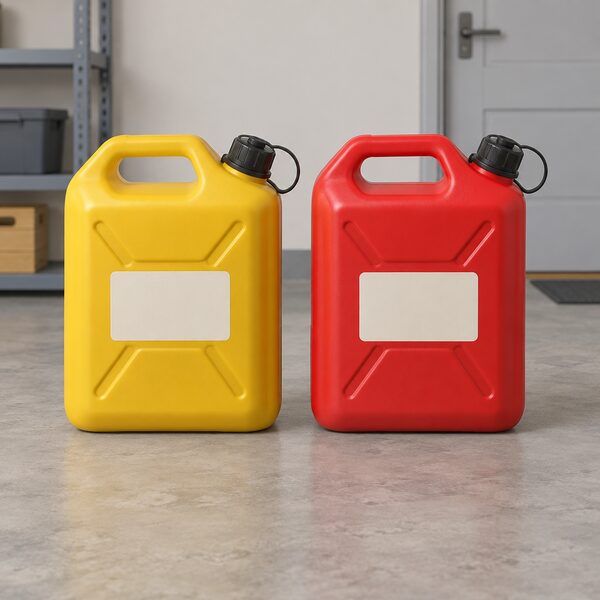
Fuel storage is where the two diverge most sharply for a household. Diesel is a liquid fuel stored in a tank the household owns, which is the arrangement that distinguishes it from LPG: with LPG the tank is usually owned by the company that supplies the gas, which can make a new installation cheaper but means an ongoing annual rental charge applies7. The same point is made for LPG more generally: the tank is normally owned by the company supplying the gas, with an ongoing annual rental charge8. Diesel carries no such rental, but it does carry the obligation to store and rotate the fuel.
For comparison, solid fuel storage guidance for house coal specifies a bunker or shed9, which is the same principle applied to a different fuel: a dedicated, ventilated, outdoor store rather than a corner of the house.
Maintenance and reliability over years of ownership
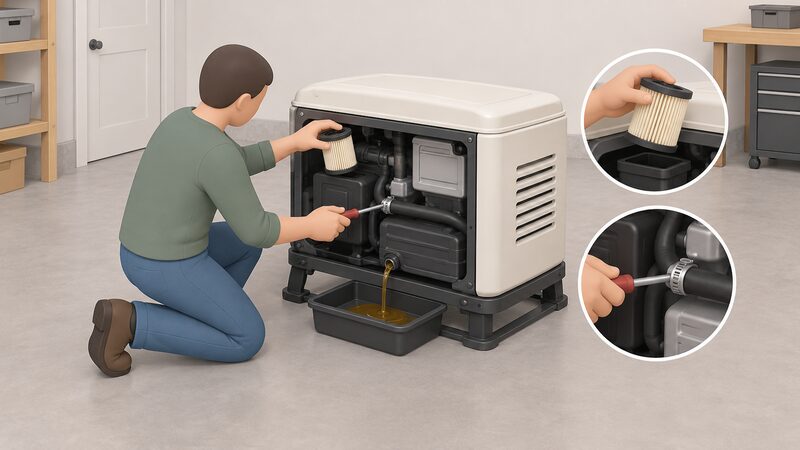
A generator is a machine with a service schedule, and the schedule is the same shape whichever fuel it burns. Run the genset regularly under load, at least once a month; turn a diesel set over a minimum of once a year; change oil and filters at the recommended operating hours or annually; and check hose clips annually2. A set that sits untouched for two years is a set that may not start when it is needed.
Diesel has the better reputation for durability over that period. Low speed gensets are generally diesel powered and described as quieter and more durable than the higher speed gensets, with less vibration and lower fuel usage2. The trade is the higher initial capital outlay, which is the price of the longer service life.
Petrol sets carry the maintenance burden of a small engine plus the starting weakness already noted: remote starting is harder because the choke needs a mechanical operation2. For a household that wants the set to sit in a shed and start on demand, that is a real constraint.
There is a wider reliability point that applies to both fuels. In a widespread outage there will not be enough generators to keep everyone powered, as more than one million homes, at least 5% of households in Great Britain, will be without power at once10. A generator is a personal solution to a problem that is, at scale, a network problem. That is the dependence it does not remove.
Noise, emissions and where each can be sited

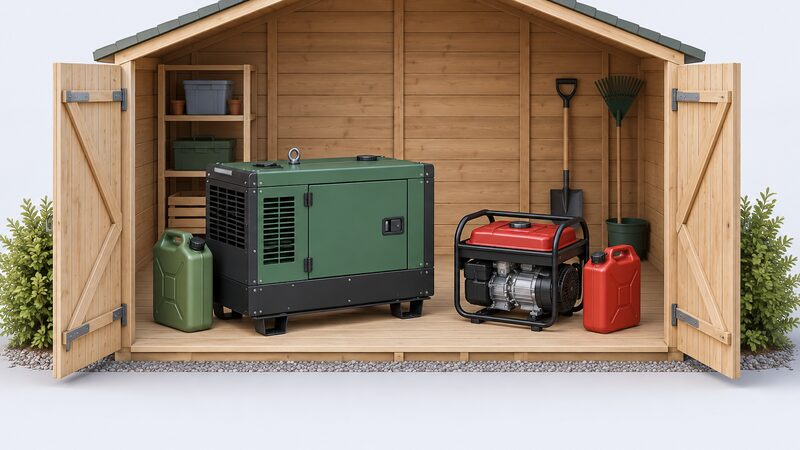
Siting is governed by safety first. A petrol, diesel or gas generator must never be run inside or near a tent, awning, caravan, motorhome or cabin, and must be kept away from open doors and windows4. Fuel-burning appliances belong outside unless they are designed and installed for indoor use4. That rules out the garage, the utility room and the conservatory for a portable set, whatever the fuel.
Noise favours diesel at the slower end. Low speed gensets are generally diesel powered and quieter than the higher speed gensets, with less vibration2. A high speed petrol set is the noisier neighbour of the two, which matters where the set sits close to a boundary or a bedroom window.
Emissions are the harder comparison. Petrol engines produce poisonous carbon monoxide gas, which is why they must never be run in a confined space2. Diesel exhaust carries its own hazards, and the sources here do not quantify either. What they do give is the wider context: oil and other fuels, including generation from pumped storage, supplied 4.18% of UK electricity generation in 2024, down from 6.47% in 199011. A home generator burning diesel or petrol is adding to a small and shrinking share of national generation, not replacing a large one.
For a household in Scotland, the storage rules for liquefied petroleum gas are set out in building standards guidance, which covers the two forms of liquefied petroleum gases generally available in the UK: commercial butane and commercial propane12. Diesel and petrol storage are not covered by that particular guidance, and no equivalent England, Wales or Northern Ireland figure for domestic diesel storage appears in the sources here.
Sizing a generator to your household load
Sizing starts with the load, not the fuel. For an off-grid system, the generator should be around twice the size of the inverter or charger's continuous output, so a 4,000-watt inverter or charger should be paired with an 8,000-watt generator2. That rule keeps the generator comfortably above the load the inverter can pass through, and it applies whether the set burns diesel or petrol.
Where a generator replaces an existing system, the installed generation capacity of the new system should not be smaller than the existing system, except where a smaller system would be more appropriate or effective, as with replacement installations such as photovoltaics13. That is building guidance rather than generator guidance, but the principle carries: match the replacement to what it replaces unless there is a reason not to.
Controls matter as much as capacity. On-site electricity generation should be provided with controls to allow proper operation of the system without the need for user intervention, particularly where electricity generation and storage systems such as batteries are used13. A generator that needs someone home to start it is a different proposition from one that starts itself.
For a household trying to work out what a generator is actually replacing, the demand figures help. An EPC D home with a gas boiler uses 11,733 kWh of gas a year, against 3,520 kWh a year with a bio-hybrid14. A household with a gas boiler and a petrol car imports 67%, two-thirds, of the total primary energy it needs for heating, power and fuel15. A generator addresses the power slice of that, and only while fuel lasts.
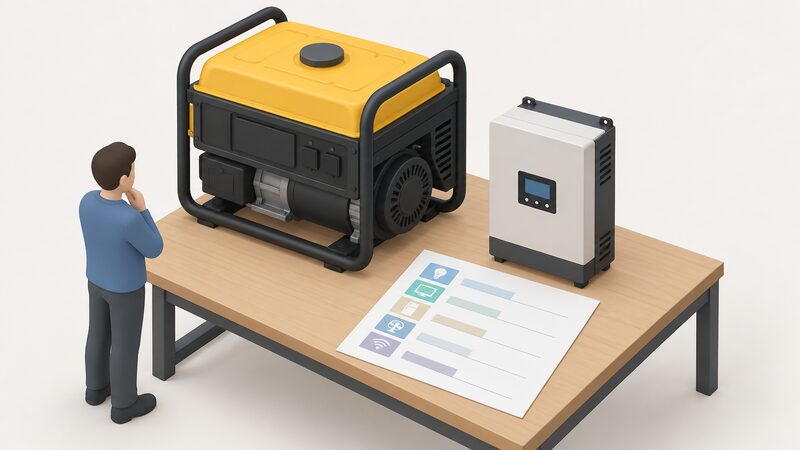
Alternatives to fuel-burning generators for backup power
Fuel is the weak point of both options, and the alternatives mostly attack it. A domestic battery system can store as much electricity as a household typically uses in a day, enabling a PV system to provide up to 70% of a household's annual electricity demand16. That is a different model of backup: no fuel to store, no exhaust, no siting rule, but a fixed capacity that runs out if the outage outlasts it.
Small-scale wind is often paired with diesel rather than replacing it. It is common to run a wind system with a diesel generator for use during periods of low wind speeds17. That hybrid arrangement is the honest picture of off-grid resilience: the renewable carries the load when it can, and the generator covers the gap.
Other heating technologies show what a household can do without a generator at all. Boilers are usually fuelled by gas or oil, but sometimes liquid petroleum gas or biomass18. Micro combined heat and power systems are usually powered by mains gas or liquefied petroleum gas, though some models run on other fuels19, and internal combustion engines are generally not suitable to use in your home, while fuel cells are more efficient than Stirling engines20. Heat pumps take a different route entirely: the amount of energy needed can be less than a third the amount of energy needed by a gas boiler to produce an equivalent amount of heat21, and heat pumps should generally be cheaper to run than most other fuel types because they are so much more efficient22.
One option is not available. At present, solar plug-in microgenerators cannot be legally sold, supplied or used in the UK due to constraints arising from existing product safety legislation23. A household planning a small solar top-up for a generator-backed circuit should know that before buying.
The dependence that remains, whichever route is taken, is worth stating plainly. A generator depends on a fuel supplier, a fuel store and a working engine. A battery depends on the grid or a PV array to recharge it. Neither makes a home self-sustaining on its own, and the backup power picture for a UK household is usually a combination rather than a single device.
Sources23 cited
- How to buy the best generator, Which?, 2026-01-20
- Choosing a generator for off-grid systems, Wind & Sun, 2023-11-24
- How much does it cost to charge an electric car, Which?, 2026-08-26
- Holiday carbon monoxide safety tips, Northern Gas Networks, 2026-07-24
- Reduced public charging prices could boost EV sales, ChargeUK, 2026-07-31
- UK energy security and clean electrification, Ember, 2024-10-21
- Off-gas grid heating: options available, OFTEC, 2026-09-17
- Future liquid fuels, UKIFDA, 2026-01-27
- Wood, coal and smokeless fuel: which is right for your stove, HETAS, 2026
- Emergency power cuts, Electricity North West, 2026-09-19
- Energy statistics, Uswitch, 2025-12-17
- Liquefied petroleum gas storage, Scottish Government, 2017-03-01
- Building regulations Part L and F review, Approved Document L2B, Welsh Government, 2020-11
- Green Gas Taskforce report: bio-hybrids, Cadent, 2026-02-03
- Household energy security in 2030, ECIU, 2024
- Making the most of your solar PV panels, Centre for Sustainable Energy, 2026-08
- Wind, nidirect, 2026-05-18
- Heating your home, Energy Saving Trust, 2026-05-19
- Micro combined heat and power, Energy Saving Trust, 2022-08-05
- Micro-CHP, MCS Certified, 2026-08-17
- Heat buildings strategy, Scottish Government, 2021-10
- In-depth guide to heat pumps, Energy Saving Trust, 2026-07-16
- Plug-in solar consultation, UK Government, 2026-06-16
 Generator Fuel and Running CostsPetrol, diesel, LPG or HVO: which is cheapest to run a whole-house generator, and how much does it really cost each day?
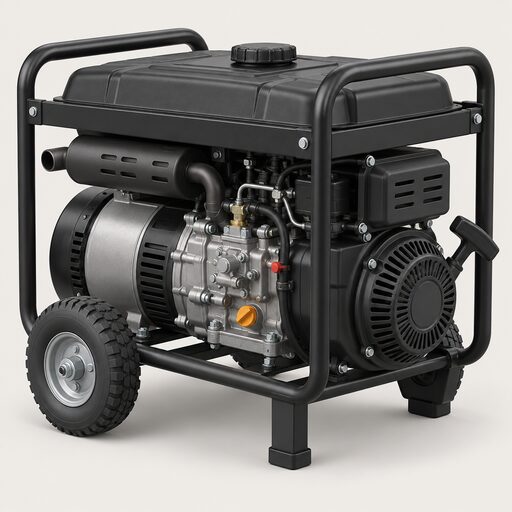 Portable Generators for HomesWhat can a portable generator actually run in a power cut, and for how long?
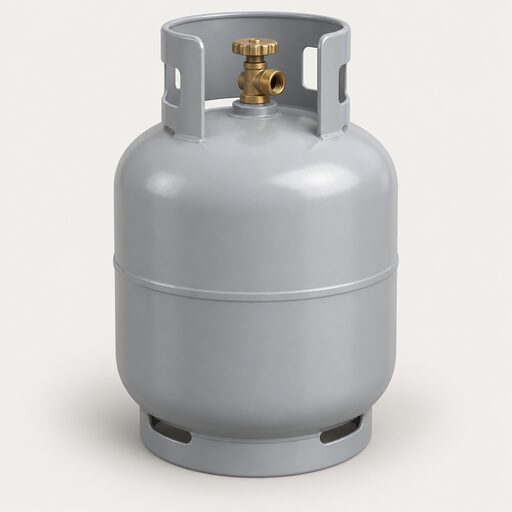 Storing Generator Fuel at HomeHow much petrol can you legally keep at home, and where should you put it?
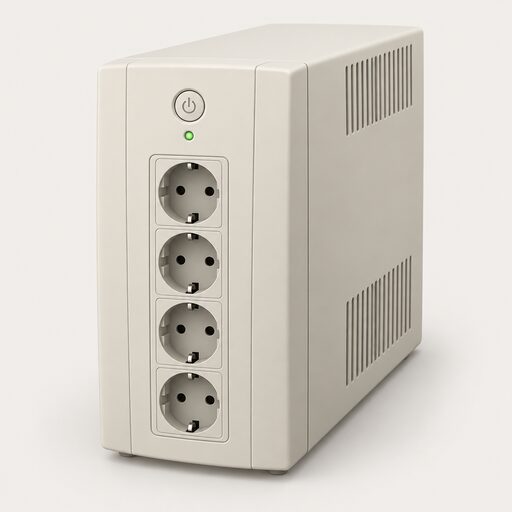 Maintaining Backup PowerWill your generator actually start when the power goes off?
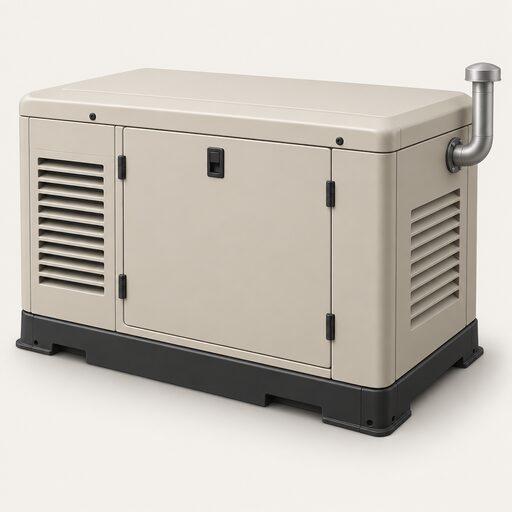 Standby Generators for HomesA standby generator starts itself when the power cuts out, so your home keeps running even when you are out.
 Heat Pump Running CostsWhat does a heat pump cost to run each year, and is it cheaper than a gas boiler?