
In this comparison
Smappee and Emporia both sell whole-home electricity monitoring built on current transformers, and both have moved from that base into appliance-level detail and EV charging. The difference is where each puts the intelligence. Smappee, a Belgian manufacturer, builds a modular platform that spans electricity, gas and water, with the Infinity range at its centre and a dashboard aimed at professionals and operators as well as households1. Emporia, a United States company, builds a lower-cost monitor plus a smart plug that measures each device directly, and its UK presence runs through Amazon rather than a wide installer network4.
For a household weighing energy independence, the practical question is what each system lets you see and keep. Smappee's platform is designed to manage single installations or larger site networks on the same software, and its chargers carry MID-certified class B metering, which is the grade used for billing-grade measurement2. Emporia's Vue 3 can be combined with further Vues in the app for a unified view of a home's energy, and the smart plug pairs with the Vue to assign appliance-level data to the whole-home profile7.
Neither system removes dependence on the grid or on a supplier. Both depend on a cloud app, a manufacturer's continued support and, in Emporia's case, a retail channel that is currently Amazon-only in the UK5. What they change is the quality of the household's own data, which is the input to sizing solar, a battery or a heat pump.
At a glance: Smappee vs Emporia
The two ranges overlap at the whole-home clamp monitor and diverge above it. Smappee's entry hardware is the Power Box and Connect, both of which communicate over Smappee Bus A and Smappee Bus B, and both rated overvoltage category II10. The Infinity Power Box, dated 13 January 2026, uses the same two buses12. That shared bus architecture is what lets Smappee add modules rather than replace the unit, and it is the basis of the claim that the platform can manage single installations or larger site networks with the same software2.
Emporia's range is narrower and more retail-shaped. The Vue 3 is listed for home use on a two-phase system, and the Monitor Only package ships without the additional 50A CT sensors needed to track individual circuits, so circuit-level detail depends on which kit is bought4. The smart plug is the appliance-level instrument, and Emporia positions it as a foundational tool within its home energy management platform, with pairing to the Vue unlocking automated management8.
| Smappee | Emporia | |
|---|---|---|
| Core monitor | Power Box, Connect, Infinity Power Box10 | Vue 37 |
| Communications | Smappee Bus A and Bus B10 | WiFi to the Emporia app9 |
| Multi-utility | Electricity, gas and water3 | Electricity7 |
| Appliance detail | Platform-level monitoring and management2 | Smart plug measures per device9 |
| UK retail route | Maker and installer channels | Amazon, exclusively for plugs5 |
What each system does: monitoring, appliance recognition and control
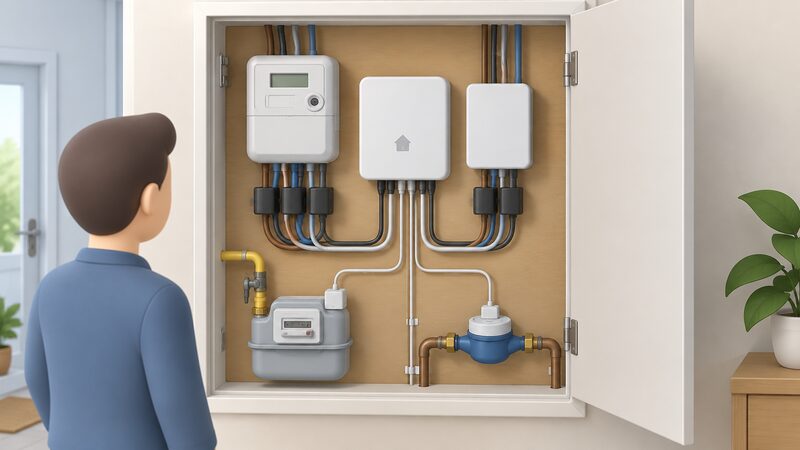
Smappee describes its platform as bringing together energy monitoring and metering, energy management and optimisation, and EV charging and charging services within one consistent platform2. In the home that means the Infinity system visualises, predicts and manages energy flows, and the energy management layer monitors electricity, gas and water in one scalable system, working with EV charging, solar and storage3. The app tracks real-time and historical energy use across appliances, solar and EV charging so a household can compare periods13.
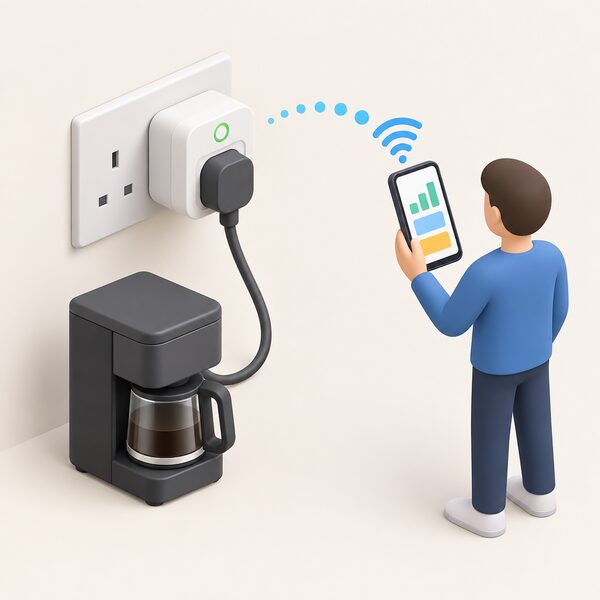
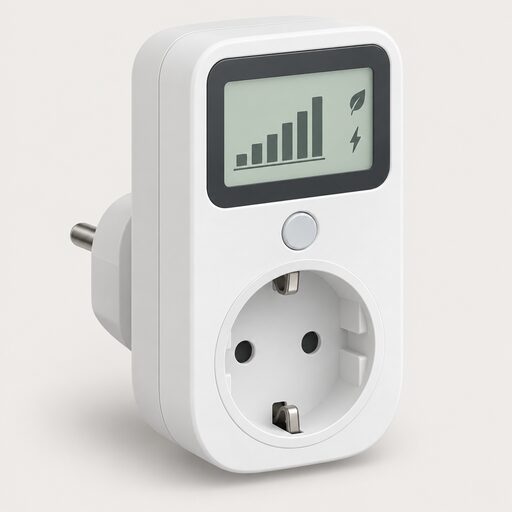
Emporia's approach is more granular at the device and less broad at the utility. The Vue 3 monitors the whole home and can be combined with further Vues in the app for a unified view, which matters in larger properties or where a second consumer unit exists7. The smart plug then measures energy use per device rather than only switching it on and off, connects over WiFi to the Emporia app, and can be controlled remotely from a phone9. Paired with a Vue, it can automatically turn devices off when home energy load approaches a pre-defined peak5.
Control is where the two differ most sharply. Emporia's plug is a switching device as well as a meter, and it works with Amazon Alexa or Google Home for voice control14. Smappee's control layer sits in the platform and dashboard rather than in individual sockets: the dashboard is built for professionals, operators and partners, with the flexibility to manage sites and users, configure pricing and access, monitor performance across locations and support installations remotely2. For a single household that is more capability than most need, but it is the reason Smappee appears in commercial and multi-site work.
"Through the App and Dashboard, you can monitor, manage and optimise your system in real time at home, at work or across multiple sites"
Smappee's appliance learning: what it identifies and how
Smappee's published material does not claim automatic appliance recognition from an electrical signature. What it describes is a monitoring and metering platform, with the app tracking real-time and historical energy use across appliances, solar and EV charging2. Where Smappee does publish hard measurement credentials, they sit in the charging hardware: the EV Base, EV Dual Base and EV One each carry MID metering certified class B6.
That distinction matters when comparing the two brands. Emporia's appliance-level data comes from a physical plug on the device, which is direct measurement rather than inference, and its AI Energy Assistant analyses plug data to deliver instant, personalised insights about device costs, usage patterns and savings opportunities8. Smappee's appliance-level view comes from circuit-level monitoring and the platform's analytics, which is a different kind of evidence: it can cover hard-wired loads that a plug cannot reach, but it depends on the household labelling circuits correctly.
For energy independence, the practical consequence is that neither system tells a household what a device costs without some setup. Emporia needs a plug on the appliance. Smappee needs the circuit identified and the platform configured. Both then produce the consumption history that a sizing decision rests on.
Emporia in the UK: availability and integration limits
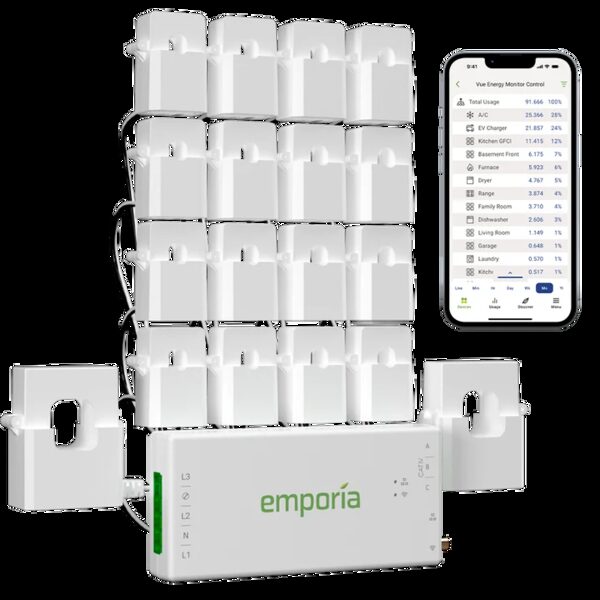
Emporia's UK position is retail and narrow. The company states that its UK and EU smart plugs are available exclusively on Amazon, and that a 240V UK variant is offered5. The Vue 3 home energy monitor and the energy monitoring smart plug are both listed as in stock4. The smart plug is also sold in US and EU variants, and in the EU it is available on Amazon in France, Germany, Italy, Netherlands and Spain8.
The limits are worth stating plainly. Nothing in Emporia's published material describes integration with UK flexibility services or with the ev.energy app, so any such claim should be verified with the maker before purchase. The plug's own standby consumption is 1W, which is small but not zero across a house full of them12. Returns run to 60 days on the plug12.
Smappee's UK route is different: it sells through its own channels and through installers, and its platform is designed to be managed by professionals and partners as well as householders2. That gives more integration depth but less retail convenience. Neither brand's app removes the household's dependence on a manufacturer's cloud service, and neither replaces the smart meter as the settlement-grade record of import and export. For the meter itself, see how smart meters work and consumer access devices.
The two companies: origins, track record and design credentials
Smappee is a Belgian company. Its EV Wall is made in Belgium, inclusive of assembly, and the company states that its energy management solutions have helped families and businesses worldwide for over a decade1. Its chief executive is Stefan Grosjean1. The design record is documented: Red Dot Design, iF Product and two Henry van de Velde design awards1. Hardware certifications across the range include CE, with ACMA on the EV Base, FCC and RCM on the Connect, and CE on the EV Dual Wall and EV Dual Base6. Enclosures use Magnelis and aluminium, and the EV Dual Wall carries IP54 and IK10 ratings18.
Emporia is a United States company whose UK footprint is a retail listing rather than a manufacturing or support presence. Its smart plug has been named one of CNET's favourite smart plugs, and a review by Gareth Butterfield at The Mirror is cited on its own site9. Customer review distribution on the plug shows 64% five-star ratings from 75 reviews12. Those are the maker's own citations of third-party coverage, not independent test results, and should be read as such.
The independence question is the same for both. A monitor is only as useful as the company behind it: firmware, app updates and cloud storage all sit with the manufacturer. Smappee's decade of trading and its commercial installer base give it a longer track record in the UK and European market; Emporia's UK presence is newer and thinner.
EV charging: where each brand has expanded
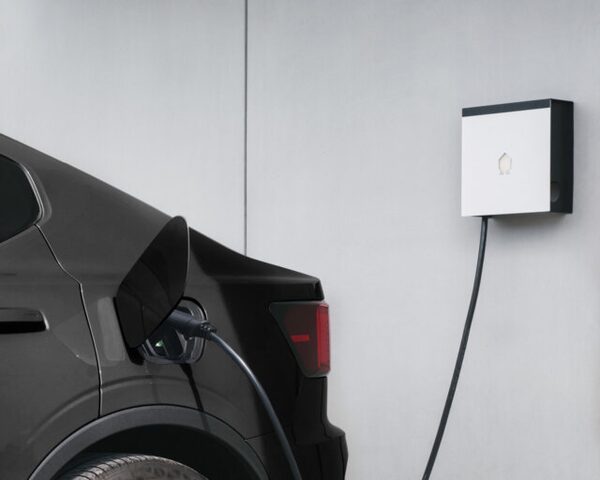
Smappee's charging range is the more developed of the two and is where much of its engineering documentation sits. The EV Wall delivers up to 22 kW through a single connector, with dynamic load balancing that automatically adapts to site consumption, and it supports split billing between employer and employee with transparent reporting17. The EV One Home is a floor-mounted station with one connector, using a kWh meter compliant with IEC 62053-21 at 1% accuracy, Ethernet 100BASE-T connectivity, and an operating altitude of 0 to 2000 m15. The EV Dual is modular, with a single EV Dual Core available in socket or cable configuration and in wall-mounted or ground-mounted setups, and it carries MID metering certified class B6.
Communications across the charger range are consistent: Ethernet 100BASE-T on the EV Base, EV One Home and EV Wall Home Black, and Ethernet 100BASE-T with 4G LTE-M on the EV Dual Base and EV Dual Wall19. The EV Wall Home Black is available only with a fixed cable and uses charge mode 3 under IEC 6185116.
Emporia's expansion into charging is documented in the United States rather than the UK, and the material available here does not give UK specifications for an Emporia charger. For a UK household, that means Smappee is the brand with a documented UK-relevant charging specification, and Emporia is the brand with a documented UK-relevant monitoring and plug range.
Using monitoring data before buying battery storage: the three-month rule
There is no single mandated monitoring period before buying a battery, but the metering standards point to what the data needs to be. Ofgem's guidance for the Metering and Monitoring Service Package requires meters to record data at least every two minutes and update it at least once a month20. That is the granularity a sizing decision needs: half-hourly or finer, sustained across seasons.
The tariff side sets a practical floor. Smart export guarantee tables show payment cycles of three months on several tariffs, including Solar Saving, Export Variable, Export and Earn Plus, SEG Beyond Exclusive and Export Variable Value, and twelve months on Next Export Exclusive v321. Several of those tariffs include battery storage as an eligible technology, which is the point at which monitoring data stops being interesting and starts being load-bearing21.
A household that monitors for a single month sees one season and one set of behaviours. A full year captures heating and cooling swings, holiday absence and the shoulder months when a battery earns most of its keep. The three-month payment cycle is the shortest period over which an export tariff will settle, so it is a reasonable minimum for a first read, not a substitute for a year.
For the wider sizing method, see using energy data to size a system and solar and battery system monitoring.
Which suits which home
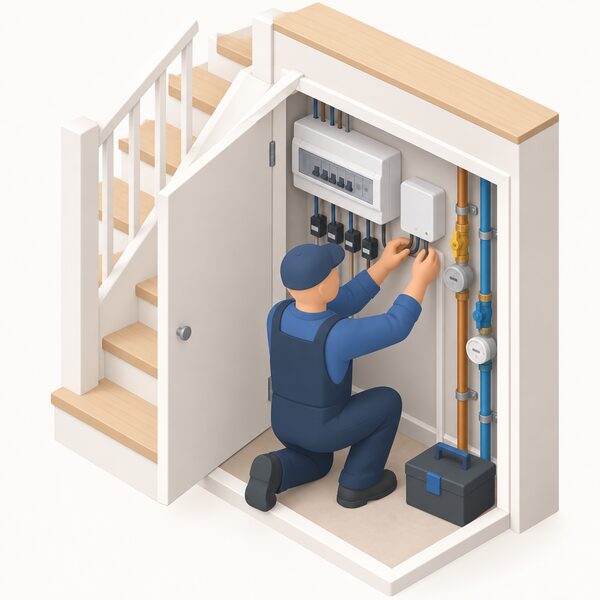
The choice turns on what the household needs to measure and how much integration it wants.
Smappee suits a home that wants one platform across electricity, gas and water, with circuit-level monitoring, an installer-managed setup and a route into EV charging from the same maker3. It also suits properties where the monitoring will later extend to a second building or a small commercial site, because the same platform manages single installations or larger site networks2. The trade-off is cost and complexity: the dashboard is built for professionals and partners, and the hardware is priced and specified accordingly2.
Emporia suits a home that wants whole-home monitoring plus direct per-device measurement at low cost, with a plug that switches as well as measures and works with Alexa or Google Home9. It suits a household willing to buy through Amazon and to accept that UK integration with flexibility services is not documented5. The Vue 3's ability to combine multiple units helps larger homes, and the Monitor Only kit is the cheaper entry point without circuit sensors7.
Neither brand makes a household independent of the grid. Both depend on a cloud app and a manufacturer's continued support, and both sit alongside, rather than replace, the smart meter. What they deliver is the consumption record that makes every later decision, on solar, battery or tariff, an evidence-based one rather than a guess. For the wider picture, see home energy monitors and smart plugs and appliance monitoring.
Sources21 cited
- Smappee home page, Smappee, 2026
- Smappee platform and software, Smappee, 2026
- Smappee energy management, Smappee, 2026
- Emporia energy monitors, Emporia Energy, 2026
- Emporia UK and EU smart plugs, Emporia Energy, 2026
- Smappee EV Dual Base technical specifications, Smappee, 2026
- Emporia Vue 3, Emporia Energy, 2026
- Emporia smart plug, Emporia Energy, 2026
- Emporia UK smart plugs review in The Mirror, Emporia Energy, 2026
- Smappee Power Box technical specifications, Smappee, 2026
- Smappee Connect technical specifications, Smappee, 2026
- Emporia energy monitoring smart plug, Emporia Energy, 2026
- Smappee app, Smappee, 2026
- Emporia smart plug a favourite of CNET, Emporia Energy, 2026
- Smappee EV One Home technical specifications, Smappee, 2026
- Smappee EV Wall Home Black technical specifications, Smappee, 2026
- Smappee EV Wall, Smappee, 2026
- Smappee EV Dual Wall technical specifications, Smappee, 2026
- Smappee EV One Home technical specifications, Smappee, 2025
- Domestic RHI guide to metering, Ofgem, 2022
- Smart export guarantee, Solar Energy UK, 2026
 HEMS and Monitoring CostsWhat does a home energy monitor cost to buy and run?
 Home Energy MonitorsWhich home energy monitor suits your house, and what will it actually show you?
 Home Energy AssessmentsWhich home energy check do you actually need?
 What a HEMS DoesWhat does a home energy management system actually do, and is it worth having one?
 Home Energy ModelThe energy rating on your EPC is about to be worked out differently when you buy, sell or build a home.
 Baseline Your Energy UseBefore spending money on a heat pump, solar panels or a battery, you need to know what your home actually uses now.