
In this comparison
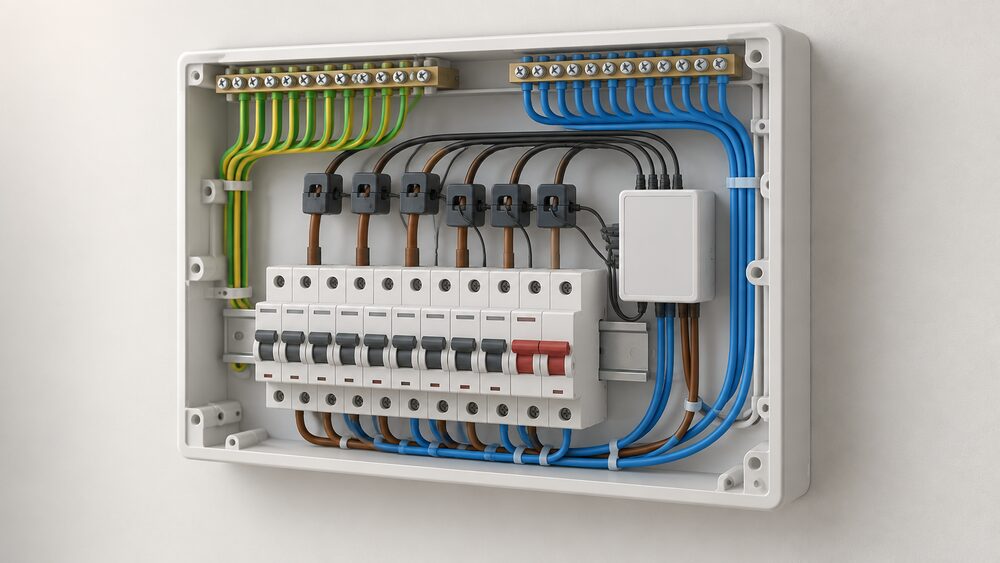
Emporia and Shelly approach whole-home energy monitoring from opposite directions. Emporia's Vue 3 is a single box that clamps onto the circuits inside a consumer unit and reports them together: the maker states it monitors up to 16 individual circuits per Vue, and that multiple Vues can be combined in the Emporia app for a unified view of the whole home1. Shelly's energy metering range is modular, built from meters and relays that each watch one or two circuits and can switch a load as well as measure it2.
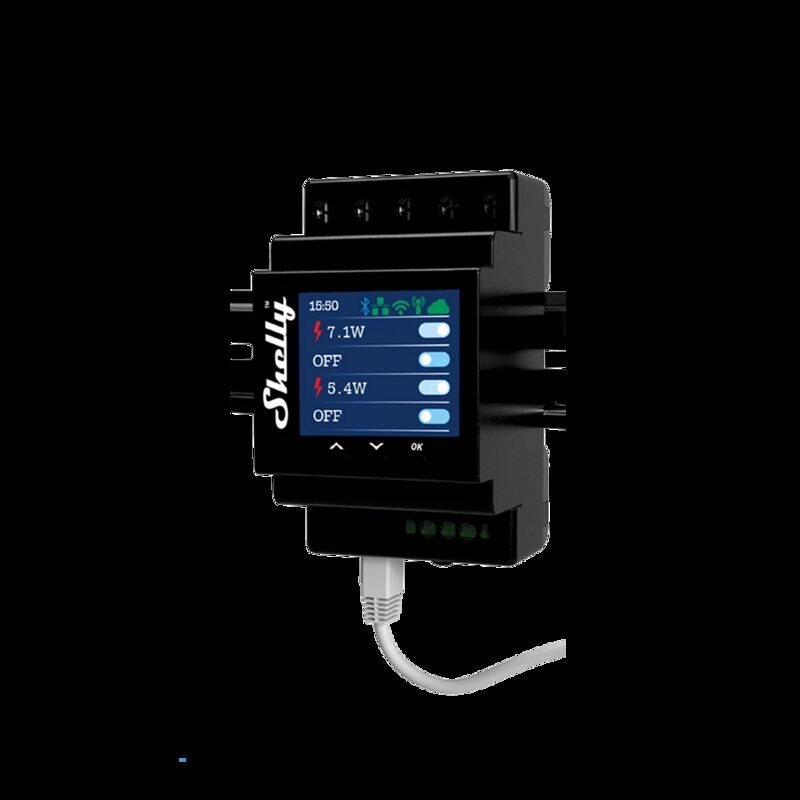
The practical difference is what a household wants to see. A Vue 3 with the 16-sensor package gives the most complete measurement coverage available from a single monitor, in the maker's words, and the 8-sensor package tracks eight circuits plus the system mains1. A Shelly EM monitors two circuits on the same phase or individually, and the Shelly Pro EM-50 is a DIN rail mounted two-channel single-phase meter with an integrated switch for contactor control2.
Both sit in the local-first corner of the market, which is why they are compared for Home Assistant use. Neither is a smart meter replacement: a smart meter is the supplier's billing device, while these are consumer-side monitors that read the same circuits independently. For the wider picture, see home energy monitors and current transformers and energy sensors.
What each system measures: circuit-level clamps versus individual devices
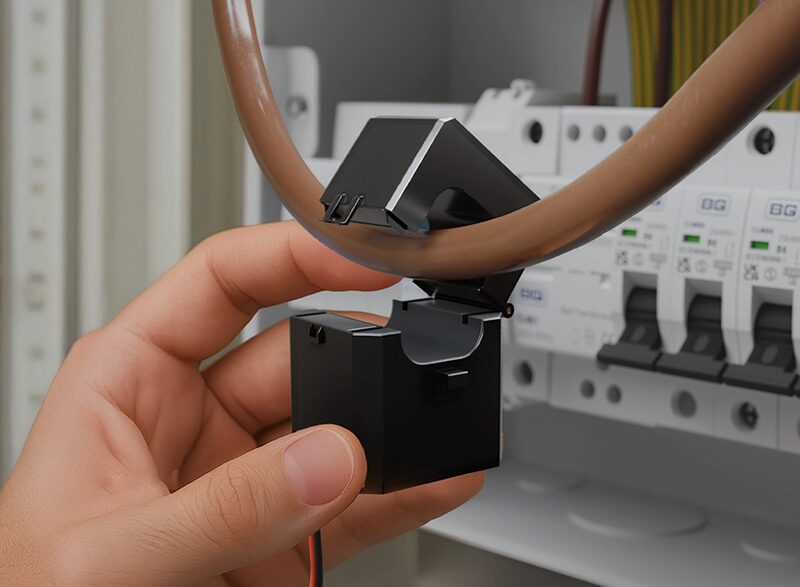
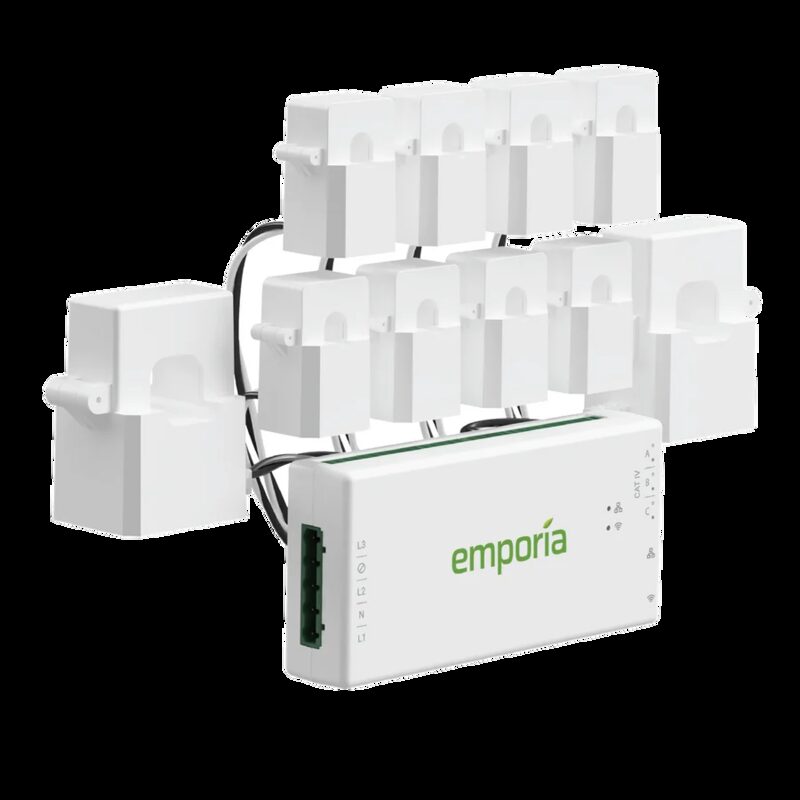
The Vue 3 is a circuit-level monitor. It is sold in three packages, and the difference between them is how many circuits can be tracked separately.
| Vue 3 package | What it includes | What it tracks |
|---|---|---|
| Monitor Only | No additional 50A CT sensors | System mains only1 |
| 8 Sensors | Eight 50A CT sensors | Eight individual circuits plus the system mains1 |
| 16 Sensors | Sixteen 50A CT sensors | The most complete measurement coverage available with a single Vue, in the maker's words1 |
The unit supports single phase two-wire systems, single-split phase three-wire systems, and three-phase four-wire Wye systems with earthed neutral, so a standard UK single-phase supply falls inside the supported list1. It also tracks solar generation and net metering1.
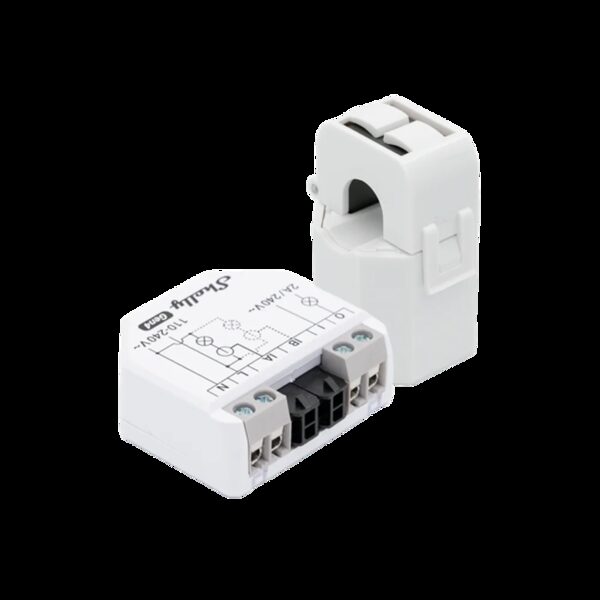
Shelly's approach is modular. The Shelly EM is a Wi-Fi-operated energy meter that monitors two circuits on the same phase or individually2. The Shelly Pro EM-50 is a DIN rail mountable two-channel single-phase meter with an integrated switch for contactor control, so it can measure and switch2. The Shelly EM Gen4 adds Wi-Fi 6, Bluetooth, Zigbee and Matter2.
A third route exists for households that only want one appliance measured. Which? describes the plug-in monitor method: plug the monitor into the wall socket and the appliance into the monitor, and for multiple devices plug them into an extension lead and plug the lead into the monitor3. Emporia's smart plug does the same job with an app: the maker states it monitors energy use per device, not just on and off4.
The companies behind them: Emporia of Colorado and Shelly's European base
Emporia Energy was founded in Littleton, Colorado in January 2018, with the stated aim of making home energy monitoring affordable and accessible. Its product line has grown from monitors into smart plugs and EV chargers, and its editorial output is written largely around North American electricity plans: fixed-rate plans, free nights plans, EV charging plans and Texas solar buyback plans all feature in its blog through mid-2026. That is a fair indication of where the company's commercial centre of gravity sits, and it matters to a UK buyer weighing how much of the product's automation logic is built for a market with different tariffs and different grid rules.
Shelly sells into the UK and Europe as part of a European smart home hardware business, and its energy metering range is documented with EU conformity paperwork. Shelly published a multilingual EU declaration of conformity, number 189, for the Shelly EM dated 23 July 20252. The range spans clamp meters, DIN rail meters and relay modules, which is a different commercial model from Emporia's single flagship monitor: Shelly sells components that installers and hobbyists assemble into a system, while Emporia sells a kit with an app.
Ownership stability is worth checking in this sector. The energy service market has a history of companies failing or being absorbed: First Utility was acquired by Shell and renamed Shell Energy5, and Citizens Advice has documented complaints about HELMS (Home Energy Lifestyle Management Ltd) and Green Deal work, noting that PVSI has the same company director as HELMS6. A monitor whose automation depends on a manufacturer's cloud service carries that company's continuity risk, which is the argument for local data access. See local data access and Modbus and app subscriptions and cloud dependence.
Accuracy and data: what the Vue and Shelly EM report and how often
Neither maker publishes an accuracy class for these consumer monitors in the material available here, so the honest position is that circuit-level clamp monitoring is indicative rather than billing-grade. What the makers do publish is what the devices measure and how they connect.
| Emporia Vue 3 | Shelly EM | |
|---|---|---|
| Circuits measured | Up to 16 per unit1 | Two, same phase or individually2 |
| Solar and net metering | Tracked1 | Not stated for the EM2 |
| Switching | Not stated | Pro EM-50 has an integrated switch for contactor control2 |
| Wired connection | 10/100 Ethernet1 | Not stated2 |
| Wireless | Wi-Fi 2.4 GHz1 | Wi-Fi 6, Bluetooth, Zigbee and Matter on Gen42 |
Independent testing of home energy monitors is thin. Which? has examined whether energy monitors are the best way to measure power usage, and its guidance on plug-in monitors describes the extension-lead method for measuring several devices at once3. The Energy Performance Validation Scheme describes itself as an independent certification standard and states that it then continuously monitors members to ensure they are giving consumers accurate performance estimates and monetary savings7. That is a validation scheme for installers and performance estimates rather than a test regime for consumer monitors, but it is the closest independent assurance structure in this space.
For a household, the practical accuracy question is what the data is used for. If it is used to decide which circuits to shift or to size a solar or battery system, indicative circuit data is usually enough, and the using energy data to size a system page covers that. If it is used to check a bill, the supplier's meter is the reference point, not the monitor. Which? notes that its own testing of electric cars found an average range difference of around 19% against official WLTP figures, a reminder that manufacturer-published performance figures and independent measurement can diverge8.
Smart home integration: Home Assistant, ev.energy and the IQ Energy Router+ route
Integration is where the two brands diverge most. The Vue 3 connects over Wi-Fi on 2.4 GHz (IEEE 802.11b/g/n) or Ethernet (10/100Base-T, IEEE 802.3), which gives it a wired option that many consumer monitors lack1. The Emporia smart plug supports voice control with Amazon Alexa or Google Home4. Shelly's energy metering range is broader in protocol terms: the Shelly EM Gen4 carries Wi-Fi 6, Bluetooth, Zigbee and Matter2. Matter and Zigbee support widens the number of hubs and controllers a Shelly module can talk to, which is why the brand appears so often in local-first setups. The home energy device protocols page explains what those protocols mean in practice, and Home Assistant for home energy monitoring covers the software side.
There is also a documented pairing between Shelly hardware and Enphase's energy management line. Enphase has published a configuration image dated March 2026 showing an IQ Energy Router+ for single-phase water heaters with a Shelly relay module. That is a specific configuration rather than a general compatibility statement, and a household considering it would need to check the router model and module against current Enphase documentation.
Emporia's automation is app-centred. The maker states that the smart plug can automatically turn devices off when home energy load approaches a pre-defined peak, and automatically turn devices on when the home has excess solar generation, both when paired with an Emporia Vue4. It can also set a schedule for devices to use energy when it is cheapest, and turn devices off during a utility's peak hours4. Those features assume a tariff structure the app understands, and Emporia's published tariff guidance is North American.
Recognition and track record: awards for the Emporia smart plug and Pro EV charger
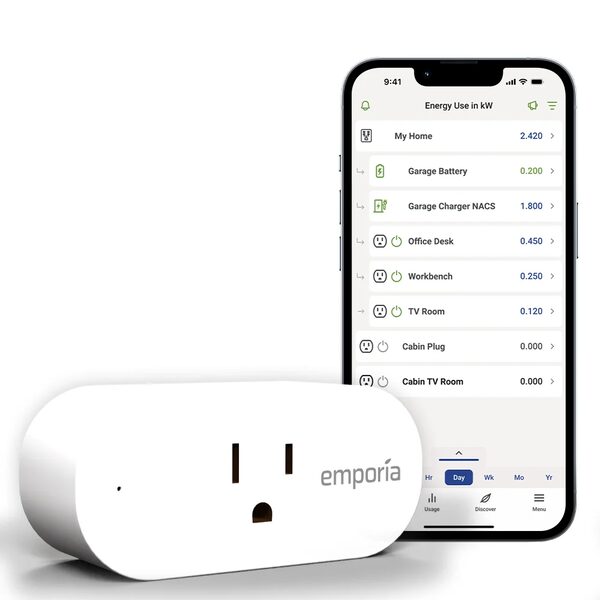
Emporia's recognition sits with its accessories rather than its monitor. The maker states that its US smart plugs earned Editor's Choice in PC Magazine and recognition from DigitalTrends, and that the UK and EU plugs carry the same award-winning features4. CBS News separately named the Emporia smart plug among the best smart plugs of 2024, noting that it monitors power draw in real time in the Emporia app. On the charging side, State of Charge named the Emporia Pro among the best home EV chargers of 2025, highlighting its PowerSmart load balancing, and the product page cites a 2026 award for design, power, reliability and price.
Independent recognition in the wider market is worth reading alongside those:
- Zapmap named Smart Charge the best EV charging network 2026 in the medium rapid and ultra-rapid category9.
- BSI Kitemark certification covers testing and certification for charge points both for home and commercial use10.
- The ivie rewards programme has previously offered prizes including ivie Bud giveaways, vouchers for solar and battery installations, and Samsung SmartThings appliances11.
Awards are a track record signal, not a specification. The Emporia awards above relate to the smart plug and the Pro charger, not to the Vue 3 monitor, and no equivalent independent award for the Vue 3 appears in the material here. For a household, the more useful track record question is whether the company keeps publishing firmware and app updates for the monitor over the years the device is installed.
UK availability and what each means for household energy independence
The Vue 3 is listed as in stock on Emporia's own shop, with free shipping and no hidden fees stated by the maker1. The smart plugs reach the UK differently: Emporia states that its UK and EU smart plugs are available exclusively on Amazon, with storefronts in the UK, France, Germany, Italy, the Netherlands and Spain4. So the monitor and the plug arrive through different channels, and a household wanting both should expect to buy them separately.
Shelly's energy metering range is sold through the maker's own collections and through European distribution, with EU conformity documentation for the EM dated 23 July 20252. No UK price is published for either range in the material here, so prices are shop-quoted or installer-quoted at the point of sale.
What either system does for energy independence is bounded and worth stating plainly. Both give a household its own view of circuit-level consumption without waiting for a supplier's app, and both can drive automation that shifts load away from peak periods. Neither removes dependence on the grid, on a supplier, or on the manufacturer's cloud service for the app features. The Vue 3's automation runs through the Emporia app; Shelly's local protocols reduce but do not eliminate that dependence, since the useful dashboards still tend to sit in third-party software. On the gas side, none of this applies at all: a monitor sees electricity circuits only.
Support structures differ across the UK:
- Home Energy Scotland offers free advice on improving the energy efficiency of your home12.
- National Energy Action provides personalised energy advice for customers in England13.
- The Boiler Upgrade Scheme requires a property to be in England or Wales14.
- The Warm at Home Plus and Home Cashback schemes in Northern Ireland are administered by Evolve15.
- Which? offers a free home energy plan to UK homeowners16.
Which to choose for your home
The choice turns on coverage, protocol and where the data lives rather than on a single headline number.
Choose the circuit-level route if the question is which circuits in the house draw the most. The Vue 3 with the 16-sensor package gives the widest single-unit coverage, up to 16 circuits, and multiple units can be combined in the app for a whole-home view1. It also tracks solar generation and net metering, which suits a home with panels1. The trade-off is that the automation and the tariff logic live in Emporia's app, and the company's published tariff guidance is North American.
Choose the modular route if the question is how to measure and switch a small number of specific loads, or how to fit monitoring into an existing local-first setup. The Shelly EM covers two circuits, the Pro EM-50 adds a switching contactor on DIN rail, and the Gen4 model carries Wi-Fi 6, Bluetooth, Zigbee and Matter2. The trade-off is that a system assembled from modules needs more design work than a kit, and the household is more dependent on the software it chooses to run.
For a single appliance, neither is necessary: a plug-in monitor or a smart plug answers the question more cheaply3. For the wider comparison of monitor types, see smart meter vs standalone energy monitor and smart plugs and appliance-level energy monitoring. Households in flats or rented homes face separate constraints, covered in monitoring in flats and rented homes.
Sources16 cited
- Emporia Vue 3 Home Energy Monitor, Emporia Energy, 2026-09-17
- Energy Metering, Shelly, 2026-09-20
- Are energy monitors the best way to measure your power usage?, Which?, 2026-03-31
- Emporia UK and EU Smart Plugs, Emporia Energy, 2026-09-17
- Big six energy suppliers guide, Uswitch, 2026-07-17
- HELMS and Green Deal complaints, Citizens Advice Scotland, 2026-09-17
- Energy Performance Validation Scheme, EPVS, 2026-01-12
- Should I buy an electric car?, Which?, 2026-04-16
- Smart Charge, Zapmap, 2026
- Powering trust in electric vehicle charging with BSI Kitemark certification, BSI, 2026-09-17
- Celebrating the little wins with ivie points, ivie, 2026-09-20
- Financial help and energy efficiency improvements, City of Edinburgh Council, 2026-09-20
- Helping communities in crisis, SGN, 2026
- Raising minimum standards for heat pumps: options assessment, GOV.UK, 2024-11-27
- NISEP List of Schemes 2024-25, Utility Regulator Northern Ireland, 2024-10
- Use our home energy planning service, Which?, 2026-06-18
 Home Energy MonitorsWhich home energy monitor suits your house, and what will it actually show you?
 HEMS and Monitoring CostsWhat does a home energy monitor cost to buy and run?
 What a HEMS DoesWhat does a home energy management system actually do, and is it worth having one?
 Current Transformers and SensorsA clamp monitor measures the current in your cables, while a P1 module reads your smart meter instead.
 Home Energy AssessmentsWhich home energy check do you actually need?
 Take Control of Your EnergyHow do you read your own energy use and keep hold of your meter readings?