In this guide
Enphase is a microinverter manufacturer whose household monitoring sits inside a single app. The Enphase App is described by the maker as a "powerful and intelligent companion to the Enphase Energy System", offering 24/7 remote monitoring and management, live solar production, and panel-level performance insights that show shade, dirt or faults as they appear1. The app is available on the App Store and Google Play1.
The scale behind it is global rather than British. Enphase states that over 5 million homes are powered by Enphase systems, with support for 1700+ grid codes and electrical parameters2, and that approximately 5.3 million Enphase-based systems have been installed in over 165 countries3. A press release dated 20 August 2026 repeats the 5.3 million figure4. Those are the maker's own counts and cover worldwide installations, not UK homes.
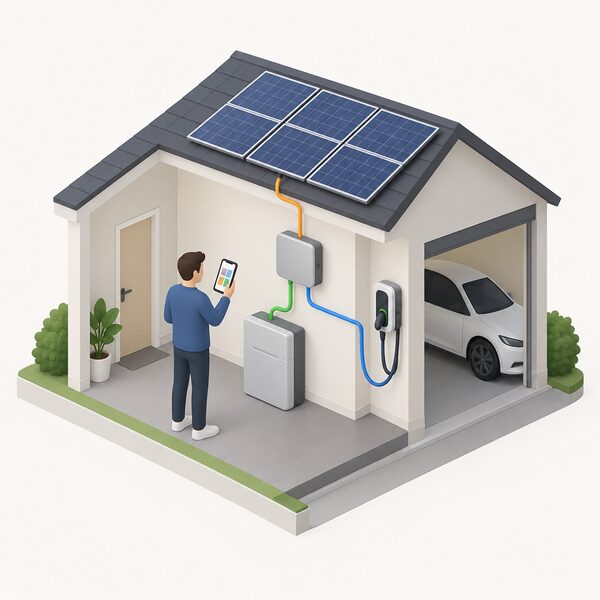
For a household, the monitoring proposition is straightforward: one app for solar production, battery state, grid import and export, and EV charging, with the option of panel-level detail. The dependence is equally straightforward. The app runs on Enphase's cloud, the gateway needs a home broadband connection, and the deepest features, including the AI Assistant, require a logged-in account tied to the manufacturer.
What the Enphase App does: 24/7 monitoring of your system
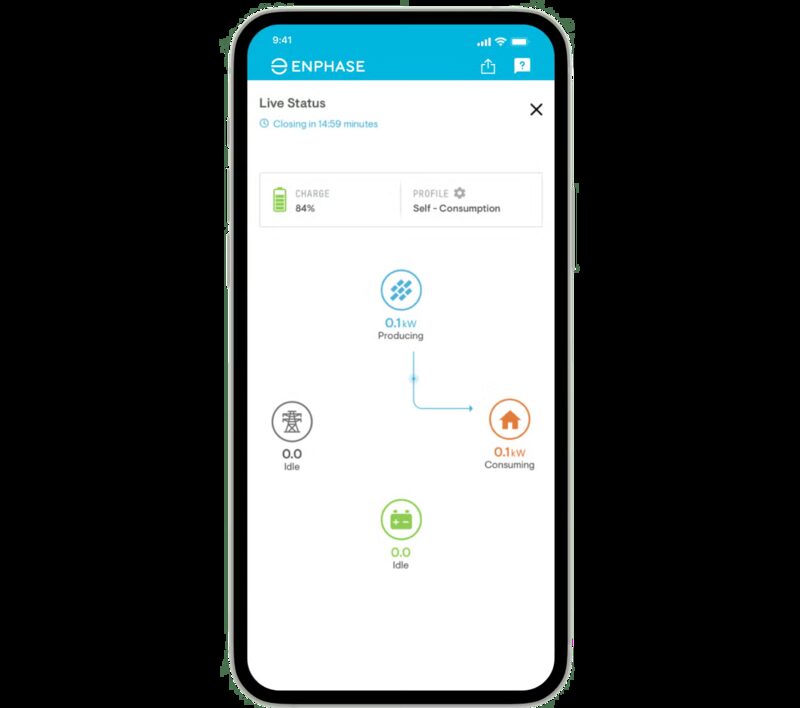
The Enphase App is the single interface for an Enphase Energy System. Its stated functions are 24/7 remote monitoring and management, live solar production, and real-time panel-level performance insights that let a householder spot shade, dirt or issues instantly and know where to focus attention1. The main screen is Status, which summarises energy produced and consumed along with details of energy pulled from the grid and from the batteries8.
The app is not only a display. Enphase describes it as the tool householders use "to monitor performance and intelligently manage their systems"9, and IQ Energy Management, the AI software platform embedded in Enphase Energy Systems, is controlled entirely through it10. That platform forecasts energy production and consumption while monitoring energy rates, and manages when the system uses grid, solar or battery energy and when to schedule energy-intensive appliances10.
Updates arrive over the air. Enphase states that microinverters and batteries receive over-the-air software updates that bring new features to both the solar system and the app, so the monitoring interface changes without a visit11. The app is available on the App Store and Google Play1.
The independence question here is real but partial. A household with an Enphase system can see its own generation, consumption and battery state in detail, which is more than a standard smart meter or in-home display provides. But the data is rendered by Enphase's cloud and app, not held locally by default. Local data access is a separate subject, covered in local data access and Modbus, and the wider pattern of app dependence is set out in app subscriptions and cloud dependence.
Panel-level monitoring: seeing each panel individually
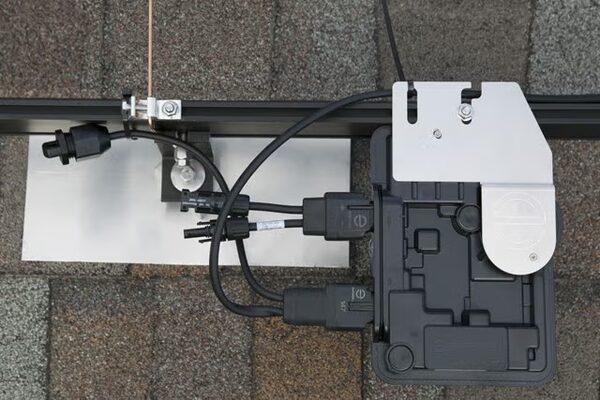
Panel-level visibility is the feature that distinguishes microinverter systems from string inverter systems. Because each panel has its own microinverter, the system can report on each panel separately, and the Enphase Enlighten App is described as leveraging this to offer panel-level visibility showing energy production from each panel13. Enphase's own description is that a householder can "see each panel's performance in real time with the Enphase App, spot shade, dirt, or issues instantly and know where to focus"5.
In practice this changes fault-finding. A shaded chimney, a soiled panel or a failing unit shows up as a dip on one panel rather than as a fall in total output, which is a different diagnostic experience from a string system where one underperforming panel drags the whole array. Enphase's newsroom describes the same principle from the company side: the system "translates the data into information for the users, for example about the current performance of their PV system, also per solar panel"14.
There is a limit worth stating. Panel-level data is only as good as the communications path. Enphase's own support material lists common sources of interference to power-line communication:
- Power strips and surge protectors
- UPS or battery backup units
- Touch lamps, older battery chargers and AC adapters
- Heavy rotating motors in fans, refrigerators, freezers and water pumps
- Workshop equipment such as drill presses and table saws
- Electronic pest deterrents
- Older or failing compact fluorescent lamps15
Where that communication degrades, the granular reporting is what suffers first.
For a household, panel-level monitoring is a genuine independence gain in one narrow sense: it makes the performance of the generating asset visible without calling anyone out. It does not reduce dependence on the grid, the supplier or the manufacturer's cloud.
The IQ Battery and storm preparedness from the app
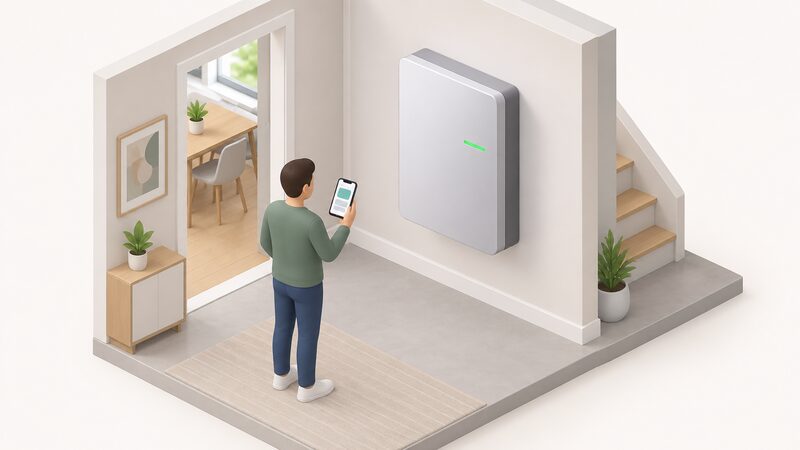
Enphase IQ Batteries are managed through the Enphase App, which the maker describes as putting a householder "just a tap away from tracking how much" energy is stored and used16. The app gives a real-time view of power made, used and saved, plus reports over a period, system settings and service messages in a single mobile app11.
The backup features are where the app does more than report. Enphase describes a Storm Guard feature that monitors the National Weather Service for approaching storms and, if one is detected, automatically fully charges the batteries for the most backup power possible11. During an outage, an integrated load controller allows power-hungry appliances to be turned on and off from the Enphase App, either automatically or manually, to conserve charge11. Enphase published a dedicated storm preparedness guide for homeowners on 12 November 2024, covering how to maximise battery backup power, monitor system status and troubleshoot common issues ahead of storm-related grid outages15.
The IQ Battery 5P is described as letting a household "bank the power you make and use it anytime, day or night, rain or shine"3, and it receives over-the-air software updates that bring new features to the system and the app11.
The independence this creates is the most substantive on the page: a charged battery with app-controlled load shedding keeps selected circuits running when the grid fails. What remains is the app itself. Battery management, storm alerts and load control all run through Enphase's software, so a household that wants to manage stored energy without a cloud account has fewer options than one content to use the maker's interface.
Smart Charging in the Enphase App: the IQ EV Charger 2
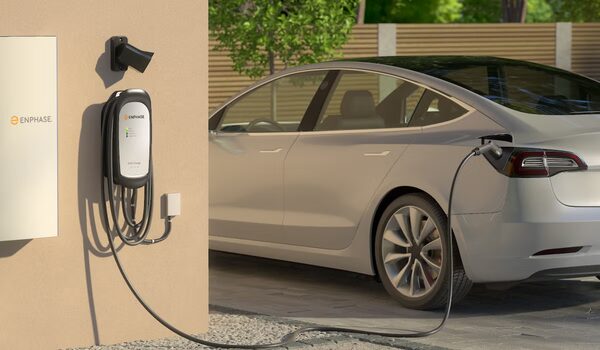
Smart Charging became available in the Enphase App for homeowners using the IQ EV Charger 2 on 15 April 20266. It allows a householder to set a target driving range and a departure time, and then optimises charging using solar and low-tariff grid periods6. Charging modes are reached from three places in the app: the EV charger status page, the EV charger settings page and the profile page6.
The IQ EV Charger 2 is sold in tethered single-phase and three-phase forms, both paired with the Enphase App for advanced monitoring, control and access features17. It integrates with the Enphase Energy System or functions independently as a standalone charger17. The three-phase version adds intelligent phase switching, automatically adjusting between single-phase and three-phase charging to maximise the use of surplus solar energy18. Owners can start and stop charging, set and update charging modes, monitor real-time and historical energy consumption, generate charging reports and manage charger settings from the app19.
The charger also supports partner integrations at different levels of control:
| Integration tier | What it covers |
|---|---|
| Full control | Start/stop charging, charging profiles and schedules20 |
| Partial control | Real-time monitoring and historical data, with start/stop control for grid load management20 |
| Monitoring only | Real-time status and historical consumption data, aimed at utilities managing grid load20 |
Where an Energy Management System is used locally over Modbus or a similar connection, the EMS owns the end user experience and Enphase can only monitor the charger20. Integration with the ChargeLab platform is enabled from the Enphase Enlighten App by selecting ChargeLab, reviewing access permissions and tapping Enable, after which a registration request is sent and the screen shows Active status if registration succeeds19.
The independence position is mixed. Solar-surplus charging reduces reliance on imported electricity for transport, and the app makes that visible and schedulable. But scheduling, reporting and partner integrations all run through Enphase's cloud, and the local Modbus route hands the user experience to a third-party EMS rather than to the householder directly.
Power Control Software: protecting your home from overload
Power Control Software is Enphase's answer to a practical constraint: a home's main breaker limits how much current can be drawn at once, and an EV charger is a large new load. Enphase published an article on 21 July 2025 describing how PCS dynamically manages the EV charging rate and home loads to keep household current within main breaker limits15. A June 2025 article covers dynamic load balancing without overloading the home, and a video page published on 23 June 2025 explains how the IQ EV Charger 2 manages the home load with the same feature15.
This matters for households considering an EV charger without a supply upgrade. Rather than charging at full rate and risking the main fuse, the charger reduces its draw as other appliances in the home increase theirs. The system supports 1700+ grid codes and electrical parameters, which is the mechanism by which one product can be configured for different national supply arrangements2.
The wider UK context is that network operators have been moving to speed up charger connections. UK Power Networks has instantly approved more than 2000 new applications since launching Smart Connect in February 202121. That is a distribution network operator's process, not an Enphase feature, but it bears on how quickly a household can get a charger energised.
For energy independence, load management is a supporting capability rather than a generating one. It does not reduce the amount of electricity a home needs, but it allows a larger load to be added within an existing supply, which is often the difference between charging an EV at home and not.
Tariff integration and the Octopus Energy relationship
Enphase announced on 27 January 2025 that the Enphase Energy System had integrated into Octopus Energy's smart tariffs, including Intelligent Octopus Flux9. The same release states that Enphase announced a new strategic relationship with Octopus Energy in the previous year to deploy IQ8 Microinverters and IQ Battery 5P in the United Kingdom9.
Intelligent Octopus Flux is described in independent guidance as a two-rate tariff with matching import and export prices and automated battery management, charging the battery when power is cheapest and exporting between 4pm and 7pm22. Octopus Flux appears in Smart Export Guarantee listings as requiring an import tariff, with Octopus named as the supplier for the Octopus SEG Tariff23. Octopus smart EV tariffs work via an app that customers download24.
Two things are worth separating. The Enphase integration is with Octopus's smart tariffs, which is a commercial arrangement between a manufacturer and a supplier. The Octopus Compare tool, by contrast, is currently only available for Octopus tariffs and customers, who provide an account number and an API key to make comparisons25. The two are not the same kind of access.
The independence reading is that tariff integration lets a battery and charger respond to price signals automatically, which lowers cost and shifts load away from peak periods. It also deepens dependence on two companies at once: the manufacturer whose system decides when to charge, and the supplier whose tariff sets the signal. A household that switches supplier away from a supported tariff loses the automated behaviour, even though the hardware is unchanged.
The AI Assistant: what it adds to monitoring
Enphase launched the AI Assistant in the Enphase App on 20 August 20267. It is an AI-powered energy advisor that knows a household's exact solar setup, including solar panels, battery, EV charger and gateway27. It can answer natural language questions, explain system behaviour and guide troubleshooting7.
The Assistant's data access is broad for a logged-in user. It can reach devices and their health, energy production and consumption, battery activity, grid usage, system settings, site details and support history, and can access real-time system data, device status, energy history and account details to give personalised answers27. It also shows key metrics including Solar Offset, Grid Dependence and Energy Independence, along with a five-day production forecast27. Beyond diagnosis, it can:
- Recommend compatible upgrades based on the system
- Help find certified installers
- Check warranty and support history
- Download reports
- Manage system users
- Connect a householder with Enphase Support27
It can also adjust app-based controls such as battery operating profiles, charge-from-grid settings, EV charging behaviour, notification preferences and report generation7.
Availability is continuing to expand, and the Assistant can be reached on the Enphase Support website, in the Enphase App, in the Enphase Installer Portal and in Enphase Service Manager, with availability varying by platform and region27.
The metrics are the interesting part for independence. Solar Offset, Grid Dependence and Energy Independence are the maker's own framing of how self-sufficient a home has become, and they are calculated from the system's own data. That is useful, but it is a manufacturer's scoreboard rather than an independently audited measure, and it depends on the same cloud account as everything else in the app.
Enphase as a company: scale, reach and what it means for owners
Enphase describes itself as an American company14 and as the world's leading supplier of microinverter-based solar and battery systems, EV chargers, home energy management systems and virtual power plant solutions7. Its Energy Management System is presented as bringing energy generation, storage, control and management together into one complete solution, described as smarter and more connected than ever before28.
The reach figures are the ones that matter for an owner weighing longevity:
| Measure | Figure | Source |
|---|---|---|
| Homes powered by Enphase systems | Over 5 million | 2 |
| Systems deployed | Approximately 5.3 million | 3 |
| Countries with deployments | Over 165 | 3 |
| Countries with active deployments and installer networks | Over 160 | 2 |
A press release dated 20 August 2026 repeats the 5.3 million deployment figure4. The two country counts, 160+ and 165, come from different pages and are not reconciled; both are the maker's own.
For a UK household, scale cuts two ways. A large installed base and a wide installer network suggest parts, service and software support are likely to persist, and the UK operation has a support phone number and email published on its warranty documentation29. But the monitoring experience is inseparable from the company: the app, the cloud, the AI Assistant and the over-the-air update pipeline are all Enphase services, governed by terms of service updated on 9 June 2025 covering Enphase websites, apps and services including Enlighten, 365 Pronto and the Enphase App15.
The honest summary for independence is this. An Enphase system gives a household unusually detailed visibility of its own generation, storage and consumption, and the battery and charger features allow real control over when energy is used. What it does not give is independence from the manufacturer. The data is rendered by Enphase's cloud, the smart features run through Enphase's app, and the deepest capabilities require a logged-in account. A household comparing options should weigh that against systems that keep more of the monitoring local, a subject covered in solar and battery system monitoring and in Enphase vs SolarEdge monitoring apps.
Sources29 cited
- The Enphase App, Enphase, 2026
- IQ Bidirectional EV Charger datasheet, Enphase, 2026-06
- Homeowners (UK), Enphase, 2026
- Enphase AI Assistant press release, Enphase, 2026-08-20
- Home solar systems (UK), Enphase, 2026
- Smart Charging: never wake up to an uncharged EV again, Enphase, 2026-04-15
- Enphase Energy launches AI Assistant in the Enphase App, Enphase, 2026-08-20
- Manage EV charging in the Enphase App, Enphase, 2023-09-26
- Enphase and Octopus Energy smart tariff integration, Enphase, 2025-01-27
- IQ Energy Management, Enphase, 2026
- Home solar batteries (UK), Enphase, 2026
- Home solar systems, Enphase, 2026
- Best solar monitoring apps, LuxPowerTek, 2026-02-25
- Enphase: our inverters are the smartest, Enphase, 2022-03-18
- Enphase homeowner updates, Enphase, 2024-11-12
- Home solar batteries, Enphase, 2026-09-17
- IQ EV Charger 2 tethered single-phase, Enphase, 2026-09-17
- IQ EV Charger 2 tethered three-phase, Enphase, 2026-09-17
- IQ EV Charger 2 integration with ChargeLab, Enphase, 2026-05-27
- IQ EV Charger partner integrations, Enphase, 2026-09-17
- Electric car chargers fast-tracked in the South East, UK Power Networks, 2021-02
- Smart Export Guarantee rates: the best and worst SEG tariffs, Which?, 2026-04-24
- Smart Export Guarantee, Solar Energy UK, 2026-05-12
- Octopus EV energy tariffs, Uswitch, 2025-10-09
- Consumer engagement with smart electricity tariffs, Which?, 2024-11
- Green energy, Uswitch, 2026-09-04
- Enphase Support, Enphase, 2026
- Enphase Energy Management System, Enphase, 2026-09-17
- Enphase Energy limited warranty, IQ Battery 5P FlexPhase UK, Enphase, 2025-09-15
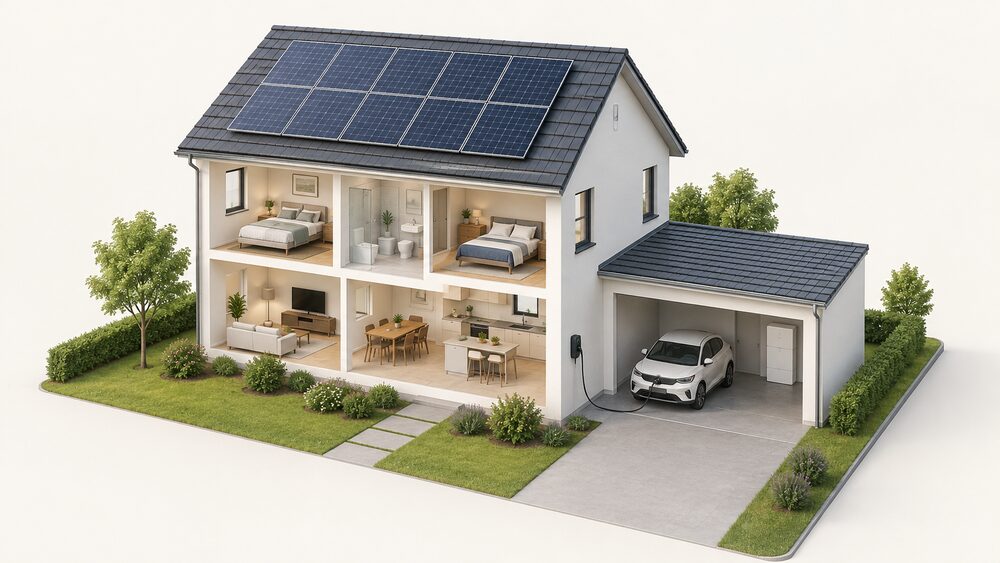 Enphase home EV chargersCan the Enphase charger use the solar power your roof is already making, even if your panels are not Enphase?
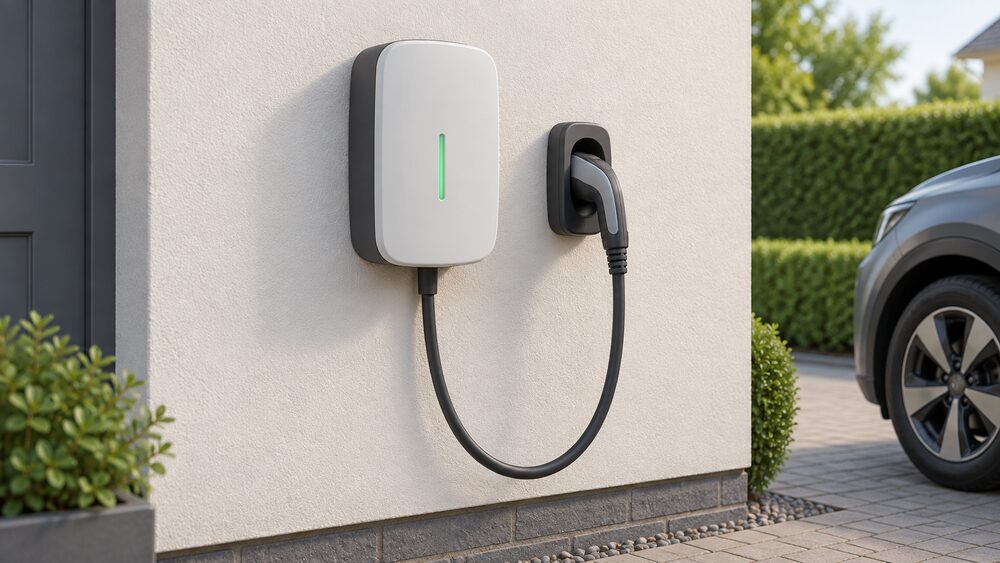 Enphase IQ EV Charger 2Can the Enphase IQ EV Charger 2 send spare solar power to your car instead of the grid?
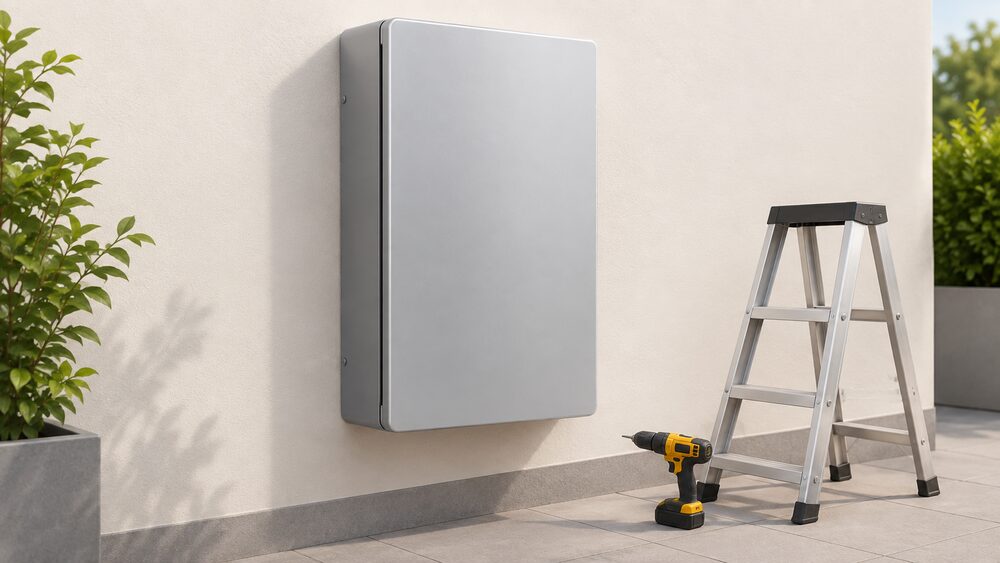 Enphase Home BatteriesEnphase makes the IQ Battery range for UK homes, and the current model is the IQ Battery 5P.
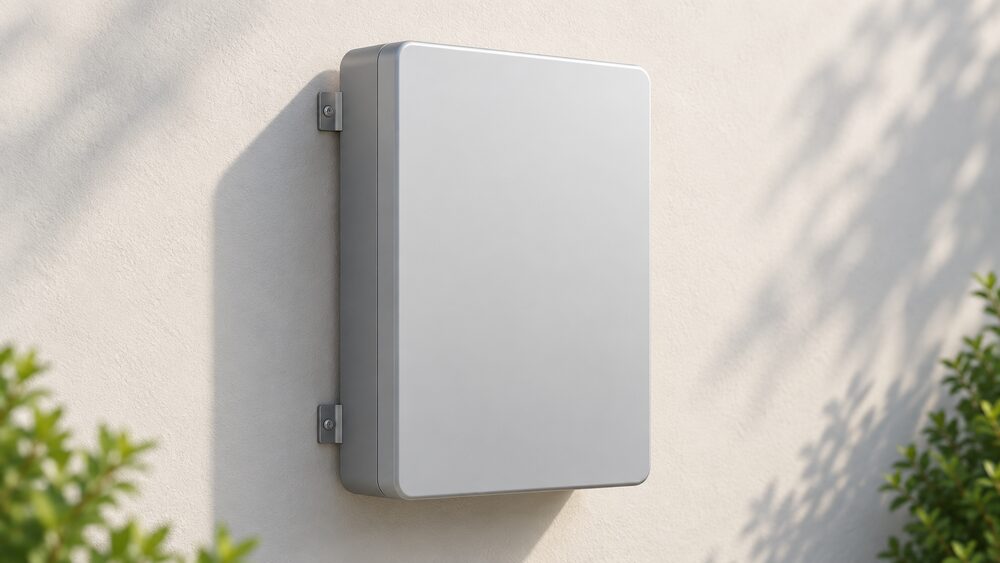 Enphase IQ Battery 5PHow much power does the Enphase IQ Battery 5P actually store, and how long does the warranty last?
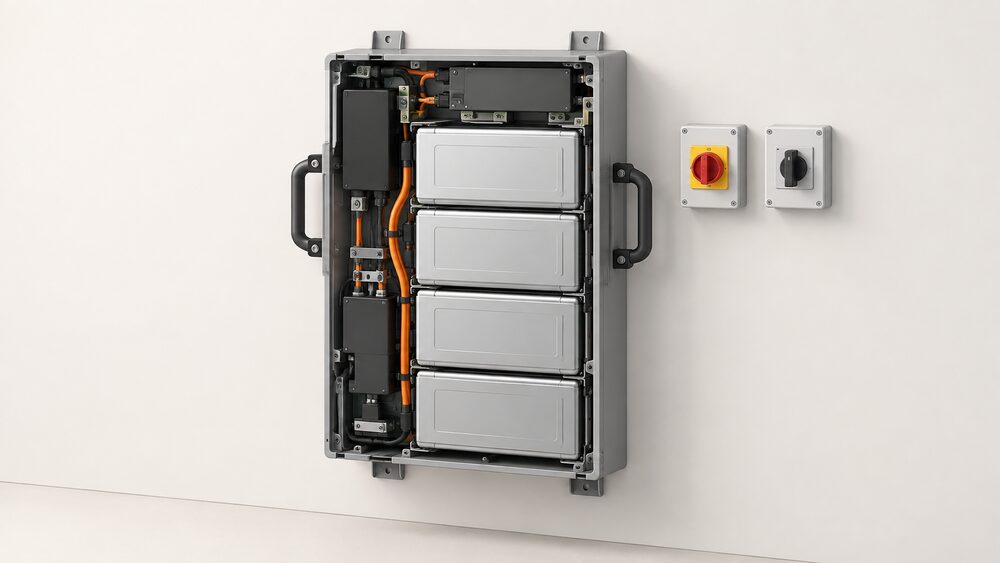 Enphase IQ Battery C80You may have seen the Enphase IQ Battery C80 mentioned and want to know whether it is a real battery you can buy in the UK, how it compares with the 5P and 10C, and what it would cost to run one at home.
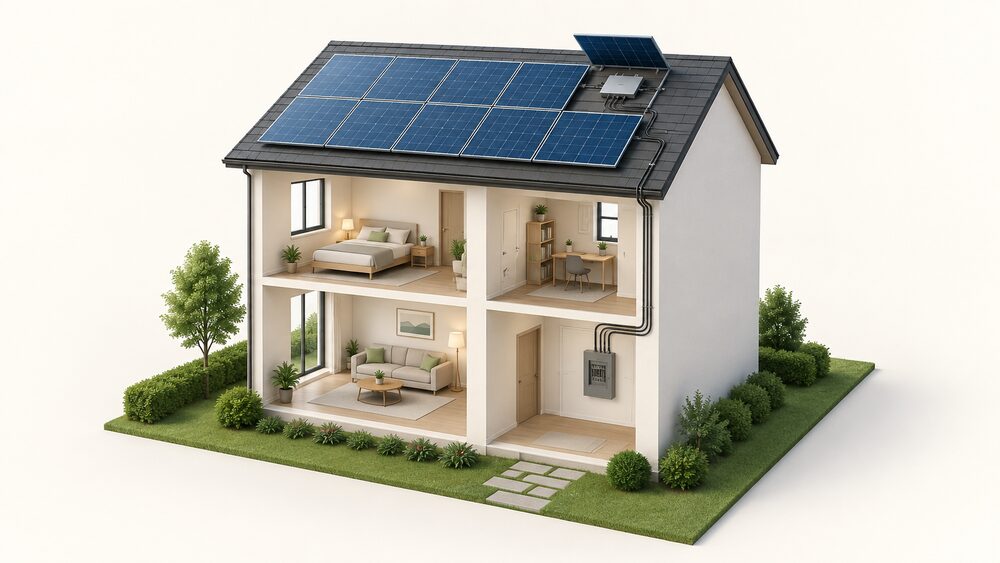 EnphaseEnphase puts a small converter on every panel instead of one big box on the wall, so you can see how each panel is doing and a fault on one does not stop the rest.
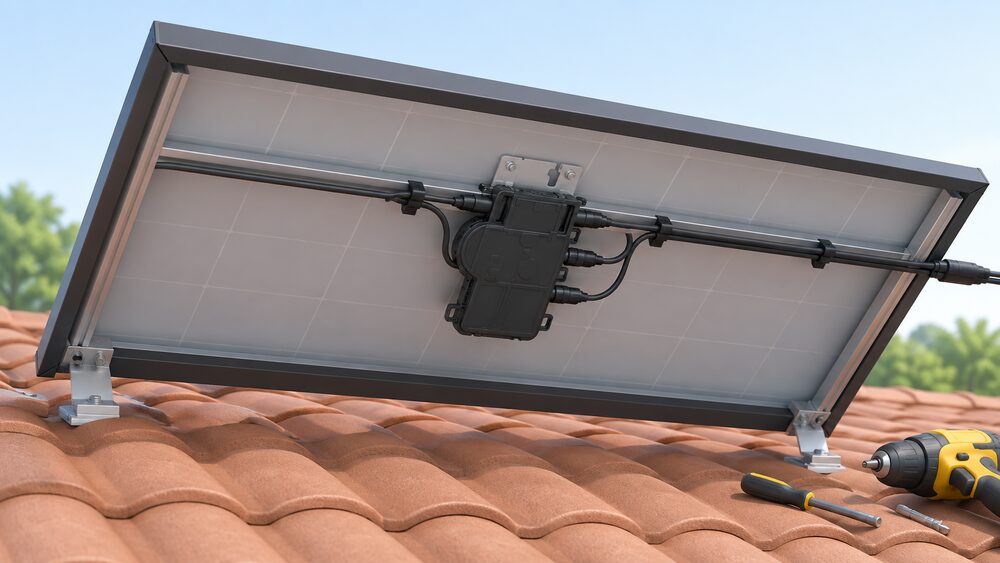 Enphase IQ8 microinvertersWhich Enphase IQ8 model suits your roof, and what do the different versions cost?