In this guide
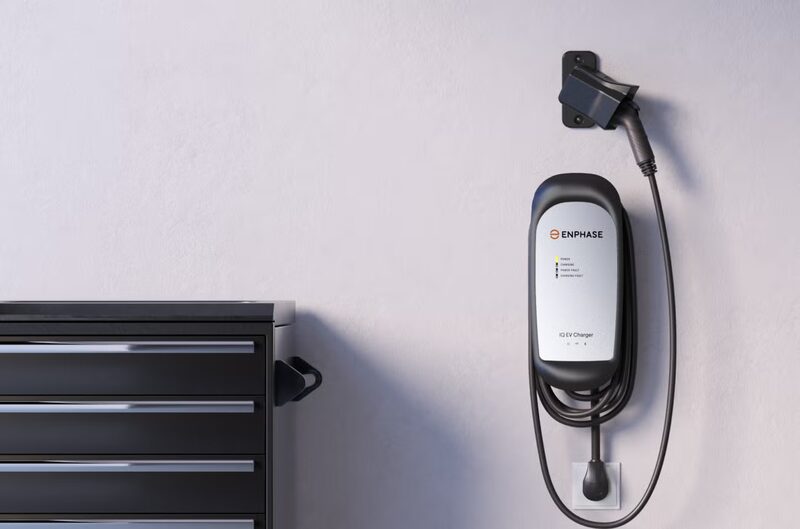
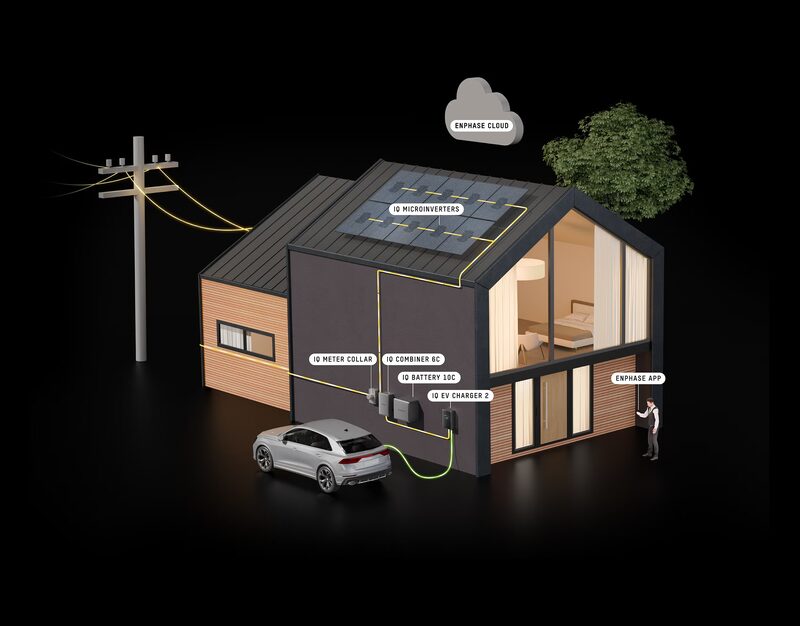
Enphase is best known in the UK for solar microinverters and home batteries, and its entry into home charging follows the same logic: a wallbox that talks to the rest of the house's energy system. The current product is the IQ EV Charger 2, sold in tethered and socketed forms and in single-phase and three-phase versions. It pairs with the Enphase App for monitoring, control and access features, and it either integrates with an Enphase Energy System or runs independently as a standalone charger1.
The headline capability is solar-aware charging. Enphase states the charger works with any solar system, Enphase or otherwise, adapting in real time to enable solar energy1. Green charging uses available surplus solar energy and works with compatible third-party solar systems as well as Enphase solar3. When paired with an Enphase Energy System, Enphase states the charger can charge from as little as 1.4 kW, low enough to follow modest surplus rather than pulling at full rate1.
A bidirectional unit is coming. Enphase lists the IQ Bidirectional EV Charger as available in 2026 and expected to launch in late 2026, compatible only with EVs that are ISO 15118-compliant and support bidirectional power flow4. The IQ EV Charger 2, available in the second half of 2025, will support AC bidirectional functionality4.
The Enphase range: IQ EV Charger 2, dual chargers and what's coming next
The IQ EV Charger 2 is the product a UK household would buy today. It is offered in socketed and tethered configurations across European markets7, and the single-phase tethered version is customised for UK smart charging regulations with built-in PEN fault protection and a MID meter for usage tracking and reimbursements2. The three-phase tethered version carries the same app pairing and the same choice between integration with an Enphase Energy System and standalone operation8.
Enphase also describes dual EV chargers in a variety of power and installation types. The dual unit mounts to a wall indoors or outdoors, uses a single circuit so it is inexpensive to install compared with two charging stations, splits power 50-50 between each car when two vehicles request a charge, and offers full power to the remaining vehicle once one is full, without unplugging9.
The forward-looking product is the IQ Bidirectional EV Charger. Enphase states it can integrate with existing Enphase Energy Systems, unlocking home backup, smart charging and grid services depending on site configuration and components present5. Its user interface is the Enphase App, with multi-colour notification LEDs and a Dark Start switch, and it supports both 400 V and 800 V battery platforms10. It operates on 230 VAC single-phase or 230/400 VAC three-phase at 50 Hz, and carries a Class B energy meter with plus or minus 1% accuracy to ANSI C12.2010.
| Product | Form | Key specification |
|---|---|---|
| IQ EV Charger 2, single-phase tethered | Tethered, single-phase | UK smart charging compliance, PEN fault protection, MID meter2 |
| IQ EV Charger 2, three-phase tethered | Tethered, three-phase | Enphase Energy System integration or standalone8 |
| IQ EV Charger 2, socketed | Socketed | Available across European markets7 |
| Dual EV charger | Two vehicles, one circuit | 50-50 power split, full power to remaining car9 |
| IQ Bidirectional EV Charger | Bidirectional, DC | 230 VAC or 230/400 VAC, 50 Hz, 400 V and 800 V platforms10 |
Solar integration: charging from your own roof with the Enphase App
Solar diversion is the feature independent guidance singles out first among what makes a smart charger worth having: it allows the charger to prioritise solar power for EV charging, minimising reliance on the grid11. Enphase's implementation of that idea is green charging, which uses available surplus solar energy to charge the vehicle and works with compatible third-party solar systems as well as Enphase solar3.
The behaviour differs according to what the house has. Where the IQ EV Charger is paired with Enphase solar and home consumption monitoring, the system checks for surplus solar energy and, if it is more than 25% of the charger's rated capacity, the EV starts charging immediately12. With the Self-Consumption profile and Green Charging with Battery Assist enabled, the system will supplement solar with energy from IQ Batteries so that charging can continue smoothly, until the system reaches the next 25% charging level12. That is a deliberate trade: the car keeps charging through a cloud band, but the household battery is drawn down to do it.
Where the charger is not paired with Enphase solar or battery systems, there are two options for charging modes, Scheduled Charging and Manual Charging, both using grid modes12. Manual charging runs the EV at 100% power level whenever plugged in, with whichever energy source is available12. That is the standalone position: the charger still works, but the solar logic is absent.
Enphase states the charger works with any solar system, Enphase or other, adapting in real time to enable solar energy, even on cloudy days1. The practical limit is that surplus-following depends on the charger seeing the home's import and export, which is why metering compatibility matters.
Smart Charging and Power Control Software: how overload protection works
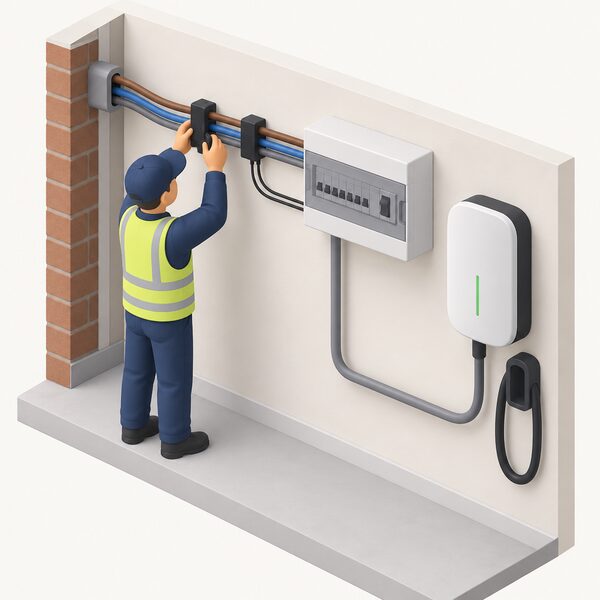
The constraint that shapes every home charger installation is the size of the supply. Enphase's answer is dynamic load balancing, which automatically adjusts EV charging as electricity use in the home changes, helping prevent overloads and keep charging within the home's available electrical capacity3. The charger reduces its charging rate automatically to prevent overloading and main breaker tripping when household appliances reach the threshold limit13.
Smart Charging arrived in the Enphase App for homeowners using the IQ EV Charger 2 in April 202614. It is reached from the EV charger status page, the EV charger settings page or the profile page14. Charging modes give three ways to decide how the EV charges when paired with an Enphase Energy System12, and charging schedules apply to all homes with an IQ EV Charger, while the system profile setting applies only to homes with an Enphase Energy System15.
Metering is what makes the load control work. The IQ EV Charger 2 can use home metering data from compatible smart meters or CT-based metering solutions to enable dynamic load balancing and green charging, and in other markets installers can use compatible CT-based metering solutions3. The charger itself carries a built-in MID-certified meter with plus or minus 1% accuracy, with app-based and RFID access control1.
Installation: why a licensed electrical contractor is recommended
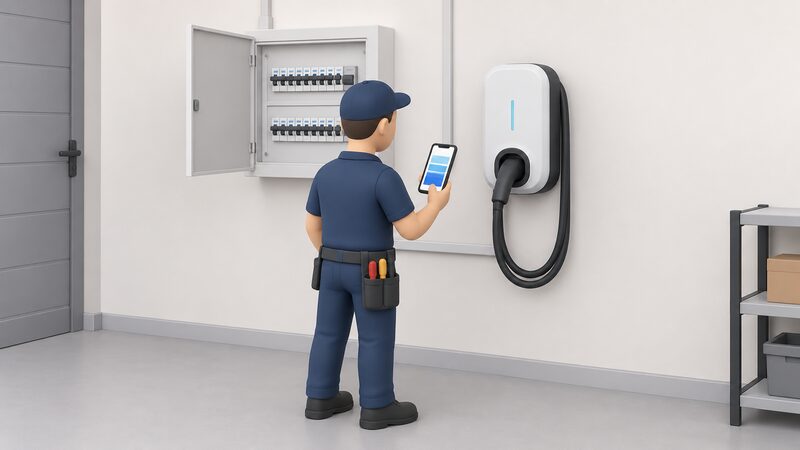
Enphase's own installer page and the wider regulatory picture agree on one point: this is not a DIY job. Building regulations approval is always required when installing an EV home charger, and a competent and reputable installer should be used, with specific processes for notifying the local building control authority16. The recommendation is to use a reputable company and ensure the installer has the relevant qualifications16.
Independent guidance is firmer still. EV charger installation should always be done by a qualified and certified electrician18, and chargers should be installed by a registered electrician with experience in this type of installation19. Householders are advised to hire an electrician registered with a recognised certification body, such as NICEIC20. Electricians registered on a Competent Person Scheme are deemed competent to self-certify their own work, saving householders time and money20.
The technical responsibilities sit with the installer. To install EV chargers, competence in the IET Code of Practice for Electric Vehicle Charging is required21. That code highlights the installer's responsibility to assess the adequacy of supply capacity for the new EV load plus existing load, assess the adequacy of earthing, and notify the network operator once installation is completed22. Compatibility between the charger, solar system and any battery storage should be considered from the outset23.
Enphase's own process runs through the Enphase Installer App, used to install and commission the charger24. Commissioning through that app is a prerequisite before any third-party platform integration can be enabled24. If a charger breaks, the guidance is not to attempt repair: it is a job for a professional electrician with the qualifications and certifications20.
UK availability and power options
The IQ EV Charger 2 is the unit sold in the UK, in single-phase tethered form customised for UK smart charging regulations2. Three-phase versions exist for homes with a three-phase supply, where independent guidance describes home charging typically at 11kW (3.7kW per phase) or higher25. The charger provides both wired and wireless connectivity for flexibility8.
On price, Enphase publishes no UK list price for the charger or for a fitted installation, so figures are installer-quoted. For context on what a home charge point costs in general, official Northern Ireland guidance puts an EV charger at up to £1,00026. That is a general figure, not an Enphase price, and it should be read as indicative only.
The charger is compatible with all Type 2 EVs sold in the UK1. Charging current can be adjusted between 6 A and 32 A in the Enphase App6. A Cable and Connector Holster is available and is compatible with all versions of the IQ EV Charger 26.
For households with an Enphase battery, the AC Battery is available via UK installers27. That matters for the solar logic described above, because battery assist depends on an IQ Battery being present.
Partner integrations: Flipturn, E-Flux, Mobiflow and ChargeLab
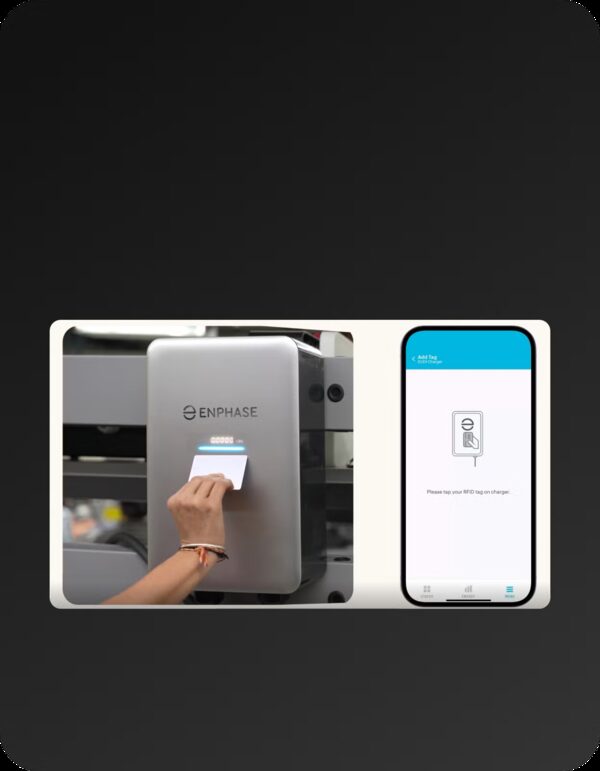
Enphase's charger connects to third-party platforms through OCPP standards, robust APIs and local EMS interfaces, with either Enphase or the partner able to control and monitor the experience28. Integration with an Energy Management System can be made locally over Modbus or similar, where the EMS owns the end user experience and Enphase can only monitor the charger28.
Flipturn is one such partner. After integration, Flipturn can authenticate charging sessions, add or edit RFID cards, monitor data for all charging sessions and view historic consumption data29. Registration runs through an activation form, and Flipturn verifies and confirms once the charger is connected29. A restriction applies: authentication settings are blocked from the Enphase App, and owners need to use the Flipturn portal to manage RFID authentication settings29. The charger must be online and unplugged before Enable is clicked29.
E-Flux by Road works differently. Owners select it as a partner in the Enphase App, review access details and grant consent to share system data, after which a connection request is automatically sent to the E-Flux by Road platform24. Mobiflow uses the charger's serial number as the charger ID on its platform30. ChargeLab integration is enabled in the Enphase Enlighten App by selecting ChargeLab, reviewing access permissions and tapping Enable, with a registration request sent to the ChargeLab platform and an Active status shown if registration succeeds31. Commercial users contact ChargeLab directly to confirm dashboard access and charger registration31.
The pattern across all four is the same: the Enphase App retains start and stop, charging modes, real-time and historical consumption monitoring, charging reports and charger settings29, but specific functions move to the partner platform once integration is switched on.
What an Enphase charger means for household energy independence
The independence case for an Enphase charger rests on the solar link. Green charging uses surplus solar to charge the car, and works with compatible third-party solar systems as well as Enphase solar3. When paired with an Enphase Energy System, charging can start from as little as 1.4 kW, so the car can absorb low surplus rather than waiting for a full-rate window1. For a household with a roof array, that converts generation that would otherwise be exported into miles.
The dependence that remains is substantial and worth stating plainly. The charger is a grid-connected appliance: it draws from the grid whenever solar and battery cannot cover the load, and standalone homes get only Scheduled and Manual charging modes using grid power12. Remote control, monitoring and reports run through the Enphase App, which means a dependence on home broadband, Enphase's cloud and a manufacturer's software1. Partner integrations add a further platform to that chain, and in Flipturn's case move RFID authentication out of the Enphase App entirely29.
Battery assist is a trade rather than a free gain: enabling it draws the household battery down to keep the car charging, until the system reaches the next 25% charging level12. The bidirectional unit, when it arrives, would change the direction of flow, but it is expected to launch in late 2026 and is compatible only with ISO 15118-compliant EVs that support bidirectional power flow5. Until then, the household remains a consumer of grid electricity for any charging the roof cannot cover.
Sources31 cited
- Enphase EV chargers for homeowners, Enphase, 2026-09-17
- IQ EV Charger 2 tethered single-phase, Enphase, 2026-09-17
- Enphase brings smart EV charging to more homes across Europe, Enphase, 2026-09-03
- IQ Bidirectional EV Charger, Enphase, 2026-09-17
- IQ Bidirectional EV Charger, UK, Enphase, 2026-09-17
- Enphase installers: EV chargers, Enphase, 2026-09-17
- Enphase highlights safety and reliability of IQ EV Charger 2, Enphase, 2026-07-16
- IQ EV Charger 2 tethered three-phase, Enphase, 2026-09-17
- Charging multiple EVs at the same time, Enphase, 2022-12-12
- IQ Bidirectional EV Charger white paper WHP-00041, Enphase, 2026-06
- Integrating solar panels with EV charging, Uswitch, 2025-07-02
- Manage EV charging in the Enphase App, Enphase, 2025-10-08
- Optimise EV charging and protect homes from electrical overload, Enphase, 2025-07-21
- Smart Charging: never wake up to an uncharged EV again, Enphase, 2026-04-15
- Control EV charging in the Enphase App, Enphase, 2023-09-26
- Building regulations: electric vehicle charging, Planning Portal, 2026
- Electric vehicle charging, house elements, Planning Portal, 2026
- EV charging guide, Uswitch, 2026-09-19
- EV charger regulations in England: what's changed, NICEIC, 2026-08-19
- Electric vehicle charger installation and maintenance, NICEIC, 2025-08
- Section 722 EV charging: complete guide, Elec-Mate, 2026-07-02
- Frequently asked questions about connecting to the networks, Energy Networks Association, 2026-09-17
- Can solar panels charge electric cars?, CPA, 2026-04-15
- IQ EV Charger integration with E-Flux by Road, Enphase, 2025-08-28
- Three-phase EV charging report, REA, 2018-08
- Electric vehicles, nidirect, 2026-09-17
- Solar panel battery storage, Which?, 2026-05-14
- IQ EV Charger partner integrations, Enphase, 2026-09-17
- IQ EV Charger 2 integration with Flipturn, Enphase, 2026-05-06
- IQ EV Charger integration with Optimile Mobiflow, Enphase, 2025-08-28
- IQ EV Charger 2 integration with ChargeLab, Enphase, 2026-05-27
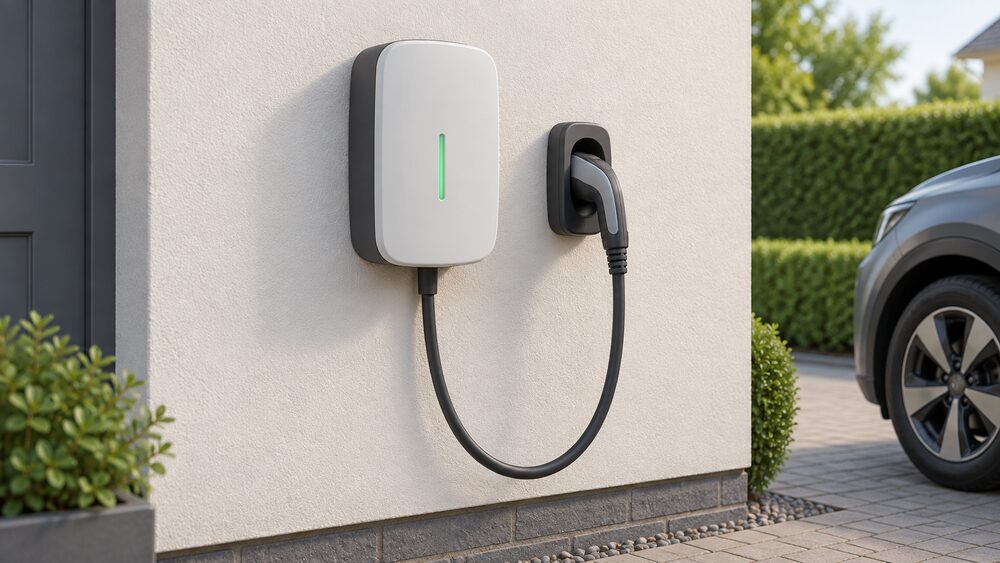 Enphase IQ EV Charger 2Can the Enphase IQ EV Charger 2 send spare solar power to your car instead of the grid?
 Enphase Home BatteriesEnphase makes the IQ Battery range for UK homes, and the current model is the IQ Battery 5P.
 Enphase IQ Battery 5PHow much power does the Enphase IQ Battery 5P actually store, and how long does the warranty last?
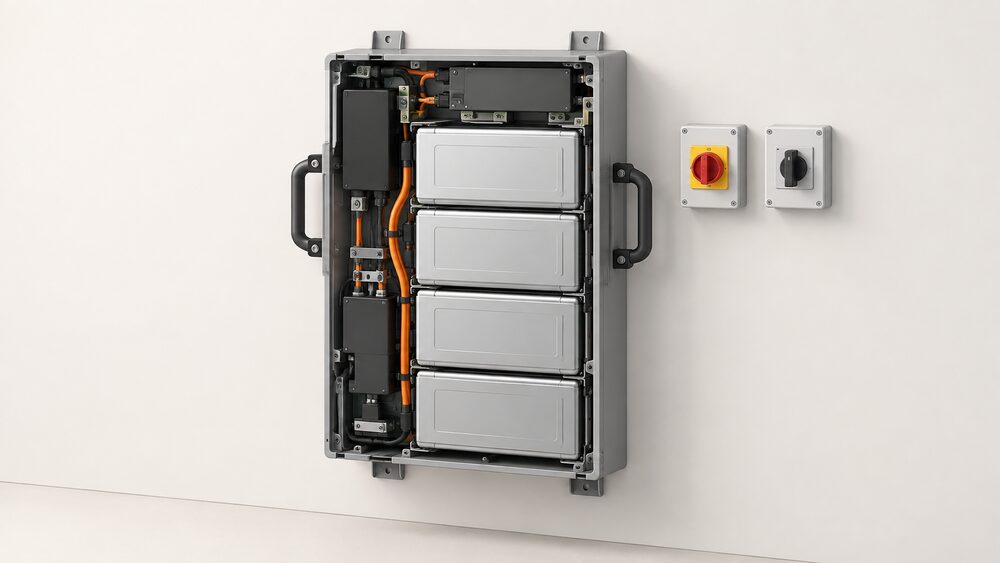 Enphase IQ Battery C80You may have seen the Enphase IQ Battery C80 mentioned and want to know whether it is a real battery you can buy in the UK, how it compares with the 5P and 10C, and what it would cost to run one at home.
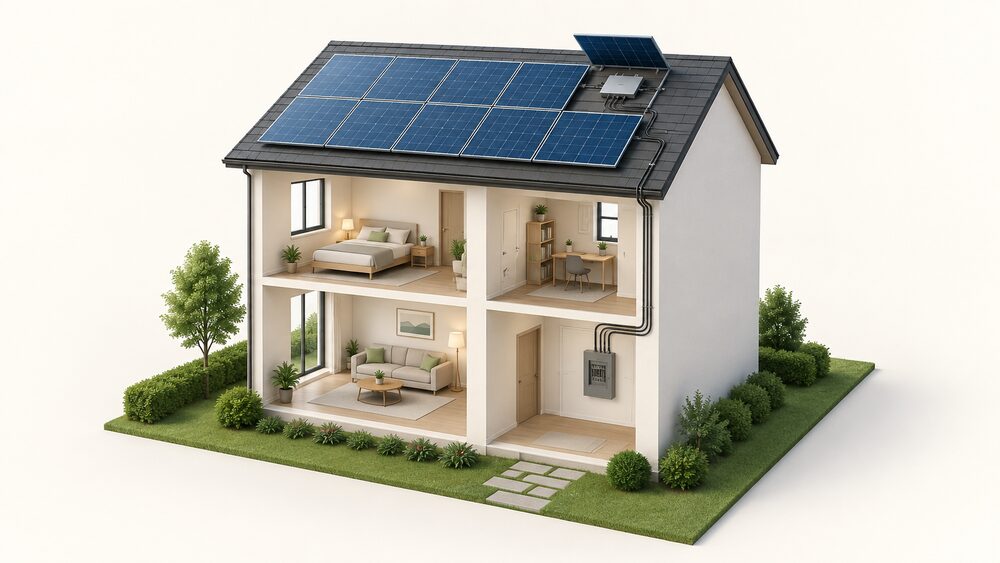 EnphaseEnphase puts a small converter on every panel instead of one big box on the wall, so you can see how each panel is doing and a fault on one does not stop the rest.
 EnphaseEnphase makes the kit that turns sunlight into power for your home, and its app lets you watch what your solar panels are doing all day.
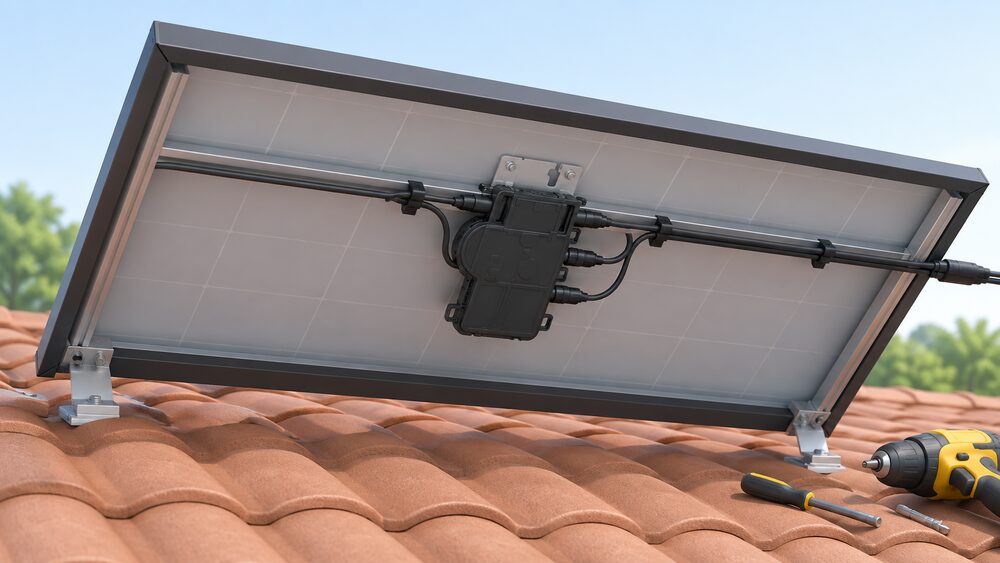 Enphase IQ8 microinvertersWhich Enphase IQ8 model suits your roof, and what do the different versions cost?