
In this comparison
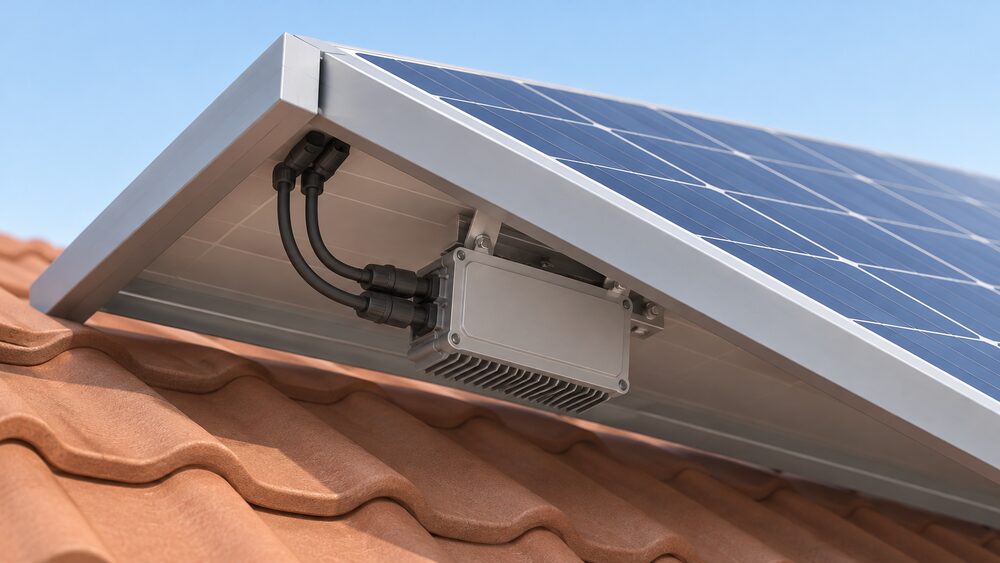
Microinverters turn the direct current each solar panel makes into mains electricity at the panel itself, instead of feeding everything down to one big box on the wall. Three names dominate the residential market in the UK: Enphase, APsystems and Hoymiles. They take noticeably different approaches. Enphase fits one microinverter behind every panel and backs it with a 25-year limited warranty1. APsystems builds dual-module units so one device serves several panels2. Hoymiles sells four-channel units with a standard 12-year warranty on its Wi-Fi integrated range3, and is generally positioned as the value end of the three.
What each means for a household's energy independence also differs. All three reduce dependence on a single point of failure on the wall: if one microinverter fails, the rest of the roof keeps working. But each creates its own dependencies, on a maker's app, cloud platform or accessory ecosystem, and those are worth understanding before choosing. This comparison sets out what each brand actually offers, using the makers' own published specifications and independent UK guidance.
The three brands at a glance
| Enphase | APsystems | Hoymiles | |
|---|---|---|---|
| Approach | One microinverter per panel7 | One microinverter for multiple PV modules2 | 4-in-1 units with four input channels and two MPPTs5 |
| Warranty | 25-year limited warranty on IQ Microinverters1 | Terms set per product; no single standard term published | 12-year standard warranty on W series3 |
| Monitoring | Enphase App with panel-level real-time data8; Enlighten Manager subscription adds device-level health6 | Focus on hardware; chip-based architecture programmable for any grid profile9 | S-Miles Cloud and app, module-level data and alarms10 |
| Extra products | Batteries, system controller, connected appliances11 | Microinverters, energy storage, rapid shutdown devices9 | Hybrid inverters, batteries, EV charger, smart meter12 |
| Scale | Approximately 5.3 million systems deployed4 | Describes itself as a global leader in module-level power electronics15 | Serves residential and commercial markets5 |
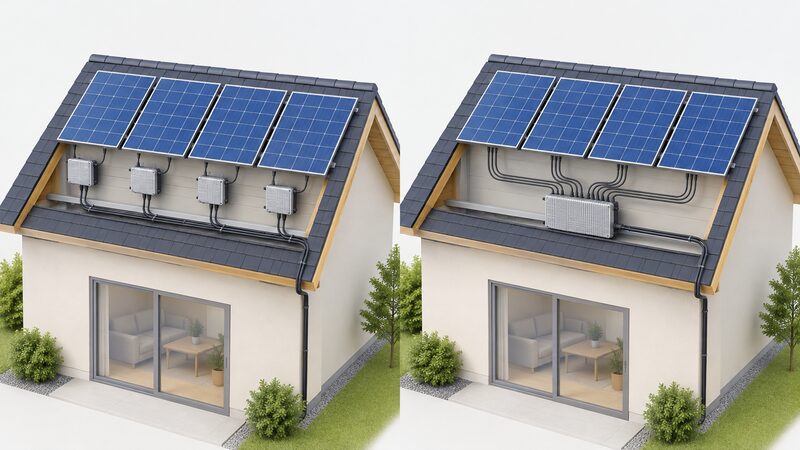
The core architectural difference drives everything else on this page. Enphase converts high-voltage DC to AC at the panel, which independent UK guidance notes as the brand's defining safety feature7. APsystems and Hoymiles instead spread one microinverter across two or four panels, which means fewer boxes on the roof and typically a lower hardware cost per panel, but less granularity when something goes wrong with an individual module.
Enphase: one microinverter per panel
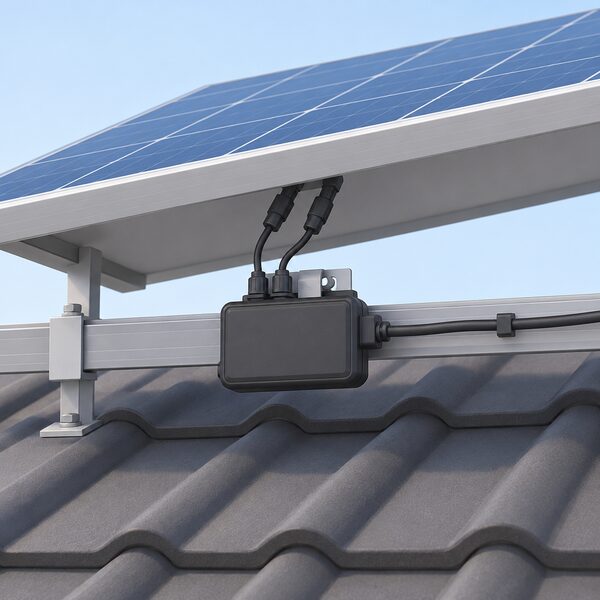
Enphase is the best established of the three, with approximately 5.3 million Enphase-based systems deployed worldwide, according to the company's own August 2026 announcement4. Its IQ Microinverters are covered by a 25-year limited warranty, which the maker describes as industry-leading1. That term is the longest of the three brands compared here and is the single most quoted reason UK households pay a premium for the brand.
The hardware itself is engineered for longevity on a roof. IQ Microinverters use a double-insulated polymer casing that resists shock and corrosion, and the IQ9 range is NEMA6 / IP67 certified, meaning the units are sealed against dust and water ingress1. The system runs at low voltage, which the maker positions as a safety benefit over high-voltage string systems1. Independent UK guidance makes the same point: Enphase converts high-voltage DC to AC at the panel, so there is no high-voltage DC cabling running down from the roof7.
Enphase IQ Microinverters also receive over-the-air software updates that bring new features to the solar system and the Enphase App1. In practice this means a system bought today can gain functions over its life without hardware changes, though it also means the system stays dependent on Enphase's cloud and software pipeline for those features to arrive.
The main trade-off is cost and count: one microinverter per panel means more units to buy and fit than a dual- or quad-module design. For a household weighing energy independence, the benefit is resilience, since a fault affects one panel rather than a group, and the 25-year warranty term matches the expected life of the panels themselves. More detail on the range is on our Enphase IQ8 microinverters page.
APsystems: dual-module units for fewer boxes on the roof
APsystems takes the opposite architectural bet. Each APsystems microinverter handles multiple PV modules, rather than one2. Its QS1-range positioning is as a cost-efficient, flexible and safe solution for residential and small-to-medium commercial rooftops2, and the maker states its microinverters serve all residential and commercial applications9.
The technology rests on what APsystems calls a proprietary chip-based architecture, which the company says ensures maximum efficiency and allows easy programming for any grid profile9. For a UK household, that grid-profile point matters: a microinverter must be set to the grid standard it connects to, and a programmable architecture means the same hardware can be configured for different national requirements.
APsystems describes itself as a global leader in module-level power electronics15, and it has been expanding quickly: at SNEC 2026 the company said it had launched seven new product lines16, and its portfolio now spans micro-site DIY, residential, and commercial and industrial applications15. Its product line includes microinverters, energy storage, and rapid shutdown devices9.
Where does that leave a UK householder? The dual-module approach means roughly half the microinverter units for the same number of panels compared with Enphase, which usually translates into lower hardware and installation cost. The compromise is monitoring and fault-finding at the level of a pair of panels rather than a single one, and a warranty position that is set product by product rather than by a single headline term. APsystems does not publish one standard warranty figure across its range, so the term for the specific model quoted is what counts.
Hoymiles: the budget option and where it fits
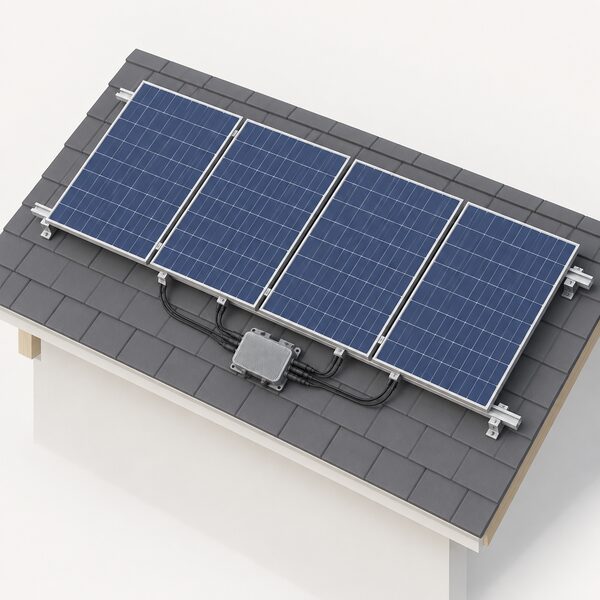
Hoymiles is generally the value entry of the three, and its architecture pushes furthest in that direction. Its 4-in-1 microinverters offer four input channels, so one unit serves four panels5. Those units carry two MPPTs, which means panels sharing an MPPT should point the same way: Hoymiles recommends placing PV modules under the same MPPT in the same direction for maximum yield5. On a roof with two orientations, that is a real design constraint an installer must plan around.
The brand's W series builds an industrial-grade Wi-Fi module directly into the microinverter, removing the need for a separate gateway for basic connectivity, and carries the 12-year standard warranty3. Hoymiles states the units have been rigorously tested with mainstream routers3. The company also confirms that its single-phase microinverters can be used in a three-phase grid system5, which covers the common UK case of a single-phase home supply.
Hoymiles' wider ecosystem is where it has grown beyond budget microinverters. Its LB-G2 battery works with HMS-series microinverters and Hoymiles energy storage inverters, with monitoring through the S-Miles app including pack-level charging, discharging and fault statuses, and automatic detection of Hoymiles inverters and batteries17. Its AC-coupled HiBattery is described by the maker as 100% compatible with all inverters18, a claim worth noting for households who want storage freedom. The HIS G3 hybrid inverter runs 3 to 6 kW single-phase with 2 MPPTs, 100V low start-up voltage and seamless off-grid switching13, and the AC EV Charger can be connected to the Hoymiles energy storage inverter to form a combined PV, storage and EV charging system12.
For independence-minded buyers, Hoymiles offers the lowest-cost route to panel-level conversion, but with the shortest standard warranty of the three and a design constraint on mixed roof orientations. Its ecosystem is broader than it once was, though most of it locks a household into Hoymiles components. Our Hoymiles microinverters page covers the range in full.
Monitoring apps and system-level hardware
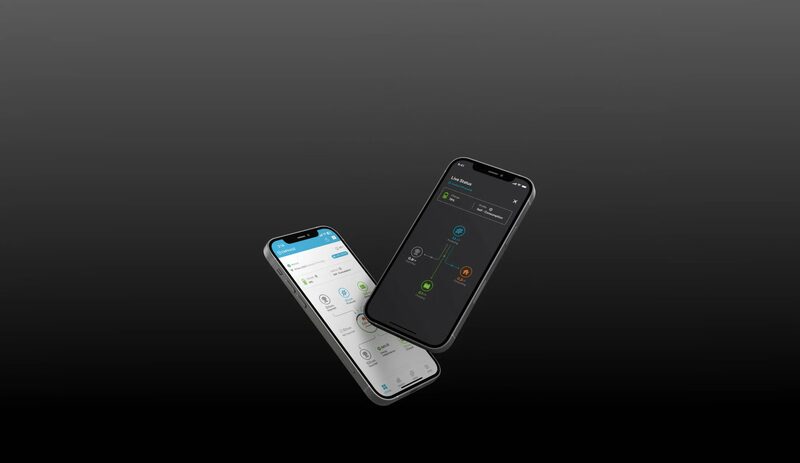
Monitoring is where the three brands diverge most in daily use. The Enphase App is a companion to the whole Enphase Energy System8, offering 24/7 remote monitoring and management8 and real-time panel-level performance insights, showing shade, dirt or issues instantly19. System settings changes and service messages come through the same app19. Beyond the free app, Enlighten Manager is a monthly subscription that adds device-level health monitoring6, so the deepest diagnostics sit behind a paid tier.
Hoymiles monitoring runs through S-Miles Cloud and the S-Miles app, reached via a data transfer unit (DTU). The range is tiered: the DTU-Lite-S is a direct-plugin unit compatible with HMS and HMT series microinverters20; the DTU-W100/G100 is plug and play, communicates over Wi-Fi or GPRS using a 2.4G wireless solution, and gives module-level data, alarms, monitoring and data storage10; the DTU-Pro adds Ethernet, Wi-Fi, GPRS or 4G communication, works with HM and MI series microinverters, and supports remote upgrading and parameter setting21; and the DTU-Pro-S uses a Sub-1G wireless solution to send data to S-Miles Cloud with remote O&M22. The S-Miles platform also covers the integrated PV, storage and EV charger system12.
APsystems' published material concentrates on hardware: its chip-based architecture and grid-profile programmability9, with no consumer app of comparable depth described on its product pages. A household choosing on monitoring depth should ask the installer to demonstrate the actual platform before signing.
One Enphase limitation is worth flagging: the Enphase App does not support connected home appliances from another brand, and Enphase Energy System components, microinverters and solar batteries cannot be added to the Home Connect app11. Enphase's connected-appliance feature works through its partnership with Home Connect11, so appliance-level automation is Enphase-only.
Warranty terms compared
The headline figures are stark. Enphase IQ Microinverters carry a 25-year limited warranty1. Hoymiles provides a standard 12-year warranty on its W series Wi-Fi integrated microinverters3. APsystems sets its terms per product, so there is no single figure to compare; the warranty on the specific model quoted is what a buyer should confirm in writing.
Two things temper the headline numbers. First, a warranty is only as good as the company and the installer behind it: registration, and who handles a claim, matter as much as the term. Second, the warranty covers the microinverter, not the whole system. Hoymiles' low-voltage battery carries a warranty of up to 10 years23, and its battery is rated for 6,000+ charge-discharge cycles23, so a full Hoymiles system has several different terms running in parallel.
For a household planning to be independent of the grid for decades, the warranty gap is a genuine risk factor: a microinverter failing in year 15 is a repair bill under a 12-year warranty and a claim under a 25-year one. Panel warranties are covered separately on our solar panel warranties page.
UK availability, installers and support
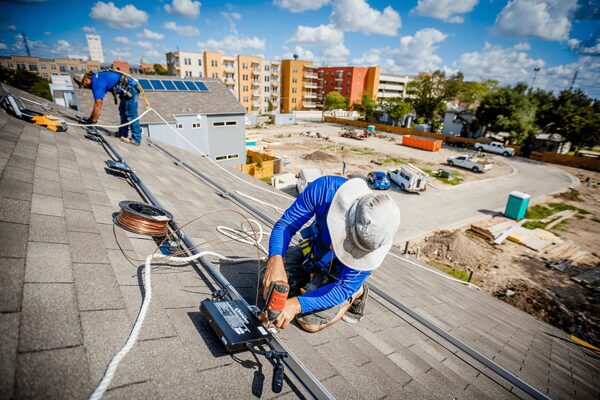
None of the three brands publishes UK prices, so costs are installer-quoted in every case. Official UK guidance is to get various quotes from different installers to compare prices24, and independent advice notes that panel choice alone moves the installation cost, with monocrystalline panels more expensive to install than polycrystalline25.
Enphase systems in the UK are bought through a local installer via the company's start.enphase.com portal11, and the Enphase Store itself requires a login to purchase6. UK support runs on 0044-33080885226.
After installation, Enphase Assistant is available on the Enphase Support website, in the Enphase App, in the Installer Portal and in Service Manager, with availability varying by platform and region26. It can recommend compatible upgrades, help find certified installers, check warranty and support history, and access device models, firmware versions, connectivity and warranty status, installer details and past support cases26. Hoymiles support runs through the installer and the S-Miles platform, with remote upgrading and parameter setting handled over the cloud22.
The independence picture is similar for all three: the hardware reduces reliance on the grid and on a single wall-mounted inverter, but each brand ties the household to its own app, cloud and accessory ecosystem. The deeper question of how microinverters compare with string inverters overall is covered in our microinverters vs string inverters guide, and the basics of the technology in microinverters for home solar.
Sources26 sources
- Enphase home solar systems, Enphase, 2026
- APsystems microinverter products, APsystems, 2025-09-13
- Hoymiles W series microinverters, Hoymiles, 2026-09-17
- Enphase newsroom release, Enphase, 2026-08-20
- Hoymiles knowledge base: microinverter questions answered, Hoymiles, 2024-02-23
- Enlighten Manager Upgrade monthly subscription, Enphase, 2026
- Five things to know before getting solar panels, Good Energy, 2025-09-08
- Enphase App, Enphase, 2026
- APsystems product portfolio, APsystems, 2026-09-17
- Hoymiles DTU-W100/G100, Hoymiles, 2026-09-17
- Enphase connected appliances FAQs, Enphase, 2026
- Hoymiles AC EV Charger, Hoymiles, 2026-09-17
- Hoymiles HIS G3 hybrid inverter, Hoymiles, 2026-09-17
- Hoymiles Smart Meter (Three Phases), Hoymiles, 2026-09-17
- APsystems energy storage portfolio at Intersolar Europe 2026, APsystems, 2026-06-17
- APsystems hybrid off-grid storage solutions at SNEC 2026, APsystems, 2026-06-03
- Hoymiles solar and battery storage guide, Hoymiles, 2024-10-14
- Hoymiles: DC-coupled vs AC-coupled vs hybrid storage, Hoymiles, 2025-09-23
- Enphase home solar systems (UK), Enphase, 2026
- Hoymiles DTU-Lite-S, Hoymiles, 2026-09-17
- Hoymiles DTU-Pro, Hoymiles, 2026-09-17
- Hoymiles DTU-Pro-S, Hoymiles, 2026-09-17
- Hoymiles low-voltage battery, Hoymiles, 2026-09-17
- Solar photovoltaic (PV) panels: energy efficiency advice, Bromley Council, 2026-09-17
- A complete guide to solar PV, Centre for Sustainable Energy, 2025-11
- Enphase Support and Enphase Assistant, Enphase, 2026