In this guide
Hoymiles is a microinverter specialist with a broad residential range in the UK market. Its current families are the HMS series, sold in 1-in-1, 2-in-1 and 4-in-1 topologies, the three-phase HMT series, and the older HM and MI series that the DTU-Pro still supports1. The HMS-600 to HMS-1000-2T models each connect up to two panels, while the HMS-1600, 1800 and 2000-4T models each connect up to four2.
The headline specification for the range is durability rather than raw output. Hoymiles states that all its microinverters are certified with an IP67 rating, that they use natural convection with fins on the back cover instead of fans, and that they operate across an ambient range of -40 to +65 degrees C4. Warranty runs to a maximum of 25 years on an extended term, against a standard term that varies by product4.
What this buys a household is panel-level conversion: each microinverter turns DC into mains AC at the panel, so there is no single central inverter to fail and no high-voltage DC run across the roof. What it does not remove is dependence on the grid, on a supplier, and on a monitoring platform that lives in the manufacturer's cloud.
The Hoymiles range: HMS, HMT, HM and MI
Hoymiles splits its microinverter line by how many panels each unit accepts and by how many phases it serves. The HMS series appears in three topologies: 1-in-1, 2-in-1 and 4-in-11. The HMT series is the three-phase option and is offered as a 4-in-11. The older HM and MI series sit outside the current HMS naming but remain supported by the DTU-Pro gateway, which lists stable communication with HM and MI series microinverters9.
The practical distinction between the families is where they are used. Single-phase HMS units cover the ordinary domestic roof. The three-phase HMT units suit properties with a three-phase supply, which in the UK is more common in larger rural houses and in homes with heavy electrical loads than in a typical suburban semi. The 1-in-1 HMS models pair one microinverter with one panel, which is the most granular arrangement and the most expensive per panel.
There is also a W Series, which Hoymiles describes as a PV microinverter with a Wi-Fi module built inside the unit rather than in a separate gateway10. That removes the need for a DTU on those models, at the cost of putting the communications radio on the roof alongside the power electronics. The W Series carries a 12 year warranty as standard, which is longer than the standard term on several other products in the range10.
For a household, the range question is really a wiring question. Choosing between 1-in-1, 2-in-1 and 4-in-1 changes how many units sit under the array, how much AC cable is needed, and how many points of failure exist. The microinverters page sets out how that compares with a single string inverter.
HMS-600 to HMS-1000-2T: what the 2T series covers
The HMS-600, 700, 800, 900 and 1000-2T models are the two-panel tier of the current range. Hoymiles describes the HMS-1000 series as a high-powered microinverter for 2-in-1 use, and states that each microinverter can connect up to two panels2. The units use an isolated transformer, and the HMS-1000-2T datasheet describes the topology as a galvanically isolated high-frequency transformer2.
That isolation matters for how the array behaves electrically. A galvanically isolated transformer separates the DC side from the AC side, which is a design choice rather than a performance claim, and it appears consistently across the 2T, 1T and 4T HMS families2. The 2T series also states rapid shutdown compliance, which is the function that reduces DC voltage at the panel during an emergency2.
The 1T tier sits below it. The HMS-300, 350, 400, 450 and 500-1T series is described as a photovoltaic microinverter with an isolated transformer, and it pairs with a Hoymiles gateway DTU13. These are the units for small arrays, awkward roofs and single-panel additions where a two-panel unit would be oversized.
| Series | Panels per unit | Topology | Isolation |
|---|---|---|---|
| HMS 1T (300 to 500) | 1 | 1-in-11 | Isolated transformer13 |
| HMS 2T (600 to 1000) | 2 | 2-in-11 | Galvanically isolated HF transformer11 |
| HMS 4T (1600 to 2000) | 4 | 4-in-11 | Isolated transformer3 |
| HMT 4-in-1 | 4 | 4-in-1, three phase1 | Not stated |
Four input channels: how the 4-in-1 models change panel wiring
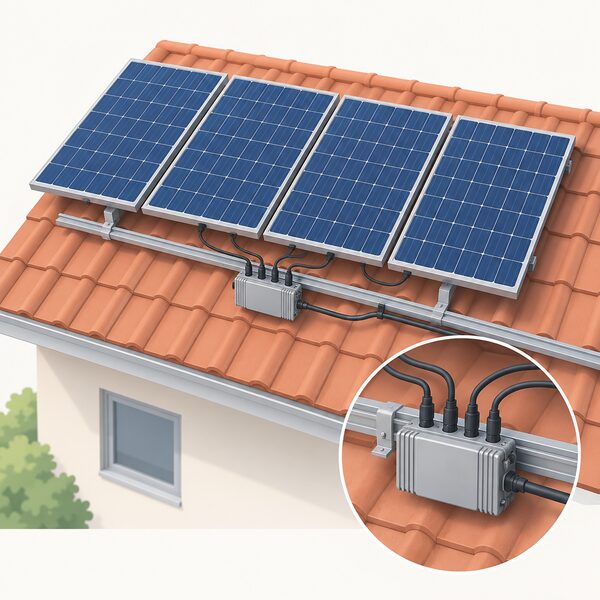
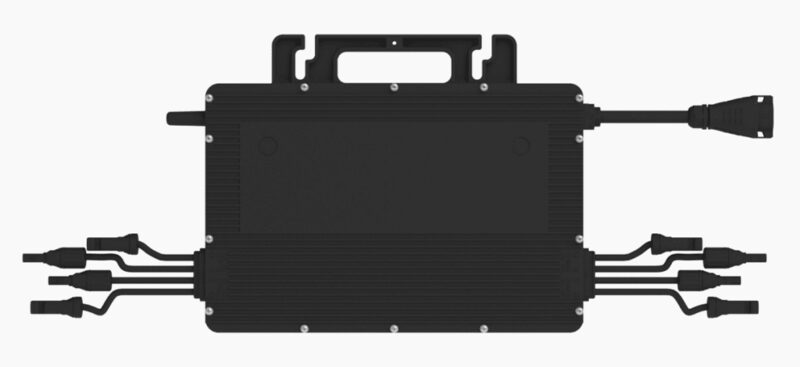
The 4-in-1 models are the ones that change how an array is put together. Hoymiles states that its 4-in-1 microinverters offer four input channels, and that leaving one input open with three PV modules will not lead to faults or abnormal operations5. That last point is the useful one in practice: a four-channel unit can be fitted on a three-panel group without a dummy load or a configuration change.
The HMS-1600, 1800 and 2000-4T models each connect up to four panels, and the datasheet repeats the same figure3. The HMS-1600 and 1800 and 2000-4T family is described as the highest for 4-in-1 microinverters, and it uses an isolated transformer3. Independent commentary on the range notes one-, two- and four-panel models with independent MPPTs and Sub-1G communication14.
Independent MPPTs are the reason the topology matters. Each channel tracks its own maximum power point, so a shaded or soiled panel on one input does not drag the others down to its level. That is the same argument that applies to microinverters generally against a single string inverter, and it is covered in more detail on the shade effect page.
The trade-off is unit count and cable. Four panels on one 4-in-1 unit means fewer boxes on the rail and less AC cabling than four separate 1-in-1 units, but it also means a single failure takes four panels offline rather than one. Hoymiles frames the general case for microinverters as having no single point of failure, which is true at system level but not at unit level15.
Durability: IP67, -40 to +65 degrees C and no fans
Hoymiles states that all its microinverters are certified with an IP67 rating4. IP67 covers dust ingress and temporary immersion, and the company's support material describes submersion for up to half an hour4. That is a rating for rain, hose spray and short-term flooding at roof level, not a description of equipment intended to sit underwater.
The thermal design is passive. Hoymiles states that it adopts natural convection in its microinverters, eliminating the need for fans, using fins on the back cover5. The stated ambient operating range is -40 to +65 degrees C5. Removing fans removes a moving part that would otherwise be the first thing to wear out, and it removes the noise that a fan-cooled unit makes under load.
The wider Hoymiles product line uses different ratings, which is worth knowing when a system mixes microinverters with other equipment. The HIS G3 Series hybrid inverter is rated IP66 and operates from -25 to 65 degrees C16. The residential energy storage battery is IP65 and operates from -20 to 55 degrees C, with self-heating described as winter-proof16. The low-voltage battery is IP66 and operates from -20 to 50 degrees C, activating a heating function automatically below 0 degrees C17. The three-phase smart meter is rated from -40 to +70 degrees C18.
Testing and standards: IEC 62093 and a 6000V surge test
Hoymiles publishes the test standards behind its reliability claims. Accelerated life testing is stated against IEC 62093:2022 and IEC 60068-2-38, and the company states that all the test results are compliant with IEC 62093:20224. IEC 62093 is the design qualification standard for balance-of-system components in photovoltaic systems, which is the relevant standard for equipment that is not itself a module.
Surge testing is stated against IEC 61000-4-5:2014, in which a signal generator is used to produce a 6000V surge voltage4. Hoymiles states that it has chosen the much stricter 6000V surge test for its microinverters, described as Category IV, and contrasts this with the Category III threshold at which any microinverter withstanding a 2000V surge test receives a green light4.
What that means for a household is a tested withstand level rather than a guarantee. A higher surge test category indicates greater tolerance of transient overvoltage from switching or from nearby lightning, and it is a design qualification result. It does not replace surge protection at the consumer unit, and it says nothing about the age of the installation or the quality of the earthing. The solar PV safety page covers where surge protection sits in a domestic system.
On grid connection, the position is less clear from the published material. G98 type verification testing was completed on 20 August 2017, and an example G98 form records installation of a Hoymiles MI-600 on 1 January 2021. Compliance is declared per model and per firmware version, so the certificate that matters is the one covering the exact unit being fitted. The G98 and G99 page explains what the application involves.
Warranty: up to 25 years, and why microinverters last longer
Hoymiles states that its microinverters carry a maximum warranty of up to 25 years, and that they are designed to operate two to four times longer than traditional string inverters4. The extended warranty periods offered are 10, 12, 15, 20 and 25 years, applied for through a form that requires the country and acceptance of the terms and conditions6.
The standard terms differ by product, which is where most of the confusion sits. The W Series carries a 12 year warranty as standard10. The low-voltage battery warranty period can be up to 10 years17. The three-phase smart meter carries a 2 year warranty from Hoymiles18. So "up to 25 years" is the top of the ladder, not the term that applies to every box in a system.
Independent guidance puts the general market in context. The Energy Saving Trust states that most inverters have warranties of five years as a minimum, which can often be extended by up to 15 years19. The Low Carbon Hub states that it is standard for inverters to have warranties for 10 years20. Independent commentary on microinverters puts typical warranty ranges at 10 to 25 years and typical service life at around 20 to 25 years14.
The reason microinverters are claimed to last longer is structural. There is no single central unit carrying the whole array's current, no high-voltage DC string, and no fan. Each unit handles one, two or four panels, so thermal and electrical stress per device is lower. That is the maker's argument, and it is consistent with the passive cooling and IP67 enclosure described above, but it is a design claim rather than an independently measured lifespan.
Monitoring and control: the DTU-Lite-S and DTU-Pro
Microinverters need a gateway to report what they are producing. Hoymiles calls these data transfer units, and the current options are the DTU-Lite-S and the DTU-Pro-S. The DTU-Lite-S is described as a data transfer unit that collects information and data from PV microinverters, sends it to S-Miles Cloud, and supports remote system management there7. Its datasheet lists Sub-1G as the communication type to the microinverters21.
The DTU-Pro-S adds scope. It is described as a data transfer unit offering module-level monitoring and data storage, PV generation and load consumption monitoring, and local configuration with S-Miles Toolkit8. Its Wi-Fi version lists HMS series as its microinverter mode, and its 4G version lists HMT series, with a Sub-1G wireless solution providing stable communication with both8.
Compatibility is the point to check before ordering. The DTU-Lite-S lists HMS series and HMT series as its modes, and its datasheet adds MiS series7. The older DTU-Pro is listed for HM series and MI series only, so it is not the gateway for an HMS array9. The DTU-W100/G100 uses 2.4G wireless communication instead of Sub-1G and offers module-level monitoring and data storage22.
This is where the dependence sits. Local production continues without any of it, but module-level data, alarms, remote diagnostics and remote firmware management all run through a gateway, a home broadband connection and Hoymiles' S-Miles Cloud platform. The solar PV monitoring page covers what that means for a household that wants its data to stay local.
Batteries: LB-G2 and HiBattery 4020 alongside microinverters
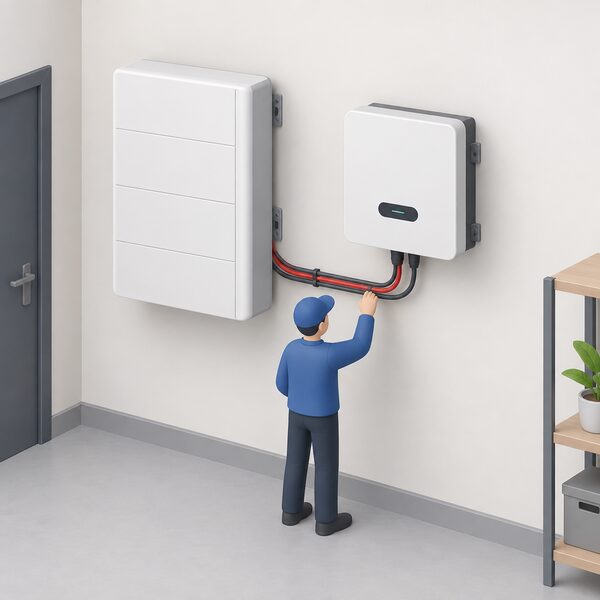
Hoymiles sells storage that can sit alongside a microinverter array, and the two routes are different in kind. The low-voltage battery is compatible with all current single-phase low-voltage hybrid inverters from Hoymiles, specifically the HYS-LV-EUG and HAS-LV-EUG models, and connecting it to an inverter takes about three to five minutes17. Both the first-generation and second-generation low-voltage systems support up to four battery packs in parallel, and the battery can be remotely upgraded for system management via S-Miles Cloud17. Its cycle life is stated as 6,000 or more charge-discharge cycles17.
The HiBattery 4020 is the newer, plug-in route. Hoymiles describes HiBattery as its latest AC-coupled plug-in product, and states that the AC-coupled technology makes it 100 per cent compatible with all inverters15. The system can be used on-grid and off-grid15. The 4020 X model uses LFP chemistry with 8,000 cycles and Bluetooth and 2.4 GHz Wi-Fi wireless connection23. The battery module is made for the HiBattery 4020 X and AC, and both are described as designed and manufactured in Hoymiles self-owned production facilities24.
The distinction that matters is AC coupling. An AC-coupled battery sits on the AC side and does not care what generated the electricity, which is why it pairs with a microinverter array without a hybrid inverter. A DC-coupled battery needs a hybrid inverter to manage the DC bus. The battery storage page sets out the trade-offs, and the microinverters and battery storage discussion covers the combination specifically.
For independence, the position is mixed. A microinverter array with an AC-coupled battery keeps generating and can store without a central inverter, and the HiBattery can run off-grid. But the array still needs the grid for export and for the G98 connection, the battery still needs a supplier for top-up in winter, and the monitoring still needs the cloud.
Sources24 cited
- Residential solutions, Hoymiles, 2026
- HMS-600, 700, 800, 900 and 1000-2T, Hoymiles, 2026
- HMS-1600, 1800 and 2000, Hoymiles, 2026
- Microinverter reliability and warranty explained, Hoymiles, 2024
- Your microinverter questions answered, Hoymiles, 2024
- Warranty information, Hoymiles, 2026
- DTU-Lite-S, Hoymiles, 2026
- DTU-Pro-S, Hoymiles, 2026
- DTU-Pro, Hoymiles, 2026
- W Series, Hoymiles, 2026
- HMS-1000W series datasheet, Hoymiles, 2026
- HMS-1000-2T datasheet, Hoymiles, 2025
- HMS-300, 350, 400, 450 and 500-1T, Hoymiles, 2026
- Best microinverters for solar panels, SolaX Power, 2026
- DC-coupled vs AC-coupled vs hybrid storage, Hoymiles, 2025
- HIS G3 Series hybrid inverter, Hoymiles, 2026
- Low-voltage battery, Hoymiles, 2026
- Hoymiles smart meter, three phase, Hoymiles, 2026
- Solar panels advice, Energy Saving Trust, 2026
- How to choose a good solar installer, Low Carbon Hub, 2025
- DTU-Lite-S datasheet, Hoymiles, 2026
- DTU-W100/G100, Hoymiles, 2026
- HiBattery 4020 X solar battery, Hoymiles, 2026
- HiBattery 4020 battery module, Hoymiles, 2026
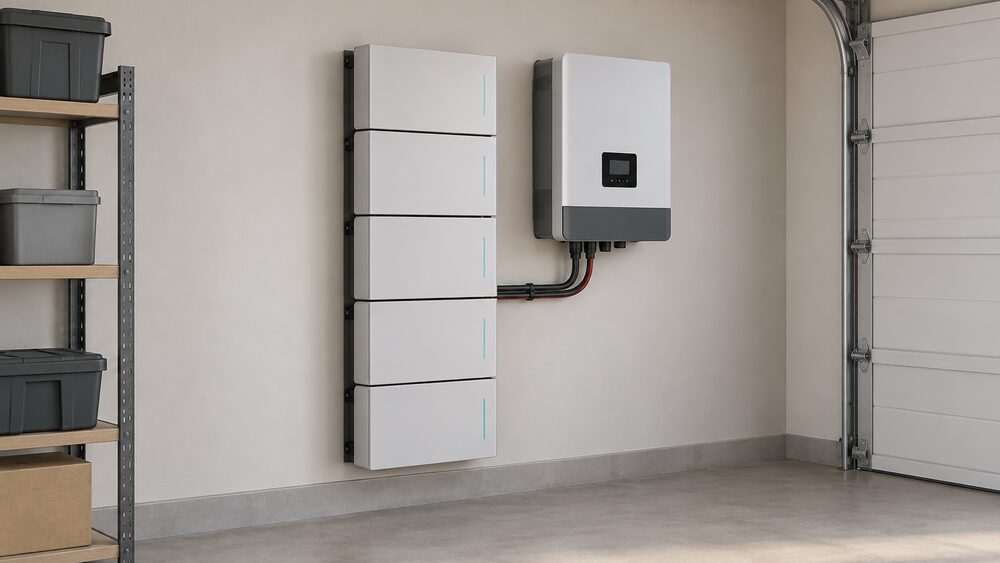 Hoymiles Storage Systems for the HomeHoymiles makes two kinds of home battery: a stackable one that grows with your needs and a plug-in one you can add to later.