
In this answer
Short answer
The UK government's headline heat pump target is 600,000 installations a year by 2028, set out in the Ten Point Plan for a Green Industrial Revolution in 20201. Parliamentary research records that 72,000 were installed in 2022, the year the ambition was already in force1. Independent analysis described the 2028 figure as a 20-fold increase on the rate then being achieved2.
The target has since been joined by a second milestone. The Warm Homes Plan, published in January 2026, set out the government's aim to achieve 450,000 heat pump installations per year by 2030, with at least 70% of heat pumps installed in the UK made in the UK3. Official guidance also records an aim of 450,000 annual installations by 2030, 70% of which are targeted to be manufactured in the UK by 20355.
For a household, the target is a signal rather than an obligation. It shapes grant funding, installer training, grid planning and building rules, and it is the benchmark against which independent advisers judge whether the transition is happening fast enough to affect the cost and availability of low-carbon heating.
The 2028 target and where it came from
The 600,000 figure is the anchor of UK heat pump policy. It was established by government in 2020 in the Ten Point Plan for a Green Industrial Revolution, and it has been restated consistently since: in parliamentary briefings, in official consultations, in press releases and in independent analysis1. The consistency is unusual in energy policy, and it means the number is the one against which delivery is measured.
The scale of the change is the point. Parliamentary research records 72,000 installations in 20221. Independent analysis framed the 2028 target as a 20-fold increase on the rate then being achieved2. A separate assessment found the UK was achieving just 10% of the rate needed, citing European Heat Pump Association figures for 202211.
The target is not a cap or a quota on households. It is a deployment ambition that government uses to justify grant funding, to plan grid connections and to press industry on manufacturing capacity. The target for 600,000 heat pump installations a year by 2028 is backed by government support, according to the Department for Energy Security and Net Zero12.
What drives the figure is the wider climate framework. The Climate Change Committee models that emissions must fall by 87% compared to 1990 levels by 2040, and that electrification makes up 60% of emissions reductions by 204013. Heat pumps are the main route to electrifying home heating, so the installation target is effectively the delivery mechanism for the buildings share of that reduction.
"The UK Government has a target of 600,000 installations per year by 2028 and 72,000 were installed in 2022."
The 2030 aim and the 2035 range
The 2030 milestone is newer and less settled. The Warm Homes Plan, published in January 2026, included details of the government's aim to achieve 450,000 heat pump installations per year by 20303. Official guidance in the Carbon Budget and Growth Delivery Plan factsheet records the same 450,000 annual installations by 2030 figure, alongside the aim that 70% of them be manufactured in the UK by 20355. The Heat Pump Association has described the 450,000 per year by 2030 figure as the target set out in the Warm Homes Plan14.
Beyond 2030 the documents diverge, and the divergence is worth stating plainly. Independent analysis cites installations rising to 1.6 million per year by 20357. Official guidance in the heat pumps investment roadmap cites up to 1.9 million a year by 20358. These are different figures from different documents, and the difference is not reconciled in the material available. A household reading either number should treat it as a modelled ambition rather than a forecast.
A third figure appears in older material: 600,000 installations annually by 2028, rising to over 1 million from 2030 onwards15. That sits between the 450,000 aim and the 1.6 million and 1.9 million figures, and it illustrates how the long-range numbers have moved as the policy has been restated.
| Milestone | Figure | Source type |
|---|---|---|
| 2028 | 600,000 installations a year | Official and independent, consistently restated1 |
| 2030 | 450,000 installations a year | Warm Homes Plan aim3 |
| 2030 onwards | over 1 million a year | Independent guidance15 |
| 2035 | 1.6 million a year | Independent analysis7 |
| 2035 | up to 1.9 million a year | Official guidance8 |
Is the target being met?
Independent commentary has been direct. In September 2026 a trade publication stated that unless something changes drastically, the heat pump installation target for the UK will be missed, by miles16. The Climate Change Committee, the statutory body that advises government, reported some encouraging signs of progress in its delivery indicators but added that a significant increase in roll-out rates is needed in many areas in the next few years17.
The Committee's central recommendation bears directly on the target. Its number one recommendation remains to make electricity cheaper by taking policy costs off electricity bills, which it describes as vital for ensuring the required scale-up of heat pump installations in the plan17. It expected the issue to be addressed in the upcoming Warm Homes Plan17. The Committee's wider position is that the lower-cost, energy-secure future is electric, and that government should plan to accelerate electrification, in particular by making electricity cheaper18.
There is also a supply chain question. The Heat Pump Association has said that meeting the government's target to install up to 600,000 heat pumps a year by 2028 will require significant industry collaboration19. Parliamentary research cites a requirement for 50,200 installers by 20306. Certification bodies have received funding under the Heat Pump Ready programme to build that base20, and the sector has passed 250,000 certified heat pump installations in total21.
Where the target applies, and where it does not
The Warm Homes Plan technical annex describes the ambition as UK-level23. That does not mean a single delivery route. Energy and buildings policy is partly devolved, and the Climate Change Committee advises each administration separately: it provides advice to Northern Ireland on its 2030 and 2040 interim targets and first three Carbon Budgets24, and the Scottish Government requests regular advice including an annual Scottish progress report on reducing emissions25.
The practical differences matter to households. Grant schemes, building standards and planning rules for heat pumps are set separately in England, Scotland, Wales and Northern Ireland, so the route to an installation and the support available differ by nation even though the headline target is UK-wide. The energy regulation and policy pillar sets out how those layers fit together, and the devolved positions are covered in the pages on energy policy in Scotland and energy policy in Wales.
There is a rural dimension in the material. Independent analysis of rural household views records the 600,000 per year by 2028 aim in the context of new build and rural homes26, and research on retrofitting the housing stock notes the government's target of installing 600,000 heat pumps a year by 2028 in the Ten Point Plan27. Off-gas-grid homes are a distinct case, and the policy position on alternative heating routes is covered in hydrogen heating policy.
What the target means for a household's energy independence
A heat pump shifts a home's heating from gas, delivered through a national network and priced against international markets, to electricity, which can be generated on the roof or bought from a supplier. That is the independence gain, and it is real but partial. The household still depends on the grid for most of its electricity, on a supplier for billing and standing charges, and on a manufacturer for parts and warranty support. The Climate Change Committee's own framing is that the lower-cost, energy-secure future is electric, which is a statement about the system as much as the home18.
The target affects that calculation indirectly. A larger market means more installers, more competition and a deeper supply chain, which is what the 50,200 installer figure and the 70% UK manufacturing aim are intended to produce6. It also means more scrutiny of running costs, which is why the Committee's recommendation on electricity prices is tied explicitly to the scale-up of heat pump installations17.
The limits are as firm as the benefits. The target is an ambition, not a guarantee, and the evidence in the material is that the current rate falls well short of it16. A household considering a heat pump is making a decision about its own property, its own tariff and its own installer, and the national target changes the context rather than the answer. The rules that govern the installation itself, from certification to building control, are set out in MCS explained and installer schemes and consumer codes.
Who holds the government to the target
The Climate Change Committee is an independent statutory body established under the Climate Change Act 200828. It reports to Parliament each year on how well the UK performed over the previous 12 months on reducing carbon emissions29, and it has said it will continue to hold the government to account for how it delivers against its targets18. Its chair is Nigel Topping CMG30.
The Committee's 2026 progress report centred on accelerating electrification across the economy, and the Energy Saving Trust responded by saying the UK is cutting emissions but not fast enough, calling for rapid delivery of the Warm Homes Plan31. The Committee has also commissioned the Energy Saving Trust and Green Alliance to research policies introduced in other countries in response to the energy crisis32.
That accountability structure is what gives the installation target its force. The number is not self-enforcing, but it is the benchmark the statutory adviser uses, and its annual reports to Parliament are where the gap between ambition and delivery is recorded. For a household, that means the target is best read as a direction of travel with a published scorecard, not as a promise about any individual home.
Sources32 cited
- Research briefing: heat pumps, UK Parliament, 2025
- How heat Scotland's homes, Nesta
- Heat pump deployment quarterly statistics, United Kingdom, 2026 Q1, Department for Energy Security and Net Zero, 2026
- Families to save in biggest home upgrade plan in British history, Department for Energy Security and Net Zero, 2026
- Carbon Budget and Growth Delivery Plan: heat and buildings factsheet, Department for Energy Security and Net Zero
- Research briefing: heat pumps, UK Parliament, 2025
- Heat Pump Supply Chain readiness to deliver Net Zero Homes, Heat Pump Association
- Heat pumps investment roadmap, Department for Energy Security and Net Zero
- Decarbonising heat: the basics, Energy and Climate Intelligence Unit
- Call for input: disconnections, Ofgem, 2025
- Heat as a service: is it all hot air?, Energy Systems Catapult
- Demand for heat pumps rises following increase in applications to the Boiler Upgrade Scheme, Department for Energy Security and Net Zero
- End the fossil fuel age for a secure and prosperous future, Climate Change Committee, 2025
- UK heat pump sales reach record high in 2025, Heat Pump Association
- The Future of the Gas Network: recommendations for hybrid heating, Cadent Gas
- If nothing else works, Energy and Utilities Alliance
- Response to the government's Carbon Budget and Growth Delivery Plan, Climate Change Committee, 2025
- Response to the government's seventh carbon budget target, Climate Change Committee, 2026
- MCS awarded funding under Heat Pump Ready, MCS
- UK reaches 250,000 certified heat pump installations, MCS
- Heat pump action plan, Chartered Institution of Building Services Engineers
- Response to the Scottish Government's climate change plan, Climate Change Committee, 2025
- Warm Homes Plan technical annex, Department for Energy Security and Net Zero
- Advice report: the path to a net zero Northern Ireland, Climate Change Committee
- Climate change policy, Scottish Government
- The views of rural households, Liquid Gas UK
- Existing and future technologies for retrofitting the UK housing stock, Centre for Research into Energy Demand Solutions
- Research briefing: the Climate Change Committee, UK Parliament, 2026
- Climate Change Committee report response, Energy Saving Trust, 2026
- Response to Parliament passing the seventh carbon budget into law, Climate Change Committee, 2026
- Start at home for newly trained heat pump installers, Nesta
- Climate policy that cuts costs: international policy comparison, Climate Change Committee
 Policy, Targets and Coming RulesHeat pumps are central to the government's plans for greener home heating.
 Heat Pump Install StatisticsHow many heat pumps are actually being fitted in the UK each year, and is that number going up?
 The Full Statistics GuideHow many homes in the UK have solar panels, heat pumps or batteries?
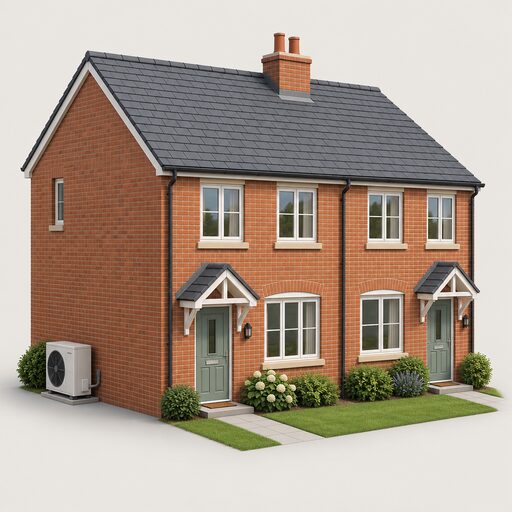 Which Homes Suit a Heat PumpMost UK homes can have a heat pump fitted, so the real question is whether yours makes it easy or expensive.
 Cost of Energy IndependenceA heat pump and better insulation are the usual starting point, but what does the whole job really cost, and what help is there with the bill?
 Public Attitudes to Home EnergyWhat do people in the UK really think about heat pumps, solar panels and smart meters?