
In this guide
Growatt is one of the world's largest manufacturers of PV inverters and energy storage systems, and has been in the PV market for well over a decade1. Its residential catalogue runs from a 750W inverter for a three-panel system up to three-phase hybrid units, with the whole company range spanning 600W to 253kW2. For a UK household the practical question is not scale but fit: which Growatt inverter suits the roof, whether a battery can be added later, and what the monitoring and warranty arrangements require of the owner.
The range divides into four working types. On-grid inverters such as the MIN 5000 are grid-tied with no battery support at all3. Hybrid inverters such as the MIN 2500-XH2, MIN 4600-XH2, MOD 3000TL3-HU and MOD 4000TL3-HU accept a battery, and several are battery-ready, meaning the unit can be commissioned grid-tied and storage added later without replacing it4. Off-grid models such as the SPF 6000ES run without a grid connection and accept a generator input8. Storage is handled by matched battery units: the APX 5.0H high-voltage battery, the ALP 5.0L low-voltage unit and the NOAH home battery, each tied to a compatible inverter class9.
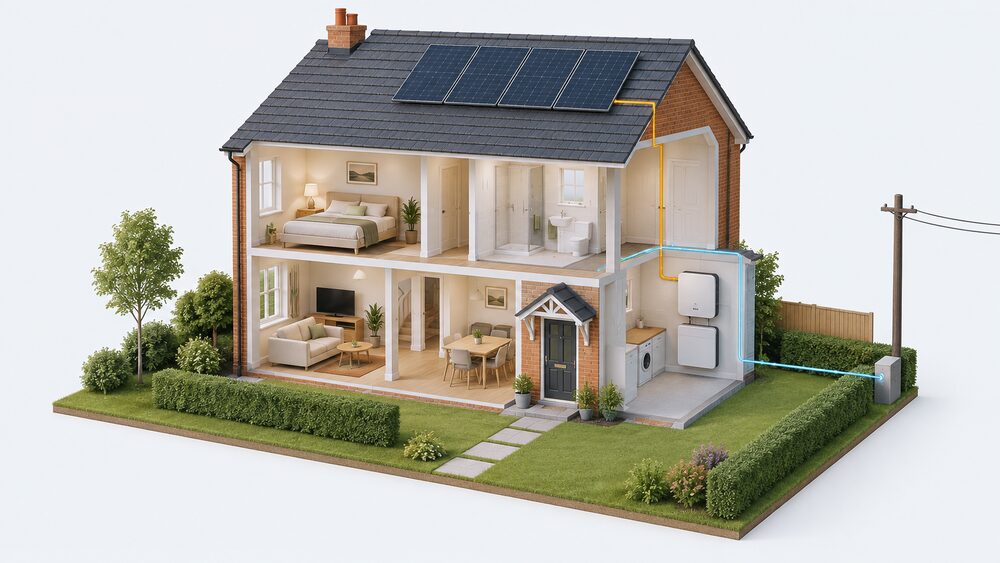
What this buys a household is self-consumption: the ability to use its own generation rather than export it, and in the hybrid models a degree of backup. What it does not remove is dependence. Every grid-tied Growatt inverter still needs a grid connection and a supplier, the monitoring layer runs through Growatt's cloud, and the warranty depends on an authorised repair path through the manufacturer rather than a local engineer.
Growatt at a glance: scale, reach and what the company makes
Growatt describes itself as a global leader of smart energy solutions, supplying residential, commercial and utility-scale PV inverters, energy storage, microgrid systems and smart energy management solutions12. The company reports 43 or more representative offices worldwide, systems installed in more than 180 countries, and more than 1.7 million end users connected to its cloud platform2. Those are the manufacturer's own figures and describe the installed estate rather than UK market share, but they indicate a company with enough volume to sustain a service network: Growatt states it has an extensive service network in Europe15.
The product spread matters for a householder because it determines what spares and firmware support are likely to exist. The catalogue covers single and dual tracker options across a wide range of inverter sizes, and the residential end of it starts at a 750W unit intended for three-panel systems12. At the other end, Growatt offers onsite commissioning for large plant where inverter capacity exceeds 500kW, which is a commercial service rather than anything a home would use14.
The residential storage side is where most UK interest sits. Growatt's own residential storage material describes a system built around a hybrid inverter and a lithium battery, with remote firmware upgrade for both, 24-hour self-consumption monitoring and multiple levels of protection from the battery management system and the inverters16.
For energy independence, the significance is that Growatt is a volume manufacturer with a broad catalogue, which tends to mean competitive pricing and wide availability. The counterweight is that the relationship is with a manufacturer, not a local firm: service, firmware and warranty all route back to Growatt. The wider landscape of inverter makers is set out in solar inverter and microinverter manufacturers.
Inverters and batteries for UK homes: the residential range
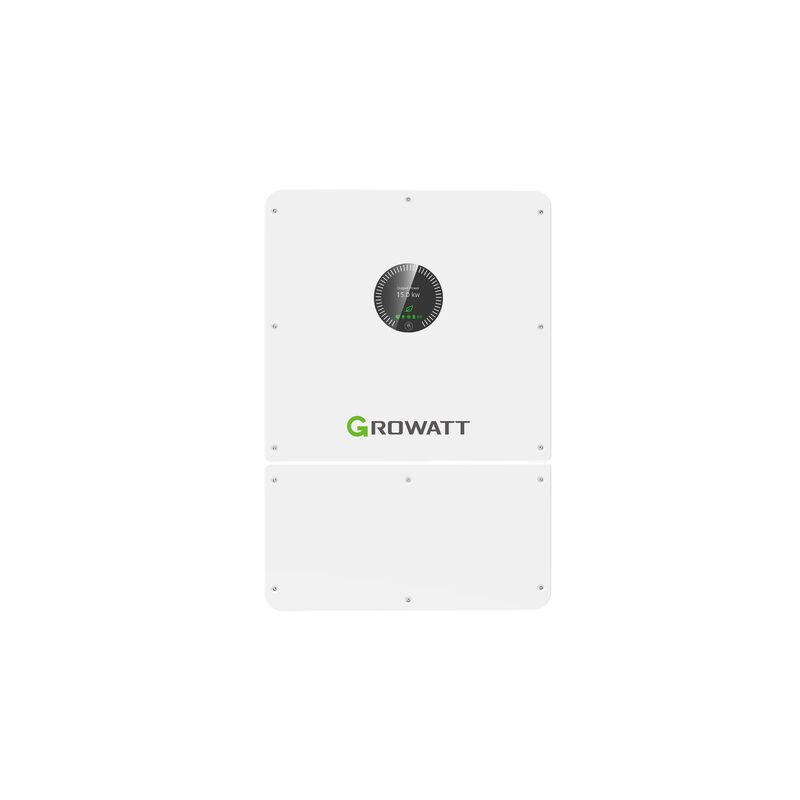
The residential range splits by phase and by whether storage is supported. On the single-phase side, the MIN 5000 is a high-efficiency on-grid inverter without energy storage support, and Growatt answers plainly that it is grid-tied with no battery capability3. The MIN 2500-XH2 and MIN 4600-XH2 are hybrid inverters, so they do accept a battery6. On the three-phase side, the MOD 3000TL3-HU and MOD 4000TL3-HU are hybrid and battery-ready4, while the WIT-HU series comprises three-phase hybrid inverters with a low-voltage battery, generator input, black start and parallel operation, running up to the WIT 25K-HU17.
Batteries are matched to the inverter by voltage class. The APX high-voltage battery set is designed to work with Growatt MIN-XH, MIN-XH2, MOD and MID hybrid inverters, and the battery voltage class must match the inverter9. The ALP 5.0L is a lithium iron phosphate low-voltage battery with an IP66 rating, sold through Growatt.tech with full documentation and a European service warranty10. The NOAH home battery is a lithium iron phosphate unit monitored through the ShinePhone app11.
| Model | Type | Notes |
|---|---|---|
| MIN 5000 | On-grid | No battery support3 |
| MIN 2500-XH2 | Hybrid | Single-phase6 |
| MIN 4600-XH2 | Hybrid | Single-phase5 |
| MOD 3000TL3-HU | Hybrid, battery-ready | HV storage added later4 |
| MOD 4000TL3-HU | Hybrid, battery-ready | HV storage added later7 |
| WIT-HU series | Three-phase hybrid | LV battery, IP66, EPS backup module17 |
| WIT-HU series | Three-phase hybrid | Black start, parallel operation19 |
| WIT 25K-HU | Hybrid | Generator input, smart load1 |
| SPF 6000ES | Off-grid | Generator input8 |
| APX battery set | Battery | MIN-XH, MIN-XH2, MOD, MID9 |
| ALP 5.0L | Battery | LiFePO4, IP6610 |
| NOAH home battery | Battery | LiFePO411 |
Growatt's UK residential storage material cites an installation using a hybrid inverter SPH 6000 and a lithium battery GBLI6532, which shows the pairing approach the company takes16. The smart meter and the TPM-CT-E-EU meter are compatible with Growatt solar, storage and hybrid inverters respectively, and the smart meter connects directly to the inverter20.
Hybrid, battery and micro inverters: which type fits which setup
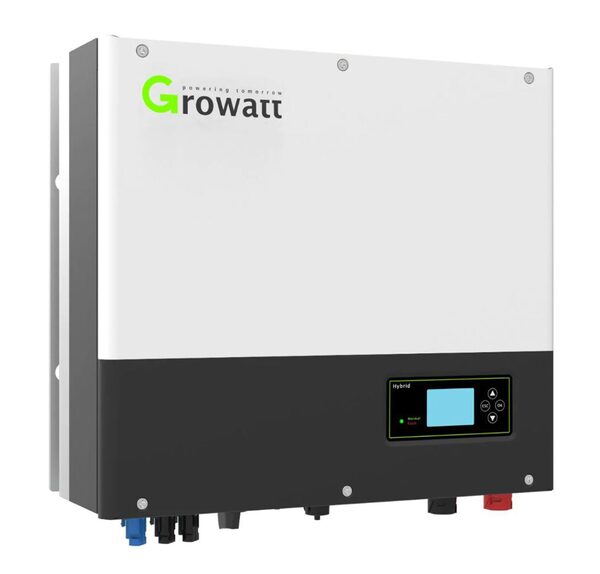
The choice turns on three questions: whether the grid connection is single or three phase, whether a battery is wanted now or later, and whether backup during a power cut matters.
A grid-tied inverter is the simplest and cheapest arrangement, and it is the right answer where no storage is planned. The MIN 5000 is explicitly an on-grid inverter without energy storage support3. It generates, it exports surplus, and it stops when the grid stops.
A hybrid inverter adds battery capability. The battery-ready models are the more flexible option: the MOD 3000TL3-HU and MOD 4000TL3-HU can be commissioned in grid-tied mode straight away and have high-voltage storage added at any later point without replacing the unit4. The WIT-HU series works the same way with a low-voltage battery, which can be added at any point without replacing the inverter18. That matters for independence because it lets a household start with solar and add storage when budget or tariffs allow, rather than committing to both at once.
Backup is a separate feature from battery capability. The three-phase WIT-HU hybrids carry a built-in EPS backup module17. Growatt states that its hybrid inverters support seamless switching to off-grid operation during blackouts, supplying essential appliances such as lights, routers and refrigerators without interruption, and that during outages its inverters automatically switch to off-grid mode to power critical household loads from the battery22. That is a genuine independence gain, but a bounded one: it covers essential circuits, not the whole house, and it depends on the battery having charge at the moment the grid fails.
Off-grid is the fourth case. The SPF 6000ES is an off-grid inverter with a generator input, parallel-ready8. This is the only configuration in the range that removes the grid dependence entirely, and it does so by accepting a different dependence: a generator or a large enough battery bank to carry the property through winter.
Growatt's own guidance describes intelligent mode-switching between on-grid and off-grid operation with multiple customisable working modes22. Comparisons with rival hybrid platforms are at Sunsynk vs Growatt hybrid inverters compared and Growatt vs GivEnergy.
Monitoring and the ShinePhone ecosystem: what owning a Growatt system means day to day
Growatt's monitoring runs through the ShinePhone app and the ShineServer portal. ShinePhone is described as the system monitoring app for users and as one app for all Growatt products23. The Shine GPRS-X communication module connects a Growatt inverter to the internet so that production, consumption and battery state can be monitored in the app and portal, with fault notifications and full operating history11. It is designed to work with Growatt inverters and energy storage systems that support ShinePhone or ShineServer monitoring11.
The connection chain is worth understanding because it is where most day-to-day problems occur. A datalogger communicates with the inverter over an RS485 or CAN port, and an interruption on that link is a recognised cause of missing data24. Growatt's wifi modules do not support 5GHz networks, which is a common reason a system fails to come online in a home with a modern router25. Where the app shows no production data, the datalogger link is one of the things Growatt points to24.
Local access exists as a fallback. Growatt publishes guidance on reaching local settings through the inverter's local network address, which allows configuration without going through the cloud13. That is a meaningful independence point: the inverter itself keeps working, and local settings remain reachable, even when the cloud link is down.
What the household should expect in practice is a system that reports well when the communications chain is intact, and that goes quiet when it is not. The inverter continues to generate and to charge the battery regardless. What is lost is visibility and remote control, not generation. The wider question of how long apps and portals are supported is covered in firmware updates and product support life.
Firmware updates and smart features: remote upgrades and generator input
Growatt's residential storage system supports remote firmware upgrade for both the inverter and the battery16. That is a genuine advantage over older equipment that needed a laptop and a cable on site: fixes and feature changes can be applied over the monitoring connection.
Some faults need a specific build rather than the general release. For Fault 08 on an off-grid inverter, Growatt advises upgrading special firmware, which can be requested from the company26. For Warning 20, the guidance is to replace the BMS cable or check with Growatt whether the battery has been approved and appears in the compatibility list27. Where a battery was not purchased from Growatt or is not on the compatibility list, Growatt suggests setting the battery type as US2 in the 05 setting option and letting it work without BMS communication27. That is a workaround, not an endorsement, and it removes the battery management system's protective communication.
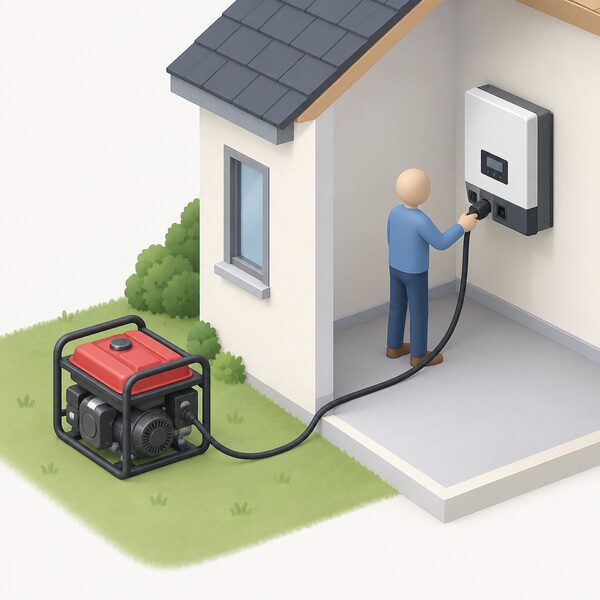
Generator input is the other smart feature that bears on independence. The three-phase WIT-HU hybrids offer AC generator input alongside a smart load function, parallel operation of multiple units and black start1. The WIT 25K-HU offers generator input and smart load, which Growatt describes as letting you build a flexible system even where the grid is unstable1. The SPF 6000ES off-grid inverter has an AC input for a generator8, and Growatt's microgrid solution integrates generator input at system level16.
Black start and parallel operation are the features that matter most for a household aiming at independence: they allow a system to restart without grid assistance and to be expanded by adding units rather than replacing them. The limits are practical. Generator input means a fossil fuel dependence replaces a grid dependence, and parallel operation requires the additional units to be bought and wired.
Warranty terms and the authorised repair path
Growatt's product warranty covers PV inverters, storage inverters, smart energy management devices, monitoring software, EV chargers, portable power stations, and Growatt batteries and accessories14. The power series inverters carry a five-year warranty that is extendable for the remaining capacities2, and the ARK 2.5H-A2 battery is sold with a European service warranty2.
The exclusions are the part to read closely. Growatt lists damage from breaking the product seal or opening the casing without permission from Growatt, transport damage, incorrect installation or commissioning, failure to observe the user manual, installation guide and maintenance regulations, unauthorised modifications, changes or attempted repairs, incorrect use or inappropriate operation, insufficient ventilation, failure to observe applicable safety regulations, and force majeure such as lightning, overvoltage, storm or fire28.
The repair path is narrow by design. Growatt states that in case of persistent hardware failure, the only authorised path for repair is contacting the official Growatt Service Department13. That applies across fault types, including Error 122 bus voltage faults, Error 203 PV isolation faults and OLED display failures, where persistent failure requires display module replacement and the same authorised route29. For faults Growatt identifies as hardware-related, such as Fault 07 on an off-grid inverter, it directs owners to the service team for further solutions26.
"In case of persistent hardware failure, the only authorized path for repair is contacting the official Growatt Service Department."
The service contact is service@growatt.com, which is also the address for reporting security vulnerabilities14. Accessory compatibility is confirmed before purchase by writing to info@growatt.tech32. For a household, the practical consequence is that diagnosis and repair run through the manufacturer rather than a local electrician, and that any attempt to open the unit or repair it independently ends the warranty. The general position on keeping a warranty valid is at registering a warranty and keeping it valid.
Cost and UK availability: where to buy and what to weigh
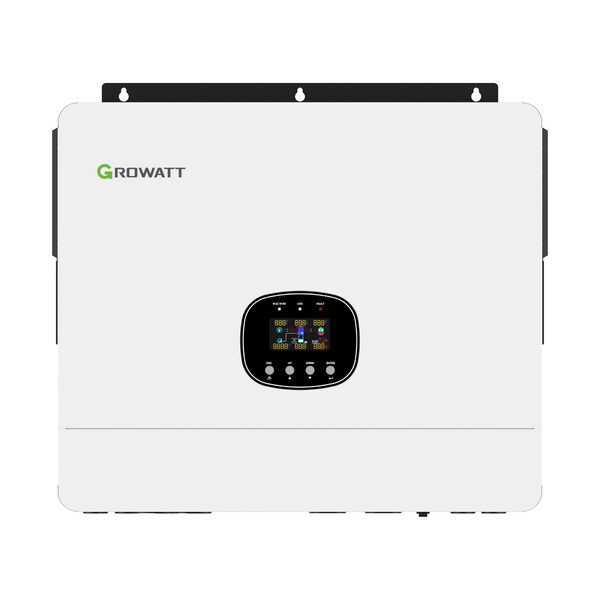
Growatt equipment is sold through the growatt.tech shop, which lists models including the MIN 5000, the three-phase WIT-HU hybrids and the NOAH home battery with full documentation and a European service warranty3. Installers and businesses see B2B trade prices after logging in, which applies to the MOD 4000TL3-HU, MOD 3000TL3-HU and the NOAH battery among others7. The ALP 5.0L is sold the same way, with trade prices requiring a login10.
Midsummer Wholesale is a UK trade distributor carrying the Growatt inverter range12. For most of the range no published retail price is given, so prices are installer-quoted and depend on trade status. Where distributor listings do show a figure, they differ in VAT treatment: a Growatt SPH3000TL BL-UP storage inverter is listed at £889.46 inc VAT, while other Growatt inverters are listed ex-VAT or behind a trade login12. Pricing therefore varies by channel rather than following a single list price.
What to weigh comes down to three things. First, the trade-price model means the household usually buys through an installer, so the installer's competence and registration matter as much as the badge. Second, the warranty conditions are strict about who opens the unit and how it was installed, so the quality of the original commissioning has a long tail. Third, the monitoring and firmware relationship is with Growatt's cloud, which is a continuing dependence rather than a one-off purchase. Buying routes are compared at buying direct from a manufacturer or through an installer, and the battery side of the market at home battery storage manufacturers.
Data security and your cloud connection
Growatt's monitoring estate is large: more than 1.7 million end users connected to the cloud platform2. That scale is the context for the security question, because a monitoring account holds a household's production, consumption and battery data.
Growatt publishes vulnerability handling guidelines that apply to all its products and services, including inverters, energy storage systems, monitoring solutions such as ShineWiFi, ShineLan and Shine4G, the Shine Server online platform and the ShinePhone mobile app28. The reporting address for a discovered security vulnerability is service@growatt.com28. The existence of a published disclosure route is a positive indicator, though it is a process rather than a guarantee.
The company does not publish account security requirements for householders. The practical exposure is the same as any monitoring login: the account controls visibility of the system and, depending on configuration, remote settings. A unique password and a login not shared with third parties are the ordinary precautions, and they are the householder's to take rather than the manufacturer's to enforce.
The deeper independence point is architectural. Growatt inverters support monitoring by radio, wifi, LAN, GPRS and RS4852, and local settings remain reachable through the inverter's local network address13. That means the system can be configured and will continue to generate without the cloud. What the cloud adds is remote visibility, fault notification and remote firmware upgrade16. A household that wants to minimise its dependence on a manufacturer's servers can keep the local route in use, at the cost of losing the remote features. The wider pattern across the industry is covered in manufacturers and household energy independence.
Sources32 cited
- Growatt WIT 5kW-HU hybrid inverter, Growatt, 2026-09-17
- Growatt company and product overview, Growatt, 2025-09-15
- Growatt MIN 5000 TL-X inverter, Growatt, 2026-09-17
- Growatt MOD 3000TL3-HU hybrid inverter, Growatt, 2026-09-17
- Growatt MIN 4600-XH2 hybrid inverter, Growatt, 2026-09-17
- Growatt MIN 2500-XH2 hybrid inverter, Growatt, 2026-09-17
- Growatt MOD 4000TL3-HU hybrid inverter, Growatt, 2026-09-17
- Growatt SPF 6000ES off-grid inverter, Growatt, 2026-09-17
- Growatt APX 2.0 battery set, Growatt, 2026-09-17
- Growatt ALP 5.0L battery, Growatt, 2026-09-17
- Growatt Shine GPRS-X, Growatt, 2026-09-17
- Growatt inverters at Midsummer Wholesale, Midsummer Wholesale, 2026-09-19
- Accessing Growatt local settings, Growatt, 2025-12-19
- Growatt warranty, Growatt, 2026-09-17
- Growatt NOAH 2000 battery, Growatt, 2026-09-17
- Growatt residential storage system, Growatt, 2026-09-17
- Growatt WIT 4kW-HU hybrid inverter, Growatt, 2026-09-17
- Growatt WIT 6kW-HU hybrid inverter, Growatt, 2026-09-17
- Growatt WIT 8kW-HU hybrid inverter, Growatt, 2026-09-17
- Growatt smart meter, Growatt, 2026-09-17
- Growatt TPM-CT-E-EU meter, Growatt, 2026-09-17
- Choosing the right operating mode for your storage system, Growatt, 2025-06-27
- Growatt monitoring platform, Growatt, 2026-09-17
- ShinePhone app not showing production data, Growatt, 2025-12-19
- Why Growatt wifi modules do not support 5GHz networks, Growatt, 2025-12-19
- Growatt off-grid inverter FAQ, Growatt, 2026-09-17
- Growatt off-grid inverter FAQ, page 2, Growatt, 2026-09-19
- Growatt warranty terms, Growatt, 2026-09-17
- Growatt Error 122 bus voltage fault, Growatt, 2025-12-19
- Growatt Error 203 PV isolation fault, Growatt, 2025-12-19
- Growatt OLED display troubleshooting, Growatt, 2025-12-19
- Growatt BDC 95045-A1 base, Growatt, 2026-09-17
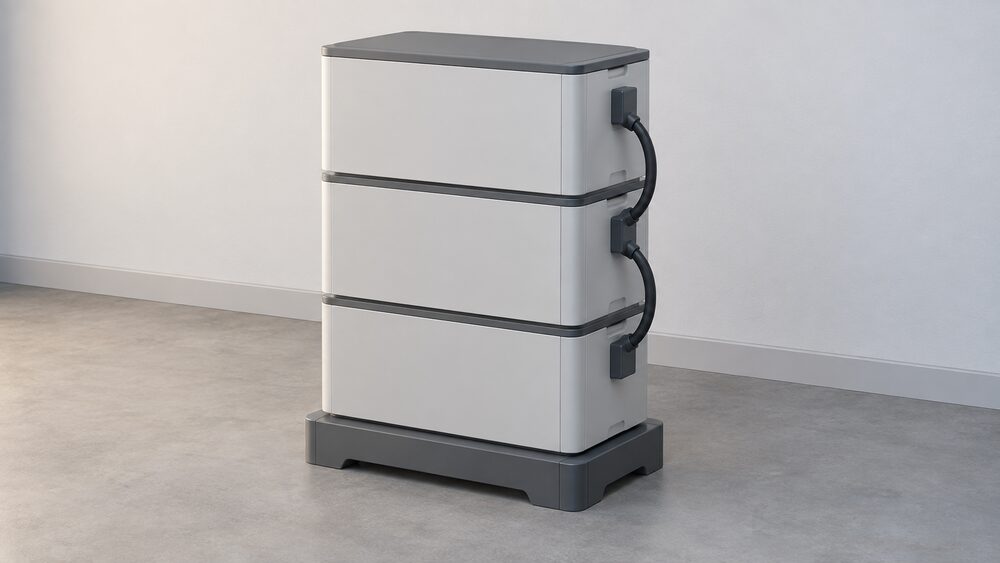 Growatt AXEHow many Growatt AXE batteries do you need for your home, and can you add more later?
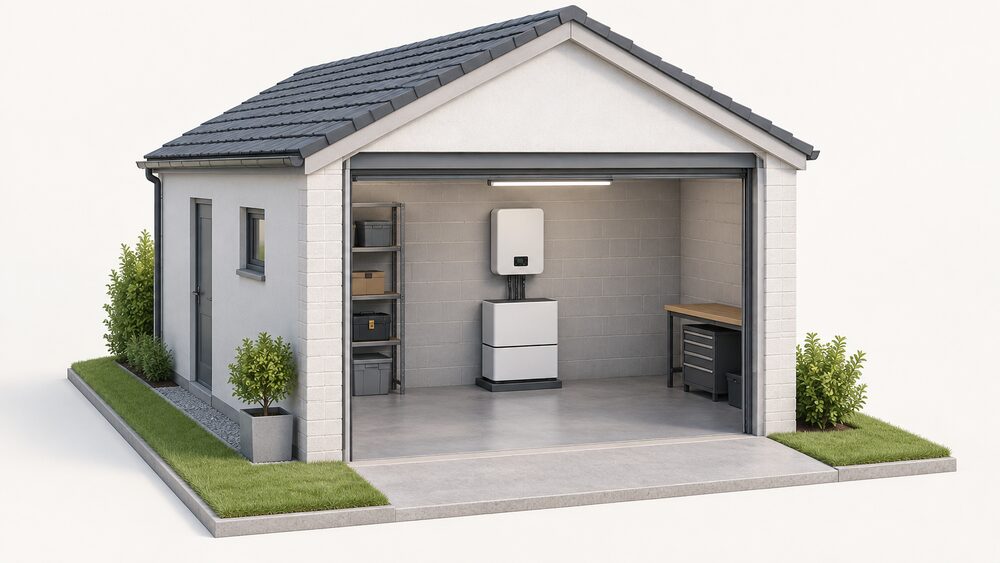 Growatt Home Batteries and Storage SystemsGrowatt home batteries store the extra power your solar panels make, so you can use it in the evening instead of buying it back from the grid.