
In this guide
Growatt is one of the world's largest manufacturers of PV inverters and energy storage systems, present in the PV market for well over a decade, with an extensive service network in Europe1. For a UK household, that matters less than what the kit does: the company sells low-voltage and high-voltage battery modules, hybrid inverters, off-grid inverters and the ShinePhone monitoring platform, mostly through its own growatt.tech shop and through installers.
The core domestic product is the AXE battery, a cobalt free lithium iron phosphate (LFP) module rated at 5 kWh nominal, with about 4.6 kWh usable at the datasheet depth of discharge of 92%2. Modules stack: the AXE 5.0L series runs from a single 5 kWh module to clusters of up to 400 kWh in total, for off-grid systems, single-phase hybrid inverters and WIT-HU inverters2. A parallel high-voltage line, the APX series, uses the same 5 kWh module size but caps at 30 kWh per system4.
Backup is conditional rather than automatic. Growatt states that combined with a hybrid inverter, the energy storage battery keeps selected circuits running during a grid outage through the inverter's backup or EPS function5. Independent guidance is more cautious: Which? notes that not all systems are suitable for power cuts, and the Centre for Sustainable Energy advises checking with an installer whether a battery will work in an outage and for how long6.
The range at a glance: AXE, APX, ALP and the inverters
Growatt's home storage splits into low-voltage and high-voltage families. The AXE 5.0L is the low-voltage workhorse, a 5.0 kWh module with cobalt free LFP cells, expandable from one module to clusters of up to 400 kWh2. The AXE 5.0H-E1 is a 5 kWh module listed as compatible with three-phase commercial Growatt WIT XHU hybrid inverters5. The AXE 10 kWh set is a modular low-voltage battery at 51.2 V, built from two AXE 5.0L-C1 modules8.
The APX series is the high-voltage option, described as a modular high-voltage energy storage battery for residential and commercial three-phase hybrid systems, with compact 5 kWh modules stacked into a system of up to 30 kWh4. It is sold as ready-made sets of 5 kWh and 10 kWh, and as separate master and expansion modules10. The ALP 5.0L is a further low-voltage 5 kWh unit with an IP66 rating, sold as a kit for WIT and SPF inverters13.
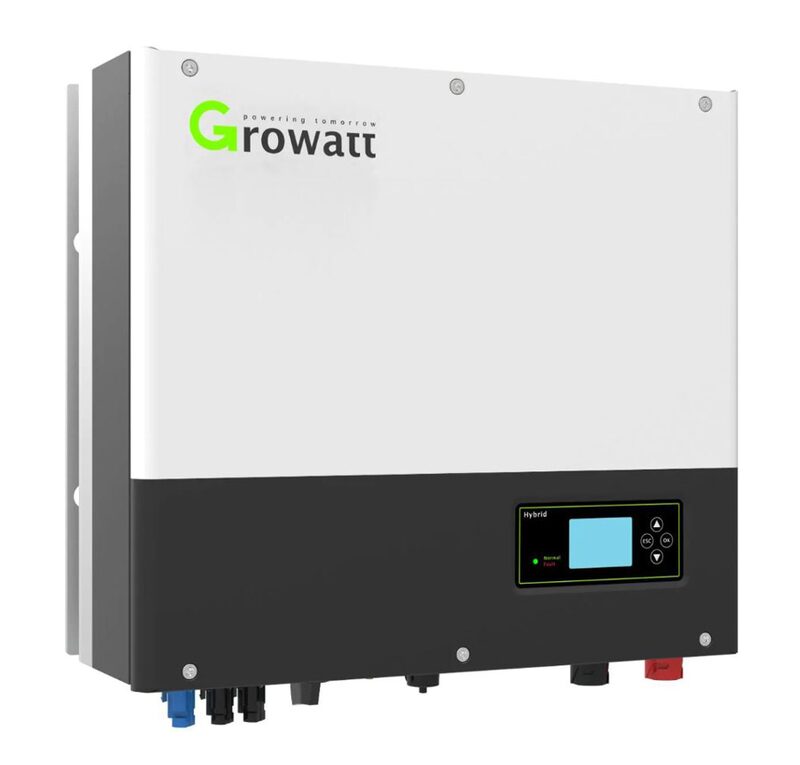
On the inverter side, the WIT range covers single-phase and three-phase hybrid models with built-in EPS backup modules, the MIN range covers smaller single-phase inverters, and the SPF 6000ES Plus is a 6 kW off-grid inverter with parallel capability15. Growatt also sells the NOAH 2000, an LFP unit for balcony systems20.
| Product | Type | Capacity | Notes |
|---|---|---|---|
| AXE 5.0L | LV battery module | 5.0 kWh per module | Cobalt free LFP, up to 400 kWh in clusters2 |
| AXE 5.0H-E1 | Battery module | 5 kWh | For three-phase WIT XHU inverters5 |
| AXE 10 kWh set | LV battery set | 2 × AXE 5.0L-C1 | 51.2 V, IP208 |
| APX 5.0H | HV battery module | 5 kWh | 1 to 6 modules, 5 to 30 kWh4 |
| ALP 5.0L | LV battery | 5 kWh | IP66, kit for WIT and SPF13 |
| SPF 6000ES Plus | Off-grid inverter | 6 kW | Parallel ready16 |
AXE 5 kWh: capacity, chemistry and what the numbers mean

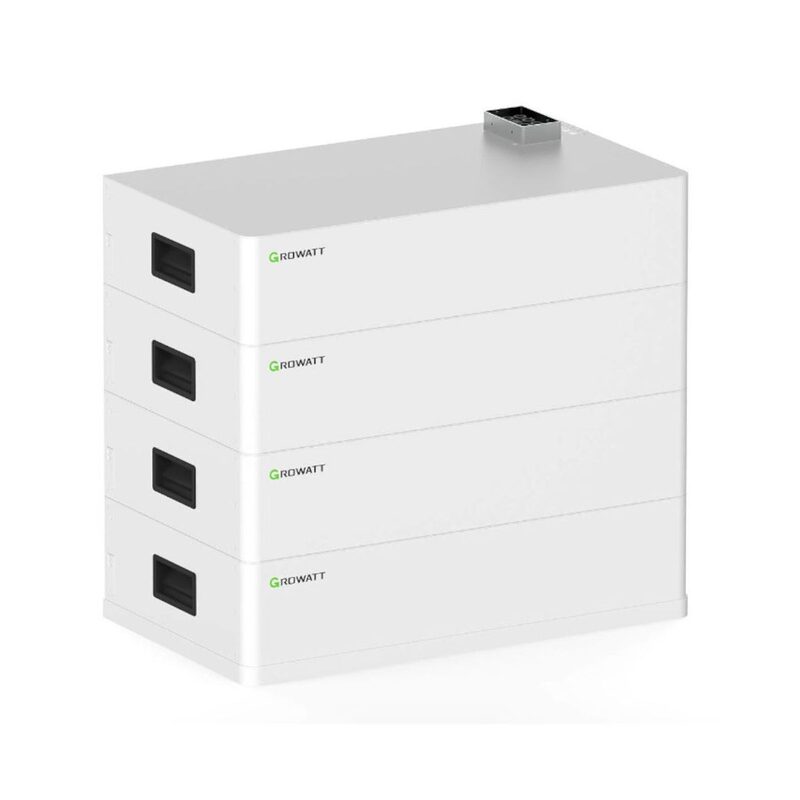
The headline figure on a Growatt AXE module is 5 kWh, and that is the nominal capacity: the AXE 5.0L lists 5.0 kWh per module, and the 15 kWh set lists 5 kWh per module in its specification table2. Nominal capacity is not the same as the energy a household can draw. Growatt's own AXE 5 kWh page gives a usable capacity of about 4.6 kWh at the datasheet depth of discharge of 92%3. That gap is normal for lithium storage and is worth understanding before sizing a system, since the usable figure is the one that determines how much of an evening's demand a single module covers.
The chemistry is lithium iron phosphate, written LiFePO4 or LFP, and Growatt describes it as cobalt free across the AXE range3. LFP is the dominant chemistry in home storage for reasons of cycle life and thermal stability, and the wider chemistry picture is set out in home battery chemistries. The AXE 10 kWh set runs at 51.2 V, which is the standard low-voltage bus for this class of battery8.
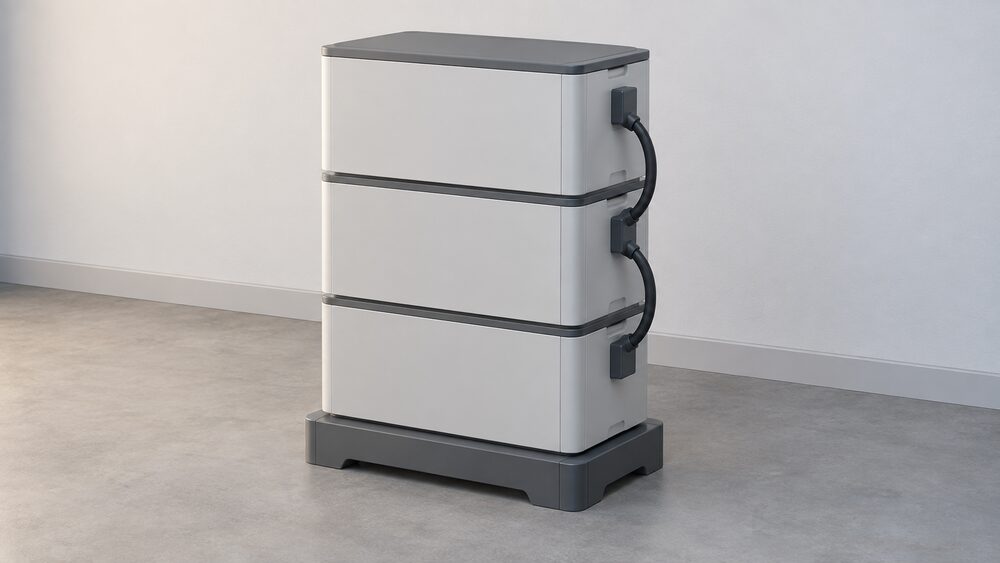
Physically, the AXE 5 kWh set is listed at 650/350/165 (W/D/H) mm22. Weight figures in Growatt's own documentation disagree: one page gives a weight of 42 kg for the set, another gives 54.40 kg, and the documents do not resolve which applies to which configuration3. The 15 kWh set uses natural convection cooling with no fans and module level energy optimisation21. The AXE 10 kWh set carries an IP20 ingress protection rating and an integrated BMS8.
Scalability: from a single 5 kWh module to 400 kWh
The AXE 5.0L series is described as a scalable low-voltage energy storage battery running from a single 5 kWh module to clusters of up to 400 kWh in total2. The expansion rule is specific: 1 to 10 modules per cluster, giving 5.0 to 50.0 kWh per cluster, with a maximum of 8 clusters in parallel and a maximum of 400 kWh in total2. The 15 kWh set expresses the same idea more loosely as flexible capacity options from 5 kWh to 50 kWh, and notes support for mixing new and old battery modules in one system21.
The APX high-voltage line scales differently. One master module takes up to five expansion modules, which is how the system reaches 30 kWh, and the sets are described as 1 to 6 modules of 5 kWh each, a 5 to 30 kWh system4. The ALP 5 kWh modules connect in parallel into clusters of up to 40 kWh per cluster, with multiple clusters possible14.
For a household, the practical question is which ceiling applies. A single-phase home on a WIT-HU inverter sits in the AXE low-voltage world, where the ceiling is far above any domestic demand and the real constraint is budget and space. A three-phase home on an APX system is capped at 30 kWh, which is ample for most houses but not expandable indefinitely. The general principles of adding capacity later are covered in modular and stackable battery systems and battery capacity and usable capacity.
Backup and off-grid: what a Growatt set keeps running in an outage
Growatt's backup claim is consistent across its battery pages: combined with a hybrid inverter, the energy storage battery keeps selected circuits running during a grid outage through the inverter's backup or EPS function5. The same wording appears for the AXE 5.0L, the AXE 5.0H-E1, the AXE 10 kWh set, the APX modules and sets, the ALP 5.0L and the ARK sets2. The WIT 6kW-HU is listed with a built-in EPS backup module17, and Growatt's residential storage page claims it will "Guarantee your 24/7 uninterruptable energy, providing backup power when a blackout occurs"25.
The word doing the work in the product pages is "selected". A backup circuit is wired to particular loads, not to the whole house, and what stays live depends on how the installer configures the changeover. Independent guidance is firmer on the limits than the marketing is. Which? states that "If you're looking to protect yourself against power cuts with a home battery, not all systems are suitable"6. Electricity North West notes that in some cases storage devices can provide back-up supplies for use in a power cut, but that this is not always possible and should be checked with an installer7. The Centre for Sustainable Energy notes that the more expensive battery systems can also provide electricity during a power cut26. The Energy Saving Trust's case study describes a household arrangement that lets the home run on batteries during a power cut27.
For a household weighing independence, the position is that a Growatt battery plus hybrid inverter can carry selected circuits through an outage, and the off-grid SPF route can run without a grid connection at all. Neither removes the dependence on the manufacturer for firmware, monitoring and warranty service. The mechanics of backup circuits are covered in battery backup power and EPS and battery storage during a power cut.
Monitoring and control: ShinePhone, ShineServer and remote updates
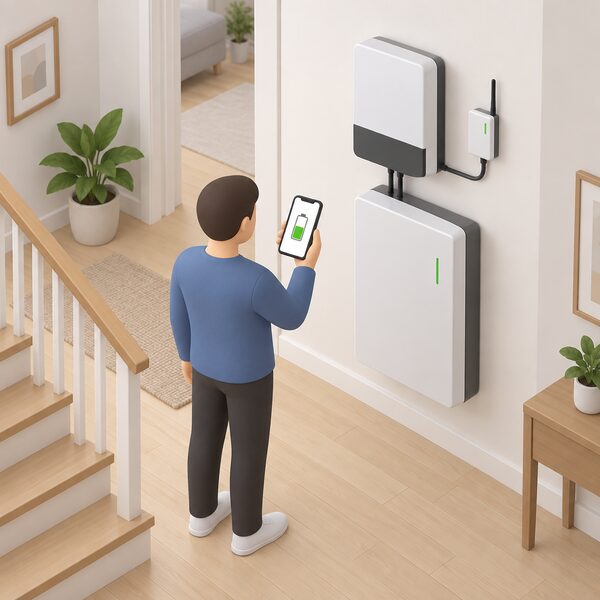
Growatt's monitoring runs through ShinePhone, described as one app for all Growatt products, and the ShineServer portal9. The app and portal show state of charge, charge and discharge power and operating history, with fault notifications, for the ARK and ALP batteries and through the connected inverter13. The Shine WiLAN-X2 and Shine GPRS-X communication modules connect a Growatt inverter to the internet so that production, consumption and battery state can be monitored remotely, and both are designed to work with Growatt inverters and storage systems that support ShinePhone and ShineServer monitoring28.
Commissioning and firmware are split between local and remote routes. ShineTools handles local commissioning and local firmware upgrade, while Growatt's residential storage system offers remote firmware upgrade for inverter and battery, and local commissioning through the app9. The NOAH 2000 is tracked in the free ShinePhone app20.
This is the clearest dependence the range creates. Local control at the inverter continues without an internet connection, but scheduling, energy monitoring, fault notification and remote firmware updates depend on a home broadband connection, Growatt's servers and the manufacturer's app. A household that wants to see and control its storage without a cloud account is relying on the local interfaces only. The wider picture is in monitoring a home battery.
Warranty and installation requirements
Growatt's warranty terms vary by product and by variant, so they read as a ladder rather than a single number. The AXE 5.0H-E1 carries a 10 year European service warranty per the manufacturer's terms, and the AXE 15 kWh set is listed with a 10 year warranty5. The AXE 5.0L and the AXE 10 kWh set are covered by a European service warranty of 5 or 10 years depending on variant8. The APX 5 kWh set carries a 10 year European service warranty10.
The standard warranty period runs from the date of installation on the installation certificate, and no more than six months after the delivery date from Growatt30. Coverage extends across PV inverters, storage inverters, smart energy management devices, monitoring software, EV chargers, portable power stations and Growatt batteries and accessories30. Two conditions matter. Warranty coverage is contingent on the country of sale, the country of installation and the country of after-sales service aligning, and customers need to present the original purchasing invoice, installation documents or receipts for a claim30. Excluded damage includes incorrect installation or commissioning30.
Installation is not a DIY job in Growatt's terms. The AXE 5 kWh and the AXE 5.0L should be installed by a qualified installer according to the manufacturer's manual, and the same requirement appears for the ARK 7.68 kWh, the SYN 50-XH-10, the SYN-100-XH-30 and the BDC 95045-A12. Correct installation is a condition of keeping the warranty and of safe, trouble-free operation28. The AXE 15 kWh set is described as having easy installation with a modular and stacked design, which refers to the physical build rather than to who may do it21. The AXE 15 kWh set also lists passive protection by fuse and aerosol21, and Growatt's residential storage system cites multiple-level protection from the BMS and inverters25.
Where to buy Growatt in the UK
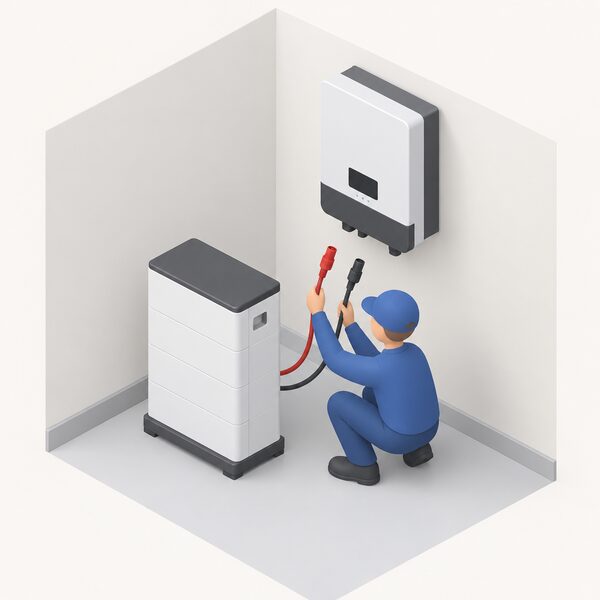
Growatt sells through its own growatt.tech shop, which lists the MIN 5000, the MIN 2500-XH2, the SPF 6000ES and the BDC 95045-A1 as available there19. The ALP 5.0L is sold through the same route with full documentation and a European service warranty, and the NOAH 2000 is sold with European service warranty, full documentation and B2B trade prices for installers, which require a login to view13. The BDC 95045-A1 page directs buyers to browse the full range in the shop and to confirm compatibility before purchase33.
No published UK installed price appears in Growatt's own material, so a supply-and-fit figure is installer-quoted. The practical route for a household is through an installer who can confirm the battery and inverter pairing, since the compatibility lists differ between AXE variants: the AXE 5.0L series is listed for off-grid systems, single-phase hybrid inverters and WIT-HU inverters, while the AXE 5.0H-E1 is listed for three-phase commercial WIT XHU hybrid inverters2. The SPF 6000ES Plus and AXE 5 kWh set is sold as a ready-to-use off-grid kit pairing a 6 kW off-grid inverter with a single AXE 5.0L-C1 module, an integrated BMS and a base for floor-standing installation22.
For a household's energy independence, the position is straightforward. A Growatt battery and hybrid inverter shifts when grid electricity is used and can carry selected circuits through an outage, and the off-grid SPF route removes the grid connection entirely. What remains is dependence on the grid for most supply, on a supplier for import and export arrangements, on a broadband connection and Growatt's servers for monitoring and remote updates, and on the manufacturer for warranty service and firmware. The wider context sits in home battery storage and home batteries and household energy independence.
Sources34 cited
- Growatt WIT 5kW-HU hybrid inverter, Growatt, 2026-09-17
- Growatt AXE 5.0L battery, Growatt, 2026-09-17
- Growatt battery kit AXE 5 kWh for SPF inverters, Growatt, 2026-09-17
- Growatt APX 5.0H 5 kWh high-voltage battery module, Growatt, 2026-09-17
- Growatt AXE 5.0H-E1, Growatt, 2026-09-17
- Solar panel battery storage, Which?, 2026-05-14
- Renewable energy storage, Electricity North West, 2026-09-19
- Growatt AXE 10 kWh low-voltage battery kit, Growatt, 2026-09-17
- Growatt monitoring platform, Growatt, 2026-09-17
- Growatt APX battery set 5 kWh, Growatt, 2026-09-17
- Growatt APX battery set 10 kWh, Growatt, 2026-09-17
- Growatt APX battery set 20 kWh, Growatt, 2026-09-17
- Growatt ALP 5.0L 5 kWh LiFePO4 LV battery, Growatt, 2026-09-17
- Growatt ALP 5 kWh battery kit for WIT and SPF, Growatt, 2026-09-17
- Growatt ARK battery set 20.48 kWh for SPH, Growatt, 2026-09-17
- Growatt SPF 6000ES Plus 6 kW off-grid inverter, Growatt, 2026-09-17
- Growatt WIT 6kW-HU hybrid inverter, Growatt, 2026-09-17
- Growatt WIT 12kW-HU three-phase hybrid inverter, Growatt, 2026-09-17
- Growatt MIN 5000 TL-X single-phase inverter, Growatt, 2026-09-17
- Growatt NOAH 2000 2.048 kWh LiFePO4 battery, Growatt, 2026-09-17
- Growatt AXE battery 15 kWh set, Growatt, 2026-09-17
- Growatt SPF 6000ES Plus and AXE 5 kWh off-grid kit, Growatt, 2026-09-17
- Growatt APX 5.0M-B3 master module, Growatt, 2026-09-17
- Growatt ARK 7.68 kWh battery kit for SPH, Growatt, 2026-09-17
- Growatt residential storage system, Growatt, 2026-09-17
- Making the most of your solar PV panels, Centre for Sustainable Energy, 2026-08
- Tim's story: solar panels and a heat pump, Energy Saving Trust, 2025-04-03
- Growatt Shine WiLAN-X2, Growatt, 2026-09-17
- Growatt Shine GPRS-X, Growatt, 2026-09-17
- Growatt warranty, Growatt, 2026-09-17
- Growatt SYN 50-XH-10 backup box, Growatt, 2026-09-17
- Growatt SYN-100-XH-30 backup box for MID-XH, Growatt, 2026-09-17
- Growatt BDC 95045-A1 base, Growatt, 2026-09-17
- Growatt MIN 2500-XH2, Growatt, 2026-09-17
 Growatt AXEHow many Growatt AXE batteries do you need for your home, and can you add more later?
 Growatt solar inverters and home batteriesWhich Growatt inverter suits your roof, and can you add a battery later?