
In this comparison
SolaX and Growatt are the two hybrid inverter brands most often shortlisted together by UK households that want solar and battery storage in one unit. Both sell single-phase and three-phase hybrid inverters, both run a cloud monitoring platform, and both are priced below the premium European brands. The difference is scale and direction: Growatt describes itself as one of the world's largest manufacturers of PV inverters and energy storage systems, present in the PV market for well over a decade and supplying residential, commercial and industrial installations in dozens of countries1. SolaX presents a narrower residential story built around hybrid inverters, modular LFP batteries, all-in-one energy storage, EV charging and cloud software2.
For a household, the practical question is not which brand is bigger but what each one leaves you dependent on. A hybrid inverter ties a home to a manufacturer's cloud account, a firmware update path and a warranty process, and it decides whether a battery can be expanded later without replacing the inverter. SolaX publishes a residential product line ranging from 2.5 kWh to 92.16 kWh3, which is a wider stated span than most homes will ever need, and Growatt's UK-facing pages concentrate on hybrid and off-grid units with the ShinePhone and ShineServer monitoring ecosystem4.
Neither brand removes grid dependence. Both are grid-tied hybrid designs for the UK market, and both rely on a supplier account for monitoring and, in most cases, for warranty administration. What they change is how much of a home's own generation can be stored and shifted, and how much of the control sits in the household's hands rather than a platform's.
SolaX vs Growatt at a glance
The two brands overlap on the core product, a hybrid inverter that manages solar, battery and grid import and export, but they diverge on how far the ecosystem extends and how the warranty is administered.
| SolaX | Growatt | |
|---|---|---|
| Stated market position | Residential hybrid, battery, EV charging and cloud software2 | One of the world's largest PV inverter and storage manufacturers1 |
| Single-phase hybrid sizes | 3.0 kW to 7.5 kW5 | MIN 5000 TL-X single-phase1 |
| Three-phase hybrid | X3-IES-P from 4 kW to 15 kW5 | WIT 6kW-HU, three-phase with UPS backup10 |
| Battery chemistry | Modular LFP2 | ARK, APX and AXE series modules11 |
| Monitoring | SolaXCloud12 | ShinePhone app, ShineServer web7 |
| Grid protocols | IEEE 2030.5 and OpenADR8 | Not stated on the pages reviewed |
| Warranty registration | Online within 90 days of commissioning6 | Not stated on the pages reviewed |
The table shows the asymmetry clearly. SolaX publishes a detailed warranty process, a protocol list and a stated residential capacity span. Growatt publishes product pages with monitoring and compatibility detail, and routes support through a single email address13. That does not make Growatt the weaker product, but it does mean a household has less published process to rely on when something fails.
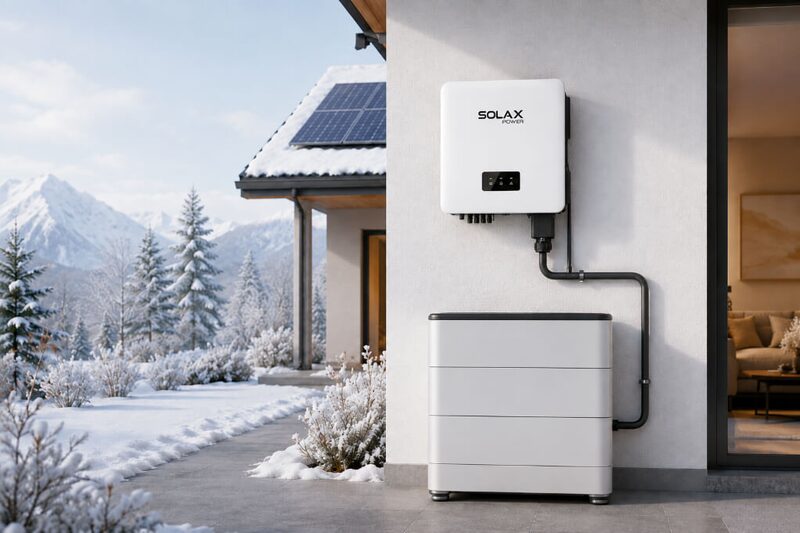
Two manufacturers, two scales: who each company is
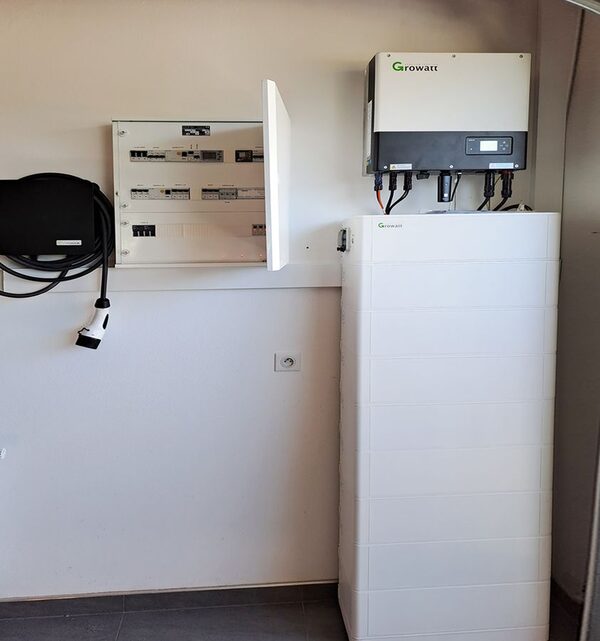
Growatt's own positioning is the broadest claim on either side of this comparison. Its product pages describe it as one of the world's largest manufacturers of PV inverters and energy storage systems, present in the PV market for well over a decade, supplying residential, commercial and industrial installations in dozens of countries1. That is a maker's statement about itself, and it points to a company built on volume across many markets rather than on a single residential niche.
SolaX publishes scale figures of a different kind. It states more than 700 global partners, over 1,000 research and development professionals, and a presence in more than 110 markets9. It also states more than 1,100 product certifications14. These are company-wide numbers, not UK-specific ones, and they are the maker's own. Read together with its residential range of 2.5 kWh to 92.16 kWh3, they describe a company that spans small home batteries up to larger commercial storage, with the residential hybrid line as the volume product.
The distinction matters for a household in one specific way: a company's breadth is not the same as its depth in your market. Growatt's UK-facing pages are product pages with an email contact13, while SolaX publishes a UK and Ireland warranty document, a registration process and an escalation address6. A buyer weighing the two is weighing a global manufacturer's product range against a manufacturer that has published more of its UK after-sales process.
Range and product coverage for UK homes
SolaX's residential coverage is documented in more detail. The X1-Hybrid G4 comes in 3.0 kW, 3.7 kW, 5.0 kW, 6.0 kW and 7.5 kW sizes5, and the X1-Boost G4 covers 2.5 kW to 6 kW with support for 200% PV oversizing15. On the three-phase side, the X3-IES-P is listed in 4 kW, 5 kW, 6 kW, 8 kW, 10 kW, 12 kW and 15 kW sizes5, and the X3-MIC G2 covers 3 kW to 15 kW16. The X1-VAST is offered in 5 kW, 6 kW, 8 kW and 10 kW ratings and is described as microgrid and generator compatible17.
Battery coverage is where the two brands differ most in published detail. SolaX states a residential product line ranging from 2.5 kWh to 92.16 kWh3, with the T-BAT H 3.0 V2 stack running from 3.1 kWh up to 12.3 kWh4. Continuous power scales with stack size: 2.5 kW on the T-BAT H 3.0, 5.1 kW on the T-BAT H 6.0 and 7.6 kW on the T-BAT H 9.04. The A1 HYBRID G2 is stated to work with T-BAT-SYS-HV-5.0 battery modules and to scale to as much as 80 kWh in parallel configurations18.
Growatt's battery side is described through module families rather than a single capacity span. The AXE 40H-E1 Rack is designed to work with Growatt battery modules of the ARK, APX and AXE series11. The WIT 6kW-HU adds AC generator input, a smart load function, parallel operation of multiple units and black start10, and the SPF 6000ES is an off-grid unit with parallel capability13.
"The Growatt AXE 40H-E1 Rack is designed to work with Growatt battery modules of the series named in the product name"
For a UK home, the practical reading is that SolaX publishes a continuous capacity ladder from a single small stack up to whole-home and larger storage, while Growatt publishes discrete product families. Neither publishes a UK price on the pages reviewed here, so both are installer-quoted.
Monitoring and cloud platforms: ShinePhone vs SolaXCloud
Both brands put monitoring at the centre of the ownership experience, and both make the platform the main ongoing tie between the household and the manufacturer.
Growatt's ecosystem is ShinePhone and ShineServer. ShinePhone is described as the system monitoring app for users, ShineServer as the web version monitoring platform, and ShinePhone as one app for all Growatt products with simple WiFi configuration7. ShineTools is listed as a lite operations and maintenance app7. Both the WIT 6kW-HU and the SPF 6000ES list ShinePhone and ShineServer over WiFi as their monitoring method10.
SolaX's equivalent is SolaXCloud, presented for real-time monitoring and energy management, with SOC 2 Type I verification highlighted for data security19. The X-ESS G4 is described as offering smart management via SolaXCloud with real-time monitoring, time-of-use optimisation and integration with EV chargers and heat pumps20. SolaXCloud is also described as emphasising real-time monitoring and user-friendly control21.
The difference a household will notice is in what the platform connects to. SolaX states that its devices connect with a diverse range of third-party Home Energy Management System platforms8, and that its residential offer links inverter, battery, charger and monitoring in one platform22. Growatt's pages describe a single-app approach across its own products7 without stating third-party home energy management integration.
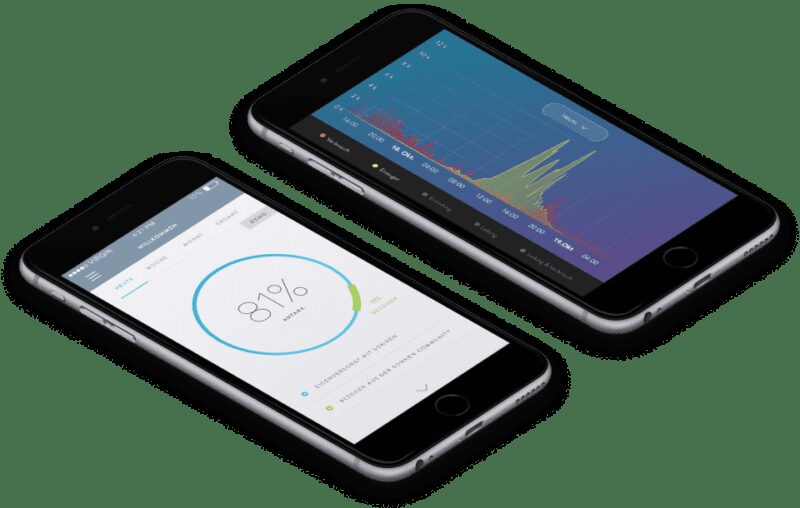
Vehicle-to-home and grid flexibility: where SolaX is pushing ahead

This is the clearest area of divergence in the published material. SolaX states that its devices support industry-standard protocols including IEEE 2030.5 and OpenADR, which it says ensures fast integration with various systems8, and its virtual power plant solution repeats support for IEEE 2030.5 and OpenADR12. Those two protocols are the ones grid flexibility markets and aggregators use, so a household reading them should understand them as the technical precondition for taking part in a flexibility scheme, not as a guarantee of earnings.
SolaX has also moved into vehicle-to-home. It presented an AC-side V2H system at Intersolar Europe 202623 and published a blog arguing that AC-side V2H could matter for Europe's solar homes23. It partnered with Axle Energy so that battery owners can connect SolaXCloud to Axle's virtual power plant23. On the product side, the Smart EV Charger G2 is offered in 4.6 kW, 7.2 kW, 11 kW and 22 kW versions and supports multiple communication protocols24, and the earlier Smart EV Charger supports both plug and socket outlet options25.
Growatt's published flexibility features sit at the device level rather than the market level. The WIT 6kW-HU lists AC generator input, a smart load function, parallel operation and black start10, and the SPF 6000ES is an off-grid, parallel-ready unit13. Those are useful for resilience and for expanding a system, but the pages reviewed here do not state grid-services protocol support or a vehicle-to-home product.
For energy independence, the distinction is real but partial. Protocol support and a virtual power plant connection let a household earn from flexibility, which is a commercial relationship with an aggregator rather than independence from the grid. Black start and generator input let a system run without the grid, which is closer to independence but still depends on fuel or stored energy.
UK availability and buying routes
Both brands reach UK homes mainly through installers rather than direct sale. SolaX battery systems are listed as available via UK installers26. Growatt's MIN 5000 is listed as available at Growatt.tech1, and the AXE 40H-E1 Rack is sold by growatt.tech with a compatibility check offered before purchase by email11.
Stock timing is worth watching on the SolaX side. Distributor listings state that the X1-VAST-8K and X1-VAST-10K are awaiting stock arrival and due around 23 September 202627, and the 7.5 kW G4 X1-Hybrid Inverter is listed as awaiting stock arrival and due in soon28. The X1-IES 6.0K is also listed as due in around 23 September 202629. These are distributor statements about availability, not manufacturer commitments.
One SolaX product needs a specific caution. The X1-SPLIT is described as a special-case option rather than a default UK home solar recommendation, with UK compatibility to be confirmed before treating it as a backup power candidate30. The A1 Hybrid G2, meanwhile, is stated as tailored specifically for the U.S. residential market16, so it is not a UK model despite appearing in the same product literature.
Data security and account hygiene
Both brands make the cloud account the administrative centre of ownership, which makes account hygiene part of the system rather than an afterthought.
SolaX states that SolaXCloud carries SOC 2 Type I verification for data security19 and describes robust security compliance12. On the hardware side it states that its residential energy storage is built with advanced battery safety, thermal management and intelligent fault detection19. It also states more than 1,100 product certifications across its range14.
Warranty administration runs through the same account. SolaX requires online registration within 90 days of the commissioning date6. If the system is not registered within 90 days, the warranty automatically starts six months after the battery left the factory31. If it is registered inside the window, the warranty certificate and exact expiration date are stored in the online account31. Extended warranty can be bought from an authorised SolaX distributor or through the SolaX Cloud platform after registration6. Claims must be filed within four weeks of the failure date6, and if a local distributor or installer cannot be reached, the claim can be escalated to service.global@solaxpower.com or the official contact page31. The general contact address is info@solaxpower.com6.
The SolaX limited warranty document states that it applies to the UK and Ireland markets only32. Warranty terms for products sold or installed on or after 10 September 2026 fall under a new version of those terms33.
Growatt's pages reviewed here do not state a registration window, a claim reporting period or a data security certification. Support runs through info@growatt.tech13. For a household, that means the SolaX route has a published paper trail and the Growatt route relies on the installer and the email address.

Which suits which household
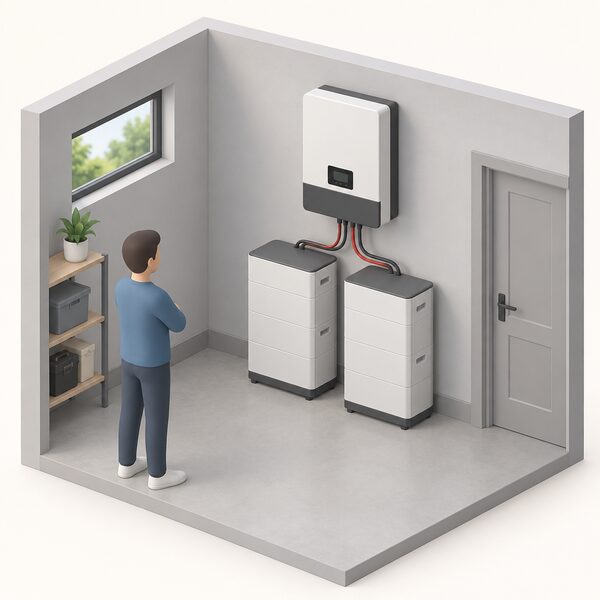
The honest answer is that the two brands suit different priorities, and neither is a recommendation.
A household that wants a documented UK after-sales process, a published capacity ladder from a small stack upward, and a route into grid flexibility protocols should look closely at what SolaX publishes. Its single-phase hybrid sizes run 3.0 kW to 7.5 kW5, its three-phase X3-IES-P runs 4 kW to 15 kW5, its battery stacks scale from 3.1 kWh to 12.3 kWh in the T-BAT H 3.0 V2 range4, and the A1 HYBRID G2 is stated to scale to as much as 80 kWh in parallel configurations18. The Spring series is stated to scale up to 16 kWh20. The X1-FIT G4 supports up to 150 kW parallel operation and has surge protection integrated34, and the X1-FIT G4 is stated to deliver less energy loss on battery to inverter34.
A household that wants a large global manufacturer's hybrid or off-grid hardware, with parallel operation and black start on the WIT 6kW-HU10 and an off-grid parallel-ready option in the SPF 6000ES13, should look at what Growatt publishes. Its battery families are the ARK, APX and AXE series11.
What neither brand removes is dependence. Both are grid-tied in normal UK operation, both rely on a cloud account for monitoring, and both route warranty through an installer and a manufacturer process. A household choosing between them is choosing which published process it can live with, and how much storage capacity it may want to add later without changing the inverter.
Sources34 cited
- Growatt MIN 5000 TL-X product page, Growatt, 2026-09-17
- Whole home energy management with solar, battery and smart loads, SolaX Power, 2026-07-28
- Best solar batteries, SolaX Power, 2026-05-12
- Choosing solar batteries for high-usage homes, SolaX Power, 2026-03-10
- What size inverter do I need, SolaX Power, 2026-05-13
- Solar inverter warranty, SolaX Power, 2026-06-18
- Growatt monitoring platform, Growatt, 2026-09-17
- Smart energy management systems, SolaX Power, 2026-04-08
- A guide to solar battery systems with simple interfaces, SolaX Power, 2026-06-24
- Growatt WIT 6kW-HU hybrid inverter, Growatt, 2026-09-17
- Growatt AXE 40H-E1 Rack, Growatt, 2026-09-17
- Smart energy management solutions, SolaX Power, 2026-09-17
- Growatt SPF 6000ES Plus off-grid inverter, Growatt, 2026-09-17
- How to choose an inverter on price, performance and warranty, SolaX Power, 2026-06-22
- Premium vs mid-range inverters for UK homeowners, SolaX Power, 2026-09-14
- Best solar inverters, SolaX Power, 2026-05-11
- SolaX X1-VAST, SolaX Power, 2026-09-17
- Dependable home battery storage on a tight budget, SolaX Power, 2026-09-09
- Reliable home battery on a budget, SolaX Power, 2026-08-18
- Emergency power supply, SolaX Power, 2026-08-05
- Seamless expansion without balancing issues, SolaX Power, 2026-05-25
- Choosing a hybrid inverter for colder climates, SolaX Power, 2026-08-10
- SolaX UK news, SolaX Power, 2026-06-23
- SolaX Smart EV Charger G2, SolaX Power, 2026-09-17
- SolaX Smart EV Charger, SolaX Power, 2026-09-17
- Solar panel battery storage, Which?, 2026-05-14
- SolaX X1-VAST stock arrival, Solar Trade Sales, 2026-09-23
- SolaX 7.5kW G4 X1-Hybrid stock arrival, Solar Trade Sales, 2026-09
- SolaX X1-IES 6.0K stock arrival, Solar Trade Sales, 2026-09-23
- Hybrid inverters and backup power: UK EPS checklist, SolaX Power, 2026-07-21
- Solar battery warranty guide, SolaX Power, 2026-06-23
- Warranty terms and conditions, UK and Ireland, SolaX Power, 2024-08-21
- SolaX warranty terms V1.7, SolaX Power, 2026-09-10
- SolaX X1 retro-fit, SolaX Power, 2026-09-17
 Hybrid InvertersA hybrid inverter lets you store solar power in a battery and use it later, all through one unit instead of two separate boxes.
 AC-Coupled vs DC-CoupledCan you add a battery to your existing solar panels without swapping the inverter, and does one kind waste more of your solar power than the other?
 Solar InvertersWhat does the box on the wall next to your solar panels do, and how long will it last?
 The Full Home Batteries GuideA home battery stores cheap or solar power for later, but will it really cut your bills enough to be worth it?
 Export Rates Per kWhHow much will your supplier pay you for the solar power you send to the grid, and why do rates vary so much from one company to another?
 MicroinvertersMicroinverters sit behind each panel and turn its power into household electricity right there on the roof.