In this guide
SolaX is a hybrid inverter brand sold into the UK through a dedicated UK site and a distributor network, and its residential range is built around pairing solar with battery storage. The single-phase X1-Hybrid G4 covers 3.0 kW to 7.5 kW, and the company also offers a selection of three-phase hybrids1. The X3-Hybrid G4 is described as a three-phase MPPT hybrid solar inverter for homes or light commercial properties2.
Warranty terms are the part of a SolaX purchase that most affects long-term cost, and they are conditional. The X1/X3-Hybrid-G4, X1/X3-Fit-G4, X3-ultra, X3-HYB-G4 PRO and X1-VAST carry a 5 year standard warranty, starting from the earlier of the installation date or six months after production3. Where the inverter is connected to SolaX Cloud and generation data is uploaded, that is freely upgraded to 10 years4. Older and smaller lines sit on a 7 year standard term, upgradable to 12 years on the same cloud condition3.
The dependence to weigh is the cloud link. The longest warranty, the time-of-use scheduling and the monitoring all run through SolaXCloud, so the extended term is tied to a continuing connection to the manufacturer's servers rather than to the hardware alone.
What SolaX makes: the residential range beyond hybrid inverters
SolaX's residential offer spans hybrid inverters, batteries, all-in-one energy storage system products, EV charging and cloud-led smart energy management7. The company's own product pages present integration across storage, EV chargers and heat pumps as part of a wider smart energy workflow8, and the residential line extends across storage inverters, batteries and all-in-one ESS as well as the hybrid units6.
The wider portfolio is broader than the inverter badge suggests. SolaX groups batteries, energy storage inverter products, string inverter lines, microinverter offerings, the Smart EV Charger G2, heat pump products and SolaXCloud under one platform architecture9. Its public UK portfolio spans hybrid inverters, batteries, all-in-one ESS, EV charging, monitoring and broader smart energy solutions1, and the range covers hybrid inverters, string inverter and micro inverter options, home battery storage, solar EV charger integration and all-in-one energy storage system choices8.
For a household, that breadth matters in one specific way: the inverter is the entry point to a single ecosystem rather than a standalone box. SolaX positions its residential offer around integrated solar, storage, EV charging, heat pump solutions and cloud monitoring rather than a single-device sale6. The company's string inverter range runs from 0.6 kW to 150 kW across residential, commercial and industrial settings2, so the same brand covers a domestic roof and a commercial array.
The microinverter line is the exception to the hybrid logic. SolaX microinverters use a modular design enabling the connection of multiple inverters in parallel, and each panel operates independently, ensuring consistent energy production even if one panel is shaded9. That is a different architecture from a string hybrid, and it is covered in more detail on microinverters.
The hybrid inverter range: single-phase up to 7.5 kW and three-phase options
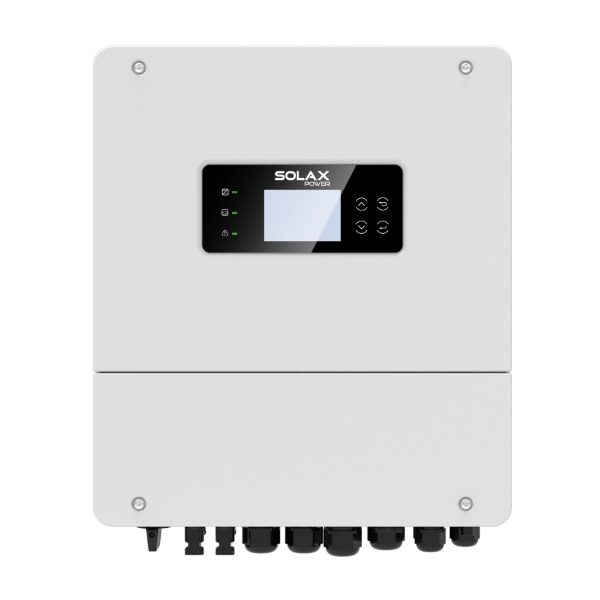
The X1-Hybrid G4 is the main single-phase line, sold in models from 3.0 kW to 7.5 kW1. SolaX describes its inverter options as running from single-phase hybrids up to 7.5 kW through to a selection of three-phase hybrids10. The X3-Hybrid G4 is the three-phase counterpart, described as a three-phase MPPT hybrid solar inverter for homes or light commercial properties2, and its datasheet names it a three-phase residential hybrid inverter11.
The X1-VAST is a further hybrid inverter in the range, and it supports V2G and V2H applications12. The X1-Lite LV is built as a single-phase low-voltage hybrid inverter13, which is a different battery architecture from the high-voltage lines.
| Line | Phase | Type | Warranty basis |
|---|---|---|---|
| X1-Hybrid G4 | Single-phase, 3.0 to 7.5 kW1 | Hybrid | 5 years, to 10 with cloud3 |
| X3-Hybrid G4 | Three-phase2 | Hybrid, MPPT | 5 years, to 10 with cloud3 |
| X1-VAST | Single-phase12 | Hybrid, V2G and V2H | 5 years, to 10 with cloud3 |
| X1-Lite LV | Single-phase, low voltage13 | Hybrid | 5 years, to 10 with cloud3 |
| X1-Micro series | Single-phase, 0.75 to 2.4 kW3 | Microinverter | 7 years, to 12 with cloud3 |
The choice between X1 and X3 is a supply question rather than a preference. Most UK homes have a single-phase supply, which caps what can be exported and what the inverter can pass through; three-phase units balance load across all phases to maximise solar utilisation14. A property with a three-phase supply can use an X3, and the X3-Hybrid G4 is VPP ready according to its datasheet11.
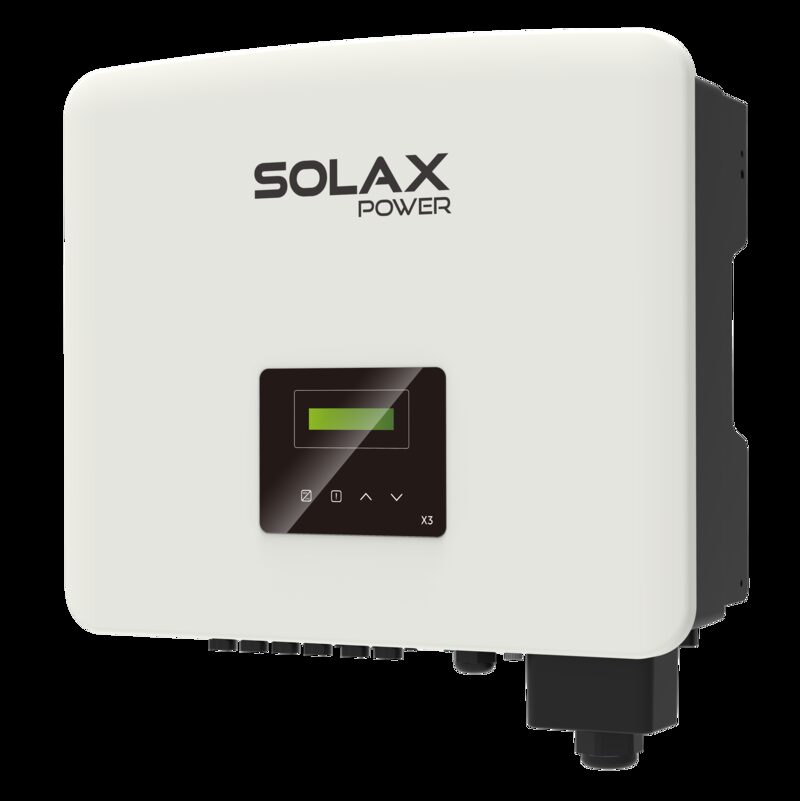
Warranty: 5 to 12 years, and how cloud connection extends it
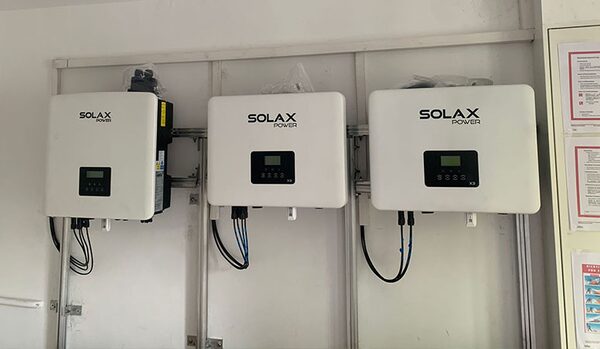
SolaX warranty terms are tiered by product line and by whether the inverter reports to the cloud. The current hybrid lines, the X1/X3-Hybrid-G4, X1/X3-Fit-G4, X3-ultra, X3-HYB-G4 PRO and X1-VAST, carry a 5 year standard warranty starting from the earlier of the installation date or six months after production3. Where the inverter is connected to SolaX Cloud and generation data has been successfully uploaded, the warranty is freely upgraded to 10 years4.
The older and smaller lines sit on a longer standard term. The X1-MINI G3 and G4, X1-MINI G4 PLUS, X1-Boost G3 and G4, X1-SMART G2, X3-MIC G1 and G2, X3-Pro and X3-Pro G2, X1-Hybrid G3 and X1-Fit G3, X3-Hybrid G2 and X3-Fit G2, X3-MAX, X3-MEGA G1 and G2, X3-Forth and X3-Forth PLUS, and X3-GRAND carry a 7 year standard warranty3. On the same cloud condition, those are freely upgraded to 12 years3. Microinverters in the X1-Micro 2 in 1, X1-Micro 2 in 1 G2, X1-Micro 4 in 1 and X1-Micro 4 in 1 G2 lines carry a 7 year standard warranty3, with options to extend to 15 or 25 years9.
Registration is the step that starts the clock. SolaX requires the product to be registered online within 90 days of the commissioning date; if that is not done, the inverter warranty period is calculated as the production date plus 6 months5. The warranty start date can be the installation or commissioning date, the purchase invoice date, or the shipment date from the factory where no registration is completed5.
Extended cover is bought separately. It can be purchased directly from an authorised SolaX distributor or through the SolaX Cloud platform after the system is registered, and must be bought within 6 months of the installation date or within 12 months of the production date5. The X1/X3-IES line runs on a 5 year standard warranty starting from the earlier of installation or 9 months after production4, and the X1 Smart and X1-AC upgrade to 5 years plus a 5 year parts warranty on the cloud condition4.
What a SolaX hybrid inverter does for energy independence
A hybrid inverter's contribution to independence is that it lets a household store its own generation and decide when to draw from the grid. SolaX states that its on-grid and hybrid inverters support export control15, which is the mechanism that limits what is sent to the network. The company's documentation shows that the inverter executes the charge commands and that time-of-use settings are created in SolaXCloud16.
That split is the honest description of the architecture. A SolaX hybrid inverter and energy storage system can be scheduled to charge during cheap-rate periods and discharge during peak-price hours, with automation and monitoring through SolaXCloud16. The scheduling intelligence sits in the cloud platform, not in the inverter's own controls, so the automation depends on a working internet connection and on SolaX's servers.
What remains local is the core function. SolaX describes its high-performance design as ensuring energy security, whether during outages or periods of high consumption17. The Adapter Box is controlled by the inverter to optimise solar energy usage according to grid power, battery capacity and time18, and it integrates with a heat pump equipped with a dry contact function, a photovoltaic inverter and an energy management system18.
The dependence that remains is threefold: the grid connection for import and export, the cloud platform for scheduling and monitoring, and the manufacturer for warranty service and firmware. A SolaX system reduces how much electricity is bought, and it does not remove the connection. The wider picture is set out on solar panels and household energy independence.
Safety and protection: LFP batteries, surge protection and fire testing
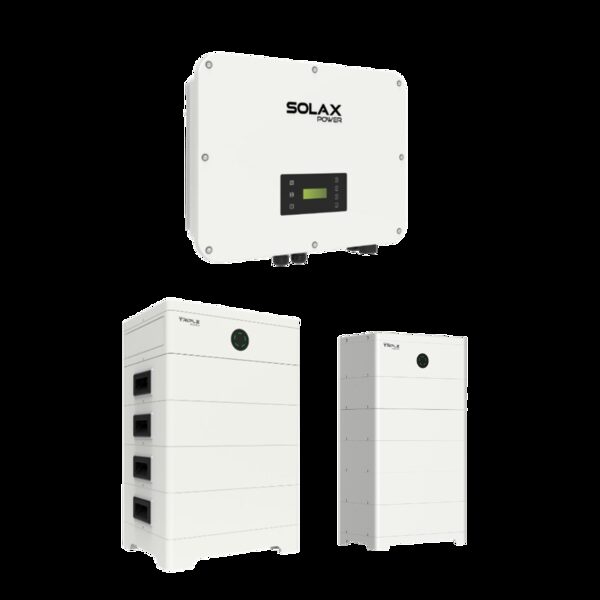
SolaX pairs its hybrid inverters with lithium iron phosphate (LFP) batteries. The company's residential offer includes hybrid inverters, modular LFP batteries, all-in-one ESS, EV charging and cloud software6, and it offers integrated solar energy storage system choices for home use including ESS and hybrid options19. LFP is the chemistry behind the modular battery line, and the A1 Hybrid G2 integrates with T-BAT-SYS-HV-5.0 battery modules2.
Surge protection is built into the inverter rather than added as an external device on some lines. SolaX states that its inverter integrates Type II Surge Protection Devices on both the AC and DC sides20, and the X3-HYB-G4 PRO carries built-in Type II SPDs on both sides to prevent electrical damage21. The string inverter range carries an integrated SPD that safeguards the system from electrical surges2. Microinverters are rated IP67 with 6,000 V surge protection22, and the X1-Micro series carries the same 6,000 V figure2.
"IP67 protection and 6,000 V surge protection"
The company has published material on validating safety at the system level through extreme testing, and in May 2026 the SolaX ORI energy storage system completed a large-scale fire test under extreme conditions. Those are manufacturer announcements rather than independent certification results, and they describe the ORI storage product rather than the residential inverter lines. Surge protection and DC isolation are covered more broadly on solar PV safety.
Compatibility: heat pumps, EV chargers, agile tariffs and export control
SolaX inverters are stated to have been designed to work with agile tariffs such as Octopus Agile10. The mechanism runs through the cloud platform: time-of-use settings are created in SolaXCloud and the inverter executes the charge commands16, so a hybrid inverter and battery combination can be scheduled to charge during cheap-rate periods and discharge during peak-price hours16.
Heat pump and EV charger integration is presented across the range. The X-ESS G4 lists EV charger compatibility and heat pump compatibility17, and SolaX residential string inverters are described as seamlessly integrating with EV chargers, heat pumps and energy storage solutions to enable intelligent energy management23. The residential all-in-one ESS can integrate with generators, heat pumps and EV chargers24.
The Adapter Box is the component that makes some of this work. It is designed to integrate with a heat pump equipped with a dry contact function, allowing the inverter to control it18, and it connects to the inverter over RS48518. That is a wired control link rather than a software integration, which matters where a heat pump has no dry contact input.
| Integration | How it connects | Line |
|---|---|---|
| Octopus Agile and other agile tariffs | Time-of-use settings in SolaXCloud, executed by the inverter16 | Hybrid inverters with battery |
| Heat pumps | Adapter Box, dry contact function, RS485 to inverter18 | Adapter Box |
| EV chargers | Listed compatibility17 | X-ESS G4, string inverters23 |
| Export control | Supported on on-grid and hybrid inverters15 | On-grid and hybrid |
| Generators | Listed integration24 | All-in-one ESS |
Export control is the compatibility point that most affects a UK installation, because it determines how much can be sent to the grid and whether a G100 device is needed. That is covered on export limitation for solar.
Scalability: starting with solar and adding storage or EV charging later
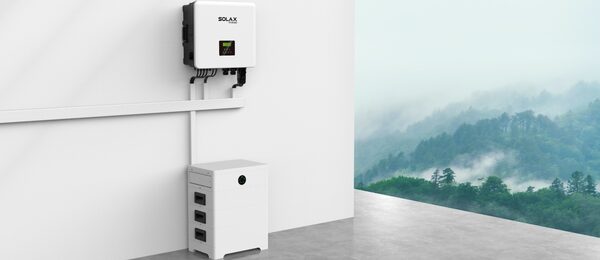
SolaX's residential lineup lets a household combine energy storage batteries with hybrid inverter options and later add a Smart EV Charger G29. The wider range links inverter, battery, charger and monitoring in one platform15, and the home ESS solutions are described as easily expandable to accommodate evolving energy needs, including electric vehicle charging and additional solar arrays25.
The technical reason expansion is straightforward on the hybrid lines is the DC/DC module. With the DC/DC module integrated into the inverter, there is no need for additional modules as battery capacity expands26. That means adding battery modules later does not require a second box on the wall.
The automation logic follows a set order. SolaX states that its solar energy system supports rules such as using solar energy first, charging the inverter battery, then powering selected appliances6. That sequence is the practical expression of self-consumption: generation serves the house, surplus charges the battery, and only then does anything go to the grid or to a diverting load.
For a household planning in stages, the sequence that the hardware supports is solar first, battery second, EV charging third, with monitoring throughout. The all-in-one ESS route packages the same functions differently, and the comparison between the two approaches is set out on hybrid solar inverters and adding battery storage to solar.
Recent developments: V2H, VPP integration and new models arriving
The direction of travel in the range is towards grid services and vehicle integration. SolaX presented its AC-side V2H system at Intersolar Europe 2026 in June 2026, and published a blog the same month arguing that AC-side V2H could matter for Europe's solar homes. The X1-VAST supports V2G and V2H applications12, which is the vehicle-to-home and vehicle-to-grid capability that lets a car battery serve the house or the network.
Virtual power plant integration is already present on the three-phase line. The X3-Hybrid G4 is described as fully VPP-ready2, and its datasheet lists VPP ready11. The X3-HYB-G4 PRO is described as ready for virtual power plants, allowing users to trade energy and maximise efficiency21. SolaX's smart energy management integrates SolaXCloud and the Virtual Power Plant Solution27, with the stated purpose of enhancing grid stability and optimising distributed energy resources27.
In February 2026 SolaX partnered with Axle Energy so that battery owners can connect SolaXCloud to Axle's VPP. That is a commercial arrangement that turns a home battery into a network asset, and it is the clearest example of the trade-off in this range: participation in a VPP means handing dispatch control to a third party in exchange for payment.
On recognition, SolaX Power recorded its fifth consecutive year of EUPD Top Brand PV recognition in the UK in April 2026. New stock is arriving through distributors: the X1-VAST-8K and X1-VAST-10K were both listed as awaiting stock arrival due around 23 September 2026, and the X1-IES 6.0K was due in around the same date. The X3-ULTRA manual reached version 16 in July 2026, updating parallel-function support, changeover-switch content and wiring diagrams.
Company, manufacturing and where the brand sits

SolaX Power Network Technology (Zhejiang) Co., Ltd. is named as the manufacturer company in SolaX's own safety documentation, which places manufacturing in Zhejiang province, China28. SolaX Power Aus Pty Ltd is named separately as the importer for the Australian market28. The company operates a dedicated UK site and sells through UK distributors, and its public UK portfolio spans hybrid inverters, batteries, all-in-one ESS, EV charging and monitoring1.
The practical consequence of an overseas manufacturer is the service chain rather than the product. Warranty claims run through SolaX and its distributor network, with the four-week reporting window and the registration deadline both set by the maker5. Parts availability and response times depend on that chain, and the extended warranty purchase route runs through an authorised distributor or the SolaX Cloud platform5.
For a household comparing brands, the relevant questions are the warranty term and its conditions, the battery chemistry, the phase of the supply, and how much of the control sits in the cloud. SolaX sits in the mid-range to premium bracket on its own account10, and the brand is compared directly with others on SolaX vs Growatt and GoodWe vs SolaX. The single-phase models are covered in more detail on SolaX X1 inverters.
Sources28 cited
- UK solar inverters buying guide, SolaX Power, 2026
- Best solar inverters, SolaX Power, 2026
- SolaX warranty terms, SolaX Power UK, 2026
- SolaX warranty, SolaX Power, 2026
- Solar inverter warranty, SolaX Power, 2026
- Whole home energy management, SolaX Power, 2026
- Which solar energy solutions provider handles smart load control best, SolaX Power, 2026
- Best one-brand solar systems UK, SolaX Power, 2026
- Seamless expansion without balancing issues, SolaX Power, 2026
- SolaX inverters, Midsummer Wholesale, 2026
- X3-Hybrid G4 datasheet, SolaX Power, 2026
- X1-VAST, SolaX Power, 2026
- Best value inverters price performance warranty, SolaX Power, 2026
- Three-phase hybrid inverters, Sunsynk, 2026
- Scotland and northern England hybrid inverter guidance, SolaX Power, 2026
- Which solar batteries automatically charge at cheap electricity times, SolaX Power, 2026
- Backup power options for remote cabins, SolaX Power, 2026
- SolaX Adapter Box, SolaX Power, 2026
- Reliable home battery on a budget, SolaX Power, 2026
- How to install a solar power inverter, SolaX Power, 2024
- Harnessing power: guide to solar hybrid inverters, SolaX Power, 2025
- Best microinverters for solar panels, SolaX Power, 2026
- Residential string inverters, SolaX Power, 2026
- How to choose an all-in-one home energy system, SolaX Power, 2026
- Residential ESS solutions, SolaX Power, 2026
- Battery ready vs hybrid systems, SolaX Power, 2024
- Smart energy management solutions, SolaX Power, 2026
- Safety data sheet, SolaX Power, 2026
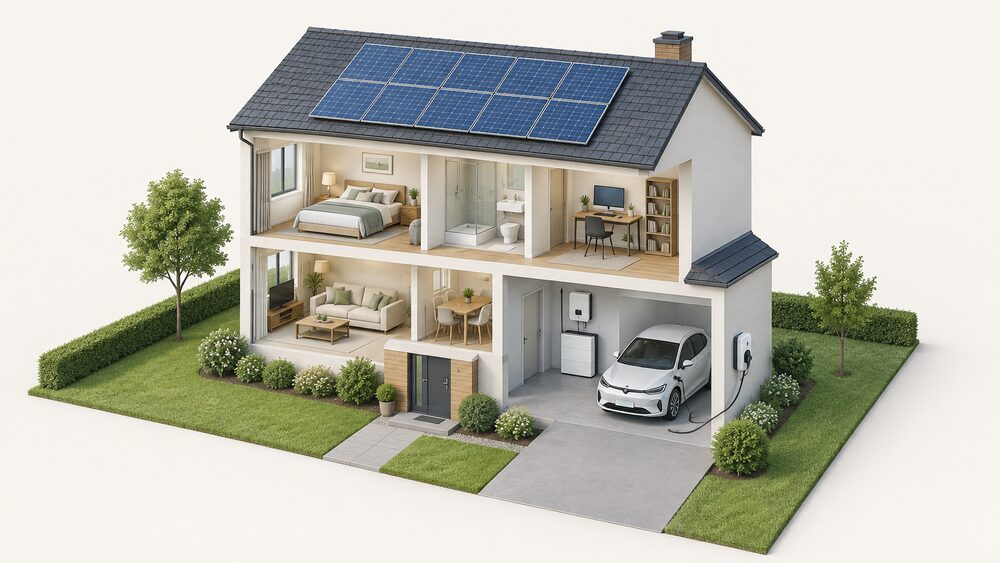 SolaX EV chargersCan a SolaX charger use your spare solar power to fill the car instead of sending it to the grid?
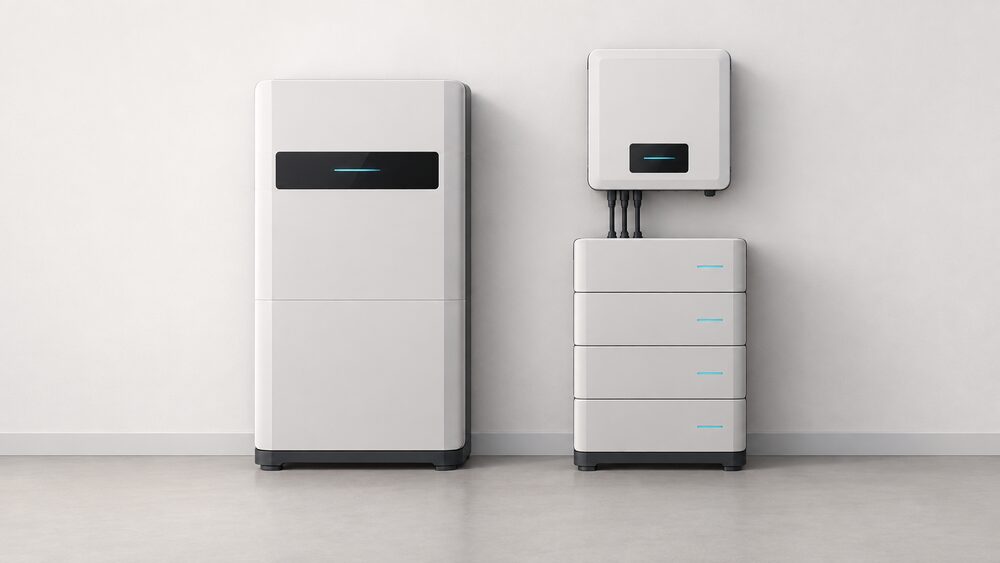 SolaX Home Batteries and Triple Power StorageHow much can a SolaX home battery store, and can you add more later?
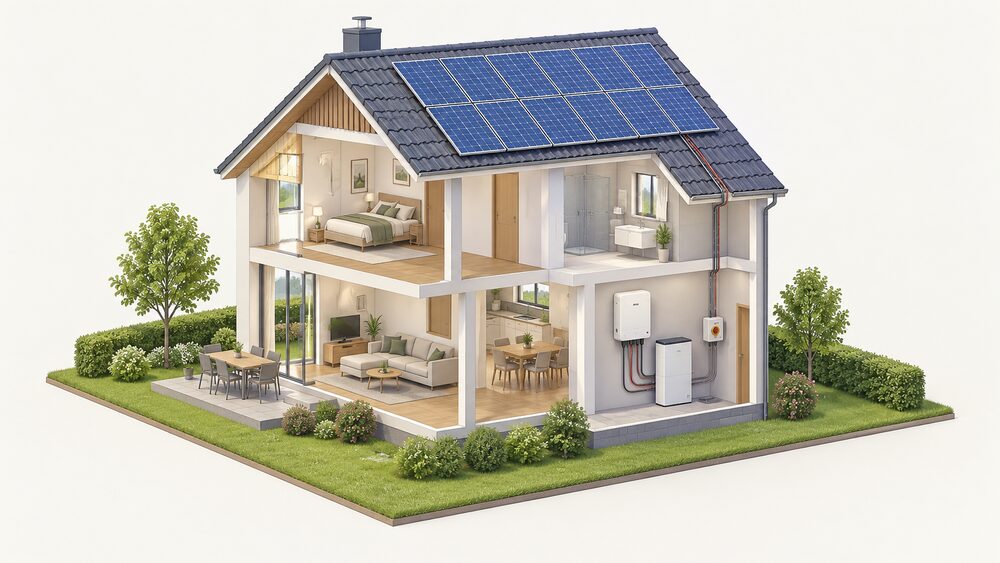 SolaX X3-ULTRAThe SolaX X3-ULTRA is a large three-phase hybrid inverter for big homes and commercial buildings.
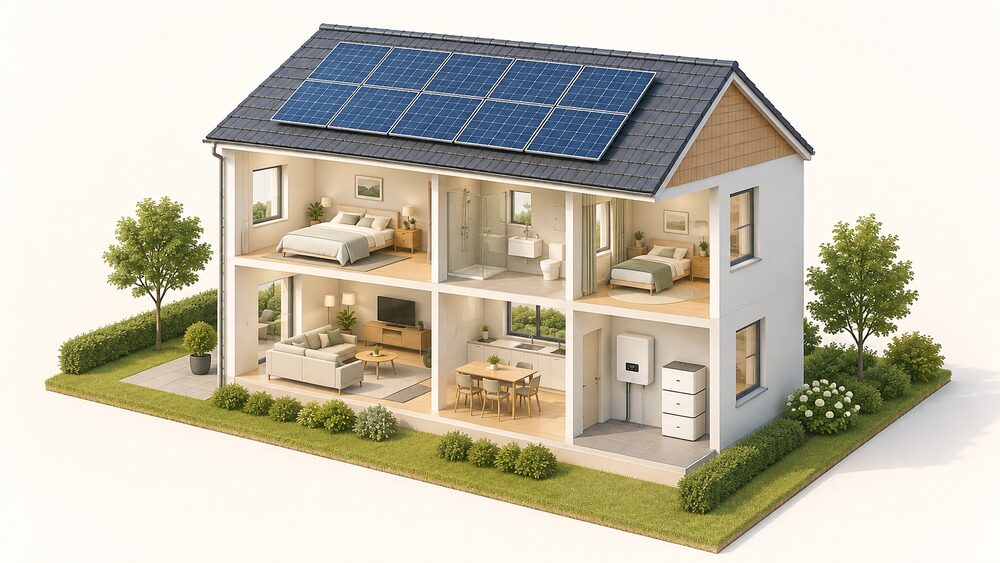 SolaX Power inverters and batteriesSolaX Power inverters and batteries come down to three things for your home: which type fits, how much storage you need, and what the warranty really gives you.
 SolaX X1 invertersWhich SolaX X1 suits your roof, and do you want battery storage now or later?