
In this guide
SolaX sells home battery storage in the UK through two main routes: the X1-IES all-in-one system, which combines inverter, battery and backup in a single enclosure, and the Triple Power battery range, which pairs with separate hybrid inverters. The X1-IES is a single-phase product with modular expansion up to 40 kWh, a round-trip efficiency figure of up to 98% and a changeover time to backup power of under 10 ms1.
The Triple Power range uses LFP chemistry with modular expansion and smart BMS protection, and SolaX lists cycle life above 6,000 cycles on the X1-IES3. Battery warranty runs to 10 years on the X1-IES and on a long list of T-BAT and TSYS battery models, under warranty terms effective from 10 September 20261.
Availability is mixed. SolaX batteries reach UK households through UK installers rather than direct sale, and at least one Triple Power model has been discontinued while several inverters are listed as awaiting stock6. This page sets out what the range contains, what the specifications mean in practice, and where the dependence on a manufacturer, an installer and a cloud platform remains.
The SolaX range at a glance
SolaX spans energy storage inverters, batteries, all-in-one ESS units, EV chargers, microinverters, monitoring devices and heat pumps8. For a household, the practical split is between systems that arrive as one box and systems assembled from an inverter plus separate battery modules.
The X1-IES is the single-phase all-in-one. SolaX describes it as single-phase integrated energy storage with integrated control, aimed at homes that want a compact solution with fewer separate boxes9. It takes one, two, three or four batteries, giving rated system energy of 5.1 kWh, 10.2 kWh, 15.3 kWh and 20.4 kWh respectively1. The X1-IES-A adds integrated battery heating technology2.
The X3-IES is the three-phase equivalent, presented as a premium three-phase residential all-in-one ESS with modular battery expansion from 10 kWh to 60 kWh6. Its battery module is listed as TP-HS50E across the 5K, 10K and 15K variants10. The X3-IES-P is a further variant delivering 98% efficiency11.
The Triple Power batteries are the modular building blocks. SolaX positions the range around LFP chemistry, modular expansion and smart BMS protection3. The T-BAT-SYS-HV-5.8 sits in the residential lineup at 5.8 to 34.6 kWh with LFP chemistry12. The LD16 and LD14 modules are also LFP, with the LD16-ME using natural cooling13.
| Product | Type | Key figure | Source |
|---|---|---|---|
| X1-IES | Single-phase all-in-one | 5.1 to 20.4 kWh with 1 to 4 batteries | 1 |
| X1-IES-A | Single-phase all-in-one | Battery heating, operation to minus 30 degrees C | 2 |
| X3-IES | Three-phase all-in-one | 10 to 60 kWh modular expansion | 6 |
| X3-IES-P | Three-phase all-in-one | 98% efficiency | 11 |
| T-BAT-SYS-HV-5.8 | HV battery | 5.8 to 34.6 kWh, LFP | 12 |
| LD16 / LD14 | LV battery modules | LFP, natural cooling | 13 |
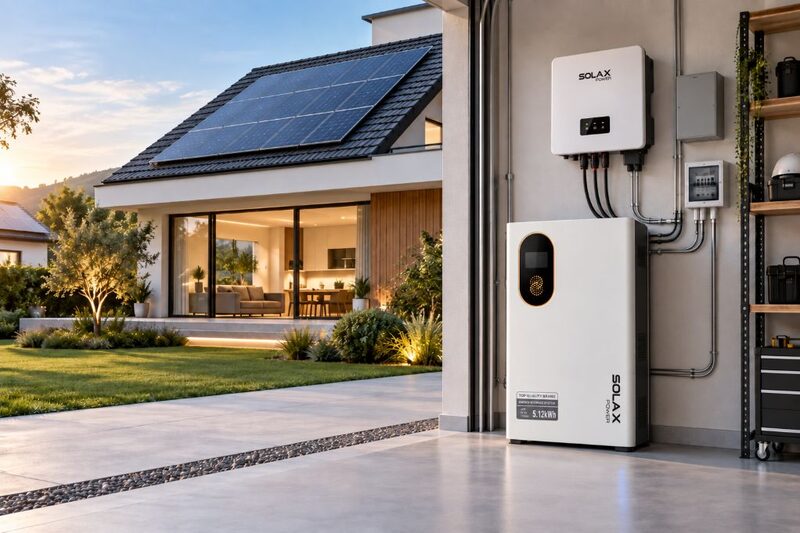
X1-IES specifications: 98% efficiency, LFP cells and modular expansion to 40 kWh
SolaX quotes the X1-IES at up to 98% efficiency, and the product page repeats the 98% figure4. The datasheet is more granular: maximum efficiency 97.6% and European efficiency 97.0%1. The gap between the headline and the datasheet is a matter of test basis rather than a dispute, but the datasheet figures are the ones tied to the appliance.
The model range runs from X1-IES-2.5K through X1-IES-8K, with two MPPTs, an MPPT voltage range of 40 to 560 V and a maximum input current of 20 A per MPPT4. PV input oversizing is up to 200%, and charge and discharge current is 50 A4. The battery operation voltage range is 80 to 480 V1. The unit carries IP65 protection4.
Backup output is where the X1-IES range separates itself. SolaX lists peak EPS output at two times rated power for 10 seconds, and separately describes support for up to 200% EPS output for 10 seconds on some operating conditions1. Changeover to off-grid output with battery is under 10 ms, and the 3K model is shown with a switchover time under 10 ms1.
For a household, the efficiency figure matters less than the conditions that produce it. Round-trip efficiency is measured under defined test conditions; real losses depend on charge rate, temperature and how long the battery sits idle. The 50 A charge and discharge current and the 200% PV oversizing are the figures that determine how quickly a system can absorb a sunny afternoon and how much panel capacity can be fitted without clipping. More on how these figures are measured is at round-trip efficiency and power ratings.
Triple Power storage: LFP chemistry, modular capacity and cycle life
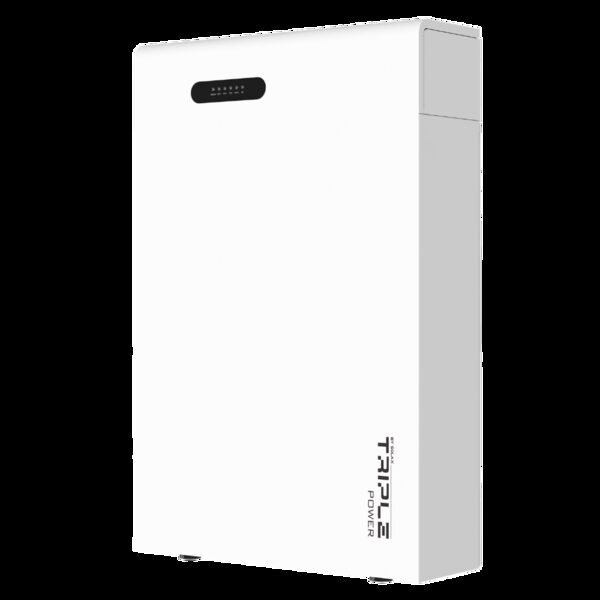
The Triple Power range is built on lithium iron phosphate cells. SolaX describes the range around LFP chemistry, modular expansion and smart BMS protection3, and positions it as modular storage with LFP chemistry and smart BMS control15. The same chemistry appears across the wider battery lineup: the T-BAT H 3.0 V2 uses LFP cells with IP65 protection and cycle life above 6,000 cycles, the LD51C is a 5.1 kWh LFP low voltage battery, and the T-BAT H 5.8 V3 uses LFP chemistry3.
LFP is the chemistry most home storage in the UK now uses, and its relevance here is thermal stability and cycle life rather than energy density. The X1-IES is listed with cycle life above 6,000 cycles4. SolaX does not publish a retained-capacity guarantee in the figures available here, so the warranty terms should be read for what they actually promise rather than assumed to cover a percentage of original capacity. The general principles are set out at battery cycle life and home battery warranties.
The Triple Power range starts at 2.5 kWh nominal and expands upward through modular capacities15. The T-BAT-SYS-HV-S3.6 offers a scalable range from 7.3 kWh up to 47.9 kWh using stackable, plug-and-play modules10. The T58 supports up to 6 units with 34.6 kWh capacity in a single cluster, or up to 12 units with 69.1 kWh where the inverter has two battery ports9.
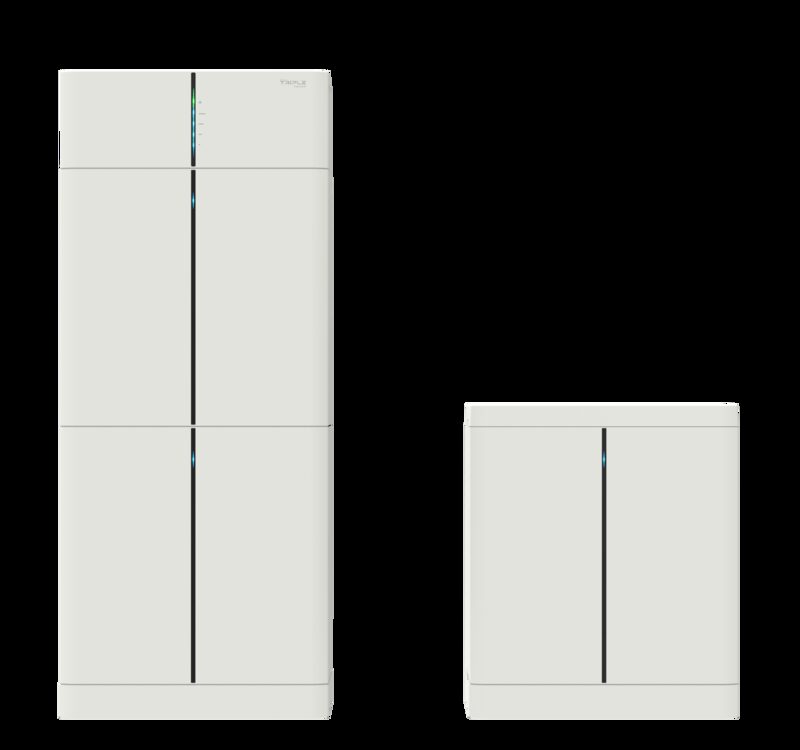
Scalability: expanding from a single unit up to 40 kWh
The X1-IES supports modular expansion up to 40 kWh2. In practice that is reached by adding battery modules to the same all-in-one unit, which takes one to four batteries in the datasheet configuration1. A household starting with a single 5.1 kWh battery can add capacity later without replacing the inverter.
The wider SolaX range scales much further. The X3-IES is presented with modular battery expansion from 10 kWh to 60 kWh2. The A1 HYBRID G2 works with T-BAT-SYS-HV-5.0 battery modules and can scale to as much as 80 kWh total storage in parallel configurations8. The J1-ESS offers modular expandability up to 46.4 kWh17. The LD51C supports up to 16 units in parallel, allowing total system capacity to expand from 5.1 kWh to 81.9 kWh16. The LD32 scales from 32.1 kWh to 513.6 kWh across 16 parallel units, a figure aimed at commercial rather than domestic use13. The TSYS-HS51 expands from 10.2 kWh to 66.5 kWh and is described as suitable for whole-home backup or EV integration10.
Two things determine how far a household can actually expand. The first is the inverter's battery port count: the X1-VAST has dual battery ports and a 2-in-1 function for expansion18, while the T58's 69.1 kWh ceiling applies only to inverters with two battery ports9. The second is the warranty position on added modules, since a battery added years later may fall under different terms from the original. The general mechanics are covered at modular and stackable systems and adding more batteries later.
Backup and EPS: under 10 ms changeover and 200% peak output
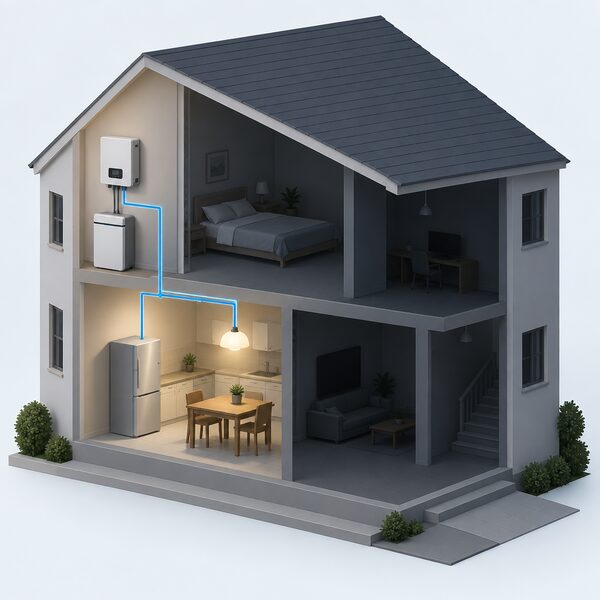
Backup changeover time is the gap between the grid failing and the battery taking over. SolaX lists the X1-IES at under 10 ms with battery, and the X1-VAST at a UPS-level switchover time under 10 ms1. The X-MS 2700 offers backup in under 10 ms, and the X1-SPT switches over to backup in under 10 milliseconds4. At those speeds most domestic equipment does not notice the transition.
Peak output is the second half of the backup story. The X1-IES-A supports up to 200% EPS output for 10 seconds, and the X1-VAST lists up to 200% EPS output for 10s4. The X1-Hybrid G4 is more modest at up to 150% EPS output for 10 seconds19. That headroom matters for motor loads such as a fridge compressor or a pump starting up, which draw far more than their running current for a moment.
There is a limit worth stating plainly. In a three-phase example without batteries, SolaX notes that EPS output is restricted to 50% of nominal EPS output20. Backup capability therefore depends on the configuration, not just the inverter model. A household expecting whole-home backup during a power cut needs the battery connected, the EPS circuit wired, and the loads within the inverter's continuous rating. The checklist is at battery backup and EPS and backup during a power cut.
Warranty: 10-year battery cover under Warranty Terms V1.7
SolaX warranty terms effective from 10 September 2026 apply to products sold or installed on or after that date5. Under those terms, a long list of battery models carries a 10-year standard warranty starting from the earlier of two dates: the T-BAT-SYS-HV-3.0, T-BAT-SYS-HV-5.8, T-BAT-SYS-LV-R2.5, T-BAT-SYS-LV-R3.6, T-BAT-SYS-HV-R2.5, T-BAT-SYS-HV-R3.6, T-BAT-SYS-LV D53, T-BAT-SYS-HV-S50E-D, T-BAT-SYS-LV-D150, TSYS-LD51, TSYS-LD160 and TSYS-LD1175. A separate group including the T-BAT-SYS-HV-S2.5, S3.6, S50E and S51 carries 12 years5. The X1-IES datasheet lists a 10-year warranty1.
The terms are not uniform across the range. A further list of battery models carries a 5-year standard warranty, and the T-BAT-SYS-HV-3.0 appears in one schedule at 10 years excluding accessories and toolkit items21. SolaX's own guidance describes the residential T-BAT series as 10-year warranty models22. Which schedule applies depends on the exact model, so the model number on the datasheet matters more than the brand.
Registration is the condition that catches people out. The product must be registered online within 90 days of the commissioning date23. If the system was not registered within 90 days, the warranty automatically starts 6 months after the battery left the factory, which shortens cover by up to six months22. For residential battery models the period begins from the earlier of the installation date or 6 months after the production date22. Where registration was completed in time, the warranty certificate and exact expiration date are stored in the online account22.
There is also a pairing condition on the inverter side. If a SolaX inverter is paired with a SolaX battery and connected to SolaX Cloud with generation data successfully uploaded, the inverter warranty is freely upgraded to 10 years on the X1-Hybrid-LV, X1-Lite-LV and X3-NEO-LV24. The J1 Hybrid carries 8 (up to 10) years25. The EV charger carries 3 years24. The wider conditions are explained at home battery warranties.
Smart features and cloud connection
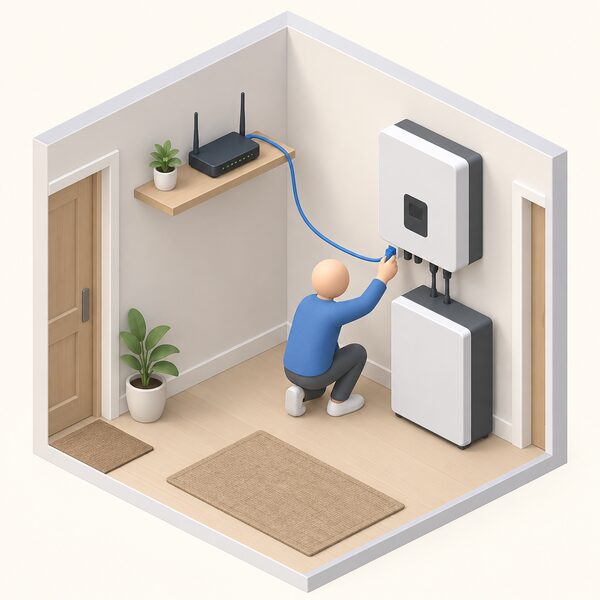
SolaX groups its monitoring and control offer under smart energy management, with SolaXCloud, VPP capability and supporting accessories such as gateways and monitoring devices26. SolaXCloud provides real-time monitoring, load management and time-of-use optimisation2. The VPP solution is positioned for cloud-based control and remote monitoring, with support for IEEE 2030.5 and OpenADR27. SolaX explicitly links smart energy management with VPP capability at utility level26.
The wider residential ecosystem links inverter, battery, charger and monitoring in one platform20. The Smart EV Charger includes smart dynamic load balancing19. In the UK, SolaX and Axle Energy partnered so battery owners can earn more by connecting SolaXCloud to Axle's VPP, announced on 26 February 202628.
This is the clearest dependence the range creates. Local operation continues without an internet connection, but monitoring, time-of-use optimisation, remote diagnostics and any VPP revenue depend on a home broadband connection, SolaX's servers and a manufacturer's platform. The inverter warranty upgrade on some models is itself conditional on successful data uploads to SolaX Cloud24. A household weighing independence should treat the cloud link as a service that can change, not as a permanent feature of the hardware. The wider picture is at monitoring and apps and batteries and grid services.
Availability in the UK: what is in stock and what has been discontinued
SolaX batteries reach UK households through UK installers rather than direct sale6. That means availability is a question for the installer or distributor, not for a manufacturer's webshop, and lead times vary by model.
The stock picture in September 2026 is mixed. The SolaX Triple Power HV 5.8kWh LFP Main Battery MASTER V2 has been discontinued, with the reason given as phased out7. The matching Triple Power HV 5.8kWh LFP Extension Battery SLAVE V2 is listed as awaiting stock arrival and due around 23 September 20267. The X1-VAST-8K and X1-VAST-10K are both awaiting stock arrival and due around 23 September 2026, as is the X1-IES 6.0K7. The 7.5kW G4 X1-Hybrid Inverter is listed as awaiting stock arrival and due in soon7.
For a household, a discontinued main battery matters because the extension units that pair with it may not be a like-for-like replacement. Anyone specifying a Triple Power system should confirm with the installer which generation is being quoted and whether matching modules will still be available if capacity is added later. The general position on product changes is at modular and stackable systems.
SolaX also sells heat pumps in the UK. The Thermal R290 Series STU1-C12R290 and STU1-C16R290 are both listed as available for the UK market, with a note that products may only be available in specific regions29. That regional caveat is worth checking locally for any SolaX product.
Fault codes, support and winter operation
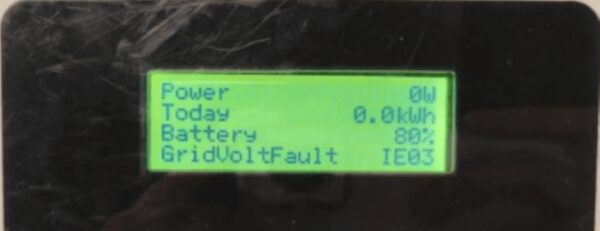
A red fault light on a SolaX inverter means the system has detected a warning or error, but the light alone does not identify the problem; the LCD screen shows the complete IE code and fault message31. SolaX states that fault codes are not standardised across brands, models or firmware versions, so the same number can mean different things on different equipment31. Two examples: IE 07 Bat Volt Fault means the battery input voltage is outside the inverter's normal operating range, and IE 13 Isolation Fault means the inverter has detected an insulation or earth fault, which may indicate current leaking from the DC side of the solar system31.
Support requests need the inverter model, operating mode, time of occurrence, recovery behaviour and the serial number from the product label or SolaXCloud31. General enquiries go to info@solaxpower.com, and claims can be escalated to service.global@solaxpower.com or the official contact page if the local distributor or installer cannot be reached23. Where a device is not in a stolen batch but shows a warranty register failure, SolaX asks owners to contact service.eu@solaxpower.com24.
On cold weather, SolaX lists integrated battery heating technology on the X1-IES-A for operation down to minus 30 degrees C, and the X3-IES-A carries a battery heating technology rating for minus 30 degrees C extreme environment operation2. The T-BAT-SYS-HV-3.0 is described with low-temperature battery heating for more demanding conditions13. The X1-LITE LV includes battery terminal temperature detection32. These are maker figures for the heating function rather than measured UK winter performance, and the general principles are at ventilation and temperature.
What the range means for household independence
A SolaX battery shifts when a household buys electricity, not whether it buys it. The X1-IES stores surplus solar generation for evening use and can charge on a time-of-use tariff, and the 40 kWh expansion ceiling means a large home can hold a full day's consumption2. The 200% PV oversizing allowance lets more panel capacity be fitted than the inverter's AC rating would otherwise suggest4.
The dependence that remains is layered. The household stays connected to the grid and to a supplier for whatever the battery cannot cover, and the battery itself is charged from solar or grid. Backup output depends on the installer wiring the EPS circuits and on the inverter's continuous rating, not on the battery alone. The cloud link adds a dependence on broadband and on SolaX's platform, and the inverter warranty upgrade on some models is conditional on data uploads24. The longest battery warranty depends on registration within 90 days and on the installation following the manual22. And the hardware itself comes through a UK installer, with at least one Triple Power model discontinued and several inverters awaiting stock6.
For a household comparing options, the useful questions are how much capacity can be added later on the same inverter, what the warranty schedule says for the exact model number, and what continues to work if the internet or the manufacturer's platform is unavailable. The wider context is at home battery storage and batteries and energy independence.
Sources32 cited
- SolaX X1-IES datasheet, SolaX Power, 2026-09-17
- How to choose an all-in-one home energy system, SolaX Power, 2026-09-10
- Which solar batteries automatically charge at cheap electricity times, SolaX Power, 2026-08-24
- All-in-one solar battery solutions, SolaX Power, 2026-04-20
- SolaX warranty terms and conditions, SolaX Power, 2026-09-10
- Solar panel battery storage, Which?, 2026-05-14
- SolaX Triple Power HV 5.8kWh LFP Main Battery MASTER V2, Solar Trade Sales, 2026-09-01
- Choosing a solar system with the right app, SolaX Power, 2026-08-28
- SolaX T-BAT-SYS-HV-5.8, SolaX Power, 2026-09-17
- SolaX X3-IES-A, SolaX Power, 2026-09-17
- SolaX X3-IES-P, SolaX Power, 2026-09-17
- Backup power options for remote cabins, SolaX Power, 2026-04-13
- SolaX LD16 and LD14, SolaX Power, 2026-09-17
- SolaX X1-IES, SolaX Power, 2026-09-17
- Dependable home battery storage on a tight budget, SolaX Power, 2026-09-09
- Low voltage battery, SolaX Power, 2026-09-11
- SolaX J1-ESS, SolaX Power, 2026-09-17
- SolaX X1-VAST, SolaX Power, 2026-09-17
- Buy certified hybrid inverters, SolaX Power, 2026-03-02
- Scotland and northern England: hybrid inverter and LFP batteries in colder climates, SolaX Power, 2026-08-10
- SolaX warranty, SolaX Power, 2026-09-17
- Solar battery warranty guide, SolaX Power, 2026-06-23
- Solar inverter warranty, SolaX Power, 2026-06-18
- SolaX UK warranty, SolaX Power, 2026-09-17
- Best solar inverters, SolaX Power, 2026-05-11
- One app, one login: all-in-one monitoring experience, SolaX Power, 2026-08-07
- Which hybrid inverter should I buy for a UK home, SolaX Power, 2026-09-14
- SolaX UK, SolaX Power, 2026-02-26
- SolaX Thermal R290 Series STU1-C12R290, Quiet Mark, 2026-09-17
- SolaX Thermal R290 Series STU1-C16R290, Quiet Mark, 2026-09-17
- Solar inverter fault codes, SolaX Power, 2026-08-12
- Hybrid inverters backup power UK home EPS checklist, SolaX Power, 2026-07-21
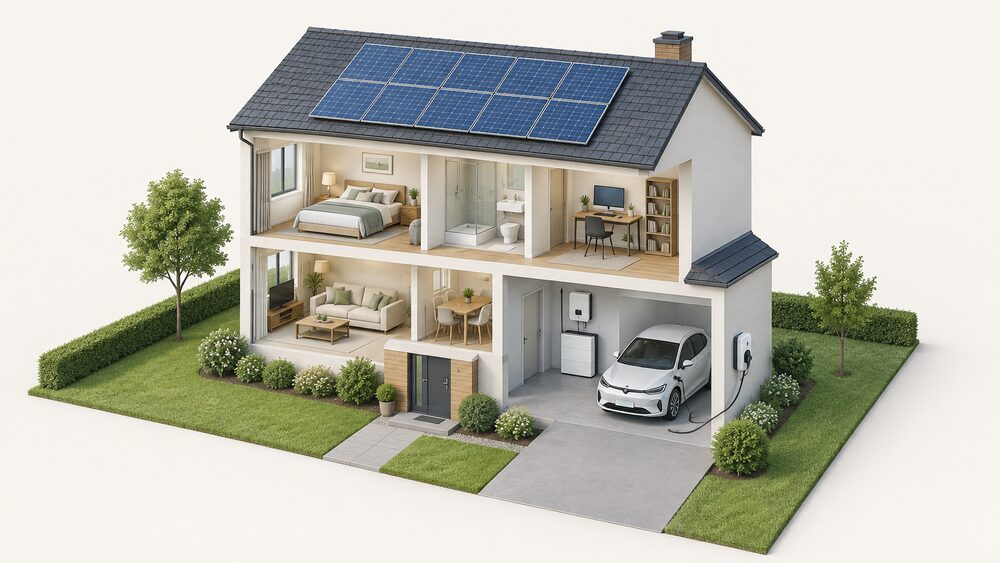 SolaX EV chargersCan a SolaX charger use your spare solar power to fill the car instead of sending it to the grid?
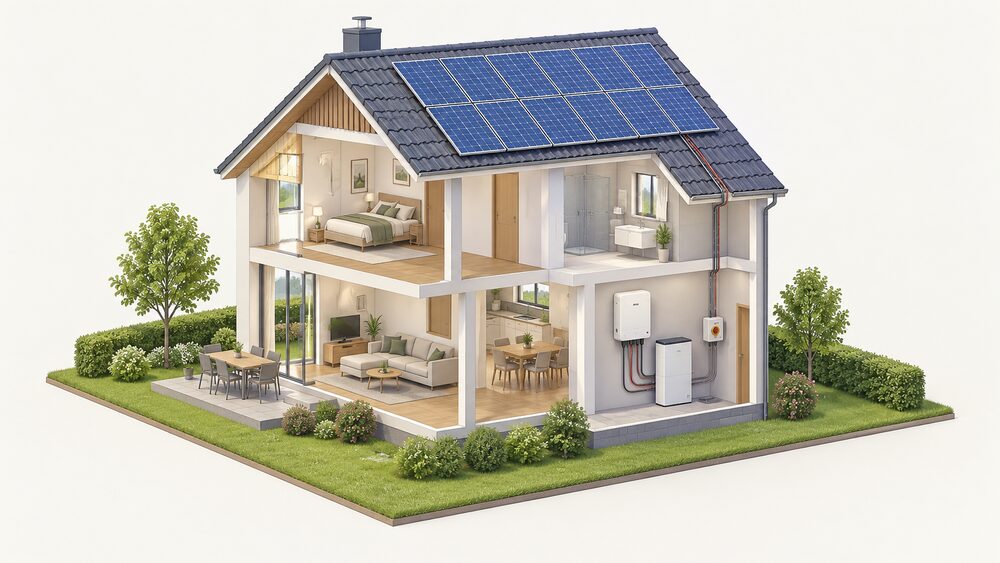 SolaX X3-ULTRAThe SolaX X3-ULTRA is a large three-phase hybrid inverter for big homes and commercial buildings.
 SolaX Power inverters and batteriesSolaX Power inverters and batteries come down to three things for your home: which type fits, how much storage you need, and what the warranty really gives you.
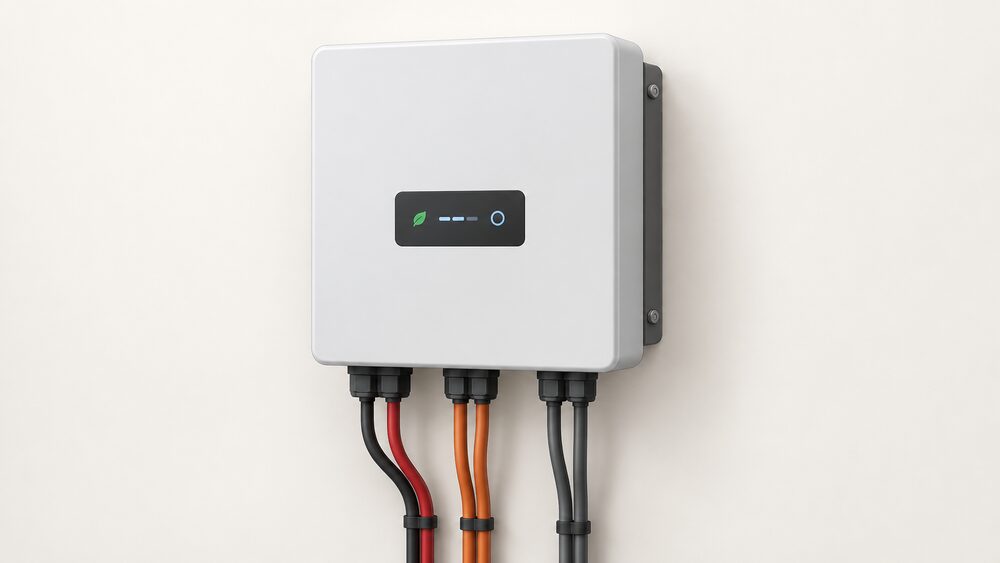 SolaX hybrid inverters for home solarWhich SolaX hybrid inverter suits a typical UK home, and what size do you need?
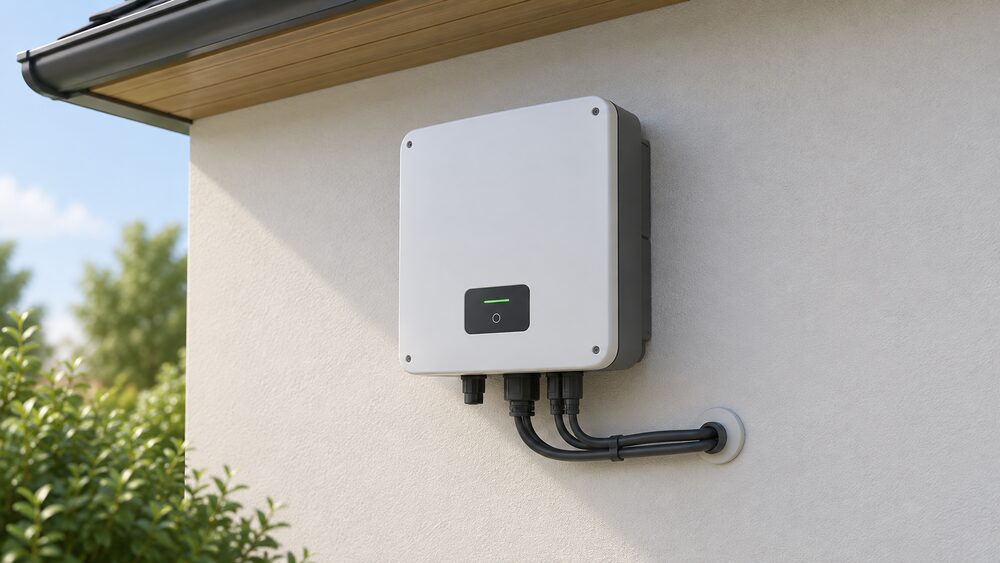 SolaX X1 invertersWhich SolaX X1 suits your roof, and do you want battery storage now or later?