
In this answer
Short answer
Adding a battery to an existing solar system is possible, and it is one of the three main ways battery storage gets installed in a UK home, alongside fitting it at the same time as new panels or installing a battery on its own1. What it is not is a plug-in upgrade. A battery-ready system, in one maker's own description, is one where the battery "can be added later, requiring additional installation and components"2.
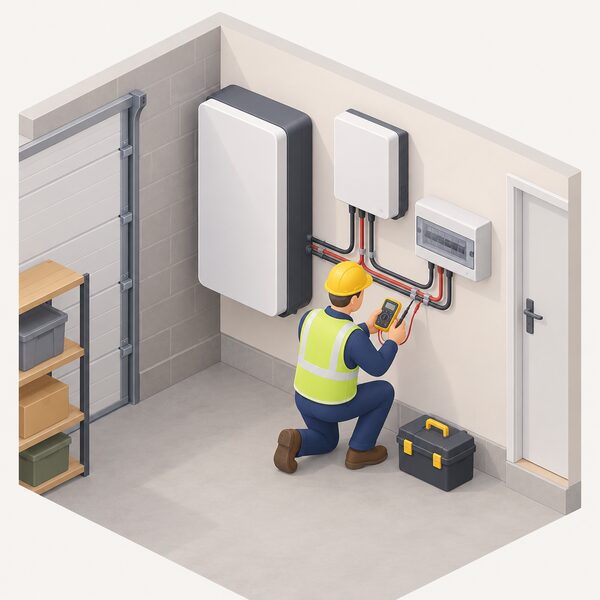
The practical question is therefore not whether expansion is allowed, but what has to be added, who has to do it, and what it costs. Battery storage systems must be hard-wired into the home's circuit by a qualified electrician, so the work is not a householder task3. The same rule applies to battery storage added alongside plug-in solar panels, which must be permanently wired and installed by a qualified electrician4.
Cost is the least predictable part. Published figures range from roughly £1,000 to £2,500 for installation, electrical work and commissioning on a straightforward retrofit, up to around £2,000 to £6,000 for capacity sufficient for typical UK rooftop systems5. Independent research also cautions that adding a battery to an existing solar system often does not recover its cost within its expected lifetime, particularly where the household already has a good export tariff7.
What adding a battery later involves
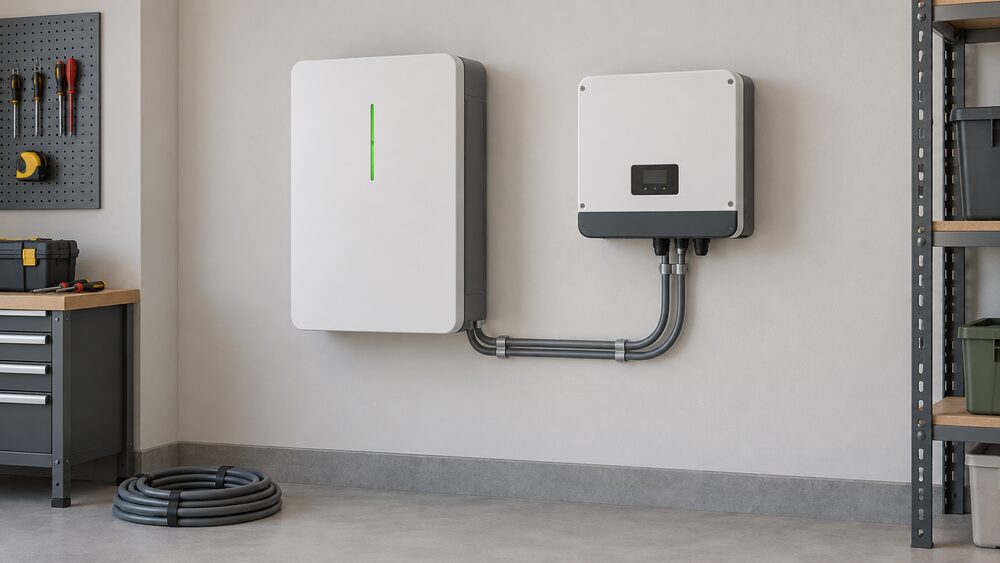
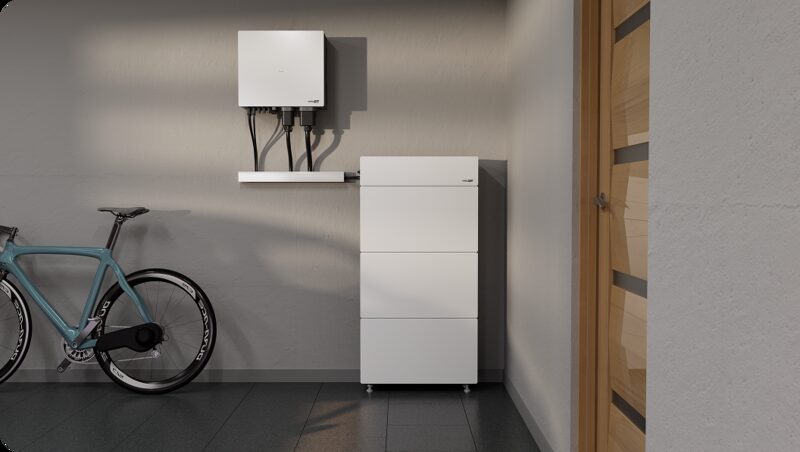
The starting point is the inverter. A hybrid inverter is built so that a battery can be added in a planned window, and one maker describes the scenario as planning to add one in the next one to three years for backup power or to store excess energy10. An AC-coupled battery sits alongside an existing inverter rather than replacing it, and one maker describes the retrofit as needing only a few plugs to complete the battery addition11. A DC-coupled or battery-ready arrangement is different again: the maker's own comparison table lists battery integration as requiring additional installation and components, and long-term cost as potentially higher because of retrofitting expenses2.
What that means in practice is that the physical work depends on the architecture already in place. Where the original installation was designed with expansion in mind, the later addition is a smaller job. Where it was not, the addition can mean new components, new cable routes and, in some cases, a consumer-unit upgrade. The independent advice to households is to ask at the point of the original installation what can be done now to facilitate future upgrades such as battery storage or electric vehicle charging12.
There is also a safety dimension that applies to any retrofit. Official research on solar fire safety notes that PV systems combined with battery storage pose chemical or explosion hazards, which is why the siting, ventilation and containment rules apply to the new unit as much as to the first13.
Cost and installation work to plan for
The cost of a later battery splits into the unit itself and the work around it. On the work, one maker's guide puts installation, electrical work and commissioning at roughly £1,000 to £2,500 for a straightforward UK battery retrofit, while noting that difficult cable routes, consumer-unit upgrades or backup equipment can push the figure higher5. Independent guidance puts the typical additional installation cost at £2,500 to £5,0008, and a news report puts the increase at around £2,000 to £6,000 for capacity sufficient for typical UK rooftop systems6. A separate independent figure records the up-front cost of installing a battery as up to £2,544 more14. These are different measures of different scopes, and no single figure covers them all.
| Figure | What it covers | Source type |
|---|---|---|
| Roughly £1,000 to £2,500 | Installation, electrical work and commissioning, straightforward retrofit5 | Maker guidance |
| £2,500 to £5,000 | Typical additional installation cost8 | Independent guidance |
| Around £2,000 to £6,000 | Capacity sufficient for typical UK rooftop systems6 | Independent news |
| Up to £2,544 more | Up-front cost of installing a battery14 | Independent guidance |
No published price exists for a specific unit, so the figure is installer-quoted, and the range above should be read as the spread of published estimates rather than a quotation for any particular home. Installation, electrical work and commissioning may add roughly £1,000, £2,500, though difficult cable routes, consumer-unit upgrades or backup equipment can push the figure higher1. Installation costs typically go up to £2,000, depending on the system and wiring complexity2.
Do you need a new inverter, and can you mix manufacturers?
Not always, and not simply. The inverter question turns on what is already on the wall. A hybrid inverter is the design that anticipates a battery, and one maker frames the decision around adding one within one to three years10. An AC-coupled battery avoids replacing the existing inverter altogether, and one maker describes the retrofit as a matter of a few plugs11. A battery-ready system, by contrast, is defined by the need for additional components at the point of expansion2.
Mixing manufacturers is a separate matter. Series battery configurations can require manual state-of-charge alignment when new batteries are added, which one maker describes as making system expansion more complex15. Product-generation compatibility should be checked before adding batteries, and warranty coverage for an added battery is based on that battery's commissioning date rather than the original installation's16. The wider lesson from community battery schemes is that shared responsibility between several parties, such as community energy groups, battery companies and electricity suppliers, creates its own problems17.
For a household, the practical position is that expansion is a compatibility question for the installer and the maker's documentation, not a matter of buying a second unit of the same nominal capacity and connecting it.
How a later battery changes your energy independence
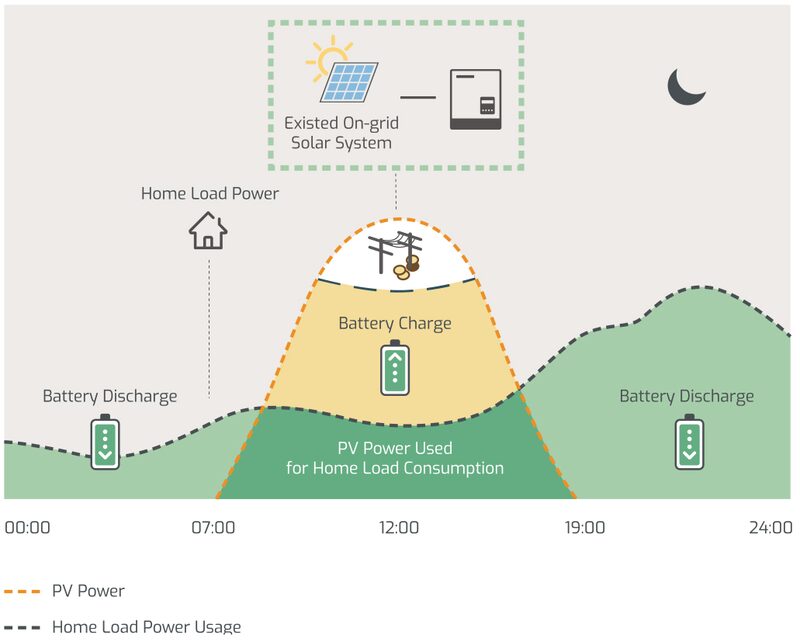
The gain from any battery, added later or not, is in self-consumption. Great British Energy figures reported in a parliamentary briefing note put the increase from 30 to 40% to 70 to 80% when a battery is added to a solar installation9. One maker gives the same jump, from roughly 30% to between 70% and 80%, and up to 90% with strategic system sizing18. Home storage batteries store electricity for use later, making the energy system more independent from the National Grid19, and they allow power produced during the day to be stored and used at another time, for example in the evening when demand is higher20.
A battery also allows cheap electricity to be stored when prices are low and used later, even during peak times, which can significantly increase savings21. In Scotland, the same principle applies: a battery can be charged with cheap electricity from a supplier, typically on certain tariffs at night or in the middle of the day22.
What remains is dependence. A battery does not remove the grid connection, the supplier or the tariff. Backup capability is conditional: some storage devices can provide back-up supplies in a power cut, but this is not always possible and should be checked with the installer23, and it is the more expensive battery systems that can provide electricity during a power cut24. Adding a battery later changes the economics and the self-consumption share, not the underlying relationship with the network.
Is it cheaper to install a battery at the same time as solar?
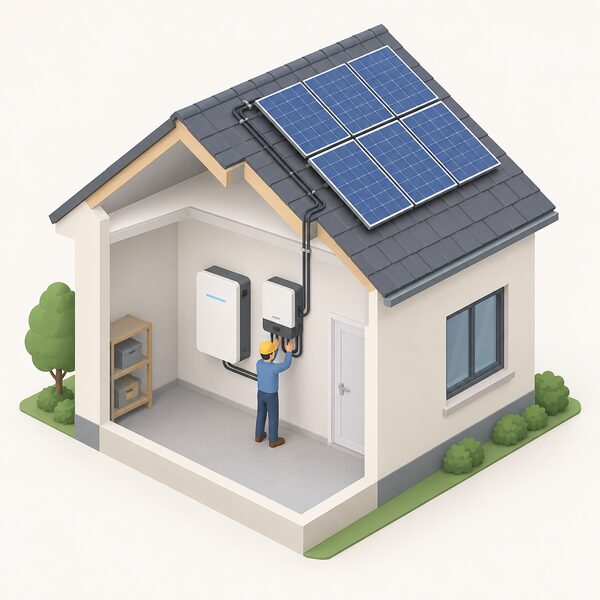
The evidence points to fitting at the same time being the lower-cost route, though no single figure for the difference is published. A battery-ready system carries potentially higher long-term cost because of retrofitting expenses and additional components1, and the same maker's comparison describes the battery-ready route as the one where the battery can be added later only with additional installation and components1.
The savings case for a battery is real but qualified. Adding a battery can significantly increase savings, with a £2,500 solar battery potentially increasing annual savings to £932, and a solar panel and battery system paid off in about 10.5 years25. Official analysis finds that installing solar PV and battery storage alongside a heat pump can significantly lower bills in all cases26. Against that, independent research finds that adding a battery to an existing solar system often does not recover its cost within its expected lifetime where a good export tariff is already available7.
For a household weighing a later addition, the honest position is that the case rests on how much of the generated electricity would otherwise be exported, what tariff is available, and whether the original installation was designed for expansion. Sunlight is free, so once the initial installation is paid for, electricity costs are lower27, but the battery is the part whose payback is most sensitive to those variables.
Where a later battery falls short
Three limits are worth stating plainly. First, the cost recovery caveat above: a later battery is the version of the purchase least likely to pay for itself within its lifetime where export payments are already good7. Second, backup is not automatic. Some storage devices can provide back-up supplies in a power cut, but not always, and the installer should be asked23; the more expensive systems are the ones that can carry a home through an outage24. Third, the installation itself is regulated work. Battery storage systems must be hard-wired into the home's circuit by a qualified electrician3, battery storage alongside plug-in solar must be permanently wired and installed by a qualified electrician4, and where an EV charger is involved it should be installed by a qualified electrician with relevant experience, with compatibility between charger, solar system and battery storage considered from the outset28.
There is also a scheme dimension. Battery storage installations are covered by added guidance under ECO429, and Birmingham's Switch Together scheme allows households to register to have battery storage added to existing solar panels to maximise the benefits of the system30. Where a free solar PV system was installed under an earlier scheme, the question of whether the consumer can add to the system at a later date is one of the points such agreements address31.
"Adding a battery to a solar panel system can increase bill savings, but often not enough to recover the cost of the battery within its expected lifetime, particularly where households already have access to a good export tariff."
Sources31 cited
- Battery storage, MCS Certified, 2026
- Battery-Ready vs Hybrid Systems, SolaX Power, 2024
- Plug-in solar, Centre for Sustainable Energy, 2026
- Plug-in solar panels, Which?, 2026
- Electrician for solar battery, Jackery UK, 2026
- Could solar panels save you £500 a year?, Which?, 2026
- Supporting households with low carbon technology combinations, Energy Saving Trust, 2026
- Solar panels, Uswitch, 2026
- POST note 0771, Parliamentary Office of Science and Technology, 2026
- Types of solar inverters, SolaX Power, 2025
- DC-coupled vs AC-coupled vs hybrid solar battery storage, Hoymiles, 2025
- Renewables and electrics, NICEIC, 2026
- Fire safety: solar photovoltaic panels, UK Government, 2026
- Solar panel installation, maintenance and repair, NICEIC, 2026
- Expanding your home batteries, Alpha ESS, 2024
- Frequently asked questions, Eleven Energy, 2026
- Citizens Advice responds to DESNZ consultation on community batteries, Citizens Advice, 2026
- Home battery storage and energy independence, Jackery UK, 2026
- Solar panel battery storage, Which?, 2026
- Batteries in the home, Solar Energy UK, 2026
- Should I switch to a time of use tariff, Energy Saving Trust, 2026
- Battery storage, Home Energy Scotland, 2026
- Storage, Electricity North West, 2026
- Making the most of your solar PV panels, Centre for Sustainable Energy, 2026
- Battery storage and solar panels, The CPA, 2026
- Clean flexibility and heat pump transition report, UK Government, 2026
- Generating renewable electricity, Energy Saving Trust, 2025
- Can solar panels charge electric cars?, The CPA, 2026
- Summary of updates to ECO4 delivery guidance, Ofgem, 2026
- Switch Together Birmingham, Birmingham City Council, 2026
- Information regarding free solar PV systems, RECC, 2026
 Adding Battery StorageCan you add a battery to solar panels you already have, or does the whole system need replacing?
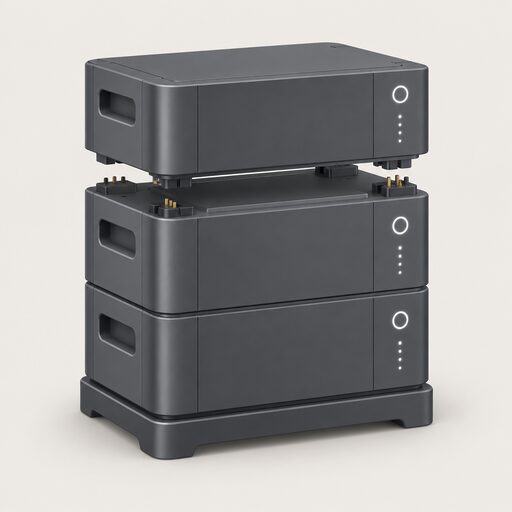 Modular and Stackable BatteriesCan you buy a small home battery now and add more storage later?
 AC-Coupled vs DC-CoupledCan you add a battery to your existing solar panels without swapping the inverter, and does one kind waste more of your solar power than the other?
 Solar and Battery Import TariffsWhat does a special import tariff actually get you when you have solar panels or a home battery?
 Home Battery Install StatisticsHow many homes in the UK actually have a battery, and is that number growing quickly?
 Check Supply Capacity FirstAdding a heat pump, car charger or home battery can push your electricity supply past what it can safely handle.