In this guide
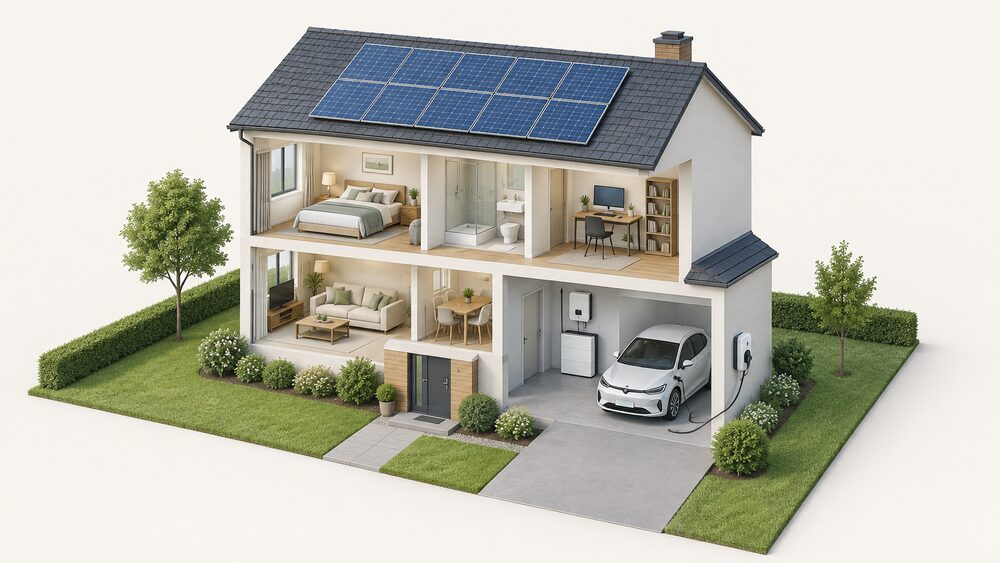
SolaX is a solar inverter and battery storage manufacturer that also makes a domestic EV charger, sold as the Smart EV Charger and the newer Smart EV Charger G2. The charger is designed to sit inside the same ecosystem as the company's hybrid inverters and batteries, so a household already running SolaX storage can add vehicle charging without a second control platform. Power options run from 4.6kW to 22kW on the G2, and the standard warranty is 3 years1.
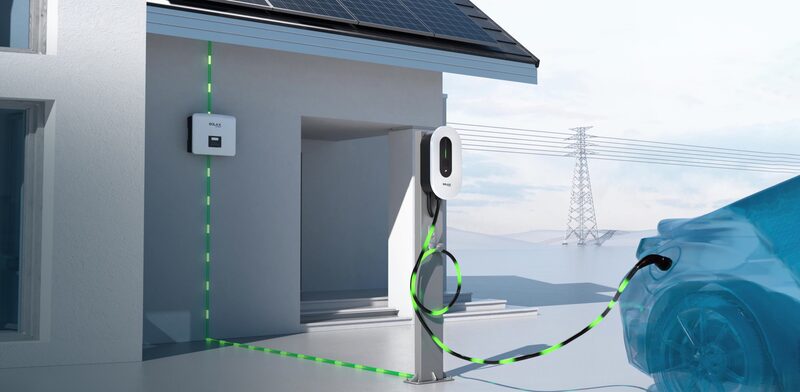
The appeal for energy independence is the solar mode. SolaX states that the charger's Green Mode detects surplus solar energy and uses it to charge the vehicle, and that the unit supports surplus green energy use in zero-export systems3. That means a household with panels can put generation that would otherwise be exported into the car instead. The dependence that remains is the same as any grid-tied charger: the grid, a supplier, and for remote features a broadband connection and SolaX's own cloud platform.
This page sets out the range, the power and phase options, the solar and smart features, the safety protections, how the charger fits SolaX storage systems, and the warranty terms, with the limits stated as plainly as the benefits.
The SolaX range: Smart EV Charger, G2 and a bidirectional model
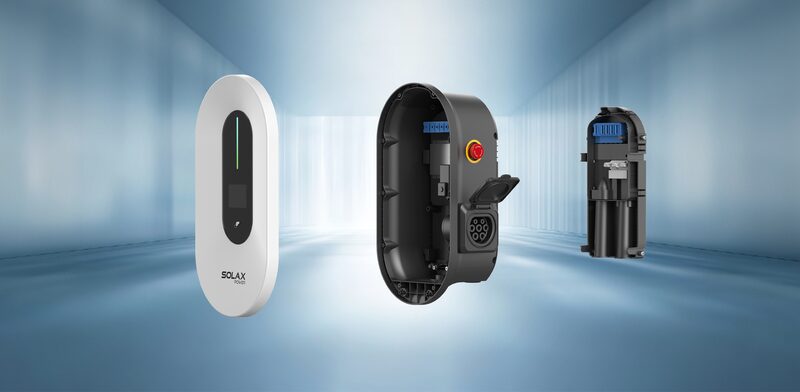
SolaX sells three distinct charging products for the home. The Smart EV Charger is the original unit, listed with 7.2kW, 11kW and 22kW power options, selectable plug or socket outlet, indoor and outdoor installation, and a smart RFID management function1. The Smart EV Charger G2 is the current generation, adding a 4.6kW option at the bottom of the range, three connectivity modes and a tethered design that SolaX describes as plug-and-play convenience2.
The third product is a bidirectional EV charger, which SolaX lists as part of its integrated home ecosystem alongside PV systems, energy storage and heat pumps. The maker states that it unlocks full-scale V2X capabilities and describes it as the core hub of its smart IoT ecosystem7. That is a different proposition from the two unidirectional wallboxes: it implies power flowing out of the vehicle as well as into it, which is covered on the vehicle-to-grid and vehicle-to-home page.
The G2 carries a Type 2 interface that SolaX says is compatible with all major EVs, and the maker states it works with SolaX inverters and applies dynamic load balancing to prevent tripping the home's main breaker6. The range is positioned as an add-on to an existing SolaX installation rather than a standalone charger, and the maker's own guidance on expanding a system describes combining storage batteries with hybrid inverter options and later adding a Smart EV Charger G28.
Power options: 4.6kW, 11kW and 22kW, with G2 adding 4.6kW

The two generations differ at the bottom of the range. The Smart EV Charger is listed at 7.2kW, 11kW and 22kW1. The G2 is listed at 4.6kW, 7.2kW, 11kW and 22kW, so the 4.6kW option is unique to the newer unit2. SolaX's own guidance describes the G2 as available in 7kW single-phase for standard homes and 22kW three-phase for properties with higher power capacity6.
| Product | Power options | Phase switching | Outlet | Connectivity |
|---|---|---|---|---|
| Smart EV Charger | 7.2kW, 11kW, 22kW1 | Automatic single/three phase1 | Plug or socket1 | Multiple protocols1 |
| Smart EV Charger G2 | 4.6kW, 7.2kW, 11kW, 22kW2 | Automatic single/three phase2 | Plug or socket, tethered2 | WiFi, 4G, Ethernet2 |
| Bidirectional EV charger | Not stated | Not stated | Not stated | SolaXCloud ecosystem7 |
The practical limit is the property's supply, not the charger's rating. A 22kW unit on a single-phase connection cannot deliver 22kW, and the automatic phase switching that both models offer simply lets the charger use whatever the supply provides without manual reconfiguration1. For a household comparing ratings, the difference between 7kW and 22kW is set out on the 7kW vs 22kW home EV charger page, and the underlying electrical requirements are covered under electrical requirements for a home EV charge point.
SolaX also sells an EVC cable accessory, listed with power ratings of 3.7kW, 11kW, 7.4kW and 22kW and available in one-phase and three-phase versions, with a 1-year warranty9. That is a separate product from the charger itself and carries a shorter term.
Charging from your own solar: green modes and zero-export systems
The solar function is the reason a SolaX charger would be chosen over a generic wallbox. SolaX states that the charger's Green Mode detects surplus solar energy and uses it to charge the vehicle, and that the unit can charge an EV with 100% clean solar energy3. The G2 is described as having a solar priority mode that allows charging using 100% clean energy generated by the PV system6. The maker also states that the charger supports surplus green energy use in zero-export systems, which matters where the installation is configured not to export to the grid at all4.
Independent guidance describes the same mechanism in general terms: smart chargers monitor real-time solar production, adjust charging speed accordingly, and switch between solar and grid supply depending on availability10. The Energy Saving Trust's sister guidance from E.ON Next puts it as chargers with special modes that charge only from the extra solar energy not being used in the house and would otherwise be sent back to the grid11.
"Smart chargers can monitor real-time solar electricity production and adjust charging speed accordingly by drawing more "
What this does for independence is real but partial. A household with panels and a SolaX charger can divert generation into the car rather than exporting it, which reduces both grid draw and export dependence. What it does not do is remove the grid: on a cloudy day, in winter, or when the car needs a full charge overnight, the charger draws from the supply like any other. The solar-aware charging model is explained further on the charging an EV from solar panels page, and the choice between midday solar and overnight off-peak charging is covered under charging an EV from solar vs the grid.
Smart features: app control, RFID, load balancing and SolaXCloud
Control runs through SolaXCloud, the maker's monitoring and control platform. SolaX states that the Smart EV Charger is fully controlled through SolaXCloud, and that the G2 enables remote control via the SolaXCloud app1. The functions listed include scheduling charging during off-peak hours, adjusting the charging current, and monitoring the vehicle's charging status remotely1. The G2 adds scheduling and real-time monitoring2.
Both models carry a smart RFID management function, which allows charging to be authorised by card rather than by anyone who plugs in1. That is a shared-supply feature rather than a single-household one, but it is listed on both product pages. SolaX also describes smart dynamic load balancing as a headline feature, and the G2 page states that dynamic load balancing prevents tripping the home's main breaker12.
The wider ecosystem matters here. SolaXCloud provides real-time monitoring, time-of-use optimisation and integration with EV chargers and heat pumps on the X-ESS G4 storage system13. The maker's residential offer is described as storage inverters, batteries, EV chargers and SolaXCloud for monitoring and control, and the platform architecture groups batteries, inverter lines, the Smart EV Charger G2, heat pumps and SolaXCloud together7. For a household already inside that ecosystem, the charger is one more device on an existing app rather than a separate login. Load balancing as a subject is covered on the load management and load balancing page, and app dependence on the EV charger apps and connectivity page.
Connectivity and installation: WiFi, 4G and Ethernet
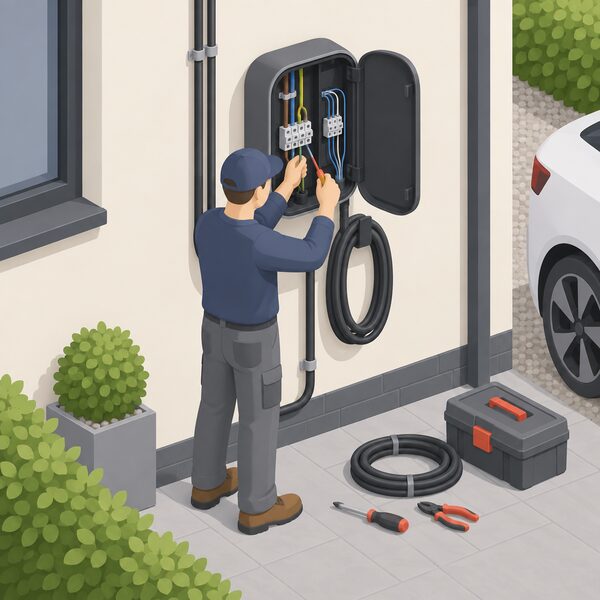
The G2 offers three connectivity modes: WiFi, 4G and Ethernet2. That is a wider set than many domestic chargers, and the 4G option matters where a garage or driveway sits outside reliable WiFi range. Both the Smart EV Charger and the G2 are listed for easy indoor and outdoor installation1.
SolaX states that the charger supports multiple communication protocols, and that it integrates terminal blocks for simple wiring while separating power and communication lines for safe installation1. The specific protocol names are not published on the product pages, so compatibility with an existing home energy management system would be confirmed at installation rather than from the specification sheet.
Installation itself is a regulated activity in the UK. NICEIC guidance sets out that home charge point work falls to a competent electrician, and the process and who can carry it out is covered on the home EV charge point installation page14. The notification that follows a new charge point is covered under telling the network operator.
The dependence this section creates is worth stating plainly. Local charging continues without any network connection, but remote scheduling, energy monitoring and remote diagnostics depend on a home broadband or mobile connection, SolaX's servers and the SolaXCloud app. A household that wants the solar diversion to work without any of that should confirm with an installer which functions run locally at the unit.
Safety protections: 30mA AC and 6mA DC leakage protection
Both the Smart EV Charger and the G2 are listed with current leakage protection of 30mA AC and 6mA DC1. The DC component matters because a vehicle's onboard electronics can introduce DC residual current that a standard AC device does not detect, which is why charge points carry combined protection. The general requirement is covered on the RCD protection for an EV charge point page.
Beyond leakage, SolaX lists over-voltage, under-voltage, short circuit, overload and surge protection on the Smart EV Charger1. The bidirectional charger is described as built with more than 10 safety protections, listed as over-current, over-temperature, over-voltage, under-voltage, lightning surge, short circuit, leakage current, relay weld, overload and ISO insulation verification7. That is a longer list than the unidirectional units carry, which is consistent with a product that can push power in both directions.
How it fits a SolaX storage system: X-ESS G4, X3-AELIO and X3 ULTRA
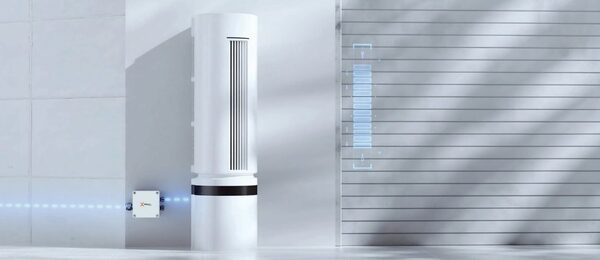
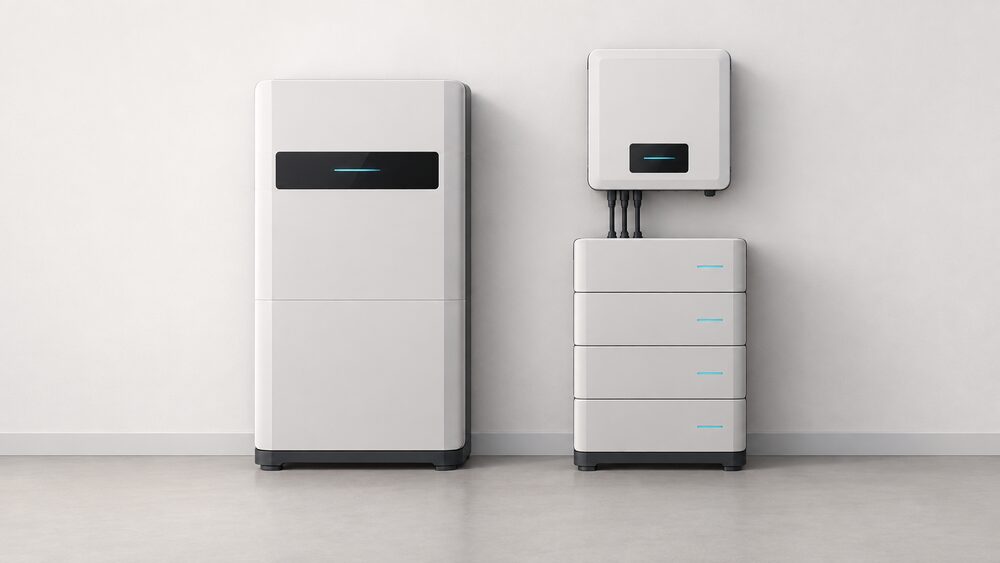
The Smart EV Charger is described as designed to integrate with the X-ESS G4 solar and storage system4. The X-ESS G4 is listed as compatible with an EV charger and a heat pump, with smart loads management covering both, and it supports up to 200% PV oversizing9. SolaX positions the X-ESS G4 at 3 to 7.5kW with 3 to 12kWh of storage15.
The X-ESS G4 also carries a maximum charging and discharging current of 30A9. That figure belongs to the storage system rather than the charger, and it is the kind of limit that determines how quickly a battery can be refilled from solar or emptied into the house and car.
For households adding storage to an existing solar array, SolaX describes the X3-FIT G4 as suited to retrofit projects and to users who want to add battery storage and backup power to an existing solar system16. The X3-HYBRID G4 supports both on-grid and off-grid applications and is described as working well for homes with solar panels, batteries and EV chargers together16. The maker's expansion guidance describes combining storage batteries with hybrid inverter options and later adding a Smart EV Charger G2, which is the sequence most retrofit households would follow8.
The independence this delivers is a shift in when grid power is used rather than whether it is used. A battery charged from solar or off-peak grid electricity can feed the charger later, so the household is buying less at peak rates and importing less overall. The grid connection, the supplier and the meter remain. Battery and EV charging together is covered on the EV charging alongside a home battery page, and the wider question of whether a battery is worth adding is on is it worth adding a battery to my solar and EV setup.
Warranty: 3 years standard, from installation or production
SolaX gives the EV charger a 3-year standard warranty, starting from the earlier of two dates: 9 months after the date of production, or the date of first installation5. The earlier-of structure is common across the maker's product lines and it means the clock can start before the unit is fitted. A charger that sits in stock for several months before installation has less than three years of cover from the day it goes on the wall.
The same document sets out different terms for other SolaX products, which is useful context for a household buying a whole system. The Fast DC Charger carries a 2-year standard warranty5. Inverters carry 5 years, with the production-date trigger varying by model: 6 months for the X1/X3-Hybrid-G4, X1/X3-Fit-G4, X3-ultra and others, and 9 months for the X1/X3-IES5. Batteries vary between 5, 10 and 12 years depending on the series5. Accessories such as meters, CT clamps and data hubs carry 2 years17.
The EVC cable accessory carries a 1-year warranty, the shortest term in the range9. Independent guidance on solar battery storage notes a 10-year figure for one SolaX battery system, which sits alongside the maker's own published terms rather than replacing them18. Warranty structures across the market are compared on the EV charge point warranties and aftercare page.
Where the SolaX charger has limits
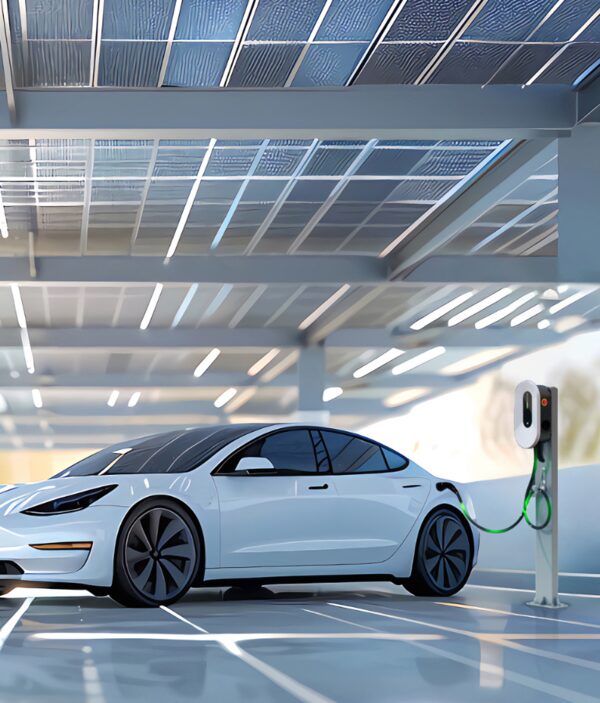
The clearest limit is that the charger is built to work best inside a SolaX system. The maker states that the G2 works perfectly with SolaX inverters, and the Smart EV Charger is described as designed to integrate with the X-ESS G46. A household with a different brand of inverter or battery would be buying the charger for its standalone functions, not for the ecosystem integration.
The second limit is cloud dependence. Remote control, scheduling and monitoring run through SolaXCloud, and the maker describes the platform as the control route for both models1. Local charging continues, but the smart functions that justify the product depend on a connection and on the manufacturer's servers continuing to operate.
The third is warranty length. At 3 years, the charger's cover is shorter than the 5-year inverter term and the 5 to 12-year battery terms in the same range5. For a household weighing a whole-system purchase, that is a real difference in aftercare.
Finally, the bidirectional product is listed as part of the ecosystem with full-scale V2X capabilities, but no power ratings, outlet options or warranty term are published for it7. A household interested in V2X should treat the unidirectional chargers and the bidirectional unit as separate purchases with separate specifications.
Sources18 cited
- Smart EV Charger, SolaX Power, 2026-09-17
- Smart EV Charger G2, SolaX Power, 2026-09-17
- How to choose the best electric car charger for home, SolaX Power, 2025-12-31
- EV Chargers, SolaX Power, 2026-09-17
- Warranty, SolaX Power, 2026-09-17
- Different types of EV chargers, SolaX Power, 2026-01-08
- Integrated heating solution, SolaX Power, 2026-09-17
- Seamless expansion without balancing issues, SolaX Power, 2026-05-25
- X-ESS G4, SolaX Power, 2026-09-17
- Can solar panels charge electric cars?, The CPA, 2026-04-15
- EV chargers for solar panel charging, E.ON Next, 2026-09-17
- Certified hybrid inverters and self-developed energy storage systems, SolaX Power, 2026-03-02
- Emergency power supply, SolaX Power, 2026-08-05
- Electric vehicle charger installation and maintenance, NICEIC, 2025-08
- Backup power options for remote cabins, SolaX Power, 2026-04-13
- Off-grid vs hybrid inverter, SolaX Power, 2026-03-13
- Warranty (UK), SolaX Power, 2026-09-17
- Solar panel battery storage, Which?, 2026-05-14
 SolaX Home Batteries and Triple Power StorageHow much can a SolaX home battery store, and can you add more later?
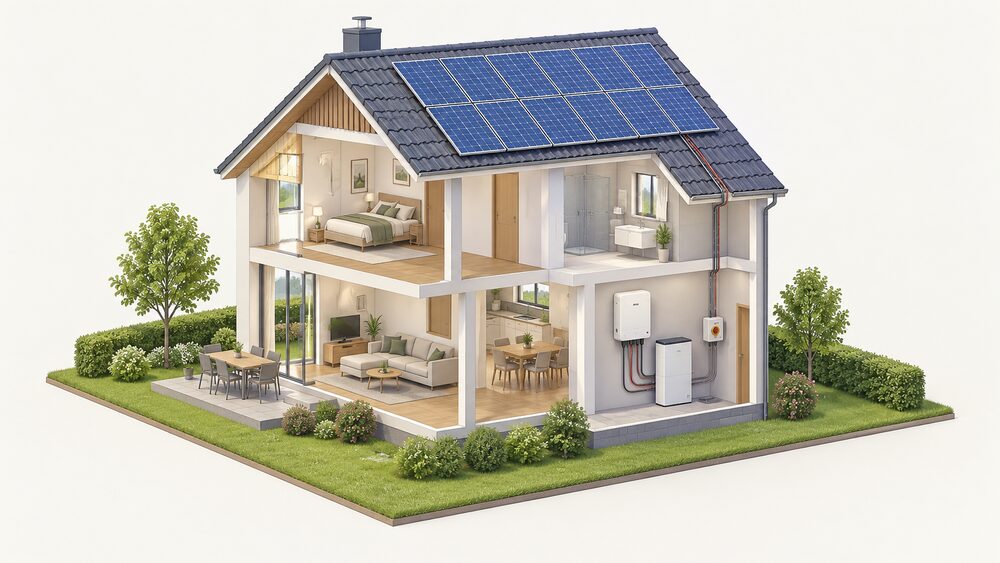 SolaX X3-ULTRAThe SolaX X3-ULTRA is a large three-phase hybrid inverter for big homes and commercial buildings.
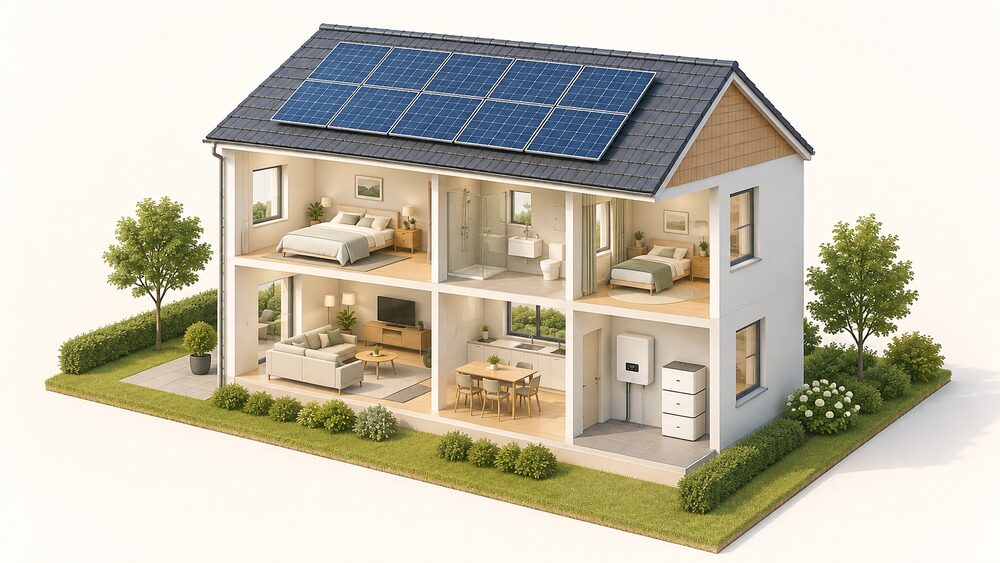 SolaX Power inverters and batteriesSolaX Power inverters and batteries come down to three things for your home: which type fits, how much storage you need, and what the warranty really gives you.
 SolaX hybrid inverters for home solarWhich SolaX hybrid inverter suits a typical UK home, and what size do you need?
 SolaX X1 invertersWhich SolaX X1 suits your roof, and do you want battery storage now or later?