
In this guide
The Growatt AXE is a stackable, low-voltage lithium iron phosphate (LFP) home battery sold in 5 kWh modules. Growatt describes the AXE 10 kWh as "a modular, low-voltage (LV, 51.2 V) LiFePO4 energy storage battery", and the AXE 5.0L as scaling from a single 5 kWh module to clusters of up to 400 kWh in total1. Each module is rated at 5.0 kWh nominal, with about 4.6 kWh usable at the datasheet depth of discharge of 92%3.
That combination of a low module price point and a very high ceiling is what drives householder interest. A single module covers a modest evening load; ten modules in one cluster give 50 kWh; eight clusters in parallel reach 400 kWh2. The AXE is not one product but a family, and the variants differ in voltage class, inverter compatibility, enclosure and warranty term, so the model name matters more than the brand.
The dependence it leaves in place is the same as any grid-tied battery. The AXE stores and shifts energy, but it needs a compatible Growatt inverter, a qualified installer, and for remote monitoring a broadband connection and Growatt's ShineServer platform4. Backup during a power cut is a function of the inverter, not the battery, and covers selected circuits only3.
What the Growatt AXE is: a stackable low-voltage LFP battery
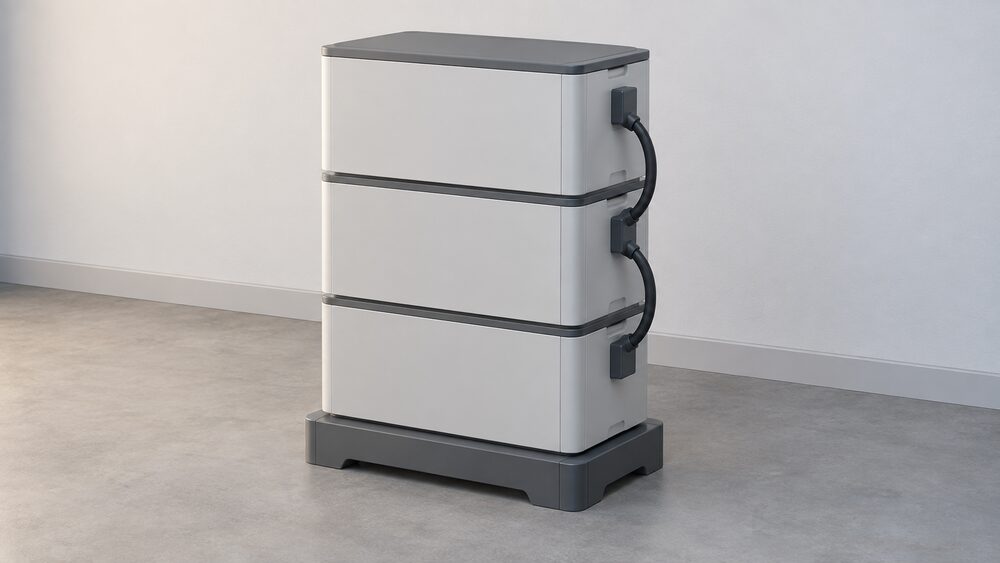
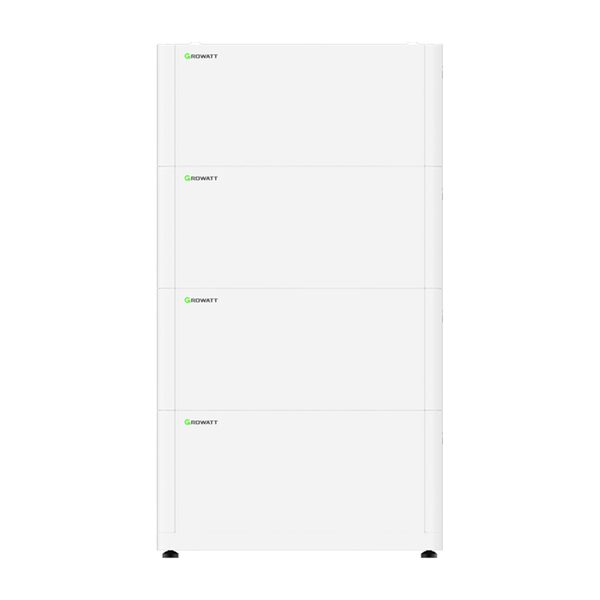
The AXE is built around a single repeating unit: a 5 kWh LFP module that stacks onto a floor-standing base. Growatt describes the 15 kWh set as offering "easy installation with modular and stacked design", "module level energy optimization", a "cobalt free LiFePO4 battery", "natural convection, no fans" cooling and "passive protection by fuse and aerosol"4. Those five attributes explain most of the product's character. LFP chemistry is the cobalt-free variant of lithium iron phosphate, chosen for thermal stability and cycle life rather than energy density, which is why the modules are bulky relative to their capacity.
The low-voltage architecture is the second defining feature. At 51.2 V nominal, the AXE sits in the same class as the Growatt ALP and ARK low-voltage lines rather than the high-voltage APX series, which Growatt positions as "a modular high-voltage energy storage battery for residential and commercial three-phase hybrid systems" with "compact 5 kWh modules stacked into a system of up to 30 kWh of capacity"1. The practical difference is that low-voltage systems use thicker cables and higher currents for the same power, but avoid the stacked high-voltage string and its associated balancing.
The AXE 5.0L carries an integrated BMS, which manages cell balancing, protection and reporting to the inverter2. The AXE 5.0H-E1 is a separate line: a 5 kWh module for three-phase commercial Growatt WIT XHU hybrid inverters, mounted in an IP55 floor-standing cabinet with air conditioning5. The two share a family name and a module capacity, and little else.

Capacity and scalability: from 5 kWh to 400 kWh
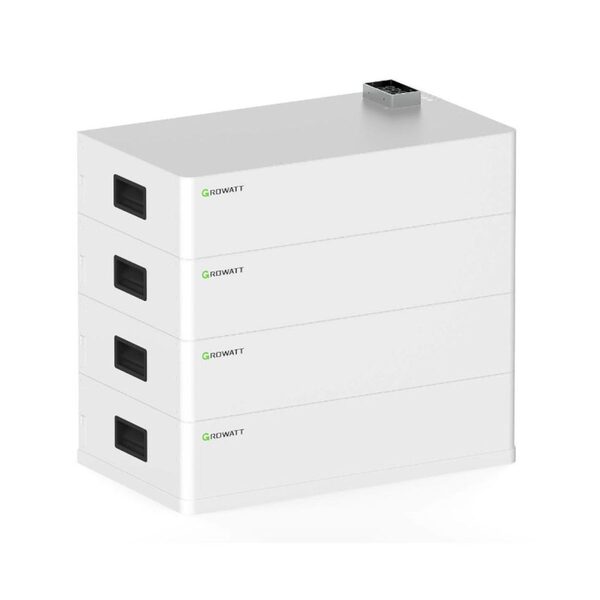
The AXE 5.0L takes one to ten modules per cluster, giving 5.0 to 50.0 kWh per cluster, with a maximum of eight clusters in parallel and 400 kWh in total2. The 10 kWh set repeats the same structure: "1-10 modules of 5 kWh each per cluster, up to 8 clusters = as much as 400 kWh"1. The AXE 5.0H-E1 scales differently, at 10 modules for 50 kWh or 12 modules for 60 kWh per cabinet, with multi-cabinet parallel operation supported5.
For a typical UK house, the useful part of that range is the bottom end. A single module gives 5 kWh nominal and about 4.6 kWh usable3. A three-module stack gives 15 kWh nominal, which is the size Growatt sells as a set4. The 400 kWh ceiling is a commercial or off-grid figure, and the AXE 5.0L series is explicitly aimed at "off-grid systems, single-phase hybrid inverters and WIT-HU inverters" as well as domestic use3.
Expansion is genuinely incremental, which is unusual. Because modules stack onto the same base, adding capacity later is a matter of adding modules and the correct connection cable rather than replacing the unit. The connection cable kit comes in big and small variants as separate part numbers, and Growatt advises checking "the variant against your stack layout before ordering"8. The base or rack enclosure is described as "the mounting component of a Growatt energy storage system" that "provides stable, safe seating of the battery modules and accessories, in line with the manufacturer's requirements"9.
| Variant | Modules per cluster | Cluster range | Maximum |
|---|---|---|---|
| AXE 5.0L | 1 to 10 | 5.0 to 50.0 kWh | 8 clusters, 400 kWh total2 |
| AXE 10 kWh set | 1 to 10 | 5 to 50 kWh | 8 clusters, 400 kWh total1 |
| AXE 5.0H-E1 | 10 or 12 per cabinet | 50 or 60 kWh | Multi-cabinet parallel5 |
Specifications: 51.2 V, 92% depth of discharge, IP20
The headline electrical figures are consistent across the AXE 5.0L, the 5 kWh set and the 10 kWh set: 51.2 V nominal, 92% depth of discharge and IP20 ingress protection1. Depth of discharge is the proportion of nominal capacity the battery is designed to release before the BMS stops it, so 92% of a 5 kWh module is about 4.6 kWh usable3. That is a high figure for a home battery.
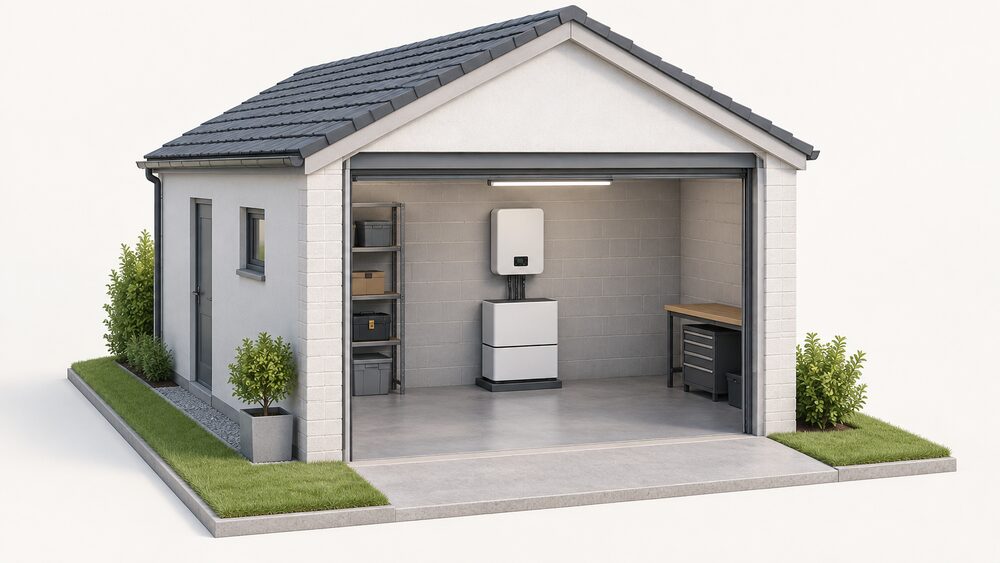
IP20 is the constraint worth understanding. The AXE 5.0L and the 5 kWh and 10 kWh sets are all listed with a floor-standing base for mounting, which suits a garage, plant room or utility space rather than an exposed wall1. The AXE 5.0H-E1 is the exception, using an IP55 floor-standing cabinet with air conditioning5.
The AXE 5.0L carries an integrated BMS2. That unit handles cell balancing, over and under voltage protection, temperature limits and the state of charge reporting that the inverter and the monitoring platform rely on. A fuller explanation of what a BMS does sits in battery management systems, and the difference between nominal and usable capacity is set out in battery capacity and usable capacity.
Backup during a power cut: what the AXE can and cannot do
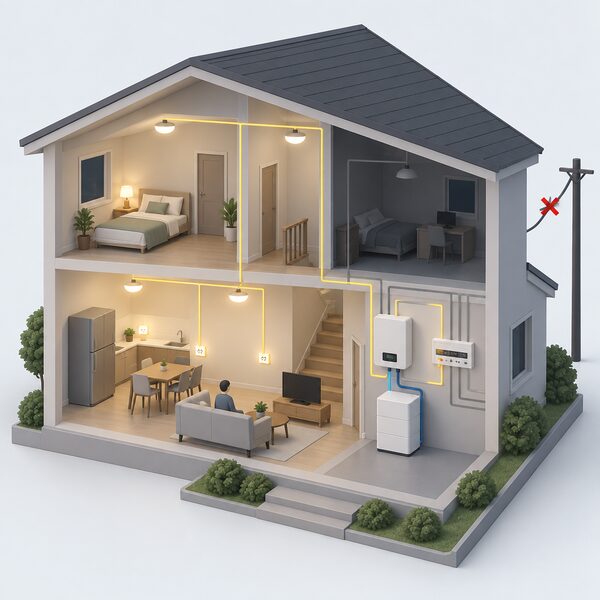
Growatt's answer is consistent across the AXE range: "combined with a hybrid inverter, the energy storage battery keeps selected circuits running during a grid outage (the inverter's backup/EPS function)"1. The same wording appears on the APX and ARK pages, so it is a statement about the inverter's capability as much as the battery's11.
Two limits follow from that wording. First, the battery alone does nothing: the backup function lives in the inverter, and the AXE 5.0L works with Growatt SPF off-grid inverters, single-phase SPH hybrid inverters and WIT 8-15K-HU hybrid inverters2. Second, "selected circuits" is not the whole house. A backup circuit typically covers lighting, broadband, a fridge and a few sockets, sized to the inverter's output rather than the battery's capacity.
Independent guidance is more cautious still. Electricity North West states that "in some cases these storage devices can provide back-up supplies for use in a power cut, but this is not always possible", and advises checking with the installer14. The same network operator notes that "after a power cut, there can be power surges when electricity is restored, which might damage your appliances", and suggests switching appliances off at the plug15. Northern Ireland Networks adds a preparation point that applies to any household relying on a battery: "refrain from using more electricity in preparation (boiling kettles for flasks, charging mobile phones etc.) as the system is struggling with the demand"16.
The practical position is that an AXE system with a hybrid inverter can carry a defined set of circuits through an outage, for as long as the stored energy lasts, and that the household should know which circuits those are before the power fails. The mechanics of changeover and EPS are covered in battery backup power and EPS.
Monitoring and control: ShinePhone, ShineServer and the integrated BMS
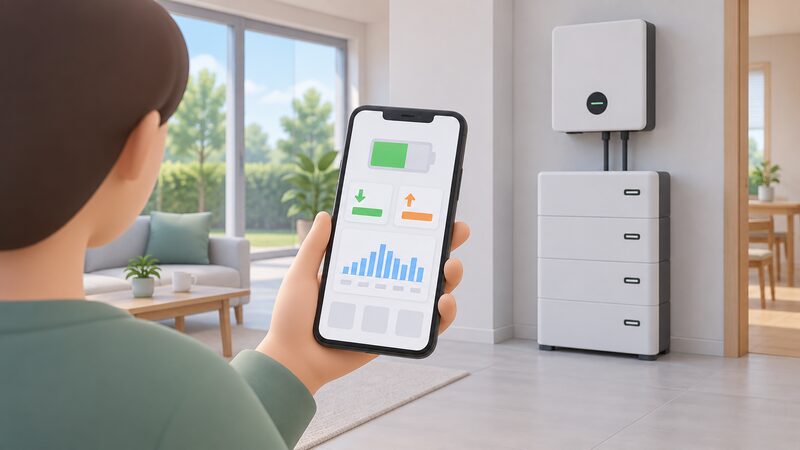
Growatt's monitoring runs on two platforms. ShinePhone is described as "one APP for all Growatt products" and as a "system monitoring APP for users", while ShineServer is the web portal behind it17. For the AXE 5.0L and the 5 kWh set, Growatt states that "the ShinePhone app and the ShineServer portal show the state of charge (SOC), the charge and discharge power and the operating history", with fault notifications passed through the connected inverter2.
The data path matters. The battery reports to the inverter, and the inverter reports to the platform. Growatt's Shine WiLAN-X2 is the communications module that carries this, described as designed to work with "Growatt inverters and energy storage systems that support ShinePhone / ShineServer monitoring", and as letting users "monitor production, consumption and battery state remotely in the ShinePhone app and the ShineServer portal"18. The SPF 6000ES Plus off-grid inverter lists "ShinePhone / ShineServer monitoring" among its features7.
The dependence this creates is worth stating plainly. Local operation of the battery continues without an internet connection, because the BMS and the inverter do their work on site. Remote visibility, historical data and fault alerts depend on a working broadband connection, Growatt's servers and the app. A household that wants to see state of charge during a broadband outage may not be able to. The wider question of local versus cloud access is covered in battery monitoring and apps.
Warranty: 5 or 10 years depending on the variant
Growatt's warranty wording on the AXE pages is deliberately open. The AXE 10 kWh, the AXE 5.0L and the 5 kWh set are each described as covered by "a European service warranty of 5 or 10 years (depending on variant), per the manufacturer's terms"1. The AXE 5.0H-E1 is listed with a 10 year European service warranty, and the AXE 15 kWh set is described with "long lifespan, 10 years warranty"5.
The contrast with the rest of the Growatt range is sharp. On the AXE line, the term depends on which variant is supplied, and the manufacturer's terms govern what the cover actually includes.
Accessories carry their own, shorter terms. The AXE 5.0H connection cable kit is listed with a "European service warranty (1 year per the manufacturer)"8. That is a reminder that the warranty on a battery system is not one document but several, and that the balance of the term sits with the modules. What retained capacity and throughput conditions typically look like is covered in home battery warranties.
Compatibility: which inverters work with the AXE
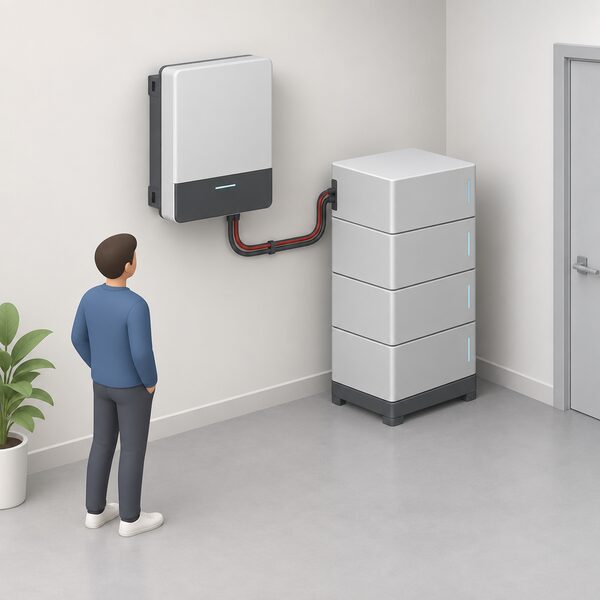
The AXE is not inverter-agnostic. The AXE 5.0L is listed as compatible with "Growatt SPF off-grid inverters, single-phase SPH hybrid inverters and WIT 8-15K-HU hybrid inverters", with the note that the "LV voltage class must match inverter"2. The AXE 5.0H-E1 works with "three-phase commercial Growatt WIT XHU hybrid inverters"5. The 5 kWh set is sold with the Growatt SPF 6000ES Plus inverter included, pairing a 6 kW off-grid inverter with two MPPT trackers and IP65 ingress protection to a single AXE 5.0L-C1 module, an integrated BMS and a floor-standing base3.
The SPF 6000ES Plus itself lists compatible batteries as "AXE 5.0L-C1, ARK 2.5L-A2, HOPE 5.0L-B1, HOPE 14.3L-A1", which shows how Growatt groups its low-voltage lines7. The AXE 40H-E1 Rack is described as designed to work with "Growatt battery modules of the series named in the product name", covering the ARK, APX and AXE series9.
| AXE variant | Compatible inverters |
|---|---|
| AXE 5.0L | Growatt SPF off-grid, single-phase SPH hybrid, WIT 8-15K-HU hybrid2 |
| AXE 5.0H-E1 | Three-phase commercial Growatt WIT XHU hybrid5 |
| AXE 5 kWh set | Growatt SPF 6000ES Plus, supplied in the set3 |
The voltage class rule is the one that catches people out. For a household already running a Growatt hybrid inverter, the AXE is a like-for-like addition. For one running another brand, the AXE is not a drop-in. The wider picture of what pairs with what is in Growatt home batteries, and the general principle in AC-coupled and DC-coupled battery systems.
Installation and siting: weight, footprint and temperature limits
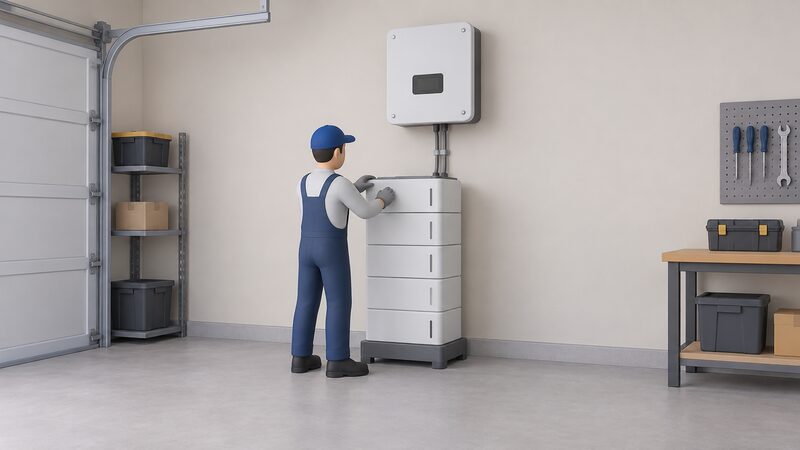
Growatt states that the AXE 5.0L, the AXE 5 kWh set and the AXE 5.0H-E1 "should be installed by a qualified installer according to the manufacturer's manual"2. The connection cable kit is to be "connected by a qualified installer according to the instructions and the wiring diagram of the specific device"8. There is no DIY route in the manufacturer's documentation.
Mounting is floor-standing across the range. The AXE 5.0L, the 5 kWh set and the 10 kWh set all use "the base for floor-standing installation"1. The AXE 5.0H-E1 uses an IP55 floor-standing cabinet with air conditioning5. The base or rack is the structural component, providing "stable, safe seating of the battery modules and accessories, in line with the manufacturer's requirements"9.
Two figures for module weight appear in Growatt's own documentation and they do not agree: 54.40 kg and about 42 kg per module. Either figure makes a multi-module stack a substantial floor load, and the base is designed to spread it.
Siting also falls under the standards for battery storage in dwellings. PAS 63100:2024 covers "installation location in respect of safety and external influences that affect fire safety"10. Growatt's own inverter documentation shows that some Growatt equipment is rated for outdoor use, with the MIN 4600-XH2 described as "suitable for indoor and outdoor installation", but the AXE modules themselves are IP20 and floor-standing19. The general rules on where a home battery can go are in battery siting and location, and the standards in battery installation standards.
Where the AXE sits in the Growatt range
Growatt sells several battery families into the UK, and the AXE is the low-voltage stackable line rather than the only option. The APX series is the high-voltage counterpart, positioned as "a modular high-voltage energy storage battery for residential and commercial three-phase hybrid systems", with 5 kWh modules stacking to 30 kWh and a 10 year warranty as standard6. The ALP is another low-voltage line, with 5 kWh modules connected in parallel into clusters of up to 40 kWh per cluster and multiple clusters21.
The AXE's distinguishing feature within that group is the 400 kWh ceiling and the ten-module cluster. The APX tops out at 30 kWh in a single cluster, and the ALP at 40 kWh per cluster7. For a domestic installation, that difference rarely matters. For an off-grid property, a small commercial site or a household planning for a large electric vehicle and heat pump load, it does.
The trade-off is the warranty. The APX line carries 10 years across the sets listed, while the AXE is stated as 5 or 10 years depending on variant1. A household comparing the two on capacity alone would miss that. The comparison across the brand is set out in Growatt home batteries, and the general case for stacking systems in modular and stackable battery systems.
What the AXE means for household energy independence
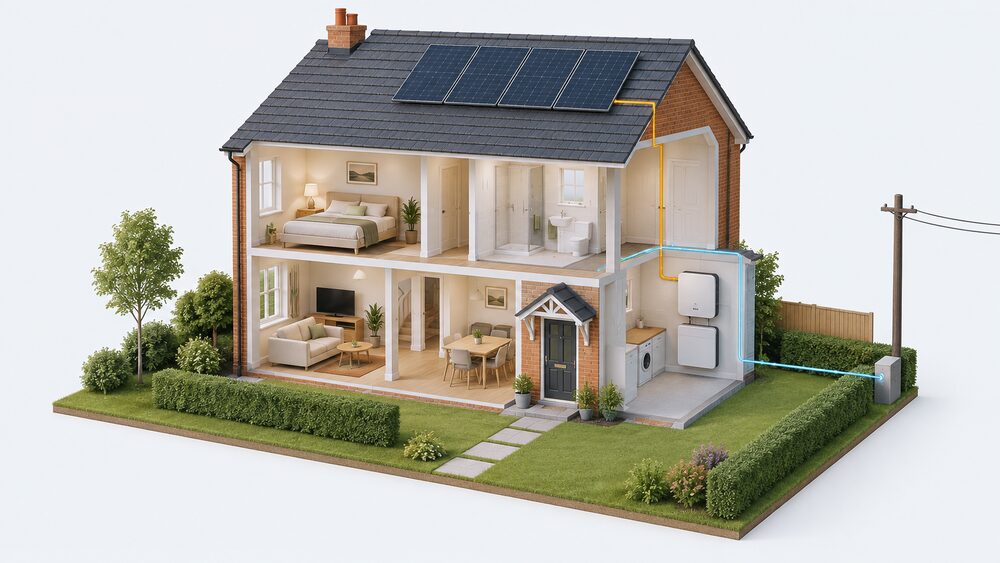
The AXE does three things for a household. It stores surplus solar generation for evening use, it allows cheap overnight tariff energy to be shifted to peak hours, and with a hybrid inverter it can carry selected circuits through a grid outage1. Those are real gains in self-consumption and in resilience, and the 92% depth of discharge means most of the nominal capacity is available rather than held in reserve3.
What remains is a set of dependencies. The battery needs the grid to charge from cheap tariff energy, and it needs a Growatt inverter of the matching voltage class to operate at all2. Backup covers selected circuits, not the whole house, and only where the inverter has an EPS function3. Remote monitoring depends on broadband, Growatt's ShineServer platform and the ShinePhone app17. The warranty term depends on the variant supplied, and on the manufacturer's terms1. Installation depends on a qualified installer working to the manufacturer's manual and to PAS 63100:20242.
None of that is unusual for a grid-tied home battery, and none of it undermines the case for storage. It does mean that the AXE is best understood as a modular building block within a Growatt ecosystem rather than a standalone appliance. The household that gets the most from it is the one that already has, or plans to have, a compatible Growatt hybrid inverter, a dry floor position for the stack, and a clear idea of which circuits the backup supply will carry. The broader picture of what storage can and cannot deliver is in home batteries and household energy independence.
Sources21 cited
- Growatt AXE 10kWh low-voltage LiFePO4 battery kit, Growatt, 2026-09-17
- Growatt AXE 5.0L battery, Growatt, 2026-09-17
- Growatt battery kit AXE 5 kWh for SPF inverters, Growatt, 2026-09-17
- Growatt AXE battery 15kWh set, Growatt, 2026-09-17
- Growatt AXE 5.0H-E1, Growatt, 2026-09-17
- Growatt APX 5.0H 5kWh high-voltage battery module, Growatt, 2026-09-17
- Growatt SPF 6000ES Plus 6kW off-grid inverter, Growatt, 2026-09-17
- Growatt AXE 5.0H connection cable kit (big), Growatt, 2026-09-17
- Growatt AXE 40H-E1 Rack, Growatt, 2026-09-17
- Electrical installations: protection against fire of battery energy storage systems for use in dwellings, BSI, 2024-03-20
- Growatt APX battery set 20kWh for MID-XH inverter, Growatt, 2026-09-17
- Growatt APX battery set 25kWh for MID-XH inverter, Growatt, 2026-09-17
- Growatt ARK battery set 20.48kWh for SPH, Growatt, 2026-09-17
- Renewable energy storage, Electricity North West, 2026-09-19
- Advice and support FAQs, Electricity North West, 2026-09-20
- Is there any action I should take in preparation?, Northern Ireland Networks, 2026-09-20
- Growatt monitoring platform, Growatt, 2026-09-17
- Growatt Shine WiLAN-X2, Growatt, 2026-09-17
- Growatt MIN 4600-XH2, Growatt, 2026-09-17
- Growatt APX battery set 5kWh for MOD-XH BP inverter, Growatt, 2026-09-17
- Growatt ALP 5kWh battery kit for WIT SPF, Growatt, 2026-09-17
 Growatt Home Batteries and Storage SystemsGrowatt home batteries store the extra power your solar panels make, so you can use it in the evening instead of buying it back from the grid.
 Growatt solar inverters and home batteriesWhich Growatt inverter suits your roof, and can you add a battery later?