
In this guide
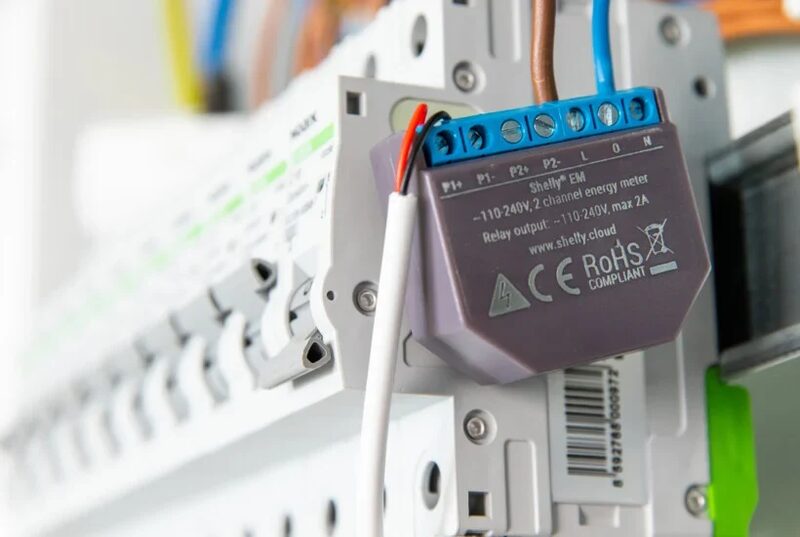
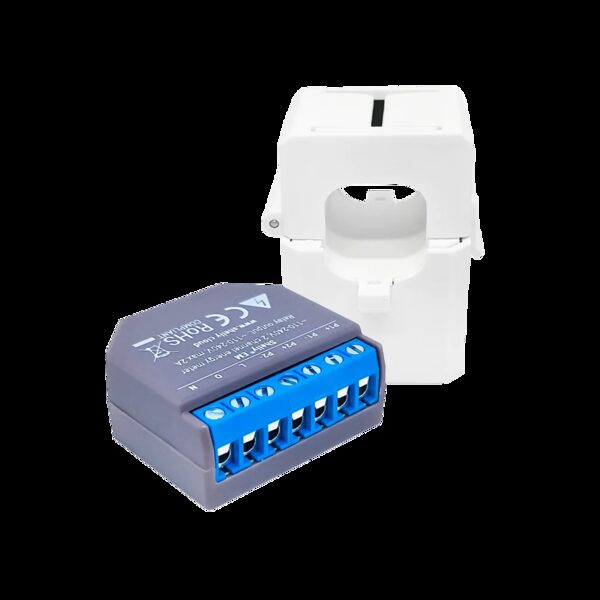
Shelly is a consumer and DIY brand whose energy devices sit inside the consumer unit rather than on a shelf. The Shelly EM is a Wi-Fi-operated energy meter that monitors two circuits on the same phase or individually, needs no hub, and connects directly to Wi-Fi1. It is typically used for energy saving, contactor control, power monitoring, solar panel monitoring, heavy load control and preventative monitoring, and it carries one contactor control output or a load up to 2A1.
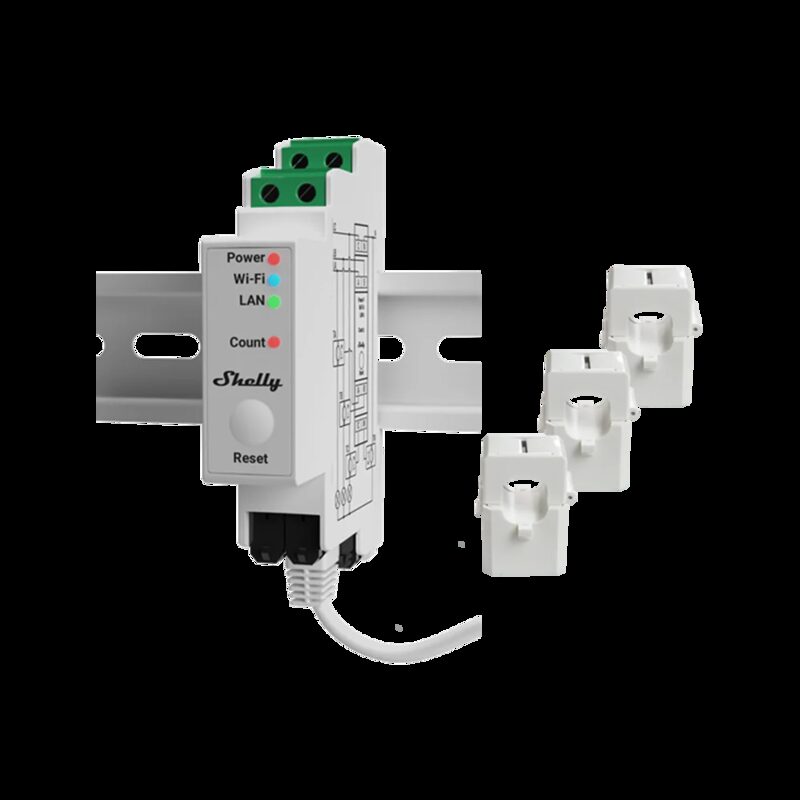
The range extends to three-phase metering. The Shelly Pro 3EM-120A measures 0 to 120A RMS via current transformers on each phase and the neutral, with four-quadrant measurement and an accuracy class of B for active energy, based on manufacturer testing against IEC 62053-212. The Shelly EM Gen4 adds Wi-Fi 6, Bluetooth, Zigbee and Matter, and the EM Mini Gen4 monitors connected devices up to a 16A load rating2.
What this buys a household is measurement and local switching, not a change of fuel. A Shelly meter tells a home what its circuits are drawing and can drive a contactor, but the supply still comes from the grid through a licensed supplier, and remote access still runs through the manufacturer's app and cloud. The sections below set out what each device measures, how it is installed, and where the dependence remains.
What Shelly devices do: relay control and energy monitoring in one
A Shelly energy device combines two functions that are usually separate. It measures current and voltage to report power and energy, and it can switch a circuit through a relay or contactor output. The Shelly EM carries one contactor control output, or a load up to 2A, alongside its metering channels1. That combination is what makes the family useful in a home energy management system: the same unit that reports a heavy load can also be wired to shed it.
The use cases the maker lists are energy saving, contactor control, power monitoring, solar panel monitoring, heavy load control and preventative monitoring1. Preventative monitoring is the least obvious of these. It means watching a circuit's consumption pattern over time so that a change, such as a pump drawing more than it used to, becomes visible before it becomes a failure.
Bluetooth on the Shelly EM is used only for device inclusion, allowing quick setup through the Shelly Smart Control app; Bluetooth control itself requires another Bluetooth device such as a Shelly BLU Button or Shelly BLU Motion1. That distinction matters when planning a system, because it means the meter is not itself a Bluetooth remote control.
For a household's energy independence, the relay function is the more consequential half. Monitoring tells a home what it is using; switching lets it act on that, whether by moving a load to a cheaper period or by limiting a circuit. Neither removes the grid connection. Both reduce the amount of guesswork in how a home uses the supply it already has.
The range: relays, the Shelly EM and the 3EM energy meters
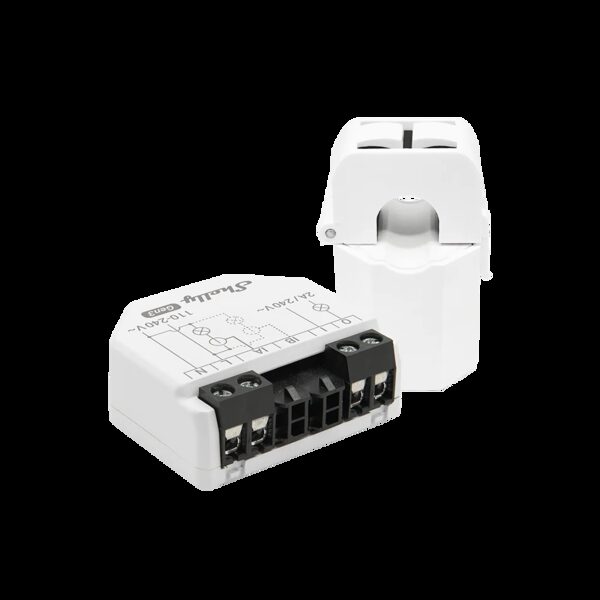
The family splits by phase count and by mounting. The Shelly EM is the single-phase entry point, with two channels and a contactor output1. The Shelly Pro EM-50 is a DIN rail mountable two-channel, single-phase energy meter with an integrated switch for contactor control2. The Pro 3EM v2 is a next generation DIN rail mountable single or three-phase energy meter with 3x120A three-phase current transformers2. The Shelly Pro 3EM 3CT 63 uses a combined 63A three-phase current transformer rating2. The Shelly 3EM-63T Gen3 is a three-phase energy meter with LAN, Wi-Fi and Bluetooth2.
| Model | Phases | Current rating | Mounting |
|---|---|---|---|
| Shelly EM | Single | 2 channel, 50A clamp variant2 | Unit with clamp CTs1 |
| Shelly EM Mini Gen4 | Single | up to 16A load rating2 | Compact2 |
| Shelly Pro EM-50 | Single | two channel, integrated switch2 | DIN rail2 |
| Shelly Pro 3EM v2 | Single or three | 3x120A CTs2 | DIN rail2 |
| Shelly Pro 3EM 3CT 63 | Single or three | combined 63A CT2 | DIN rail2 |
| Shelly 3EM-63T Gen3 | Three | 63T, LAN/Wi-Fi/Bluetooth2 | DIN rail2 |
The communications options widen across the range. The Shelly EM Gen4 features Wi-Fi 6, Bluetooth, Zigbee and Matter, and the EM Mini Gen4 supports Wi-Fi, Zigbee and Bluetooth2. Matter and Zigbee matter for households that want a device to join an existing hub rather than a manufacturer's app, a point developed below.
Choosing between them is mostly a question of the supply and the panel. A single-phase home with a spare DIN rail position and a desire for local automation is served by the Pro EM-50 or the EM. A three-phase property, more common in parts of Scotland and in older rural installations, needs one of the 3EM variants to measure all three phases rather than inferring a total from one.
Clamp-based monitoring: what the Shelly EM measures and how it fits the consumer unit
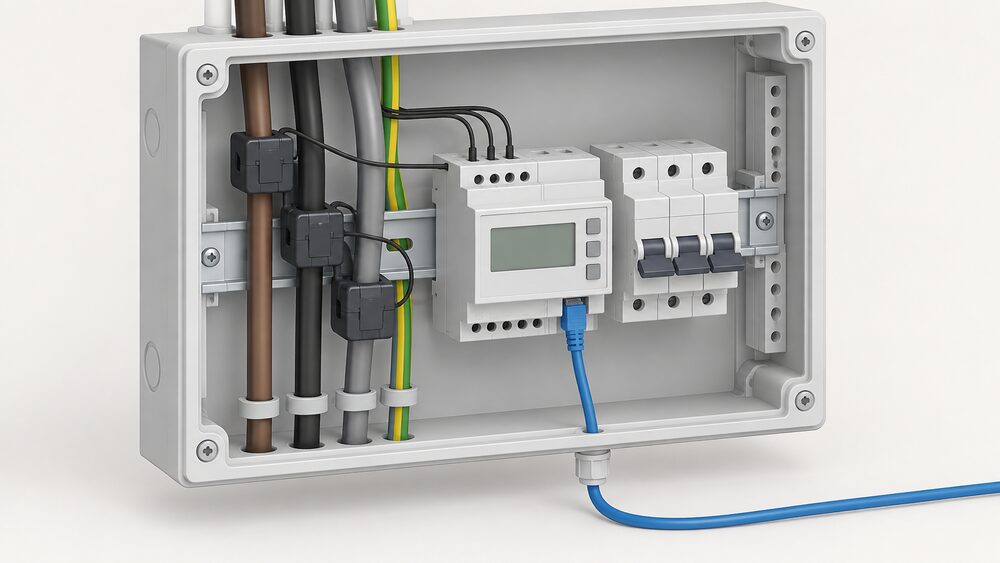
Clamp monitoring works by induction. A current transformer clips around a live conductor and produces a small current proportional to the current flowing in the cable, without breaking the circuit. The Shelly EM uses this method, with the metering unit wired to the supply and the clamps placed on the conductors being measured. The unit has two channels on a single phase, so it can monitor two circuits at once, either together or separately1.
The three-phase models scale the same principle. The Shelly Pro 3EM-120A has an ammeter range of 0 to 120A RMS via CT for each phase and the neutral, and uses four-quadrant measurement with multiple connection types2. Four-quadrant measurement means it can distinguish power flowing in either direction, which is what makes it useful on a circuit with solar generation or a battery, where current reverses.
The quantities the Pro 3EM-120A reports are active and apparent power, active and apparent energy, power factor, and fundamental active and fundamental reactive energy2. Power factor and reactive energy are the technical end of the list, but they are the figures that reveal whether a load is behaving as expected. The unit also gives optical pulse indication of energy usage and draws less than 3W itself2.
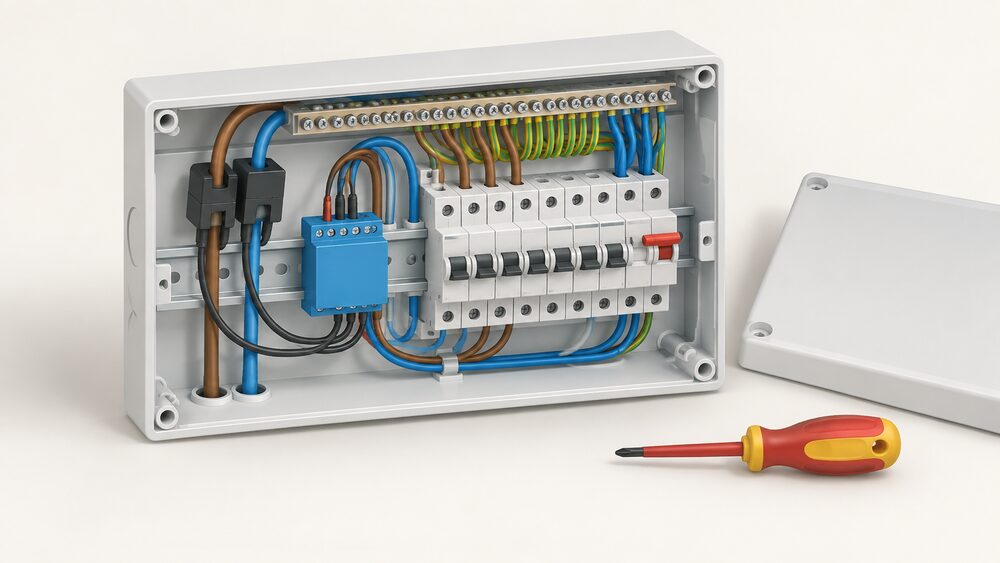
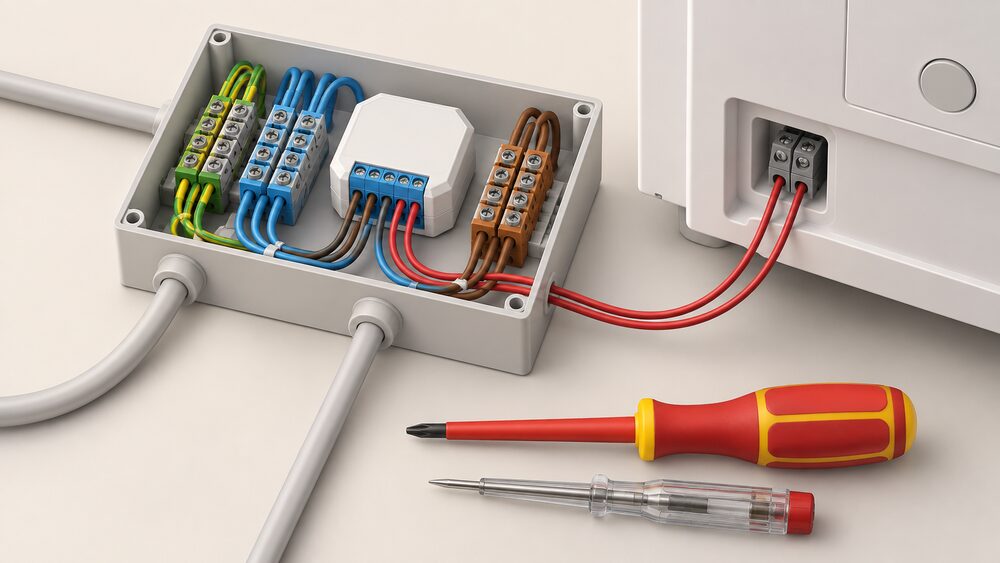
Fitting is the constraint. The clamps go around live conductors inside the consumer unit or a separate enclosure, and the metering unit needs a supply. Official guidance on connected electrical devices states that any necessary testing and modifications of the building's electrical system shall only be performed by professional electricians3. That places a clamp-based Shelly in the same category as any other consumer unit work, not in the plug-in category.
Accuracy and reporting: what the readings can and cannot tell you
The accuracy claim for the Pro 3EM-120A is Accuracy Class B for active energy, in compliance with IEC 62053-21 based on manufacturer testing2. That is a maker's figure from the maker's own testing, and it applies to active energy rather than to every quantity the device reports. It is a metering class, not a certification by an independent body, and it should be read as such.
What a Shelly meter cannot do is replace a smart meter. A home energy monitor can help track electricity use, but it does not replace a smart meter because it cannot automatically send meter readings to an energy supplier4. Energy monitors are not linked to energy accounts and do not send information to suppliers5. Billing therefore continues to run through the supplier's meter, and the Shelly's readings are for the household's own use.
The granularity has limits too. Smart meters measure household energy use only and do not know when individual appliances are turned on or off6. A circuit-level monitor narrows that down to the circuits it is clamped to, which is more useful than a whole-house total but still not appliance-level unless a circuit serves a single appliance. Some third-party home energy monitors may offer more detailed electricity insights, depending on the system4.
There is a wider caution about what any monitoring figure proves. Research comparing modelled energy use with monitoring data was commissioned to identify inaccuracies in Energy Performance Certificates and propose improvements, comparing modelled energy use and internal temperatures with monitored data from large-scale datasets7. The lesson for a household is that a model and a measurement are different things, and the measurement is the one tied to the actual building.
Local control without a cloud: what that means for energy independence
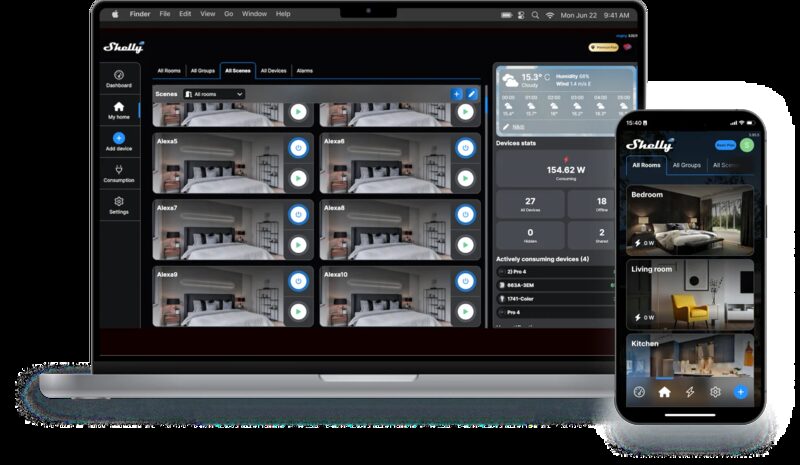
The Shelly EM needs no hub and connects directly to Wi-Fi1. That single design choice is the source of both its independence and its residual dependence. On the independent side, the device exposes MQTT, CoAP and a REST API, so a local server can read and control it without any manufacturer involvement1. Switching and metering continue to work on the local network.
On the dependent side, the Shelly EM stores its measurements in a free cloud for 365 days, and it has a 365 day built-in energy history1. Remote access runs through the Shelly Smart Control app. A household that wants history beyond the device's own memory, or control from outside the home, is relying on Shelly's servers and on a broadband connection.
The wider point about homegrown energy applies here. More homegrown energy means greater energy independence8. A monitoring and switching layer does not generate anything, but it is what allows a home to use its own generation and its own flexible loads well. Without measurement, a household cannot tell whether a battery is being cycled usefully or whether a heavy load is running at the wrong time.
The honest position is that a Shelly system makes a home better informed and better able to act, while leaving the supply itself unchanged. The grid connection, the licensed supplier and the meter all remain. What changes is the household's visibility and its ability to switch loads on its own terms, which is a real but partial form of independence.
Integration with Home Assistant and other hubs
The Shelly EM is compatible with Android, iOS, Amazon Alexa, Google Assistant, and home automation servers using MQTT, CoAP and REST API1. That list covers the two routes a household is likely to take: a voice assistant for convenience, and a local automation server for control. The API route is the one that keeps data in the home.
The newer hardware broadens the options. The Shelly EM Gen4 features Wi-Fi 6, Bluetooth, Zigbee and Matter, and the EM Mini Gen4 supports Wi-Fi, Zigbee and Bluetooth2. Matter and Zigbee allow the device to join a hub rather than requiring the manufacturer's app as the primary interface, which is the pattern most local-first households prefer.
A worked example of what a local controller can do comes from a monitored home in the Highlands. The installation covers monitoring of solar hot water input, monitoring of electrical usage, switching of the MHRV system for boost and away mode, MHRV inhibit in case of fire alarm, zone control of electric underfloor heating and air heating elements, towel radiator timer control, IP camera monitoring, security system monitoring, energy monitoring and weather station monitoring9. That is a single controller coordinating metering and switching across a whole house.
For a household, the practical question is which hub the meter talks to. A Shelly device that reports through MQTT to a local server keeps working when the internet is down and keeps its data on site. A device that reports only through a manufacturer's app does not. The choice of integration route, not the choice of meter, is what determines how much of the system survives a broadband outage.
Cost and what a whole-house setup needs
There is no published Shelly list price in the figures available here, so a Shelly installation is quoted rather than priced from a page. What the independent figures do show is the shape of the market around it. Whole-home energy monitors that hook up directly to the home power supply typically cost more than £60, and require a Wi-Fi connection and a smartphone to operate10. A standalone energy monitor costs around £30 to £40 and is easy to install yourself11.
That gap is the gap between a plug-in device and a wired one. The £30 to £40 monitor reads a whole-house signal from a sensor or a supplier's data. The £60-plus category is the one that connects to the supply, which is where clamp-based metering sits. A Shelly EM belongs in the second group, and its cost is set by the installer's quote for the consumer unit work rather than by a shelf price.
A whole-house setup needs more than one device in most homes. Whole-house monitoring takes one or two clamps on the incoming supply. Circuit-level monitoring takes additional channels, which is what the two-channel EM and the multi-channel Pro models provide1. Where a household wants switching as well as measurement, the contactor output on the EM or the integrated switch on the Pro EM-50 is the part that does the work1.
Support for monitoring as a category exists in some funded schemes. Environmental and energy monitoring systems and survey fees are eligible costs under the Optimised Retrofit Programme guidance12. A home assessment and whole house plan has been recorded at a capital cost band of £100 to £500 in retrofit feasibility work13. Those figures describe scheme-funded monitoring, not retail Shelly pricing, and they are included to show that monitoring is treated as a legitimate cost in retrofit programmes.
Installation: electrician work versus plug-in devices
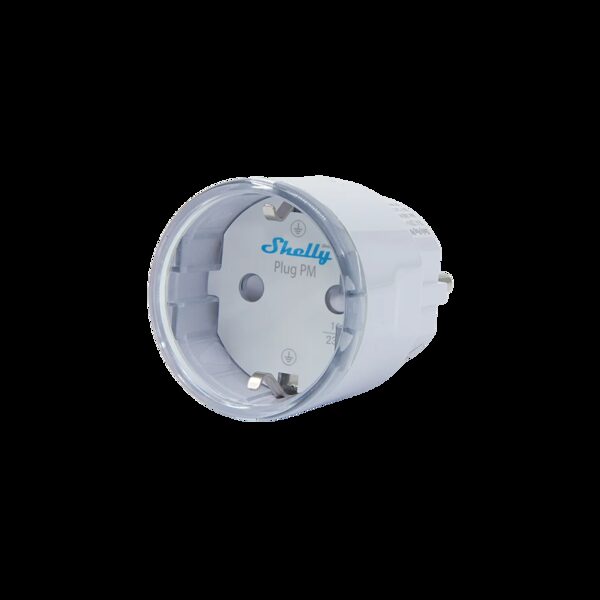
The dividing line is whether the device touches mains wiring inside the installation. A plug-in energy monitor works by plugging the monitor into the wall socket and the appliance into the monitor; for multiple devices, they are plugged into an extension lead and the lead into the monitor10. That category works with any appliance that has a three-pronged UK plug, including kettles, washing machines and electric ovens, and covers electricity only, not gas10.
A clamp-based Shelly is not in that category. Independent guidance notes that home energy monitors are usually bought privately at your own cost, and some may need to be set up by an electrician4. Guidance on solar energy monitors makes the same split: some can be installed yourself but for others you will need help from a qualified electrician14. Official guidance on connected electrical devices is firmer still, stating that any necessary testing and modifications of the building's electrical system shall only be performed by professional electricians3.
Where the work is minor, the rules recognise it. Installing cabling at extra low voltage for signalling, cabling or communication purposes, including telephone, fire alarm, burglar alarm and heating control systems, is classed as non-notifiable or minor work in Wales15. That covers control and communication wiring, not the mains connections a clamp meter needs. For work that does touch the installation, it is recommended to hire an installer who is registered with a competent person scheme, who can self-certify that the work meets the required standards16.
The comparison with a smart meter is worth stating plainly. Smart meters are installed by your energy supplier at no extra cost17. A Shelly is bought privately and installed at the household's own cost, and it does not replace the supplier's meter for billing. It adds a layer of measurement and control on top of a metering arrangement that already exists.
Where Shelly fits against a smart meter
A Shelly meter and a smart meter answer different questions. The smart meter measures the whole property for billing and sends readings to the supplier. A Shelly measures the circuits it is clamped to and reports to the household. A home energy monitor can help track electricity use, but it does not replace a smart meter because it cannot automatically send meter readings to an energy supplier4.
The two can coexist usefully. A smart meter gives near real-time data on energy use through an in-home display18. A Shelly gives circuit-level detail and the ability to switch. Where a household wants to know which circuit is responsible for a peak, the Shelly answers it; where it wants a billing record, the smart meter does.
There is a caution about expecting savings from the hardware alone. Simply buying and plugging in an energy monitor will not automatically reduce bills, and claims by a seller or manufacturer that a monitor saves energy and cuts bills should be treated with scepticism10. The saving comes from what the household does with the information, not from the device.
For a household weighing independence, the position is straightforward. A Shelly system keeps energy data in the home where it is read locally, and it can switch loads without asking a supplier. It does not change where the electricity comes from, does not replace the supplier's meter, and its remote features depend on broadband and the manufacturer's cloud. It is a visibility and control layer, and it should be judged as one.
Sources18 cited
- Shelly EM 50A Clamp, Shelly, 2026
- Energy Metering Collection, Shelly, 2026
- Plug-in solar interim product specification, GOV.UK, 2026
- Smart meters vs home energy monitors, Smart Energy GB, 2026
- How do you know if you have a smart meter, Smart DCC, 2026
- Smart meters are safe, Smart Energy GB, 2026
- Energy Performance Certificate accuracy research, GOV.UK, 2026
- Solar Energy Scotland manifesto, Solar Energy UK, 2026
- Energy Efficient Home, Highlands, Scotland, KNX Association, 2026
- Are energy monitors the best way to measure your power usage, Which?, 2026
- Energy monitors, Centre for Sustainable Energy, 2026
- Optimised Retrofit Programme 3 guidance, Welsh Government, 2022
- Catalysing net zero retrofit feasibility, CREDS, 2023
- Making the most of your solar PV panels, Centre for Sustainable Energy, 2026
- Building regulations: electrics, Welsh Government, 2026
- Plug-in solar electrical safety study, GOV.UK, 2026
- Do I already have one, Smart Energy GB, 2026
- How do smart meters save energy, Smart DCC, 2026
 Shelly Smart Switches for HeatingCan a Shelly switch make your existing heating smart without changing the boiler?
 Shelly Pro 3EM Three-Phase Energy MeterWhat is your whole house using, and how much solar are you sending back to the grid?
 Shell EnergyShell Energy left the UK domestic market when Octopus Energy took over its 1.3 million household accounts on 1 December 2023; what the transfer means for former customers, tariffs and independence.