
In this guide
Meross is a consumer smart home maker whose kit sits at the appliance end of home energy monitoring. Its smart plugs measure what a single device draws and can switch it on or off; its Smart Energy Monitor EM06P measures whole circuits instead, with six channels rated up to 120A each1. Neither replaces a smart meter. They answer a different question: not what the house is using in total, but which parts of it are using what.
The practical value is in the measurement. Independent guidance is that smart plugs monitor a device's current, voltage and energy consumption and report it in real time through a phone app2. A smart meter can help a household become aware of the appliances using the most electricity3, and smart meters support whole-home energy monitoring4. Meross kit sits between those two levels, giving circuit-level and plug-level detail that a whole-home figure cannot.
The dependence is worth stating as plainly as the benefit. Meross devices are controlled through the Meross app, and the features that make them useful, including automation rules, alerts and historical data, run through that app and the manufacturer's cloud. The EM06P offers a way out of that for technically minded households, with a native Home Assistant integration that allows data to be stored locally1. For everyone else, the readings live in an account.
What Meross makes for the smart home: plugs, sensors and monitoring
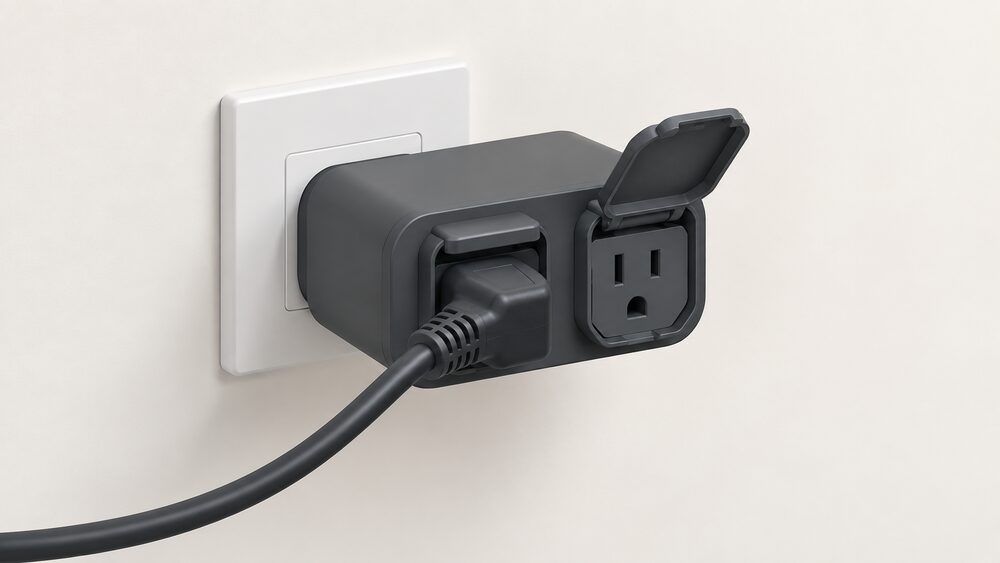
Meross's energy-relevant range divides into two kinds of product. The first is the smart plug, which sits between a socket and an appliance. Independent guidance describes what that class of device does: it monitors a device's current, voltage and energy consumption and provides real-time reports on energy consumption via a phone app2. The common features across smart plugs generally are remote control, scheduling, timers, voice control and energy monitoring4. Meross's own plugs follow that pattern, with the outdoor model adding two independently switchable outlets5.
The second is the energy monitor, which clamps around circuit conductors rather than plugging into anything. The EM06P supports monitoring of main circuits, EV chargers, solar panels, PV systems and other household appliances1. That is a different job from a plug: it watches the supply to a circuit, not the draw of one appliance.
Meross also makes sensors. Its homepage banner dated 18 September 2026 features a Bluetooth Sensor Kit with IP66 protection, and the company lists a smart presence sensor, the MS605, for which a Meross Hub is stated as expected to launch in 2026 Q3. Until that hub ships, automations built on that sensor in the Meross app are not available.
For a household, the split matters. Plugs are a five-minute job with no wiring. The EM06P is an electrical installation inside a consumer unit or around supply conductors, and that is not a DIY task. The monitoring page for home energy monitors sets out how clamp and circuit monitors differ from plug-level devices.
| Product | What it measures | Installation | App required |
|---|---|---|---|
| Matter Smart Outdoor Plug | Power consumption per outlet, balcony solar generation on the left outlet5 | Plug-in, no wiring5 | Yes, for metering and solar monitoring5 |
| Smart Energy Monitor EM06P | Six circuits, up to 120A each, including EV chargers and PV systems1 | Around supply conductors, by an electrician1 | Yes, for rules, alerts and history1 |
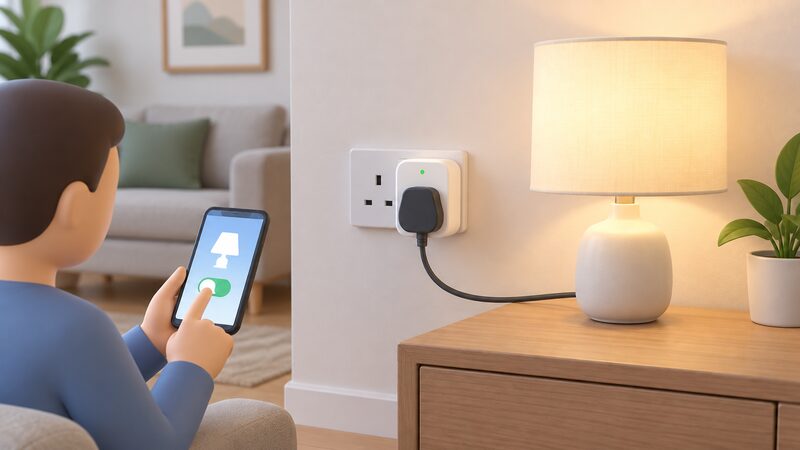
Matter Smart Wi-Fi Plug with Energy Monitor: one plug, several ecosystems
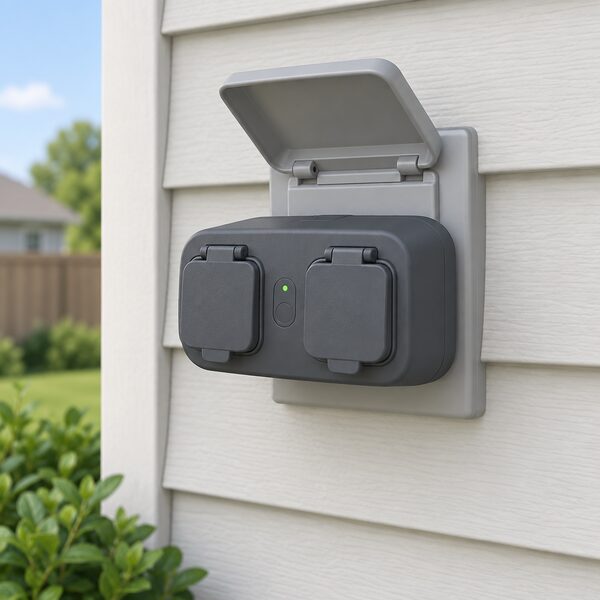
The Matter Smart Outdoor Plug, listed as the EU version, is the clearest example of what Meross's Matter support buys a household. It is compatible with Apple HomeKit, Alexa, Google Home and SmartThings5. Matter's multi-admin design is what allows a single device to be commissioned into more than one of those systems, so a household already using one ecosystem is not locked out of the plug, and a household using two can reach the same socket from either.
The hardware itself is a two-outlet outdoor plug. Both outlets can be turned on or off individually by app or by voice, or together with the power button5. It tracks power consumption for each outlet separately, which the maker links to saving energy and reducing electricity bills, and notes that the Meross app is required for that function5. It also monitors the power generation of a balcony solar system, on the left outlet only, again with the Meross app required5.
Two conditions come with the product. The maker's own instruction is to use the IPX4 plugs and insert them fully into the sockets, and to cover the outlets when not in use5. That is a weatherproofing rule rather than a performance claim, and it is the kind of instruction that decides whether an outdoor plug lasts.
The wider question of which protocols a home should standardise on is covered in Zigbee, Matter, Thread and KNX in home energy devices. Matter support is a compatibility statement, not a statement about what the plug can measure.
The EM06P energy monitor: automation rules built on power thresholds
The EM06P is the product in the range that does something a smart meter cannot. It is a six-channel meter, with each channel rated up to 120A, which the maker states can monitor twice as many circuits as traditional three-channel devices1. It supports monitoring of main circuits, EV chargers, solar panels, PV systems and other household appliances1.
The app side is where the automation lives. The maker states that households can create automation rules in the Meross app to control connected devices such as smart plugs, lights and more based on power thresholds1. It also supports setting power consumption thresholds for each circuit, with instant notifications when limits are exceeded1. So the monitor reads, the app decides, and a Meross plug or light does the switching. The rule is not stored in the monitor.
Data handling is more generous than many consumer devices. The app provides minute-, hourly- and daily-level data1, with daily data stored for up to five years1. The app also supports channel merging, CT calibration and power factor measurement1. For a household with solar, the maker states the monitor enables automatic utilisation of excess solar energy (zero export), increasing self-consumption1.
The local option is the notable one. The EM06P has a native Home Assistant integration, allowing data to be stored locally to ensure privacy1. That is the difference between a device that reports to a manufacturer's servers and one that reports to a household's own system. The trade-offs are set out in Local data access: Modbus, APIs and keeping energy data in the home and in App subscriptions and cloud dependence in energy devices.
Multi-admin support: running one plug in more than one smart home system
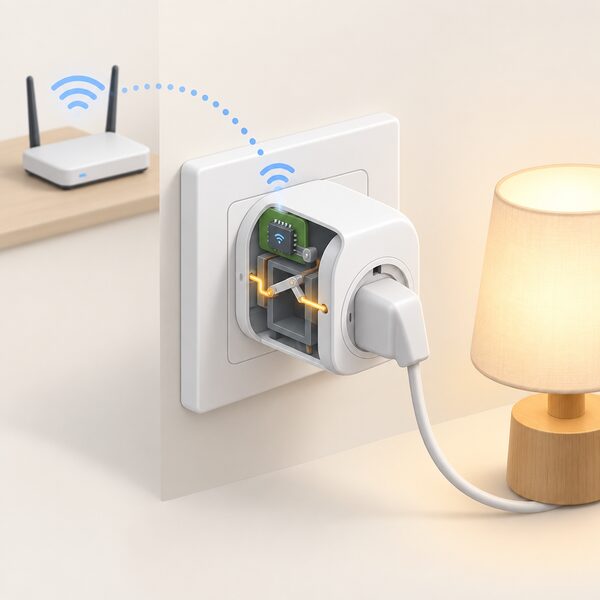
Multi-admin is the Matter feature that lets one device be shared across ecosystems rather than being claimed by a single one. The Meross outdoor plug's compatibility list, Apple HomeKit, Alexa, Google Home and SmartThings, is the practical expression of it5. A household can add the plug to one system for everyday voice control and to another for a different set of routines, and both reach the same hardware.
That is not the same as independence from the maker. Multi-admin shares control of the device; it does not remove the Meross app from the picture for the functions that need it. Per-outlet power tracking requires the Meross app5, and the balcony solar monitoring requires the Meross app5. So a household can control the plug from Apple Home and still need Meross's own software to see what it is measuring.
There is also a hub question. Independent guidance notes that some plugs need an additional hub installed for control outside of the home6. Most smart plugs connect to home Wi-Fi or a smart home hub, receive commands from an app or voice assistant, and then open or close an internal switch that controls whether electricity flows to the plugged-in device4. Whether a particular Meross plug needs a hub depends on the model and the ecosystem it is being added to.
For a household thinking about resilience, the useful distinction is between local control and remote control. Local control at the socket, and schedules held on the device, keep working when the internet is down. Remote control and app-based automation do not. The hub and controller options are compared in Smart home hubs and controllers for energy use.
Where to buy Meross in the UK and beyond
Meross sells through its own shop and through retail partners. The Matter Smart Outdoor Plug is listed on the Meross shop as in stock and ready to ship5. The EM06P page carried a stock notice of only 14 items left at the time it was read1, which is a stock position rather than a supply statement, and it will have changed.
The company maintains a where-to-buy page listing retail partners by country. Its image paths show Baltic retailers, K-Rauta in Estonia, KsenUkai in Latvia and Senukai in Lithuania, uploaded on 1 September 2026, so the listing is being extended beyond the markets Meross has historically served. UK buyers should treat that page as the current source for stockists rather than working from a fixed list.
Prices are not published in the material available here, so Meross kit should be treated as retailer-priced at the point of sale. The general cost picture for monitoring devices, including what a household might expect to pay across the category, is set out in What home energy monitoring and management costs.
One point of context for UK households: a smart meter is available at no extra charge to households and small businesses across England, Scotland and Wales7, and every home in England, Scotland and Wales will be offered the opportunity to upgrade by their energy supplier before the end of the rollout8. Meross kit is a paid addition on top of that, bought for the appliance-level and circuit-level detail a smart meter does not provide. Northern Ireland sits outside that rollout, so households there are working from a different starting point, covered in Smart meters in Northern Ireland.
What Meross kit means for household energy independence
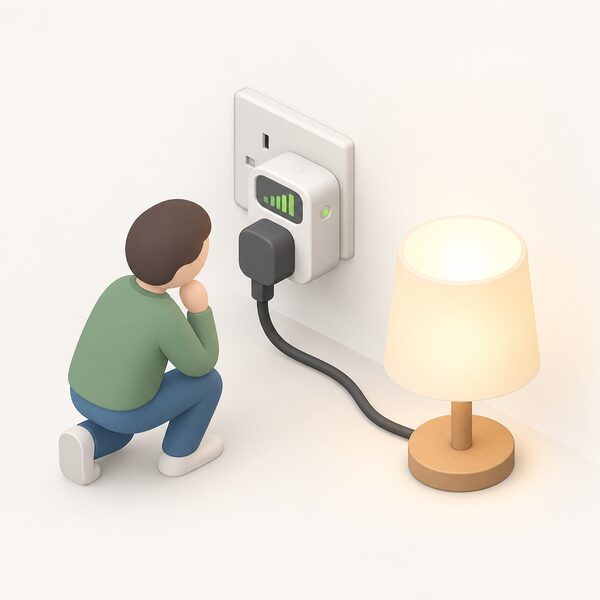
The honest answer is that Meross improves visibility and leaves dependence largely intact. What it gives a household is measurement at a resolution the meter cannot reach: per-appliance draw through a plug, and per-circuit draw through the EM06P, with minute-, hourly- and daily-level data and up to five years of daily history1. That is the raw material for deciding what to change.
What it does not give is independence from the grid, from a supplier, or from the manufacturer. The devices are controlled through the Meross app2, and the automation, alerts and history that make the EM06P useful run through it. The one route out is the native Home Assistant integration, which allows data to be stored locally1. A household that takes that route keeps its own data; a household that does not is relying on a company's servers and account.
There is a wider policy direction here that Meross kit sits inside. The Smart Secure Electricity Systems Programme aims to unlock domestic-scale flexibility through the use of energy smart appliances9, and an energy smart appliance is defined in official guidance as one, such as an electric vehicle charging point or a heat pump, capable of increasing or reducing its electricity demand in response to signals received remotely from a third party10. Consumer plugs and monitors are a step short of that: they measure and switch, but they are not yet the load-controlled appliances the programme is built around.
For a household, the practical position is this. Meross kit tells you what your appliances and circuits are doing, and it can act on a threshold you set. It does not generate anything, does not store anything, and does not reduce what you draw from the grid by itself. The savings come from what a household does with the readings, and the dependence that remains is on the app, the account and the internet connection behind them.
Sources10 cited
- Smart Energy Monitor EM06P, Meross, 2026-09-20
- Smart plugs advice, Centre for Sustainable Energy, 2025-10
- Standby power: the hidden costs of vampire devices, NICEIC, 2026-01-28
- What are smart plugs and do energy saving plugs work, Smart Energy GB, 2026-08-19
- Matter Smart Outdoor Plug MOP320MA, Meross, 2026-09-20
- Getting smarter with energy, Centre for Sustainable Energy, 2026-07
- How to get a smart meter, Smart DCC, 2026
- Get a smart meter, Smart Energy GB, 2026-08-10
- RECC consumer guide on demand-side response, RECC, 2018-10-23
- Energy smart appliances and load control, House of Commons Library, 2026-09-20
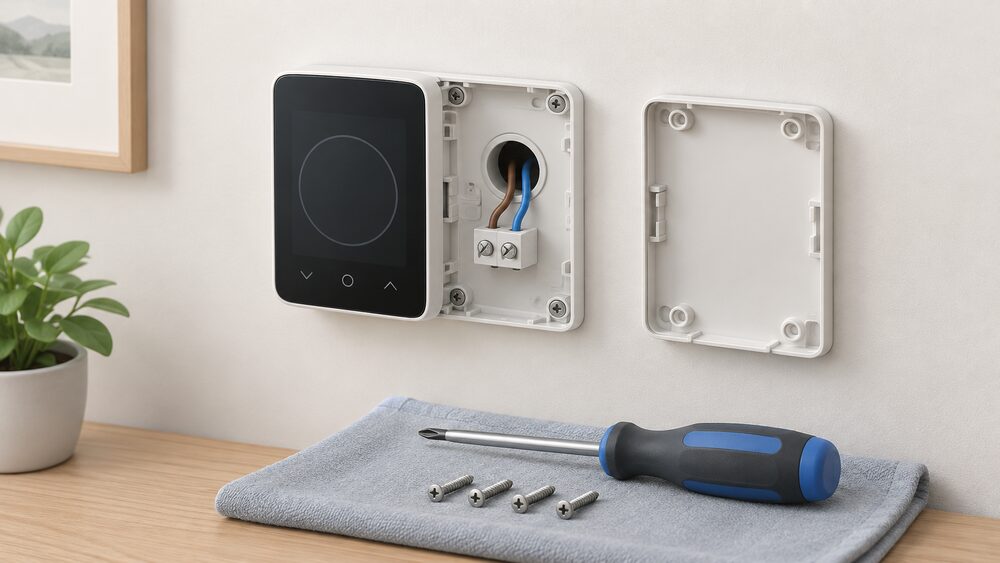 Meross Smart ThermostatsWhich Meross thermostat works with a gas boiler or electric heating, and which one suits a heat pump?