
In this guide
Shell Energy no longer supplies gas or electricity to UK households. Shell announced in summer 2023 that it would sell its domestic energy business in the UK to Octopus and exit the market, and the sale completed on 1 December 20231. Octopus Energy took on 1.3 million customers from Shell in the process2. Anyone searching for Shell Energy today is looking for an account that now sits with Octopus, or for a brand that has left household supply altogether.
The scale of the transfer matters. Octopus Energy is now the largest supplier of electricity in Great Britain and the second-largest for gas, after British Gas2. Ofgem's own market reporting puts Octopus as the largest electricity supplier and second largest gas supplier in England, Scotland and Wales, within a domestic market where six large companies hold 91% of customers3. A former Shell Energy household did not move to a small challenger; it moved into the largest electricity book in the country.
What follows is the record of how Shell Energy got here, who ended up inside its customer base, what its service record looked like, what its tariffs cost, what its renewable claim actually rested on, and what holding a former Shell Energy account means for a household's energy independence.
Shell Energy has left the UK domestic market
The exit was a sale, not a collapse. Shell announced in the summer of 2023 that it would sell its domestic energy business in the UK to Octopus and leave the market, and that process was completed on 1 December 20231. The distinction matters for a household: customers were transferred to a continuing supplier rather than being moved through the supplier of last resort process that follows a failure.
The receiving company was already large and has grown since. Octopus Energy is the number one electricity supplier in the UK and the second-biggest gas supplier behind British Gas4. It took on customers from a range of other suppliers who had either ceased trading, like Bulb, or exited the market voluntarily, such as Shell Energy4. The Bulb transfer alone brought 1.5 million customers, alongside the 1.3 million from Shell2.
For a former Shell Energy household, the practical position is that the account, the meter point and the supply relationship continue, under a different supplier's systems, tariffs and service operation. There is no separate Shell Energy household entity to deal with. The brand survives in other parts of Shell's business, but not as a domestic energy supplier.

From First Utility to Shell Energy to Octopus
Shell Energy did not begin as Shell. First Utility, one of the more prominent challenger energy brands, was acquired by Shell and renamed Shell Energy1. That is the origin of the brand in household supply: an existing challenger supplier with its own customer base and systems, bought by an oil and gas major and rebadged.
The rebranding gave Shell a domestic retail presence at a time when challengers were taking share from the established suppliers. It also placed Shell Energy inside a group whose primary business is upstream production, refining and fuel retail, not household billing. When Shell decided to leave domestic supply, the customer book was an asset to sell rather than an operation to wind down.
Octopus, by contrast, was founded in 2015 and now accounts for almost a quarter of the domestic electricity market7. It also operates the Co-Op Energy brand, which scores the same as Octopus in customer surveys8. The company claims nearly one million people switched to Octopus during 20241.
The sequence, then, runs from challenger brand, to oil major's retail arm, to part of the largest electricity supplier in Great Britain. Each step changed who set the tariffs and who handled the calls, without changing the wires or pipes into the home.
Who ended up as a Shell Energy customer
Shell Energy's customer base was substantially built from other suppliers' failures. Between July 2021 and July 2022, 29 energy suppliers failed as wholesale prices rose and financial resilience proved inadequate across much of the market5. Shell Energy absorbed several of them.
| Failed supplier | Customers taken on by Shell | Date |
|---|---|---|
| Green Supplier Limited | roughly 255,000 domestic | 27 September 20214 |
| Pure Planet | roughly 235,000 | 13 October 20214 |
| Colorado Energy | roughly 15,000 | 13 October 20214 |
| Daligas | roughly 9,000 domestic and non-domestic | 17 October 20214 |
| GOTO Energy | roughly 22,000 domestic | 21 October 20214 |
Shell also took over customers including GoTo Energy and Bluegreen Energy in October 20214.
That history explains why a household may have arrived at Shell Energy without choosing it. A customer of Pure Planet or Green Supplier Limited did not switch to Shell; the account was moved. The same pattern later repeated in reverse, when Shell's own book moved to Octopus.
Shell Energy was also assessed under Ofgem's review of how suppliers support customers in vulnerable situations. It was placed in a group of suppliers identified with moderate weaknesses, alongside E (Gas & Electricity), Ecotricity and others9. That finding sits in the record of the period before the sale.
Customer service and ratings before the transfer

Shell Energy's service record has to be read with care, because the survey data predates the transfer. Ofgem's supplier-level satisfaction research took place before Shell Energy Retail was taken over by Octopus Energy, and Shell Energy Retail is reported as a separate entity6. Any score attached to the Shell Energy name therefore describes a company that no longer exists in household supply.
The wider market context is more positive than the supplier-level picture. Ofgem's State of the Energy Market reporting records that 81% of customers are satisfied with their energy supplier, the highest level ever recorded in that survey3. A separate Ofgem survey found an increase in overall customer service satisfaction to 71%, from 66% in January and February 202410. In the July and August 2025 findings, 40% of domestic consumers reported being very satisfied with their supplier's customer service11.
Independent survey work gives a spread across brands. Which? customer scores include Good Energy at 81%, Octopus Energy at 79%, E (Gas & Electricity) at 78%, and Sainsbury's Energy at 76%6. A separate Which? dataset lists Good Energy at 81%, So Energy at 76% and a third figure of 44% in the same row7. Ofgem research also notes that most customers already rate their supplier at 3 stars or higher, at 87%12.
For a former Shell Energy customer, the relevant question is not the old score but the current supplier's performance. Complaints that cannot be resolved with the supplier can go to the Energy Ombudsman, which can be contacted at enquiry@energyombudsman.org13. The Ombudsman also handles disputes about debt and payment arrangements, including cases where a supplier failed to review a customer's changing financial circumstances under an agreed 12-month debt payment plan14.
Tariffs and pricing: the cap benchmarks that now apply
There is no Shell Energy tariff to quote, because the supplier has left the market. What can be given is the regulated backdrop against which any former Shell Energy household now pays, and the regional spread of the cap.
Ofgem's benchmark maximum charges for the charge restriction period show annual electricity figures that vary by region and by metering arrangement. For single-rate metering at 3,100 kWh, the North West figure is £977.30 per annum, and South Wales is £1,005.10 per annum15. For multi-register metering at 4,200 kWh, the Midlands figure is £1,130.71, Eastern is £1,202.99, the South East is £1,229.07, and North Wales and Mersey is £1,269.4815.
One table gives £977.30 per annum at 3,100 kWh on single-rate metering, while the same source carries a second electricity table showing £1,196.71 for that region15. Both figures come from the same official publication and the difference is not resolved there, so both are given.
The price cap levels for 1 October to 31 December 2025 give a further regional example. For North Wales and Mersey, the cap level is £243.15 at nil consumption and £1,061.64 at 3,100 kWh on single-rate metering, or £240.90 at nil consumption and £1,297.15 at 4,200 kWh on multi-register metering, on the Other Payment Method16.
| Region | Metering | Annual figure |
|---|---|---|
| North West | Single-rate, 3,100 kWh | £977.3015 |
| South Wales | Single-rate, 3,100 kWh | £1,005.1015 |
| Midlands | Multi-register, 4,200 kWh | £1,130.7115 |
| Eastern | Multi-register, 4,200 kWh | £1,202.9915 |
| South East | Multi-register, 4,200 kWh | £1,229.0715 |
| North Wales and Mersey | Multi-register, 4,200 kWh | £1,269.4815 |
These are cap benchmarks, not a supplier's tariff. A household's actual bill depends on consumption, region, payment method and the tariff it is on. Wider context on how supplier pricing works sits in energy supplier profits and margins.
100% renewable electricity backed by REGO certificates

Shell Energy sold renewable electricity tariffs, and the mechanism behind that label is worth understanding because it applies across the market. A 100% renewable electricity tariff requires a supplier to buy enough REGO certificates to match what customers on the tariff use over a year8. REGO certificates verify that a specified amount of electricity was generated from a renewable source17.
The certificate system works at a defined scale: one REGO certificate is issued for every megawatt hour of renewable electricity generated18. Crucially, the certificates can be sold separately from the renewable energy itself and assigned by other suppliers to units of energy they sell to the public18. That means a supplier can hold certificates matching its customers' consumption without buying the underlying electricity directly from a renewable generator.
"REGO (Renewable Energy Guarantee of Origin) certificates verify that a specified amount of electricity was generated fro"
Independent guidance identifies the suppliers that go further by buying renewable electricity and REGO certificates directly from renewable generators, providing significantly greater support for renewables development. The most significant of these are Good Energy, 100Green, Octopus and Ecotricity18. Good Energy's tariffs are powered by 100% renewable energy generated in the UK by independent producers17, and all but one of So Energy's plans promise 100% renewable electricity17.
The distinction is between certificate matching and direct purchase. Both satisfy the 100% renewable claim; only the second puts money directly in front of a generator. More on what these labels mean in practice is at green energy tariffs and fuel mix disclosure.
What owning a former Shell Energy account means for energy independence
A former Shell Energy account now sits with Octopus Energy, which means the household's supply relationship is with a large, continuing supplier rather than a brand that has exited. That is a more stable position than a failure, but it is still dependence: on a supplier's billing systems, on its tariff decisions, and on the grid and gas network that deliver the energy.
The dependence is not only commercial. A household on a standard variable or fixed tariff has no control over the wholesale price it reflects, and the regional cap figures show how much the same consumption costs in different parts of the country15. The North West single-rate figure of £977.30 and the North Wales and Mersey multi-register figure of £1,269.48 describe the same kind of household in different places.
Reducing that dependence means changing what the home uses, not only who bills it. Energy Company Obligation 4 eligibility, for example, requires an owner-occupied house to have an energy efficiency rating of D, E, F or G19. ECO Flexible eligibility routes are administered by local authorities, with schemes published by councils including Breckland20, Ceredigion21 and Torridge22. In Northern Ireland, advice runs through a separate energy advice tool23.
For households that generate their own electricity, export arrangements add a second relationship. Octopus export tariffs including Outgoing Octopus, Octopus SEG Tariff and Octopus Flux carry no fixed end date24. Solar generation itself is 100% renewable and free at the point of use13. The Energy Saving Trust, an independent organisation, provides advice in this area23.
The honest summary is that a former Shell Energy household has gained a stable supplier and lost nothing in supply terms, but has gained no independence either. The account moved; the dependence on a supplier, a grid and a price set elsewhere did not. The routes that change that sit in retrofit, generation and storage, not in the choice of billing brand. Related reading: energy suppliers and energy independence, who took over Shell Energy customers, and Octopus Energy vs British Gas.
Sources24 cited
- Big Six Energy Suppliers Guide, Uswitch, 2026-07-17
- Energy Statistics, Uswitch, 2026-01-19
- State of the Energy Market Report, Ofgem, 2025-04-15
- Which Energy Suppliers Are British?, Uswitch, 2026-06-26
- Public Accounts Committee: Energy Bills Support, UK Parliament, 2022-07
- Customers' Satisfaction With Their Supplier: Supplier Level Findings, Ofgem, 2024-03
- Which? Energy Survey Results, Which?, 2026-01-19
- Differences Between Green Energy Suppliers, Which?, 2026-03
- Ofgem Completes Review of How Suppliers Support Customers in Vulnerable Situations, Ofgem, 2022-11-22
- Energy Satisfaction Survey, Wave 19, Ofgem, 2024-07
- Energy Consumer Satisfaction Survey Findings, July to August 2025, Ofgem, 2025
- Understanding Consumers' Energy Tariff Choices, Ofgem, 2025-07
- Raise a Dispute: Energy Swap, Energy Ombudsman, 2026-09-17
- Case Studies: Debt and Payment, Energy Ombudsman, 2026-09-17
- Benchmark Maximum Charges for the Charge Restriction Period 13a, Ofgem, 2025
- Energy Price Cap Levels, 1 October to 31 December 2025, Ofgem, 2025
- Green Energy, Uswitch, 2026-09-04
- Green Electricity Tariffs, Centre for Sustainable Energy, 2026-07
- ECO 4 and ECO Flexible Eligibility, Breckland Council, 2026-09-17
- ECO Flexible Funding, Ceredigion County Council, 2026-09-17
- Energy Efficiency Advice, Torridge District Council, 2026-09-17
- Energy Advice Tool, Northern Ireland Housing Executive, 2026-09-17
- Smart Export Guarantee, Solar Energy UK, 2026-05-12
- Solar Panels, Oxfordshire County Council, 2026-09-17
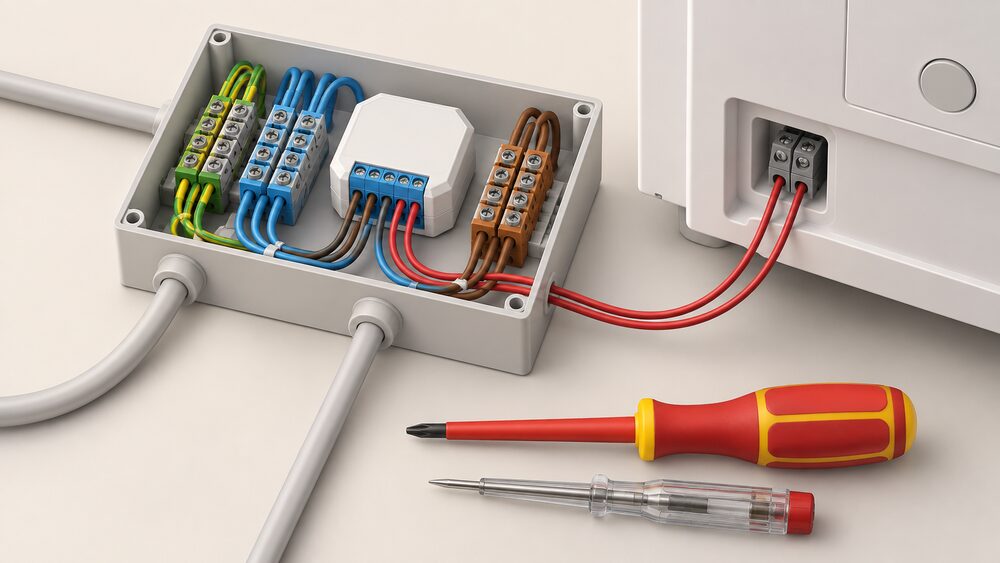 Shelly Smart Switches for HeatingCan a Shelly switch make your existing heating smart without changing the boiler?
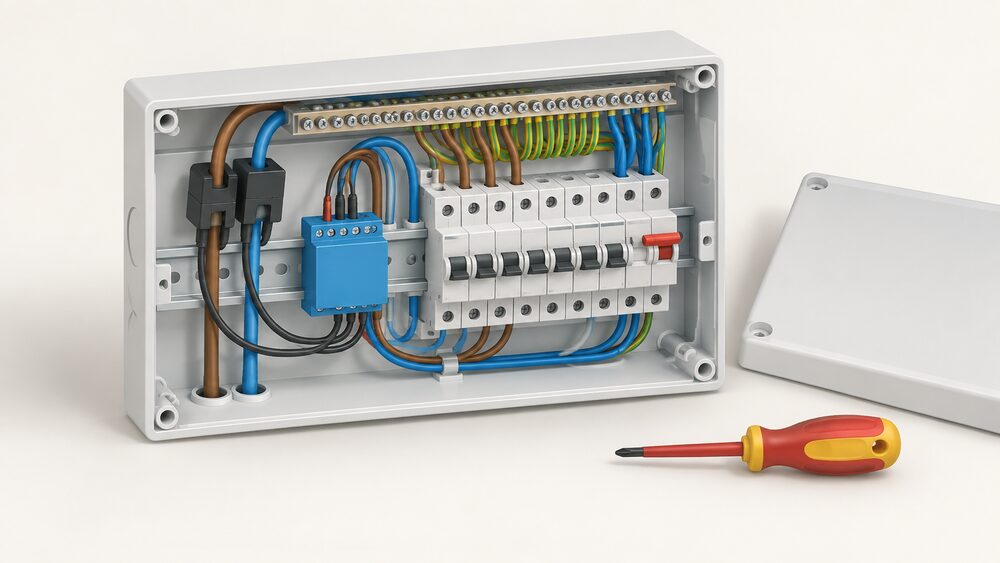 Shelly Smart Relays and Energy Monitoring DevicesShelly devices fit inside your fuse box to track how much electricity your home uses.
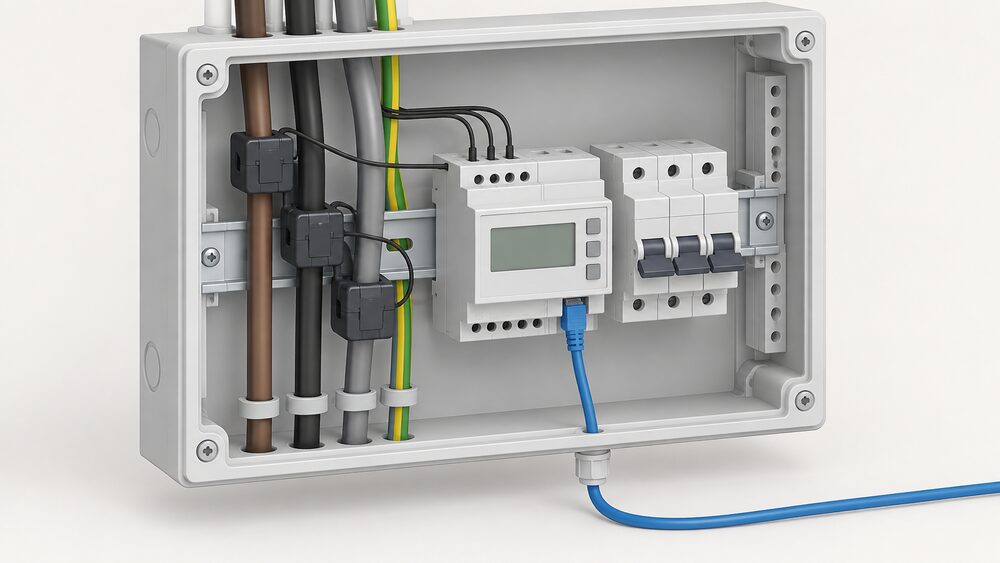 Shelly Pro 3EM Three-Phase Energy MeterWhat is your whole house using, and how much solar are you sending back to the grid?