In this guide
So Energy is a British energy supplier set up in 2015 that merged with ESB Energy in 2021 and now has around 300,000 customers, selling fixed tariffs that are 100% renewable1. It is a challenger rather than one of the large legacy suppliers, and it sells two things to households: gas and electricity supply, and solar panels with battery storage installed on the home.
The supply side is straightforward. All but one of So Energy's plans promise 100% renewable electricity2. The company holds a mandatory Feed-in Tariff licence and a mandatory Smart Export Guarantee licence, and it appears in the Energy Ombudsman scheme3. On the installation side, independent guidance dated 3 August 2026 lists So Energy solar panels starting from £4,972 and solar with battery storage from £7,5185, with a 5-year workmanship warranty and a 20p per kWh export rate6.
For a household thinking about energy independence, the distinction matters. A supplier changes who bills you and what fuel mix sits behind the tariff. It does not remove the grid connection, the standing charge or the meter. What So Energy adds beyond supply is the ability to generate and export electricity, which is the part of independence a household can actually own.
What So Energy offers UK households
So Energy's core product is a fixed tariff that the company describes as 100% renewable1. Independent guidance confirms that all but one of its plans promise 100% renewable electricity, which means the exception is worth checking on the specific tariff a household is offered rather than assuming the whole book is the same2. Renewable electricity on a tariff is matched by certificates rather than delivered as a physically separate supply, so the grid connection and the network charges are unchanged.
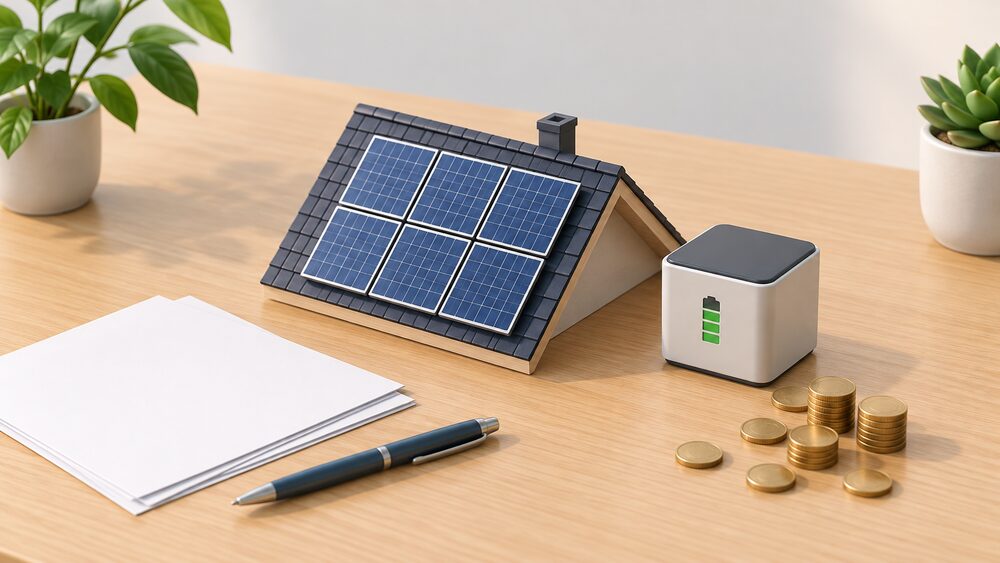
Alongside supply, So Energy sells solar photovoltaic systems and battery storage. Independent guidance dated 3 August 2026 records solar panels starting from £4,972 and solar with battery storage from £7,5185. The company states that it installs trusted brands such as Duracell6. It also offers 0% finance on solar panels and battery storage, which changes the cash-flow position for a household paying up front6.
The company's regulatory footprint is wider than supply alone. So Energy Trading Ltd is listed as a mandatory Feed-in Tariff licensee3, and So Energy Trading Limited appears as a mandatory Smart Export Guarantee licensee for the sixth SEG year, running from 1 April 2025 to 31 March 20264. Those two licences are what allow it to make export payments to generating households.
On vulnerability and support, So Energy is one of two suppliers named in Ofgem's consumer vulnerability progress report as taking what the regulator describes as a deliberate approach to innovation, where new tools are intended to support staff decision-making and improve visibility of need, rather than acting as standalone solutions or replacing existing support channels8. That is a description of method, not a performance measure.
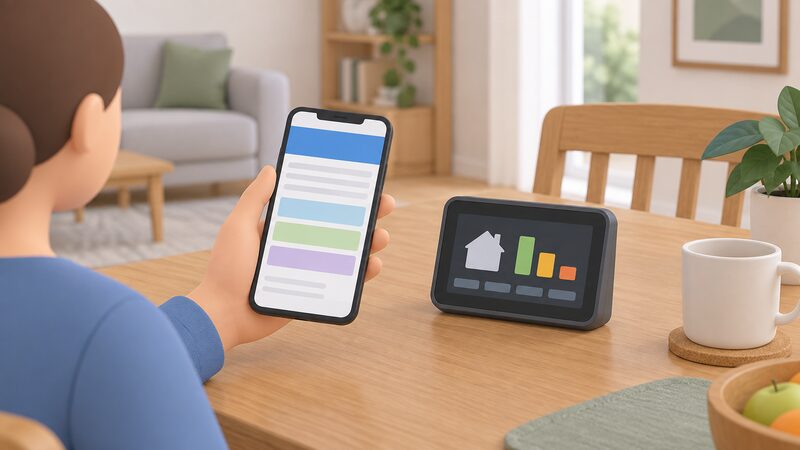
Specifications: what the solar packages include
The published specification for So Energy's installation work is thin compared with what a boiler or heat pump maker publishes, and the figures that exist are starting prices rather than a technical datasheet. Independent guidance dated 3 August 2026 gives solar panels from £4,972 and solar with battery storage from £7,5185. The company states that it installs trusted brands such as Duracell6.
| Item | Published figure | Source basis |
|---|---|---|
| Solar panels, starting price | £4,972 | Independent guidance, 3 August 20265 |
| Solar plus battery, starting price | £7,518 | Independent guidance, 3 August 20265 |
| Workmanship warranty | 5 years | Company product page, 17 March 20266 |
| Export rate | 20p per kWh | Company product page, 17 March 20266 |
| Finance | 0% available on solar and battery | Company product page, 17 March 20266 |
| Brands installed | Duracell named | Company product page, 17 March 20266 |
Two things are absent from that table and matter in practice: panel capacity in kilowatts and battery capacity in kilowatt hours. Neither is published in the figures available, so a household comparing systems is comparing starting prices rather than like-for-like hardware. Prices for a specific roof are quoted after a survey, and the starting figures should be read as a floor rather than an expectation.
The export rate is the more consequential number for a generating household. So Energy offers a 20p per kWh Smart Export Guarantee rate, and customers who buy solar panels from the company are eligible for its higher SEG rate6. That link between buying hardware and receiving a better export rate is a commercial tie rather than a regulatory one: the SEG licence obliges a supplier to make an offer, not to make its best offer available to everyone4.
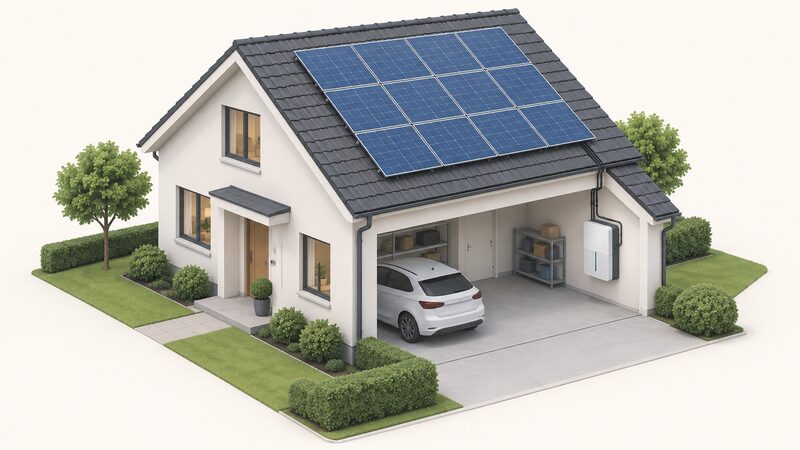
What the warranty covers, and what it does not
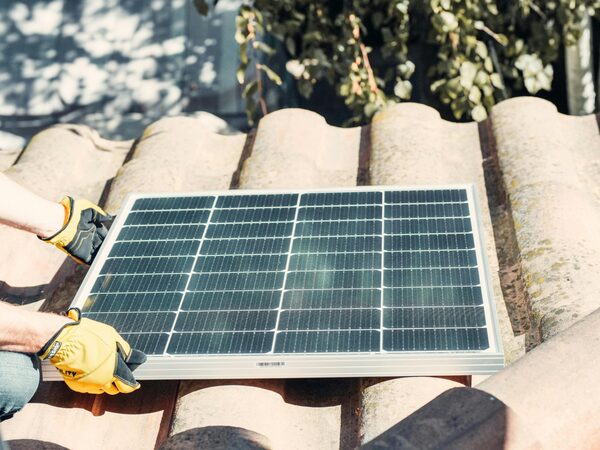
So Energy states that it backs its work with a 5-year workmanship warranty6. That is a statement about the installation itself: the quality of the fitting, the roof work, the wiring and the commissioning. It is not a statement about the hardware.
The distinction matters because a solar installation carries at least three separate warranties. The workmanship term covers the installer's own work. The panels, the inverter and the battery each carry a manufacturer's warranty, which is a separate contract with a separate company and a separate duration. None of those manufacturer terms appears in the figures available for So Energy, so a household cannot compare total cover from the published material alone.
There is a second limit worth stating plainly. A workmanship warranty depends on the company continuing to trade and honour it. So Energy is an active supplier with a live SEG licence and a live FIT licence3, and it appears in the Energy Ombudsman scheme, which gives a household a route to dispute resolution if something goes wrong. That is a stronger position than a failed supplier's paperwork, but it is still a company's promise rather than a statutory protection.
For households in Scotland, Wales and Northern Ireland, consumer protection and advice routes differ, and the installation standards framework that governs rooftop solar is set out separately by the certification body9. The warranty terms themselves do not vary by nation.
What So Energy costs
There is no published So Energy unit rate or standing charge in the figures available, so a household cannot compare tariffs from this page alone. What is published is the installation pricing: solar panels from £4,972 and solar with battery storage from £7,518, both dated 3 August 20265. Those are starting figures, and the company offers 0% finance on solar panels and battery storage6.
On the supply side, the cost that matters most to a household is not the headline rate but what happens when something goes wrong. Ofgem published a decision on 9 May 2025 recording 1,558 So Energy customers affected by price cap compliance failures on restricted meters, with total refunds of £266,041.1611. That is an official finding, and it relates specifically to customers on restricted meters rather than to billing across the whole customer base.
For households in Northern Ireland, the market is separate and the advice route runs through the Northern Ireland Housing Executive's energy advice tool rather than through the Great Britain supplier framework12. So Energy's supply business is a Great Britain operation.
Company status and how customers rate it
So Energy is an active supplier. It holds a mandatory Feed-in Tariff licence3 and a mandatory Smart Export Guarantee licence for the sixth SEG year, from 1 April 2025 to 31 March 20264. It appears in the Energy Ombudsman scheme, which is the dispute route for household complaints that a supplier has not resolved.
The independent assessment is mixed and worth reading in its parts rather than as a single number. Which? recorded a total score of 60% for So Energy, made up of a 76% customer survey score and a 44% assessment score, from a survey of 108 So Energy customers carried out in September and October 2025, alongside a request for information and desk research in September to November 20257. That placed the company joint fifth in a ranking of 17 energy companies, as rated by 11,945 members of the public in the annual Which? customer survey7.
The component scores show where the strengths and weaknesses sit. Complaints scored 5 out of 15, contacting the supplier 4 out of 12, help for customers who need it 7 out of 10, smart meters 2 out of 10 and switching 3 out of 57. In the star ratings, ease of contacting and clarity of statements both scored four of five stars, while customer service overall, usefulness of communications about energy costs, accuracy of payments and value for money each scored three of five7.
Separately, So Energy received a special commendation for overall improvement in 2026, after raising its scores across all ten surveyed categories, and the award was given on the basis that it had the largest improvement across all categories from 2025 to 2026 among suppliers qualifying in both years13. A supplier improving from a low base and a supplier performing well are different things, and both figures are needed to read the position.
What So Energy means for household energy independence
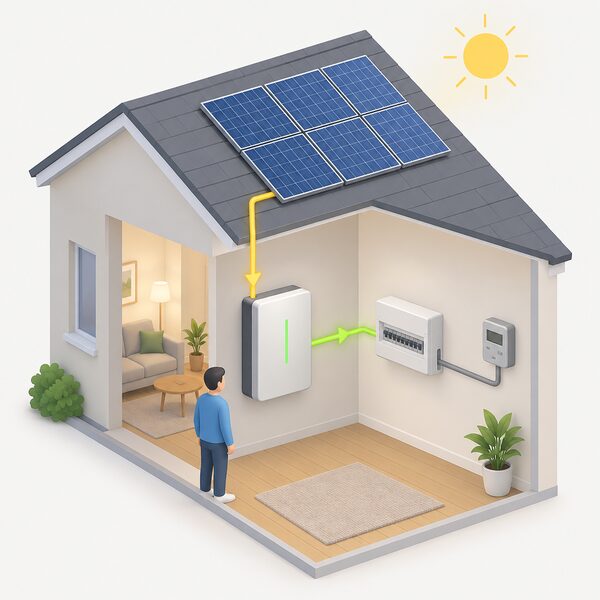
The honest answer is that a supply contract does not deliver independence. Energy, as defined in legislation, covers natural gas, petroleum in any form, any other substance used as fuel, and electricity14. A household buying those from a supplier remains dependent on the grid, on the network operator, on wholesale markets and on the supplier's own continued trading. Switching to a renewable tariff changes the certificates behind the electricity, not the physical dependence.
What does move the needle is generation. Solar energy uses the sun's free energy to provide electricity through photovoltaic panels15, and the measure that matters is self-sufficiency: the percentage of electricity consumed in the property over a year that is met by behind-the-meter solar or electrical energy storage10. A narrower definition, grid electricity independence, is the fraction of electricity consumed in the property that is met by self-consumed electricity10. Both are about the household's own generation, not about who sends the bill.
So Energy's relevance to that is twofold. It sells the hardware, with solar from £4,972 and solar and battery from £7,5185, and it pays for exports at a stated 20p per kWh SEG rate, with a higher rate for customers who buy panels from it6. The battery is the part that raises self-consumption, because it stores midday generation for evening use rather than exporting it.
The dependence that remains is real. The grid connection stays, the standing charge stays, the meter stays, and the export payment depends on the supplier's tariff terms and on its SEG licence continuing4. For households on low incomes, the separate route to efficiency improvements is the Energy Company Obligation, which helps to make homes more energy efficient by installing improvements free of charge to eligible households16. In Scotland, the strategic approach to fuel poverty sets out a different policy framework again17, and in Northern Ireland the advice route is separate12. Where a household stops using energy entirely because of affordability, that is self-disconnection, and it is treated as a distinct problem from supply choice18.
For a household weighing So Energy, the practical position is this: it is an active challenger supplier with a renewable tariff book, a live export licence, a published installation price list and a mixed independent rating with a strong improvement trend. It is not a route off the grid, and its longest warranty is a company promise rather than a statutory one. Households comparing it with other challengers can read the wider picture in challenger energy suppliers and the comparison with its closest rival in So Energy vs Octopus Energy.
Sources18 cited
- Green energy tariffs guide, Uswitch, 4 September 2026
- So Energy review, Which?, 16 June 2026
- FIT licensee contact details, Ofgem, 17 September 2026
- Smart Export Guarantee supplier list, Ofgem, 26 March 2025
- Solar panel costs, Which?, 3 August 2026
- Solar calculator, ivie, 17 March 2026
- Which? energy survey results, Which?, 19 January 2026
- Consumer vulnerability strategy progress report, Ofgem, 21 July 2026
- Generating your own energy: solar electricity, Welsh Government, September 2018
- MCS 032 consumer protection guidance, MCS Certified, February 2025
- Supplier compliance: price cap requirements for customers with restricted meters, Ofgem, 9 May 2025
- Energy advice tool, Northern Ireland Housing Executive, 17 September 2026
- Energy customer satisfaction reaches highest point since 2021 energy crisis, Uswitch, May 2026
- Energy Act 2022, legislation.gov.uk, 2022
- Solar Energy UK consumer protection guidance, Solar Energy UK, 17 September 2026
- ECO4 Flex, South Cambridgeshire District Council, 17 September 2026
- Tackling fuel poverty in Scotland, Scottish Government, 17 September 2026
- Vulnerable customers, Energy UK, 4 September 2026
 So Energy TariffsSo Energy sells fixed green plans and a variable one called So Flex.