In this guide
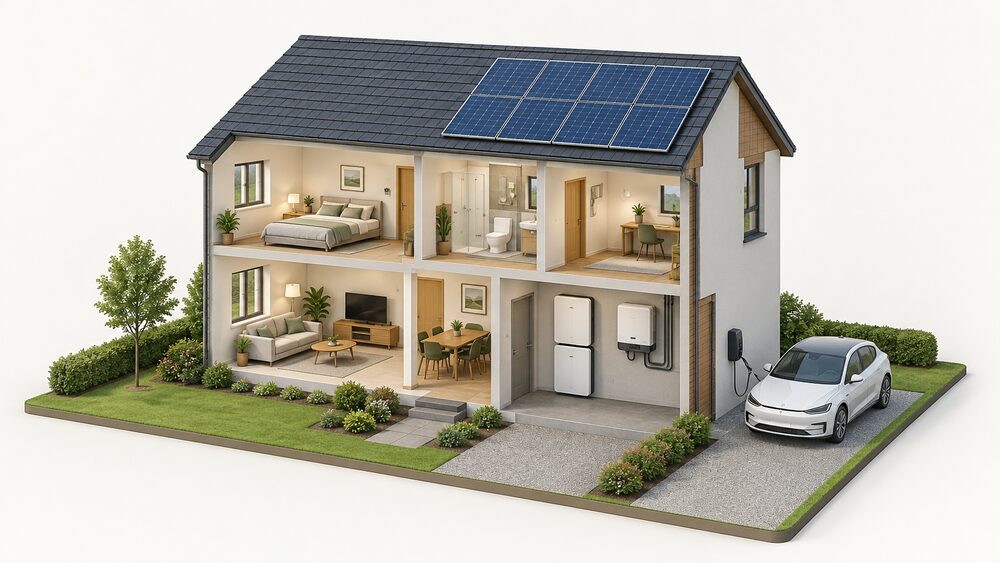
A Duracell Energy home battery is a lithium iron phosphate storage unit sold under licence in the UK, paired with a hybrid inverter and an electric vehicle charger and controlled through the Duracell Energy app. The range is designed, tested and distributed from the Cotswolds, and the maker states that its home batteries use Lithium Iron Phosphate, which it calls "the safest battery chemistry in home energy storage"1. The system is designed to be solar and EV ready, so it can be added to an existing array or fitted with one1.
The commercial route is not a shop. Duracell Energy products are distributed by a network of Approved Installers and Platinum Partners, and enquiries go through an online form that a sales team follows up to put a household in touch with an official distributor2. Installation must be done by a qualified, MCS-registered electrician, which the maker ties to both safety and warranty requirements4.
What the battery does for independence is real but partial. It stores excess solar generation and cheap off-peak grid electricity for use later, and the maker lists power cut protection among its functions1. It does not take a home off the grid: the battery charges from the grid when prices are low, the app depends on a manufacturer's platform, and the warranty depends on an installer relationship. The sections below set out the chemistry, the range, the modular capacity, the backup position, the app, the UK operation and the buying process.
What a Duracell Energy home battery is and how it stores energy
The unit stores energy by converting electrical energy into chemical energy, and an inverter converts alternating current from the grid or the solar array into direct current for storage, then back to alternating current for household appliances1. Energy drawn from the grid is typically alternating current, which is why the inverter sits at the centre of the system rather than at its edge1. The battery stores any excess energy the solar panels produce, and the maker states it is possible to store enough energy to power a home 24 hours a day1.
There are two charging routes. The first is solar: the battery captures energy generated by the photovoltaic system, and energy not used immediately is stored rather than exported5. The second is the grid, and this is where the economics sit for a home without panels. The system integrates with dynamic tariffs to store low-cost off-peak electricity for use at peak times, and the maker states that the battery will sync with the app and automatically take energy from the grid when the price is low1. The same unit can therefore run on self-generated power, on cheap imported power, or on a mix.
The range is also built to accept generation beyond solar. Duracell Energy states that its renewable energy storage batteries are designed to integrate with a variety of alternative energy systems, including wind and hydro, which widens the cases where a battery has something to store9. For a household, the practical point is that the battery is a store rather than a source: it shifts when energy is used, and it increases resilience against grid outages or price fluctuations, but it does not remove the connection9.
Chemistry: Lithium Iron Phosphate and what it means

Duracell Energy's home batteries are made using Lithium Iron Phosphate, which the maker describes as the safest battery chemistry in home energy storage1. Older Duracell Energy guidance described the batteries as slimline lithium-ion units that can be wall-mounted to reduce the space they take up, so the chemistry description has tightened over time from the general family to the specific one10. Lithium Iron Phosphate is the LFP chemistry, and the wider UK market sells it alongside nickel manganese cobalt; the differences between them are set out in home battery chemistries.
The chemistry choice has consequences a household can weigh. LFP cells are the common choice where cycle life and thermal stability matter more than energy density, which is why they appear across modular home storage rather than in vehicles alone. The same chemistry appears in unrelated UK products: an independent trade announcement describes a Luthmore boiler as powered by six non-rare-earth Lithium Iron Phosphate batteries, which shows how far the chemistry has spread beyond storage11. That is a different product from a different company, and it is not evidence about Duracell Energy's cells, but it does show the chemistry is not a niche.
What the maker does not publish in these materials is a cycle life figure, a retained capacity guarantee or a depth of discharge for the Duracell Energy range. Those are the numbers that decide how long an LFP battery lasts in practice, and they belong in a warranty document rather than a support article. The general principles are covered in battery cycle life and degradation and battery capacity and usable capacity.
The range: batteries, EV chargers and inverters as one system
Duracell Energy sells an ecosystem rather than a single box. The maker describes it as seamlessly integrating home battery storage (the Dura5 solar battery), a hybrid inverter (the Dura-i) and an EV charger (the DuraCharger) through its smart app6. Earlier guidance put it the same way: the company offers a fully integrated EV charger and an inverter for households that want a complete energy set-up alongside solar batteries10. The system is designed to be solar and EV ready from the outset1.
The integration matters most for households with heavy loads. The three-phase inverter and battery system supports multiple EV chargers, heat pumps and energy-hungry appliances, and is aimed at premises with significant energy demands, whether a large home running several chargers and high-powered appliances or a business needing reliable backup power7. The maker states that the system has integrations with almost every electricity tariff on the market, and that it automatically charges the battery when electricity is cheapest7.
| Component | Role in the system |
|---|---|
| Dura5 solar battery | Home battery storage, the core of the ecosystem6 |
| Dura-i hybrid inverter | Converts AC to DC for storage and back again1 |
| DuraCharger EV charger | Integrates EV charging with solar and battery5 |
| Duracell Energy app | Controls and monitors the whole system6 |
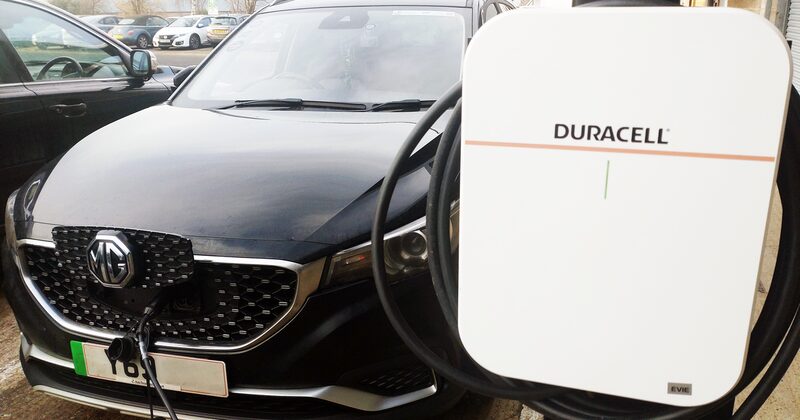
The EV charger is the piece that changes daily behaviour rather than just bills. Duracell Energy states that a household can integrate its EV charger with the solar and battery system to create a home energy ecosystem, and the app offers a choice of charging options, from maximising savings to using only green energy5. The general rules on charging an EV at home, including the chargepoint registration step with the local network operator, are covered in charging electric vehicles13.
Modular capacity: expanding the battery as your needs grow
The range is built to be added to. Duracell Energy states that the three-phase inverter and battery system can connect up to 30 inverters in parallel and 16 batteries per inverter, with additional units added retrospectively7. That is the headline scalability figure, and it is aimed at large premises rather than a typical semi: the same system is described as providing an enormous 2.4MWh of total storage when 30 inverters are connected in parallel7.
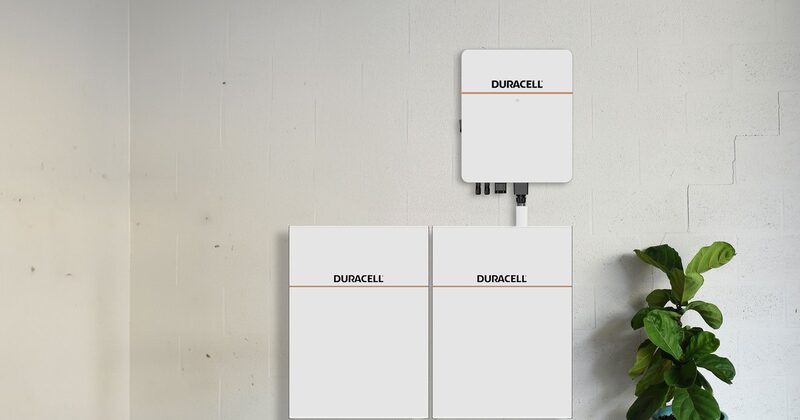
For ordinary homes the maker's guidance is simpler. Duracell Energy batteries can be stacked together to ensure the correct quantity for the household's needs, and one of the advantages of the system is that another battery unit can simply be added if the set-up does not have enough resources14. The units are described as slimline and able to be discretely mounted or stacked, taking up minimal space14. The maker also states that the home battery systems are designed to integrate with a variety of alternative energy systems, giving flexibility to expand energy solutions as needed9.
The practical question is whether expansion is genuinely retrospective. Adding a battery later means another unit, another commissioning visit and a possible change to the inverter's configuration, and the maker's own guidance is that the installer guides the process13. Households weighing this should read modular and stackable battery systems and adding more batteries later before committing to a first size. The sizing decision itself is covered in what size home battery you need.
Powercut protection: what the battery does in an outage
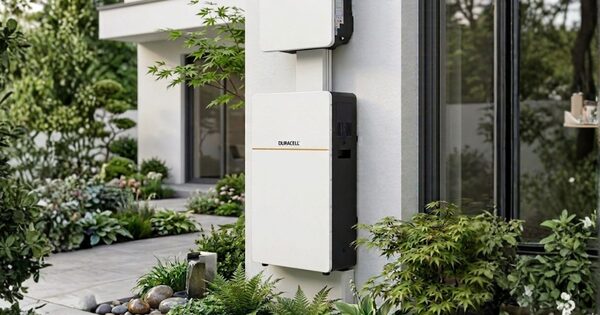
Duracell Energy lists power cut protection among the functions of its home battery storage, and states that energy can be stored for use later, for example in the evening or during power cuts1. The three-phase system is described as providing reliable backup power for businesses and homes7. That is the maker's position, and it is the strongest claim in the range.
Independent guidance is more cautious. Electricity North West states that in some cases storage devices can provide back-up supplies for use in a power cut, but this is not always possible and should be checked with the installer8. That qualification matters because backup depends on how the system is wired: a battery that only serves the whole house through a changeover arrangement behaves differently from one that keeps a single circuit alive. The distinction between the two is set out in battery backup in a power cut and do I need a backup interface.
For households with medical equipment the position needs checking earlier rather than later. One network operator's priority services guidance notes that a battery may keep specialist in-home medical devices operating for longer during a power cut, subject to approval from the manufacturers of that equipment15. That is a condition on the equipment maker, not on the battery, and it is not a substitute for registering with the network operator's priority services list.
The Duracell Energy app: tariffs, solar and charging together
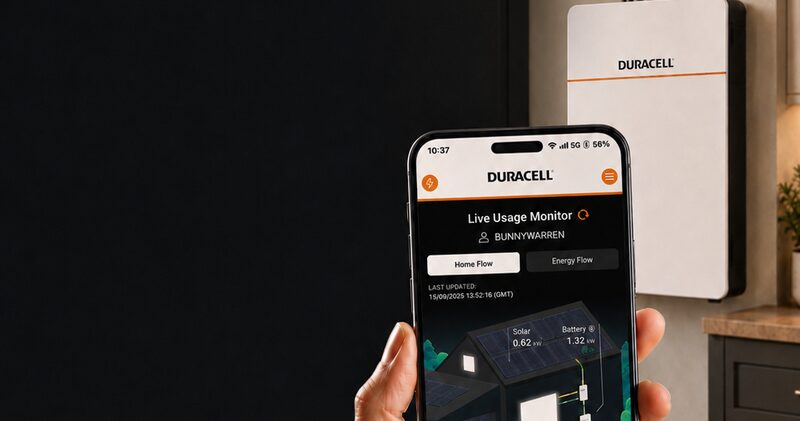
The app is the control layer for the whole system. Duracell Energy states that the app lets a household manage how energy is used or sold, automate charge and discharge, and set the battery to charge low and sell high5. It integrates a variable rate tariff so the battery charges during off-peak low-cost times, and it handles scheduling charge times for the Dura5 battery12. The maker describes control of the system with a click of a button12.
The scheduling limits are worth knowing. Duracell Energy states that up to 3 charges and 3 discharges can be set, and that the battery will charge from excess solar energy automatically16. The system integrates with all dynamic tariffs, according to the maker, which is a broad claim and one that depends on the tariff's own data being available to the platform5. The app is available for iPhone and Android12.
This is where the dependence sits most clearly. The app is a manufacturer's platform: scheduling, tariff integration, monitoring and any remote control run through Duracell Energy's software and the household's broadband connection. The maker's own update guidance describes app releases as bug fixes and performance enhancements, and recommends always using the most recent version for the best experience17. On Android, if no update is shown the app is up to date; on iPhone or iPad, if no update appears the household is already on the latest version17. The wider question of what a battery keeps working when the internet does not is covered in monitoring a home battery.
Designed and supported in the UK: the Cotswolds operation
Duracell Energy states that its products are designed, tested and distributed from the UK, in the heart of the Cotswolds6. Manufacturing and warranty support for the Dura16 low-voltage home battery sit with Puredrive Energy Limited in Toddington, Gloucestershire, which manufactures the unit under licence and supports its warranty15. Puredrive Energy was granted a licence in 2022 to manufacture and sell Duracell Energy battery storage systems across the UK and key European territories.
The brand itself is licensed. Duracell is a registered trademark of Duracell Batteries BV and Duracell U.S. Operations, Inc., used under license, according to the product datasheets15. That structure is common in the sector and it means the household's contractual relationship is with the licensed UK business and its installer network, not with the American battery company whose name is on the casing. The distinction between a brand licence and a manufacturer is worth understanding before comparing warranties, and it is covered in home battery warranties.
The installer network is the support model. Duracell Energy products are distributed by a network of Approved Installers and Platinum Partners, and the company describes personalised UK customer and technical support2. It also states that it will help a household find a Duracell-approved installer nearby, with the installer then guiding the process13. The company has been active in UK training as well: it is supporting renewable energy skills training through an installation at Adra's Decarbonisation Centre in Penygroes, North Wales4. For households comparing brands on this basis, Puredrive home batteries covers the manufacturer behind the licence.
Buying and installing: enquiry, MCS-registered electricians and warranty
The buying route starts with an enquiry. Duracell Energy states that a household can fill in an online enquiry form and a member of the team will be in touch to help choose a solar battery storage set-up3. The sales team then helps identify the right products and puts the household in touch with an official Duracell Energy Distributor2. There is no published list price for the range in these materials, so costs are installer-quoted after a survey.
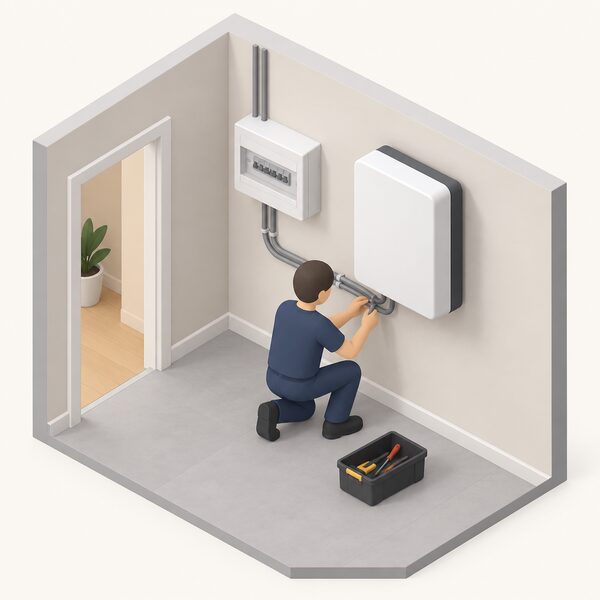
Installation is restricted. Duracell Energy answers the self-installation question with a plain no: the installation must be done by a qualified, MCS-registered electrician, and the company states this is important for safety and to meet warranty requirements4. The wider scheme rules agree. For domestic batteries to be eligible for the Warm Homes: Social Housing Fund scheme, the product must be installed by an MCS certified installer to the relevant MCS installation standard, MCS 301219. The same standard is described as outlining the requirements for MCS certified installers who supply, design and install electrical energy storage or battery systems20.
MCS certification also carries consumer protections. The MCS Customer Commitment requires the contract to clearly state the product details, including the make, model number, power rating where applicable and storage capacity where applicable21. Independent guidance on solar grants and incentives advises checking that the installer is MCS-accredited and that the products to be installed are certified by them22. The standards governing the work are covered in battery installation standards and the process itself in home battery installation.
Where the range has limits
The clearest limit is that the system is a licensed brand rather than a manufacturer's own line. The trademark belongs to Duracell Batteries BV and Duracell U.S. Operations, Inc. and is used under license, while manufacturing and warranty support sit with Puredrive Energy Limited in Toddington15. That is a normal arrangement, but it means the household should read the warranty document issued with the unit rather than rely on the name on the front.
The second limit is the app. Tariff integration, scheduling and monitoring run through Duracell Energy's platform, and the maker's update guidance is limited to bug fixes and performance enhancements17. A household that wants local control independent of a manufacturer's servers should weigh that, and the options are set out in monitoring a home battery.
The third is backup. The maker lists power cut protection, but independent guidance says backup is not always possible and should be checked with the installer1. The circuits that stay live are a design decision, not a product feature.
Finally, the range is not a route off the grid. The battery charges from the grid when prices are low, integrates with dynamic tariffs, and depends on an MCS-registered installer for the warranty1. What it changes is when energy is bought and used, and how much of a solar array's output is kept rather than exported. The wider picture is in home batteries and household energy independence and the pillar guide at home battery storage.
Sources22 cited
- Home battery storage explained, Duracell Energy, 2026-09-17
- Get products and find a distributor, Duracell Energy, 2026-09-17
- Energy saving tips: how to reduce your electricity bill, Duracell Energy, 2024-10-28
- Can I install my own battery, Duracell Energy, 2026-09-17
- Maximise energy savings with solar battery storage, Duracell Energy, 2026-09-17
- Duracell Energy home page, Duracell Energy, 2026-09-17
- Duracell Energy 3-phase ecosystem, Duracell Energy, 2026-09-17
- Renewable energy storage, Electricity North West, 2026-09-19
- Renewable energy storage for your home, Duracell Energy, 2026-09-17
- How many storage batteries are needed to power a house, Duracell Energy, 2024-05-25
- Luthmore appoints former Dyson innovation director as CEO, CIPHE, 2026-02-27
- Duracell Energy app, Duracell Energy, 2026-09-17
- I already have a Duracell battery, can I add solar, Duracell Energy, 2026-09-17
- How to schedule charges, Duracell Energy, 2026-09-17
- Dura16kWh LV battery datasheet, Duracell Energy, 2026-09-17
- Home battery packs and priority services, SSEN, 2026-09-17
- App error messages, Duracell Energy, 2026-09-17
- Dura5 datasheet, Duracell Energy, 2026-09-17
- Warm Homes: Social Housing Fund wave 3 scheme guidance addendum, UK Government, 2026-06
- MCS launches industry-first battery installation standard, MCS, 2021-11-23
- MCS Customer Commitment, MCS, 2025-01-01
- Should you get solar panels, Which?, 2024-07-03