In this guide
Home batteries sold in the UK come from two broad kinds of maker. One group sells complete, installer-fitted systems, where the battery, its controls and often the inverter arrive as a package: Powervault, APsystems and Livoltek are examples covered here, alongside the brands profiled on their own pages such as GivEnergy and Tesla. The other group sells low voltage battery modules, rack units and cabinets that connect to a separately chosen inverter. Fogstar Energy, a UK brand selling direct, is the main example of the second kind in this guide. Energy Saving Trust guidance puts a home battery at £1,500 to £10,000 depending on type and size, with a 5kWh system around £4,6001.
A single Fogstar Energy 5.12kWh rack battery is listed at £899.99, as of September 2026, with no inverter or installation included2. The maker states a design life of 15 years, 5,000 cycles at 95% depth of discharge and a 10-year manufacturer-backed warranty3. Each unit weighs 45.2kg, runs at a rated 51.2V and can be joined in parallel with up to 31 others (30 others on Victron systems), but not in series4.
The price gap between a £899.99 module and a £4,600 installed system is not a like-for-like saving. It reflects the inverter, the installer, certification and the support arrangements that a complete system includes and a bare battery does not. What follows sets out who makes what, what the Fogstar range contains, and what a rack battery does and does not do for a household's independence from the grid.
Who makes home batteries sold in the UK
The government publishes statistics on MCS-certified retrofits of batteries into homes across the United Kingdom, which gives the market an official measure5. The Energy Storage Association describes the UK as having "a strong domestic battery market", and reports no evidence that other battery companies plan to stop operating6. Registered installations were running at just under 3,000 a month in January 20257. Newer formats are arriving too: plug-in solar batteries are reported to be "already being developed for the UK market"8.
The makers covered in this guide differ in how they sell and what they state about their products:
| Maker | What the maker states | Route to market |
|---|---|---|
| Powervault | LFP chemistry; stops charging when the cells are at freezing temperatures9 | Installed home storage |
| APsystems (APbattery series) | Charges down to -5°C; self-heating for low ambient temperatures10 | Installed with its microinverter systems |
| Livoltek (HomCellar) | 48V, 314Ah, 15kWh module; CAN / RS485 communication11 | Low voltage residential battery |
| Fuse Energy | Offers solar installation and sells home batteries12 | Energy supplier and installer |
| Fogstar Energy | Rack, stackable, modular and cabinet batteries; 6 or 10-year warranties3 | Sold direct and as inverter bundles |
Fogstar also sells DIY battery kits built with Seplos Mason components, which the maker states integrate with Victron, Growatt, Sofar and Solis inverters over CAN and RS48513. The brand grew out of cell retail: it stocks 18650, 20700, 21700 and 26650 cells alongside its energy storage range2.
For brands with their own pages, see Powervault, Pylontech, Fox ESS, Sunsynk, SolaX Power, Huawei and Sungrow. The full picture of equipment makers sits in the manufacturers guide, and who owns which brand is set out under parent groups.
Fogstar Energy: the range and what each bundle contains
Fogstar sells its batteries in two ways: as battery-only products, and as battery and inverter bundles. The bundle prices below are "from" prices, meaning the cheapest configuration, as listed in September 202614. VAT position is not stated alongside these prices, and none includes installation.
| Bundle (battery plus inverter) | Listed price |
|---|---|
| 48V 5.12kWh Server Rack Battery bundle | from £1,485.79 |
| IP65-Rated 10kWh 48V Battery bundle | from £2,129.79 |
| ECO Battery bundle | from £2,451.79 |
| IP65-Rated Battery bundle (single unit) | from £2,681.79 |
| Larger 48V Battery bundle | from £3,877.79 |
| IP65-Rated Modular Battery Stack bundle (two modules) | from £4,015.79 |
| IP65-Rated Modular Battery Stack bundle (three modules) | from £5,257.79 |
| IP65-Rated Modular Battery Stack bundle (four modules) | from £7,097.79 |
Individual bundle pages show different figures from the collection page because they reflect a particular inverter. The larger 48V battery and inverter bundle, listed from £3,877.79 on the collection page, is £4,105.03 on its own page with an 8% saving15, and the 10kWh bundle is £2,357.03, also with 8% off16.
The battery-only range spans small units to large stacks. The stackable 48V 5.12kWh battery is £749.9917; the 48V 10kWh battery is £1,599.9918; the 48V ECO battery is £1,949.992; the larger 48V battery, which includes heating and fire suppression, is £3,499.9919. The modular IP65-rated stacks run from the two-module stack at £3,999.9920 to the four-module stack at £6,999.9921, with the three-module stack at £5,499.99, and an IP56 outdoor battery system and cabinet is listed from £3,999.9922.
The ECO bundle is described as "a fully assembled, high-capacity lithium energy storage solution"14. The modular stacks connect up to 16 stacks together23. The rack battery, the focus of the next sections, is the building block for Fogstar's 15kWh and 30kWh cabinet bundles.
Fogstar 5.12kWh rack battery: specifications at a glance
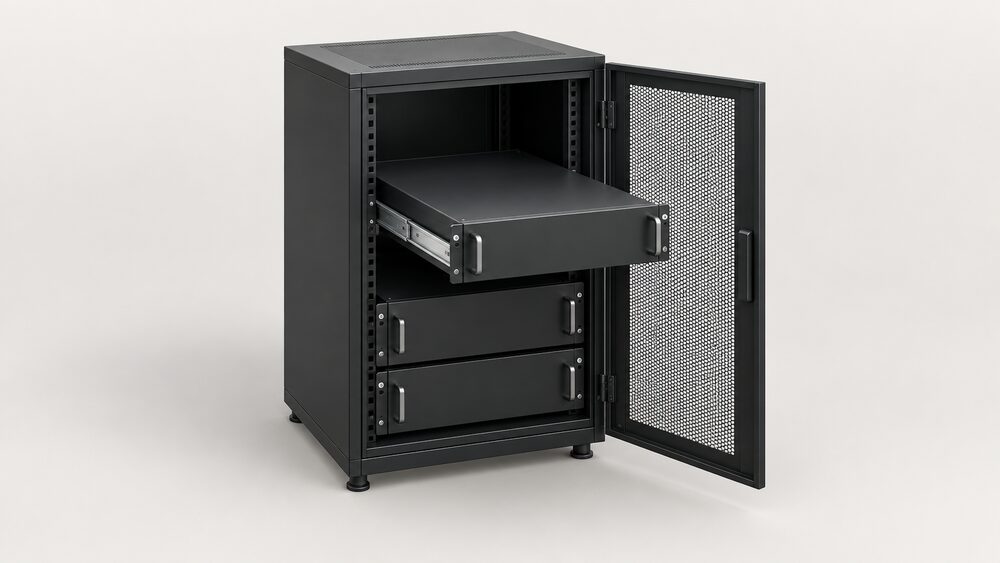
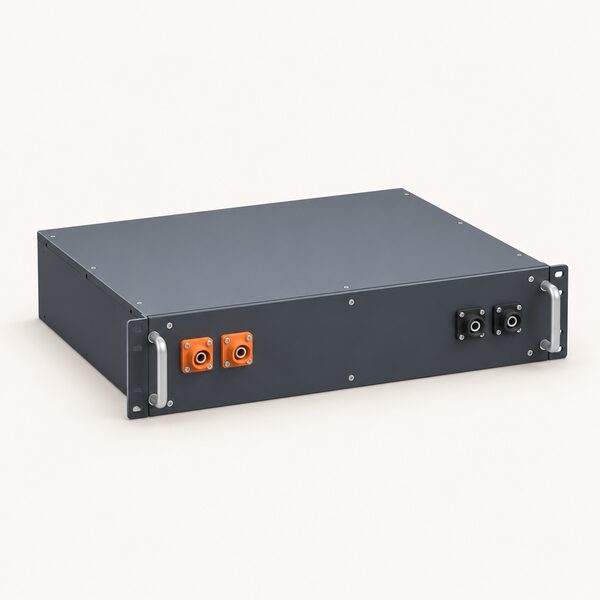
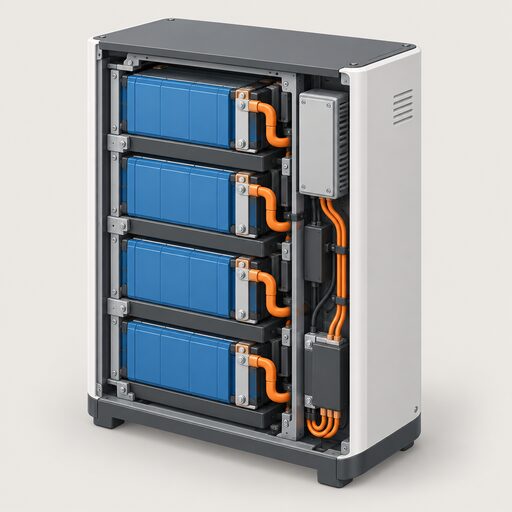
The Fogstar Energy 5.12kWh 51.2V rack battery is a server rack format unit: a flat, rectangular module designed to slide into a standard equipment cabinet, one above another. Fogstar Energy is named as the manufacturer3. All figures below are the maker's own4.
| Specification (Fogstar Energy 5.12kWh 51.2V Rack Battery) | Figure |
|---|---|
| Total energy | 5,120Wh per battery |
| Rated voltage | 51.2V |
| Nominal capacity | 100Ah |
| Maximum charge voltage | 57.6V |
| Discharge cut-off voltage | 43.2V |
| Cell configuration | 16S1P |
| Discharge temperature | -20°C to 60°C |
| Weight | 45.2kg per battery |
| Design life | 15 years |
| Parallel connection | Up to 32 batteries (31 for Victron systems) |
| Series connection | Not supported |
The 16S1P configuration means sixteen cells wired in series in a single string, which is how the 51.2V rating is reached. The 43.2V discharge cut-off is the point at which the battery management system stops drawing power to protect the cells. Energy Saving Trust guidance notes that a system "should never let your battery discharge to zero, as this can significantly reduce the life of the battery"1, and the cut-off is the mechanism that enforces that.
The 45.2kg weight per unit is a practical constraint rather than a technical one. A cabinet of six carries six of these, which bears on floor loading, where a system can go and how it is delivered. Reading one maker's datasheet against another's is covered in comparing manufacturer specifications and the standards behind them in product testing and datasheets.
Chemistry, cycle life and design life: 5,000 cycles and 15 years
Fogstar states the rack battery is "Engineered for up to 15 years of service with 5,000 cycles at 95% DOD"3. A cycle is one full charge and discharge; depth of discharge (DOD) is how much of the capacity is used in each cycle. Higher DOD gives more usable energy per day but, in general, fewer cycles.
The maker's own documents do not agree on the rack battery's cycle rating. The page for the 48V 5.12kWh server rack battery bundle states "4,000 cycles at 80% depth of discharge"24, against 5,000 cycles at 95% on the rack battery pages. Both are maker statements for what appears to be the same product, and the difference is unresolved. The stackable 5.12kWh battery, a different product, is rated at "6000 cycles at 91% Depth of Discharge (DOD)"17.
Outside figures give a sense of where these claims sit. One guide gives lithium iron phosphate (LFP) home storage 4,000 to 8,000+ cycles, and other lithium chemistries 3,000 to 6,000 cycles with a life of 8 to 12 years, noting those are more sensitive to heat and deep cycling25. Another states lithium-ion, especially LiFePO4, batteries often last 10 to 15 years or 5,000 to 10,000 cycles26. Both are maker guidance rather than independent testing, so they indicate the claimed range across the industry rather than a verified benchmark.
MCS guidance explains that "Manufacturers usually provide an estimated lifespan in years or the number of full charge cycles estimated"27. That is the pattern here: a design life in years (15) and a cycle count (5,000 or 4,000). The two measures interact. A battery cycled once a day would reach 5,000 cycles in well under 15 years, so in daily solar use it is usually the cycle count, not the calendar, that sets the practical limit. What happens to capacity near the end of that life, and whether the warranty guarantees a minimum remaining capacity, is not stated in the maker's figures, and it is the question that decides what a cycle rating is worth.
Cold weather: discharge to -20°C, but charging is a separate limit

Fogstar gives the rack battery a discharge temperature range of -20°C to 60°C4. That covers drawing power from the battery. It does not say the battery can be charged across the same range, and the maker's rack battery figures give no separate charging temperature and do not describe built-in heating on this unit.
The distinction matters because of the chemistry. Powervault states plainly: "LFP battery chemistry cannot charge when the cell temperature is below zero degrees centigrade." Its battery "will automatically stop charging until the temperature rises again"9. This is a property of LFP cells generally, not a fault of one brand.
"LFP battery chemistry cannot charge when the cell temperature is below zero degrees centigrade."
Some makers design around it. APsystems states its APbattery series "Supports charging down to -5 °C" and has "Self-heating for low ambient temperatures"10. Within Fogstar's own range, heating is a named feature of other products: the larger 48V battery includes heating and fire suppression19, and an IP65-rated battery is listed with "Heating, 10 Year Warranty and additional 2A JK balancing support"23.
In practice this shapes where a rack battery can go. A unit in an unheated garage or outbuilding through a UK winter may discharge normally on a cold morning but decline to store surplus solar until its cells warm up. That is exactly when solar output is lowest anyway, so the energy lost may be small, but it means a battery placed outdoors or in an unheated space may not be available to charge from a cheap overnight tariff on the coldest nights. A heated or indoor unit avoids the issue.
Inverter compatibility and communications: CAN, RS485 and pre-loaded protocols
A rack battery stores energy; it cannot power a home on its own. It needs an inverter to turn its direct current into the alternating current a house uses, and the two must talk to each other so the inverter knows how full the battery is and how hard it can be charged or discharged. That conversation runs over a communications link, and CAN and RS485 are the two common standards for low voltage batteries. Livoltek, for example, lists "CAN / RS485" for its HomCellar module11, and Fogstar's Seplos Mason kits integrate "using CAN and RS485"13.
Fogstar states the 5.12kWh rack battery is "Compatible with major LV inverter brands including Victron, Sunsynk, LuxPower and more", with pre-loaded inverter protocols so the battery can be set to speak each inverter's language4. Its other 48V products name a longer list:
- Larger 48V battery: Victron, Luxpower, Sunsynk, Solis, Voltacon15
- IP65-rated modular stacks: Victron, Luxpower, Sunsynk, Solis, Voltronic, Voltacon28
- 48V battery with 10-year warranty: Luxpower, Victron, Sunsynk, Solis, Growatt, Sofar, GoodWe29
The limit on this list is the word "LV". These are 48V, low voltage batteries. They suit low voltage hybrid and off-grid inverters, but not high voltage inverters built for batteries wired in series, which the rack battery does not support4. Compatibility also runs both ways: a battery maker listing an inverter brand does not guarantee the inverter maker lists that battery, and inverter warranties can depend on approved batteries. Inverter brands are profiled in solar inverter manufacturers, including Sunsynk, Growatt, Solis and GoodWe.
Scaling up: 5.12kWh, 15kWh and 30kWh cabinet bundles
The rack format is built to grow. Fogstar states its rack batteries expand "with up to 32 batteries in parallel (31 for Victron systems). Series connection is not supported"3. Parallel wiring keeps the voltage at 51.2V and adds capacity with each unit.
Fogstar sells three steps:
| Configuration | Capacity | Listed price (September 2026) |
|---|---|---|
| Single 5.12kWh rack battery | 5,120Wh | £899.992 |
| 15kWh 51.2V rack glass cabinet bundle | 15kWh (as named) | £2,999.993 |
| 30kWh 51.2V rack glass cabinet bundle | 30.72kWh from six batteries | £5,749.944 |
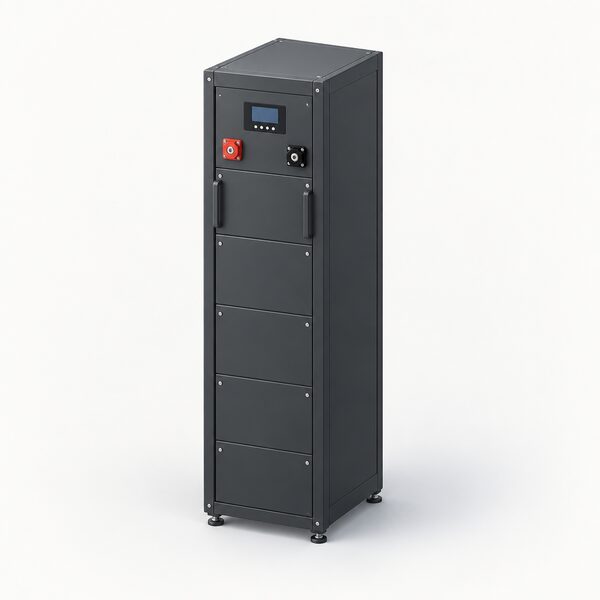
The 30kWh bundle "combines six 5.12kWh rack batteries for a total system capacity of 30.72kWh"4. The glass cabinet houses the modules together, which is tidier and safer than loose units, and allows batteries to be added later up to the parallel limit.
Other Fogstar formats scale differently. The 10kWh battery allows "Up to 16 batteries" in parallel18, and the modular stackable system allows "up to 16 stacks"23.
For comparison, UK guidance describes a typical domestic battery as 4kWh to 10kWh30. A 30kWh cabinet is well above that, and a large bank suits households with heavy evening demand, an electric vehicle, a heat pump or an off-grid aim. Whether more capacity pays depends on whether the home can fill it: a battery larger than the daily surplus or cheap-rate window can charge will sit partly unused, and the cost of each unused kilowatt-hour is still paid up front.
Price and warranty: £899.99 with a 10-year warranty
The Fogstar rack battery is listed at £899.99, as of September 2026, with the VAT position not stated2. Fogstar's own blog put its 5.12kWh stackable battery at £156.25 per kWh in April 202513. These are battery-only prices.
Independent and official figures for installed systems sit much higher, because they include an inverter, labour and certification:
| Figure | Scope | Source |
|---|---|---|
| £1,500 to £10,000; 5kWh around £4,600 | Home battery, by type and size | Energy Saving Trust1 |
| £2,800 to £4,500 | 8 to 10kWh, battery-only, March 2026 | ClimateXChange31 |
| £4,500 to £7,000 | 8 to 10kWh, installed, March 2026 | ClimateXChange31 |
| £4,000 | 10kWh battery, measure cost, case studies | Energy UK32 |
| Up to £10,000; typical 5kWh around £4,600 | Energy Saving Trust estimate | Parliamentary Office of Science and Technology33 |
| £2,500 to £10,000 | 4kWh to 10kWh, fully installed | Plymouth Energy Community30 |
One maker's guide puts an installed 10kWh battery at £6,000 to £8,000, with a payback of 8.9 years on an £8,000 system saving £900 a year34; that is a modelled example, not a measured result.
On warranty, Fogstar states a "10-Year Warranty: Complete peace of mind with a robust manufacturer-backed warranty" on the 15kWh and 30kWh cabinet bundles3, and a 10-year warranty on the 48V 5.12kWh server rack battery24 and another of its 48V batteries29. Several other Fogstar products carry less: the larger 48V battery19, the two-module stack20, the four-module stack21, the three-module stack35 and an IP65-rated modular stack36 each come with a 6-year warranty and 10 years of UK customer support.
Buying direct from a maker usually shifts installation, certification and first-line support onto the household or its chosen installer; the trade-offs are set out in buying direct from a manufacturer, and what MCS listing means in manufacturer certification.
What a rack battery means for household energy independence
A home battery's main job is to hold on to energy a home would otherwise send away. Solar Energy UK describes batteries as "a way for homeowners to store excess electricity produced from their solar system"37. The effect on self-sufficiency is measurable. One maker's guide states that without a battery most homes use about 30 to 40% of what their panels generate, rising to 60 to 75% with one38. Uswitch data puts the self-consumption rate at 70% with a 10kWh battery39. Solar Energy UK suggests rooftop solar with a battery could supply 80% of a household's annual electricity33. The Energy Saving Trust adds that storing solar to run a heat pump makes a home "less reliant on grid electricity"40.
What remains dependent is just as concrete:
- The grid. A battery-backed home still draws from the grid through winter, when solar is low, and a cheap overnight tariff means a supplier relationship continues.
- Backup during a power cut. A battery does not automatically keep the lights on. Whether it does depends on the inverter supporting backup or off-grid operation, not on the battery.
- The inverter maker. The rack battery relies on the inverter's firmware and communication protocols, and a future inverter update can change compatibility. See firmware updates and support life.
- The battery maker. Warranty claims and replacement parts depend on the company staying in business; see support and spare parts.
- Cold weather. An LFP battery will not charge when its cells are at freezing temperatures unless it has heating9.
The modular, parallel design gives one kind of independence that sealed systems do not: capacity can be added a unit at a time, and a single failed module can in principle be replaced without replacing the whole bank. Its low voltage, open-protocol approach also means the battery is not tied to one inverter brand.
At national level, home batteries are increasingly treated as part of the grid itself. Solar Energy UK points to "the combined potential of millions of homes with batteries to help balance supply and demand across the country"37, and the Energy Storage Association reports working with the Department for Energy Security and Net Zero on the sector41. A battery can make a household far less reliant on buying grid power, but in most UK homes it deepens the connection to the grid as much as it loosens it. The wider picture is set out in manufacturers and energy independence.
Sources41 cited
- Battery storage advice, Energy Saving Trust, 2026-08-19
- Solar battery storage collection, Fogstar, 2026-09-19
- Fogstar Energy 15kWh 51.2V rack battery bundle, Fogstar, 2026-09-19
- Fogstar Energy 30kWh 51.2V rack glass cabinet battery bundle, Fogstar, 2026-09-19
- MCS domestic retrofit battery installations 2025 to 2026, GOV.UK, 2026-05-28
- GivEnergy FAQs, Energy Storage Association (UK), 2026-04-17
- Can time-of-use tariffs make heat pumps cheaper to run?, Nesta, 2025-01
- Plug-in solar explained, Low Carbon Hub, 2026-07-09
- Powervault for home, Powervault, 2026-09-19
- APstorage, APsystems, 2026-08-15
- HomCellar low voltage residential battery, Livoltek, 2026-09-10
- Solar panel installation in Winchester, Fuse Energy, 2026-09-14
- Solar battery storage: the best options in 2025, Fogstar, 2025-04-28
- Battery and inverter bundles, Fogstar, 2026-09-19
- 32kWh 48V battery and inverter bundle, Fogstar, 2026-09-19
- 10kWh 48V battery and inverter bundle, Fogstar, 2026-09-19
- Fogstar Energy stackable 5kWh battery, Fogstar, 2026-09-20
- Fogstar Energy 48V 10kWh battery, Fogstar, 2026-09-19
- Fogstar Energy 48V 32kWh battery with heating and fire suppression, Fogstar, 2026-09-19
- IP65-rated 48V 32kWh modular battery stack, Fogstar, 2026-09-19
- IP65-rated 48V 64.4kWh modular battery stack, Fogstar, 2026-09-19
- Fogstar Energy collection, Fogstar, 2026-09-17
- Fogstar Energy battery showdown, Fogstar, 2026-06-17
- 5.12kWh rack battery and inverter bundle, Fogstar, 2026-09-19
- How long do solar panels last?, Jackery, 2026-06-30
- How many batteries does a home need?, SAJ, 2026-07-22
- Battery storage for consumers, MCS, 2026-09-17
- 32.2kWh modular 48V battery and inverter bundle, Fogstar, 2026-09-19
- 16.1kWh 48V battery and inverter bundle, Fogstar, 2026-09-19
- Everything you need to know about battery storage, Plymouth Energy Community, 2026-09-20
- Balancing investment in clean heat and energy efficiency in Scottish housing retrofit, ClimateXChange, 2026
- Clean heat: supporting low-income households, Energy UK, 2026-06-11
- POSTnote 771, UK Parliament, 2026-06-25
- 10kW solar battery price UK, Jackery, 2026-06-04
- 48.3kWh modular 51.2V battery and inverter bundle, Fogstar, 2026-09-19
- IP65-rated 48V 16kWh modular battery stack, Fogstar, 2026-09-19
- Batteries in the home, Solar Energy UK, 2026-09-17
- Solar panels: are they worth it?, EcoFlow, 2025-07-23
- Britain's homes with solar panels reap £40 million during the heatwave, Uswitch, 2026-06-28
- How to ensure a heat pump runs efficiently, Energy Saving Trust, 2026-05-19
- Plug-in battery, Energy Storage Association (UK), 2026-08-27
 Home Battery CostA home battery usually costs between one and a half and ten thousand pounds fitted, depending on size.
 The Full Home Batteries GuideA home battery stores cheap or solar power for later, but will it really cut your bills enough to be worth it?
 Portable Power Station CostHow much does a portable power station cost in the UK, and what does the money actually buy?
 Home Battery Install StatisticsHow many homes in the UK actually have a battery, and is that number growing quickly?
 Batteries and IndependenceHow far home battery storage moves a UK household away from the grid and supplier pricing, covering self-sufficiency, winter limits, cost, lifespan, backup, export payments and flexibility earnings.
 Solar Panel CostsA typical UK home pays somewhere between four and eleven thousand pounds for solar panels fitted, with most landing in the middle.