In this guide
SOFAR is a Chinese inverter manufacturer founded in 2013, with two global manufacturing bases, 16 inverter production lines and an annual production capacity of 14GW of PV and storage inverters1. By the end of 2023 the company reported having shipped over 31 GW of inverters, and its UK distributor describes an annual inverter output of over 4GW and supply to more than 20 countries1. Its hybrid inverter range runs from 3 kW to 20 kW1.
For a UK household, the practical question is narrower than the company's global scale. SOFAR's residential hybrid inverters sit in the budget tier of the UK market, sold through wholesale distributors rather than a manufacturer-direct installer network, and the company publishes a UK technical support address rather than a UK service organisation3. The grid-connected 3 to 6KTLM-G3 is described by the maker as a grid-connected PV inverter, which places it in the string inverter category rather than the hybrid one4.
What follows sets out what SOFAR publishes about its residential products, how UK grid connection rules apply to them, what the warranty position looks like, and where the evidence runs out. Several of the questions a buyer would ask first, including the exact warranty term and the serial number location, are not answered in the company's own published material, and that gap is itself part of the picture.
Who SOFAR is and how the company stands
SOFAR was founded in 2013 and now operates two global manufacturing bases, with 16 inverter production lines and an annual production capacity of 14GW of PV and storage inverters1. The company reported shipping over 31 GW of inverters by the end of 2023, and its UK distributor states that it has an annual inverter output of over 4GW and supplies over 20 countries worldwide1. The distributor also notes that SOFAR has been active in the renewable energy industry for well over a decade3.
The company's corporate profile has moved on since those figures. SOFAR was listed on the ChiNext Board of the Shenzhen Stock Exchange in 2025, and in 2026 it was recognised as a BloombergNEF Tier 1 Energy Storage Manufacturer for two consecutive quarters1. That tier listing is an energy storage designation rather than a solar inverter one, and it speaks to the company's battery and storage business rather than to its residential string and hybrid inverters.
For a household, the relevant point is what kind of supplier this is. SOFAR is a volume manufacturer selling through distribution, not a brand with a UK installer accreditation scheme of the kind that governs extended warranties on some competing ranges. Its published service network is described as over 20 branch offices worldwide, which is a global figure rather than a UK one1. The UK-facing support route is an email address, service.uk@sofarsolar.com, published by its distributor3.
That structure shapes everything downstream: how a fault is handled, who registers a warranty, and how quickly a replacement unit arrives. A household buying a SOFAR inverter is buying into a distributor-led support chain rather than a manufacturer-led one, and the terms of that chain are worth establishing before the order is placed rather than after.
The UK residential range: hybrid and string inverters
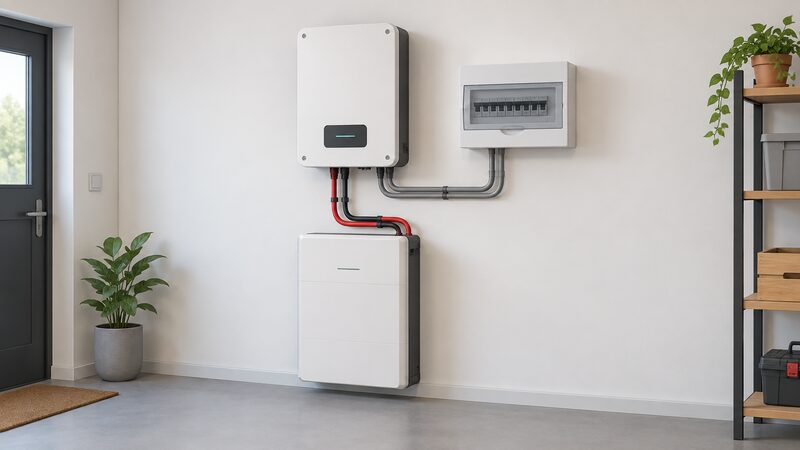
SOFAR's residential offer in the UK divides into two product types. The hybrid inverters, which combine solar conversion with battery management in one unit, run from 3 kW to 20 kW according to the company's own catalogue1. The 3 to 6KTLM-G3 is a grid-connected PV inverter, which is to say a solar-only string inverter rather than a hybrid4.
The distinction matters because it determines what the unit can do. A solar hybrid inverter is defined as an intelligent power management device that consolidates the capabilities of a traditional solar inverter and a battery inverter into a single unit6. A string inverter does the solar conversion alone, with no battery input. The wider UK market splits along the same lines, with ranges that cover hybrid inverters, string inverter and micro inverter options, home battery storage, solar EV charger integration and all-in-one energy storage systems7. SOFAR's published residential range is narrower than that: hybrid and string, without the micro inverter or all-in-one categories.
String inverters in the UK residential market are typically single-phase units at 5kW and 7 to 9 kW8. SOFAR's hybrid range spans a wider band, from 3 kW at the bottom to 20 kW at the top, which covers most domestic array sizes and reaches into small commercial work1. Hybrid inverter ranges generally cover residential and light commercial applications across a range of power ratings, and SOFAR's published band sits within that convention9.
Specifications: power ratings, efficiency and battery compatibility
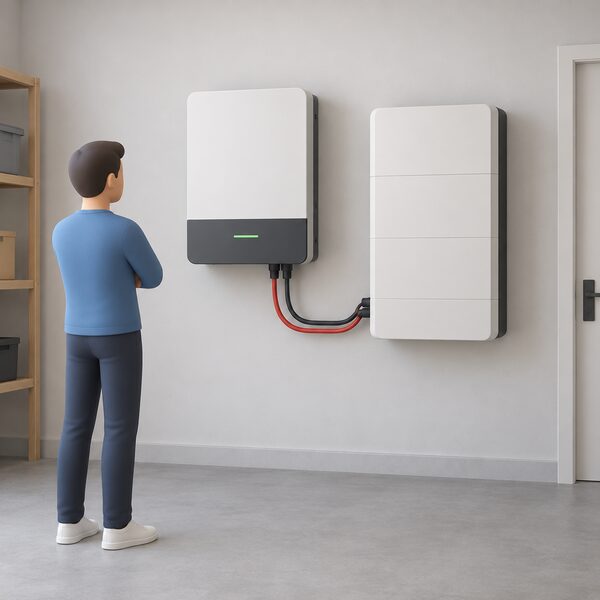
The published specification detail for SOFAR's residential models is thinner than for some competing brands. What the company does state is the hybrid power band, 3 kW to 20 kW, and the grid-connected nature of the 3 to 6KTLM-G31. Beyond that, model-level efficiency figures, battery voltage windows and battery compatibility lists are not set out in the material available here.
For context on what those figures normally look like, comparable UK hybrid inverters publish battery voltage windows of 40 to 60V and inverter power ranges of 2.1kW to 4kW on a 3.6kW unit10. Battery charging and discharging efficiency on one competing single-phase hybrid range is stated at 95.2%11. Those are other makers' figures, given here only to show the shape of the specification a buyer would expect to see, not as SOFAR data.
| Specification | SOFAR published position |
|---|---|
| Hybrid inverter power range | 3 kW to 20 kW1 |
| 3 to 6KTLM-G3 type | Grid-connected PV inverter4 |
| Annual production capacity | 14GW PV and storage inverters2 |
| Inverters shipped | over 31 GW by end of 20231 |
| Model-level efficiency | Not stated in published material |
| Battery voltage window | Not stated in published material |
The absence of a published battery compatibility list is the more consequential gap. A hybrid inverter's value depends on which battery packs it will talk to, and that list is normally the first thing a buyer checks. Where a maker does not publish it, the compatibility question has to be put to the distributor or the installer directly, and the answer confirmed in writing before the order.
Grid certification: G98 and G99 approval for UK connection
All UK grid-connected solar inverters must comply with G98 or G99 engineering recommendations, which govern how distributed generation connects to the distribution network9. G98 and G99 are UK grid connection standards published by the Energy Networks Association5. The split between them is by size: G98 applies to smaller systems, specifically inverters rated at 3.68kW or below for single-phase connections, and the installer notifies the DNO after installation rather than applying in advance5.
Above that threshold the G99 process applies. For units installed before 27 April 2019, EREC G59 or G83 type-tested inverters can also be used under the G99 fast track process12. Vehicle-to-grid connections sit at the other end: it is likely that V2G will be greater than 16 A per phase and therefore G98 is not applicable and G99 should be used13.
Northern Ireland runs its own variant. G98/NI type-tested inverters and G99/NI Type A type-tested inverters are permitted for installations up to 16 amps per phase14. A G99/NI fast track connection application requires a compliance certificate with test results15. That is a different evidence requirement from the notification-only route that applies to a small single-phase system in Great Britain, and it matters for any household in Northern Ireland planning a hybrid installation.
For a SOFAR unit, the certification position should be confirmed against the specific model and the specific network area before installation. The general rules above set out what the installer will need to demonstrate; they do not by themselves confirm that any particular SOFAR model holds the relevant certificate.
Warranty and registration
SOFAR does not publish a warranty term, a registration deadline or a registration portal in the material available here. That is unusual in a market where competing makers publish all three. For comparison, one competing brand requires the product to be registered online within 90 days of the commissioning date, and where registration is not completed within that window the warranty period is calculated as the production date plus six months16. Another offers five extra years by registering the inverter in an online service centre, extendable further17.
The general market position is more generous than a single year. Most inverters have warranties of five years as a minimum, which can often be extended by up to 15 years18. Independent guidance for households choosing an installer goes further and states that it is standard for inverters to have warranties for 10 years19. Those are market norms, not SOFAR terms, and they should not be read as describing what a SOFAR buyer receives.
Where a scheme imposes its own deadline, that deadline binds regardless of the maker's terms. The Barcud Solar Panel Installation Scheme specification requires inverter product registrations to activate guarantees and warranties to be completed within 48 hours of commissioning20. A household installing under a funded scheme of that kind faces a much tighter window than the 90 days some makers allow.
What owning a SOFAR inverter means for energy independence
A hybrid inverter is the component that decides how much of a household's solar generation stays in the house. Hybrid units in the UK market support self-consumption, backup and export control, and single-phase hybrid ranges commonly include built-in support for both low-voltage and high-voltage battery packs, time-of-use optimisation and seamless backup21. Those functions are what turn a solar array from an export machine into a supply that covers evening demand.
The stated benefits of a 5kW hybrid inverter for a household are reduced electricity bills, energy independence and a smaller carbon footprint, with cost savings, grid independence and environmental benefits cited for commercial users21. Those are maker claims for hybrid inverters generally rather than measured outcomes for any particular installation, and they describe what the category is designed to do.
What a SOFAR inverter does not change is the underlying dependence. A grid-connected inverter, hybrid or not, remains connected to the distribution network and subject to the G98 or G99 rules that govern that connection9. A household with a hybrid inverter and a battery still draws from the grid when the battery is empty and still exports to it under an export arrangement. The independence a hybrid delivers is a reduction in imported units, not a severance from the network.
There is also a manufacturer dependence specific to this brand. Support runs through an email address and a distributor, and the distributor states that it will assist with urgent on-site technical support where it is able, but that all other support enquiries must be made directly with SOFAR3. A household whose inverter fails is therefore dealing with a manufacturer in another time zone for anything that is not urgent and on-site. That is a real constraint on how quickly a system returns to service, and it is worth weighing against the lower purchase price that budget inverters typically carry.
Where to buy and who installs in the UK
SOFAR inverters reach UK households through wholesale distribution rather than a manufacturer installer network. Midsummer Energy is the UK distributor whose published terms cover the brand, and it states that it will assist with urgent on-site technical support where it is able, but that all other support enquiries must be done directly with SOFAR3. That is the support chain a household is buying into: distributor for supply, manufacturer for everything else.
The installer route is the ordinary one. For competing brands the pattern is that installers order from a local distributor in countries where the product is available, and private customers are directed to enquire with a local installer rather than buying direct17. The same structure applies here: the household contracts with an installer, the installer buys through distribution, and the manufacturer sits behind both.
Choosing that installer is the decision with the most influence on outcomes. Independent guidance on selecting a solar installer exists precisely because installation quality, not the badge on the inverter, drives how a system performs and how long it lasts19. For a brand without a UK accreditation scheme, the installer's own competence and willingness to handle a warranty claim on the household's behalf carries more weight than usual.
Where the evidence runs out
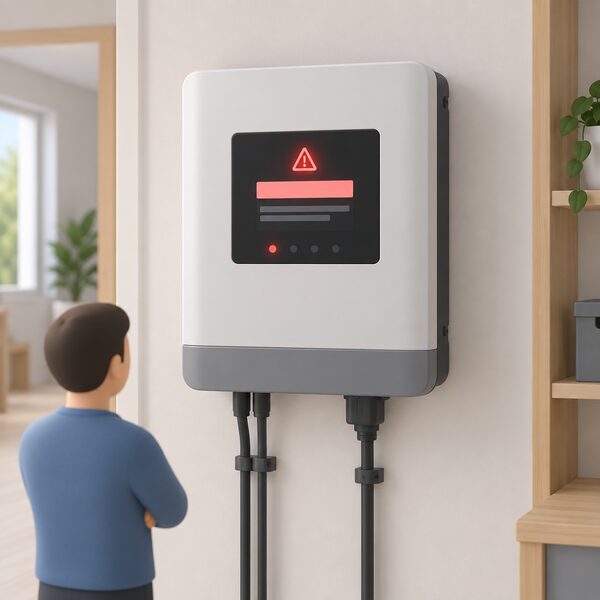
Several questions a buyer would ask first are not answered by SOFAR's published material. The warranty term and registration process are the most significant: no deadline, no portal and no stated duration appear in the company's own documents. The serial number location is likewise unstated, as is the model-level efficiency and the battery compatibility list.
On fault diagnosis, the general rule is that fault codes are not standardised across brands, models or firmware versions, and the same number can have different meanings on different inverter brands and models23. A fault light alone does not identify the problem; the display carries the complete code and fault message23. Grid voltage mismatch is one documented cause of solar inverter faults, and voltage changes on the network are a recognised issue that households can raise with their network operator24.
For a SOFAR unit, that means the maker's own code list is the only reliable reference, and it should be obtained with the installation paperwork rather than looked up from a generic source. Where a code points to a grid voltage issue rather than a fault in the inverter, the network operator is the relevant party, not the manufacturer.
The honest summary is that SOFAR publishes enough to establish what the company is and what its hybrid range covers, and not enough to answer the warranty, compatibility and fault-diagnosis questions a household will eventually face. Those answers have to come from the distributor or installer, in writing, before the order is placed.
Sources24 cited
- SOFAR product catalogue, SOFAR, 2024
- SOFAR CH1000 compatibility datasheet, SOFAR, 2026
- SOFAR inverters, Midsummer Energy, 2026
- SOFAR 3-6KTLM-G3 grid-connected PV inverter, SOFAR, 2026
- Solar panel installation in Hertfordshire, Fuse Energy, 2026
- Guide to solar hybrid inverters, SolaX Power, 2025
- One-brand solar systems in the UK, SolaX Power, 2026
- Residential string inverters, Canadian Solar, 2026
- How does a solar inverter work, Sunsynk, 2026
- Sunsynk 3.6kW All-In-One Elite hybrid inverter, Alternergy, 2026
- North Sea single-phase hybrid inverters, Eleven Energy, 2026
- G99 fast track process, Electricity North West, 2026
- G98 Single Premises, Energy Networks Association, 2026
- G99/NI compliant equipment, NIE Networks, 2026
- What you need to start your G99/NI application, NIE Networks, 2026
- Solar inverter warranty, SolaX Power, 2026
- Sunny Boy Smart Energy, SMA, 2026
- Solar panels, Energy Saving Trust, 2026
- How to choose a good solar installer, Low Carbon Hub, 2025
- Barcud Solar Panel Installation Scheme specification, Sell2Wales, 2026
- 5kW hybrid inverter, Sungrow, 2026
- Single-phase hybrid inverters, Sunsynk, 2026
- Solar inverter fault codes, SolaX Power, 2026
- Managing voltage changes in your property, Electricity North West, 2026
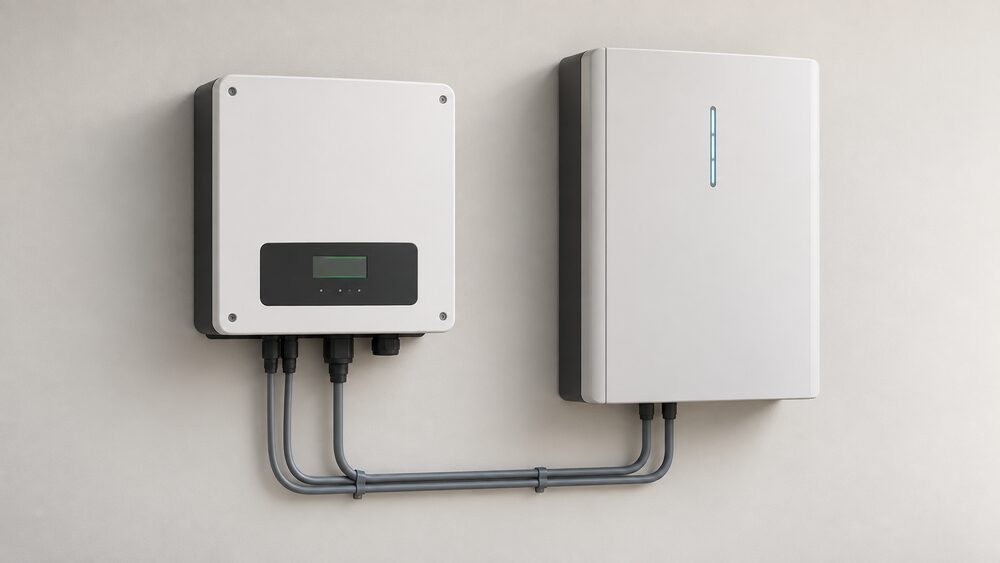
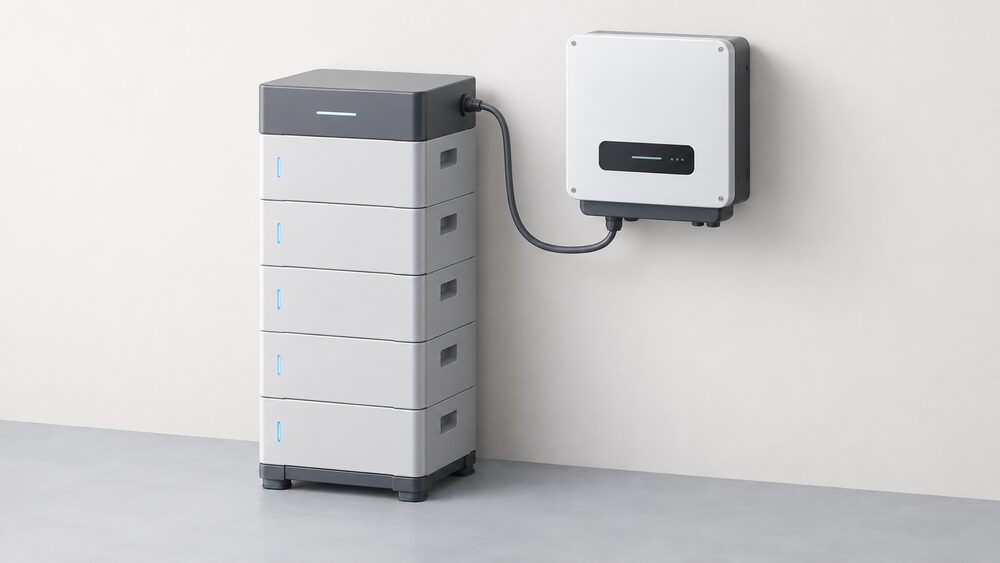 SOFAR Home Battery Storage and Hybrid InvertersSOFAR makes solar inverters and home batteries, and its hybrid inverters work with its own BTS batteries.