In this guide
SOFAR, formally Shenzhen SOFARSOLAR Co., Ltd., is a Chinese manufacturer of solar inverters and battery storage equipment, founded in 2013 and now running two global manufacturing bases1. For a UK household the relevant part of the range is the hybrid inverter line, which spans 3 kW to 20 kW, and the high-voltage BTS battery family that pairs with it1. The company states an annual production capacity of 14GW of PV and storage inverters and 1 GWh of batteries2.
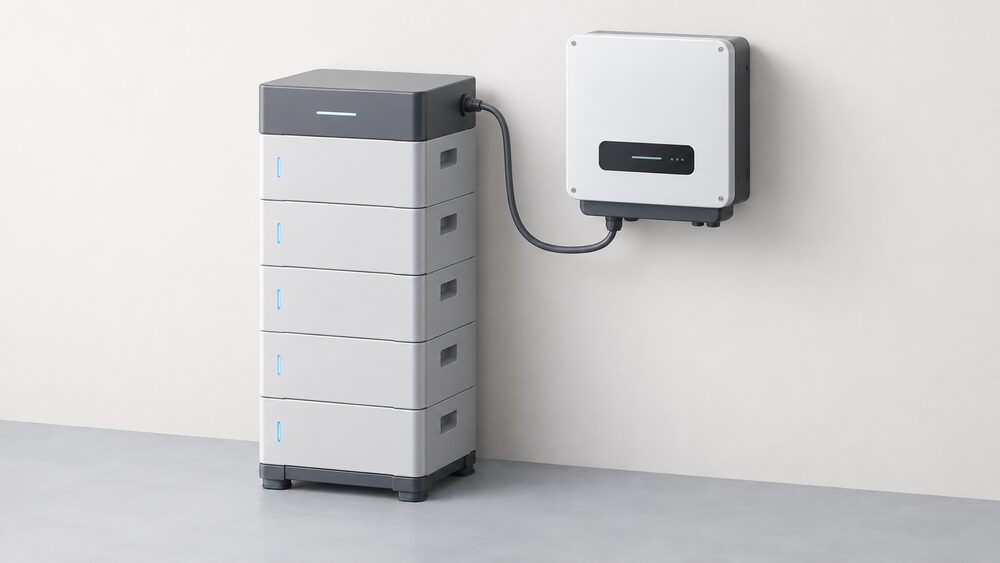
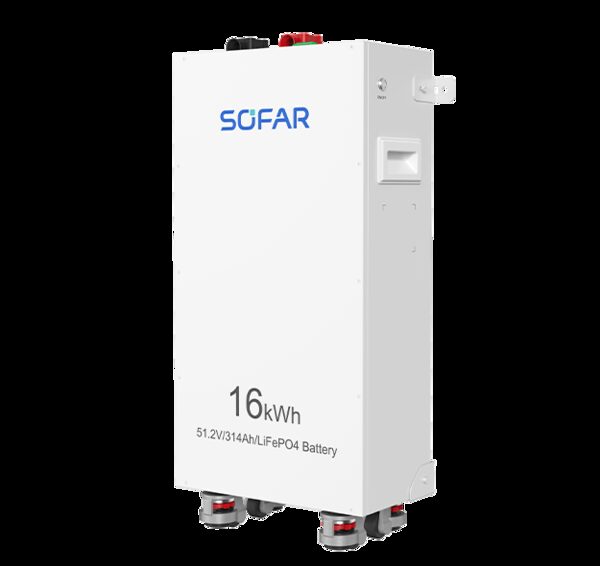
The battery most often discussed for homes is the BTS E5-DSS, a lithium iron phosphate (LFP) unit with a total energy of 5.12kWh per module and a rated capacity of 100Ah3. SOFAR describes it as "energy storage specially for ME/HYD 5K~20KTL-3PH inverters", which is the single most important compatibility fact on this page: the battery is designed around a specific three-phase hybrid inverter family, not around inverters in general3.
That matters for independence in a specific way. A battery of this kind lets a household store its own generation and draw on it later, which is the mechanism by which a home becomes less reliant on grid electricity4. What it does not do is remove the grid, the inverter maker's firmware, or the installer relationship that carries the warranty. The sections below set out what the equipment is, what it pairs with, and where the dependencies remain.
Who SOFAR is and what the company makes
SOFAR was founded in 2013 and describes itself as having two global manufacturing bases, four battery production lines and 16 inverter production lines1. Its stated annual capacity is 14GW of PV and storage inverters and 1 GWh of batteries, and it reports over 20 branch offices worldwide2. By the end of 2023 the company stated it had shipped more than 31 GW of inverters to over 100 countries and regions1.
The product range divides into three groups that matter to a householder. First, grid-tied solar inverters, listed as single-phase single MPPT, single-phase dual MPPT and three-phase dual MPPT models2. Second, hybrid inverters, which combine solar conversion with battery charging and discharging, spanning 3 kW to 20 kW1. Third, the battery packs themselves, in the BTS family3.
The distinction between the first two groups is the one that decides whether a battery can be added at all. A grid-tied inverter converts solar output and nothing else; a hybrid inverter manages a battery alongside it. SOFAR's own battery compatibility statement names the hybrid models, not the grid-tied ones3.
SOFAR's UK standing rests partly on grid-compliance paperwork. SGS-CSTC issued a verification of compliance for SOFARSOLAR AC-coupled storage inverters on 23 September 2022, tested against ENA Engineering Recommendation G99 Issue 1 Amendment 87. That is the engineering standard a UK installer works to when connecting generation to the distribution network, and it is the kind of document a network operator or an MCS-certified installer will ask for.
The BTS E5-DSS battery: modules, capacity and pairing
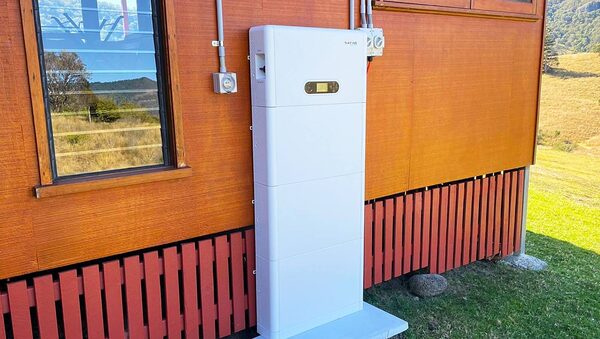
The BTS E5-DSS is built from a BTS 5K battery module and a BTS 5K-BDU battery distribution unit, one of each per stack3. Each module carries 5.12kWh of total energy and 100Ah of rated capacity, and the chemistry is LFP3. The wider BTS E5 to E20 family uses the same LFP chemistry across the range1.
Capacity scales by adding modules. SOFAR lists rated capacities of 100Ah for the E5-DSS, 200Ah for the E10-DSS, 300Ah for the E15-DSS and 400Ah for the E20-DSS, with the same 5.12kWh module energy throughout3. That is a modular design in the ordinary sense: the household buys a stack size now and the architecture allows a larger one.
SOFAR also states that the integrated PCU improves the capacity mismatch problem and that battery available energy is increased by 6%6. That is a maker's figure for its own product and should be read as such, but it addresses a real issue in stacked batteries, where modules of slightly different condition or state of charge limit what the stack can deliver.
The product page describes "user-friendly one-button battery operation", and positions the BTS E5-20-DS5 as suitable for residential energy storage and small-scale commercial and industrial energy storage scenarios6. The same page gives the chemistry as LiFePO4, which is the same material as LFP under its full name2.
| Model | Rated capacity | Module energy | Chemistry |
|---|---|---|---|
| BTS E5-DSS | 100Ah3 | 5.12kWh3 | LFP3 |
| BTS E10-DSS | 200Ah3 | 5.12kWh3 | LFP1 |
| BTS E15-DSS | 300Ah3 | 5.12kWh3 | LFP1 |
| BTS E20-DSS | 400Ah3 | 5.12kWh3 | LFP1 |
Compatibility: built for the ME and HYD three-phase hybrids
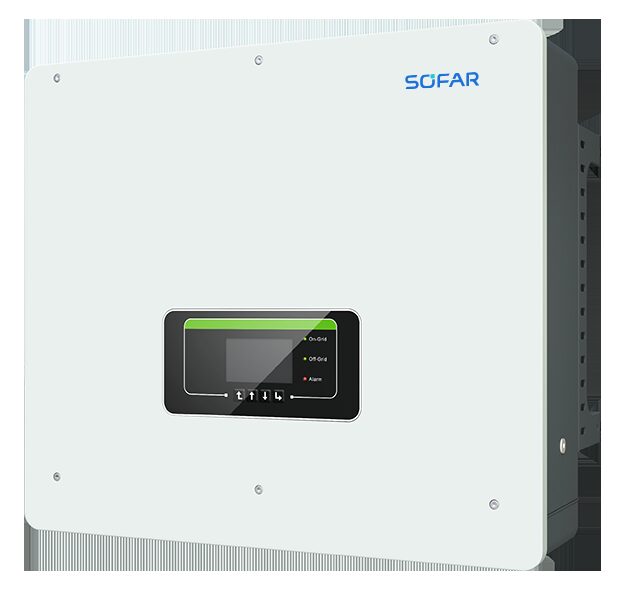
The compatibility statement is narrow and worth reading exactly. SOFAR describes the BTS E5-DSS as "energy storage specially for ME/HYD 5K~20KTL-3PH inverters"3, and the product page repeats it as "energy storage specially for ME/HYD 5-20KTL-3PH inverters"6. The HYD 5 to 10KTL-3PH-G4 datasheet does not list batteries itself; it directs readers to a separate document, the "SOFAR inverter Model compatible battery list"8.
The HYD 5 to 20KTL-3PH range accepts both lithium-ion and lead-acid batteries, with a battery voltage range of 180V to 800V1. The HYD 5 to 10KTL-3PH-G4 datasheet gives a narrower window of 180V to 600V and specifies CAN/RS485 for battery management system communication8. Those two figures differ because they cover different model sets, and the voltage window is the parameter that decides whether a given battery can be connected at all.
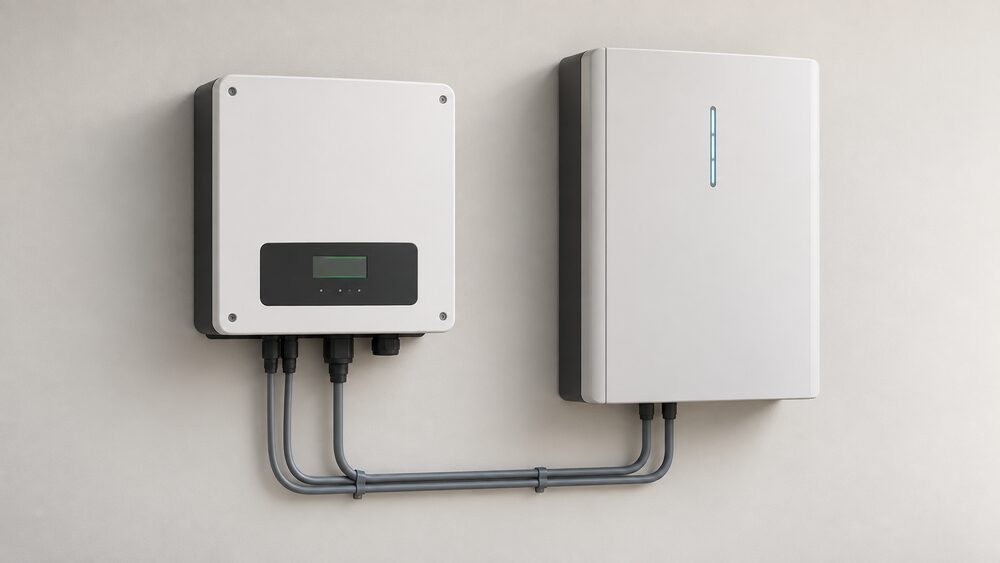
For a household, the practical consequence is that a SOFAR battery is not a general-purpose add-on. It is part of a matched pair with a SOFAR hybrid inverter, and the pairing is documented by the maker rather than left to the installer's judgement. Where an existing system has a different brand of inverter, the compatibility statement does not cover it. The wider question of how AC-coupled and DC-coupled systems differ is set out in AC-coupled and DC-coupled home batteries, and the general rules on matching a battery to an inverter are covered under home battery storage.
Hybrid and AC-coupled options across the range
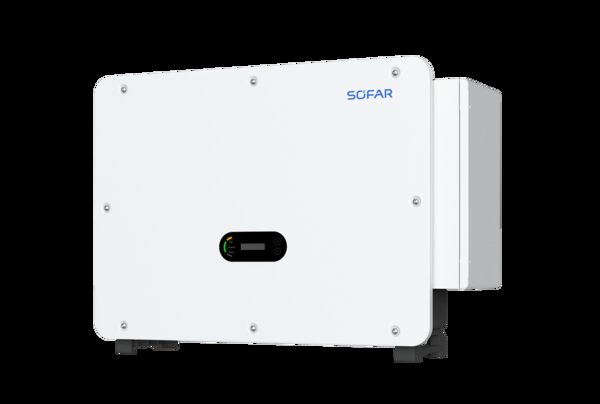
SOFAR's hybrid inverters run from 3 kW to 20 kW, which covers a small flat through to a large house with heavy loads1. The ME and HYD 5K to 20KTL-3PH models named in the compatibility statement are three-phase units3. SOFAR also lists single-phase inverters, described as single-phase single MPPT and single-phase dual MPPT2, and a three-phase dual MPPT grid-tied line2.
That spread matters because the choice between a hybrid and an AC-coupled approach is usually decided by what is already installed. Independent guidance is that AC-coupled batteries are probably better if a household already has PV, because they are easier to retrofit4. A hybrid inverter, by contrast, manages the solar and the battery in one unit, which suits a new installation where both are being specified together.
The distinction between the two architectures is explained in AC-coupled and DC-coupled home batteries. For SOFAR specifically, the battery compatibility statement points at the hybrid route: the BTS packs are designed for the ME and HYD hybrid inverters, not for a separate AC-coupled battery inverter3.
Scale is the other variable. A 5.12kWh module suits a household shifting a modest daily surplus; a four-module E20-DSS stack at 400Ah suits a larger one3. Sizing is not a matter of picking the biggest number, and the method is set out in what size home battery you need. Modular systems that expand later are covered in modular and stackable home batteries.
Scale and standing: shipments, tiering and recognition
SOFAR's own figures put it among the larger Chinese inverter makers: founded in 2013, two global manufacturing bases, 16 inverter production lines and four battery production lines, with capacity of 14GW of inverters and 1 GWh of batteries a year1. The company stated that by the end of 2023 it had shipped over 31 GW of inverters to more than 100 countries and regions1.
Two dated items speak to standing rather than volume. SOFAR was included in the BloombergNEF Energy Storage Tier 1 List for a second consecutive quarter, dated 4 August 2026, and advanced energy storage beyond backup power at Intersolar Europe 2026, dated 1 July 20262. Tiering lists of this kind are used by buyers and financiers as a rough screen on bankability, and a second consecutive quarter is a continuity signal rather than a one-off.
The grid-compliance verification from SGS-CSTC, issued 23 September 2022 against ENA Engineering Recommendation G99 Issue 1 Amendment 8, is the document most relevant to a UK installation7. It covers AC-coupled storage inverters, and it is the evidence a network operator expects when a system is notified under the connection rules. Those rules are explained in telling the network operator about a home battery.
None of this is a warranty or a performance guarantee. Shipment volumes and tiering describe a company's scale and its standing with analysts; they say nothing about how a particular unit will behave in a particular house. The standards that do bear on a UK installation are separate, and are covered in the standards governing home battery installation.
What a SOFAR battery means for household energy independence
The function of a home battery is straightforward: it stores electricity generated during the day so the household can use it at night, and it makes the energy system more independent from the National Grid5. With a battery, surplus solar energy is captured and held for when it is needed, including overnight electric vehicle charging, whereas without one the surplus is either wasted or exported, often at a relatively low rate10.
The independence is real but partial, and it is worth being exact about what remains. A SOFAR system keeps the household connected to the grid for import and export, to a licensed supplier for billing and for any top-up, and to the inverter's firmware and app for monitoring and control. The battery shifts when grid electricity is used; it does not remove the connection. Independent guidance is that home solar batteries are most worthwhile where a household wants backup power, does not have full-retail export rates, or can access cheap overnight charging tariffs11.
There is also a system-level point. Small battery storage is projected to account for around a third of total battery storage deployment capacity by 2040, according to official consultation material12. Households with batteries are therefore part of a larger flexibility picture, and tariffs that pay for exported or stored power are part of how that value reaches them13.
"Home storage batteries store your electricity to use later, making your energy system more independent from the National Grid."
The dependencies that remain are worth naming plainly. The battery needs a SOFAR hybrid inverter to pair with3. It needs an installer to commission it and to carry the warranty registration. It needs the maker's documentation for parameters and fault diagnosis. And it needs the grid for anything beyond what the battery and the solar array can supply on a given day. How far a battery can take a household towards self-sufficiency is set out in how much self-sufficiency a solar home battery can achieve, and the wider picture is in home batteries and household energy independence.
Documentation, registration and support
SOFAR publishes its technical material as dated PDFs on its own site, and the revision dates matter because compatibility tables and parameter windows change between versions. The HYD 5 to 10KTL-3PH-G4 datasheet is dated 17 September 2026 in the material available here8, and the BTS E5-DSS datasheet is dated 17 September 20263. A parameter read from an older revision may not match the current model.
Registration is a condition of warranty cover, and it is time-limited. One Welsh public sector scheme specification requires inverter product registrations that activate guarantees and warranties to be completed within 48 hours of commissioning14. Consumer guidance for plug-in solar systems is to register the product with the manufacturer so that any warranty is activated and so the household can be contacted about a problem or a safety recall15. The general conditions attached to home battery warranties are covered in home battery warranties.
On support, SOFAR states it operates over 20 branch offices worldwide2, but no UK telephone number, address or email is given in the material available here. The practical route runs through the installer who commissioned the system, since the compatibility statement and the battery list are trade documents. Fault diagnosis follows the same path: one documented cause of solar inverter faults is grid voltage mismatch16, which is a network-side condition rather than a battery fault, and distribution network operators publish guidance on managing voltage changes in a property16. For a code on a specific unit, the model manual is the reference.
Installation standards are separate from the maker's documentation and are not optional. Domestic batteries are expected to be installed in compliance with the latest version of the quality and installation standards, including MCS, PAS 63100 and PAS 203517. PAS 63100:2024 covers requirements such as battery and fault management and installation locations18. For PV batteries, evidence of the manufacturer and model of the battery unit and its usable capacity in kWh is required under the relevant conventions19. Battery storage installations are also covered by added guidance under ECO420. The full set of rules is set out in the standards governing home battery installation, and siting is covered in where a home battery can be installed.
Sources20 cited
- SOFAR product catalogue, SOFARSOLAR, 2024
- SOFAR company and product range page, SOFARSOLAR, 2026
- BTS E5-DSS battery datasheet, SOFARSOLAR, 2026
- Battery storage advice, Centre for Sustainable Energy, 2025
- Solar panel battery storage, Which?, 2026
- BTS E5-E20-DS5 residential battery product page, SOFARSOLAR, 2026
- Verification of compliance for SOFARSOLAR AC-coupled storage inverters, Energy Networks Association, 2022
- HYD 5 to 10KTL-3PH-G4 datasheet, SOFARSOLAR, 2026
- Getting smarter with energy, Centre for Sustainable Energy, 2026
- Can solar panels charge electric cars?, The CPA, 2026
- Is a home battery worth it?, Independent Advisor, 2026
- The future for small-scale low-carbon generation, BEIS, 2019
- Batteries in the home, Solar Energy UK, 2026
- Barcud Solar Panel Installation Scheme specification, Sell2Wales, 2026
- Plug-in solar consumer guide, Electrical Safety First, 2026
- Managing voltage changes in your property, Electricity North West, 2026
- Warm Homes Social Housing Fund wave 3 scheme guidance addendum, GOV.UK, 2026
- PAS 63100: protection against fire of battery energy storage systems, BSI, 2024
- RDSAP conventions, version 12, BRE Group, 2025
- Summary of updates to ECO4 delivery guidance and measures table, Ofgem, 2026
 SOFAR Solar InvertersThinking about a SOFAR inverter for your home?