In this guide
Tier 1 is a rating of the manufacturer, not of the panel. It is conferred by Bloomberg New Energy Finance (BNEF), a private commercial research house, and it reflects whether banks have been willing to finance large solar projects built with that maker's modules. It is not a government designation, not a safety mark and not a measure of efficiency or build quality. A Tier 1 badge tells a household that the company behind the panel is large enough and established enough to be financeable at project scale.
The practical consequence is that Tier 1 status is a financing signal that has been repurposed as a sales label. Which? notes that in the UK solar panels are sold via installers rather than direct to consumers, which is why it does not award Best Buys for specific models and instead gives an overall steer on how a brand compares1. Almost three quarters of the solar panel owners Which? surveyed only had one brand of panel offered by their chosen installer, so the badge often arrives as part of a single-brand quote rather than as the outcome of a comparison2.
For a household weighing energy independence, the rating matters in one narrow way: it speaks to whether the manufacturer is likely to still be trading when a warranty claim arises. It says nothing about how much electricity a panel will produce, how it will perform on a UK roof, or whether the installer quoting it is competent. The sections below set out who publishes the lists, what bankability means to lenders, which named manufacturers appear, and where the label stops being useful.
What Tier 1 means: a rating for the manufacturer, not the panel
The single most common misunderstanding is that Tier 1 describes a grade of panel. It does not. The rating attaches to the company, and it is earned by having modules used in projects that banks have financed. A manufacturer can hold Tier 1 status while selling a range of modules of differing efficiency, and a manufacturer outside the list can still make a perfectly serviceable panel.
This is why Which? frames its solar panel testing around brands rather than models. Its stated policy is that it does not award Best Buys for specific models, and instead uses its results to give an overall steer on how a particular brand compares1. The reasoning is structural: because panels reach UK households through installers, a consumer rarely chooses between models on a shelf. The brand is often the only variable actually on offer.
The distinction matters when a salesperson presents Tier 1 as evidence of quality. The rating is evidence of scale and financeability. Quality is addressed by other means: independent testing programmes, certification schemes and the manufacturer's own warranty terms. Solar Keymark, for example, maintains quality through initial type testing and regular controlled inspection of products and their production sites by independent inspectors, and states that it ensures the certified product will provide a good performance4. That is a product-level assurance, and it is a different thing from a Tier 1 badge.
For a household, the useful reading is this: Tier 1 answers a question about the company's standing with lenders. It does not answer questions about the panel's output, its degradation rate or its suitability for a particular roof. Those are answered by the datasheet, the certification and the warranty.
Who publishes the list: Bloomberg New Energy Finance
BNEF is the publisher of the best known Tier 1 list, and it is worth being clear about what kind of organisation that is. It is a commercial research provider, not a regulator, not a standards body and not a government agency. There is no statutory route to Tier 1 status and no legal protection attaching to the term. Any manufacturer, installer or marketing department can use the phrase, and the only meaningful check is whether the company actually appears on the current published list.
The criteria for module makers are widely reported to include having been active for at least five years, with a track record of producing quality panels3. That five-year threshold is a track-record test rather than a performance test. It is designed to filter out newcomers whose modules have not yet been deployed at the scale that would attract project finance.
Because the list is commercial, it is also periodically revised. Inclusion is not a permanent state, and the assessment is repeated. This is the mechanism by which a manufacturer can lose Tier 1 status, and it is the reason a badge quoted in a 2024 sales brochure may no longer reflect the current position.
The UK has its own certification landscape that operates on entirely different principles. Flexi-Orb, for instance, states that its Solar PV Product Standard Policy is intended to facilitate the UK renewable energy industry, especially solar panel manufacturers, and to avoid duplicate certification applications and testing where there is no benefit to the consumer or manufacturer5. That is a conformity scheme with published standards. Tier 1 is a market ranking. The two are not substitutes, and a household checking a manufacturer's credentials would do better to look at certification first and the Tier 1 list second.
Named Tier 1 manufacturers: Canadian Solar, JA Solar, LONGi, SunPower and Trina
The manufacturers most often named in UK residential quotes are large, internationally traded module makers. Their presence in the Tier 1 conversation reflects their scale in project markets rather than any assessment of the panels sold to households.
JA Solar is described as one of the original members of the Solar Module Super League, an informal industry grouping6. Among JA Solar panel owners surveyed, 13% said they chose it from several brands recommended by their installer, which suggests a brand that is frequently on a shortlist rather than the only option presented6.
LONGi occupies a different position in the UK market. Nearly half of those who owned LONGi solar panels in a Which? survey said they had chosen them as the only brand fitted by their chosen installer2. That is a striking figure, because it means the brand decision was effectively made by the installer rather than the household. It is not evidence about panel quality either way, but it is a clear illustration of how little choice many buyers actually exercise.
Trina Solar makes and sells solar PV panels for homes and businesses, as well as energy storage for large commercial customers7. Its project activity is substantial: Trina supplied 184,328 Vertex N 695W modules to the 126 MW Sarimay Solar PV power plant in Uzbekistan, described as fully commissioned on 9 September 2026, and Trina Storage was selected to supply the battery energy storage system for Stage One of Frontier Energy's Waroona Renewable Energy Project in Western Australia on 14 September 20267. Those are utility-scale facts, and they are the kind of deployment that underpins a bankability rating.
SunPower is the cautionary entry. It held Tier 1 status and still failed, which is the clearest available demonstration that the rating is not a solvency guarantee. Households holding SunPower or Maxeon warranties face the consequences of that failure directly, and the practical position for owners is set out in SunPower and Maxeon: the failure and what owners face.
| Manufacturer | Position in the UK residential market | Notable fact |
|---|---|---|
| JA Solar | Frequently shortlisted by installers | One of the original members of the Solar Module Super League6 |
| LONGi | Often the only brand offered | Nearly half of owners surveyed had no alternative brand2 |
| Trina Solar | Panels for homes and businesses, plus commercial storage | Supplied 184,328 modules to a 126 MW plant, commissioned 9 September 20267 |
| SunPower | Failed despite Tier 1 status | Warranty position covered separately1 |
What bankability means and why lenders care
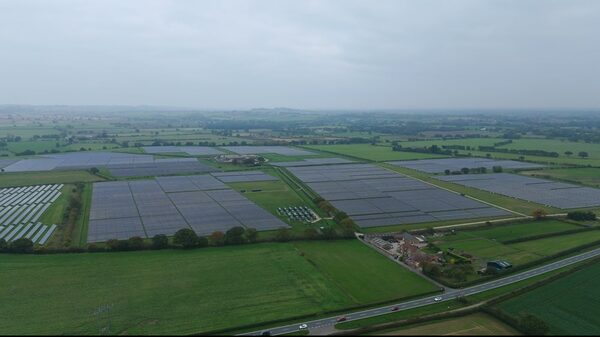
Bankability is the underlying concept and Tier 1 is the published label. A module is bankable if a lender will accept it as collateral-grade equipment in a financed project, which in practice means the lender believes the manufacturer will still exist to honour performance guarantees over the life of the loan. That is why the criteria lean on track record rather than laboratory results.
The logic is straightforward once the scale is understood. A solar farm is financed against decades of expected generation, and the performance warranty on the modules is part of the security. If the manufacturer disappears, the warranty is worthless and the lender's assumptions weaken. Tier 1 exists to give lenders a shortlist of manufacturers whose continued existence is a reasonable bet.
For households, the same logic applies at a smaller scale, and it is the reason the rating is worth knowing about at all. A 25 or 30 year performance warranty is only as good as the company standing behind it. The difference is that a household cannot diversify across a portfolio of manufacturers the way a lender can across a portfolio of projects.
There is a further wrinkle in the UK market. The financial case for a domestic installation depends heavily on what the household is paid for exported electricity. Energy Saving Trust states that the level of savings depends strongly on export tariffs, with the best Smart Export Guarantee rates significantly increasing returns8. The Smart Export Guarantee ensures homeowners and businesses who generate renewable electricity, such as from solar panels, can earn payments for exporting excess electricity to the National Grid9. Eligibility requires solar panels or small wind of 5MW or less, or micro CHP of 50kW or less, installed in the home or business10.
That export income is a contract with an energy supplier, not with the panel manufacturer. It is worth separating the two in the mind: the manufacturer's bankability affects the warranty, while the supplier relationship affects the export revenue. Neither substitutes for the other.
What a Tier 1 rating does and does not tell you about panel quality
Tier 1 tells you that a manufacturer is financeable at project scale. It does not tell you the efficiency of a particular module, its degradation curve, its performance in diffuse UK light, or how it behaves on a shaded roof. Those are product questions, and they are answered by test data and certification.
The gap between the two is where most sales misrepresentation happens. A quote that leads with Tier 1 status and says nothing about the module's warranty terms, its certification or its expected output is using a company-level rating to imply a product-level claim. The rating cannot carry that weight.
Independent testing fills part of the gap. Which? runs a solar panel testing programme, and its decision not to award model-level Best Buys is a direct consequence of how the UK market is structured1. Certification schemes fill another part. Solar Keymark's assurance rests on initial type testing and regular controlled inspection of products and production sites by independent inspectors, and it states that this ensures the certified product will provide a good performance4.
"This level of quality is maintained by initial type testing and by regular controlled of the products and their production sites by independent inspectors"
There is also a safety dimension that Tier 1 does not touch. The Electrical Contractors' Association, responding to the government's Future Homes Standard, warned that safety could be compromised, a reminder that installation quality and product conformity are separate concerns from manufacturer scale11. A Tier 1 module fitted badly is still a badly fitted module.
The honest summary is that Tier 1 is a useful filter for one specific risk, the risk that the manufacturer will not be around to honour a warranty. It is not a quality grade, and treating it as one leads households to pay a premium for a badge rather than for a better panel.
Tier 1 beyond panels: inverters and storage on the same logic
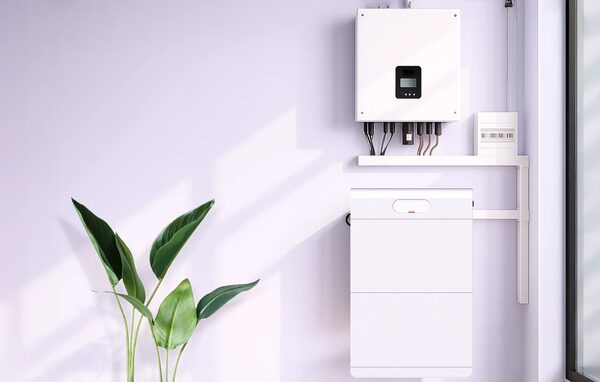
The same bankability logic is applied to other equipment categories, and the lists are published separately. A manufacturer that is Tier 1 for modules is not automatically Tier 1 for inverters or batteries, and the distinction is frequently blurred in marketing.
BNEF maintains a separate Energy Storage Tier 1 list and a Tier 1 Power Inverter List. Pylontech reported consecutive recognition on the Energy Storage Tier 1 List, in a statement dated 3 August 20263. GoodWe reported inclusion in the Tier 1 Power Inverter List for the sixth consecutive quarter, in a statement dated 1 September 20263. Sungrow reported retaining the number one position in the 2025 S&P Global PV inverter shipments rankings, in a statement dated 6 August 20263. These are separate assessments from the module list, and each covers a different product category.
For a household, the practical point is that a system is only as bankable as its weakest component. A Tier 1 module paired with an inverter from a manufacturer with no track record leaves the inverter warranty exposed. The UK pages on solar inverter and microinverter manufacturers and home battery storage manufacturers set out the ranges and warranty positions for those categories.
There is a UK-specific tax treatment that reinforces the case for treating the system as a whole. The combined installation of solar panels and a battery for storage of power generated from the solar panels is treated as a single supply of the installation of solar panels for VAT purposes, where the installation is carried out at the same time, the customer perceives a single supply, and the battery is a better means of enjoying the principal supply of solar panels12. Solar panels themselves qualify for a lower rate of VAT13, and they are listed among energy-saving materials in the relevant legislation14.
The VAT position is a reminder that the household is buying an installation, not a set of independently rated components. Bankability ratings are useful at component level, but the thing being financed and warranted is the system.
How Tier 1 status fits a household's energy independence
Energy independence for a household means generating its own electricity and reducing what it draws from the grid. The equipment choice affects how much of that independence is achievable, and the manufacturer's survival affects how long the system can be kept working.
Tier 1 status contributes to that in a limited but real way. A manufacturer likely to still be trading in fifteen years is more likely to honour a performance warranty, supply a replacement inverter under warranty, or provide technical support. That supports the longevity of the installation, which is what makes the independence durable rather than temporary.
What Tier 1 does not do is remove dependence. A grid-connected solar system still relies on the grid for import when generation is low, and on a supplier for the export payments that make the financial case work. The Smart Export Guarantee is a supplier contract, and its value depends on tariff levels rather than on the panel brand8. A household that wants to understand the full picture of what it still depends on should read manufacturers and household energy independence.
There is also a community route that changes the dynamic. Solar Together Wirral is described as a group-buying scheme which brings households together to get high-quality solar panels at a competitive price15. Group buying shifts some of the purchasing power back to households, though it does not change the underlying manufacturer risk.
The National House Building Council's view is that, providing the maintenance costs and pay-back periods are accurately predicted, this reliable technology has a role16. That is a measured endorsement, and it points to the real determinants of a good outcome: accurate cost prediction, competent installation and a manufacturer that survives. Tier 1 speaks to the last of those three and to nothing else.
For a household assembling a picture of a manufacturer, the useful sequence is to check certification and product listing first, then the warranty terms and who actually backs them, then the Tier 1 position as a secondary signal about longevity. The pages on manufacturer certification and approvals and manufacturer warranties on home energy equipment cover the first two. Tier 1 is the third, and it is the weakest of the three as evidence about the panel on the roof.
Sources16 cited
- How we test solar panels, Which?, 2026-08-12
- LONGi solar panels review, Which?, 2024-04
- How long do solar panels last?, Uswitch, 2026-07-13
- Solar Keymark for public authorities, Solar Keymark, 2026-09-17
- Flexi-Orb Solar PV Scheme consultation announcement, Flexi-Orb, 2020-02-26
- JA Solar solar panels review, Which?, 2026-08-12
- Trina Solar solar panels review, Which?, 2026-08-12
- Supporting households with low carbon technology combinations, Energy Saving Trust, 2026-07-15
- Consumer grants and incentives, EPVS, 2025-06-26
- Smart Export Guarantee, MCS Certified, 2026-04-27
- ECA welcomes government's Future Homes Standard but warns safety could be compromised, ECA, 2026-03-25
- VAT energy saving materials: VENSAV3210, HMRC, 2026-09-17
- Tax on shopping: energy saving products, GOV.UK, 2026-09-17
- Value Added Tax Act 1994, Schedule 7A, legislation.gov.uk, 2026-09-17
- Solar panels, Wirral Council, 2026-09-17
- Research briefing CBP-10170, House of Commons Library, 2026-09-17
 Solar Mounting System MakersWhich solar mounting brands might appear on your quote, and does the maker actually matter?
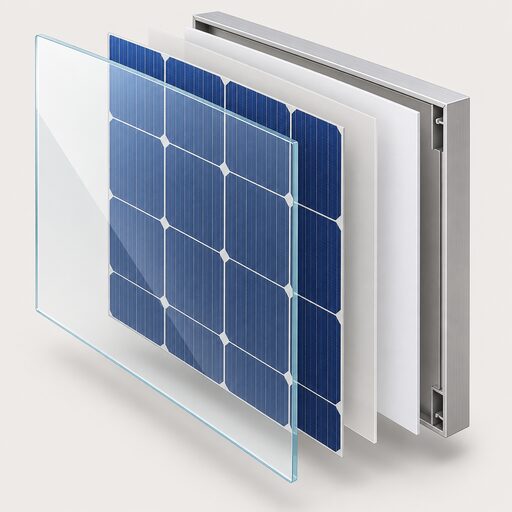 Solar Panel Manufacturers UKWhich solar panel brands are actually worth buying in the UK, and who really makes them?
 Comparing Specs Like for LikeTwo solar panels or heat pumps can look different on paper even when they do the same job.
 Manufacturer Approved NetworksDoes an approved installer badge mean better work, or just a longer warranty on the boiler or heat pump?
 Energy Independence and MakersWhich brands let you keep control of your heating, solar or car charging, and which tie you to their app and their cloud?
 The Full Brands GuideWhich boiler, heat pump or solar brand can you trust, and who actually owns it?