In this guide
A household replacing a boiler in Britain is choosing from a short list of manufacturers. Consumer guidance names Worcester Bosch, Vaillant, Alpha, Viessmann and Ideal as the brands a new UK boiler is likely to be1, and a separate review of the gas boiler market records that big names such as Baxi, Vaillant and Worcester Bosch dominate it2. Beyond that core group, brand satisfaction surveying covers Alpha, Ariston, ATAG, Biasi, Baxi, Ferroli, Glow worm, Ideal, Intergas, Keston, Main, Navien, Potterton, Vaillant, Viessmann, Vokera and Worcester Bosch, giving a fair picture of what is actually installed in British homes2.
Much of this equipment is made here. Around 70% of the roughly 1.4 million natural gas boilers sold each year are produced in the UK3, and one heat industry baseline puts UK manufacture at 80% of fossil fuel appliance sales4. Around 1.5 million boilers go into existing homes each year5. The dominant product is the condensing gas combi: condensing gas boilers are by far the most common boiler type in UK homes6, a combination boiler is the most common type of boiler in the UK7, and 80% of boilers sold in the UK are combination heat and water boilers8.
The maker matters because the appliance is central to the home's energy use and because support, parts and warranty all run through that company for a decade or more. Boilers are the most common heating type in UK homes9, and UK homes use around 35% of the UK's energy10. This page sets out the brands, the ranges, the specifications worth comparing and the servicing duties, without ranking any manufacturer.
What a boiler does for a household, and how dominant boilers are
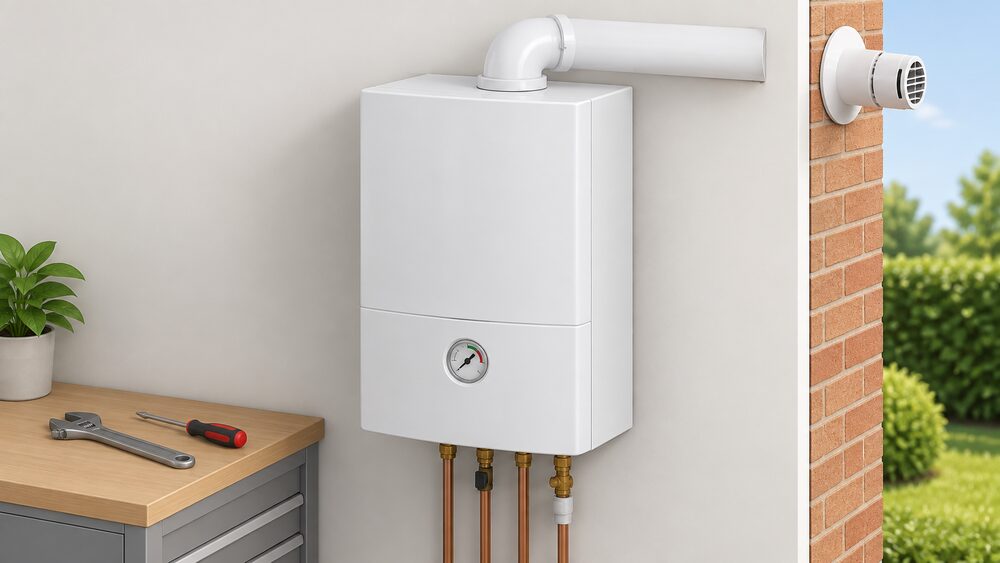
A boiler burns fuel, or in electric models uses resistance heating, to raise the temperature of water that circulates to radiators and, in most systems, to taps. Its share of the housing stock is large by any measure, though the published figures differ according to what is counted. Around 85% of UK homes are heated by a natural gas boiler11, a figure echoed at approximately 85% of households still relying on natural gas boilers15 and at 85% of UK homes using a gas boiler for heating16. A gas network study gives a lower share, stating that most households, 73%, rely on gas boilers for central heating and hot water and that gas boilers provide warmth to over 70% of households17. Counted in absolute terms, 23 million homes use gas boilers for central heating and hot water18.
The national picture varies. In Scotland, 89% of all dwellings use a boiler of any fuel type to heat the home19, and around 87% of Scottish households use a gas or oil fuelled boiler20. In Northern Ireland, more than two thirds of homes use oil boilers as their main source of heating21, which is why oil manufacturers and oil-specific ranges matter far more there than in most of Great Britain.
For energy independence, the significance is blunt. A gas or oil boiler ties the household to a fuel supply chain it does not control: much of the energy consumed in British homes does not originate in Britain and its price is often dictated by international markets22. The boiler itself may be British-built, but the fuel, and therefore the bill, is not.
The main brands supplying UK homes

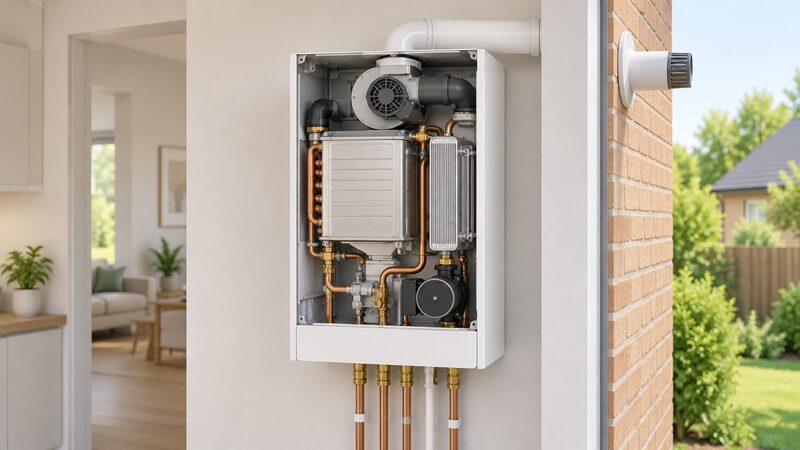
The brands most householders meet fall into a handful of groups. Detailed brand pages cover Worcester Bosch, Vaillant, Ideal Heating, Baxi, Viessmann and Grant, and ownership of the smaller names is set out under parent groups.
| Brand | Position in the UK market | Source type |
|---|---|---|
| Worcester Bosch | Named among brands dominating the gas boiler market2; 872 owners in the 2025 brand survey2 | Independent |
| Vaillant | Named among dominant brands2; largest survey sample at 1,137 owners2 | Independent |
| Baxi | Named among dominant brands2; 908 owners surveyed2 | Independent |
| Ideal | Named as a likely brand for a new UK boiler1; 903 owners surveyed2 | Independent |
| Viessmann | Named as a likely brand for a new UK boiler1 | Independent |
| Alpha | Named as a likely brand for a new UK boiler1; 461 owners surveyed2 | Independent |
| Glow worm, Intergas, Ariston, ATAG, Keston, Main, Navien, Potterton, Ferroli, Biasi, Vokera | Covered in the same brand survey at smaller sample sizes2 | Independent |
Longevity is one axis on which independent guidance distinguishes them: boilers from popular brands such as Viessmann, Vaillant or Worcester Bosch tend to last longer as they are of higher quality23. That is a general observation about build, not a performance guarantee, and the same guidance frames a boiler for every brand as a purchase made once every 10 to 20 years24.
Manufacturing location is not the same as brand nationality. The Vaillant ecoTEC pro range is engineered in Germany and manufactured in the UK26, which is typical of the pattern behind the 70% UK production share3. Where a product is built, and what that means for spare parts lead times, is treated further under where home energy products are made and spare parts and technical support.
Combi, system and heat-only: what each maker offers
Nearly every mainstream manufacturer sells all three configurations, plus oil variants where they serve that market. Independent price tables cover gas combi, gas heat-only, gas system, oil combi, oil heat-only and oil system27, which is a fair summary of the product grid a household chooses within.
- Combi. Heats water on demand with no cylinder. The most common type of boiler in the UK7, and 80% of UK boiler sales8.
- System. Works with a sealed cylinder, suited to homes with several bathrooms or high simultaneous demand.
- Heat-only (regular). Works with a cylinder and feed tanks. The cheapest type of boiler to buy6.
Boilers are one of three broad heating families in the UK alongside low carbon heating and electric heating9. Electric boilers sit at the edge of the category: manufacturers still recommend that electric boilers are serviced annually even though there is no combustion28. Electric models remove the gas connection but leave the household entirely dependent on mains electricity, a point developed on the electric heating manufacturers page.
Typical output ranges from two of the makers illustrate how the grid is filled out in practice:
| Model | Type | Outputs |
|---|---|---|
| Ideal Independent | Combi | 24, 30, 35 kW29 |
| Ideal i2 | Combi | 24, 30, 35 kW29 |
| Vaillant ecoTEC pro | Combi | 24, 28, 30 kW30 |
| Vaillant ecoTEC plus | System | 12, 15, 18, 24, 30 and 37 kW31 |
| Vaillant EcoFit Pure | System | 12, 15, 18, 25, 30 kW30 |
Oil-fired options and the through-the-wall combi

Oil matters disproportionately outside the gas grid and in Northern Ireland, where more than two thirds of homes use oil boilers as their main heating source21. Oil ranges follow the same three configurations as gas, and independent price tables list oil combi, oil heat-only and oil system products separately from their gas equivalents27.
One product occupies a distinct niche. The Grant Wallstar Combi Max is a combination oil boiler that the maker states is the only through the wall oil-fired combi on the market32. A through-the-wall arrangement puts the appliance body outside the dwelling, which frees internal space in homes where an oil boiler would otherwise need a utility room or outbuilding. That is a manufacturer's own claim about its own product and has not been verified against an independent survey of the oil boiler market.
Specifications worth comparing like for like
Comparing manufacturers honestly means comparing the same figures. Four groups of numbers carry most of the weight.
Output in kW. The headline figure for a combi describes hot water performance more than space heating need; oversizing is common where the buyer treats a higher kW as better. The ranges above show that a single model family typically spans three to six outputs29.
Efficiency and rating. New boilers must be A-rated under the ErP requirement, but how efficiently a boiler works in practice depends on several factors33. That is the crucial caveat: the rating is a laboratory figure, and installed flow temperature determines whether the appliance condenses at all in service.
Flow rate and pipework. Hot water flow rate in litres per minute is the number that decides whether a combi satisfies a household, and it should be compared model to model at the same stated temperature rise, since a figure quoted at a smaller rise will always look better. Incoming mains flow and pipe size cap what any combi can deliver, so the rated figure is a ceiling rather than a promise.
Dimensions, clearance and flue. Physical fit governs whether a replacement drops into the existing space. General guidance advises at least 60 mm clearance if the boiler is housed in a cupboard34. Flue gas temperature is bounded by regulation: modern boilers bearing the CE mark, indicating compliance with the Boiler (Efficiency) Regulations 1993, normally have a flue gas temperature not exceeding 250C35. Each manufacturer publishes its own clearances and flue run limits in the installation manual, and those figures govern.
For the wider method of putting two datasheets side by side, see comparing manufacturer specifications and how energy products are tested.
Lifespan: 10 to 15 years, and the case for replacement

The most frequently cited figure is that the average lifespan of a boiler is 10 to 15 years12, repeated as 10 to 15 years in a household that has been regularly serviced and looked after23 and as a 10 to 15 year lifespan in heating comparisons36. Official planning guidance works on a current boiler lifespan of around 15 years37, and one policy analysis assumes the average boiler has a life span of 15 years when modelling net zero timelines38. Other guidance sets the practical ceiling higher: a well maintained boiler can last up to 15 years, with a minimum lifespan of ten years and replacement recommended at 1539, while in some cases boilers go longer than 15 years and even up to 2023. Consumer reviews of multiple brands frame the purchase as one made once every 10 to 20 years24.
The spread is explained by maintenance and duty rather than by disagreement over the technology. Regular servicing is the variable each source attaches the longer figures to23.
Replacement becomes the reasonable option when repair costs approach a new appliance, when parts for an older model are no longer held, or when the existing unit is not condensing effectively. Warranty length is a separate matter from lifespan: gas boiler manufacturers can offer ones that last up to 10 years or more28, so a well chosen guarantee can cover most of the expected life. Registration conditions and what voids cover are dealt with under manufacturer warranties and warranty registration.
Servicing: annual, and who arranges it
Every source in this area converges on the same interval. A boiler should be serviced every year by a Gas Safe registered engineer41, at least once a year, in other words every 12 months34, and on an annual basis as a general recommendation42. Energy Saving Trust recommends getting a boiler or heat pump serviced every year to make sure it is running properly43. The Chartered Institute of Plumbing and Heating Engineering describes an annual boiler service as essential and a relatively inexpensive piece of maintenance44. Electric boilers are not exempt: manufacturers still recommend annual servicing28.
Costs, all UK, read as follows.
| Service | Cost | As of |
|---|---|---|
| Boiler service, average | around £90 to £10013 | 2026 |
| Boiler service, Checkatrade average | £10013 | March 2026 |
| Oil boiler service | around £90 to £9513 | 2026 |
| Independent engineer, one off | around £70 to £11041 | 2025 |
| HomeServe annual service | £12645 | 2026 |
| HomeServe cover | from £6.99 a month45 | 2026 |
British Gas includes an annual boiler service as standard across the entire HomeCare range46. Manufacturer-run alternatives are covered under manufacturer service plans.
In rented homes the duty sits with the landlord. In rented accommodation the landlord is responsible for servicing boilers and appliances annually and must provide an up to date gas safety record, which is a legal requirement47. Insurance guidance puts it the same way: a landlord is legally required to service a boiler on an annual basis in all of their properties42, and the landlord should arrange and pay for the service43. Under the Northern Ireland Sustainable Energy Programme, the homeowner or landlord is responsible for arranging and paying for the annual service after installation48.
"your landlord is responsible for servicing boilers and appliances annually"
Running settings: pressure, flow temperature and cold weather
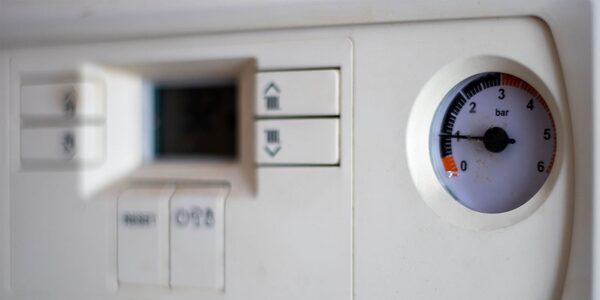
Normal household boiler pressure should be between 1 and 2 bar34, with slight variance depending on the boiler manufacturer. Flow temperature is where the gap between rated and delivered efficiency opens: a boiler set higher than it needs to be spends less of its running time condensing, so the seasonal figure drifts below the laboratory one. Understanding how a boiler works and how to set it correctly could help to reduce a heating bill14, and a yearly service on a boiler or heat pump keeps it running properly34.
What the choice of maker means for energy independence
A boiler is an appliance of dependence, and choosing between manufacturers changes some dependencies and not others. It does not change the fuel: much of the energy consumed in British homes does not originate in Britain and its price is often dictated by international markets22. It does not change the electricity requirement, since the controls and pump stop in a power cut49. What it does change is where the household stands for parts, warranty service and installer coverage over the 10 to 15 year life of the appliance12, and whether the manufacturing base is domestic: around 70% of gas boilers sold here are UK-produced3, and one industry baseline puts UK manufacture at 80% of fossil fuel appliance sales4. Where a manufacturer has failed, the position for owners is set out under orphaned products.
Policy is also reshaping the manufacturer list. Government has pursued supply-side measures including obligations on boiler and heat pump manufacturers, and potentially energy companies, to deliver a certain number of low carbon heat installations each year51. Under the design analysed for such a mandate, the amount a manufacturer pays in penalties would depend linearly on the extent to which it meets its target, which depends linearly on the number of gas boilers it manufactures52. The Clean Heat Market Mechanism applies to manufacturers that sell more than 19,999 gas boilers, or 999 oil boilers, to the UK market53. Boiler makers are therefore also becoming heat pump makers, a shift traced on the heat pump manufacturers page and across manufacturers and energy independence.
Regulatory requirements differ between the nations in ways that affect what is installed. BEIS decided not to make the English Boiler Plus standard a specific requirement of the Energy Company Obligation throughout Great Britain, so installations follow the building regulations of each nation54. A household in Wales, Scotland or Northern Ireland should expect the local regulations, not an English standard, to set the controls and efficiency conditions on a replacement.

Sources54 cited
- New boiler cost guide, Uswitch, 2024-11-06
- Best gas and oil boiler brands, Which?, 2025-09-17
- Heat and buildings investor factsheet, GOV.UK, 2026-06-23
- From Carbon to Competitiveness, Heat Pump Association UK, 2026-01
- Three steps to unlocking heat pumps, Nesta, 2026-07-27
- Different boiler types, Uswitch, 2026-09-18
- What are the different types of boiler, Which?, 2025-09-16
- Boiler statistics, Uswitch, 2024-01-04
- Heating your home, Energy Saving Trust, 2026-05-19
- Routes to retrofit, Low Carbon Hub, 2023-09-29
- Hydrogen boilers: what you need to know, Which?, 2026-09-17
- Tips to improve the EPC rating of your home, Energy Saving Trust, 2026-08-03
- How much does a boiler service cost, Uswitch, 2026-09-03
- What to do if your boiler breaks down at Christmas, Which?, 2025-12-12
- Warming to heat pumps, CIPHE, 2025-10-09
- What is operational carbon in buildings, UKGBC, 2026-09-20
- The Future of the Gas Network: recommendations for hybrid heating, Cadent Gas, 2025-04
- Domestic heating technology options, Nesta, 2025-02-03
- Scottish House Condition Survey 2024: key attributes of the housing stock, Scottish Government, 2024
- Scottish House Condition Survey 2024 key findings, Scottish Government, 2026-02
- The best heating for your home, Which?, 2025-09-22
- Household energy: buying British, ECIU, 2024-04-15
- How long does a boiler last, Uswitch, 2024-11-13
- Worcester Bosch boilers review, Which?, 2025-09-17
- Baxi boilers review, Which?, 2025-09-17
- Vaillant ecoTEC pro range, Quiet Mark, 2026-09-17
- Boiler prices: how much does a new boiler cost, Which?, 2025-09-17
- Electric boilers: what you need to know, Which?, 2025-09-17
- Ideal boilers review, Which?, 2025-09-17
- Vaillant boilers review, Which?, 2025-09-17
- Vaillant ecoTEC plus system boiler range, Quiet Mark, 2026-09-17
- Wallstar Combi Max, HRM Boilers, 2025
- Vokera boilers review, Which?, 2025-09-17
- Boiler maintenance guide, Uswitch, 2026-09-03
- Building regulations guidance Part J: heat producing appliances, Welsh Government, 2026-09-17
- Heat pumps vs boilers, CPA, 2025-02-18
- Heating and hot water, Planning Portal, 2026
- The UK needs a new plan for phasing out boilers, Nesta, 2025-01-21
- New boiler guide, Uswitch, 2025-03-21
- Ariston boilers review, Which?, 2025-09-17
- Getting the best boiler service, Which?, 2025-09-17
- Boiler servicing guide, Confused.com, 2025-07-23
- Take control of your heating at home, Energy Saving Trust, 2026-09-11
- Six reasons to service your boiler now, CIPHE, 2021-09-07
- HomeServe boiler cover, Uswitch, 2026-09-17
- British Gas HomeCare, Uswitch, 2026-06-01
- Gas safety and carbon monoxide, nidirect, 2025-11-24
- Northern Ireland Sustainable Energy Programme, Energy Saving Trust, 2026-09-07
- Storms and bad weather, Energy Networks Association, 2026-09-17
- My boiler isn't working, SGN, 2026
- Taking stock of the UK government's Heat and Buildings Strategy, Climate Change Committee, 2022-03-09
- Assessing government plans to obligate boiler manufacturers to support heat pumps, Nesta, 2022-04-20
- Clean Heat Market Mechanism, MCS, 2026-05-08
- ECO4 scoring methodology decision, Ofgem, 2022-04-12
 The Full Brands GuideWhich boiler, heat pump or solar brand can you trust, and who actually owns it?
 The Full Energy Suppliers GuideWho the UK's domestic gas and electricity suppliers are, how the market is structured across Great Britain and Northern Ireland, what a supplier is licensed and obliged to do, how the price cap limits bills, what happens when a supplier fails, and who regulates it all.
 New Boiler Cost in the UKWhat a replacement boiler costs in the UK by type and fuel, and what drives the installation element: conversions, relocations, flue work and system upgrades.
 Will Gas Boilers Be Banned?What has actually been legislated, proposed or dropped on gas and oil boiler phase-out across the four UK nations, and the difference between new build rules and replacement in existing homes.
 Who Owns Which Energy BrandMaps the corporate groups that sit behind familiar UK boiler, cylinder, heating and renewables brands, and which names are badges rather than separate factories.
 Gas Boilers GuideMains gas boilers heat around 23 million UK homes.