In this guide
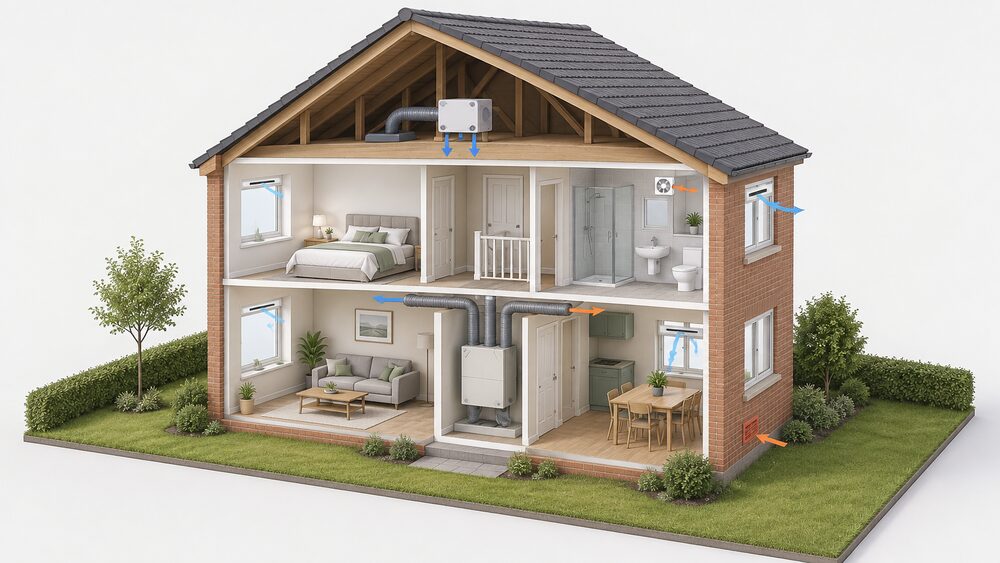
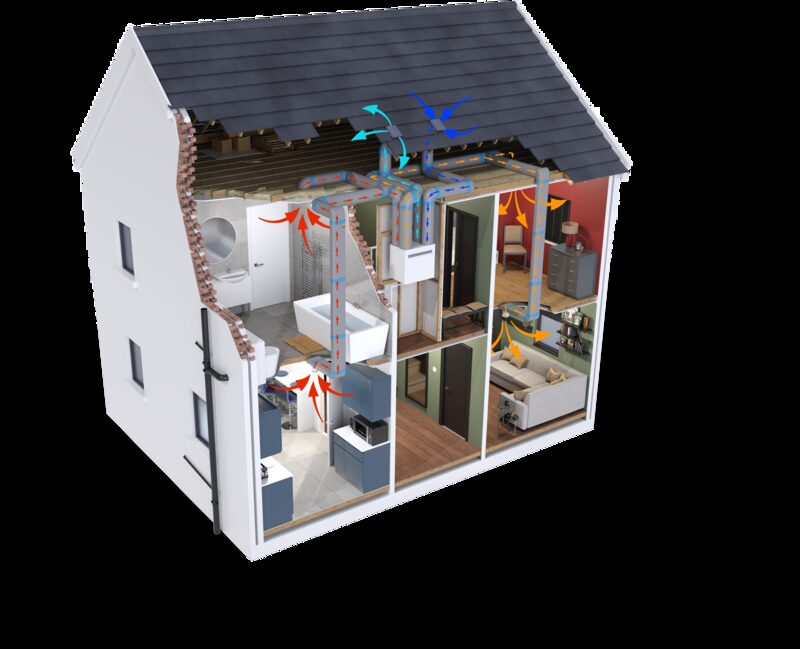
Ventilation equipment for UK homes is made and supplied by a defined group of manufacturers, and in the UK they are represented collectively: the BEAMA Ventilation group represents leading UK manufacturers and suppliers of ventilation products and equipment1. The products they sell into homes fall into a small number of families: intermittent and continuous extract fans, positive input ventilation (PIV) units that push filtered air in from a loft, and mechanical ventilation with heat recovery (MVHR) systems that supply and extract through ducting while recovering heat from the outgoing air. Passive provision sits alongside them, in the form of airbricks, wall vents and trickle vents in modern windows, and extractor fans are listed among the same set of deliberate ventilation openings that draught proofing must not block2.
The reason this equipment is bought is air quality rather than comfort alone. BEAMA has stated that 65% of UK homes contain polluted air, from mould, condensation and household items3. Cost sits at the other end of the decision: for decentralised MVHR, prices start from £600 per fan, and for whole-house MVHR systems they start from around £3,000 but could cost well over £10,000, according to the Centre for Sustainable Energy4. Those are guide figures for the system type rather than a quoted price for any named model.
The certification most visible on ventilation and heating product listings is Quiet Mark. It launched in January 2012, and by March 2022 over 1,000 appliances and acoustic materials from more than 90 global brands across more than 70 product categories had been certified5. It is a relative threshold, not an absolute sound limit: between only 10% to 20% of the quietest, best performing products in a category are awarded certification, and categories are re-evaluated annually6.
What "ventilation manufacturer" means for a UK household
A ventilation manufacturer, in the context of a UK home, is a company that designs and builds the fan units, PIV units, heat recovery cores and ducting components that a building either needs by regulation or gains by retrofit. The trade grouping for this sector is the BEAMA Ventilation group, representing leading UK manufacturers and suppliers of ventilation products and equipment1. Membership of a trade group is not itself a quality test, but it marks out which firms treat UK domestic ventilation as a defined product line rather than a sideline.
The regulatory and certification backdrop matters as much as the product itself. Quiet Mark, an independent certification awarded by the Noise Abatement Society, is one of the few independent checks on how loud domestic equipment actually is in use, and its scope shows how selective such schemes are: only 30% of boilers tested by Quiet Mark received their accreditation, with noise range assessed along kW output.
"Ventilation of a dwelling is required to maintain air quality and so contribute to the health and comfort of the occupants."
In Northern Ireland, the summary of the current Decent Homes Standard includes adequate insulation against external noise where external noise is a problem, which is one of the reasons householders look at mechanical ventilation as an alternative to opening windows8.
Demand is not only driven by regulation. Two million UK households bought a dehumidifier in the year to December 20259, which is a symptom of moisture problems that ventilation equipment is intended to address at source. A Cardiff University indoor air quality study found that ventilation, appliance use and household behaviours shape exposure levels significantly10, so the equipment is only part of the outcome: how it is run matters as much as which brand supplies it.
The manufacturers and product families sold into UK homes
There are three product families a household will meet, and most manufacturers in the BEAMA grouping supply more than one of them1.
| Product family | What it does | Where it appears |
|---|---|---|
| Extract fans | Remove moist air at source, intermittently or continuously | Bathrooms, kitchens, utility rooms2 |
| Positive input ventilation | Supplies filtered air into the dwelling, typically from a loft unit | Listed as eligible works under local home improvement loans11 |
| MVHR | Balanced supply and extract with heat recovery from outgoing air | Whole-house, ducted; from around £3,0004 |
Passive components sit alongside these. Trickle ventilators provide ventilation without the need to open windows, reducing noise levels as a consequence, and acoustic options are available in noisier locations, according to the Glass and Glazing Federation12. That matters to manufacturer choice: where background ventilation is already provided passively, the mechanical equipment specified changes.
Two manufacturers with dedicated pages on this site are EnviroVent and Nuaire, which supply extract and PIV equipment into the UK domestic market. Pump and ventilation supplier S&P UK Ventilation Systems Ltd reported in January 2023 a marked increase in customers and trade buyers specifically requesting quiet products, and stated that its CT Xtra, CT Force, Right Pumps and HomeBoost ranges have all been tested and certified with the Quiet Mark13.
Some local schemes name the categories explicitly. Cornwall Council's Home Improvement loan lists mechanical ventilation with heat recovery systems, positive input ventilation systems and air conditioning within its eligible ventilation works11. Eligibility rules of this kind are local, so the same product may be fundable in one council area and not another.
Noise: the reason certification exists in this category
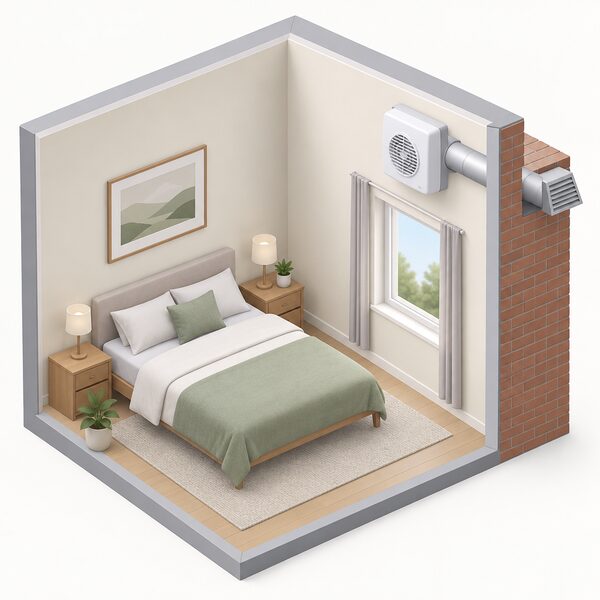
Ventilation runs continuously or near-continuously, and it runs in bedrooms and bathrooms. That makes sound the attribute households notice most after installation. The demand signal is visible in the trade: a marked increase in customers and trade buyers specifically requesting quiet products was reported in January 202313.
Noise is also treated as a design factor in official guidance for adjacent equipment. Guidance on biomass fuelled appliances tells householders to take into account factors such as ventilation, noise and general safety14. Nesta notes that environmental health regulations apply broadly to all noise-generating equipment, including heating systems15. There is no single household ventilation noise limit stated here, and none should be inferred.
Two technical points shape what a manufacturer can achieve. BRE guidance notes that doubling the ventilation rate to 1 air change per hour would be very unusual for a typical mechanical system16, which sets the scale of airflow a domestic unit is moving and therefore the noise it must generate that flow within. And CIBSE has recorded the view that the need to provide higher levels of outside air and to avoid recirculation should for the time being take precedence over energy efficiency17, a position that pushes systems towards more air movement rather than less.
For a household, the practical consequence is that noise and airflow are traded against each other in the same unit. A quieter fan at a given duty is generally a larger or better-engineered one, and that is what a noise certification is attempting to signal.
Quiet Mark: what the certification is and who runs it
Quiet Mark is the international certification programme associated with the UK Noise Abatement Society charitable foundation18. It launched in January 20125. Its stated method is scientific testing, expert acoustic assessment and continuous data analysis, and it says it only certifies the best-performing products in each category18.
Its reach across heating and ventilation is now substantial. Quiet Mark states that it assesses the declared sound measurements of approximately 400 boilers every year, and the declared decibel levels of approximately 375 heat pump models each year5. For heat pumps, it says all models are tested to the same standards, which gives a decibel level while the product is in operation, with heat pumps split into like-for-like sizes6.
The mark is not confined to appliances. Acoustic building materials are certified too: Knauf's OmniFit Thermal and Sound Slab appears among the products listed as available for the UK market19. Heating brands carry it as well: the Vaillant ecoTEC exclusive Green IQ boiler range was among those certified by Quiet Mark for low-decibel technology in January 202120, and Vaillant UK has displayed that certification in national press advertising21. Whether a specific brand holds it is covered separately in is my boiler or heat pump brand Quiet Mark certified.
How products earn the mark: the quietest 10 to 20% of a category
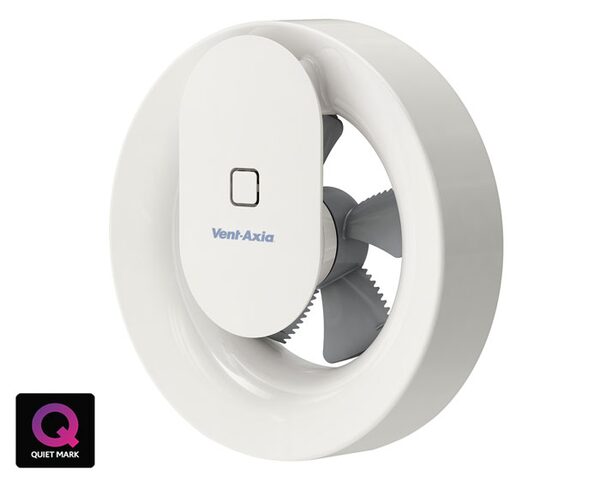
The threshold is relative and stated plainly. Between only 10% to 20% of the quietest, best performing products are awarded Quiet Mark certification within a category6. For heating specifically, only the quietest 20% of any heating sub-category is eligible5. Quiet Mark has put the proportion of the heat pump market eligible at around 20%6. For boilers, the pass rate has been reported lower: only 30% of boilers tested by Quiet Mark received their accreditation, with noise range assessed along kW output20.
Three features follow from a relative threshold, and each matters when reading a certificate on a product listing:
- It moves. Each product category is re-evaluated annually to reflect new models coming on to the market6. A model certified in one year is not automatically certified the next.
- It is category-bound. Products are compared like for like, with heat pumps split into like-for-like sizes6 and boiler noise assessed along kW output20. A certified small unit is not quieter than an uncertified large one by virtue of the mark.
- It is a ranking, not a limit. Because it identifies the quietest fraction of what is on sale, the mark shifts as the market shifts. It tells a buyer that a product is in the quieter group of its class, not that it meets any fixed decibel figure.
Quiet Mark has also made a claim about consequences for installation: it states that Quiet Mark-certified heat pumps, due to their low-level noise operation, will not require additional acoustic insulation22. That is the certifier's own statement about products it certifies, and it does not displace any planning or environmental health requirement.
What the mark does not tell you: no published decibel levels
The clearest limit on the certification is disclosure. Quiet Mark does not publish decibel levels22, and its own product pages carry an explanation of why it does not19. A Welsh Government report on air source heat pump noise and permitted development rights describes the scheme in the same terms: Quiet Mark assessing the sound quality beyond the decibel rating of products, but not publishing decibel levels23.
The practical effect is that the mark works well as a first filter and poorly as a comparison tool. Two certified units in the same category cannot be ranked against each other from the mark alone, because no figure is published for either. Where a decision turns on a measured number, for example an installation close to a boundary, the declared sound data from the manufacturer is the document that carries it. Reading those declarations consistently is covered in comparing manufacturer specifications and how energy products are tested.
Certified examples listed for the UK market
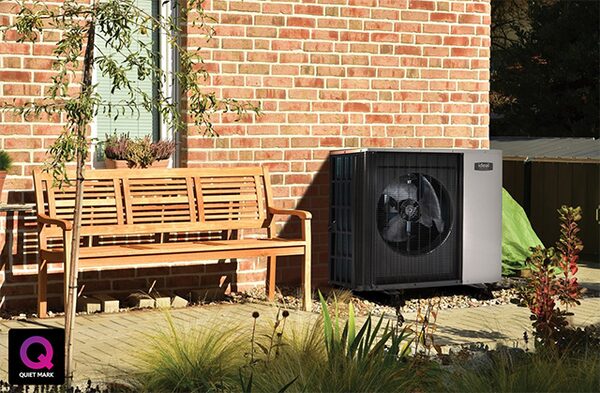
Quiet Mark's UK product listings show which models are presented as certified and available here. Heating and climate products dominate the ventilation-adjacent listings.
| Brand and model | Variant | Status |
|---|---|---|
| Duux DXCH41UK Black Zone Heater | single model | Quiet Mark certified, available for the UK market24 |
| Midea M Thermal Nature Plus MHC-V8WD2N7-B2 | heat pump | Certified, available for the UK market25 |
| Midea MHC-V12WD2N7-B / MHC-V12WD2RN7-B | single phase / three phase | Certified, available for the UK market26 |
| Midea MHC-V14WD2N7-B / MHC-V14WD2RN7-B | single phase / three phase | Certified, available for the UK market27 |
| Midea MHC-V16WD2N7-B / MHC-V16WD2RN7-B | single phase / three phase | Certified, available for the UK market28 |
| Knauf OmniFit Thermal and Sound Slab | acoustic material | Certified, available for the UK market19 |
Quiet Mark attaches a caveat to some listings: certified products available for the UK market may only be available in specific regions26. Availability shown on a certification directory is therefore not a guarantee of stock through a UK distributor.
No published decibel figure accompanies any of these entries, because the programme does not publish them22. A household reading the table should take it as a list of models that passed a relative noise threshold in their category, and nothing further.
Where to buy, and what is actually published on price
Ventilation equipment reaches households through three routes: merchant and distributor supply to installers, direct retail listings, and inclusion within a funded or loan-supported scheme such as the ventilation works category in Cornwall Council's Home Improvement loan, which covers MVHR systems and positive input ventilation systems11.
Published national pricing for individual domestic ventilation units is thin. The figures that can be stated are the Centre for Sustainable Energy's system-level ranges: from £600 per fan for decentralised MVHR, and from around £3,000 for MVHR systems, which could cost well over £10,0004. Beyond that, extract fan and PIV prices are distributor-listed or installer-quoted and vary by specification, so no single range should be presented as the market price. Whether it is better to buy through an installer or directly is discussed in buying direct from a manufacturer.
Certification, self-certification and building control
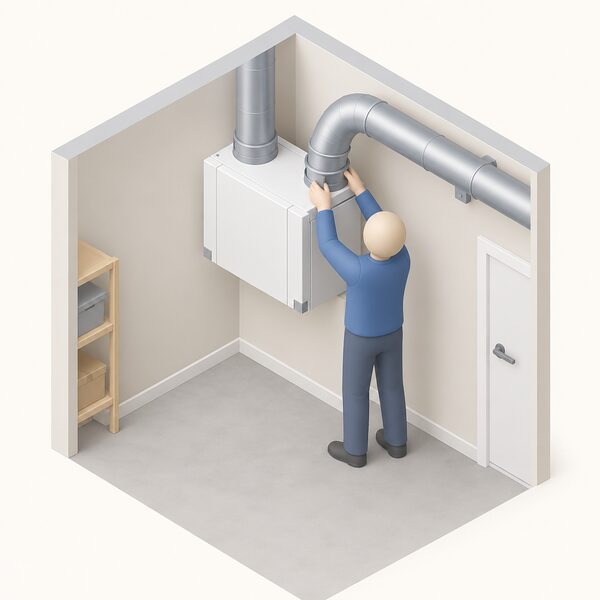
Product certification and installation certification are separate systems, and households routinely conflate them. Quiet Mark certifies the product. Compliance for the installation runs through building regulations, and for mechanical ventilation and air conditioning systems in dwellings the registered competent person schemes are BESCA, Blue Flame Certification, Certsure and Napit29. Where an installer belongs to a Competent Person Scheme, they can self-certify the work, which means separate building regulations approval is not needed for it30.
That distinction determines who a household can go back to when something is wrong. A noise complaint about a unit that is performing to its datasheet is a product matter for the manufacturer. A unit that is ducted badly, sited badly or commissioned at the wrong duty is an installation matter, and the certifying scheme is the route. Manufacturer-run installer networks are covered in manufacturer installer networks, and the general question of what certification marks mean is set out in manufacturer certification.
What ventilation equipment does, and does not do, for energy independence
Ventilation is one of the few household systems that can increase heat demand and reduce it at the same time. Extract fans and PIV units move air out of or into the dwelling without recovering the heat in it. MVHR recovers heat from outgoing air, which is why it is the family most often discussed in the context of a low-demand, tightly sealed home. Against that, CIBSE has recorded the view that providing higher levels of outside air and avoiding recirculation should for the time being take precedence over energy efficiency17, so airflow is not always a variable to minimise.
The dependencies that remain are real and worth stating. All three families are electrically powered and run continuously or on demand, so the household stays connected to a supplier for the fan load. MVHR adds a maintenance dependency: filters, and eventually a heat exchanger, from a manufacturer that must still exist and still stock parts, which is the subject of manufacturer support and spare parts and when a manufacturer fails. Units with app or cloud control add a further dependency on the maker's software, covered in firmware updates and product support life.
What ventilation delivers instead is control over the indoor environment: a way of managing moisture in a home where 65% of UK homes are reported to contain polluted air from mould, condensation and household items3, without opening windows and losing the fabric performance that insulation was installed to provide. Trickle ventilators serve the same end passively, reducing noise as a consequence of not opening windows, with acoustic options in noisier locations12. And because exposure levels are shaped significantly by ventilation, appliance use and household behaviours10, the equipment's contribution depends on it being run as designed rather than switched off because it is audible. That is precisely why noise certification, with all its disclosure limits, matters in this category more than in most. The full manufacturer map across heating, power and storage is set out on the manufacturers hub.
Sources30 cited
- BEAMA White Paper and Manifesto 2022, BEAMA, 2022
- Draught proofing your home, Smart Energy GB, 2026-03-16
- Net Zero by Design: our vision of a zero carbon home, BEAMA, 2021-10
- Mechanical ventilation with heat recovery, Centre for Sustainable Energy, 2026-07
- A homeowner's guide to Quiet Mark, Quiet Mark, 2022-03-11
- How quiet are air source heat pumps, Quiet Mark, 2021-09-22
- Ventilation focus area, Building Engineering Services Association, 2026-09-20
- Current Decent Homes Standard summary table, nidirect, 2025-08-05
- Condensation nation: households struggling with damp and mould, Uswitch, 2025
- Welsh indoor air quality study, HETAS, 2026-02-09
- Eligible and non-eligible works, housing financial assistance, Cornwall Council, 2025-10-01
- Ventilation and trickle vents, Glass and Glazing Federation, 2026-09-20
- The growing demand for Quiet Mark certified HVAC products, Quiet Mark, 2023-01-24
- Biomass fuelled appliances and building regulations, Welsh Government
- Are heat pumps noisy, and is there regulation on noise, Nesta, 2025-01-21
- Overheating guidance briefing paper, BRE Group
- Changes to the Energy Performance of Buildings Regulations, CIBSE
- Can heat pumps be quiet, Quiet Mark, 2023-08-01
- Knauf certified products, Quiet Mark, 2026-09-17
- Quiet boilers and heat pumps: best buys for peaceful living, Quiet Mark, 2021-01-20
- Do gas boilers still make sense, Quiet Mark, 2022-08-01
- The 11 quietest heat pumps on the market, Quiet Mark, 2025-03-12
- ASHP noise and permitted development rights in Wales, phase 1 report, Welsh Government, 2023-12-13
- Duux DXCF41UK Black Zone Heater, Quiet Mark, 2026-09-17
- Midea M Thermal Nature Plus MHC-V8WD2N7-B2 heat pump, Quiet Mark, 2026-09-17
- Midea MHC-V12WD2N7-B heat pump, Quiet Mark, 2026-09-17
- Midea MHC-V14WD2N7-B heat pump, Quiet Mark, 2026-09-17
- Midea MHC-V16WD2N7-B heat pump, Quiet Mark, 2026-09-17
- Future Homes and Buildings Standards consultation response, GOV.UK, 2026-03
- Find a heat pump installer, GOV.UK, 2022-07-05
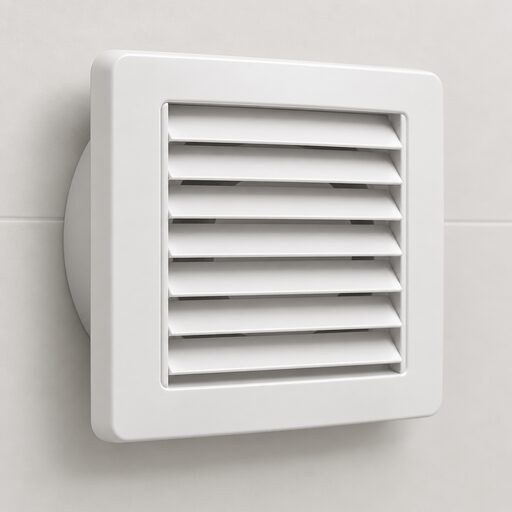 Home Ventilation SystemsWhy do modern insulated homes need extra ventilation, and what happens if they do not get it?
 The Full Cooling and Air Conditioning GuideDo you really need air conditioning in a British summer, or would a fan and better shading do the job?
 Types of Air ConditioningPortable, wall-mounted, multi-room or ducted: which air conditioning suits your home?
 Air Conditioning CostPublished UK equipment prices and the parts of an installed price for portable, single split, multi-split and whole-house air conditioning.
 Domestic Wind TurbinesCan a wind turbine really power a home, and is your site windy enough?
 Electric FansHow electric fans cool people rather than rooms, what the main UK fan types (desk, pedestal, tower, ceiling and bladeless) draw in watts and cost per hour, where they fall short in a heatwave, how to use them safely, and how they fit alongside night ventilation and shading.