
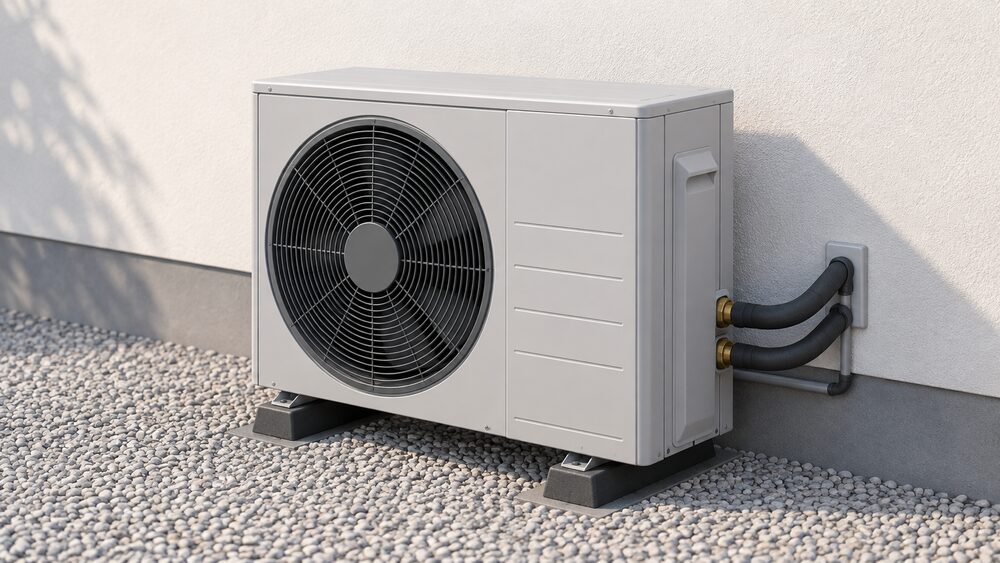
In this guide
Midea is a high-volume manufacturer whose heat pumps reach the UK both under its own name and rebranded by other sellers. Its main domestic offering here is the M Thermal Nature Plus series, an air-to-water heat pump described across its listings as a one-stop solution for heating, cooling and domestic hot water, and sold in single-phase and three-phase versions1.
Every model in the series carries Quiet Mark certification for the UK market, uses R290 refrigerant with a stated global warming potential of 0.02, and runs a DC Inverter compressor4. The range is sold through UK partners rather than direct: Good Energy offers Midea heat pumps with a 10-year warranty and remote monitoring and diagnostics7.
For a household, the appeal is a low-noise, R290 air-to-water unit at a size that suits most UK homes, with cooling as a stated function. The dependence is the same as any grid-connected heat pump: electricity, a supplier, and an installer network that carries the warranty. Midea's own brand presence in UK heating is smaller than its manufacturing volume, which is why the same platform turns up under other names.
Who Midea is and what it sells in the UK
Midea is a Chinese manufacturer, and its UK heat pump presence runs through the M Thermal Nature Plus series and the MHC-V series, both listed as products available for the UK market1. The company's scale is in manufacturing rather than in a UK retail brand: it builds units that other firms sell under their own names, which is why a Midea-made heat pump may not carry a Midea badge on the casing.
The UK listings are specific about availability. Several models are flagged as possibly available only in specific regions, so a household should confirm local supply before specifying a particular output8. The series covers a wide range of outputs, from a small flat through to a larger, less well insulated house, and each output comes in a single-phase and a three-phase variant2.
What Midea sells here is the outdoor unit and its controls, not a full heating package. Cylinders, emitters, pipework and commissioning come from the installer. That matters for how a household reads the brand: the unit is one component in a system whose performance is set by the survey, the heat loss calculation and the flow temperatures the system is designed to run at.
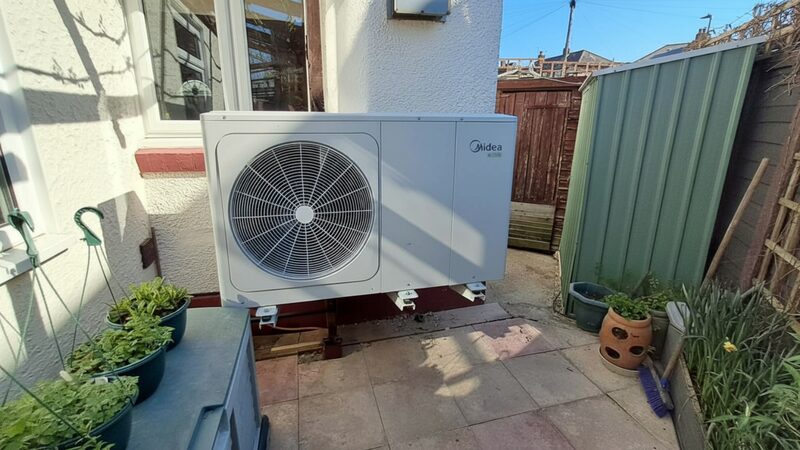
The M Thermal Nature Plus range: 8 to 16 kW
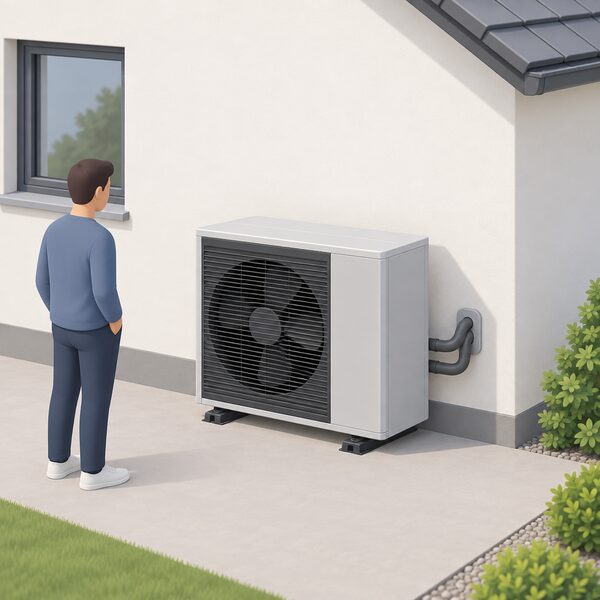
The range is built around a wide span of nominal outputs, each offered as a single-phase or three-phase unit2. Midea describes the span as a wide range, and the listings present the units as high efficiency ATW (air-to-water) heat pumps2.
| Model | Phase | Refrigerant |
|---|---|---|
| MHC-V8WD2N7-B | Single phase | R290, GWP 0.028 |
| MHC-V8WD2RN7-B | Three phase | R290, GWP 0.028 |
| MHC-V10WD2N7-B | Single phase | R290, GWP 0.029 |
| MHC-V10WD2RN7-B | Three phase | R290, GWP 0.029 |
| MHC-V12WD2N7-B | Single phase | R290, GWP 0.0210 |
| MHC-V12WD2RN7-B | Three phase | R290, GWP 0.0210 |
| MHC-V14WD2N7-B | Single phase | R290, GWP 0.0211 |
| MHC-V14WD2RN7-B | Three phase | R290, GWP 0.0211 |
| MHC-V16WD2N7-B | Single phase | R290, GWP 0.0212 |
| MHC-V16WD2RN7-B | Three phase | R290, GWP 0.0212 |
The three-phase options matter for larger properties and for homes with a big electrical load, where a single-phase supply may need attention before a heat pump is added. Output alone does not decide which unit fits: the correct size comes from a room-by-room heat loss calculation, and oversizing a heat pump tends to shorten its cycles and hurt real-world efficiency. More on that is at heat pump sizing.
Heating, cooling and hot water from one unit
Midea presents the series as a one-stop solution for heating, cooling and domestic hot water, and that phrasing appears across the listings3. In practice the three functions are delivered differently: space heating and cooling go through the same wet circuit and emitters, while domestic hot water needs a cylinder, which is a separate component supplied as part of the installation rather than by Midea.
Cooling is the function that distinguishes an air-to-water heat pump from a boiler. It is a stated capability of the unit, not a guarantee that a given installation will deliver it comfortably, because that depends on the emitters fitted and whether the system is configured for it. Underfloor heating and fan coils work better for cooling than standard radiators. The wider subject is covered at using a heat pump for cooling.
Hot water is where sizing and cylinder choice interact. A heat pump heats a cylinder more slowly than a gas boiler, so cylinder volume and coil surface area are chosen to match the household's hot water demand. That is a system design question, not a unit specification, and it is covered at hot water cylinders for heat pumps.
Quiet Mark certification: which models are certified
Quiet Mark certification covers the M Thermal Nature Plus series and the MHC-V series, and the listings state that the products shown are certified for the UK market1. The certified models include the single-phase and three-phase units across the range2.
Noise is a practical constraint rather than a comfort point. In Wales, domestic heat pumps benefit from permitted development rights, which means that in most cases planning permission is not required, subject to certain limitations and conditions14. Those conditions include noise limits, and the assessment method is set out at MCS 020. A certified quiet unit helps with siting, but it does not remove the need to check clearances and the position of neighbouring windows. The general picture is at how noisy is a heat pump.
Efficiency and inverter technology
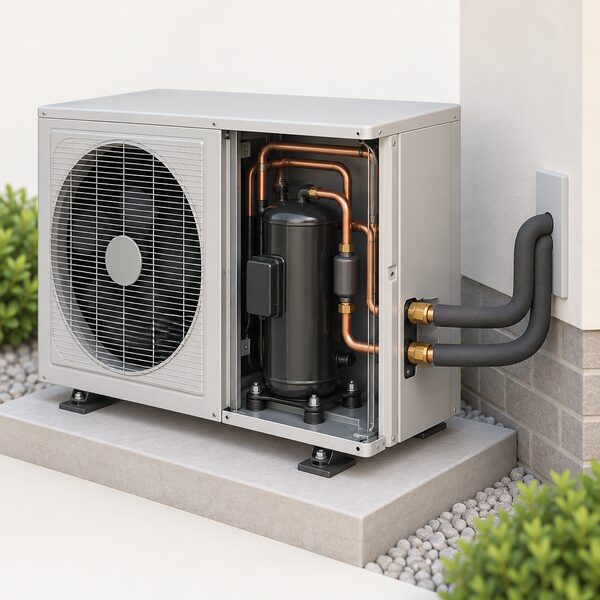
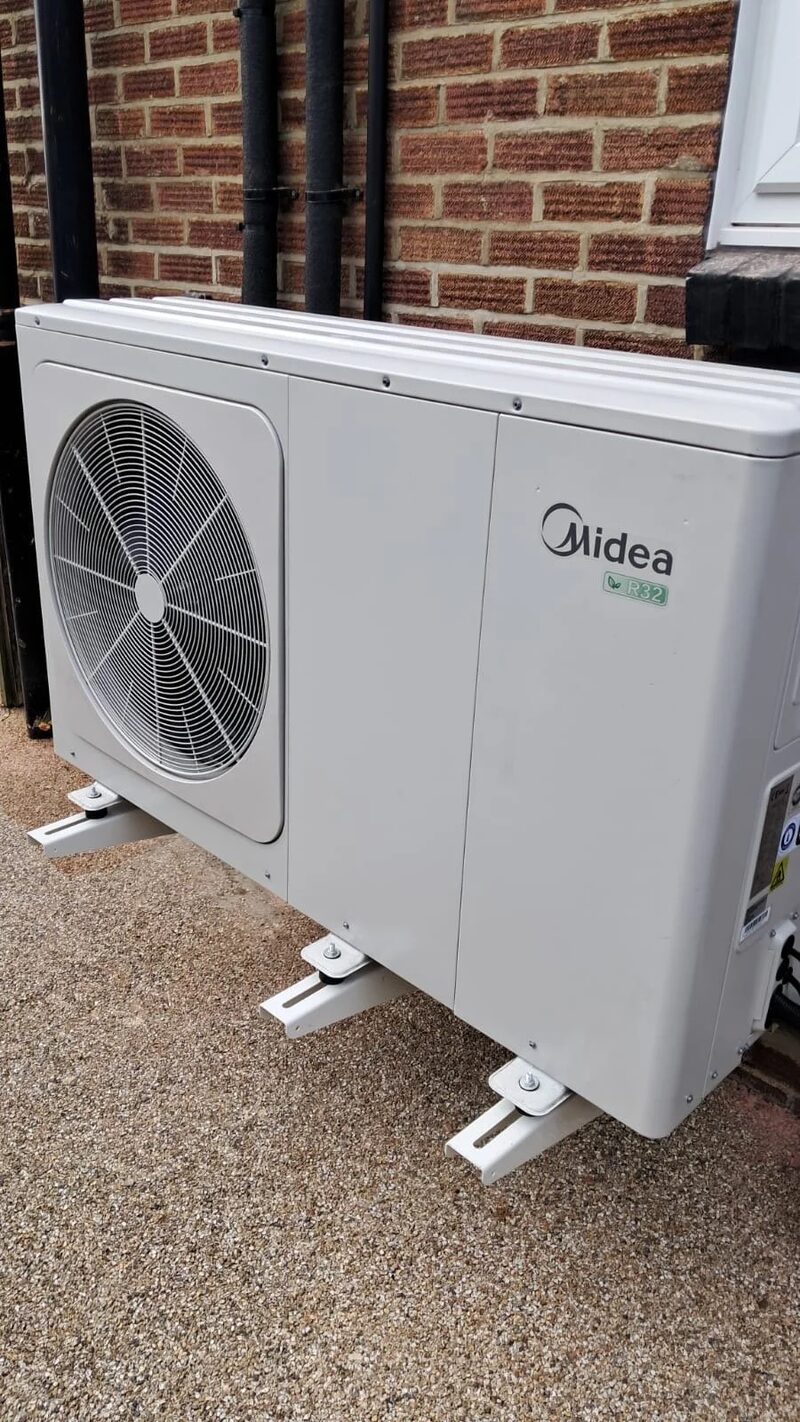
Every model in the series runs a DC Inverter compressor, and the listings describe the units as high efficiency ATW heat pumps2. An inverter varies compressor speed rather than switching it on and off, which lets the unit modulate output to match demand instead of cycling at full power.
The listings do not publish a COP or SCOP figure for these models, so no seasonal performance number can be quoted here. What determines real efficiency is the flow temperature the system runs at and how well the emitters shed heat at that temperature. A medium-temperature heat pump is defined in government consultation work as delivering its declared capacity for heating at an indoor heat exchanger outlet temperature of 55 °C15. Running lower than that improves efficiency further, and the subject is explained at heat pump efficiency: COP, SCOP and SPF.
The refrigerant choice supports efficiency and environmental performance together. R290 has a stated GWP of 0.02 on these listings, far below the fluorinated refrigerants it replaces, and it also works well at higher flow temperatures4. The rules around it are covered at heat pump refrigerants.
The IBH option and system compatibility
The IBH option appears across the M Thermal Nature Plus range and the MHC-V series2. IBH stands for integrated backup heater: an electric element inside the unit that can top up heating output when the heat pump alone cannot meet demand, such as during a cold snap or during a hot water cycle.
That has two consequences for a household. It provides resilience in cold weather, which is covered at heat pumps in cold weather. It also means the unit can draw a higher electrical load than the compressor alone, which is a point for the electrical survey. Supply and wiring are covered at electricity supply, fuses and wiring for a heat pump.
Compatibility is otherwise conventional. These are air-to-water units designed to work with a wet heating circuit, so they suit radiators, underfloor heating and fan coils, and they need a cylinder for hot water. The distinction between this and an air-to-air system is set out at air-to-air vs air-to-water heat pumps, and the general case for wet systems is at air-to-water heat pumps.
Solstice Split and other recent UK launches
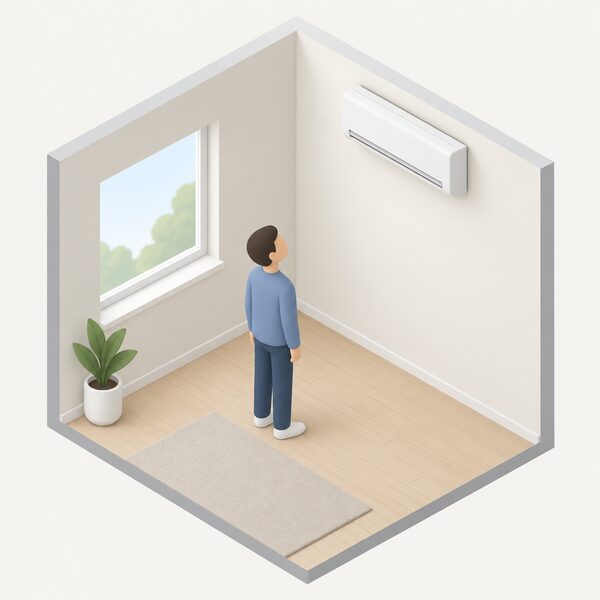
Midea's UK activity is not confined to heating. The Solstice Split System, a wall-mounted air conditioner powered by next generation AI, is introduced as new for 2026, and a new 2026 price list with updated products and pricing across the full range is available for installers to order. The company also won a German Design Award in 2025 for its H-Pack product.
Those launches sit alongside the heat pump range rather than replacing it, and they show where Midea's UK volume actually lies: cooling and air conditioning first, heating second. For a household, that is useful context. It means the brand is well established in the UK air conditioning market, and that its heat pump line is a newer arrival in a market where heat pumps are currently installed in 1% of UK homes16.
The wider market is growing. Government statistics record 11,001 heat pump installations in the UK in the second quarter of 2025, of which 8,897 were in England17. Air-to-water monobloc and split unit annual sales rose almost four-fold between 2019 and 202415. The policy background is at UK heat pump policy, targets and the rules coming.
What owning a Midea heat pump means for household energy independence
A Midea heat pump moves a home off gas for heating and hot water, which is the main independence gain. Independent analysis finds that households with a heat pump and electric vehicle are far less dependent on foreign oil and gas imports and make more use of British electricity, and that insulating homes and running electric heat pumps and cars on an ev would boost energy independence18.
What remains is electricity. The unit runs on mains power from a supplier, so the household swaps a gas dependence for an electrical one, and the carbon and cost profile depends on how that electricity is generated and bought. Adding solar and a battery changes that balance, and the options are set out at solar panels and a battery with a heat pump.
Three further dependencies are worth naming. The IBH option means a resistive element can draw power at peak times, which is a cost exposure rather than an independence one. Remote monitoring and diagnostics, offered with Midea units through Good Energy, depend on a broadband connection and a manufacturer's or partner's platform7. And the warranty runs through the selling partner, so the household's protection depends on that company continuing to trade and honour its terms.
The technology itself is well suited to UK homes: heat pumps are technically suitable for most UK homes if installed appropriately16. The variable is the installation, not the fuel. The full picture is at heat pumps and household energy independence.
Sources20 cited
- Midea brand page, Quiet Mark, 2026
- Midea M Thermal Nature Plus MHC-V8WD2N7-B2, Quiet Mark, 2026
- Midea M Thermal Nature Plus MHC-V10WD2N7-B2, Quiet Mark, 2026
- Midea M Thermal Nature Plus MHC-V12WD2N7-B2, Quiet Mark, 2026
- Midea M Thermal Nature Plus MHC-V14WD2N7-B2, Quiet Mark, 2026
- Midea M Thermal Nature Plus MHC-V16WD2N7-B2, Quiet Mark, 2026
- Heat pumps vs boilers, Which?, 2025
- Midea M Thermal Nature Plus MHC-V8WD2RN7-B2, Quiet Mark, 2026
- Midea M Thermal Nature Plus MHC-V10WD2RN7-B2, Quiet Mark, 2026
- Midea M Thermal Nature Plus MHC-V12WD2RN7-B2, Quiet Mark, 2026
- Midea M Thermal Nature Plus MHC-V14WD2RN7-B2, Quiet Mark, 2026
- Midea M Thermal Nature Plus MHC-V16WD2RN7-B2, Quiet Mark, 2026
- Midea MHC-V8 single and three phase, Quiet Mark, 2026
- Planning permission for heat pumps, Welsh Government, 2026
- EINAS 2025: heat and buildings, Department for Energy Security and Net Zero, 2025
- Heat pumps, UK Parliament POST, 2026
- Heat pump deployment quarterly statistics, UK 2025 Q2, Department for Energy Security and Net Zero, 2025
- Household energy: buying British, Energy and Climate Intelligence Unit, 2024
- Boiler Upgrade Scheme guidance for installers v5.1, Ofgem, 2026
- Boiler Upgrade Scheme guidance for property owners V5, Ofgem, 2026