
In this answer
Short answer
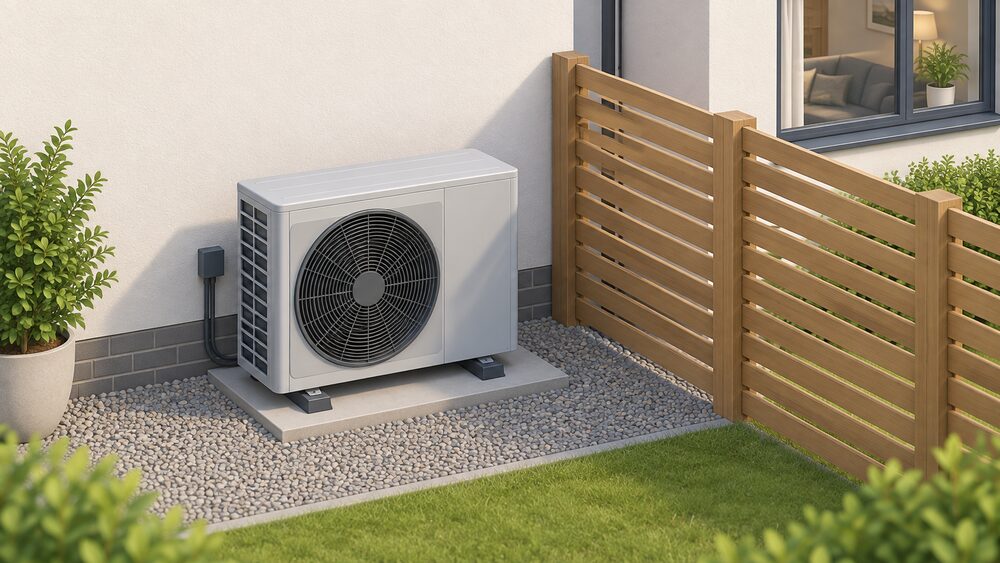
On the evidence available, a heat pump and a gas boiler are not far apart in noise. Heat pumps are located outside and are typically quieter than gas boilers, according to government guidance, and most air source heat pumps produce noise levels similar to a typical gas boiler1. The unit itself is usually quiet, about the same noise level as a fridge3.
The figures that matter are these. A heat pump typically runs at 40 to 60 decibels when it is on, a range the consumer body Which? compares to a dishwasher or microwave4. The planning limit for a single air source unit is 42 decibels measured one metre from a neighbouring habitable room window5. Inside the house, the picture is mixed: one householder reports the system is not louder than the boiler was, while another describes a unit audible in a living room and disturbing sleep in a bedroom above the outdoor unit6.
Why noise matters when choosing between a heat pump and a boiler
Noise sits alongside cost in the decisions households actually make. In a 2026 survey, 63% said noise concerns would influence their decision to install a heat pump8. That is a large share of the market reacting to something the measured figures describe as modest, and it points to a gap between perception and the decibel range.
The gap shows up elsewhere. Over a third of homeowners surveyed, 37%, said they do not know if a heat pump will perform better than a gas boiler9. Cost and electricity prices are often leading people to favour gas boilers, and those two factors are named as important in the decision10. Noise is not the only uncertainty, but it is the one a neighbour is most likely to raise.
There is a real basis for caution. Air source heat pumps have external fan units that can generate a considerable level of noise, and that is why the planning standards exist11. The rules are not a formality: permitted development depends on staying within the limit, and a unit that fails the assessment needs planning permission12.
For a household's energy independence, noise is a siting constraint rather than a technical one. A heat pump moves the combustion out of the home entirely, which removes the flue and the boiler casing from the kitchen or airing cupboard. What remains is a fan and compressor outside, and the grid connection that powers it. The trade is a small, continuous outdoor sound for the loss of an indoor appliance.
How many decibels, and what the numbers mean
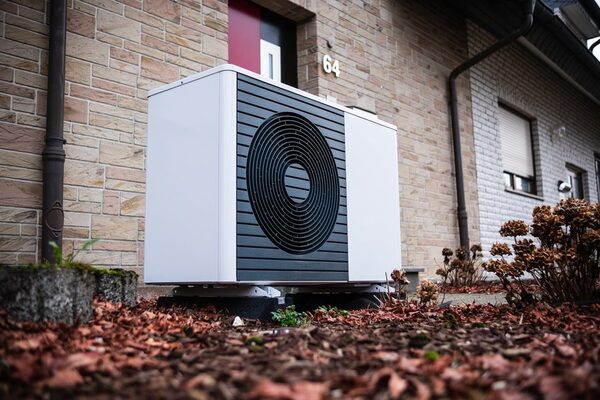
The headline range is 40 to 60 decibels when the heat pump is on12. Which? puts air source units at between 40 and 60 decibels on average, a similar noise level to a dishwasher or microwave4. Citizens Advice describes the unit as usually quiet, about the same noise level as a fridge3.
The planning figure is tighter than the operating range, and deliberately so. In the UK the legal noise limit for heat pumps is 42 decibels14. For a single air source heat pump, noise levels must stay at or below 42 decibels measured one metre from any habitable room, for the heat pump on its own5. A household cannot normally install a heat pump unless the noise level is 42 dB or less when stood one metre from a neighbouring window12.
| Measure | Figure | Source basis |
|---|---|---|
| Everyday comparison | Dishwasher or microwave | Independent guidance4 |
| Against existing heating | Similar to a typical gas boiler | Independent guidance2 |
| Planning limit, single ASHP | 42 dB at one metre from a neighbouring habitable room window | Official guidance5 |
| Ground source | Generally even quieter | Independent guidance2 |
The everyday comparisons and the planning figure are not in conflict. Describing a unit as sounding like a dishwasher or microwave refers to the machine at the point of operation; the 42 dB limit describes what is permitted to reach a neighbour's window5. Distance, barriers and the assessment position do the work of closing the gap.
What makes a heat pump noisy, and what makes a boiler noisy
A heat pump's noise comes from two places. Outdoors, the fan and compressor in the external unit do the work, and those fan units can generate a considerable level of noise11. Indoors, the picture depends on the type: indoor units of air-to-air heat pumps can be noisier than other heat pumps15. The Energy Saving Trust reports that the indoor unit of a heat pump typically makes the same level of noise as a gas boiler when running16.
Householder experience varies. One case study reports both the outdoor and the indoor unit were noisy while operating17. Another reports the system is not louder than the boiler was6. That spread is normal: the same equipment in different positions, with different barriers and different neighbours' windows, produces different results.
A gas boiler's noise is combustion, a pump and a fan, all inside the building. The material here does not give a decibel figure for a boiler, so no direct number can be set beside the heat pump range. What is documented is that most air source heat pumps produce noise levels similar to a typical gas boiler, and that heat pumps are typically quieter than gas boilers2.
"Heat pumps are located outside and are typically quieter than gas boilers."
For independence, the difference is where the sound sits. A boiler puts its noise inside the home, in a kitchen or utility room, and vents combustion gases through a flue. A heat pump puts its noise outside and takes its energy from electricity, which can be generated domestically or bought from any supplier. The household loses an indoor appliance and gains an outdoor one.
Where the units sit: siting and installation choices that affect noise
Siting is the main lever a household controls. The MCS 020 noise assessment records the installation address, the heat pump installation location, a description of each assessment position, and up to four assessment positions per assessment18. It also accounts for barriers, including open fencing18. Two heat pumps and four heat pumps are each supported as assessment cases18.
The rule the assessment tests is specific: noise levels for an air source heat pump on its own must stay at or below 42 decibels from a metre away from any habitable room5. The practical version is that a unit cannot normally be installed unless the level is 42 dB or less when stood one metre from a neighbouring window12.
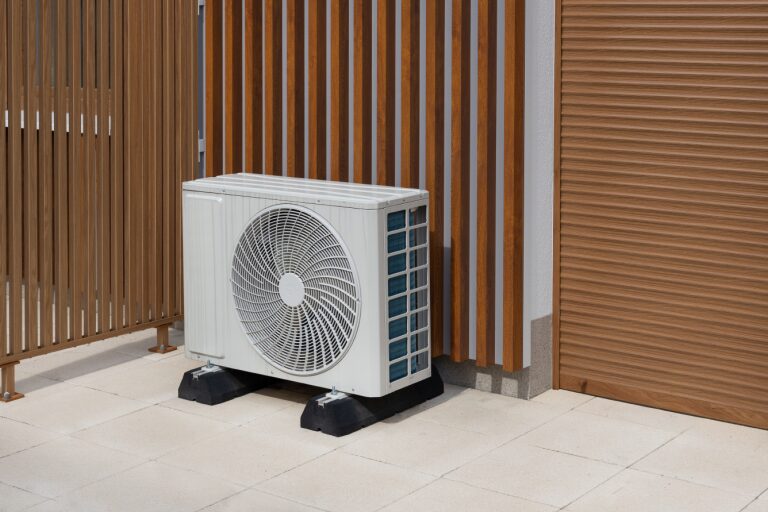
Ground source heat pumps change the calculation. They are generally even quieter than air source models, and are described as quieter with increased energy efficiency2. The outdoor work happens in a ground loop or borehole rather than a fan unit, so there is no external fan noise at all. That is a siting advantage in tight plots, and it is covered in more detail on ground source heat pumps.
For air source units, the practical questions are distance to the nearest habitable room window, whether a barrier sits between unit and window, and whether the assessment position is realistic. The MCS 020 noise assessment is the document that answers them, and where a heat pump outdoor unit can go covers the siting rules in full.
Do heat pumps make noise at night?
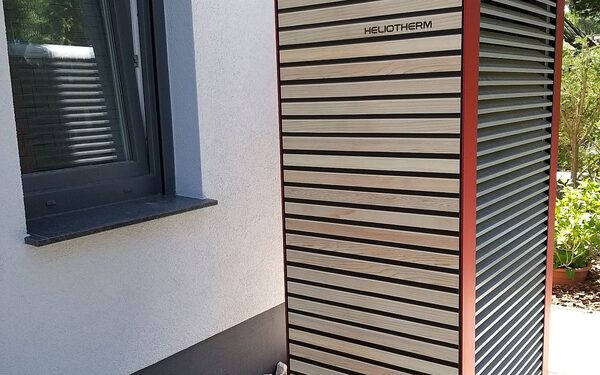
Air source units run when heat is called for, and in cold weather that includes overnight. The material here does not give a separate night-time decibel figure, so the operating range of 40 to 60 decibels and the 42 dB planning limit are the figures that apply12.
The reported experience is mixed. One householder reports hearing the unit all the time in the living room, sometimes quieter and sometimes louder, with whooshing and startup sounds disturbing sleep in a bedroom above the outdoor unit7. That is a single reported case, and it sits against the general finding that most air source heat pumps produce noise levels similar to a typical gas boiler2.
Ground source heat pumps are the quieter option at night because there is no external fan2. For air source, the assessment position and the barrier between unit and bedroom window decide the outcome. A bedroom directly above an outdoor unit is the configuration most likely to transmit structure-borne sound, and it is the configuration the reported case describes7.
Efficiency and running costs: how the two compare
Noise and running cost are usually weighed together, and the cost picture is more contested than the noise picture. At current energy prices, running costs for heat pumps are around the same as for a new gas boiler12. Nesta reports that bills will likely stay similar under current tariff caps when switching from a gas boiler20.
The savings case depends on conditions. A household could save more than 50% on running costs with a heat pump compared to a gas boiler, but this requires high quality installation, high efficiency and a heat pump tariff21. The Energy Saving Trust's latest research shows that switching to a heat pump time-of-use tariff can reduce running costs significantly22. Electric heat pumps use about 3 to 4 times less energy than gas boilers to produce the same heat23.
Against that, Citizens Advice has found it is typically more expensive to run a heat pump than a gas boiler due to the relative price difference between electricity and gas19. Gas boilers produce less than one unit of heat for each unit of gas used24. The two positions reflect different tariff assumptions and different installation quality, and the evidence on the typical outcome is not settled.
| Factor | Heat pump | Gas boiler |
|---|---|---|
| Energy use | About 3 to 4 times less than a gas boiler23 | Less than one unit of heat per unit of gas24 |
| Running cost, current prices | Around the same as a new gas boiler12 | Baseline |
| Best case with heat pump tariff | More than 50% saving, with high quality installation and high efficiency21 | Not applicable |
| Minimum efficiency | Not applicable | 86% for gas, 85% for oil25 |
For independence, the running cost question is really a tariff question. A heat pump on a time-of-use tariff can shift consumption away from peak prices, which a gas boiler cannot do. That flexibility is covered on heat pump running costs and heat pump vs gas boiler running costs.
The phase-out of new gas boilers and what it means for your decision
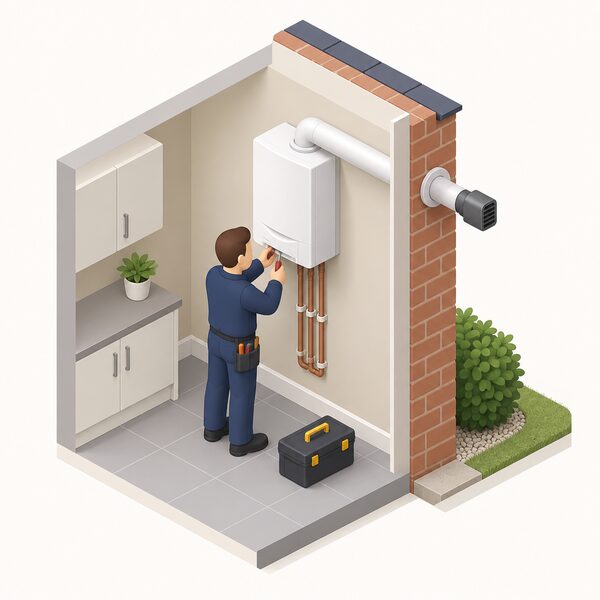
The government has said it plans to phase out the installation of gas boilers in new homes beyond 2035, though the timeline remains subject to revision26. Nesta records that gas boilers are phased out from new builds from 202527. The two statements describe different scopes and different dates, and the evidence on the detail is not settled.
What is clear is that existing boilers are not being removed. The material here records no forced removal of existing boilers, and adjustments for current homes are unlikely to be implemented until 203526. Servicing and repair of an existing boiler are separate from the rules on new installations.
The transition evidence is worth weighing. Households replacing previously functioning gas boilers typically expressed a preference for a new boiler over the heat pump, and those who had previously had working gas or oil boilers were more likely to report an increase in bills or lower satisfaction than their previous system28. That is a finding about satisfaction, not about noise, but it bears on the decision.
Where a boiler is old, a heat pump is worth considering as a much lower carbon alternative to a new boiler29. A heat pump produces up to 70% less CO2 over 15 years than a gas boiler and zero emissions at point of use30. For a household's independence, that shifts the energy source from gas, which is imported and grid-delivered, to electricity, which can be generated on site. The dependence that remains is the electricity supply itself, and the heat pumps and household energy independence page sets out what that means in practice.
Sources30 cited
- Heat pumps explained: experts answer your questions, GOV.UK, 2024-03-28
- Are heat pumps noisy and is there regulation on noise, Nesta, 2025-01-21
- Deciding if a heat pump is right for you, Citizens Advice, 2025-12-08
- Heat pumps vs boilers, Which?, 2025-09-22
- Building regulations: renewables guidance, Bedford Borough Council, 2026-09-17
- Integrated electric home case study, Energy Saving Trust, 2026-08-12
- One person's background hum is another's sleepless nightmare, Flexi-Orb, 2025-05-13
- Quiet Mark UK National Noise Survey 2026: heat pumps, Quiet Mark, 2026
- Beyond affordability: why heat pumps feel like a gamble, Which?, 2026-07-02
- The potential impact of heat pump readiness, Nesta, 2026-02-12
- Air source heat pumps fact sheet, Pendle Borough Council, 2026-09-17
- Heat pump fact check, Energy Saving Trust, 2026-07-01
- Heat pumps, New Forest District Council, 2026-09-17
- Air and ground source heat pumps, Croydon Council, 2026-09-17
- Air to air heat pumps, Energy Saving Trust, 2026-09-11
- Vanessa and Patryk's air source heat pump, Energy Saving Trust, 2022-07-20
- Robert and Maria's air source heat pump, Energy Saving Trust, 2022-04-20
- MCS 020 noise assessment calculator, MCS Certified, 2026-09-19
- Balancing act: transferring policy levies from electricity to gas bills, Citizens Advice, 2023-10-05
- What will my energy costs look like with a heat pump, Nesta, 2025-01-21
- Air source heat pump costs and savings, Which?, 2026-04-14
- Air source heat pumps, Energy Saving Trust, 2026-07-16
- What is the electricity to gas price ratio and why is it important, Nesta, 2026-04-01
- An introduction to heat pumps, Which?, 2025-09-22
- Building regulations: boilers and heating, Welsh Government, 2026-09-17
- Gas central heating, Which?, 2025-09-22
- Estimating willingness to pay for a heat pump, Nesta, 2025
- Heat pump transition report, Department for Energy Security and Net Zero, 2026-05
- Energy saving at home, CAT, 2025-06-27
- Heat pump, GOV.UK, 2026-09-10
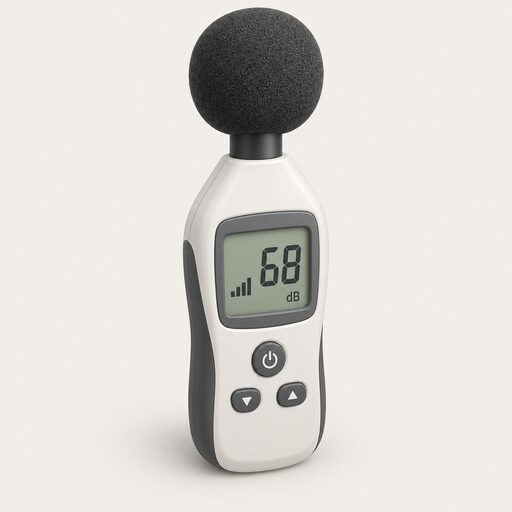 How Noisy Is a Heat PumpHow loud a heat pump actually sounds when it is running, whether it will annoy your neighbours, and what the rules say about how close it can be to their windows.
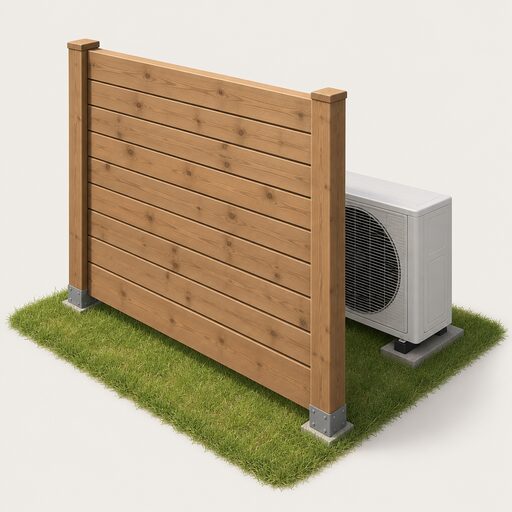 MCS 020 Noise AssessmentWill your air source heat pump be too noisy for next door?
 Heat Pump Running CostsWhat does a heat pump cost to run each year, and is it cheaper than a gas boiler?
 Air Conditioning NoiseHow loud will an air conditioner be inside your home, and how much noise will the outdoor unit make for you and your neighbours?
 High Temperature Heat PumpsHigh-temperature heat pumps deliver flow temperatures of roughly 65 to 80°C, close to boiler levels, so existing radiators can often stay in place.
 Air Source Heat PumpsHow an air source heat pump takes heat from outdoor air, the difference between air-to-air and air-to-water systems, typical efficiency, the £7,500 Boiler Upgrade Scheme grant, noise and planning limits, and what ownership means for a household's energy independence.