
In this answer
Short answer
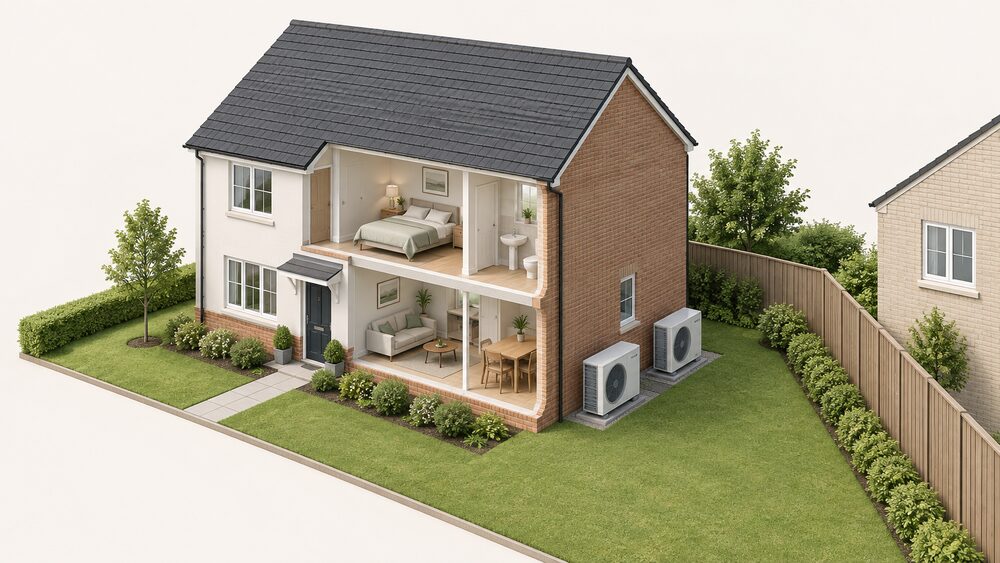
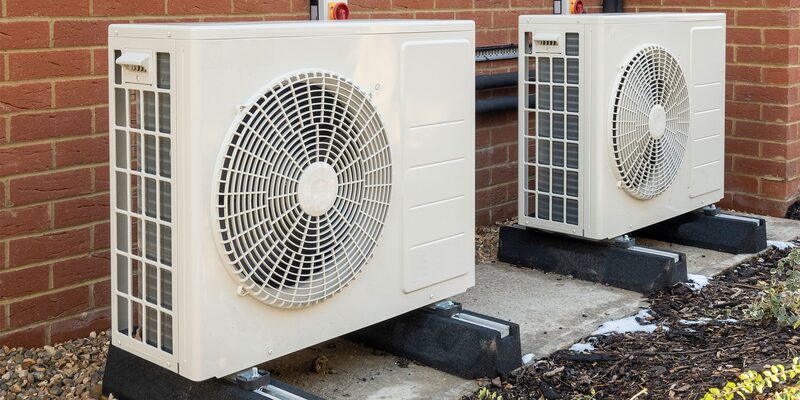
Wales allows up to two heat pumps on a detached house under permitted development, but the two units running together must not exceed a combined 40 dB limit1. That is the figure that decides whether a two-unit installation on a detached property in Wales can go ahead without a planning application. The previous limit was one heat pump per detached dwelling house1.
The change takes effect from 1 June 2026, when installers working in Wales must comply with new permitted development rules1. Alongside the increase to two units, the three metre boundary restriction has been removed, so a heat pump can be installed within three metres of the boundary of a detached dwellinghouse, with the distance determined by noise compliance under the MCS 020 assessment2. Air-to-air heat pumps are also now covered, having previously required planning permission because of a rule that heat pumps be used only for heating3.
The noise rules themselves are not new. The legal noise limit for heat pumps in the UK is 42 decibels, and permitted development installations must comply with the MCS Planning Standards, including the MCS 020 sound assessment4. For two units, the assessment calculates the total sound pressure level from both heat pumps against a 37 dB pass or fail threshold5.
Two heat pumps on a detached house: what Wales allows
The permitted development change for detached properties in Wales allows up to two heat pumps instead of one3. The same change lets homeowners put up to two heat pumps on a wall of their property if it faces a highway3. The size limit for a heat pump has also increased from 1 cubic metre to 1.5 cubic metres for dwelling houses1.
The legislation behind the single-unit restriction is Class G, which sets out that more than one air source heat pump is not permitted on or within the curtilage of a dwellinghouse which is not a detached dwellinghouse or a block of flats, and more than two are not permitted for a detached dwellinghouse6. That is the structure the Welsh rules now follow: two units for a detached house, one for everything else.
There is pressure to go further. Independent analysis has recommended that, as is now the case for detached houses, more than one heat pump should be allowed on semi-detached and terraced houses as long as the cumulative sound level of the installations meets the current limit set under MCS 0207. That recommendation has not been adopted in the Welsh rules described here.
Two conditions sit alongside the unit count. A heat pump cannot be installed on a pitched roof1. Properties which are listed, located in conservation areas or within a World Heritage Site, or where a system fails the MCS noise assessment, remain subject to planning permission2.
For a household, the practical effect is that a detached home in Wales can now carry a two-unit system, whether that is two air source units or a combination, without a planning application, provided the noise test is passed. The dependence that remains is on the grid and on the installer's assessment: the household cannot self-certify the noise result, and the MCS 020 calculation is what stands between permitted development and a planning application.
How the combined limit of 40 dB works for two units
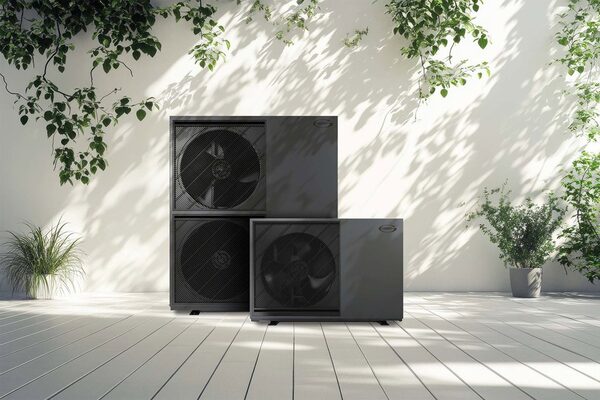
The rule is cumulative. The two units in operation together must not exceed the 40 dB limit1. The same wording appears in the Welsh Government's summary of consultation responses, which states that two units in operation together must not exceed the 40 dB limit8. This is not a limit that each unit can meet independently: two units each rated just under a single-unit threshold can still fail when their sound is added together.
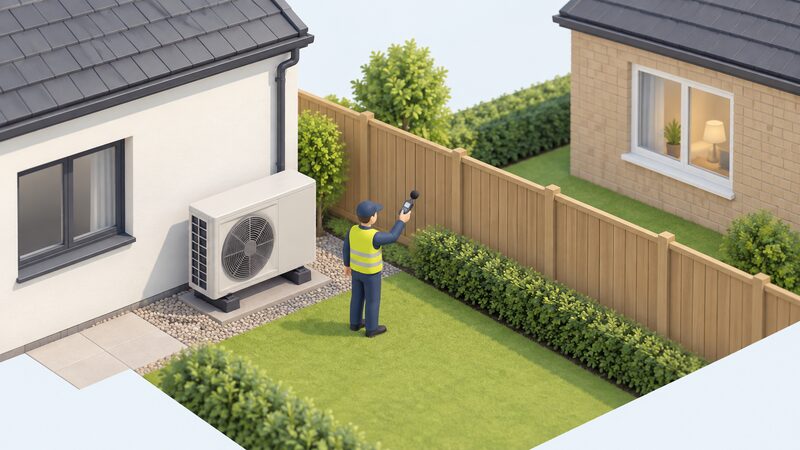
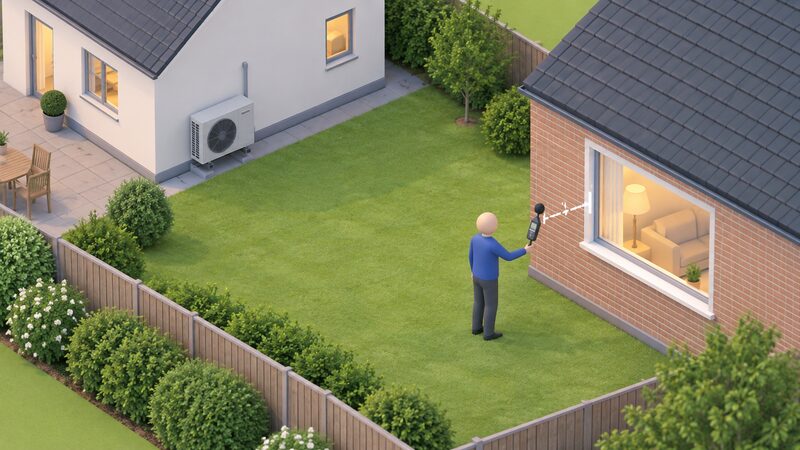
The mechanism for checking this is the MCS 020 assessment. It checks whether the heat pump sound is within a 37 dB threshold one metre from the neighbour's window9. The MCS 020 calculator supports a two heat pump assessment and calculates the sound pressure level total from two heat pumps5. The pass or fail noise limit in that calculator is 37.0 dB(A)5.
So there are three numbers in play, and they do different jobs:
| Figure | What it is | Where it applies |
|---|---|---|
| 40 dB | Combined limit for two units in operation together | Wales permitted development1 |
| 37 dB | MCS 020 pass or fail threshold, one metre from the neighbour's window | The assessment that decides permitted development5 |
| 42 dB | UK legal noise limit for heat pumps | General noise regulation4 |
The 40 dB combined figure and the 37 dB assessment threshold are not the same measurement. What is clear is that the combined output of both units is what counts, and that the assessment point is the neighbour's window rather than the unit itself. Under permitted development rights in Wales, the two units in operation together must not exceed the 40 dB limit1, and the same combined limit applies to two air source heat pumps assessed under MCS 020(a)2. The MCS 020 (a) assessment checks whether the heat pump sound is within a 37 dB threshold one metre from the neighbour's window3. For context, air source heat pumps operate at around 40 decibels and can reach 60 decibels when working very hard4, and combi boilers typically make between 40 and 60 decibels at a distance of 1 m when running5.
For a household, this means the choice of unit and the choice of position are linked. A quieter pair sited further from the neighbour's window gives more headroom than a louder pair close to it. The household remains dependent on an installer's calculation to demonstrate compliance, and on the manufacturer's published sound data for each unit.
Permitted development rights: the conditions a Welsh installation must meet
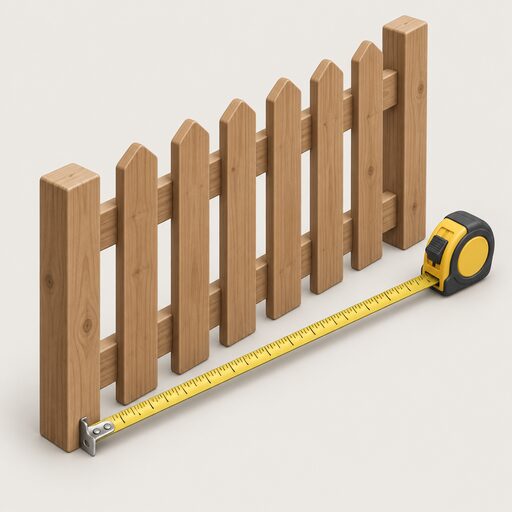
Wales's permitted development rights for air source heat pumps were originally shaped to reduce noise pollution potential, and required a minimum three metre distance from the boundary10. That restriction has been removed from 1 June 2026, with the distance now determined by noise compliance under MCS 0202. Heat pumps can be installed within three metres of the property boundary1.
The conditions that remain, and the ones that were added, are these:
- Up to two heat pumps on or within the curtilage of a detached dwelling2
- The two units in operation together must not exceed 40 dB1
- A heat pump cannot be installed on a pitched roof1
- The size limit for a heat pump is 1.5 cubic metres for dwelling houses, up from 1 cubic metre1
- Heat pumps can be installed on a wall or roof which fronts a highway1
- Air-to-air heat pump installations are allowed1
- Installations must abide by MCS 020(a) sound level standards3
The new rules emulate recent changes to regulation in England3. England's permitted development regime requires an air source heat pump to comply with Microgeneration Certification Scheme Planning Standards or equivalent standards12, and installations completed under permitted development must comply with the noise limits outlined in MCS Planning Standards MCS 020(a)2.
One point of uncertainty remains. Reporting in January 2026 noted that information was still awaited on when the changes were to be implemented3. The effective date now given is 1 June 20261.
For a household, the conditions are mostly about siting and paperwork rather than technology. The independence gained is procedural: a two-unit installation on a detached house in Wales no longer needs a planning application if it passes the noise test. The dependence that remains is on the assessment being done correctly and on the property not falling into one of the categories, listed buildings, conservation areas or World Heritage Sites, where planning permission is still required2.
What the 42 dB limit means in practice for siting and choice of unit
The 42 dB figure is the one most households will have seen. In the UK, the legal noise limit for heat pumps is 42 decibels4. Guidance for householders states that noise levels for an air source heat pump on its own must stay at or below 42 decibels from a metre distance away from any habitable room13. A separate official source describes the same limit as an air source heat pump not exceeding 42 dB at a distance of one metre from the centre of a neighbour's habitable room window, known as the assessment point. The two documents disagree on the exact reference point, one citing any habitable room and the other the neighbour's window, and that conflict is unresolved.
Other sources put the limit in similar terms. Current noise regulations restrict heat pump noise to a maximum of 42 dB within one metre of a neighbour's windows14. Air source heat pump regulations stipulate that a heat pump must not exceed a noise level of 42 dB(A) when measured one metre away from a neighbour's window15. Guidance for microgeneration air source heat pumps includes a noise level equal to or lower than 42 dB16. A distributor's product page describes an external unit at around 42 decibels when measured at one metre away, as listed in the MCS Installation Standard (MCS 020)17.
For permitted development specifically, the test is tighter. To qualify as permitted development, the unit must not produce noise louder than 37 dB at the nearest neighbouring window18. Local guidance for installations that need permission refers to noise levels not exceeding 37 dB LAeq at any time, as measured on the boundary of the site with any neighbouring residential property19.
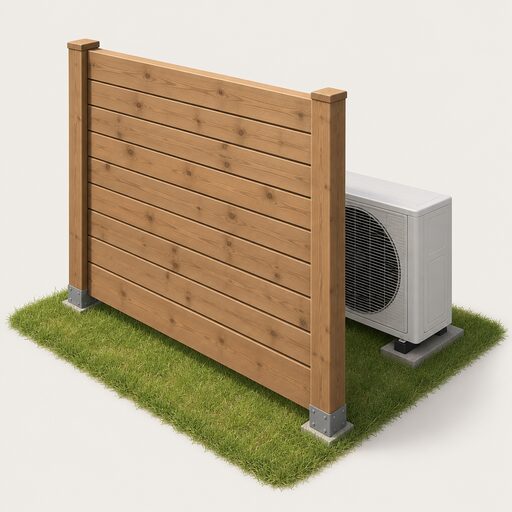
What drives the assessed level is not only the unit's rating. A noise assessment takes in existing background noise levels, the characteristics of the noise, noise levels at all operating modes including defrost cycles, the distance between the unit and neighbouring properties, and noise barriers or mitigation measures20. That is why two identical units can pass on one plot and fail on another.
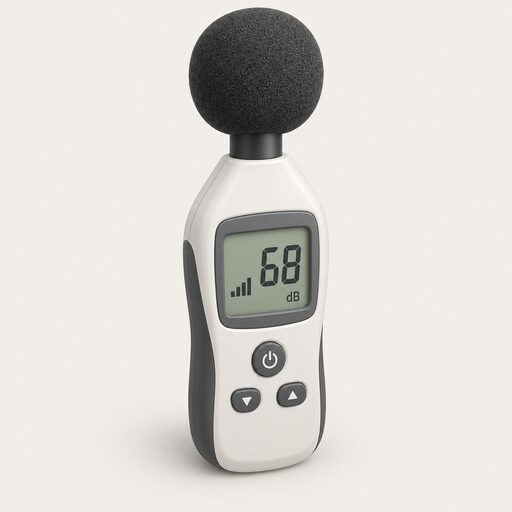
In practice, heat pumps are not unusually loud. The typical range of a heat pump when it is on is between 40 and 60 decibels21, and air source heat pumps operate at around 40 decibels and can reach 60 decibels if they are working very hard22. Combi boilers and heat pumps typically make between 40 and 60 decibels at a distance of one metre when running23. There are strict rules controlling the maximum noise a heat pump is permitted to generate, which is typically no louder than a fridge freezer or gas boiler24.
For a household, the 42 dB limit is the outer boundary and the 37 dB assessment is the working target. Siting, distance and unit choice are the levers. The dependence that remains is on the neighbour's window position, which the household does not control, and on the accuracy of the manufacturer's sound data at the operating modes the assessment covers.
Where the Welsh and English rules differ
The headline noise figure is shared. England's permitted development rules require compliance with the MCS Planning Standards, and the 42 dB limit applies across the UK4. The divergence is in the wider permitted development regime.
Planning guidance for England states plainly that the guidance relates to the planning regime for England and that the policy in Wales may differ25. That warning appears on both the home energy generation and building regulations pages of the Planning Portal.
The substantive differences are these. Wales previously required a minimum three metre distance from the boundary, a condition England did not apply in the same form, and that restriction has now been removed in Wales10. Wales allows two heat pumps on a detached house and permits air-to-air installations1. The Welsh changes emulate recent changes to regulation in England3.
Where a planning application is needed, cost differs by scale of work. In Wales, larger works are charged a higher fee, with figures of £528 and £585 cited for larger applications27.
For a household, the practical question is which regime applies to the property, not which is more generous. A detached house in Wales now has a two-unit allowance that a detached house in England does not have in the same terms, while both share the 42 dB limit and the MCS 020 assessment. The dependence that remains is on the devolved planning framework: the same physical installation can sit under different permitted development rules depending on which side of the border it is built.
Sources27 cited
- Changes to Permitted Development Rights (PDR) in Wales from 1 June 2026, MCS Certified, 2026-05-22
- Do Grant heat pumps need planning permission, Grant UK, 2026-06-01
- What could the next Senedd do on heat pump planning, Nesta, 2026-01-26
- Air and ground source heat pumps, Croydon Council, 2026-09-17
- MCS 020(a) Calculator, MCS Certified, 2026-09-19
- Class G: Installation or alteration etc of air source heat pumps on domestic premises, legislation.gov.uk, 2025-05-29
- How to get homes more ready for heat pumps, Nesta, 2026-02-12
- Changes to Permitted Development Rights: Summary of Responses, Welsh Government, 2025-12
- Four realities for installing a heat pump in a flat, Nesta, 2026-05-20
- Air Source Heat Pump Noise and Permitted Development Rights in Wales, Phase 1 Report, Welsh Government, 2024-01-11
- Written Statement: Publication of Air Source Heat Pump Noise and Permitted Development Rights in Wales Report, Welsh Government, 2024-01-11
- Impact assessments, Scottish Government, 2026-09-17
- Building regulations renewables guidance, Bedford Borough Council, 2026-09-17
- Planning is holding back heat pumps, here's how to fix it, Nesta, 2024-03-21
- Are air source heat pumps noisy, Intergas Heating, 2026-03-24
- Air source heat pump guide, Eastleigh Borough Council, 2025-05
- Air source heat pumps, ScottishPower, 2026-09-17
- I'm a sustainability expert, here's why I'm not getting a heat pump, Which?, 2026-02-12
- Air source heat pumps: householder planning advice, Central Bedfordshire Council, 2026-09-17
- Air source heat pumps, Westmorland and Furness Council, 2026-09-17
- Heat pump fact check, Energy Saving Trust, 2026-07-01
- Smart Flex Heat Pump Trial, Low Carbon Hub, 2025-12-19
- Are heat pumps really loud, Alpha Innovation, 2025-07-04
- Would a heat pump work for your home, Which?, 2024-11-19
- Heat pumps, Planning Portal, 2026-09-17
- Heat pumps: building regulations, Planning Portal, 2026-09-17
- 10 things to make getting a heat pump easier, Nesta, 2026-02-12
 Planning Permission in WalesDo you need planning permission for a heat pump in Wales?
 Planning Permission WalesDo you need planning permission for an air conditioning unit outside your home in Wales?
 How Noisy Is a Heat PumpHow loud a heat pump actually sounds when it is running, whether it will annoy your neighbours, and what the rules say about how close it can be to their windows.
 Home Energy Planning WalesSolar panels and heat pumps often need no planning permission in Wales, but the rules differ from England.
 MCS 020 Noise AssessmentWill your air source heat pump be too noisy for next door?
 Planning Permission in EnglandDo you need planning permission for an air source heat pump?