
In this answer
Short answer
The short answer is once a year, every 12 months. Independent guidance recommends a boiler is serviced at least once a year, and the same 12-month interval is repeated across consumer bodies, network operators and manufacturers1. Where a boiler has not been seen in the past 12 months, the advice is to book an engineer in2.
The interval is not a legal requirement for a privately owned home, but it is a condition of most manufacturer warranties and of many boiler cover policies. Failure to get a boiler serviced annually will, in most cases, invalidate its warranty, and many boiler warranties require regular servicing to remain valid3. That makes the annual service less a maintenance preference than the price of keeping the guarantee alive.
For a household, the service is also the main safety check on the appliance. All gas appliances, including the boiler, gas cooker and gas fire, should be safety checked once a year and serviced according to the manufacturer's instructions by a Gas Safe registered engineer5. The rest of this page sets out what the annual rule covers, what it costs, how long it takes and who is allowed to do the work.
Once a year, every 12 months
The 12-month figure is the consistent recommendation across the sector. Consumer guidance states that a boiler should be serviced at least once a year, in other words every 12 months1. The same interval appears in manufacturer advice, which describes annual servicing as the general rule of thumb to keep everything functioning correctly6, and in the safety guidance published by the gas distribution networks, which asks households to arrange an annual service for the boiler or other gas appliances with a Gas Safe registered engineer7.
The interval is expressed in two ways that mean the same thing: once a year, or every 12 months. Some sources phrase it as a maximum gap, noting that if a service has not happened in the last 12 months it is worth booking one8. Others phrase it as a minimum standard, stating that a boiler should be serviced at least annually to keep it in the best working condition and protect the warranty9.
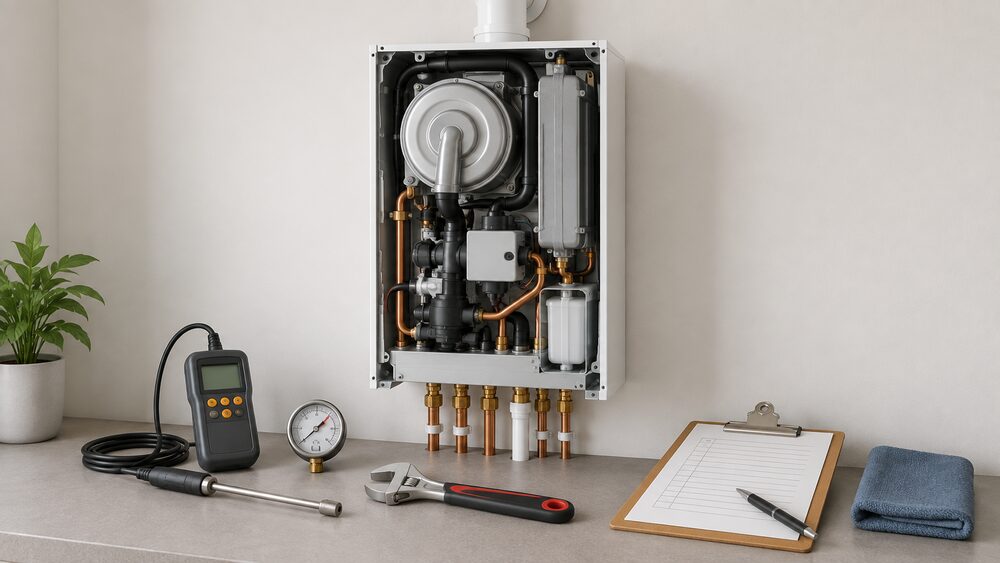
What drives the interval is the combination of wear and safety. A boiler that runs through a heating season accumulates dust, debris and combustion by-products, and the annual visit is the point at which the engineer checks the flame, the heat exchanger, the pressure and the flue. Regular maintenance improves efficiency, extends the lifespan of the system and helps catch small issues before they become larger ones10. The 12-month cycle is set to land before those small issues have a full year to develop.
In practice, the date that matters is the anniversary of the last service, not the calendar year. A boiler serviced in September 2025 falls due in September 2026. Households that let the gap stretch to two years are the ones most likely to find a warranty claim refused, because the condition is a 12-month interval, not a vague instruction to service occasionally.
Why annual servicing matters
An annual service is described by consumer guidance as essential for keeping a boiler running efficiently and safely, and many cover providers will only cover a boiler if one has been carried out11. That single sentence captures the two reasons the interval exists: performance and protection.
On performance, the argument is straightforward. Scheduling an annual service extends the lifespan of the boiler and enhances its performance, according to manufacturer guidance12. Independent advice makes the same point, noting that an annual service can keep a boiler running smoothly and extend its life, delaying an expensive replacement by years13. The oil heating body OFTEC frames the annual service as an important investment even when household finances are tight14.
On safety, the service is the point at which combustion is checked. Ensuring a boiler is serviced annually helps avoid problems including carbon monoxide leaks15. Carbon monoxide is the reason the gas networks and the Gas Safe Register push the annual check so hard: it is colourless and odourless, and a boiler that is burning incorrectly can produce it without any obvious sign in the home.
There is also a warranty dimension that runs through every section of this page. Annual boiler servicing is described as crucial for maintaining efficiency, validating warranties and ensuring safe operation16. A household that services the boiler every year is doing three things at once: protecting the appliance, protecting the people in the home, and protecting the guarantee.
Servicing and your warranty: the annual requirement
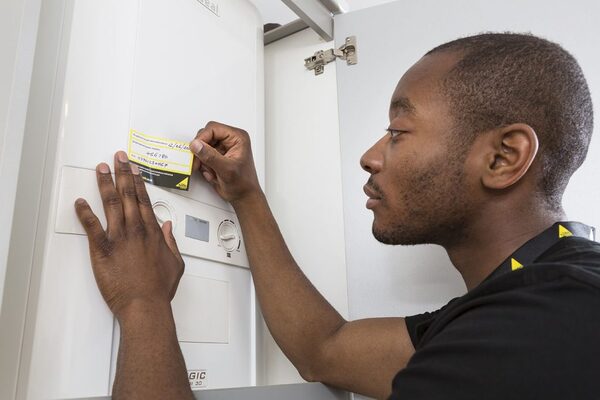
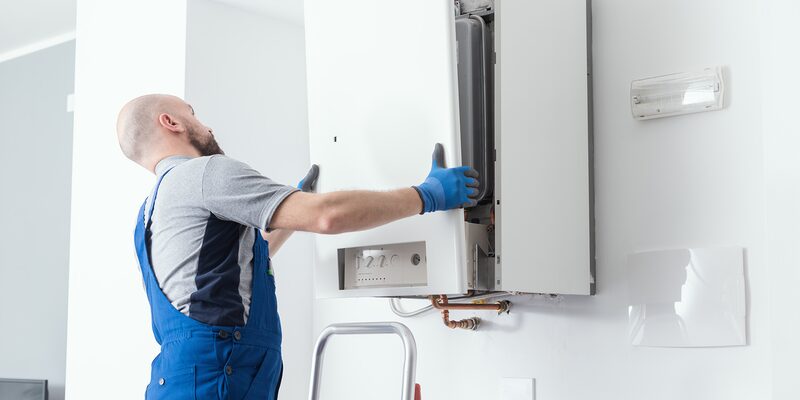
The warranty condition is the part of the annual rule with the clearest financial consequence. Independent guidance states plainly that not keeping up with annual servicing can invalidate any warranty on the boiler17. A separate consumer guide puts it more strongly: failure to get a boiler serviced annually will also, in most cases, invalidate its warranty3. Manufacturer terms follow the same pattern, with many manufacturer warranties requiring annual boiler servicing as part of the guarantee, carried out by a Gas Safe engineer every 12 months6.
The practical effect is that a warranty is conditional, not automatic. A boiler installed with a long guarantee is covered on the assumption that it is serviced each year by a registered engineer, and the paperwork matters as much as the work. Keeping the service record, the engineer's report and the dated invoice is what allows a household to demonstrate the condition has been met if a claim is made.
Boiler cover policies often carry the same condition. Cover products commonly include an optional annual service by a Gas Safe registered engineer, and providers may only cover a boiler that has been serviced11. That means the service and the cover are linked: the policy is priced on the assumption that the appliance is being maintained to schedule.
For households weighing up whether to skip a year, the arithmetic is worth setting out. A service costs around £90 to £100, while a repair following a service is given as averaging £120 to £7504. Where a warranty claim is refused because the service record has a gap, the household carries the full repair cost. The annual service is the cheaper of the two outcomes by a wide margin.
Gas Safe engineers and oil boilers: who can service what
Servicing a gas boiler is regulated work. All gas appliances, including the boiler, gas cooker and gas fire, should be safety checked once a year and serviced according to the manufacturer's instructions by a Gas Safe registered engineer5. The same requirement is repeated by the gas networks, which ask households to get the boiler and gas appliances serviced every year and to use only a Gas Safe registered engineer19, and by manufacturers, who state that boilers should be serviced once a year by a Gas Safe registered engineer20.
Checking that an engineer is registered is a specific step, not a formality. The Gas Safe Register exists to help households find a registered engineer for gas appliance and boiler problems, and can be contacted on 0800 408 5500 or through its website21. The registration card carries a licence number and the types of work the engineer is qualified for, which matters because not every registered engineer covers every appliance.
Oil boilers sit outside the Gas Safe scheme because there is no gas supply involved. Oil-fired appliances are serviced by technicians registered with OFTEC, the oil heating body, which also recommends an annual service14. The interval is the same; the registration body is different.
"Remember all of your gas appliances, including your gas boiler, gas cooker and gas fire should be safety checked once a year and serviced regularly according to the manufacturer's instructions by a Gas Safe registered engineer."
For a household, this is the point at which energy independence meets a hard limit. A boiler cannot be serviced by the occupant, however competent they are at other home maintenance. The annual visit depends on a registered engineer being available, and in a cold snap that availability tightens. Booking ahead, and keeping the service date in the same month each year, is what keeps the appliance, the warranty and the safety check on schedule.
How long a service takes, and what it costs
Duration and cost both vary with the boiler. Reported averages are around 30 minutes for a combi, one hour for a system boiler, 1.5 hours for a regular boiler and one to two hours for an oil boiler4. A gas boiler service is given as taking between 30 minutes and two hours, and may take longer depending on the boiler's type, location, age and condition1. A good service should last at least 30 minutes22.
| Boiler type | Typical duration | Typical cost |
|---|---|---|
| Combi | 30 minutes | Around £90 to £100 |
| System | 1 hour | Around £90 to £100 |
| Regular | 1.5 hours | Around £90 to £100 |
| Oil | 1 to 2 hours | Around £90 to £95 |
Costs are quoted in several ways across the published guidance, and the figures differ because they cover different scopes and dates. One guide gives an average of around £79, with some services up to £120 depending on where the household is17. Another puts the average at around £90 to £100, with a gas boiler service at £80 to £120 including VAT and an oil boiler service at around £90 to £954. A figure of £100 including VAT is given as the average as of March 20264. A consumer survey reported a range of £70 to £110 for a gas boiler, not including any resulting repairs3.
The variation is explained by the same factors that drive duration: the age and model of the boiler, the area, who carries out the work and the time of year22. A straightforward combi in an accessible kitchen is at the quick end; an older regular boiler in a cupboard, or an oil appliance, sits at the slower end.
Repairs found during a service are charged separately, and the figures are much larger. Where issues are identified, the additional bill is given as averaging £120 to £7504. That is the range a household should have in mind when the engineer reports a fault, and it is the reason the annual service is best understood as a check rather than a repair visit.
When to book, and what happens if the boiler fails
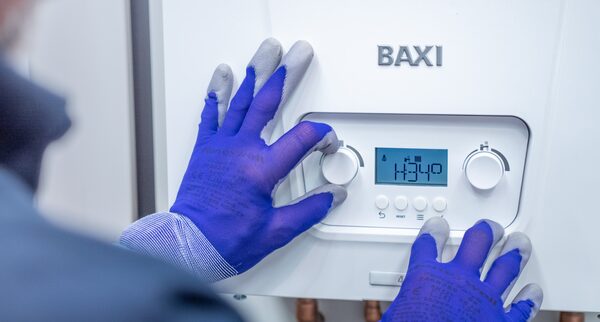
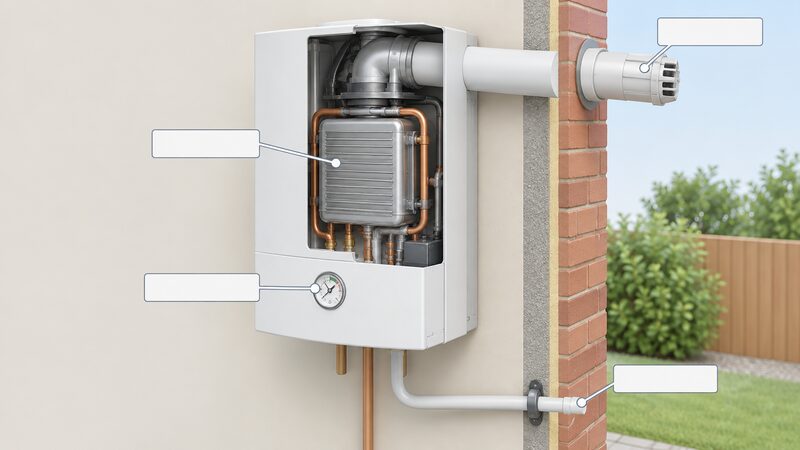
Late summer is the standard recommendation. Booking towards the end of the summer is described as a good time23, and the best time for a boiler service is usually given as the summer24. The reasoning is practical: engineers have more availability before the heating season begins, and any fault found has time to be fixed before the boiler is needed daily.
The Energy Saving Trust recommends getting a boiler or heat pump serviced every year to make sure it is running properly25, and the same annual rhythm applies to heating controls and the rest of the system. A spring checklist from a trade body advises scheduling a professional service for the boiler or heating system, since regular maintenance improves efficiency, extends lifespan and catches small issues early10.
If the service identifies a fault, the engineer reports it and the repair is quoted separately. A Gas Safe registered engineer can also classify an appliance as unsafe, in which case it should not be used until the fault is corrected. That outcome is rare on a maintained boiler and more common where servicing has lapsed.
For households in rented property, the responsibility for arranging the service usually sits with the landlord rather than the tenant, and the same annual interval applies. For anyone unsure whether a service is due, the date of the last one is the only figure that matters: 12 months on from that date is when the next is due.
Sources25 cited
- Boiler maintenance guide, Uswitch, 2026-09-03
- What to do if your boiler breaks down at Christmas, Which?, 2025-12-12
- Common boiler problems and repair costs, Which?, 2025-09-17
- How much does a boiler service cost?, Uswitch, 2026-09-03
- Using a Gas Safe engineer, Liquid Gas UK, 2026-09-20
- Boiler servicing, E.ON Next, 2026-09-17
- Take no chances with gas safety, Northern Gas Networks, 2026-09-14
- How to keep your boiler working in cold weather, Which?, 2025-12-11
- How much is a boiler service?, Vaillant, 2026-09-17
- Spring into home care, APHC, 2025-05-07
- How to choose the best boiler cover, Which?, 2025-09-30
- Most common boiler problems, Vaillant, 2026-09-17
- Keeping warm in winter, CIPHE, 2022-12-19
- Five summer heating tips, OFTEC, 2026-05-26
- Boiler not working, Cadent Gas, 2026-09-20
- Worcester Bosch boilers, Fuse Energy, 2026-07-01
- Why you need a boiler service and what to ask about, Which?, 2025-10-27
- Boiler cover, E.ON Next, 2026-09-17
- Energy efficiency, Northern Gas Networks, 2026-06-25
- Boiler safety, Fuse Energy, 2026-09-05
- Make the right call, Cadent Gas, 2026-09-20
- Getting the best boiler service, Which?, 2025-09-17
- Boiler servicing guide, Confused.com, 2025-07-23
- How long does a boiler last?, Uswitch, 2024-11-13
- Take control of your heating at home, Energy Saving Trust, 2026-09-11
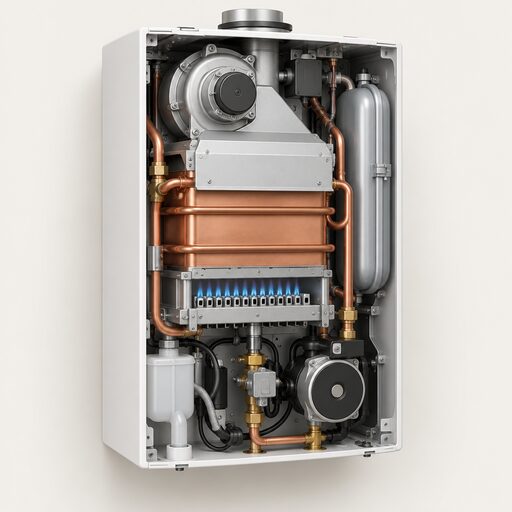 Servicing and MaintenanceWhat an annual gas or oil boiler service covers, the intervals manufacturers specify, the link between servicing records and warranty validity, and what servicing means for a household's energy independence.
 Boiler WarrantiesHow long does a boiler warranty actually last, and what do you have to do to keep it?
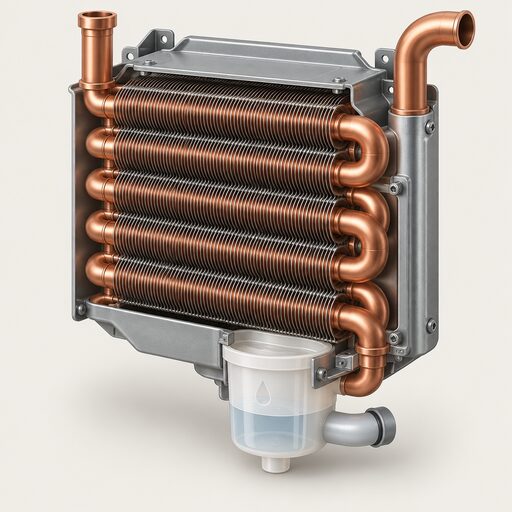 Gas Boilers GuideMains gas boilers heat around 23 million UK homes.
 Boiler Manufacturers in the UKCovers the manufacturers supplying gas, oil, LPG and electric boilers to UK homes, their main ranges and where they are made.
 The Full Boilers and Heating GuideWhich boiler suits your home, and when is it worth swapping the old one?
 Registering a WarrantyGetting a new boiler covered for longer usually means registering it quickly, often within a month of installation, or the long guarantee drops to a year.