
In this answer
Short answer
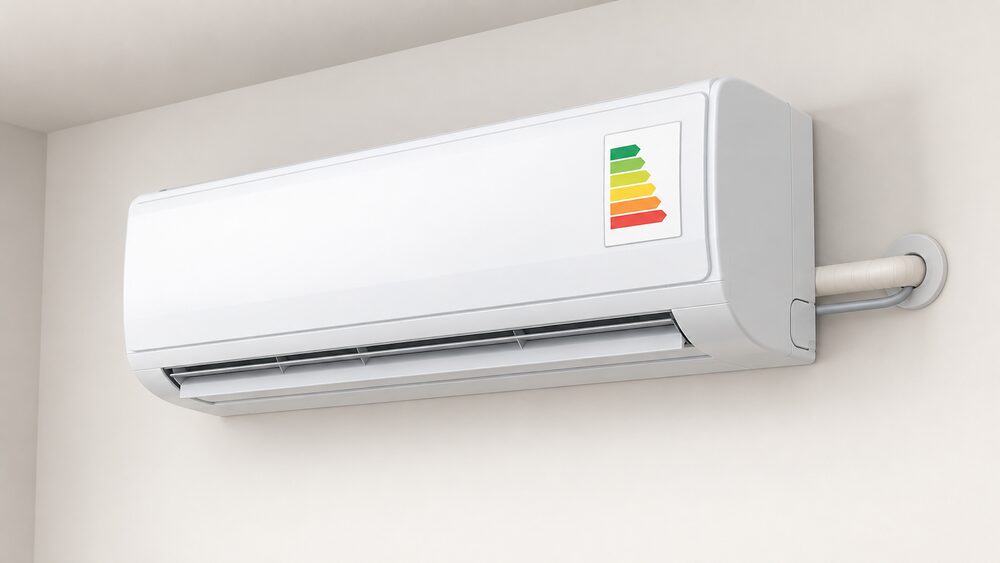
A+++ is the top class on the air conditioning energy scale, and it is the class buyers filter by when they want a unit that costs less to run. It is not a single technology. It is a label applied to fixed split and multi-split systems that have been tested to a seasonal standard, and it is largely absent from the portable units sold in UK shops.
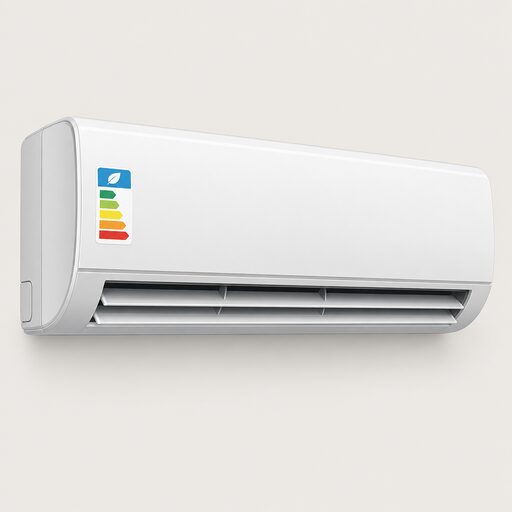
The scale for air conditioning runs from A+++ at the top down to D at the bottom, and one maker states plainly that its units are rated up to A+++ for heating and cooling1. A Panasonic range is described as carrying the highest energy rank of A+++ in heating and cooling2. Behind the letter sit two seasonal figures, SEER for cooling and SCOP for heating, which measure year-round energy use rather than performance at a single test point3.
What the label does not do is guarantee a running cost. The efficiency class is established under test conditions; the bill depends on the home, the settings and the price of electricity4. For a household weighing energy independence, an A+++ fixed system is the closest thing in cooling to a controllable, on-site appliance, but it still runs on imported electricity from a supplier and the grid.
What the A+++ label means on an air conditioning unit
The letter on the label is a class, not a measurement. It sits on a scale that runs from A+++ at the top to D at the bottom for air conditioning products, and the class is awarded on the basis of seasonal efficiency testing rather than a spot reading1. That is why two units with the same A+++ class can still differ in their underlying SEER and SCOP numbers.
The labelling system has changed over time. Some older appliances may still show outdated A+ to A+++ scores, which belong to an earlier scale1. A unit carrying A+++ today is at the top of whichever scale applies to it, but the two scales are not directly comparable, so a second-hand or older-stock unit needs its actual SEER and SCOP figures checked rather than its letter alone.
Manufacturer guidance for buyers is consistent on the direction of travel: choose a unit with a class A rating, or even A+, A++ or A+++, and avoid the lowest letters of the classification system, E, F and G9. That advice is about avoiding the bottom of the range rather than chasing the top class for its own sake.
For a household, the practical meaning is narrow and useful. A+++ tells you the unit is among the most efficient tested in its category. It does not tell you the size of the unit, whether it heats as well as cools, or how it will perform in a particular room. Those come from the specification and the installation.
Which systems carry an A+++ rating: splits, multi-splits and portable units compared

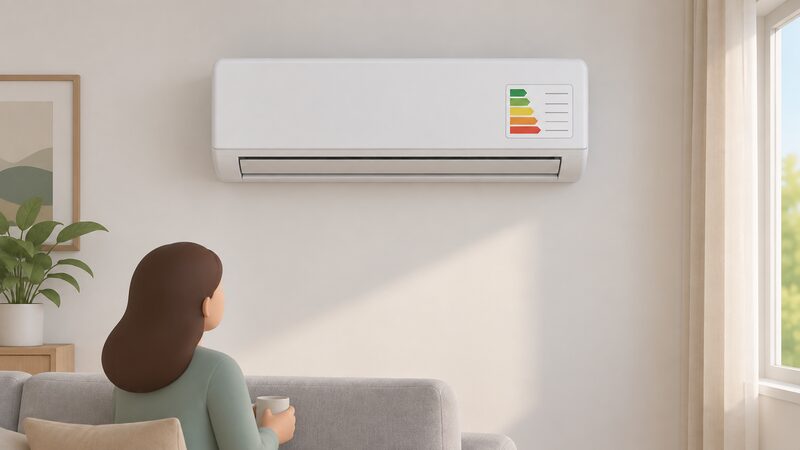
Fixed systems are where A+++ is found. A pair system, meaning one outdoor unit matched to one indoor unit, is offered with seasonal efficiency values up to A+++11. A high wall unit in the Daikin Emura range is described as delivering A+++ energy efficiency alongside ultra-quiet operation10. Multi-split systems, which use a single outdoor unit connected to multiple indoor units, typically two to five, are also sold on efficiency grounds12.
Portable units are a different category. A typical portable air conditioner draws 1,000 to 1,500W, and the ratings table for portable air conditioners lists draws of up to 2,000W and up to 9.3A7. Those are power and current figures, not seasonal efficiency classes, and no portable unit in the evidence here carries an A+++ label. The physical reason is straightforward: a portable unit rejects heat through a hose to a window rather than through a fixed outdoor coil, and it sits inside the room it is cooling.
| System type | A+++ available | What the evidence shows |
|---|---|---|
| Single split (pair) | Yes | Seasonal efficiency values up to A+++11 |
| High wall split | Yes | A+++ energy efficiency stated for the Emura range10 |
| Multi-split | Yes | One outdoor unit, typically two to five indoor units12 |
| Portable | No | Typical draw 1,000 to 1,500W; up to 2,000W and 9.3A7 |
The comparison matters for independence as much as for cost. A fixed split or multi-split is a permanent installation with its own outdoor unit, which means the household owns the cooling equipment outright and is not dependent on a shared or rented appliance. A portable unit is cheaper to acquire and can move house, but it is the least efficient way to move heat out of a room.
Efficiency ratings: what SEER and SCOP figures sit behind the label
SEER and SCOP are the numbers the letter is built from. SEER is the seasonal energy efficiency ratio for cooling and SCOP is the seasonal coefficient of performance for heating; both measure year-round energy usage based on a typical day-to-day environment3. A single EER figure, by contrast, described performance at one set of conditions, which is why the seasonal metrics replaced it as the basis for labelling.
The regulatory floor sits below the top class. For existing dwellings, Approved Document L sets a minimum SEER of 4.0 in cooling mode for comfort cooling systems5. A government consultation proposed changing the minimum SEER to 5.1, which would raise the bar for new installations if adopted6. The gap between a minimum-compliant unit and an A+++ unit is therefore a gap in seasonal performance, not a gap in legality.
The same document set applies differently across the UK. Approved Document L governs England; Scotland and Northern Ireland have their own building standards, and the inspection regime for larger systems derives from the Energy Performance of Buildings Directive, which required larger air-conditioning systems in buildings to be inspected from an energy efficiency point of view15. Scotland's building standards are set out separately16.
For a household, the useful reading is that SEER and SCOP are the figures to compare when two units both show A+++. The letter compresses a range; the numbers do not.
How A+++ translates into running cost at home

The honest answer is that the label does not translate into a fixed annual cost. Actual costs vary depending on the home's insulation, temperature settings, energy prices and how the system is used4. Two identical A+++ units in two different houses will produce two different bills.
What the evidence does offer is a comparison between heating technologies. Air-to-air system running costs are likely to be lower than using an oil boiler and similar to a gas boiler or an air-to-water heat pump with a standard electricity tariff at current energy pricing17. That places a reverse-cycle air conditioner in the same running-cost band as the main alternatives for home heating, which is a stronger claim than the label alone makes.
There is no published pounds-per-year figure for A+++ against A++ for air conditioning. The nearest official comparison is for a different appliance: choosing A+++ rated over B-rated tumble dryers could save around £700 in Great Britain and £850 in Northern Ireland over a 13-year lifetime18. That figure belongs to tumble dryers and cannot be carried across to cooling.
The independence question here is about where the electricity comes from. An A+++ unit reduces the number of kilowatt hours needed for a given amount of cooling, but every one of those hours is still drawn from the grid through a supplier. Efficiency lowers the size of the dependence; it does not remove it.
Sizing and installation: why the rating alone does not guarantee performance
A unit can carry A+++ and still underperform in a room. The class is awarded under test conditions, and the installed result depends on correct sizing, pipework, refrigerant charge and airflow. Installation of air conditioning must comply with building regulations, and it is advisable to use an installer belonging to the Microgeneration Certification Scheme or a relevant Competent Person Scheme20.
Sizing is the first variable. A system matched to the cooling requirement of the building performs differently from one that is oversized or undersized, and the inspection regime recognises this: an inspection report must include an assessment of the air-conditioning efficiency and the sizing of the system compared to the cooling requirements of the building, and contain appropriate advice on possible improvements, replacement of the system and alternative solutions21.
Larger systems carry legal obligations. Air conditioning inspection reports are required for air conditioning systems over 12kW output8, and regular inspections of the accessible parts of air-conditioning systems apply to non-residential systems over 70kW effective rated output15. Combined air conditioning and ventilation systems also fall within the inspection requirements22.
For a household, the sequence is: correct size, competent installer, compliant installation, then the label. The label is the last check, not the first guarantee.
Checking the label before you buy: what to look for in the showroom and online
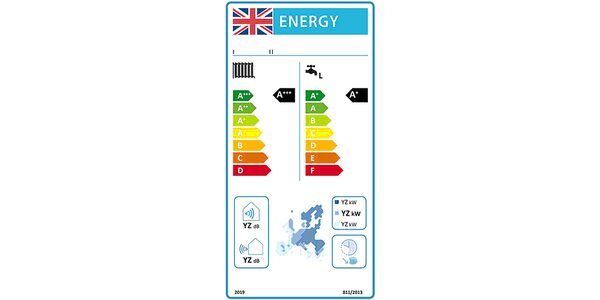
In a showroom or on a product page, the letter is the starting point and the seasonal figures are the substance. Look for the SEER and SCOP values rather than the class alone, because the class compresses a range and the numbers distinguish between two units that both show A+++3.
Check what the rating covers. A unit rated up to A+++ for heating and cooling is doing two jobs; a cooling-only unit has one class to declare1. For a household that wants the unit to contribute to winter heating as well as summer cooling, the heating class and the SCOP figure are the ones that matter.
Check the physical label. Electrical Safety First notes that a rating label is required for all manufacturers to have on their appliance, showing either the power of the appliance or the current of the appliance23. On a fixed split system, the energy label is supplied with the unit and the rating label is on the product.
Check the certification route for the installer. MCS operates an installations database, and certified products carry a certification number, with a grace period label applied after the certification number for products covered by updated standards24. That is a signal about the installation route rather than the appliance's efficiency class.
Netatmo's home air conditioning guidance favours units rated class A or higher (A+, A++ or A+++) over those in the lowest letters of the scale, E, F and G9.
For wider context on how the classes fit together, see air conditioning efficiency ratings and the pillar guide to home cooling. Households comparing fixed and portable options can read split vs portable air conditioning, and those weighing the heating side can read air conditioning that heats.
Sources24 cited
- Why air conditioners are good for heating, Daikin, 2026-09-20
- Heat with aircon, Panasonic, 2026-09-17
- How to choose an air-to-air heat pump, Daikin, 2026-09-17
- Electric wallpaper explained, Energy Saving Trust, 2026-03-26
- Approved Document L, Conservation of fuel and power, Volume 1: Dwellings, HM Government, 2026
- The Future Homes and Buildings Standards 2023 consultation, HM Government, 2026-09-17
- Summer energy tips, National Energy Action, 2026-08-13
- The Energy Performance of Buildings (England and Wales) (Amendment) Regulations 2024, explanatory memorandum, legislation.gov.uk, 2026-09-17
- Home air conditioning, Netatmo, 2026-09-20
- Energy efficient air conditioning with low running costs, Cooleasy, 2026-09-23
- Pair system, Daikin, 2026-09-17
- Air-to-air heat pumps: a low-carbon solution for UK homes, Nesta, 2026-02-17
- Ratings of electrical appliances, Electrical Safety First, 2026-09-19
- Approved Document L, Volume 1: Dwellings, HM Government, 2026
- Energy Performance of Buildings Directive 2010/31/EU, legislation.gov.uk, 2026-09-17
- The Building (Scotland) Regulations 2008, explanatory note, legislation.gov.uk, 2026-09-17
- Why a heatwave is a good time to think about home heating, Nesta, 2026-07-08
- Home appliances, Energy Saving Trust, 2026-05-20
- Energy Performance Certificate reform consultation: government response, Scottish Government, 2025-01
- Is permission needed for installing new roof tiles?, Planning Portal, 2026
- The Energy Performance of Buildings (England and Wales) Regulations 2012, Part 4, legislation.gov.uk, 2026-09-17
- Changes to the energy performance of buildings regulations, CIBSE, 2026-09-17
- Energy and rating labels, Electrical Safety First, 2026-09-19
- Grace period for solar PV products announced ahead of implementation of four updated product standards, MCS Certified, 2026-08-01
 Air Conditioning CostPublished UK equipment prices and the parts of an installed price for portable, single split, multi-split and whole-house air conditioning.
 Types of Air ConditioningPortable, wall-mounted, multi-room or ducted: which air conditioning suits your home?
 Cooling and Heat PumpsCan an air conditioner heat your home as well as cool it?
 The Full Cooling and Air Conditioning GuideDo you really need air conditioning in a British summer, or would a fan and better shading do the job?
 Multi-Split ACHow multi-split air conditioning works when one outdoor unit serves several indoor units: how many rooms one system can serve, independent room control, efficiency, outdoor unit size and sound, planning rules in England and Scotland, servicing and lifespan, the 0% VAT position and how it compares with separate single splits.
 Efficiency RatingsWhich air conditioning numbers actually tell you what it will cost to run?