In this guide
An air conditioner's efficiency is published in two kinds of figure. Seasonal ratings, SEER for cooling and SCOP for heating, average performance across a year of changing outdoor temperatures. Snapshot ratings, EER and COP, measure output against electricity use at a single test condition. The seasonal figures are the ones that reflect what a household actually pays, because they take account of how temperatures shift through the year1.
In England, building regulations guidance sets a minimum SEER of 4.0 for a fixed air conditioner working in cooling mode2. Consumer guidance suggests looking for SEER ratings of 7 or more to keep running costs down3. In practice, independent modelling assumes a cooling unit delivers 3.5 kWh of cooling for every 1 kWh of electricity4, which is why air conditioning, despite its reputation for heavy electricity use, moves several times more heat than it consumes.
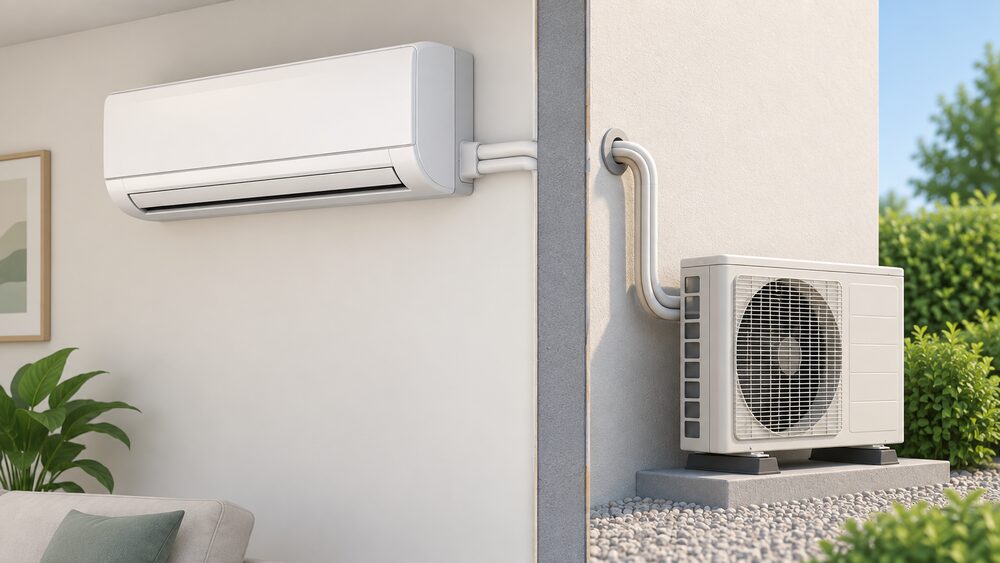
Most air conditioning units are, in HMRC's words, air source heat pumps5. That matters for independence: the same unit can heat a room in winter as well as cool it in summer, but every kilowatt-hour it moves still depends on electricity from the grid or from the home's own generation.
What SEER and SCOP measure: seasonal efficiency in real conditions
The Energy Saving Trust defines the Seasonal Coefficient of Performance as "a measure of how efficient a heat pump is, taking seasonal temperature changes into account"7. Alongside the snapshot figure, a datasheet will usually carry a SCOP or a Seasonal Performance Factor (SPF), which shows efficiency averaged across the whole year1. SEER is the cooling equivalent: the ratio of cooling delivered to electricity used over a cooling season.
Seasonal figures exist because a single test point flatters or understates a unit depending on the conditions chosen. A compressor running on a mild day works less hard than one running in a heatwave, and a seasonal rating weights those conditions across the year. That is why planning and building rules ask for seasonal figures rather than peak ones. The Greater London Authority's energy assessment guidance asks for details of the SCOP, the SPF and the SEER of proposed heat pumps8, and the Welsh Government's draft Approved Document L set out that "the seasonal energy efficiency ratio of an air conditioner working in cooling mode should be a minimum of 4.0"9.
| Rating | What it measures | Mode | Where it appears |
|---|---|---|---|
| SEER | Cooling output against electricity use, averaged over a season | Cooling | Datasheets, energy labels, building regulations minimums2 |
| SCOP | Heating output against electricity use, averaged over the year | Heating | Datasheets, energy labels, heat pump scheme rules7 |
| SPF | Seasonal performance of an installed system | Heating | Design and pre-sale performance estimates1 |
| EER | Cooling output against electricity use at one test condition | Cooling | Datasheets |
| COP | Heating output against electricity use at one test condition | Heating | Datasheets10 |
For a household, the practical rule is that SEER and SCOP describe the same machine in its two modes, and a reverse-cycle unit carries both. A unit with a strong SEER and a weaker SCOP may suit a home that wants summer cooling more than winter heating, and the reverse is equally possible. Comparing units like for like means comparing SEER with SEER and SCOP with SCOP, rated under the same climate conditions.
EER and COP: the snapshot ratings behind the seasonal figures
COP is the instantaneous ratio of heat delivered to electricity used; SCOP, as Which? puts it, "is the average COP across the whole year"10. EER is the equivalent snapshot for cooling. These single-point figures are useful for sizing and for comparing units at a stated condition, but they do not show how a unit behaves as the weather changes.
Makers publish seasonal figures well above the modelling assumptions used by independent analysts. Ember reports that some manufacturers, such as Daikin, publish air conditioning unit specifications which state a seasonal COP of 5.211. For its own modelling of household cooling demand, however, Ember assumed an average COP of 2.85 and an average heating output of 7.65 kW, both taken from a Department for Energy Security and Net Zero literature review of air-to-air heat pumps11.
| Figure | Value | Who states it |
|---|---|---|
| Seasonal COP in published Daikin air conditioning specifications | 5.2 | Maker, reported by Ember11 |
| Cooling COP in CSE's cooling model | 3.5 | Independent modelling4 |
| Average COP assumed for air-to-air heat pumps | 2.85 | DESNZ literature review, used by Ember11 |
The gap between these figures is the gap between a laboratory rating and a fleet average in real homes. A laboratory SCOP is measured under a standard method at defined temperatures; an installed system's performance also depends on sizing, pipe runs, how the controls are set and how well the unit is maintained. The maker figure describes what the maker states its product achieves; the modelling figures describe what analysts assume for homes in general. Neither is wrong, but they answer different questions.
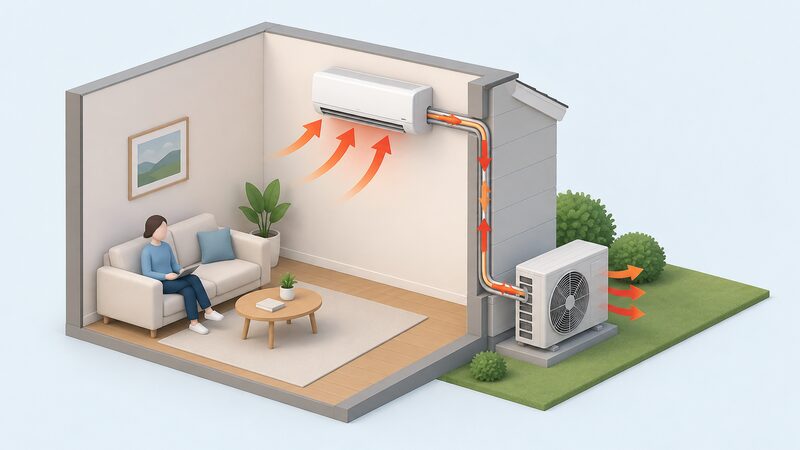
Efficiency in practice: around 4 kW of output for every 1 kW used
Home Energy Scotland gives a worked example of how a seasonal figure is reached: a heat pump that used 3,000 kWh of electricity over a year and provided 12,000 kWh of heat has a SCOP of 4, or 400% efficiency12. The same arithmetic applies to cooling. The Centre for Sustainable Energy's summer modelling assumes a cooling system "operating at a Coefficient of Performance (COP) of 3.5 (i.e. 1 kWh electricity gives 3.5 kWh cooling)"4. Nesta describes an air-to-water heat pump with a COP of 3 as providing 3 units of heat for every 1 unit of electricity used13.
So the headline of around 4 kW out for every 1 kW in sits in the middle of a range. Independent figures run from 2.8511 through 313 and 3.54 to the worked SCOP of 412, with maker specifications higher still. What drives the spread is the temperature difference the unit works against: the hotter the outdoor air in summer, or the colder it is in winter, the harder the compressor works and the lower the ratio.
Electrical load is modest by comparison with the heat moved. A single split system has a power rating of 0.8 to 2.5 kW3. That is within the range of a kettle or a small heater, but a unit may run for many hours during a heatwave. Detailed running cost figures are on the air conditioning running costs page.
For independence, the ratio is the lever. Every point of SEER or SCOP reduces the electricity drawn from the grid for the same comfort. Homes with solar panels can meet part of that demand themselves, since hot sunny days coincide with high cooling demand; that relationship is covered in running air conditioning on solar panels.
How air conditioning compares with plug-in electric heaters
A plug-in electric heater converts each kilowatt-hour of electricity into one kilowatt-hour of heat. An air-to-air heat pump moves heat from outside, so each kilowatt-hour of electricity delivers several. Which? reports that an air-to-air heat pump gives "lower running costs than with other types of electric heating and plug-in air conditioning"14.
That comparison has two halves. Against resistance heating, a fixed reverse-cycle unit wins on efficiency because of the COP effect described above. Against plug-in air conditioning, a fixed split system also has the edge, because a portable unit keeps both the hot and cold sides of the refrigeration cycle inside the room and vents heat through a hose. The trade-offs between these units are set out in split vs portable air conditioning and in the more detailed air conditioning vs electric heater efficiency.
The limit is stated plainly by the Centre for Alternative Technology: bolt-on home cooling systems "tend to use a lot of electricity, leading to higher bills"15. Efficiency ratios compare air conditioning favourably with other electric appliances doing the same job; they do not make cooling free, and a home that adds air conditioning adds a new summer electricity load it did not have before. Passive measures reduce that load before any machine runs; see passive cooling.
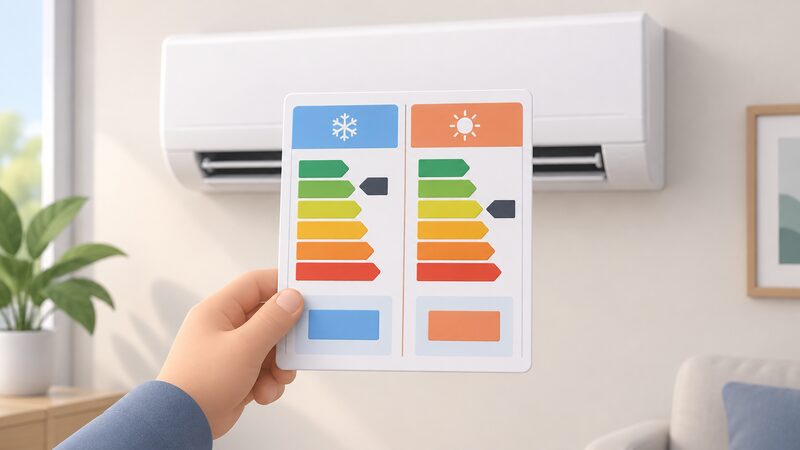
Reading the energy label: A ratings and beyond
Energy labels rate products "from A to G in terms of energy use, with A being the most efficient and G being the least efficient", according to nidirect16. Plymouth Energy Community's guidance is that products rated 'A' or above are the most efficient for their size17. Air conditioners are among the products where labels extend above A, which is why terms such as A+++ air conditioning appear on datasheets.
The rating is relative to size. The Energy Saving Trust explains that "the energy rating is generally linked to its size", so a bigger A-rated product of the same type uses more energy than a smaller one18. A large A+++ unit can therefore use more electricity than a smaller unit with a lower letter. The Trust's advice when choosing appliances is to check the energy ratings label19, but the letter alone does not show consumption; the SEER and SCOP figures and the rated capacity together do. Choosing the capacity the room actually needs is covered in air conditioning sizing.
Labels for heat pumps and air conditioners rest on seasonal figures. The MCS domestic heat pump guide notes that "ErP labelling and Eco-Design use SCoP and a predetermined SEPEMO8 boundary 3 condition"20. Minimum label classes have been written into building guidance: Scottish draft guidance stated that fixed air conditioners should have a minimum energy efficiency classification of Class C under the labelling scheme adopted in the Energy Information (Household Air Conditioners) (No 2) Regulations21.
EPCs themselves are changing. The Scottish Government has announced a new rating system for domestic buildings giving clearer information on fabric efficiency; the emissions, efficiency and running costs of the heating system; and the cost of energy to run the home to standardised conditions23. The UK Government has consulted on reforms to EPCs, Display Energy Certificates and air conditioning inspection reports24. These reforms follow the European directive requirement to "ensure that larger air-conditioning systems in buildings are inspected from an energy efficiency point of view"25.
Why most air conditioners are heat pumps: heating and cooling in one unit
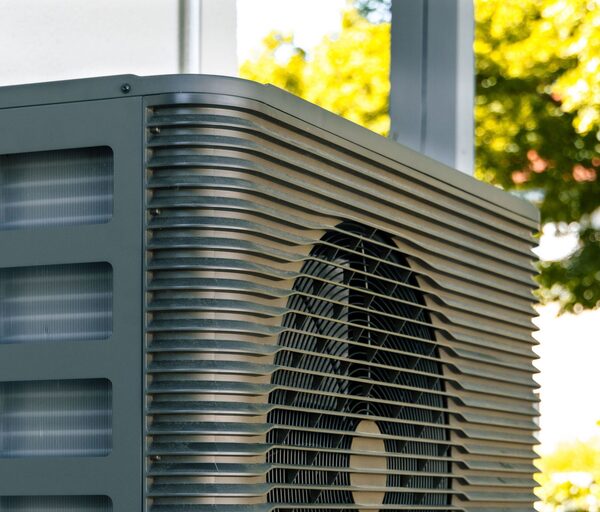
HMRC states: "HMRC's understanding is that most air conditioning units are air source heat pumps"5. The industry and government sources agree. Air-to-air heat pumps "can both heat and cool air depending on what you need", transferring heat through fan coil units or blowers26. The Energy Saving Trust notes that these units can be configured for cooling as well as heating27, and the Construction Products Association that many heat pumps "can even provide summer air conditioning"28. The terms overlap in everyday use: air-to-air heat pumps are "sometimes referred to as air conditioning"29 and are "often known as air conditioning units"30. For grid connection purposes, the Energy Networks Association treats air conditioning units as a form of heat pump, so the same process applies31.
"HMRC's understanding is that most air conditioning units are air source heat pumps."
This is why an air conditioner carries a SCOP at all. SCOP is "a way to rate a heat pump's performance in a given climate"32, and in Scotland's compliance guidance it is measured under the procedures in BS EN 14825:2013, the standard for testing air conditioners, liquid chilling packages and heat pumps at part load and calculating seasonal performance33.
The climate rating matters when comparing figures. The standard temperatures for calculating SCOP in "average" and "colder" climates are -7 and 15°C respectively, according to Local Energy Scotland34. A SCOP stated for one climate is not directly comparable with one stated for another.
There is one place where UK scheme rules set a SCOP threshold, and it does not apply to air conditioning. Ofgem's Boiler Upgrade Scheme guidance clarifies that the SCOP 2.8 requirement applies only to air-to-water systems, not all heat pumps35. The grants position for air-to-air systems is set out in are there grants for air conditioning, and the heating side in detail in air conditioning that heats.
What a reverse-cycle unit does not do is heat water. A household that uses air conditioning for winter warmth still needs a separate source of hot water, and its space heating becomes wholly dependent on the electricity supply.
Building Regulations Part L and what it requires of installed systems
Putting in a fixed air-conditioning system is one of the alterations listed by GOV.UK as needing building regulations approval36. In England, Approved Document Part L covers higher standards for windows and for the efficiency of heating, hot water, mechanical ventilation, air conditioning and lighting, as well as the building fabric37, and its guidance on comfort cooling sets the minimum SEER of 4.0 for an air conditioner in cooling mode2. The current Part L for new and existing dwellings in England came into force on 15 June 202238.
Part L has a longer history. It was introduced in 1995 for new buildings and revised in 2005 to include existing dwellings where works are carried out in homes over 25 m239. Part O, aimed at preventing overheating in new homes, came into force in England on the same date, 15 June 202239; its requirements are explained on the Part O overheating page.
The four nations differ:
| Nation | Position on air conditioning efficiency |
|---|---|
| England | Minimum SEER 4.0 for an air conditioner in cooling mode, in Approved Document L2 |
| Wales | Draft Approved Document L set a minimum SEER of 4.09; a 2025 review consults on Part L alongside Part F (Ventilation) and Part O (Overheating)40 |
| Scotland | Draft compliance guidance set a minimum Class C energy label for fixed air conditioners21 |
| Northern Ireland | A 2023 discussion document proposed increasing the SEER for cooling systems to 4.041 |
Part L applies to heating and cooling systems of every fuel type, including gas, oil, solid fuel, solar, electric and community or district heating42. In scope terms, it applies to roofed buildings with walls that use energy to condition the indoor climate6. Compliance combines design calculations such as SAP with "as built" verification through airtightness testing and photographic evidence22.
The regulations set a floor, not a target. A unit that meets SEER 4.0 complies; consumer guidance of SEER 7 or more3 is well above it. Regional planning rules for outdoor units are separate from building regulations; see air conditioning planning permission in England and its equivalents for Scotland, Wales and Northern Ireland.
Servicing, F-Gas registration and keeping efficiency over the system's life

A rated SEER or SCOP describes a new unit under test. An installed system keeps that performance only if it is installed correctly and maintained. The industry's own performance methods reflect this. MCS 031 has historically used the SCOP, based on a presumed flow temperature, to estimate the Seasonal Performance Factor and calculate the electricity needed to meet annual heat demand43. The Energy Saving Trust notes that for an exhaust air heat pump, "the designed seasonal performance factor (SPF)" will indicate its running costs44. Welsh draft guidance also defines a seasonal primary energy efficiency ratio (SPEER) as a measure of primary energy use across heat pumps, boilers, cogeneration and hybrid systems45.
The legal duty that bears most directly on efficiency is inspection. Under the energy performance regulations, the person in control of an air conditioning system must "ensure that the system is inspected by an energy assessor at regular intervals not exceeding five years"6. For systems first put into service on or after 1 January 2008, the first inspection falls due by the last day of the five years beginning with that date6. Scottish guidance sets the interval from three years for poorly maintained and inefficient systems up to five years for well maintained ones46.
Routine care is separate from the energy inspection. Blocked filters and dirty coils make the compressor work harder for the same output, lowering real-world efficiency below the rated figure. What that care involves is covered in air conditioning maintenance, and how installation quality affects performance in air conditioning installation.
For independence, maintenance is where dependence on others remains. A household can clean filters itself, but refrigerant work and statutory inspection rely on certified engineers and energy assessors.
How long a system lasts and what warranty to expect
The statutory framework gives a timetable for scrutiny rather than a lifespan: an energy inspection within five years of first use and at intervals not exceeding five years after that6. Over a long life, a system can expect several such inspections, each assessing whether it is still efficient and correctly sized.
Warranty terms are set by each manufacturer and installer, and differ by range and by whether the installation is registered with the maker. There is no official or independent standard term for home air conditioning. The maker ranges that carry longer terms are listed in which systems come with a 5 year warranty, and the makers themselves in air conditioning brands sold in the UK.
A warranty is a dependence on a company. It is only as good as the maker's continued trading and the conditions attached, which commonly include installation and servicing by a qualified engineer. A unit's efficiency over its life depends at least as much on the maintenance and inspection described above as on any warranty document.
Dehumidification and comfort
NEA's summer guidance distinguishes the two appliances: air conditioners "actively remove heat and reduce room temperature", while "a dehumidifier does not lower the air temperature, it can take out existing moisture in the air"47. Air conditioning also removes some moisture as it cools, which contributes to comfort in humid weather. Efficiency ratings do not measure moisture removal, so SEER and SCOP say nothing about how well a unit dries a room. Dry modes and humidity control are explained in air conditioning, dry mode and humidity.
What efficiency ratings mean for energy independence
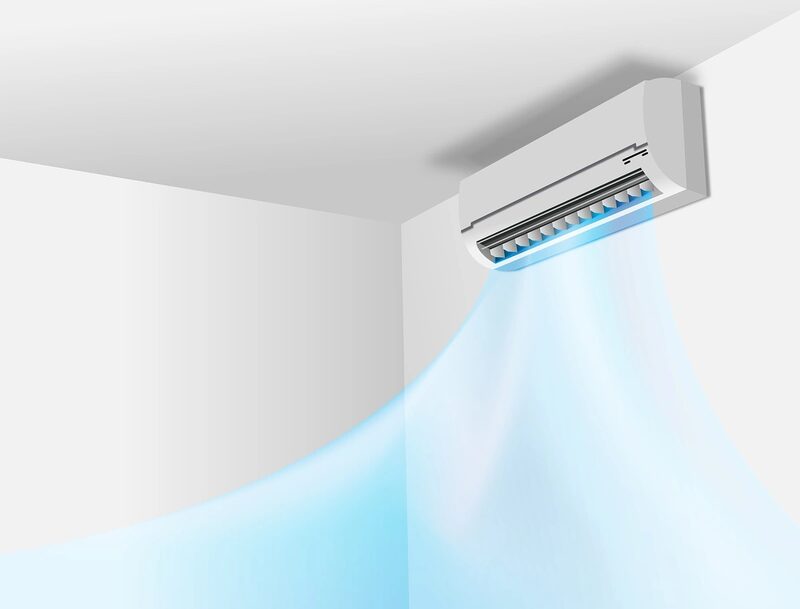
Seasonal ratings measure how much of a household's comfort comes from the air outside and how much from bought electricity. A SCOP of 4 means three-quarters of the delivered heat is moved from outdoors12; a cooling COP of 3.5 means each kilowatt-hour buys 3.5 kWh of cooling4. Higher ratings cut grid demand, and the pattern of summer cooling aligns with solar generation.
The dependence that remains is clear. An air conditioner needs electricity at every moment it runs, a certified engineer for refrigerant work, an energy assessor for statutory inspection, and a manufacturer for parts and warranty. The wider picture is set out in home cooling and energy independence and the full guide to home cooling.
Sources47 cited
- In-depth guide to heat pumps, Energy Saving Trust
- Approved Document L, Volume 1: Dwellings, UK Government
- Is air conditioning worth it in the UK?, Uswitch, 2026-07-14
- Summer fuel poverty and the new price cap, Centre for Sustainable Energy, 2026-08-26
- VAT energy-saving materials: air source heat pumps, HM Revenue and Customs
- Energy Performance of Buildings (England and Wales) Regulations 2012, Part 4, legislation.gov.uk
- Energy jargon buster, Energy Saving Trust, 2026-03-20
- Energy assessment guidance, Greater London Authority, 2022-06
- Part L and F review stage 2a: Approved Document L, Welsh Government, 2020-11
- An introduction to heat pumps, Which?, 2025-09-22
- UK solar homes power equivalent of five hours of daily air con use during heatwave, Ember, 2026-06-24
- Living with a heat pump, Home Energy Scotland, 2024-02
- Air source heat pumps (air to water), Nesta, 2025-02-03
- How a heat pump can cool your home, Which?, 2026-07-17
- Home cooling, Centre for Alternative Technology, 2025-06-27
- Choosing energy efficient products, nidirect, 2025-04-09
- What uses watt, Plymouth Energy Community
- Top five tips to save energy in the kitchen, Energy Saving Trust, 2026-05-20
- Buying energy efficient products, Energy Saving Trust, 2024-09-05
- Domestic heat pump guide, MCS, 2024-04-02
- Draft Domestic Building Services Compliance Guide, Scottish Government
- SAP 10 FAQs, BRE Group
- Reforming Energy Performance Certificates, Scottish Government, 2025-01-21
- Reforms to the energy performance of buildings regime, UK Government, 2024-12-04
- Energy Performance of Buildings (Scotland) Regulations 2008 explanatory note, legislation.gov.uk
- Heating your home with renewable energy, Which?, 2025-09-22
- Air to air heat pumps, Energy Saving Trust, 2026-09-11
- Heat pumps vs boilers, Construction Products Association, 2025-02-18
- Northern Ireland low carbon heating in buildings, Energy Saving Trust, 2025-07-03
- Written evidence, UK Parliament, 2023-08
- Connecting electric vehicles and heat pumps to the networks, Energy Networks Association
- How heat pumps work: a guide for homeowners, NICEIC, 2025-09-17
- Domestic Building Services Compliance Guide 2022, Scottish Government, 2022-06
- Do air source heat pumps work in cold weather?, Local Energy Scotland
- Summary of updates to BUS guidance for property owners, version 5, Ofgem, 2026-03
- Building regulations approval, GOV.UK
- Thermal regulations, Mineral Wool Insulation Manufacturers Association
- Heat pump and electric resistance heating guide, BEAMA, 2022-06-15
- Are London's homes ready for a heatwave? Collated call for evidence, London Assembly, 2026-06
- Building Regulations Part L: 2025 review, Welsh Government, 2025-08-26
- Building regulations discussion document 2023, Department of Finance Northern Ireland, 2023-10-11
- HVAC legislation, Mineral Wool Insulation Manufacturers Association
- An update to MCS 031, MCS, 2024-12-18
- Exhaust air heat pumps, Energy Saving Trust, 2025-06-05
- Approved Document L draft consultation version, Welsh Government, 2019-12
- Building Standards Technical Handbook: Domestic, Scottish Government, 2026-03
- Summer energy tips, National Energy Action, 2026-08-13
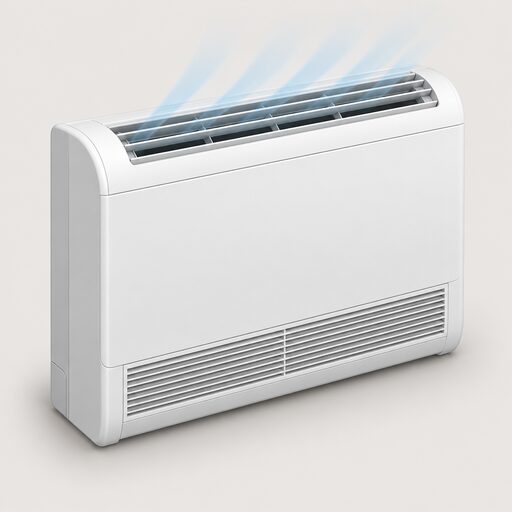 Split Air ConditioningA split air conditioning system cools or heats one room using an indoor unit and an outdoor unit linked by pipes.
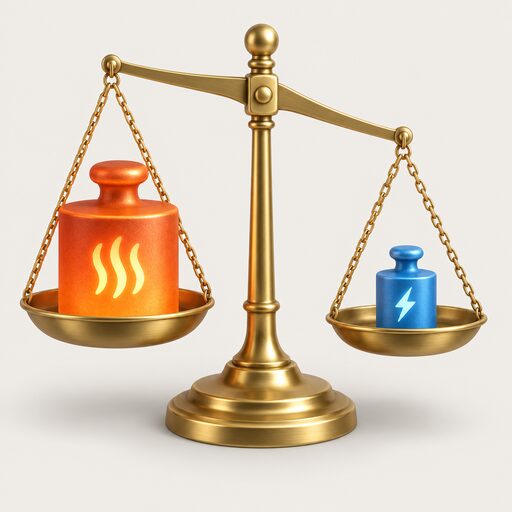 Efficiency COP SCOP and SPFA heat pump can give out three or four times more heat than the electricity it uses, so what do the efficiency numbers on a quote actually mean?
 Energy Performance CertificatesAn Energy Performance Certificate rates how energy efficient your home is, from A down to G.
 Efficiency and ErP RatingsWhat do boiler efficiency ratings like A to G actually mean, and how do they compare with the older SEDBUK scores?
 Air Conditioning CostPublished UK equipment prices and the parts of an installed price for portable, single split, multi-split and whole-house air conditioning.
 Energy Checks Before BuyingHow energy efficient is the house, and what will it cost to heat?