
In this answer
Short answer
Heating controls do two jobs: they decide when the system runs, and they decide how warm each room gets. Independent guidance describes them as helping control when the heating system operates and the temperature in each room1, and the central heating controls themselves simply turn the heating on and off2. Everything else on the dial, the screen or the app is a way of setting one of those two things.
The settings that cause the most confusion are the ones with numbers rather than words. A room thermostat shows a temperature, and independent guidance puts the main room thermostat between 18°C and 21°C, a temperature comfortable for most people3. A thermostatic radiator valve shows a number instead, often 0 to 6, where 0 is off and 6 is fully open2. A programmer shows times, not temperatures, and a boiler flow temperature setting sits on the boiler rather than the wall.
What the main heating control settings do
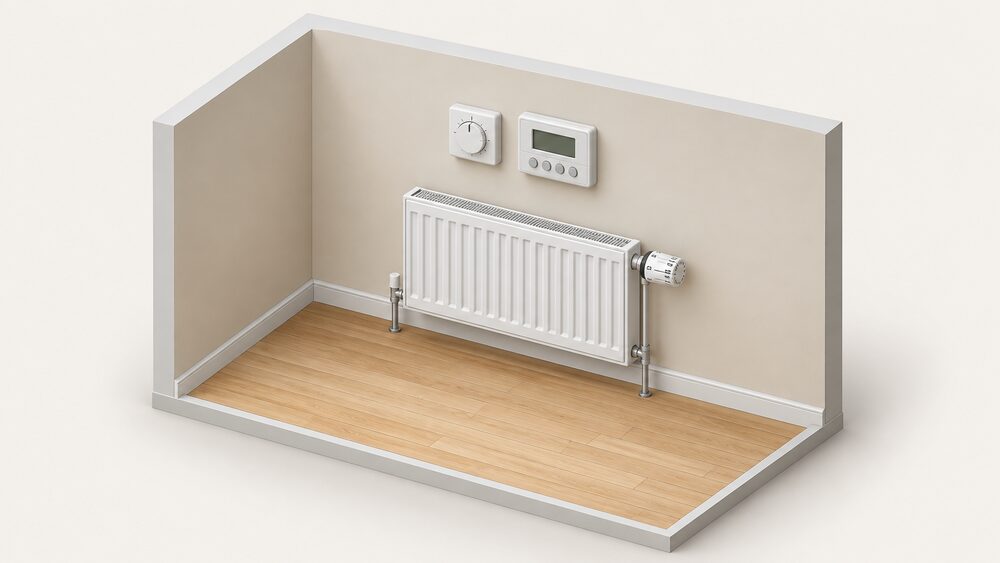
The controls in a typical UK home fall into three layers. The programmer or timer sets the schedule. The room thermostat sets the temperature the heating runs to. The TRVs set individual room temperatures by throttling the radiators. Independent guidance lists exactly that combination, a programmer, at least one room thermostat and thermostatic radiator valves, as the minimum core controls for a central heating system such as a boiler2.
Above that minimum sit optional layers. Smart controls are connected to the internet and offer more functionality than conventional controls2, which is the main practical difference between a wall thermostat and an app. Zoning splits a home into separately controlled areas, and a three-channel programmer is used on system or regular boilers to control hot water plus two separate heating zones, such as upstairs and downstairs2.
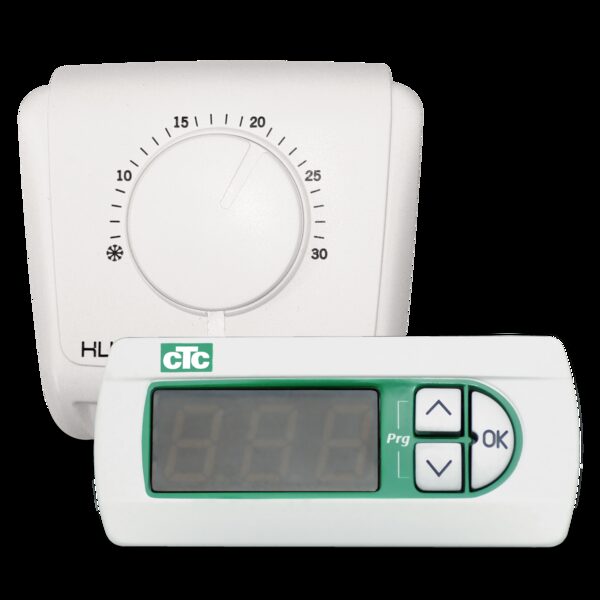
Manufacturers describe the same purpose in their own words. Ideal Heating lists three aims for its controls: keeping the home's temperature moderate and comfortable, increasing the efficiency of heating solutions and energy consumption, and tailoring heating to personal preferences6. CTC describes its indoor module as controlling the heating system according to your preferences7.
One sequencing point matters more than any individual setting. Independent guidance is explicit that it is important to get your heating controls right before you try to change the flow temperature2. Turning down a boiler while the room thermostat is badly sited, or while TRVs are jammed open, changes the wrong variable.
Room thermostat: temperature, hysteresis and where to set it
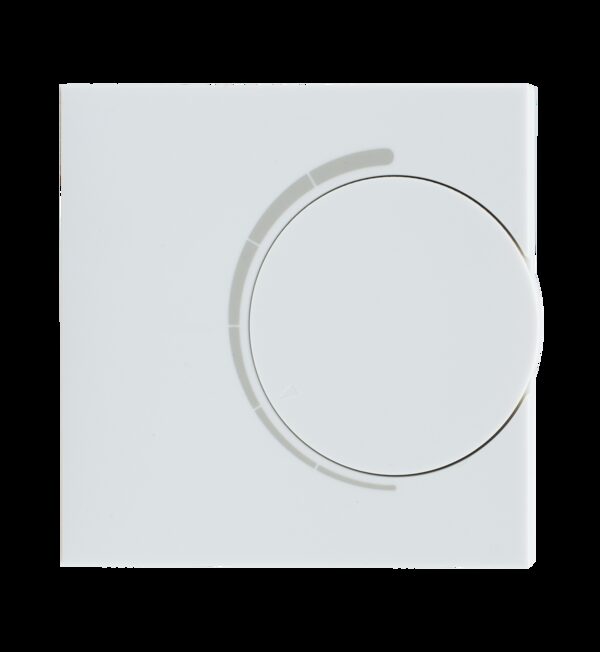
The room thermostat is the control most people adjust and the one most often set for the wrong reason. Independent guidance says to set it to the lowest comfortable temperature, which for most people is between 18°C and 21°C2. A maker's support article gives the same 18°C to 21°C band for maximising comfort and energy efficiency, while noting that it is down to personal preference3. A consumer body's energy-saving guidance repeats the 18°C to 21°C figure for the main room thermostat8.
Where the thermostat sits changes what it reads. A maker's support article states that it should be located centrally in the house in a room that achieves the required temperature last3. Another maker's guidance adds that room thermostats only read temperatures accurately when air can circulate freely around them, and that they should be kept away from curtains, furniture and heat sources such as lamps or appliances9. Underfloor heating guidance makes the same point in different words: the thermostat should sit in an area that properly reflects the room's typical temperature, not in a draughty spot or a hotter zone10.
Hysteresis is the small swing either side of the setpoint before the boiler switches. It is why a thermostat set to 20°C may let the room fall slightly below the setpoint before firing and overshoot slightly before stopping. The recommended setting for maximising comfort and energy efficiency is 18°C to 21°C, though it is down to personal preference1. Placement matters as much as the number: a thermostat reads temperature accurately only when air can circulate freely around it, so it should sit away from curtains, furniture and heat sources such as lamps or appliances2, centrally in the house in a room that achieves the required temperature last3.
What this means for independence is modest but real. A correctly sited thermostat with a sensible setpoint reduces run hours, which reduces gas bought from a supplier. It does not remove the dependence on that supplier or on the gas network.
Programmer: on/off times, hot water and heating channels
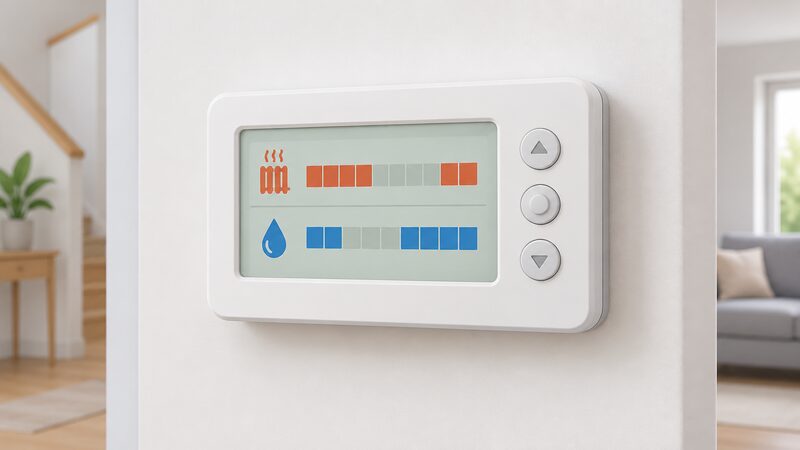
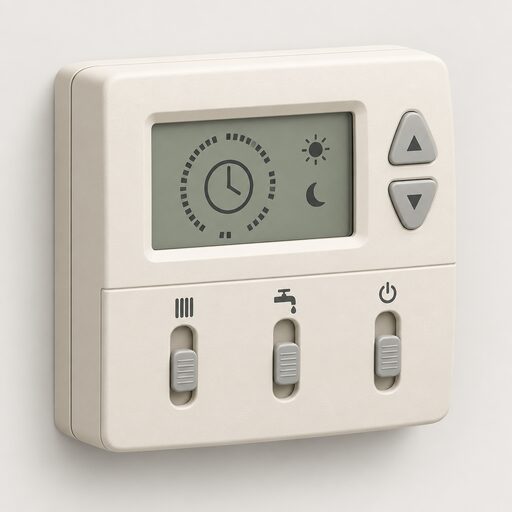
A programmer is a clock with switches. A timer lets you control when your heating or hot water turns on and off each day, so that you can programme your central heating around your routine11. A boiler programmer allows you to set your heating, and sometimes hot water, to switch on and off at different times and on different days of the week12.
The channel count is the setting people most often misread. A two-channel programmer gives separate timings for heating and hot water13. A three-channel programmer is for system or regular boilers controlling hot water and two separate heating zones, such as upstairs and downstairs2. Combi boilers have no cylinder, so there is no hot water channel; some combi controls instead offer hot water pre-heat times, and one Drayton model lists three on and three off pre-heat settings14.
There is also a regulatory layer. Official guidance for low-temperature domestic heating systems states that controls must be installed that ensure the heat generator does not supply hot water services and space heating service simultaneously15. In practice that is what a mid-position or diverter valve does, and it is why a system boiler with a cylinder cannot heat the radiators and the cylinder at the same moment.
Storage heaters use the same idea in a simpler form. A programmer or timer lets you set specific times for when you want your heating to come on and off16, and modern storage heaters generally come with improved heating controls, including an automatic charge control, thermostat and programmer17.
Thermostatic radiator valves (TRVs): numbers, frost setting and boost
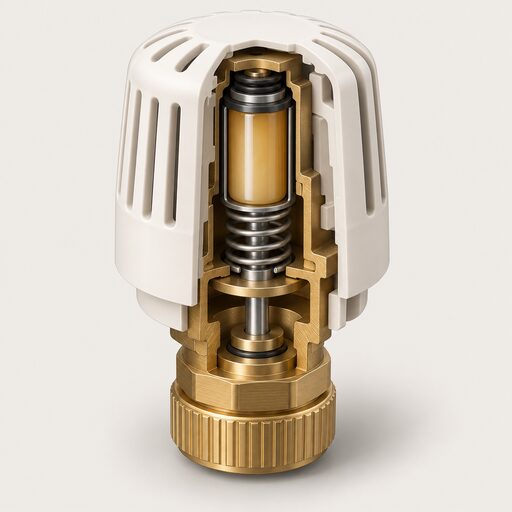
A TRV is a temperature-controlled valve on the radiator, not a thermostat on the wall. Official guidance states that TRVs control the temperature of each room by opening and closing automatically to control the flow of hot water through the radiator they are fitted to18, and that they can be manually adjusted to different settings18. A Welsh Government page puts the benefit plainly: a TRV gives better control over the individual room temperatures19.
The numbers are the puzzle. Independent guidance notes that while TRVs do not usually show specific temperatures, they often use numbered settings that correspond to a temperature range20. The dial is often numbered 0 to 6, where 0 is off and 6 is fully open2. So a setting of 3 is not "3 degrees" and not "3 kilowatts"; it is a position on a scale that maps to a target room temperature.
TRVs also do something a wall thermostat cannot: they balance the house. A consumer body's radiator-balancing procedure turns all thermostats to 0 first, then sets them all to 2 for the test, starting from the radiator furthest from the boiler on a combi system21. A trade body describes the same behaviour from the valve's side: TRVs automatically adjust the heat output of each radiator to maintain a comfortable room temperature22.
The frost setting is the lowest position on the dial. Independent winter guidance suggests adjusting TRVs to the frost setting to make sure radiators use the minimum amount of energy needed to protect the home5. That is a protection setting, not a comfort setting, and it is the right position for a spare room or a garage radiator in cold weather.
For independence, TRVs are the cheapest form of room-by-room control and they work without an internet connection. They do not, however, tell the boiler to modulate, and they cannot reduce the standing loss of a hot water cylinder.
Boiler flow temperature and why lowering it saves energy
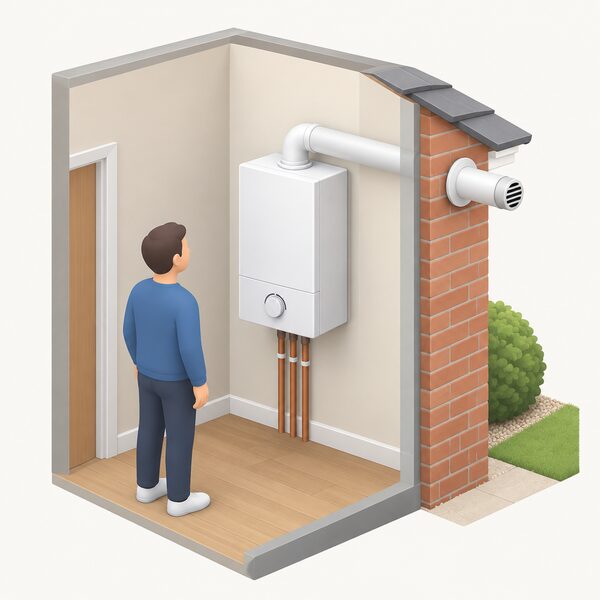
The flow temperature is the temperature of the water the boiler sends to the radiators, and it is usually set on the boiler itself rather than on a wall control. The principle is thermodynamic: boilers are more efficient when the return temperature is low, and this can save both energy and money16. Reducing the flow temperature also lowers the return temperature16.
The size of the saving varies between sources. Independent guidance reports that turning down the flow temperature can improve boiler efficiency by around 4% to 5%4. A separate energy-saving guide gives 6 to 8% off the heating bill from lowering flow temperature23, and another suggests turning the flow temperature down to 60 degrees to improve efficiency by around 4%24. Welsh Government guidance states that if you have a combi boiler, reducing its flow temperature can lower your bills25. The figures differ because they measure different things: boiler efficiency against the gas used, versus the bill against the household's whole heating pattern.
The condition attached to all of them is the one from the Energy Saving Trust: get your heating controls right before you try to change the flow temperature2. A lower flow temperature with a badly balanced system produces cold rooms and a boiler that runs longer, not a saving.
For a household, this is the setting with the clearest link to energy independence: less gas burned per degree of warmth means less exposure to gas prices and imports. It does not change the fuel, and a gas boiler remains a gas boiler.
Boost, holiday and frost protection modes explained
These three modes are the ones people press without knowing what they have pressed.
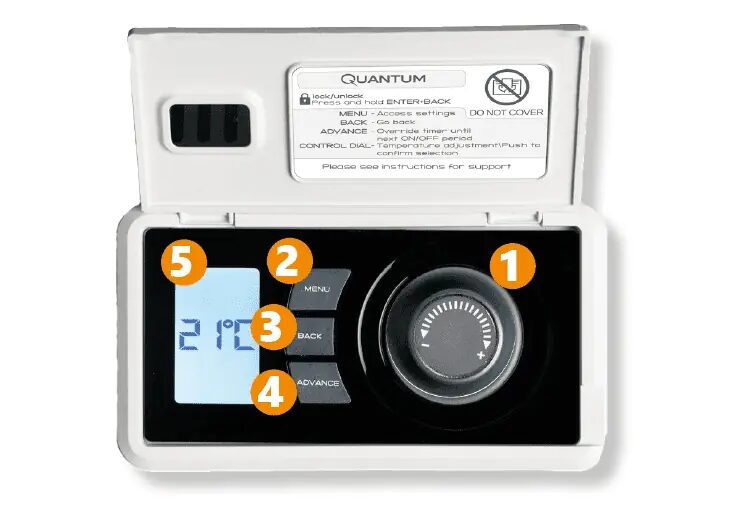
Boost. On a storage heater, the output or boost control regulates the rate at which the stored heat is released, normally left on a low setting during the day and turned up in the evening if more heat is needed26. On a Dimplex Quantum, the boost option does not use heat already stored in the heater but uses the expensive rate of electricity to generate heat27. The same guidance warns that the auto boost function allows the heater to use the boost element whenever the temperature drops below the selected temperature, and that this will significantly increase the running cost of the heater27. Boost on a storage heater is therefore a cost decision, not a comfort decision.
Holiday mode. Frost protection mode is sometimes known as holiday mode5. On one Salus model, in these modes the frost protection temperature is maintained for a specific number of days28, and the wireless version of the same unit maintains the frost protection temperature for a specific number of days29. The setting is a duration plus a floor temperature.
Frost protection. Homes without frost protection will only call for heat if the temperature inside drops below 10°C, so only a small amount of energy is used5. Some controls build it in as standard; one Ideal Heating wireless thermostat lists built-in frost protection30.
"The boost option does not use heat already stored in the heater but uses the expensive rate of electricity to generate heat."
Where the settings interact, and where they conflict
The settings are not independent. A TRV set to 5 in a room with a wall thermostat set to 18°C will fight the thermostat: the radiator will keep calling for heat while the thermostat has already stopped the boiler. A programmer set to 24 hours, meaning the heating stays on all the time11, removes the schedule layer entirely and leaves the thermostat to do all the work.
The evidence on constant running is a method rather than an answer. One suggested test is to leave the heating on constantly for a week, followed by a week of programming the heating to come on twice a day, taking meter readings at the start and end of each week, in a well-insulated home31. A separate trial suggests setting the thermostat to 18°C and leaving the heating on constantly for the same period32. Neither produces a universal figure, because the result depends on insulation, occupancy and the boiler.
Two further settings sit outside the wall controls. Weather compensation and load compensation adjust flow temperature automatically rather than by hand, and OpenTherm is the protocol that lets a modulating thermostat talk to the boiler. Those are covered in weather compensation and load compensation and modulation.
For a household, the independence question is straightforward. Programmer, thermostat and TRV settings are local: they work without a broadband connection, an app or a manufacturer's server. Smart controls are connected to the internet and offer more functionality than conventional controls2, and that functionality comes with a dependency on the maker's cloud service and on the product's continued support. The settings themselves are free to change; the dependence is in the hardware that holds them.
Sources32 cited
- Thermostats and heating controls, Home Energy Scotland, 2026-09-20
- Thermostats and heating controls, Energy Saving Trust, 2026-02-10
- Homeowner FAQs, Drayton Controls, 2023-11-20
- Tips to reduce your heating bills, Which?, 2026-06-02
- Protect pipes in winter, Home Energy Scotland, 2025-12
- Heating controls, Ideal Heating, 2026-09-17
- Indoor modules, CTC Heating, 2026-09-17
- Energy savings tips, British Gas Energy Trust, 2026-02-27
- Central heating controls, tado°, 2026-07-07
- Underfloor heating maintenance tips, Warmup, 2025-08-06
- How to use your heating controls, Age UK, 2026-03-23
- Boiler controls explained, Worcester Bosch, 2026-09-17
- LP522 programmer, Drayton Controls, 2023-11-14
- LP10RF Digistat Plus 2RF, Drayton Controls, 2025-07-30
- Low temperature heating, NCM PCDB, 2026-09-17
- Should I turn my boiler's flow temperature down?, Energy Saving Trust, 2026-05-20
- Electric storage heaters, Energy Saving Trust, 2026-05-20
- ECO4 new measures and products guidance, Ofgem, 2026-03-26
- Building regulations: energy efficiency, Welsh Government, 2026-09-17
- Radiator valves, Smart Energy GB, 2026-04-22
- How to balance your radiators, Which?, 2025-09-16
- Smart heating controls: what they do and why they matter, BEAMA, 2025-04-07
- Energy saving tips for winter, Centre for Sustainable Energy, 2025-12-10
- Free energy saving tips, Uswitch, 2025-10-14
- Five top tips to cut your energy bills, Climate Action Wales, 2026-03-18
- Getting the most from Economy 7, National Energy Action, 2026-09-10
- Dimplex Quantum night storage heaters, Centre for Sustainable Energy, 2026-06
- DT500 wired programmable thermostat, Salus Controls, 2026-09-20
- DT500RF wireless programmable thermostat, Salus Controls, 2026-09-20
- Wireless thermostats: all you need to know, Ideal Heating, 2026
- Heat the whole house or one room?, Uswitch, 2026-08-20
- Energy saving tips for the home, Confused.com, 2025-10-14
 The Full Heating Controls GuideA room thermostat, a programmer and valves on your radiators are the basics.
 Thermostat and Room TemperaturesWhat temperature should a thermostat be set to, and does it differ from room to room?
 Controls, Thermostats and TRVsWhich heating controls actually cut your bills, and what does each one do?
 Thermostatic Radiator ValvesHow a thermostatic radiator valve senses room air temperature and throttles flow to a single radiator, what the numbered settings mean, where TRVs should and should not be fitted, and what the Building Regulations require across the UK.
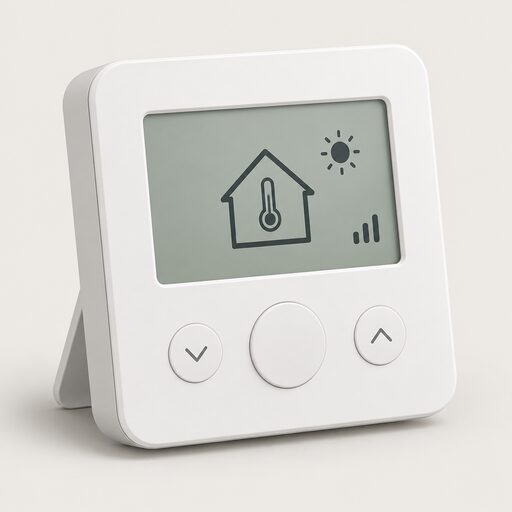 Room Thermostats ExplainedExplains mechanical, digital, programmable, wired, wireless and smart room thermostats, how they call for heat and switch it off, where to site them, how many zones a home needs under the building regulations, and what one degree on the dial is worth.
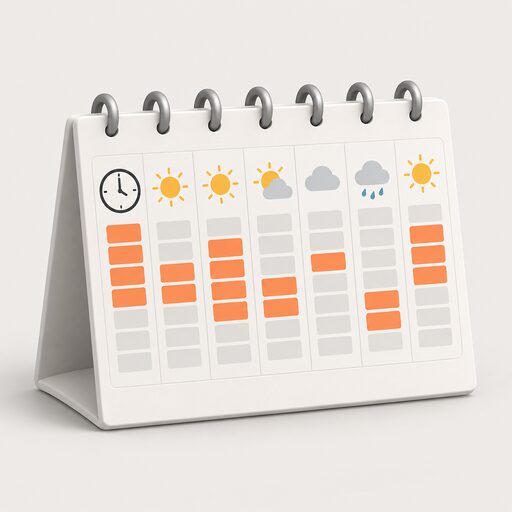 Programmers, Timers and SwitchesWhat a heating programmer does, how single, twin and three-channel units differ, how programmers fit alongside room thermostats and TRVs, and how time control relates to smart meters, time-of-use tariffs and smart controls.