
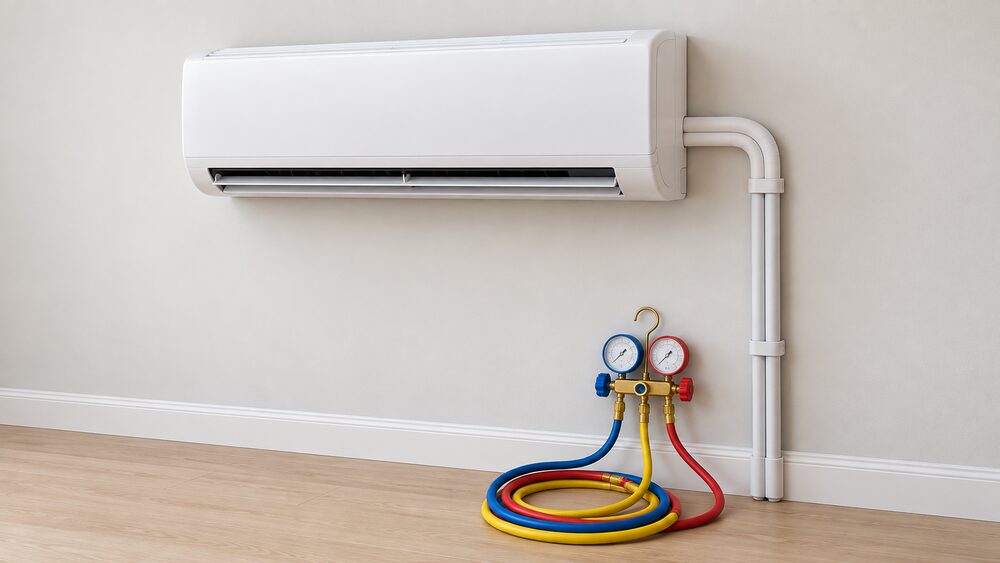
In this guide
A domestic air conditioning system is a sealed refrigeration circuit, and the gas inside it is regulated from the moment it is manufactured to the moment it is recovered. The rules that matter to a householder are not about the cooling output on the box: they are about who is allowed to touch the refrigerant, what gas the unit is allowed to contain, and how much of it the system holds.
The single most important figure is the global warming potential, or GWP, of the refrigerant. R32, the gas in most current domestic splits, has a GWP of 6751. R134a, an older gas still found in some small heat pumps, has a GWP of 1,4301. From 2025, F gases with a GWP above 750 are banned in single split systems containing less than 3 kg of refrigerant, which is the category most home units fall into2. R32 sits under that line; R134a does not.
The second thing to understand is that the work is reserved. It is against the law to work with equipment containing F-gases without the correct qualifications, and installing new systems is one of the activities that requires them3. That applies to a small wall-mounted split in a bedroom exactly as it applies to a supermarket chiller bank. What follows sets out the qualification, the thresholds, the sale restrictions and what a certified engineer actually does on a domestic job.
What the F-Gas rules mean for a household air conditioning system
The F-gas regime reaches into a home in three ways: through the gas a unit is permitted to contain, through the person permitted to handle it, and through the inspection and reporting duties that attach to larger systems.
The inspection duty is the clearest threshold in the legislation. Part 4 of the 2012 Regulations applies to air-conditioning systems with an effective rated output of more than 12 kW4. A single domestic split is far below that, so the periodic inspection regime does not normally fall on a household. Where it does apply, the inspection report must include an assessment of the air-conditioning efficiency and the sizing of the system compared to the cooling requirements of the building, and contain appropriate advice on possible improvements to the system, replacement of the system and alternative solutions4. That is a substantive engineering review, not a paperwork exercise.
The gas rules are separate and apply at every size. From 2025, F gases with a global warming potential above 750 are banned in single split systems that contain less than 3 kg of refrigerant2. From 2022, all F gases with global warming potentials of more than 150 were banned as the refrigerant or foam blowing agent in hermetically sealed equipment2. Central pack systems with a rated cooling capacity of 40 kW or more face a ban on F gases above 150 GWP from 2022, and for primary circuits in cascade systems the ban applies only to F gases above 1,500 GWP2.
For a household, the practical effect is that the refrigerant in a new unit is decided by regulation before the buyer sees a specification sheet. The choice of gas is not a preference to be traded against price. It is a condition of the equipment being placed on the market at all.
The direction of travel matters too. Heat pumps will be the main source of F gas emissions due to the planned national rollout of heat pumps as a replacement to gas boilers, according to the government's 2025 phasedown consultation1. Domestic cooling and heating equipment is where the remaining emissions are expected to concentrate, which is why the thresholds keep tightening.
The F-Gas Handler qualification: who may legally work on your system

The qualification is called F-Gas Handler for Stationary Refrigeration, Air-Conditioning and Heat Pump Equipment and Refrigerated Trucks and Trailers. It is a regulated profession in the UK, and the government's guidance is unambiguous: it is against the law to work with equipment containing F-gases if you do not have the correct qualifications3.
The reserved activities include installing new systems3. Regulation 2015/2067, as retained in UK law, establishes the minimum requirements for the training and certification of the people who carry out that work3. To hold the certificate, a person must hold a certificate issued by a certification body, demonstrating that they have passed a theoretical and practical examination organised by an evaluation body, covering the minimum skills and knowledge set out in Annex I of the Regulation, for the category concerned3. In other words, there is a written and a practical test, and the certificate is specific to the category of equipment.
The Building Engineering Services Association is named as a qualifying body3. Enforcement sits with different regulators depending on where the work is done: the Environment Agency in England and Wales, the Scottish Environment Protection Agency in Scotland, the Northern Ireland Environment Agency, and Northern Ireland District Councils3. The UK also recognises equivalent qualifications issued by an EU Member State3.
For a household, this is the point at which energy independence meets a hard legal limit. A sealed split system cannot be maintained, topped up or decommissioned by the owner. The refrigerant circuit is a licensed activity, and the household depends on a certified trade for the life of the equipment.
Refrigerants in home air conditioning: R32 and its global warming potential of 675
R32 is the refrigerant most domestic air conditioning now uses, and its GWP of 675 is the number that decides whether a unit can be sold in the UK1. The figure is not a measure of how much gas leaks or how efficiently the unit runs. It is a multiplier: one kilogram of R32 released to atmosphere counts as 675 kilograms of carbon dioxide equivalent.
That multiplier is why the 750 threshold in the 2025 single split ban matters so much. R32 at 675 clears it with room to spare1. R134a at 1,430 does not1. A manufacturer wanting to keep selling small splits into the UK market has to move to a gas below the line, and R32 is the mainstream answer.
The regulatory pressure does not stop at R32. The 2022 ban on F gases above 150 GWP in hermetically sealed equipment already rules out a large part of the older gas range for factory-sealed products2. From 2023, HFCs with global warming potentials of more than 150 were banned in all other foams, including polyurethane2. The direction is towards lower GWP across every application, and the natural refrigerants sit below the HFC range entirely.
"R32 and R134a, two HFCs used in small heat pumps, have GWPs of 675 and 1430 respectively"
For a household, the GWP figure on a datasheet is a compliance marker rather than a running cost. It tells you the unit is legal to sell and install today. It does not tell you how much electricity the unit will use, which is a separate question answered by the efficiency labels.
Refrigerant charge and CO2-equivalent: why 850 g and 1,900 g matter under the rules
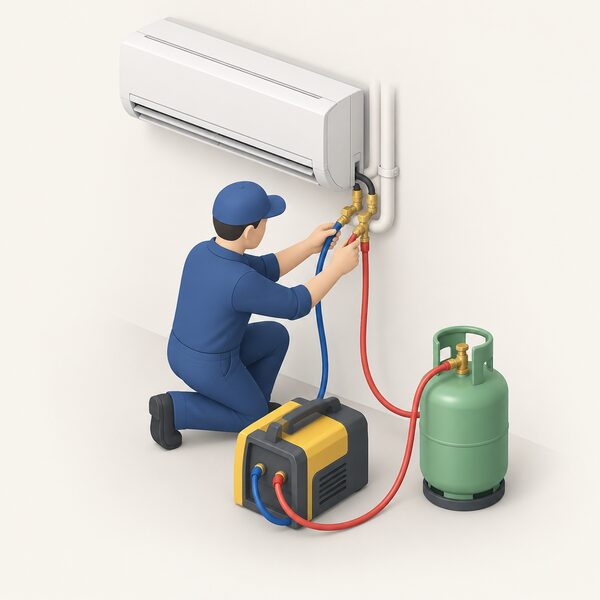
The rules work on two numbers together: the weight of refrigerant in the system and the GWP of that refrigerant. Multiply one by the other and you get tonnes of CO2 equivalent, usually written tCO2e. That is the unit the regulation uses for thresholds and for the reporting duties that sit above them.
The single split ban is expressed as a combination rather than a single weight. From 2025, F gases with a global warming potential above 750 are banned in single split systems that contain less than 3 kg of refrigerant2. A system holding 850 g of a gas at 675 GWP is comfortably inside the permitted range on both counts. A system holding 1,900 g of a gas above 750 GWP would not be. The weight alone does not decide it, and the GWP alone does not decide it either.
The same logic runs through the business thresholds. The only exemption under the F gas Regulation arranged for businesses is for producers or importers placing less than 100 tCO2e of HFCs on the market annually1. That is a bulk threshold far above any domestic installation, but it shows the unit of account: the regulation counts carbon dioxide equivalent, not kilograms.
| Measure | Figure | What it governs |
|---|---|---|
| R32 GWP | 675 | Whether a gas clears the 750 single split threshold1 |
| R134a GWP | 1,430 | Above the single split threshold, so excluded from new small splits1 |
| Single split charge limit | less than 3 kg of refrigerant | The size band the 2025 ban applies to2 |
| Hermetically sealed equipment | GWP above 150 banned from 2022 | Factory-sealed products2 |
| Business exemption | less than 100 tCO2e placed on the market annually | Producer and importer obligations1 |
For a household, the charge figure is worth knowing because it determines what happens at end of life. A system with a larger charge takes longer to recover and may attract different handling. The recovery itself is a certified activity in every case.
What a certified engineer does at installation, servicing and leak checks
On a domestic split, the certified engineer's work starts before the unit is switched on and continues for the life of the equipment. Installation involves running the pipework, pressure testing the circuit, evacuating it to remove moisture and air, releasing or charging the refrigerant to the manufacturer's specification, and commissioning the system. Every step that touches the refrigerant is reserved to a certified F-Gas Handler3.
Servicing divides into two kinds of task. The user-serviceable side, filter cleaning and casing checks, does not open the circuit and does not require certification. The refrigerant side does. Any operation that recovers, adds or transfers refrigerant requires the qualification, and so does decommissioning the unit at end of life3.
Leak checking is the part of the regime most associated with larger equipment, and the thresholds reflect that. The periodic inspection duty under Part 4 of the 2012 Regulations applies to air-conditioning systems with an effective rated output of more than 12 kW4. A domestic split sits below that line, so the statutory inspection cycle does not normally apply. That does not remove the case for regular servicing, but it does mean the household is not subject to the reporting obligations that fall on larger installations.
The comparison with gas appliances is instructive. HSE strongly advises that all gas appliances, flues and pipework should be installed, regularly maintained and serviced at least annually by a Gas Safe registered engineer7. There is no equivalent annual statutory interval for a domestic air conditioning system in the material here, but the principle is the same: the safety-critical work belongs to a registered trade, and the household's role is to book it.
Efficiency and refrigerant together: SEER, SCOP and what the labels tell you
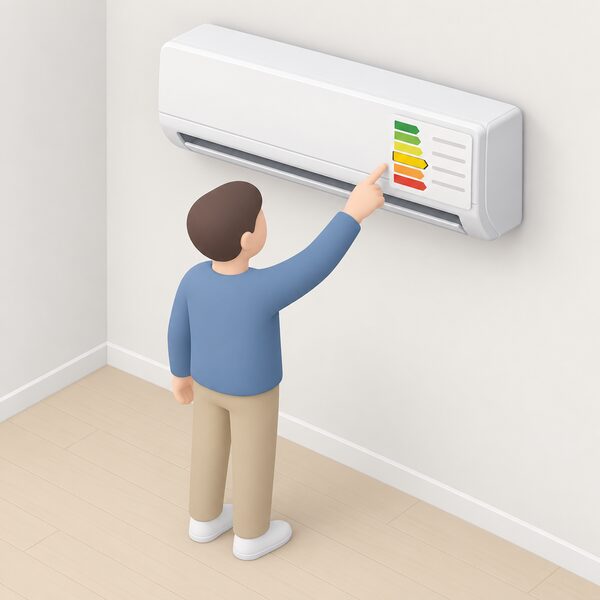
Refrigerant choice and efficiency are separate regulatory questions, and a datasheet answers them with different numbers. The efficiency side is measured by seasonal metrics: Seasonal Coefficient of Performance (SCOP), the Seasonal Performance Factor (SFP) and Seasonal Energy Efficiency ratio (SEER)8. Those figures describe how much cooling or heating a unit delivers per unit of electricity across a season, not what gas it contains.
The building regulations framework sets minimum standards for building work with respect to carbon performance and energy conservation measures, and Part F (Conservation of fuel and power) is the part that carries them9. In Scotland, fixed air conditioners should have a minimum energy efficiency classification of Class C in Schedule 3 of the labelling scheme adopted under the Energy Information (Household Air Conditioners) (No 2) Regulations10. The same Class C minimum appears in the Welsh review of Part L and Part F11. The London Plan's energy assessment guidance records the residential notional specification for existing buildings as having no SEER requirement for cooling, which shows how differently the standards can be drawn8.
| Standard | Requirement | Where it applies |
|---|---|---|
| Fixed air conditioners | Class C minimum in Schedule 3 of the labelling scheme | Scotland10 |
| Fixed air conditioners | Class C minimum in Schedule 3 of the labelling scheme | Wales11 |
| Residential notional specification, existing buildings | No SEER requirement for cooling | London Plan guidance8 |
| Heat pumps | SCOP, SFP and SEER information required | Proposed heat pumps8 |
The two sets of rules interact in one practical way. A unit has to clear the GWP threshold to be sold, and it has to meet the applicable efficiency class to satisfy building regulations where those apply. Neither figure substitutes for the other, and a low GWP gas does not by itself make a unit efficient.
For a household, the efficiency label is the number that affects running cost, and the refrigerant is the number that affects legality and end-of-life handling. The efficiency ratings page sets out how SEER, SCOP and the energy label classes are read in practice.
Choosing a system size: from a 2.5 kW room unit to a 10.0 kW model
Sizing starts with the room, not the house. A 2.5 kW system is often suitable for smaller rooms, such as compact bedrooms or small offices, while a 3.5 kW system is often better for larger bedrooms, larger home offices, garden rooms, small living rooms or spaces with more sunlight and glazing1. Published sizing tables put 1.5 kW, or 5,000 BTU, against rooms up to 12 m² (120 ft²), and 2.5 kW, or 9,000 BTU, against rooms up to 20 m² (200 ft²)1. Multi-split and ducted systems are listed with a 1 to 5 kW power rating2.
Two ceilings sit above the room calculation. Air-to-air systems using flammable refrigerant are limited to around 6.5 to 7 kW3. Separately, the air-conditioning inspection regime applies to systems with an effective rated output of more than 12 kW4. For a single dwellinghouse in England and Wales, a Class G permitted development installation also requires that the outdoor compressor unit, including any housing, must not exceed 1.5 cubic metres, against 0.6 cubic metres for a block of flats5.
What this means for independence is that capacity is capped by rules as well as by load. A household can size a unit to the room it serves, but the refrigerant limit and the 12 kW inspection threshold decide how far a single system can be scaled before different obligations apply.
Size determines which rules apply, and the thresholds are not all in the same place. The inspection regime under Part 4 of the 2012 Regulations applies to air-conditioning systems with an effective rated output of more than 12 kW4. A single room unit at 2.5 kW is nowhere near it. A whole-house installation approaching 12 kW starts to come within scope.
The government's 2025 consultation flags a separate size limit that bears directly on domestic splits. One option considered is to limit the size of air-to-air systems using flammable refrigerant to around 6.5-7 kW1. That is a proposed limit rather than a rule in force, and it matters because the lower-GWP refrigerants are often flammable. A household considering a larger single split should be aware that the size band above roughly 6.5 to 7 kW is the one under review.
Above the domestic range, the bans are already in place. F gases with global warming potentials of more than 150 are banned in central pack systems with a rated cooling capacity of 40 kW or more2. For primary circuits in cascade systems, the ban applies only to F gases with global warming potentials above 1,5002. Those are commercial thresholds, but they show the pattern: the larger the system, the tighter the gas restriction.
| System size | Regulatory position |
|---|---|
| Single room unit, around 2.5 kW | Below the 12 kW inspection threshold4 |
| Air-to-air system around 6.5-7 kW | Size band proposed for a flammable refrigerant limit1 |
| System above 12 kW effective rated output | Part 4 inspection and reporting duty applies4 |
| Central pack system, 40 kW or more cooling | F gases above 150 GWP banned from 20222 |
Sizing itself is a cooling-load question rather than a regulatory one, and the sizing page covers how kW, BTU and room dimensions relate. What the F-gas rules add is a ceiling on how large a single domestic system can grow before it changes category.
Specifications that affect installation: pipe lengths, height difference and electrical supply

The installation rules that bear on a domestic air conditioning job are mostly building regulations rather than F-gas rules, and they apply to the parts of the work that are not refrigerant.
Building regulations apply to the electrical installation as well as to the cooling equipment12. The installation of air conditioning must comply with building regulations, and it is advisable to contact an installer who belongs to the Microgeneration Certification Scheme or a relevant Competent Person Scheme13. Adding air conditioning to a home may be considered permitted development provided all the limits and conditions set in legislation are met, and those limits cover function, size, placement and quantity of units13.
Where the outdoor unit sits is governed by permitted development limits as well as by the F-gas rules. For an air source heat pump, the external unit must not exceed 3 metres in height14. For a ground or water source heat pump, any part within 3 metres of the boundary of the curtilage of the dwellinghouse must not exceed 4 metres in height14. In England and Wales, the outdoor compressor unit including any housing must not exceed 1.5 cubic metres for a dwellinghouse or 0.6 cubic metres for a block of flats15.
Air-to-air units are now included within air source heat pump permitted development rights, as long as they are used for heating, not just cooling16. That is a significant change for a household weighing a reverse-cycle unit, because it brings the cooling and heating functions under one planning position. Installation of an air source heat pump is permitted development, subject to a number of limits and conditions17.
Pipe length, height difference and additional refrigerant charge are not fixed by regulation. They are set by the manufacturer for each model, and the charge adjustment needed for a longer run is part of the commissioning calculation. The installation page covers how pipework, drainage and commissioning are handled, and the minimum pipe length question explains why a short run can be as much of a problem as a long one.
Owning an air-to-air heat pump under F-Gas: what independence looks like in practice
A reverse-cycle air conditioner is an air-to-air heat pump, and the F-gas rules treat it as refrigeration equipment. The Scottish heat pump guidance is direct on the point: although it is unlikely that a heat pump contains F-gases today, a household will have to comply with the F-gas regulations19. That is the honest position. The equipment is cleaner than it was, and the compliance duty remains.
The independence question has two sides. On the household's side, a reverse-cycle unit provides heating and cooling from electricity alone, with no gas connection and no flue. Air-to-air units are now included within air source heat pump permitted development rights, as long as they are used for heating, not just cooling16. That gives a household a route to space conditioning without a gas supply, and the air conditioning and heat pumps page covers how reverse-cycle units work in UK conditions.
On the dependence side, three things remain. The first is the grid: the unit runs on electricity, and the carbon intensity of that electricity is outside the household's control unless it generates its own. The second is the refrigerant circuit: every operation that touches the gas requires a certified F-Gas Handler, so the household cannot maintain, top up or decommission the equipment itself3. The third is the manufacturer, whose specification determines the charge, the pipe limits and the spare parts.
"Although it's unlikely that you will have a heat pump that contains F-gases today, be aware that you will have to comply with the F-gas regulations"
The regulatory direction reinforces the first of those. Heat pumps will be the main source of F gas emissions due to the planned national rollout of heat pumps as a replacement to gas boilers1. As the installed base grows, the rules on charge size, gas choice and certified handling are likely to tighten rather than relax. A household buying now is buying into a regime that will keep moving.
What that means in practice is that an air-to-air heat pump delivers a real measure of independence on fuel and a limited measure on maintenance. The cooling and energy independence page sets out the wider picture, and the brands page covers the ranges sold in the UK.
Sources19 cited
- HFC Phasedown Reform De Minimis Assessment, Department for Environment, Food and Rural Affairs, 2025
- Bans on F Gas in New Equipment, GOV.UK
- F-Gas Handler for Stationary Refrigeration, Air-Conditioning and Heat Pump Equipment, UK Regulated Professions Register
- F-Gas Regulation 2012, Part 4, legislation.gov.uk
- Air Source Heat Pump Noise and Permitted Development Rights in Wales, Phase 1 Report, Welsh Government, 2024
- Registration to Carry Out Gas Work, GOV.UK
- Gas Appliances: Advice for Owners and Occupiers, Health and Safety Executive
- Energy Assessment Guidance, Greater London Authority, 2022
- Part F Consultation Document 2021, Northern Ireland Department of Finance, 2021
- Domestic Building Services Compliance Guide 2022, Scottish Government, 2022
- Building Regulations Part L and F Review Stage 2A, Approved Document L, Welsh Government, 2020
- Solar Photovoltaics and Planning in Conservation Areas, West Suffolk Council
- Boilers and Heating, Planning Portal
- Building Regulations (Northern Ireland) Schedules, legislation.gov.uk
- Class G: Installation of Air Source Heat Pumps on Domestic Premises, legislation.gov.uk
- Planning Guidance: Heat Pumps, London Borough of Richmond upon Thames
- Air and Ground Source Heat Pumps, London Borough of Croydon
- Do I Need Planning Permission, Cornwall Council
- Heat Pump Guide: Defining the Project, Local Energy Scotland
 Gas Safety RulesAnyone working on gas in your home has to be on the Gas Safe Register, whether they are installing, fixing or servicing an appliance.
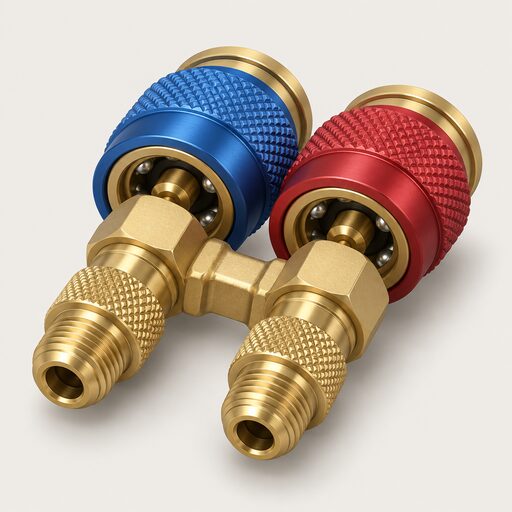 DIY Air ConditioningExplains which air conditioning can be fitted without a refrigerant engineer, including portable, through-wall and pre-charged quick-connect split kits, and where the limits lie.
 Types of Air ConditioningPortable, wall-mounted, multi-room or ducted: which air conditioning suits your home?
 Cooling and Heat PumpsCan an air conditioner heat your home as well as cool it?
 Refrigerants and F-Gas RulesWhat refrigerant does your heat pump use, and is propane safe at home?
 Gas Safety in the HomeYour landlord has to arrange a yearly gas safety check by a Gas Safe registered engineer and give you the record if you rent.