

In this answer
Short answer
The F-gas rules that affect single split air conditioning are a phasedown of hydrofluorocarbon refrigerants, not a ban on the units themselves. The revised European F-gas Regulation sets prohibition dates of 2027 for split systems, air-to-water up to 12 kW, and 2029 for split systems, air-to-air up to 12 kW, with a phase-out date of 2035 for split air conditioning and heat pumps, and earlier deadlines for certain types of split systems with higher global warming potential1.
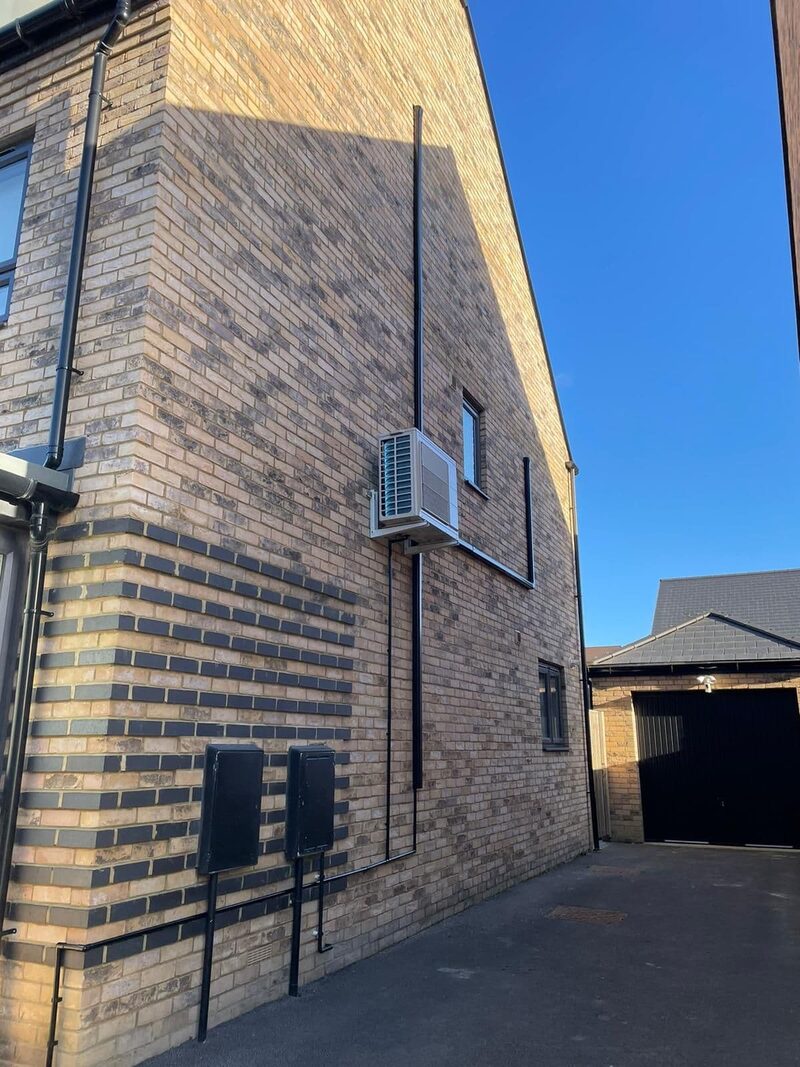
For a household, the practical effect is on what can be newly placed on the market and on which refrigerants can be supplied, not on a unit already on the wall. A single split-system air conditioner requires an indoor unit and an outdoor unit, connected via wiring and piping, with no ductwork needed and professional installation required2. That refrigerant circuit is what the regulation governs.
The dates above come from the revised European regulation. Great Britain has been consulting on its own reform of the HFC phasedown, and that consultation closed on 17 December 20253. Until the GB reform is settled, the confirmed dates a household can point to are the European ones, and the direction of travel in both is the same: lower global warming potential refrigerants, and fewer high-GWP units placed on the market.
What the F-gas rules mean for single split air conditioning
The regulation works on the refrigerant, not on the comfort it delivers. A single split system is defined by its two parts and the pipework between them, and the F-gas rules bite on the gas inside that circuit. The F-Gas Regulation states that annual leak tests for heat pumps are only legally required for systems containing more than 5 tonnes of CO2-equivalent greenhouse gases as refrigerants5. Most domestic single split units sit well below that threshold, so the routine leak-testing duty that applies to large commercial plant does not fall on a typical household unit.
What does apply is who may touch the circuit. It is against the law to work with equipment containing F-gases if you do not have the correct qualifications6. Regulation 2015/2067, as retained in UK law, establishes the minimum requirements for the training and certification of the people who do that work, and the reserved activities include decommissioning and disposing of old systems6. The UK recognises equivalent qualifications issued by an EU Member State6.
The wider policy context matters here. Heat pumps will be the main source of F gas emissions due to the planned national rollout of heat pumps as a replacement to gas boilers7. That is why the rules tighten on split equipment specifically: it is the category expected to grow fastest as homes move off gas. For a household, the F-gas rules do not restrict the use of an installed air conditioner. They restrict the supply of high-GWP refrigerant and the market for new equipment containing it, and they require certified hands for any work on the circuit.

Which refrigerants are affected and why

The regulation targets HFCs, the hydrofluorocarbons that made up most of the air conditioning refrigerant charge for the past three decades. Only three non-HFCs are widely used as refrigerants7, which is why the transition is narrower than it first appears: the industry is not choosing from a long menu, it is moving between a small number of options.
Two exemptions soften the phasedown. Recycled and reprocessed HFC refrigerants are not affected by the new quota because they were already placed on the market8, and HFO refrigerants are not affected by the phase down8. That matters for servicing: reclaimed gas can keep existing equipment running even as virgin HFC supply is squeezed by quota. The maker guidance also states the underlying principle of the prohibition: prohibition if alternatives with a lower global warming potential could technically be used5.
The EU regulation goes further out in time, with an unrestricted ban from 01.01.2050, depending on the result of the review in 20409. That is a long horizon, and it is a maker's summary of the EU position rather than a GB rule, but it shows the direction: the end state is no unrestricted HFC use at all.
For a household, the question that follows is which refrigerant is actually in the unit. That is answered by the rating plate and the manual, not by the age of the installation. A certified handler can read the charge and convert it to CO2-equivalent, which is the figure the leak-test threshold is measured against.
Timelines: what is confirmed and what is not yet dated
The confirmed dates are the European ones. The revised F-gas regulation introduces a full ban on placing products and equipment containing HFCs on the market for several categories, including certain domestic refrigerators, chillers, foams and aerosols1, alongside the split system dates. The 2035 phase-out for split air conditioning and heat pumps carries earlier deadlines for certain types of split systems with higher global warming potential1.
What is not yet dated is the GB equivalent. The F gas Regulation in Great Britain consultation on reform of the HFC phasedown closed on 17 December 20253, and no commencement date for a GB reform appears in the material. The consultation itself is the mechanism by which the GB dates will be set, so a household tracking this should watch for the government response rather than assume the European dates apply verbatim in Great Britain.
There is a separate and unrelated set of building dates that sometimes gets confused with this. Approved Document F, which covers ventilation, was last updated on 7 April 202610, and its volume 1 for dwellings takes effect on 4 March 202710. The original volume 1 was published in December 202111. These are ventilation rules, not refrigerant rules, but they bear on air conditioning installations because mechanical extract and air movement in a dwelling are covered there. For solid fuel appliances, the guidance is to avoid installing extract ventilation in the same room12.
What the ban means for households with existing single split systems
Nothing in the rules makes an installed single split system illegal. The prohibition is on placing products and equipment containing HFCs on the market, which is a supply-side restriction, not a use-side one. A working unit can stay in service, and the servicing regime continues, with reclaimed refrigerant available outside the quota8.
The pattern in adjacent home heating policy is instructive, because it shows how governments have handled the same question for boilers. There are no plans yet to ban replacement gas boilers in existing homes13, and the gas boiler ban only applies to new-build homes, with no cut-off from gas supply for existing homes14. The stated approach is to replace equipment with a low carbon alternative when it naturally needs to be15. Scotland's New Build Heat Standard prohibits mains gas and oil boilers as a main heating system in new buildings while leaving existing homes alone16.
That is the shape of the F-gas position too: new equipment is regulated, existing equipment is not condemned. The dependence that remains for a household with a single split system is on a certified handler for any work on the circuit, on the refrigerant supply chain as quota tightens, and on the manufacturer for parts and support over the unit's life. None of those is removed by the ban, and none of them is a reason the unit must come out.
Options for replacement and low-GWP alternatives
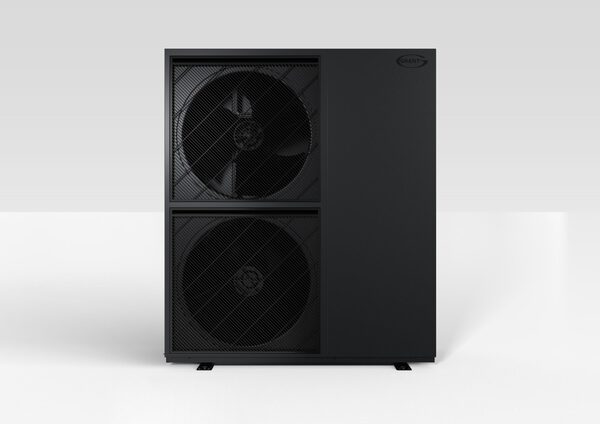
Where a unit does reach the end of its life, the low-GWP options are already on the UK market. R290, a propane-based refrigerant, has a global warming potential of 3, and it appears in several air-to-water heat pumps sold here.
| Product | Refrigerant GWP | Source |
|---|---|---|
| LG THERMA V R290 Monobloc | GWP 3 | 4 |
| Grant Aerona 290 Air Source Heat Pump | GWP 3 | 17 |
| Panasonic Aquarea M-series WH-WDG12ME8 | GWP 3 | 18 |
These are air-to-water heat pumps rather than air-to-air air conditioning, so they serve heating and hot water rather than cooling, but they show the refrigerant direction the market has taken. Monobloc systems of this kind are slightly less efficient than split systems19, which is the trade-off a household weighs against the refrigerant's far lower global warming potential.
For off-grid homes, the combination of a heat pump with an LPG or oil condensing boiler along with biofuel can significantly reduce carbon emissions20, and the Boiler Upgrade Scheme guidance has been updated on the ability to retain low-carbon heating systems that can operate alongside a BUS heat pump in some cases21. There is limited opportunity for such consumers to switch fuel source22, which is why hybrid arrangements feature in the policy discussion.
On the fossil fuel side, the ban on installing oil and LPG boilers for off-grid gas homes has been delayed to 203523, and there is currently no ban on installing or replacing an LPG boiler23. By 2035 no more gas boilers will be sold in the UK24. Those dates sit alongside the F-gas timetable and shape what a household replacing equipment is choosing between.
Where to check official dates and guidance
The authoritative sources for this subject are the regulators and the government consultations, not the marketing pages of equipment makers. Enforcement of the GB F gas Regulation is the responsibility of the Environment Agency in England7, with the Scottish Environment Protection Agency in Scotland6. The UK Emissions Trading Scheme, which sits alongside the F-gas framework in climate policy, is jointly administered by the Scottish Government, UK Government, Welsh Government and Northern Ireland Executive25, which is why dates and duties can differ between the four nations.
For anyone working on the equipment, the certification route runs through a qualifying body such as City and Guilds6, and the reserved activities include decommissioning and disposing of old systems6. The professional register entry for the F-gas handler role sets out the legal basis and the recognition of EU qualifications6.
The consultation record is where the GB timetable will appear. The F gas Regulation in Great Britain consultation on reform of the HFC phasedown closed on 17 December 20253. Related consultations show how the wider framework is being revised: the heat networks regulation fair pricing protection guidance closed on 28 October 202526, and the call for input on exercising consumer choice in the gas disconnections framework was published on 13 January 202527. For the building side, Approved Document F volume 1 for dwellings was published in December 202111 and takes effect on 4 March 202710.
"It is against the law to work with equipment containing F-gases if you do not have the correct qualifications."
Sources27 cited
- Final adoption of the revised European F-gas Regulation, Heat Pumping Technologies, 6 February 2024
- Air conditioner buying guide: which one is right for your home, Hitachi Air Conditioning, 17 September 2026
- F gas Regulation in Great Britain: Consultation on reform of the HFC phasedown, CIBSE, 17 December 2025
- LG THERMA V R290 Monobloc 16kW, Quiet Mark, 17 September 2026
- Refrigerants for heat pumps, Wolf, 17 September 2026
- F-Gas Handler for Stationary Refrigeration, Air-Conditioning and Heat Pump Equipment, Regulated Professions Register, 17 September 2026
- HFC phasedown reform de minimis assessment, Defra, 2 September 2025
- F-gas regulation, Daikin UK, 20 September 2026
- F-gas regulation: air-to-water heat pumps, Daikin UK, 17 September 2026
- Approved Document F: ventilation, Welsh Government, 7 April 2026
- Approved Document F: Volume 1 applies to dwellings, Planning Portal, December 2021
- Building Regulations guidance Part J: heat producing appliances, Welsh Government, 17 September 2026
- Gas central heating, Which?, 22 September 2025
- New boiler, Uswitch, 21 March 2025
- What the UK needs from the Warm Homes Plan, Energy Saving Trust, 17 April 2025
- Wood burning stoves to be permitted in new homes, Scottish Government, 17 September 2026
- Grant Aerona 290 Air Source Heat Pump, Quiet Mark, 17 September 2026
- Panasonic Aquarea M-series 12kW, Quiet Mark, 17 September 2026
- Air source heat pumps, Energy Saving Trust, 16 July 2026
- Hybrid heat pumps, HHIC, 17 September 2026
- Boiler Upgrade Scheme Property Owner Guidance V5, Ofgem, 17 September 2026
- Research briefing on off-gas grid households, House of Commons Library, 17 September 2026
- Boiler ban, Flogas, 20 September 2026
- Heat pumps are the future, Resolution Foundation, 16 May 2022
- Climate change policy, Scottish Government, 17 September 2026
- Heat networks regulation: fair pricing protection guidance, Ofgem, 29 September 2025
- Call for Input: Exercising Consumer Choice, Ofgem, 13 January 2025
 F-Gas RulesWho is legally allowed to work on the gas in your home air conditioning?
 Building Regs Part F VentilationMaking a home airtight without ventilation traps moisture, and Part F is the rule that stops that happening.
 Split Air ConditioningA split air conditioning system cools or heats one room using an indoor unit and an outdoor unit linked by pipes.
 Types of Air ConditioningPortable, wall-mounted, multi-room or ducted: which air conditioning suits your home?
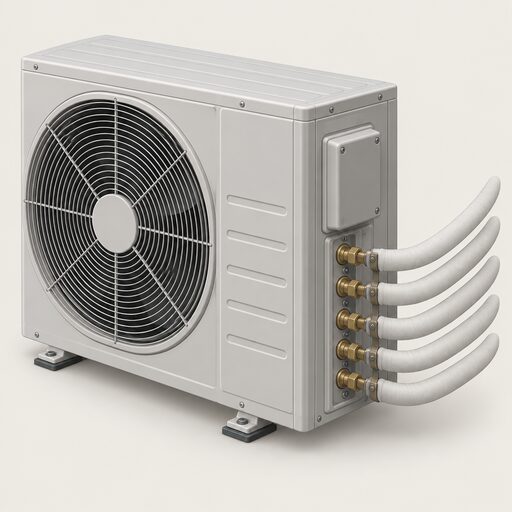 Multi-Split ACHow multi-split air conditioning works when one outdoor unit serves several indoor units: how many rooms one system can serve, independent room control, efficiency, outdoor unit size and sound, planning rules in England and Scotland, servicing and lifespan, the 0% VAT position and how it compares with separate single splits.
 The Full Cooling and Air Conditioning GuideDo you really need air conditioning in a British summer, or would a fan and better shading do the job?