
In this guide
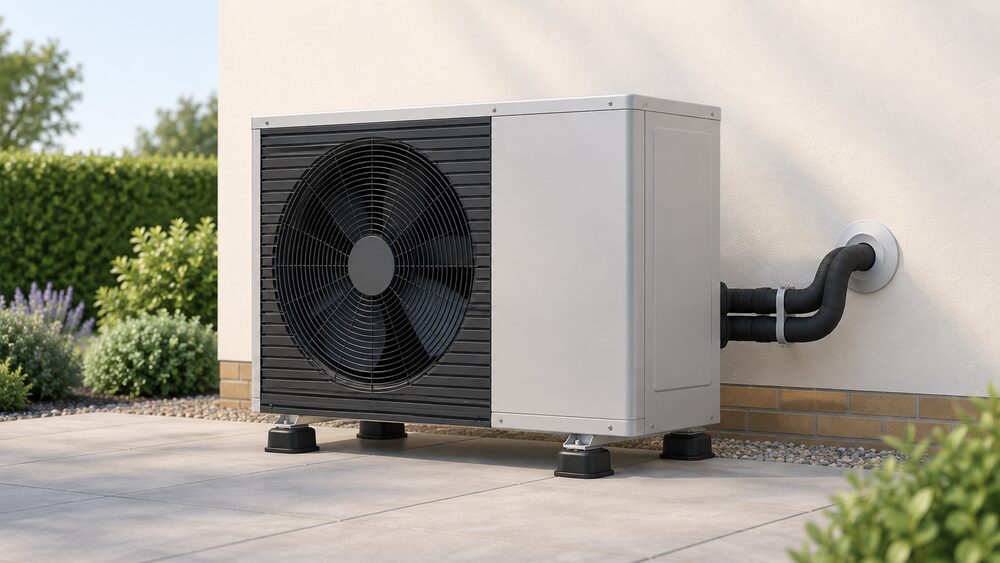
The Grant Aerona 290 is an air-to-water heat pump that uses R290 refrigerant, sold in five single phase outputs from 4kW to 15.5kW1. It is Grant's fifth generation heat pump and the company's flagship air source line, designed for installation with the Aerona Smart Controller, which allows remote management, monitoring and off-site diagnostic support2.
The headline performance figure is a SCOP of 5.08 at 35°C water flow on the 6.5kW model, tested to BS EN 14825 average climate conditions3. The range carries an A+++ ErP rating at 35°C flow, dropping to A++ at 55°C flow on the larger units3. All five models are Quiet Mark approved, and the 4kW unit is rated at 48.0dB(A) sound power in operation3.
The guarantee is 7 years when the unit is installed by a Grant G1 accredited installer, subject to terms and conditions3. There is no published list price: the Aerona 290 is installer-quoted, and the only fixed figures in the public record are grant values, with the Boiler Upgrade Scheme offering up to £7,500 towards an eligible MCS certified air source heat pump9.
What the Aerona 290 is: an air-to-water monobloc using R290
The Aerona 290 is an air-to-water heat pump, meaning it heats water for radiators, underfloor heating and a hot water cylinder rather than warming air directly5. It uses R290 refrigerant, a natural refrigerant that Grant describes as an alternative to the more commonly used R324. Grant positions the range as its fifth generation heat pump, showcasing what the company calls the latest innovation in low carbon heating technology4.
The refrigerant choice is the defining feature of the product. R290 has a Global Warming Potential of 3, which Grant describes as an incredibly low figure, and the company notes that the Aerona 290 requires less refrigerant by volume than a typical R32 heat pump3. That matters for two reasons: a lower charge means less refrigerant in the system to lose, and a lower GWP means less climate impact if it is lost. Grant's earlier Aerona³ range uses R32, which the company describes as having a significantly lower Global Warming Potential compared with traditional refrigerants, but higher than R2902.
Each Aerona 290 is MCS accredited and eligible for government funding, and Grant states the range is also Connect and Notify approved2. MCS certification is the gateway to the Boiler Upgrade Scheme and to most installer-led funding routes, so it is the practical qualification a householder should check first. The wider context on refrigerants, the F-Gas rules and how R290 compares with R32 is covered in heat pump refrigerants, and the monobloc format itself is explained in monobloc and split heat pumps.
The range: five single phase models from 4kW to 15.5kW

Grant sells the Aerona 290 in five single phase outputs: 4kW, 6.5kW, 9kW, 12kW and 15.5kW3. The company describes the range as covering heating outputs from 4kW up to 15.5kW, and each model is rated at minus 5°C air temperature and 55°C water flow2. That rating point matters in the UK, because it is close to the conditions a cold snap produces and it is the figure a heat loss calculation should be checked against.
The outputs are not simply nominal labels. Grant publishes capacity figures at 7°C air and 55°C water: 6.76kW for the 6.5kW model, 9.21kW for the 9kW model and 15.57kW for the 15.5kW model2. Running currents range from 8.3A on the 4kW unit to 12.8A on the 6.5kW and 29.3A on the 15.5kW, all at 230V nominal voltage2. The larger units draw enough current that the electrical supply is worth checking before purchase, a point covered in electricity supply, fuses and wiring for a heat pump.
| Model | Output | Capacity at 7°C air / 55°C water | Max running current |
|---|---|---|---|
| HPR2904 | 4kW | Not stated | 8.3A2 |
| HPR29065 | 6.5kW | 6.76kW2 | 12.8A2 |
| HPR2909 | 9kW | 9.21kW2 | Not stated |
| HPR29012 | 12kW | Not stated | Not stated |
| HPR290155 | 15.5kW | 15.57kW2 | 29.3A2 |
The 12kW and 15.5kW models are 0.634 cubic metres in size, which Grant notes meets the 1.5 cubic metre requirement for dwellinghouses under permitted development rules11. That is a planning point rather than a performance one, but it is the kind of detail that decides whether an installation needs a planning application. The rules differ across the four nations, and the position in each is set out in heat pump planning permission in England, Scotland, Wales and Northern Ireland.
Efficiency: A+++ at 35°C flow, A++ at 55°C
The Aerona 290 range carries an A+++ ErP rating at 35°C flow temperature, which Grant describes as highlighting just how efficient the units are4. The rating is temperature dependent: at 55°C flow the larger models are rated A++ rather than A+++, as listed on the Quiet Mark certification pages for the 9kW, 12kW and 15.5kW units5. The 6.5kW model is listed at A+++ for heating in Grant's own brochure3.
The SCOP figures follow the same pattern. The 6.5kW model achieves a SCOP of 5.08 at 35°C water flow, tested to BS EN 14825 average climate conditions3. The 15.5kW model achieves 4.56 under the same test basis3. The 4kW model is listed at a SCOP of 3.66 at 55°C water, which shows how much the flow temperature moves the number2. Grant's own product page for the 6.5kW unit also lists a second SCOP figure of 3.62 alongside the 5.08, and the two are not reconciled in the published material; the 5.08 figure is the one repeated across Grant's guidance and case studies2.
What drives the difference is flow temperature. A heat pump running at 35°C is designed for underfloor heating or generously sized radiators; one running at 55°C is working harder to serve existing emitters or a hot water cylinder. The practical consequence is that the A+++ headline applies to a system designed for low flow temperatures, and a retrofit onto small radiators will sit nearer the A++ end. The relationship between flow temperature, emitter size and real-world efficiency is set out in heat pump efficiency: COP, SCOP and SPF and what flow temperature do heat pumps use.
Noise: Quiet Mark approved across all five models
All five Aerona 290 models are Quiet Mark approved, and Grant states that the entire range has been awarded the certification in recognition of its low noise levels in operation1. Quiet Mark is an independent certification body, so the approval is a third-party assessment rather than a manufacturer's claim5.
The published sound figures vary by model. The 4kW unit is rated at 48.0dB(A) sound power in operation, and Grant's guidance on heat pump noise repeats that figure for the same model8. Sound pressure levels at one metre, measured at Q=2, run from 40.0dBA on the 4kW unit through 43.7dBA on the 6.5kW, 44.0dBA on the 12kW, 44.9dBA on the 15.5kW and 45.6dBA on the 9kW3. The 4kW model is also listed at 48dB(A) sound power to BS EN 12102-1 on Grant's product page2.
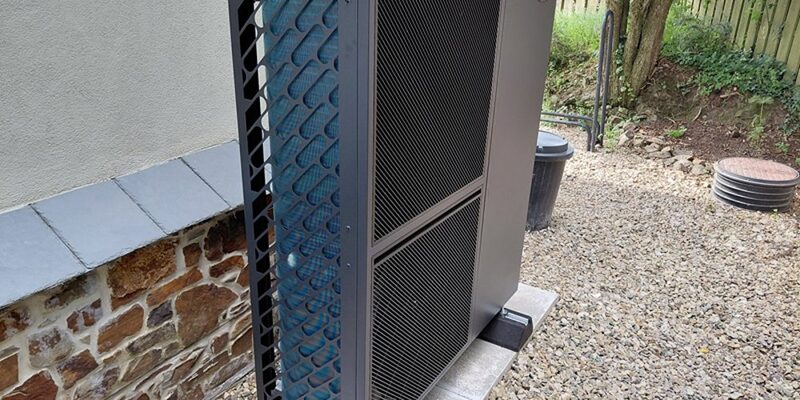
The design work behind those figures is set out by Grant: an acoustically optimised fan, vibration reducing blocks, a triple layer acoustic cotton sound insulation metal shell and double layer vibration-absorbing rubber feet4. In practice, the siting of the unit matters as much as its rating, since a unit placed close to a neighbouring wall or a bedroom window will be heard more than one on an open gable. The MCS 020 assessment that governs permitted development in England is explained in MCS 020: the heat pump noise assessment, and comparative figures are in how noisy is a heat pump.
Warranty: 7 years, but only through a G1 installer
The Aerona 290 carries a 7 year guarantee when installed by a Grant G1 accredited installer, subject to terms and conditions3. Grant states that G1 installers can offer 7 year guarantees, and that the installer must complete Grant heat pump training to be eligible2. The same 7 year term is confirmed on the Quiet Mark listings for the 4kW, 6.5kW, 9kW, 12kW and 15.5kW models, each described as coming with a 7 year product guarantee when installed by a Grant G1 Installer5.
The practical implication is that two identical Aerona 290 installations can carry different warranty positions depending on who fits them. A householder comparing quotes should establish whether the installer is G1 accredited before treating the 7 year term as part of the offer. The general relationship between servicing, registration and warranty cover is covered in does servicing a heat pump affect the warranty, and the wider Grant range is described in Grant heat pumps.
Controls: the Aerona Smart Controller and remote monitoring
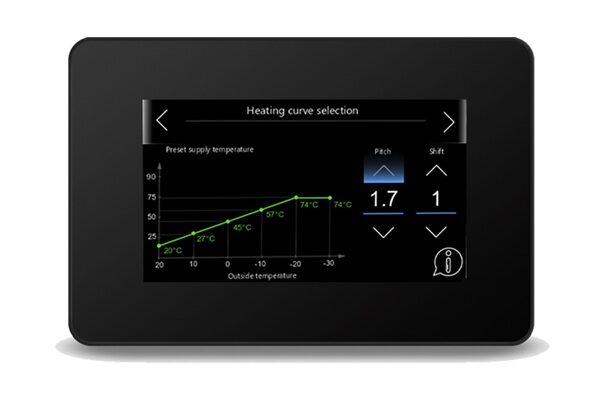
The Aerona 290 is designed for installation with the Aerona Smart Controller, which Grant describes as allowing the unit to be remotely managed and monitored, with off-site diagnostic support, weather and load compensation, heating curve adjustments and set-up support2. Grant offers two controller options across its heat pump range: the Aerona Smart Controller or the Aerona Remote Controller, both supplied in kits1.
The Smart Controller supports remote access through the ecoNET app when installed alongside its own WiFi Hub, and Grant lists three monitoring channels: a wall-mounted 4.5 inch colour touchscreen display, the ecoNET app and the ecoNET web-based platform14. The Remote Controller provides access to the heat pump's core parameters to set, view and adjust, with an LCD display showing operating status symbols and icons3. Grant also states that the Smart Controller supports heating curve configuration and that heating schedules can be set up through it1.
Wireless thermostats are supported. Grant states that the Aerona 290 is compatible with wireless thermostats when used with the Aerona Smart Heat Pump System Controller and an installed wireless receiver, and that up to three wireless thermostats can run from a single receiver16. Pairing runs through the controller menu: Settings, Service Settings, Installation Controller, the relevant circuit, then Thermostat, then Wireless Thermostat16.
This is where the range creates a dependence worth naming. Local control at the controller continues without an internet connection, but remote access, monitoring and off-site diagnostics depend on a home broadband connection, Grant's servers and the ecoNET platform. A household that wants the monitoring benefits is relying on a manufacturer's cloud service for the life of the unit. The wider picture is in heat pump controls, weather compensation and smart operation.
Installation limits: no glycol, and a heavy outdoor unit
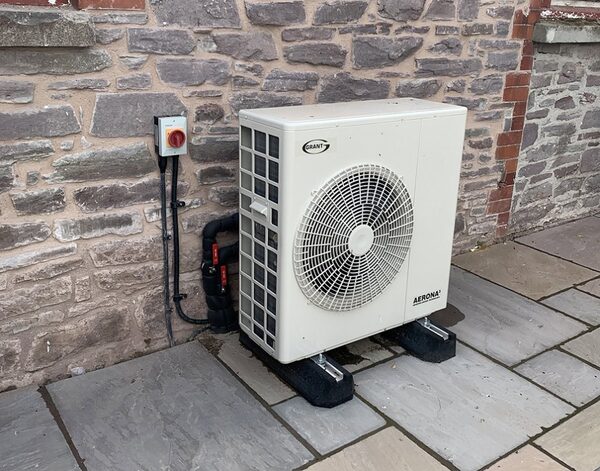
Two installation constraints stand out. First, glycol antifreeze cannot be used with the Aerona 290. Grant states that mechanical anti-freeze valves can be used to protect the external system pipework instead, and that the units carry their own protection: an anti-freeze protection heater on the plate heat exchanger and a heated base tray2. That is a departure from some older installations where a glycol mix was the standard frost protection, and it means the external pipework design has to be planned around valves rather than a chemical mix.
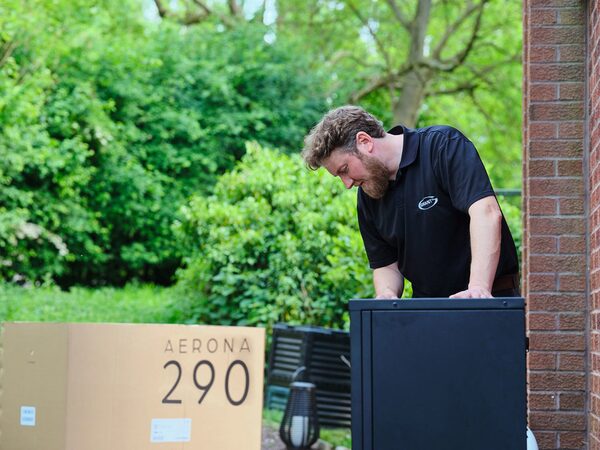
Second, the units are heavy and large. The 15.5kW model weighs 184kg full, the 12kW 120kg, the 6.5kW 117kg, the 4kW 102kg and the 9kW 101kg3. The 12kW and 15.5kW models measure 1365mm high, 1155mm wide and 425mm deep3. The 9kW unit is listed at 1223mm by 854mm by 461mm on the Quiet Mark page, and the 15.5kW at 182kg empty weight there, which differs from Grant's own full weight figure of 184kg7.
| Model | Weight (full) | Dimensions (H x W x D) |
|---|---|---|
| 4kW | 102kg3 | Not stated |
| 6.5kW | 117kg3 | Not stated |
| 9kW | 101kg3 | 1223 x 854 x 461mm7 |
| 12kW | 120kg3 | 1365 x 1155 x 425mm3 |
| 15.5kW | 184kg3 | 1365 x 1155 x 425mm3 |
A unit of that size and weight needs a solid base, adequate clearances and a route for delivery to the installation point. The siting rules and clearance distances are covered in where a heat pump outdoor unit can go, and the electrical side in electricity supply, fuses and wiring for a heat pump.
Cost, grants and what the Aerona 290 means for independence
Grant publishes no list price for the Aerona 290, so the unit and its installation are quoted by an installer after a survey. The fixed figures that do exist are grant values. Grant states that the range is MCS approved and eligible for grants of up to £7,500 through the government's Boiler Upgrade Scheme9. The scheme is administered by Ofgem, and the grant is claimed by the installer rather than paid to the householder10. Eligibility depends on the property being energy efficient enough, and the official route is to check eligibility first and then apply18.
The grant landscape is not static. The enhanced £9,000 rate for eligible off-gas grid properties replacing oil or LPG systems runs until 31 March 2027, alongside 0% VAT on qualifying heat pump installations19. Energy UK has modelled a reduced Boiler Upgrade Scheme grant of £3,200, down from £7,500, as viable by 2030, and in that scenario one modelled household borrows £13,800 to supplement the smaller grant rather than £9,500 alongside the £7,500 rate20. That is a modelled scenario, not a confirmed policy, but it shows the direction some in the industry expect. The full picture across the four nations is in heat pump grants and funding across the UK and how much does a heat pump cost with a Boiler Upgrade Scheme grant.
On independence, the position is straightforward. An Aerona 290 moves a household off gas, oil or LPG for space heating and hot water, which removes the fuel delivery and the flue and shifts the running cost onto electricity. What remains is a dependence on the electricity grid and an electricity supplier, plus a dependence on the manufacturer's controller and, for remote features, on broadband and the ecoNET platform. The 7 year guarantee depends on a continuing relationship with a G1 installer. The wider argument is set out in heat pumps and household energy independence, and the fuel comparison in replacing a gas, oil or LPG boiler with a heat pump.
Sources20 cited
- Air source heat pumps, Grant UK, 2026
- Aerona 290 R290 heat pumps, Grant UK, 2026
- Aerona brochure August 2026, Grant UK, 2026
- What are the benefits of R290 heat pumps, Grant UK, 2025
- Grant Aerona 290 4kW HPR2904, Quiet Mark, 2026
- Grant Aerona 290 6.5kW HPR29065, Quiet Mark, 2026
- Grant Aerona 290 9kW HPR2909, Quiet Mark, 2026
- Grant Aerona 290 12kW HPR29012, Quiet Mark, 2026
- Grant UK, Grant UK, 2026
- Boiler Upgrade Scheme: installers, Ofgem, 2026
- Do Grant heat pumps need planning permission, Grant UK, 2026
- Grant Aerona 290 15.5kW, Quiet Mark, 2026
- How quiet are air source heat pumps, Grant UK, 2021
- How to control your heat pump, Grant UK, 2024
- How to read your heat pump's performance data, Grant UK, 2026
- How do you pair wireless thermostats using the Aerona Smart Controller, Grant UK, 2026
- Apply for the Boiler Upgrade Scheme, GOV.UK, 2026
- Air and ground source heat pumps, Croydon Council, 2026
- Boiler Upgrade Scheme guidance for installers, Ofgem, 2026
- Clean heat: financing the transition, Energy UK, 2025
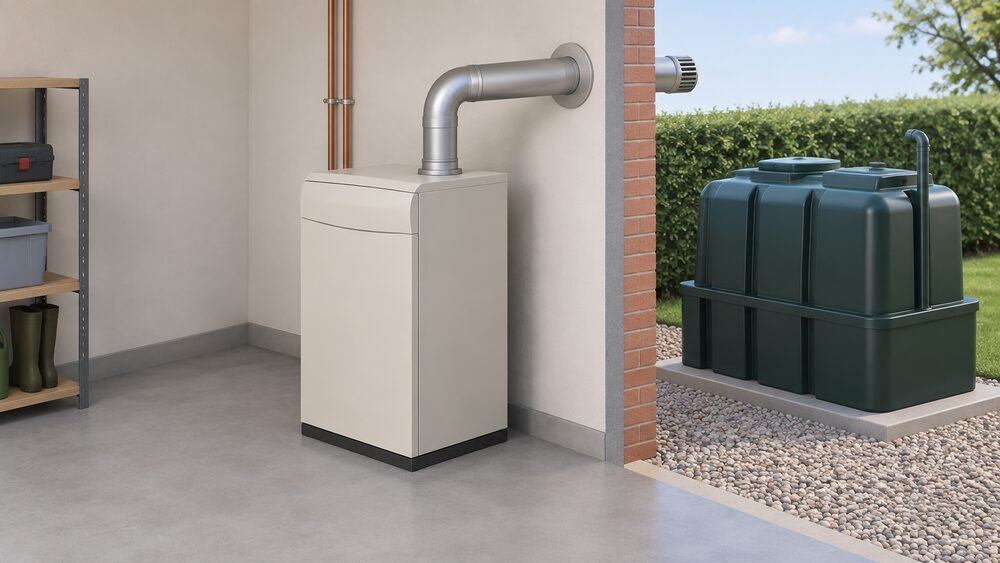 Grant oil boilersGrant oil boilers suit homes with no gas supply, so which Vortex model fits your house, and can it run on greener fuel later?
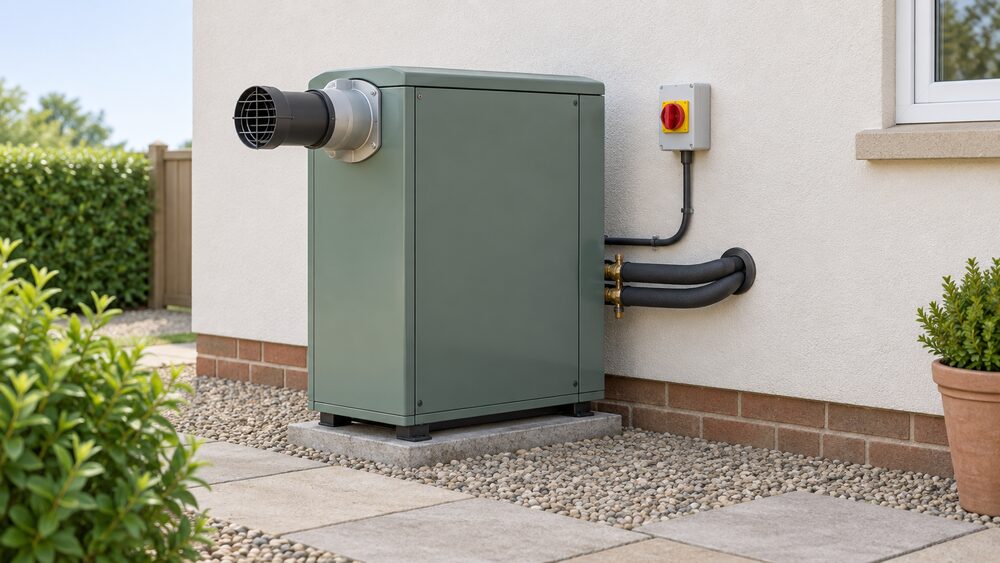 Grant Vortex oil boilerLiving off the gas grid with an oil boiler means you may be comparing a Grant Vortex with a heat pump.
 Grant heat pumpsGrant air source heat pumps run on electricity and heat your home through radiators or underfloor heating.
 Grant Heating ControlsGrant makes heating controls for its own air source heat pumps, not for boilers.
 Grant UK oil boilers and heat pumpsGrant UK makes oil boilers for homes off the gas grid, and also sells air source heat pumps if you would rather move away from oil.
 Grant solar thermalGrant solar thermal panels heat your hot water using sunlight, working alongside your boiler rather than replacing it.