

In this comparison
Scotland runs two national routes to a warmer, cheaper-to-heat home, and they are aimed at different households. The Home Energy Scotland Grant and Loan Scheme is open to all domestic owner-occupiers in Scotland and pays a grant of up to £7,500 for clean heating systems such as heat pumps, with an additional £7,500 available as an optional interest-free loan1. Warmer Homes Scotland is the Scottish Government's national fuel poverty scheme, offering support worth £10,000 or more per eligible household for measures such as heating and insulation, with the work planned and carried out for the household3.
Both are reached through the same front door. Home Energy Scotland is a free, independent advice and referral service funded by the Scottish Government and administered by the Energy Saving Trust, and it is the contact point for both the Grant and Loan Scheme and Warmer Homes Scotland5. A household that calls 0808 808 2282 is triaged: owner-occupiers with capital to contribute are pointed towards grant and loan funding, while households in or at risk of fuel poverty are assessed for the fully funded programme7.
The practical difference is who pays and how much choice the household has. Grant and Loan is a contribution towards work the household commissions; Warmer Homes Scotland is a managed installation, delivered by Warmworks, in which the Scottish Government meets all the costs in most cases3. Since the launch of Warmer Homes Scotland, over 47,000 households across Scotland have been helped to live in warmer homes9.
Two Scottish Government schemes, one front door
The two programmes share a funder, a contact centre and an eligibility conversation, but they are structurally different products. The Home Energy Scotland Grant and Loan Scheme provides grants and loans to all domestic owner-occupiers in Scotland to install clean heat and energy efficiency measures6. Warmer Homes Scotland is the Scottish Government's national fuel poverty scheme, helping households in, or at risk of, fuel poverty improve their heating and energy efficiency4.
That distinction in targeting is the whole design. Warmer Homes Scotland is not a universal offer; it is aimed at households who cannot fund work themselves, and the Scottish Government states that it targets funding at households most exposed to the health risks of staying in a cold home because of age, disability or caring responsibilities8. The Grant and Loan Scheme, by contrast, has no fuel poverty test: it is available to owner-occupiers as a class6.
The two also have different delivery models. Grant and Loan is a funding mechanism: the household arranges the work and the scheme contributes grant and, optionally, loan funding1. Warmer Homes Scotland is a delivery programme: the Scottish Government funds it, Warmworks manages it, and the work is carried out by Warmworks' installers3.
There is a long history behind the current shape. Warmer Homes Scotland replaced the Energy Assistance Scheme, which ceased taking referrals on 31 March 2015 and concluded all works by the end of August 201513. A new phase of Warmer Homes Scotland launched on 2 October 2023 with a greater focus on clean heating where that is appropriate6. The Grant and Loan Scheme sits alongside it as the mainstream route for households who are not in fuel poverty but still need help with the capital cost of a heat pump or insulation.
For a household's energy independence, the two routes do different things. Grant and Loan reduces the upfront cost of equipment the household then owns outright, which is the more durable form of independence. Warmer Homes Scotland removes the cost barrier entirely for households that could not otherwise act, but the measures are installed through a managing agent rather than chosen by the household. Both leave the home connected to a grid, a supplier and, in most cases, the gas network.

Home Energy Scotland: the advice service behind both schemes

Home Energy Scotland is described in official guidance as a free independent advice and referral scheme4. It is administered by the Energy Saving Trust on behalf of the Scottish Government5, and it provides free, independent and impartial energy advice to householders, community groups and businesses throughout Scotland14.
Its role is broader than processing applications. Local authority guidance describes Home Energy Scotland as a referral partner for area-based scheme eligibility enquiries, providing free and impartial advice funded by the Scottish Government7. It can also offer free advice on improving the energy efficiency of a home15, and it can provide specialist advice tailored to the needs of the household on how to operate heating systems effectively8. Ofgem's own contact guidance points households to Home Energy Scotland for free impartial advice on energy efficiency and renewable energy in Scotland16.
The service also runs a Funding Finder, a search tool for funding and support on improving a home's energy efficiency, reducing energy bills and making a home warmer15. For a household trying to work out which of the two national schemes applies, that tool and the phone line are the two published starting points.
Contact details are consistent across sources. The number is 0808 808 2282, a free call7. Phone lines are open Monday to Friday 8am to 8pm, and 9am to 5pm on Saturdays11. Calls are free from landlines and most mobile networks16.
The independence question here is straightforward. The advice is funded by the Scottish Government rather than by installers or energy suppliers, which is what allows it to sit above the commercial market. What it cannot do is remove the household's dependence on the grid, on a supplier, or on whatever heating fuel the property is already connected to. It changes who pays for improvements, not where the energy comes from.
Home Energy Scotland Grant and Loan: up to £7,500 grant plus interest-free loan
The Grant and Loan Scheme is the mainstream Scottish route for owner-occupiers. It provides homeowners in Scotland with a grant, an interest-free loan, or a combination of both17. For clean heating systems such as heat pumps, grant funding of up to £7,500 is available, with an additional £7,500 of funding available as an optional interest-free loan2. The Scottish Government's 2025 progress report states the same headline: a grant of £7,500 for clean heating systems for homeowners in Scotland4.
The scheme covers more than heat pumps. It can provide interest-free loan funding for energy efficiency measures or to install renewable measures such as heat pumps or battery storage, and grant funding may also be available7. An optional interest-free loan is available for both clean heating and energy efficiency4. The scheme helps eligible homeowners pay for energy efficiency improvements and clean heating systems18.
The structure matters for how a household plans. Grant funding is a contribution that does not have to be repaid; loan funding is capital that does, at zero interest. A household taking both is committing to repay £7,500 over an agreed term while receiving up to £7,500 that it keeps. That combination is what makes a heat pump installation reachable for households with some capacity to repay but not enough capital to pay upfront.
The limits are as important as the amounts. The grant is capped, so a household specifying a more expensive system than the cap allows will meet the difference itself. The loan is optional and repayable, so it is a financing decision rather than free money. And the scheme is for owner-occupiers: it is not a route for private rented sector tenants, who are covered by Warmer Homes Scotland instead4.
For energy independence, this is the stronger of the two routes in one specific sense: the household owns the equipment and chooses it. A heat pump installed with grant and loan funding reduces reliance on gas, and battery storage funded the same way reduces reliance on the grid at peak times. What remains is the electricity supply itself, the supplier, and the manufacturer's warranty and app ecosystem for whatever equipment is chosen.
Warmer Homes Scotland: fully funded support worth £10,000 or more
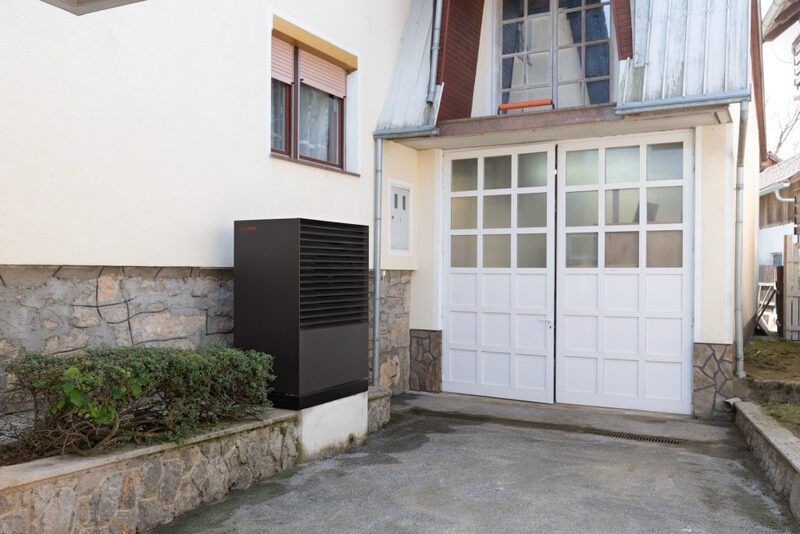
Warmer Homes Scotland is the fully funded route. It offers support worth £10,000 or more for eligible households for energy-saving home improvements such as heating and insulation3. Eligible homeowners and private rented sector tenants could receive £10,000 or more of funding for energy efficiency improvements such as heating or insulation1. The programme is funded by the Scottish Government and offers funding and support to eligible households struggling to stay warm and keep on top of energy bills7.
The delivery model is what distinguishes it. The work is done by Warmworks' installers and in most cases the Scottish Government will meet all the costs; in some rare cases a household may need to pay some costs3. The Scottish Government's own consultation material describes the offer in similar terms: energy efficiency measures and a heat pump installed with all the work planned and carried out for the household, fully funded by the Scottish Government, if certain criteria are met19.
Eligibility is the gate. It is available to households, owner-occupiers and some private rented sector tenants, who are living in or at risk of fuel poverty and who meet the qualifying eligibility criteria2. The scheme mainly supports owner occupiers, but it also covers tenants in private rented homes6. The Scottish Government states that it targets funding at households most exposed to the health risks of staying in a cold home because of age, disability or caring responsibilities8.
The programme has a substantial track record. Since the launch of Warmer Homes Scotland, over 47,000 households across Scotland have been helped to live in warmer homes9. Households who receive improvements through the scheme are expected to save over £300 per year on their energy bills10.
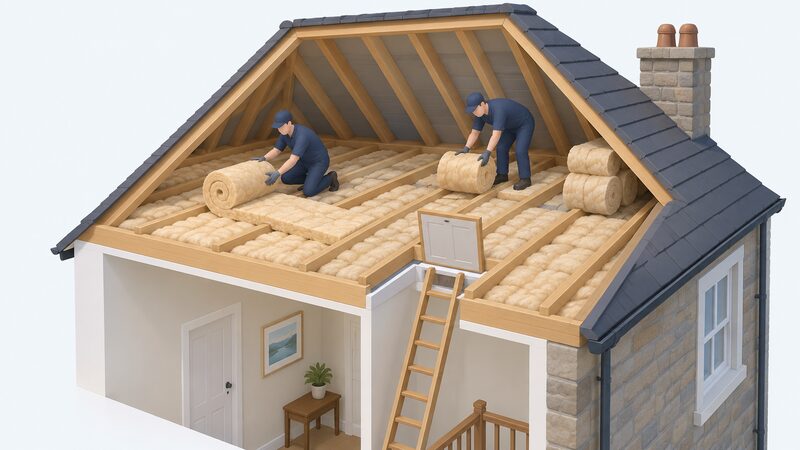
The scheme's approach to measures has historically been fabric first, with restrictions on support for certain measures10. Its measure list has included a mix of fabric insulation and heating measures, including micro-renewables and measures specifically aimed at pre-1919 homes, with some mandatory and some highly recommended13. More recently it has retrofitted privately occupied homes with heating systems and energy efficiency measures including high heat retention electric storage heating systems, air source heat pumps, energy efficient gas boilers and a suite of insulation options21.
On independence, this route delivers the most for the least household outlay, but it delivers least choice. The household ends up with a warmer, more efficient home and lower bills, and it owns the improvements. It remains connected to the grid and, where a gas boiler is installed, to the gas network. The managing agent, not the household, selects the installer.
Grant and Loan or Warmer Homes Scotland: which one fits which household
The dividing line is fuel poverty, not property type alone. A household in or at risk of fuel poverty that meets the qualifying criteria is in Warmer Homes Scotland territory2. A household that is not, but owns its home and can contribute to or repay part of the cost, is in Grant and Loan territory6.
| Home Energy Scotland Grant and Loan | Warmer Homes Scotland | |
|---|---|---|
| Who it is for | All domestic owner-occupiers in Scotland6 | Households in or at risk of fuel poverty meeting qualifying criteria2 |
| Tenure covered | Owner-occupiers6 | Mainly owner occupiers, plus some private rented sector tenants6 |
| Headline value | Up to £7,500 grant plus optional £7,500 interest-free loan2 | £10,000 or more support per eligible household3 |
| Who pays | Grant and repayable loan funding17 | Scottish Government meets all costs in most cases3 |
| Who arranges the work | The household | Warmworks, which delivers the programme1 |
| Typical measures | Clean heating systems, energy efficiency, battery storage7 | Heating systems and energy efficiency measures, including insulation21 |
A household can fall between the two. Someone who is not in fuel poverty but has no capital and no capacity to repay a loan may not fit either route cleanly. That is where local authority area-based schemes and other funding come in, and Home Energy Scotland's Funding Finder is the published tool for searching them15.
There is also a five-year exclusion to be aware of. From 1 September 2017, households are no longer able to benefit from both Warmer Homes Scotland and HEEPS: Area Based Schemes, and properties funded by one are excluded from the other for five years from installation completion22. A household that has already received area-based scheme measures may therefore be outside Warmer Homes Scotland for a period.
For households weighing the wider UK picture, the Boiler Upgrade Scheme operates in England and Wales rather than Scotland, and the Energy Company Obligation routes work differently again. The Scottish schemes are distinct products with their own eligibility logic.
What each scheme pays for: heating, insulation and clean heat
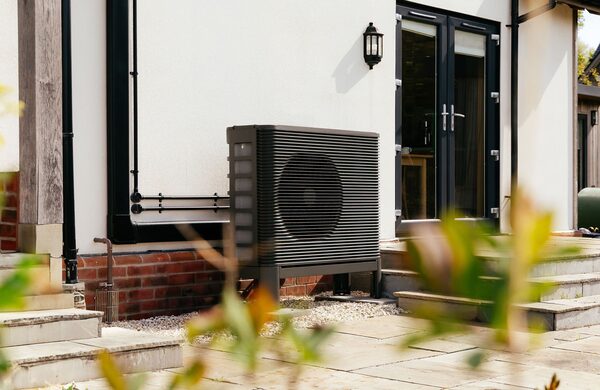
The Grant and Loan Scheme helps eligible homeowners pay for energy efficiency improvements and clean heating systems18. In practice that means insulation measures, clean heating such as a heat pump, and renewable measures including battery storage, with grant funding potentially available alongside interest-free loan funding7.
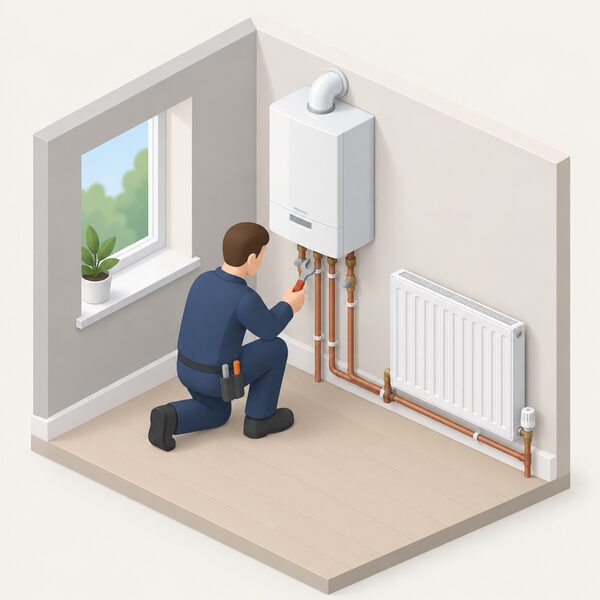
Warmer Homes Scotland covers a comparable but differently assembled package. It retrofits privately occupied homes with heating systems and energy efficiency measures, including high heat retention electric storage heating systems, air source heat pumps, energy efficient gas boilers and a suite of highly effective insulation options21. Most homes also get energy-saving upgrades, no matter which heating system is installed4. The programme also supports climate goals by installing more clean heating systems and reducing emissions through improved energy efficiency4.
Clean heating is offered first where it is suitable. Households are offered a clean heating system in the first instance, although only where installation of these systems will avoid pushing households into fuel poverty or worsen their depth of fuel poverty23. That condition is significant: it means a household can receive a gas boiler instead of a heat pump where a heat pump would raise running costs beyond what the household can bear.
"Households are offered a clean heating system in the first instance, although only where installation of these systems will avoid pushing households into fuel poverty or worsen their depth of fuel poverty"
The measure mix has evolved. The scheme's earlier contract specified a list including a mix of fabric insulation and heating measures, including micro-renewables and measures specifically aimed at pre-1919 homes13. The fabric first emphasis, with restrictions on support for certain measures, has been a consistent feature10.
For a household, the practical question is what the property needs. A solid-walled pre-1919 home in Scotland typically needs fabric work before a heat pump performs well, and both schemes can fund that. A modern home with reasonable insulation is more likely to be a straightforward clean heating case. Neither scheme pays for the household's ongoing energy, and neither removes the standing charges, network costs or supplier margin that make up a bill.
How to apply and what happens to your money
The published route starts with Home Energy Scotland. A household contacts the service, uses the online self-assessment tool, and is then referred to Warmworks for a home survey and assessment if eligible3. The Scottish Government describes the same sequence: if a household is eligible, a referral is made to Warmworks, the organisation that delivers the programme1.
- Contact Home Energy Scotland on 0808 808 2282, or use the online self-assessment tool3.
- Complete the eligibility assessment for the relevant scheme3.
- If eligible for Warmer Homes Scotland, be referred to Warmworks1.
- Warmworks carries out a home survey and assessment3.
- Work is planned and carried out by Warmworks' installers3.
On money, the two routes diverge sharply. Under Warmer Homes Scotland, the work is done by Warmworks' installers and in most cases the Scottish Government will meet all the costs, with some rare cases requiring the household to pay some costs3. The household is not paying a contractor and reclaiming; the funding sits with the programme.
Under Grant and Loan, the household is the customer. Grant and loan funding supports work the household arranges, and the loan element is repayable at zero interest17. That means the household contracts with an installer, and the funding is applied to that arrangement.
There is a cautionary precedent in the wider grant market. A Green Deal complaint concerned Home Energy and Lifestyle Management Ltd, which has gone out of business5. That is a reminder that installer company status matters independently of any scheme's backing, and that a warranty from a failed company is not something a household can rely on.
Waiting times, delays and what to expect
Neither scheme publishes a single end-to-end timescale from first call to installation. What is documented is the pattern of disruption that has affected Warmer Homes Scotland.
The most significant was the transition between programmes. The process for transitioning to the replacement scheme resulted in the programme being effectively closed for six months20. That is the clearest published statement of a delay, and it shows how a scheme change can stop work entirely for a period rather than slow it.
The contract has also been amended to absorb delay. In March 2017 the contract was amended to add five additional categories of allowed pause periods24. Earlier, changes to the criteria for eligible measures for which ECO can be claimed, and changes to ECO regulations following the introduction of the UK Government's ECO2 transition period on 1 April 2017, resulted in a disruption to the flow of ECO funding10. Warmer Homes Scotland has therefore been exposed to UK-level funding changes as well as Scottish programme transitions.
On quality assurance, Warmer Homes Scotland has a service visit at the end of the initial 12 month warranty period12. That gives a household a defined point at which the installation is checked, and it is worth knowing when planning around a warranty.
For the Grant and Loan Scheme, the published material covers application and claim processing times as a distinct topic18, which reflects that the household is managing a claim rather than waiting on a managed programme.
What this means for a household is that the funding is real but the timetable is not guaranteed. A household planning a heating replacement around a scheme should expect the assessment, survey and installation to be sequenced, and should treat any programme transition as a risk to the schedule. The energy independence gained at the end is genuine: lower bills, a warmer home, and in the Grant and Loan case, equipment the household owns. The dependence that remains is on the grid, the supplier, and for many homes the gas network, plus whatever warranty and app the chosen manufacturer provides.
Sources25 cited
- Find funding, Home Energy Scotland, 2026
- Warmer Homes Scotland, Home Energy Scotland, 2026
- Energy saving home improvements, Scottish Government, 2026
- Heat in Buildings progress report 2025, Scottish Government, 2025
- Warmer Homes Scotland scheme headline data, Scottish Government, 2025
- Heat in Buildings progress report 2024, Scottish Government, 2024
- Tackling fuel poverty: strategic approach, Scottish Government, 2021
- Tackling fuel poverty: targeting, Scottish Government, 2021
- Decarbonising heating in homes and buildings, Scottish Government, 2026
- Heat in Buildings strategy, Scottish Government, 2021
- Energy Efficient Scotland: Area Based Schemes, West Lothian Council, 2026
- Heat in Buildings quality assurance statement, Scottish Government, 2022
- Warmer Homes Scotland business case, Scottish Government, 2015
- Area Based Schemes, Glasgow City Council, 2026
- Financial help for energy efficiency, City of Edinburgh Council, 2026
- Who to contact, Ofgem, 2026
- Local and small scale renewables, Scottish Government, 2026
- Home Energy Scotland Grant and Loan Scheme application and claim processing times, Scottish Government, 2026
- Delivering net zero for Scotland's buildings, Scottish Government, 2023
- Tackling fuel poverty: engagement responses, Scottish Government, 2025
- Heat in Buildings national scheme: island communities impact assessment, Scottish Government, 2022
- Warmer Homes Scotland annual review 2017-2018, Scottish Government, 2017
- Scottish Government response to the Green Heat Finance Taskforce, Scottish Government, 2025
- Warmer Homes Scotland annual review 2016-17, Scottish Government, 2017
- Warmer Homes Scotland annual review 2018-19, Scottish Government, 2019
 Community Energy in ScotlandCommunity energy in Scotland lets you join a local scheme for cheaper, greener heat and power, or get advice and funding to make your own home warmer and cheaper to run.
 Why Energy Grants DifferWhere you live in the UK changes which home energy grants you can get.
 Energy Policy in ScotlandWho decides how your home in Scotland is heated and improved?
 The Full Grants and Schemes GuideWhich grants can you actually get right now, and how do you apply for them?
 The Full Scotland, Wales and Northern Ireland GuideWhy a householder in Glasgow, Cardiff or Belfast faces different schemes, standards, targets and markets from one in England.
 Housing Stock Data for ScotlandScotland's housing is measured differently from England's, so the numbers you see may not compare directly.