

In this guide
There is no gas boiler ban in force in the UK. Nothing in current law stops a householder replacing a gas boiler in an existing home, and no phase-out date for replacement boilers has been enacted. What exists is a set of rules for new buildings, a set of proposals for everything else, and a wide gap between the two that has been filled in public discussion by dates that were never legislated.
The proposal most people have read about is 2035. The UK Government consulted in November 2023 on plans to introduce a law which will ban new fossil fuel boilers being installed in homes and non-domestic buildings after 2035, and on exempting certain households from the phase out of fossil fuel boilers, including gas, in 20351. That is a consultation, not an Act. The same consultation delayed the ban on installing oil and LPG boilers, and new coal heating, for off-gas-grid homes from 2026 to 20351.
The rules that do bite are narrower and already in force in one nation. Scotland's New Build Heat Standard has applied to new buildings since 1 April 20243. In England, the Future Homes Standard takes effect from 24 March 2027, with full compliance from 24 March 2028, and the government has stated that from 2028 no new build home in England will be connected to the gas network4. Neither touches the boiler in an existing home.
The short answer, in three parts
The short answer has three parts, and conflating them is where most of the confusion comes from.
First, replacement. No ban applies. The most recent date quoted for a ban on the installation of replacement boilers is 2035, and that figure appears in a local authority delivery plan rather than in statute7. The UK Government's own consultation language is prospective: it sets out plans to introduce a law which will ban new fossil fuel boilers being installed in homes and non-domestic buildings after 20352. A plan to introduce a law is not a law.
Second, new build. Here the position is firmer and differs by nation. Scotland's New Build Heat Standard is a requirement set out in law, in force from 1 April 2024, and it prohibits heating and cooling systems within the curtilage of any new building which produce more than a negligible level of greenhouse gas emissions at the point of combustion3. England's equivalent arrives later, through the Future Homes Standard, with legislation taking effect from 24 March 2027 and full compliance from 24 March 20284.
Third, off-gas-grid homes. The proposed ban on installing oil and LPG boilers and new coal heating for off-gas-grid homes was delayed from 2026 to 20351. Households using oil or LPG therefore face a proposed date, not a current restriction, and the practical rules that apply to them today concern tank siting, inspection and technician registration rather than phase-out.
The figures: enacted dates, proposed dates and survey findings

The figures that circulate are a mixture of enacted dates, proposed dates and survey findings, and they carry very different weight.
| Figure | What it refers to | Status |
|---|---|---|
| 2024 | Scotland's New Build Heat Standard comes into force, 1 April 20243 | In force |
| 2025 | Gas and oil boiler ban applying in newbuild homes6 | Stated in 2021 guidance |
| 2027 | Future Homes Standard legislation effective 24 March 20274 | Announced |
| 2028 | Full compliance from 24 March 2028; no new build home in England connected to the gas network4 | Announced |
| 2035 | Proposed ban on new fossil fuel boilers after 2035; oil and LPG off-gas-grid ban delayed to 20351 | Proposed |
| 2045 | Vision for all buildings in Scotland to reach zero emissions9 | Vision |
Awareness of any of this is low. In October 2021, 17% of consumers felt they knew a lot or a fair amount about government plans to ban the installation of new gas or oil boilers by the mid 2030s, and a May 2021 figure put the same measure at 16%6. Those are the only published awareness figures available here, and they date from 2021, before the 2023 consultation and before the Scottish standard came into force.
The 2025 date in the table is worth separating out. It comes from independent guidance published in October 2021 stating that a gas and oil boiler ban will apply in newbuild homes from 20256. That is a 2021 statement of intent. The enacted English timetable that followed is 2027 and 20284, and the Scottish standard arrived in April 20243. Where documents disagree on a date, both are given here rather than reconciled.
What drives the phase-out
The phase-out is driven by emissions targets and by the practical limits of the gas network, not by a single piece of consumer regulation.
The Climate Change Committee is an independent statutory body established under the Climate Change Act 2008, and it has an important role in providing expert advice as part of the approach to climate change10. It provides regular advice, including an annual Scottish progress report on reducing emissions, advice on emissions reduction targets and regular independent assessments of Scotland's adaptation programmes11. It has also advised Northern Ireland on its 2030 and 2040 interim targets and first three Carbon Budgets12. The Committee commissioned Energy Saving Trust and Green Alliance to carry out research and analysis on policies introduced in other countries in response to the energy crisis13.
On the technology side, the Future Homes Standard is built around a specific assumption. All performance requirements are based on notional buildings with an efficient air source heat pump or a 4th generation heat network that uses air source heat pumps14. That is why the standard excludes the alternatives: gas boilers, including hybrid and hydrogen-ready boilers, will not meet the proposed standards, and the standards proposed are also unlikely to allow the installation of biofuel systems, including wood and manufactured solid fuels14. The Commons Library records that heat pumps will become "the primary heating technology" under the standard15.
What drives household behaviour is different from what drives policy. In a Nesta survey published in May 2023, the most common motivations for installing a gas boiler were that they were the most straightforward option (37%) and that they were the cheapest option16. Familiarity and cost, not policy dates, govern most replacement decisions.
"the most common motivations for installing a gas boiler were that they were the most straightforward option (37%) and we"
How the four nations differ
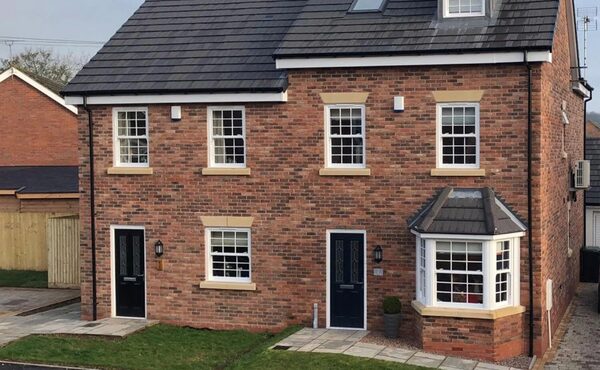
The four nations are not on the same timetable, and the differences are structural rather than cosmetic.
Scotland has moved first and furthest on new buildings. The New Build Heat Standard is a requirement set out in law, in force from 1 April 2024, and it applies to all new buildings, both domestic and non-domestic, constructed under a building warrant applied for from that date3. It is technology agnostic, allowing developers flexibility in the choice of technology used, and its purpose is to make sure that any new buildings are future-proofed by using clean heating systems which will not require future retrofit3. The standard extends only to the provision of space heating, cooling and hot water; other heat or hot water processes are out of scope, and it does not apply to any emergency back-up heating system installed solely for use in the event of failure of the normal heating or hot water service system8. It also applies to the conversion of existing buildings where the conversion involves a change in occupation or use of the part of the building in which an existing direct emission heating system is located and it is reasonably practicable to do so8. Amendments to the standard were introduced in the updated technical handbooks applying from 1 January 202519.
England relies on the Future Homes Standard, which sets new requirements for homes built in England from 2028, specifically Approved Document F and Approved Document L, and will require all new build homes to be "zero-carbon ready"4. The legislation will take effect from 24 March 2027, with a 12-month transition period, and from 24 March 2028 all developers will need to comply4. New homes with foundations laid between 24 March 2027 and 24 March 2028 can continue to be constructed under the previous standards5. For existing homeowners, the Future Homes Standard won't have any impact on your current property5.
Wales and Northern Ireland have no equivalent enacted new build standard in the material here. The Climate Change Committee's advice to Northern Ireland on its 2030 and 2040 interim targets and first three Carbon Budgets is the main dated reference point for that nation12.
The rules that apply today
The rules that apply to a householder today are building regulations, not phase-out dates, and they turn on what is being installed and where.
Building regulations for boilers and heating apply when a fixed, flueless, gas appliance is installed, among other triggers20. That is the framework that governs a replacement installation in an existing home, and it is unaffected by the 2035 proposal.
For new buildings, the position is set out above: Scotland's standard has applied since April 2024, and England's arrives in 2027 and 2028. The English standard carries specific technical requirements. New homes will be fitted with solar panels covering at least 40% of the ground floor surface area where appropriate, alongside new building fabric requirements relating to insulation, ventilation, and airtightness4. Buildings over 18 metres in height or having at least seven storeys are defined as higher risk, are exempt from the solar panel requirement, and have a later implementation date of 24 September 20274. The consultation had earlier set out an option requiring solar PV panels covering the equivalent of 40% of a new home's ground floor area, with panels not required for blocks of flats over 15 storeys21.
The standard is expected to deliver measurable running cost differences. The Microgeneration Certification Scheme and Solar Energy UK say that the Future Homes Standard would save the average household around £1000 a year22. Independent guidance puts the figure at up to £830 per year on energy bills for families, and states the standard will create at least 75% fewer carbon emissions than homes built to the 2013 standards5. Those two figures differ and both are given.
Separately, the Clean Heat Market Mechanism acts on manufacturers rather than households. Manufacturers are required to meet a target of 6% of sales with heat pumps or acquire credits from 1 April 2026, and the target level for scheme Year 2 is 8% of relevant boiler sales23. The government has decided to proceed with the proposal to mandate MCS as the sole certification scheme for the mechanism23.
What the phase-out means for energy independence

For a household, the phase-out question is really a question about what the home depends on. A gas boiler ties the household to the gas grid, to a supplier and to imported fuel. An all-electric home ties it to the electricity grid, to a network operator and to whatever generates the power. Neither is independence in the absolute sense; the dependence changes shape.
Scotland's targets show the scale of the intended shift. The Heat in Buildings Strategy sets a vision for over 1 million homes in Scotland to convert to zero emissions heating by 2030, and the equivalent of 50,000 non-domestic buildings24. It describes the need for at least 50% of the building stock to use zero emission heating systems by 2030, and a target of switching around 1 million homes currently using mains gas to zero carbon heating systems by 203026. Emissions from heat in buildings will have to fall by 68% by 2030 as compared to 202024. On energy efficiency, the target for homes is at least equivalent to an EPC Band C, with all homes meeting at least this standard by 203324.
The strategy also carries a cost and employment dimension. The Scottish Government has committed £1.8 billion to 2026 to support delivery of the strategy3. Research suggests the additional jobs supported in 2030 will exceed those displaced by an estimated 16,400 as a result of investment in zero emissions heat26. The vision is for all buildings to reach zero emissions by 20459.
What this means in practice is that the direction of travel is set, the dates for existing homes are not, and the household's exposure shifts from a fuel it buys to a grid it shares. For a home off the gas grid, the proposed 2035 date for oil and LPG is the relevant one, and it is a proposal1. For a home on mains gas, the relevant date is the 2035 proposal for new fossil fuel boiler installations, with exemptions for certain households1. Neither is law.
Sources26 cited
- Delivering net zero for Scotland's buildings: consultation proposals, Scottish Government, 2023-11-28
- Delivering net zero for Scotland's buildings: Heat in Buildings Bill consultation, Scottish Government, 2023-11
- The Heat in Buildings programme, Scottish Government, 2026-09-17
- What the Future Homes Standard means for homeowners, NICEIC, 2026-04-23
- What the Warm Homes Plan and Future Homes Standard mean for installers, NICEIC, 2026-04-22
- Supporting consumers in the transition to net zero, Which?, 2021-10-05
- Edinburgh Local Heat and Energy Efficiency Strategy delivery plan, City of Edinburgh Council
- New Build Heat Standard part two consultation, Scottish Government, 2026-09-20
- Heat in Buildings Strategy: strategic environmental assessment, Scottish Government
- The Climate Change Committee, House of Commons Library, 2026-07-10
- Climate change policy, Scottish Government, 2026-09-17
- Advice report: the path to a net zero Northern Ireland, Climate Change Committee, 2026-09-19
- Climate policy that cuts costs: international policy comparison, Climate Change Committee, 2026-09-19
- The Future Homes and Buildings Standards 2023 consultation, UK Government, 2026-09-17
- The Future Homes Standard, House of Commons Library, 2026-09-17
- Heat pumps: a user survey, Nesta, 2023-05
- Energy efficiency in homes, Scottish Government, 2026-09-17
- New Build Heat Standard part two consultation: consult view, Scottish Government, 2026-09-20
- Building standards, Scottish Government, 2026-09-17
- Heat pump sector deal expert advisory group: final report, Scottish Government
- Carbon Budget and Growth Delivery Plan: heat and buildings factsheet, UK Government, 2026-06-25
- Clean Heat Market Mechanism: revisions ahead of scheme Year 2, UK Government, 2026-09-18
- Heat in Buildings Strategy: fairer Scotland duty assessment, Scottish Government
- Heat in Buildings Strategy: business regulatory impact assessment, Scottish Government
- Heat in Buildings Strategy: child rights and wellbeing impact assessment, Scottish Government
- Scottish Government hydrogen policy statement, Scottish Government
 Gas Boilers GuideMains gas boilers heat around 23 million UK homes.
 Boiler Manufacturers in the UKCovers the manufacturers supplying gas, oil, LPG and electric boilers to UK homes, their main ranges and where they are made.
 The Full Boilers and Heating GuideWhich boiler suits your home, and when is it worth swapping the old one?
 New Boiler Cost in the UKWhat a replacement boiler costs in the UK by type and fuel, and what drives the installation element: conversions, relocations, flue work and system upgrades.
 Heating Controls Building RulesWhat heating controls must you fit by law when you replace a boiler?
 The Full Where Our Energy Comes From GuideWhere does the gas in your boiler and the electricity in your sockets actually come from?