
In this answer
Short answer
A new build home can still be connected to the gas network today, but the window is closing. The Future Homes Standard applies by law to new homes built in England, and the government has stated that from 2028, no new build home in England will be connected to the gas network1. The standard itself takes effect for new homes from 24 March 2027, and revised building regulations are set to be implemented from 20272.
The practical answer depends on when foundations are laid. Transitional arrangements allow new homes with foundations laid between 24 March 2027 and 24 March 2028 to continue to be constructed under the previous standards, so a home that starts before the rules change may keep its gas connection2. Scotland runs a separate regime, the New Build Heat Standard, which has required zero direct emissions heating systems in new-build homes since 1 January 20254.
For a household, the shift matters because it decides what a new home is built around: a gas supply and a boiler, or an all-electric system with a heat pump, solar panels and a connection to the electricity distribution network. That is a change in where the home's energy comes from, and in how much of it the household controls.
The short answer: yes, for now, but the window is closing
A gas connection for a new build is still available while the current rules apply. The network operator's own guidance is that the applicant must have permission for a new gas connection to be installed, and that the applicant or builder will need to supply the built-in meter box and build it into the wall where one is required7. There is a cost to get connected, determined by the type of property being connected, the position of the nearest viable main and how much pipework is required to connect the property8.
The timing is the whole question. The Future Homes Standard applies by law to new homes built in England, and from 24 March 2027 every new home built in England has to have a heat pump, solar panels and much better insulation9. The government has stated that from 2028, no new build home in England will be connected to the gas network1. Revised building regulations are set to be implemented from 20273.
The transition window is the detail that decides individual projects. New homes with foundations laid between 24 March 2027 and 24 March 2028 can continue to be constructed under the previous standards2. A development that starts within that window can therefore still be built around a gas supply, while one that starts later cannot.
What the Future Homes Standard changes for new build homes
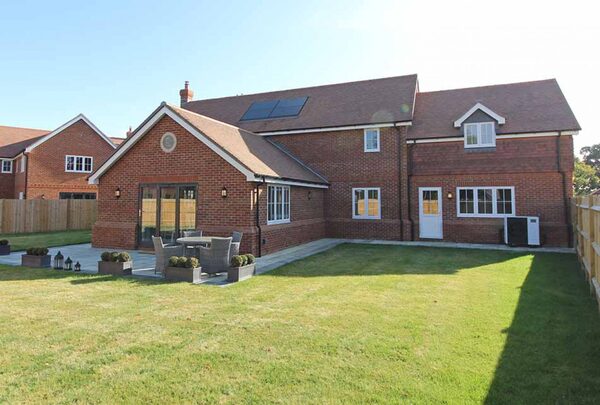
The standard is the mechanism that ends gas connections in England. It sets new requirements for homes built in England from 2028, and will require all new homes to have solar panels, and a heat pump or connection to a low-carbon heat network2. The forthcoming standard will go further, effectively prohibiting new homes from connecting to the gas grid10.
The purpose is stated plainly: the Future Homes and Buildings Standards aim to improve the energy efficiency and reduce the carbon emissions of new dwellings and non-domestic buildings, to ensure they are zero carbon ready11. The standard will require all new build homes to be "zero-carbon ready"2. Fabric performance is likely to require modest improvement due to slight changes in the notional building, including lower air permeability, use of dMEV, and updated input requirements for some components such as U-values reflecting the size and design of each window1.
For a household, the effect is that a new home is designed around a different energy system from the outset. Gas boilers are out; solar panels are in, mounted on the roof and sized to cover about 40% of the home's footprint, with at least one EV charge point per new home and batteries optional9. The commitment to require low-carbon heating in new build is described as a welcome step by the Heat Pump Association12.
"The forthcoming Future Homes Standard will go further, effectively prohibiting new homes from connecting to the gas grid"
Who owns and runs the gas network today
The gas network is split between transmission and distribution, and the split matters for anyone applying for a connection. The transmission network moves gas at high pressure around the country and is owned and operated by National Grid Gas13. Distribution networks carry gas at lower pressures and speeds to individual households14. In England and Wales the system operator is National Grid15.
The supplier is a separate party again. The gas supplier is responsible for the installation and maintenance of the gas meter, owns the gas and sends the bills16. Cadent states that the supplier owns the meter and the gas which is transported through the pipes, and is responsible for the installation and maintenance of the gas meter and billing17. SGN puts it the same way: the gas supplier is responsible for the maintenance of the gas meter and for sending bills, and that responsibility lies with the gas supplier, not SGN18.
Multiple new gas connections can also be undertaken by Independent Gas Transporters, who are able to build and operate networks19. For a household, the practical consequence is that the network operator builds the pipe to the property, the supplier owns and maintains the meter, and the household buys gas from the supplier. That chain is what a gas-free new build removes.
How a new build gas connection is applied for and who pays
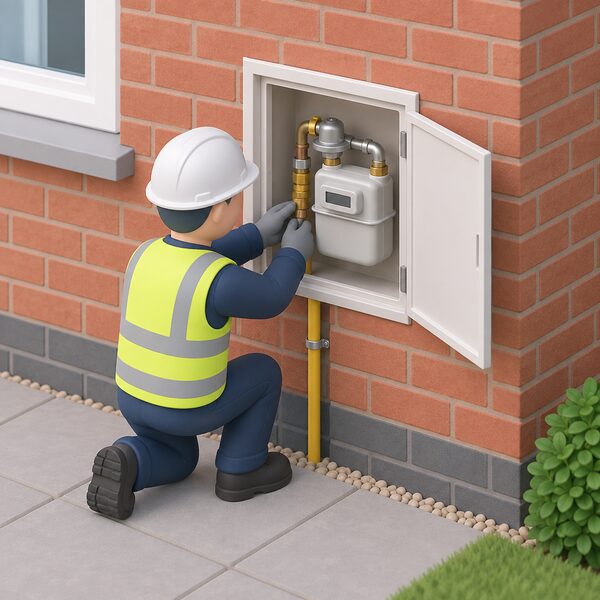
The application goes to the local gas distribution network operator, which in the Northern Gas Networks area is that company, and elsewhere is Cadent or SGN depending on region. The applicant must have permission for a new gas connection to be installed, and the applicant or builder must supply the built-in box and build it into the wall7. Northern Gas Networks does not supply gas meters; the applicant must contact a preferred gas supplier and arrange for the meter to be fitted7.
Cost is not published as a standard figure. There is a cost to get connected to the gas network, and it is determined based on the type of property being connected, the position of the nearest viable main and how much pipework is required to connect the property8. Prices are therefore installer and operator quoted, and no range can be given.
Timing can also move. The connection process can sometimes be extended by local traffic management or highway restrictions in the area20. For a self-builder or developer, the sequence is:
- Apply to the local distribution network operator and confirm permission for the connection7.
- Supply and build in the meter box where one is required7.
- Arrange meter fitting separately with a preferred gas supplier7.
- Allow for possible extension of the works by traffic management or highway restrictions20.
What a gas-free new build means for heating and hot water
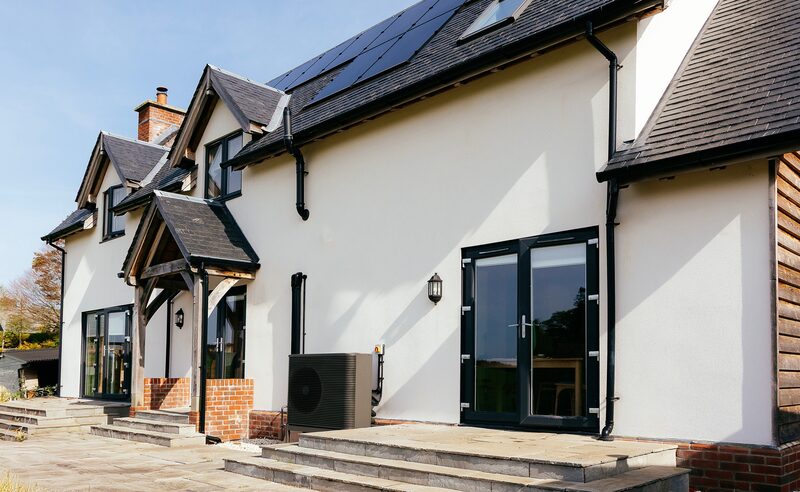
A gas-free new build is built around a heat pump rather than a boiler. Heat pumps will become "the primary heating technology"5. For the first time, all new homes will be fossil fuel-free, reliant on low-temperature heating systems, and in most cases equipped with photovoltaic panels1. The standard will require all new homes to have solar panels, and a heat pump or connection to a low-carbon heat network6.
Scotland reached the same destination by a different route and earlier. The New Build Heat Standard requires new buildings to install climate-friendly heating systems instead of oil and gas boilers, and the requirement for the installation of Zero Direct Emissions Heating systems applies to new-build homes4. Buildings connected to existing heat networks powered using natural gas will be considered to be future proofed and net zero ready under the Scottish proposals22.
The electricity side is the constraint that follows. All-electric homes require greater electrical capacity for heating, hot water, EV charging and the export of PV generation, and early engagement with network operators is essential1. Every new home needs at least one place to charge an electric car, and all new-build homes are required to have EV charge points installed9. National Grid has suggested that installing a third wire on current lines consisting of two wires on wooden poles would significantly increase the capacity of the existing network to meet requests for solar, wind, EV charge points and heat pump connection24.
Where a gas connection still falls short
A gas connection is not a route to independence. It ties the home to a distribution network, a supplier and a metered fuel, and the meter itself belongs to the supplier rather than the household17. The gas arrives through pipes owned and operated by others, and the household's role is to buy it.
The standards also close off the technologies that might have extended gas's life in new homes. Gas boilers, including hybrid and hydrogen-ready boilers, will not meet the proposed standards25. That removes the option of a gas boiler paired with a heat pump, and the option of a hydrogen-ready boiler, from the new build route.
For homes already connected, the position is different. The standards govern new construction, and existing connections continue. The question of replacing an existing boiler is governed by separate rules, covered in Can I still replace my existing gas boiler?. Scotland's position on existing homes is set out in Will I have to get rid of my gas boiler in Scotland?.
What this shift means for household energy independence
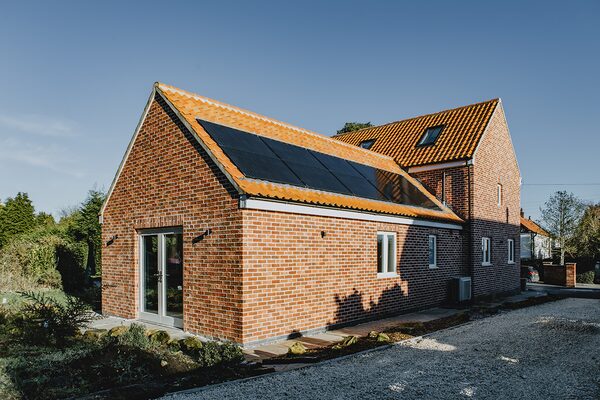
The shift moves a new home's energy supply from a national gas network to the electricity distribution network, and adds generation the household owns. Solar panels on the roof, sized to cover about 40% of the home's footprint, and a heat pump replace a metered gas supply with on-site generation and an electrically driven heating system9. The Future Homes Standard aims to ensure that all new homes and buildings are built to the highest levels of energy efficiency and sustainability12.
The dependence that remains is real and should be stated as plainly as the benefit. An all-electric home depends on the electricity distribution network, on a supplier, and on the grid's capacity to serve the development, which is why early engagement with network operators is described as essential1. It depends on the heat pump manufacturer for parts and support, and often on an app or cloud service for controls. It depends on the solar panels continuing to generate, and on the household's ability to use or export what they produce.
The gain is that a new home no longer needs a gas connection at all, and the loss is that it now leans entirely on electricity. The Future Homes Standard and Future Buildings Standard are part of the government's plan to improve the energy efficiency and reduce the carbon emissions of new homes and non-domestic buildings26. For a household, that means a home built to need less energy, generating some of its own, and buying the rest from a supplier. The wider rules that shape what a home may install and connect are set out in UK Home Energy Regulation and Policy.
Sources26 cited
- Future Homes Standard Ready, Future Homes, 2026
- What the Future Homes Standard means for homeowners, NICEIC, 2026
- The Future Homes Standard, House of Commons Library, 2026
- New Build Heat Standard factsheet, Scottish Government, 2025
- The Future Homes Standard and heat pumps, House of Commons Library, 2026
- Future Homes campaign, MCS Foundation, 2026
- Apply now for a new gas connection, Northern Gas Networks, 2026
- Gas connection FAQs and guidance, Northern Gas Networks, 2025
- Future Homes Standard for your home's future, Low Carbon Hub, 2026
- UK new homes sector unites on mission to deliver next generation of low energy homes, Future Homes, 2026
- RPC opinion on Future Homes and Buildings Standards impact assessments, GOV.UK, 2026
- Government affairs October 2025 update, CIBSE, 2026
- Energy terms explained, Ofgem, 2026
- Gas transmission and distribution networks, House of Commons Library, 2026
- Changes to permitted development rights: summary of responses, Welsh Government, 2025
- What to expect when you get connected, Northern Gas Networks, 2026
- New gas connection, Cadent Gas, 2026
- Gas meter exchange, SGN, 2026
- Installing, altering and disconnecting gas services.pdf), Energy Networks Association, 2026
- Gas connections, WW Utilities, 2026
- New Build Heat Standard direction, Scottish Government, 2024
- Heat in Buildings Strategy for Scotland, CIBSE, 2026
- Electric vehicle charging and building regulations, Planning Portal, 2026
- Decarbonising heat: the basics, Energy and Climate Intelligence Unit, 2026
- The Future Homes and Buildings Standards 2023 consultation, GOV.UK, 2026
- Research briefing on the Future Homes Standard, House of Commons Library, 2026
 Is Off-Grid Living Legal?Can you legally live without mains gas or electricity in the UK?
 Will Gas Boilers Be Banned?What has actually been legislated, proposed or dropped on gas and oil boiler phase-out across the four UK nations, and the difference between new build rules and replacement in existing homes.
 The Full Your Type of Home GuideLiving in a flat, an old listed house or somewhere off the gas grid changes what energy help you can get and what you are allowed to install.
 Gas Pipelines and LinksWhere does the gas in your home actually come from, and what happens when it gets really cold and the wind stops blowing?
 The Full Rules and Regulation GuideConfused about who actually decides what you pay for gas and electricity, or why rules differ in Scotland and Wales?
 Future Homes StandardWill your new build still have a gas boiler, and when do the new rules actually start?