
In this comparison
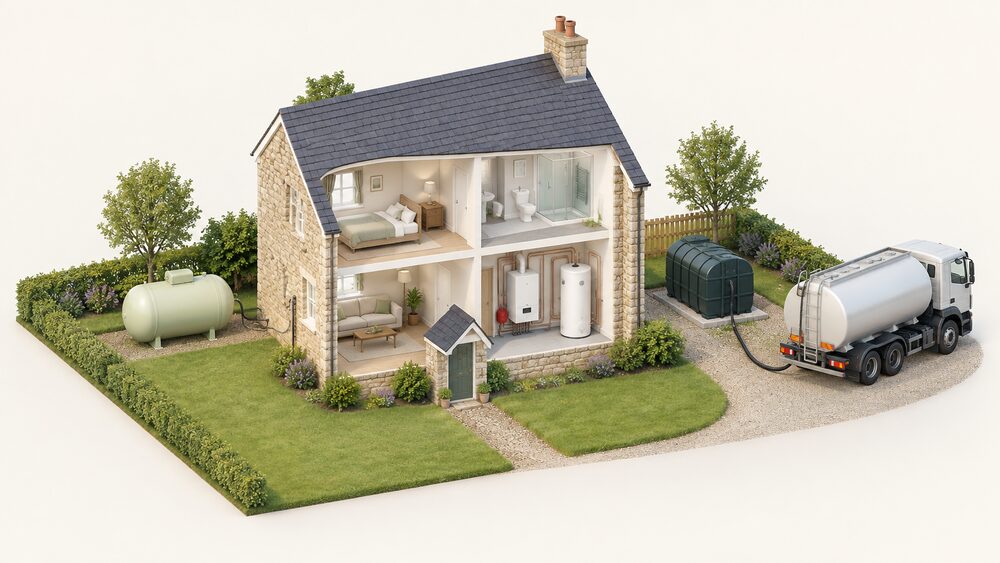
For a household with no mains gas connection, the choice between LPG and oil is a choice between two delivered fuels with different storage, different combustion and different carbon profiles. Neither is piped in. LPG is delivered by road and stored in a tank rather than being piped directly into the home1, and oil boilers have a storage tank that needs refilling every few months2. Around two million UK properties are off-grid and depend on alternative fuels for heating and cooking3, and oil boilers alone serve an estimated four million homes with no access to mains gas4.
On carbon, LPG comes out ahead on the published figures. LPG emits 12% less CO2 than oil3, and 35% less CO2 than coal5. One industry source puts the coal comparison at 33% less CO26. On running cost, the picture reverses: independent guidance describes LPG as the most expensive of the three fuel types when compared with gas and oil, while noting it has lower CO2 emissions than oil2. An oil boiler usually costs hundreds of pounds a year more to run than its gas equivalent4.
The appliance and installation side is where the headline gap sits. Oil boiler installation runs from £500 up to £2,000 across all three oil boiler types7, and LPG installation is described as significantly cheaper than electric, oil and air source heat pumps5. Both fuels remain legal for off-gas-grid homes in England, where the proposed ban on installing oil and LPG boilers was delayed from 2026 to 20358.
LPG or oil: what off-grid households are choosing between
Off-gas-grid homes use a range of fuels: heating oil, liquefied petroleum gas, solid fuels, mains electricity and microgeneration11. Of these, natural gas is the most common boiler fuel nationally, followed by heating oil and, less frequently, LPG12. In Scotland, around 87% of households use a gas or oil-fuelled boiler13, which shows how far oil reaches into the housing stock even where gas is available.
LPG is a mixture of propane and butane, two colourless liquids that heat homes14. It is the fuel of choice for 193,000 homes5, and an LPG boiler is found in rural properties considered off grid15 and is best suited to rural locations with no mains gas connection14. Oil boilers, by contrast, serve an estimated four million homes with no mains gas access4.
The two fuels are not interchangeable at the appliance level. LPG has variants of combi, system and open-vent boilers available15, and LPG system and open-vent boilers require a separate hot water tank15. LPG also fuels the familiar domestic gas appliances: central heating boilers, gas fires, gas ranges, AGAs and cookers3. Oil does not offer that breadth of appliance choice, which matters if a household wants a range cooker or a gas fire as well as central heating.
For energy independence, both fuels keep a household off the mains gas grid but leave it dependent on a road delivery. LPG is stored in a tank outside the property and topped up by an LPG supplier15; oil needs a tank refilled every few months2. Neither is a self-generated fuel. The independence is from the gas network, not from a supplier.
Running costs: LPG is the dearer fuel, oil the dearer appliance
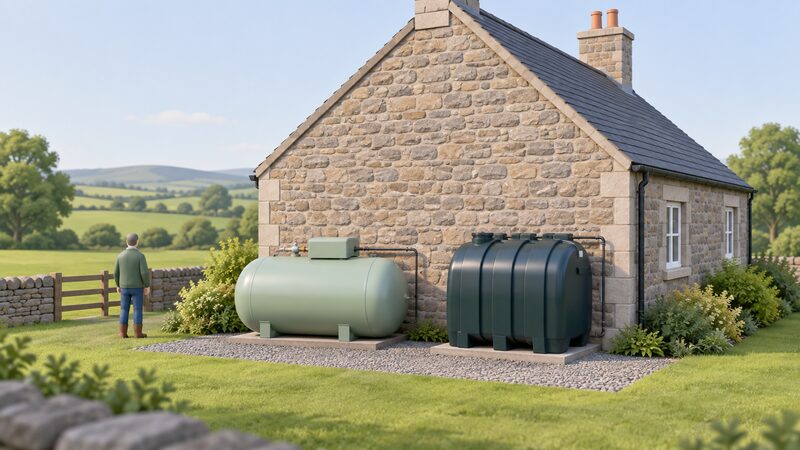
The running cost comparison is not close on the published guidance. LPG is described as the most expensive of the three fuel types when set against gas and oil2. A modern condensing gas boiler is usually the cheapest to run compared with oil, electricity, LPG and house coal for homes with a mains gas connection2, which sets the benchmark the off-grid fuels are measured against. An oil boiler usually costs hundreds of pounds a year more to run than its gas equivalent4.
That leaves LPG and oil as the two most expensive common options, with LPG at the top of the range and oil below it. The gap is not quantified in the published figures, so the ranking is directional rather than a number a household can budget from.
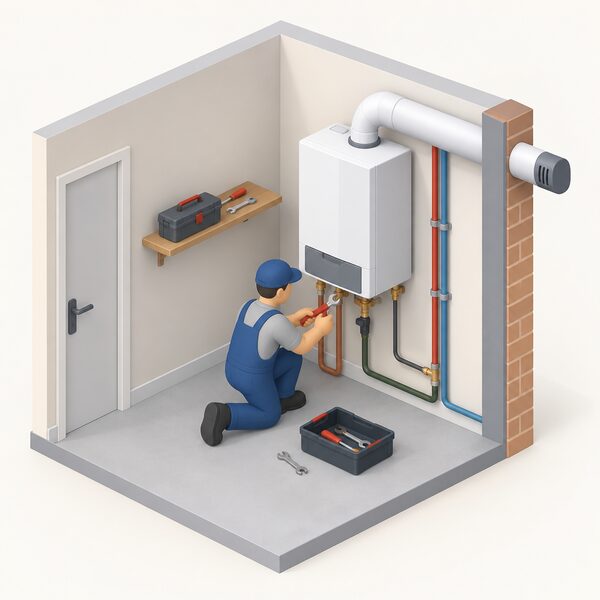
On the appliance side the position flips. LPG installation is significantly cheaper than electric, oil and air source heat pumps5. Oil boiler installation costs vary from £500 up to £2,000 across all three oil boiler types7, and oil boilers can be more expensive than electric ones due to higher installation costs16. The £500 to £2,000 figure is the installation labour and fitting, not the boiler itself.
For a household weighing the two, the trade is between a higher fuel bill and a lower installation bill, or the reverse. Neither fuel is a route to lower running costs than mains gas. Both are a route to heating a home that the gas network does not reach.
Flame control and day-to-day operation
LPG burns as a gas, which changes how the appliance behaves day to day. LPG is a cleaner fuel compared to oil as it burns less carbon, preventing soot and ash build up15. That soot and ash is what an oil boiler accumulates over a heating season, and it is part of why oil appliances need regular attention.
Noise is the other practical difference. LPG boilers do not produce as much noise compared to oil boilers when the heating is on15. That claim comes from a manufacturer rather than an independent test, so it is reported rather than measured, but it matches the engineering: an oil boiler carries a burner and a pump that an LPG boiler does not.
Leak detection favours LPG as well. LPG is not odourless, making it easier to detect leaks6. Oil leaks announce themselves differently, through smell and staining around the tank and pipework rather than through an added odorant in the fuel.
On controls, the regulatory direction of travel is the same for both. For oil fired boilers installed as a replacement of an existing boiler, time and temperature controls are applied as a new additional requirement17. Time and temperature control should be installed for the heating system on a gas-fired boiler in an existing dwelling, whether new or replacement17. The same control expectation therefore lands on an LPG boiler as on an oil one.
Efficiency standards for the two fuels diverge in the building regulations. A worked example in Approved Document L Volume 1 uses an LPG boiler with emissions of 0.241kgCO2/kWh and primary energy of 1.141kWhPE/kWh at 93% efficiency18. For gas fires in combined fire and back boiler units, the minimum efficiency is 45% for natural gas and 46% for LPG gross calorific value on an inset live fuel-effect unit19. A separate official consultation gives 63% for natural gas and 64% for LPG on all types except inset live fuel-effect19. The two documents disagree on the figure and the conflict is unresolved.
Appliance and installation costs compared
Oil boiler costs break down by type, and the published figures are specific. A heat-only oil boiler runs £1,200 to £2,450 for the unit, with an average total cost of £3,075 including installation7. A system oil boiler runs £1,450 to £2,375, with an average total cost of £3,1637. An oil combi runs £2,025 to £2,825, with an average total cost of £3,6757. Installation across all three types is £500 to £2,0007.
| Oil boiler type | Boiler cost | Installation | Average total |
|---|---|---|---|
| Heat-only | £1,200 to £2,450 | £500 to £2,000 | £3,0757 |
| System | £1,450 to £2,375 | £500 to £2,000 | £3,1637 |
| Combi | £2,025 to £2,825 | £500 to £2,000 | £3,6757 |
For comparison, a gas heat-only or conventional boiler is quoted at £2,500 to £4,100 installed, for larger properties with greater demand and low water pressure4. Oil boilers are quoted at £3,300 to £4,000 installed for properties with no access to mains gas supply4. Those two figures sit in the same independent guidance and show how little separates oil from gas on installed cost, even though the running costs differ sharply.
No equivalent published price table exists for LPG boilers. LPG installation is described as significantly cheaper than electric, oil and air source heat pumps5, which is a relative statement rather than a figure. LPG boiler prices are installer-quoted, and a household comparing quotes should expect the appliance, the flue, the tank connection and any controls to be itemised separately.
The VAT position matters for anyone considering a switch. Dual-fuel boilers designed to burn coal or oil as well as wood are not covered by VAT relief20. That relief applies to qualifying energy-saving materials and grant-funded heating supplies, and the exclusion of dual-fuel appliances is a specific carve-out.
Storage, tanks and what each fuel needs on your property
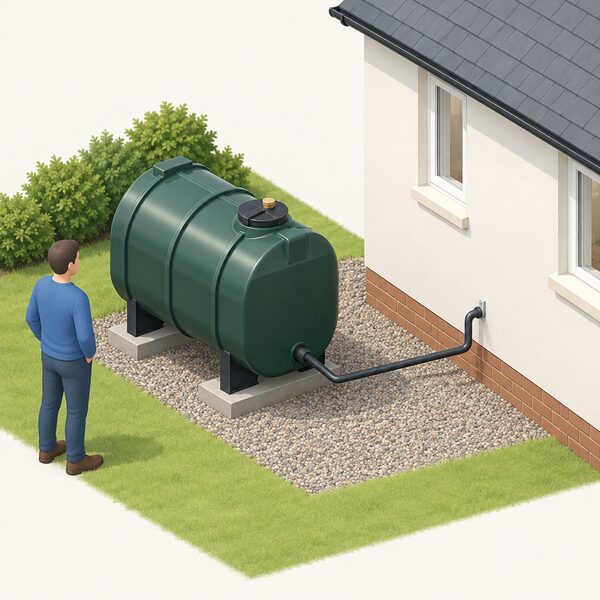
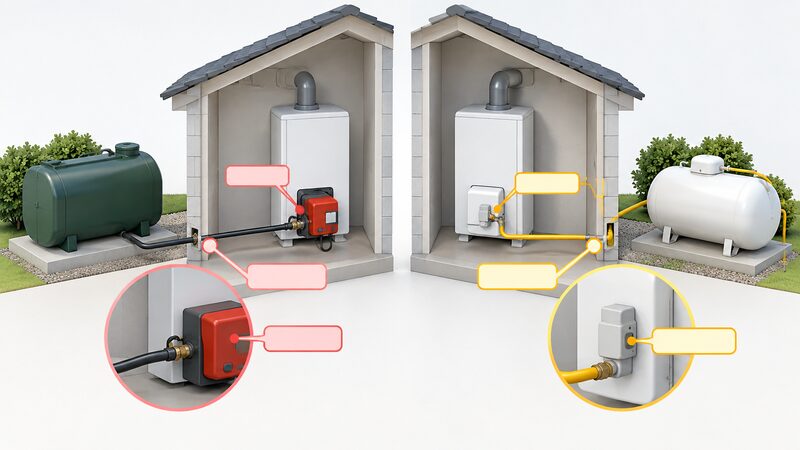
Both fuels need space outside the house, and both are governed by separation rules. Requirement J6 states that liquid fuel storage systems and the pipes connecting them to combustion appliances shall be so constructed and separated from buildings and the boundary of the premises as to reduce to a reasonable level the risk of the fuel igniting in the event of fire in adjacent buildings or premises21. That requirement applies to fixed oil storage tanks with capacities greater than 90 litres and fixed LPG storage installations with capacities greater than 150 litres located outside the building21.
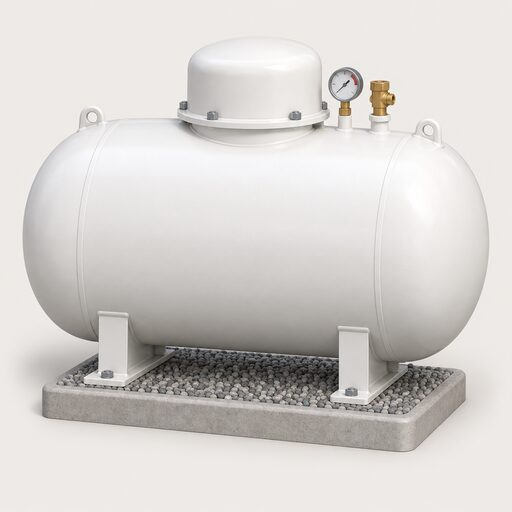
For LPG specifically, tanks and associated pipework connecting the system to a combustion appliance should be designed, constructed and installed in accordance with the requirements set out in the UKLPG Code of Practice 1: Bulk LPG Storage at Fixed Installations22. A tank not exceeding 1.1 tonnes needs 3 metres of separation from buildings, boundaries or fixed sources of ignition23.
Oil has its own regime, covered in more detail on domestic heating oil tanks. Oil boilers have a storage tank that needs refilling every few months2. LPG boilers need the tank refilled periodically, depending on how much is used2. Neither fuel removes the delivery dependency: LPG is delivered by road and stored in a tank rather than being piped directly into the home1.
The practical difference is scale and frequency. An oil tank typically holds a season's worth of fuel and is filled a few times a year. An LPG tank is topped up by a supplier on a schedule that depends on consumption15. Both need a road tanker to reach the property, which is the constraint that defines off-grid heating more than the fuel itself.
Switching fuels: conversion kits and dual-fuel boilers
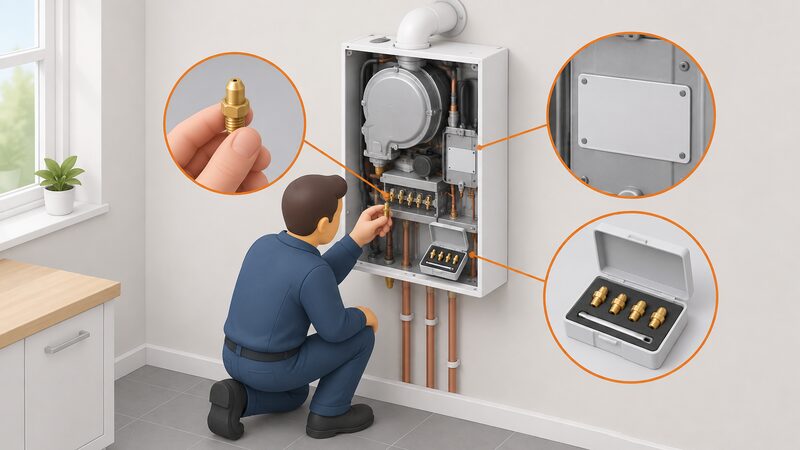
Converting an existing oil boiler to LPG is not a standard route. Independent guidance states that some boilers designed for mains gas can be converted to use LPG1, which is a different starting point: a gas boiler with an LPG conversion kit, not an oil boiler with a new fuel line. An oil boiler has a different burner, a different fuel delivery system and different combustion characteristics.
What does exist is dual-fuel appliances. Some makers sell boilers that run on natural gas and LPG with the conversion kit included as standard, marketed on the basis that no other manufacturer offers this24. That is a new appliance rather than a conversion of an existing oil unit, and it gives a household the option to move between the two gases without replacing the boiler.
For a household on oil, the realistic switch is to a new appliance, whether LPG, a heat pump or another fuel. Households with an oil boiler, LPG, electric radiators or storage heaters may save money on energy bills by switching to a heat pump25. That is the official position on the direction of travel, and it is where the grant money points.
The evidence on satisfaction is mixed. Households that had previously had working gas or oil boilers were more equivocal and more likely to report an increase in bills or lower satisfaction than their previous system when moving to a heat pump26. That finding comes from official research and is worth weighing against the grant incentive.
The Boiler Upgrade Scheme grant for off-grid homes
The Boiler Upgrade Scheme provides upfront capital grants to support the installation of heat pumps and biomass boilers in homes and non-domestic buildings27. For off-gas-grid properties, the grant level is higher. The scheme offers £9,000 off the cost and installation of air-to-water or ground source heat pumps in eligible off-gas grid properties10, and £9,000 towards an air-to-water or ground source heat pump for eligible off-grid properties heated by LPG or oil28.
The conditions are specific. The heating system being replaced must be fuelled by either oil or liquefied petroleum gas29, and the previous heating system being replaced must be fuelled by oil or LPG for the uplifted grant30. Fossil fuel heating systems for the purposes of the scheme include oil, gas, electric or liquefied petroleum gas31. One approved grant category is a ground source heat pump in an off-gas grid property that is replacing an oil heating system32.
The timing matters. The uplifted grant value for off gas grid properties will be in place until 31 March 202730, and applications for uplifted grants for eligible off-gas grid properties can be made on or after 21 July 202630. The wider scheme has been extended to 203033. Uptake has been weighted towards off-grid homes: as of November 2025 around 39% of such grants had been made to homes off the gas grid34.
The scheme is open to domestic and small non-domestic properties35, and installers must be registered to carry out the work36. For a household on oil or LPG, the grant is the single largest financial lever available, and it points away from both fuels rather than between them.
Where LPG and oil both fall short
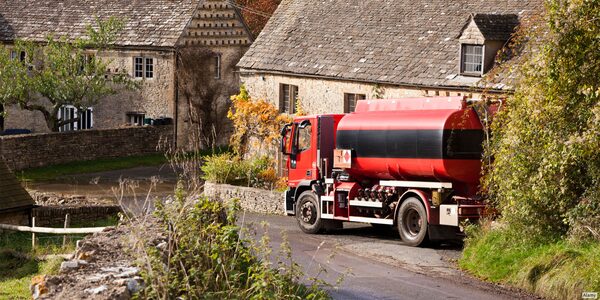
Neither fuel is a route to energy independence in the sense of generating heat on site. Both depend on a road delivery, a storage tank and a supplier. LPG is the most expensive of the three fuel types2, and oil boilers usually cost hundreds of pounds a year more to run than gas4. Both carry the storage and separation requirements set out in Requirement J621.
The regulatory direction is also the same for both. The proposed ban on installing oil and LPG boilers, and new coal heating, for off-gas-grid homes in England was delayed from 2026 to 20358. That delay applies to England; Scotland has consulted separately on its own heat in buildings proposals21, and Wales and Northern Ireland have their own building regulation and grant arrangements, covered on boiler and heating grants in Wales and boiler and heating grants in Northern Ireland.
For a household weighing the two, the honest summary is that LPG is cleaner and quieter and costs more to run, oil is cheaper to run and costs more to install, and the grant money now favours replacing both with a heat pump. The wider context sits on heating a home off the gas grid and home heating and energy independence.
Sources36 cited
- Research briefing: off-gas grid households, House of Commons Library, 2026
- Boilers advice: off-grid fuel comparison, Energy Saving Trust, 2026
- New to LPG, Liquid Gas UK, 2026
- Different boiler types, Uswitch, 2026
- LPG in the home, Liquid Gas UK, 2026
- What is LPG, Liquid Gas UK, 2026
- Boiler statistics, Uswitch, 2024
- Delivering net zero for Scotland's buildings, Scottish Government, 2023
- Heat in buildings bill consultation, Scottish Government, 2023
- Boiler Upgrade Scheme, Ofgem, 2026
- Scottish House Condition Survey 2024 key findings, Scottish Government, 2026
- Central heating systems, Uswitch, 2022
- What is an LPG boiler, Vaillant, 2026
- New boiler cost, Uswitch, 2024
- LPG central heating, Which?, 2025
- Building regulations discussion document, Northern Ireland Department of Finance, 2023
- Approved Document L Volume 1, 2026, Welsh Government, 2026
- Approved Document L Volume 1, 2021 with 2023 amendments, UK Government, 2023
- Domestic Building Services Compliance Guide 2022, Scottish Government, 2022
- VAT energy saving materials manual, HM Revenue and Customs, 2026
- Building regulations guidance Part J, Welsh Government, 2025
- Building standards: LPG storage, Scottish Government, 2017
- Building regulations guidance Part J, 2019, Welsh Government, 2019
- Heat pump transition research, UK Government, 2026
- Heat pump support for homeowners, Development Bank of Wales, 2024
- Boiler Upgrade Scheme statistics, July 2026, UK Government, 2026
- Boiler Upgrade Scheme quarterly report, Ofgem, 2023
- Boiler Upgrade Scheme installers, Ofgem, 2026
- Approved grant categories and values, UK Government, 2026
- Boiler Upgrade Scheme guidance for installers v5.1, Ofgem, 2026
- Getting help with your energy bills, Birmingham City Council, 2026
- Boiler Upgrade Scheme guidance for installers v5, Ofgem, 2026
- Home and business grants schemes, East Hertfordshire District Council, 2026
- Research briefing: Boiler Upgrade Scheme, House of Commons Library, 2025
- Heat buildings strategy impact assessment, Scottish Government, 2021
- Heat buildings strategy impact assessment, page 8, Scottish Government, 2021
 LPG Boilers and HeatingWhat LPG is, how LPG boilers differ from natural gas appliances, and how bulk tanks and cylinder supply work for off-grid homes.
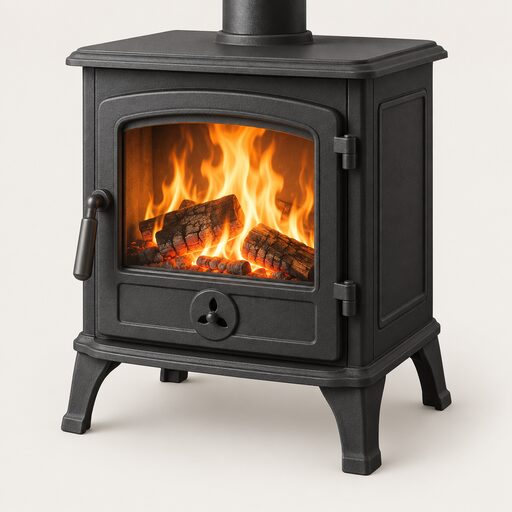 Heating Off the Gas GridThe options for the four million UK households with no mains gas connection: oil, LPG, electric, heat pump, biomass and solid fuel, and how their costs, storage and supply security compare.
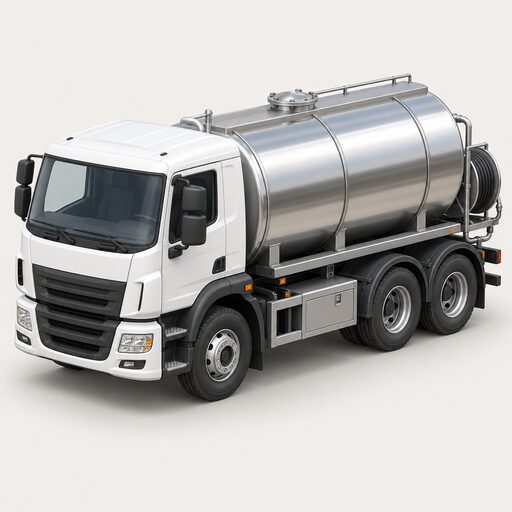 Heating Oil and LPG SupplyHow heating oil and bulk LPG reach off-grid homes, who owns the tank, what the fuels cost, why neither is covered by the price cap, and what supply risk looks like in winter.
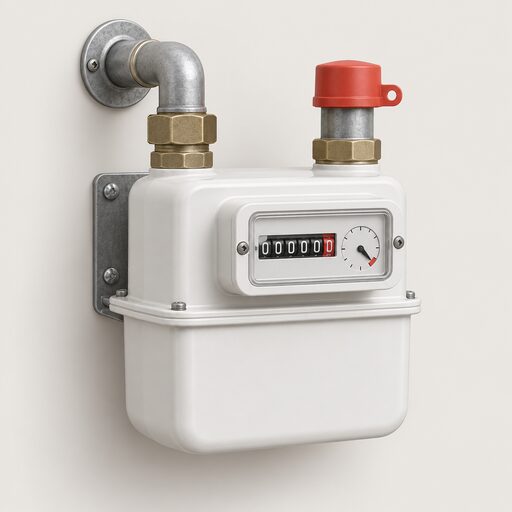 Replacing a Gas or Oil BoilerSwapping a gas, oil or LPG boiler for a heat pump changes how your home is heated and how much it costs.
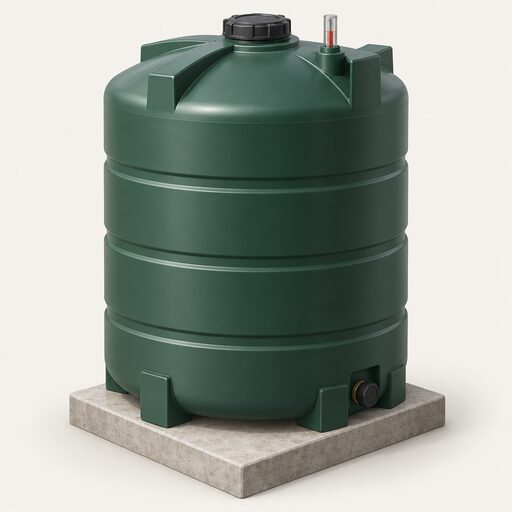 Living Off the Gas GridNo mains gas at your home?
 Storing Generator Fuel at HomeHow much petrol can you legally keep at home, and where should you put it?